Looking for fundraising event ideas in 2026? We've compiled 28 creative ideas for different causes, budgets, and event types to help you plan your next event.

Anwesha Kiran
Published:
March 31, 2026
Updated:
May 8, 2026

Discover AI Summary
• Boost student and young alumni participation by linking giving to tangible, everyday benefits, such as a "membership" that unlocks local discounts, turning a donation into a valued, ongoing experience.
• Drive fundraising success by injecting friendly competition into your campaigns, like team challenges or gamified giving days, to encourage active participation across your community.
• Create high-impact events by showcasing your alumni's professional expertise or your institution's unique strengths, transforming a fundraiser into a valuable networking and pride-building experience.
• Explore cost-effective and virtual options like interactive livestreams, trivia nights, or even social enterprise partnerships (like shoe drives) to expand your reach and engage diverse donor segments without major overhead.
• Look beyond just dollars raised by also tracking participation rates and new donor acquisition; this data helps you understand community growth and build long-term loyalty for future campaigns.
Institutions and organizations host many fundraising events throughout the year. And while your team might have certain events that have become a mainstay of your calendar, sometimes you just want to switch things up and try something new, or maybe you want a budget-friendly option for a particular event. In that case, a few fresh event ideas might be just what your team needs.
To help you brainstorm your next fundraiser, we’ve curated 28 fundraising event ideas across six essential categories from budget-friendly, low-lift options to high-impact campaigns (backed by real life examples) designed to energize your community and elevate your story.
Not all fundraisers need to be a fancy gala. Sometimes the best event for the occasion can be as simple as having a clear ask, a bit of social energy, and ideally, something that makes giving feel like part of the fun.
One challenge with student giving is making it feel immediately worthwhile. A simple way to do that is by turning a class gift into something students use.
Instead of asking for a one-time donation, position the gift as entering a shared experience. Tie it to a price that feels personal (like their class year), and pair it with a tangible benefit, like something that fits naturally into their daily routines.
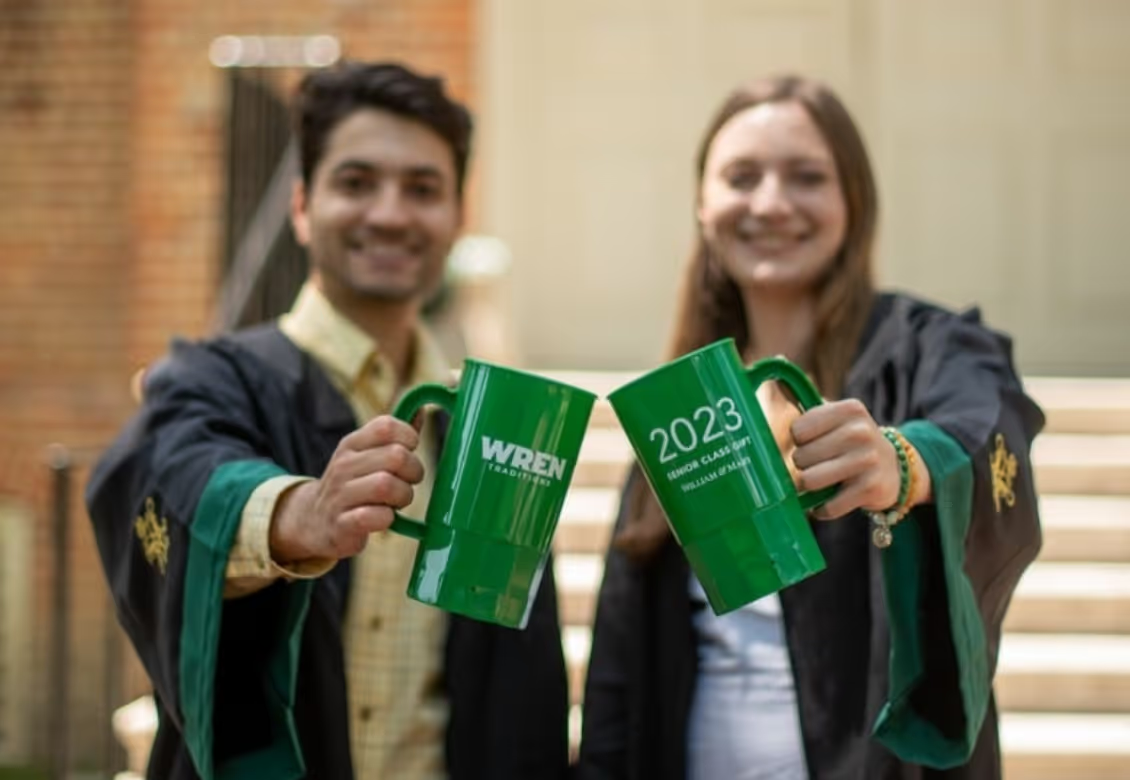
An example in action is William & Mary’s Mug Club. Seniors make a class-year gift (donating $20.26, for example) and receive a mug that unlocks rotating deals at local businesses: everything from discounted meals to drink specials. By expanding local partnerships each year and keeping the offer relevant to student life, the program stays useful, visible, and easy to say yes to.
Any institution with a graduating cohort can build a version of this. All you need is a student-led committee to drive peer engagement, a giving page with flexible fund designation, a small group of local business partners willing to offer simple, repeatable deals, and a clear participation goal set at the start of the year.
Trivia nights have become one of the most reliably successful fundraisers, and ticket sales just make up a part of the funds raised. By layering in small "pay-to-play" options like raffles, mid-round hints, or a fee to reverse a wrong answer, guests have plenty of fun ways to keep giving all through the evening.
When guests can contribute in the moment, it keeps the energy high and the giving consistent. This steady stream of small donations adds up quickly, all within an event that feels more like a fun night out than a fundraiser.

The University of Toronto’s Faculty of Law hosts an annual trivia night to raise funds for several causes.
A key advantage of a trivia night is also format flexibility. While in-person is the classic setup, hybrid versions where some teams join via livestream while others sit in the venue have become increasingly common.
What you need for your own fundraising trivia night is a host (can be someone internal), a venue with basic AV, answer sheets or a mobile quiz platform, a raffle or auction component, and a payment method set up in advance.
Karaoke nights are a low-lift way to turn energy and participation into steady, incremental giving, which works especially well with younger or campus-based audiences.
Charge a simple entry fee, then layer in pay-per-song and optional add-ons like “donate to skip the queue.” Keep the vibe casual, the song list broad, and the giving options easy to access, such as quick, mobile-friendly payments that guests can complete in under 30 seconds without interrupting the flow of the night.
An ice cream social is a familiar, community-friendly format that works especially well during spring and summer seasons.
You can sell tickets for servings or partner with local vendors for a percentage of sales and add a clear donation touchpoint like a QR code or short giving moment during the event. Keep it easy, visible, and family-friendly to maximize attendance and add-on gifts.
Restaurant nights are one of the simplest ways to fundraise without taking on operational complexity. They work because they’re extremely accessible: a regular meal turns into a reason to give.

Applebee's Flapjack Fundraiser, for instance, lets groups take over the restaurant for a breakfast shift and keep most of the ticket revenue. But you don't need a chain; a local spot with a community-minded owner works just as well.
Great returns don’t always require a big investment. The most cost-effective reframe the ask and find a more creative way to invite people to give.
Even old everyday items have fundraising potential. You can work with a social enterprise or nonprofit partner to collect gently worn, used, or new items. This makes it easy for supporters to give. This removes the barrier of a cash ask, and anyone can join by simply giving items they already have.

Funds2Orgs runs a Shoe Drive fundraising program where schools, nonprofits, and community groups collect gently worn, used, and new shoes from their networks and get paid by weight. Funds2Orgs handles the pickup and logistics.
You can pitch it to your community as simply cleaning out their closet for a cause. Those who might feel uncomfortable with a cash ask are suddenly able to contribute meaningfully.
To set one up, sign up with Funds2Orgs, choose a collection period (60 days is typical), promote collection points at your campus or organization, and coordinate pickup with their logistics team.
Transform a regular donation drive into a high-energy, community-wide challenge by having teams or departments compete to raise the most money or collect the most items. Competition drives promotion and motivation, while giving remains simple.
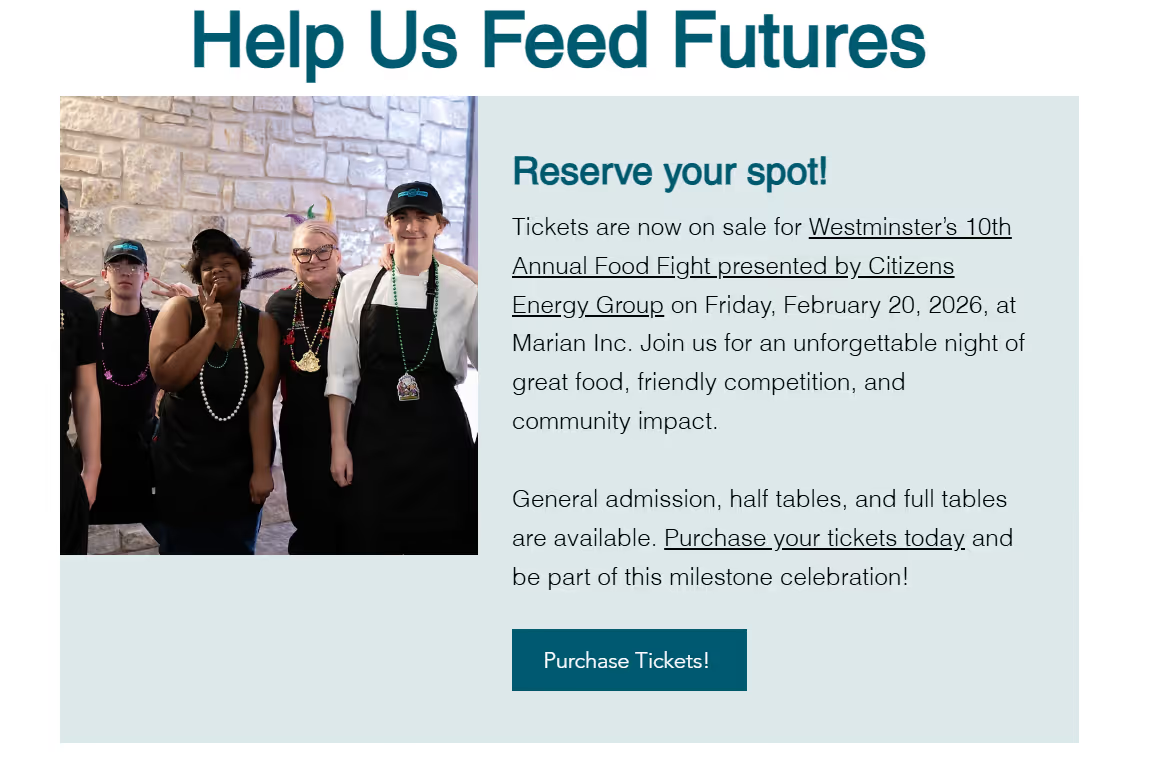
Westminster's Food Fight is a competitive, community-wide food and fund drive that elevates a straightforward donation campaign into a fun event. Seeing exactly where contributions go keeps people engaged, and the competitive format naturally encourages participation without heavy supervision or involvement.
This format is quite adaptable: any organization with internal teams or departments can run a version of this.
You could also play around with a number of budget-friendly additions to create buzz - a leaderboard, a small prize for the winning team, or even just a deadline.
Announce the mission, set the competition, the deadline, and let peer pressure do the rest.
A car wash is a quick, low-cost way to raise money while engaging your community. It works because people enjoy supporting a visible effort.
All you need for this is a weekend, a car park, a hose, and a group of enthusiastic volunteers. Charge a flat fee per vehicle or accept donations. This works particularly well for school sports teams, student clubs and local communities.
Movie nights are a simple, repeatable way to fundraise while giving your community a fun experience. Outdoor screenings or themed nights can tie into your mission and draw larger crowds. Rent a projector, pick a movie everyone loves, and sell some snacks. It’s a classic fundraiser format that’s easy to theme around your mission, plus, an outdoor summer screening is always a hit.
A secondhand sale turns donated items into fundraising revenue while emphasizing sustainability, an idea that resonates strongly with younger donors. Host a pop-up market with items donated by your community. It’s a great way to lean into sustainability, a big win with younger donors, and while it takes a bit more legwork, the proceeds are usually well worth the effort.
Virtual fundraising is the go-to for those trying to reach donors who cannot show up to an in-person event.
Tap into the power of online communities by letting supporters give while engaging with content in real time. This approach works especially well for younger audiences and alumni networks who are active on streaming platforms.

St. Jude PLAY LIVE has raised more than $75 million through one of the most distinctive virtual fundraising models out there: gamers and content creators livestream themselves playing while their audiences donate in real time to St. Jude Children's Research Hospital.
When streamers bridge a cause with their content, their communities naturally show up. By letting viewers pay to trigger challenges or vote on what happens next, donation becomes an interactive part of the show.
To set up a similar campaign, create a dedicated fundraising page, recruit enthusiastic streamers or content creators, define a clear goal, and build in real-time incentives to keep donors engaged.
Transform a standard giving day into an immersive, all-day virtual experience that energizes your community and encourages frequent, small donations. This format works because it makes giving visible and fun, sparking friendly competition and community pride.
Because it’s entirely virtual, anyone can participate from anywhere, making it easy for alumni and supporters worldwide to join in.
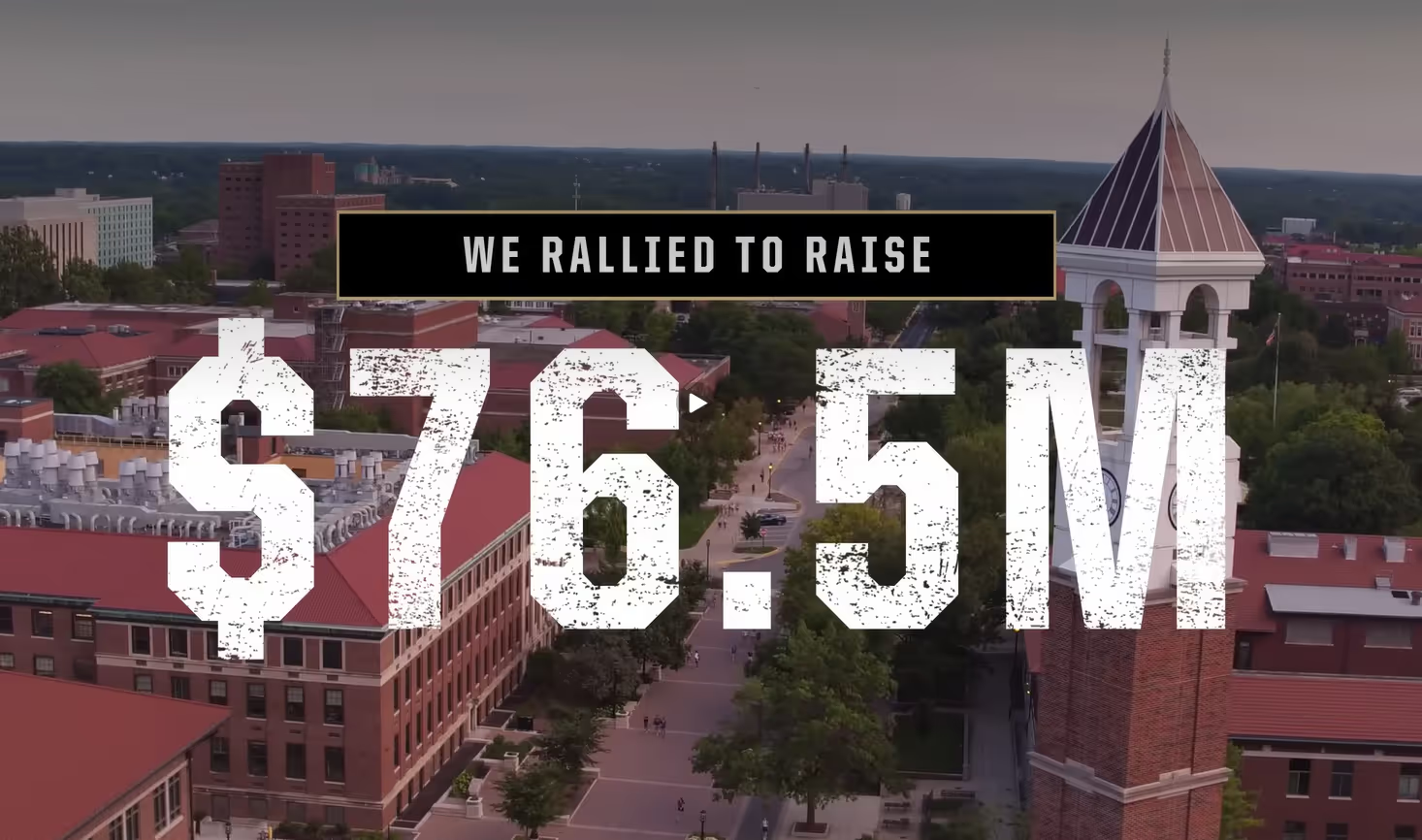
Purdue University has turned the traditional giving day into a global digital event, raising a staggering $76.5 million in just 24 hours during their 2024 campaign. It shifts the focus from a simple "ask" to an all-day social media celebration. By using live leaderboards and hourly social media challenges like posting photos of pets in Purdue gear, the campaign keeps energy high and participation consistent.
To replicate this, you'll need a dedicated 24-hour window, a "social ambassador" toolkit for your supporters, and a platform that can show real-time progress to create friendly competition and sustain momentum.
A virtual game night is a great way to bring people together without anyone having to leave their couch. Formats like digital Bingo or board game tournaments keep participants engaged while making giving part of the fun.
You can raise funds by charging a small "buy-in" for entry, selling extra Bingo cards, or even letting players pay for "mulligans" and power-ups that help them stay in the game.
Every event hosted by a nonprofit is, in some way, a trust exercise. Donors give money to a cause they believe in, and the event needs to honour that. The best nonprofit fundraisers know how to tell their story.
A gala can be the perfect stage for your mission. Use it as an opportunity to immerse guests in your mission, showing them exactly how their support makes a difference. Blend storytelling, visuals, and strategic moments of impact into the evening to turn donations into a shared experience that inspires both generosity and long-term loyalty.

The 2024 Children's Gala hosted by Sanford Health Foundation exemplifies this approach. Beyond the $1.2 million raised, this event served as the launchpad for the announcement of South Dakota’s first dedicated pediatric emergency department.
The gala also gave donors the chance to witness the change they’re influencing. Guests experienced the daily reality of care: the equipment, the families, the staff. When it was time to make donations, the room knew what the donations would do.
The takeaway here is to build your gala around moments of mission visibility. What you need to achieve this is a venue, a clear messaging around your mission, a paddle raise or live ask element, a smooth check-in and payment system, and ideally a headline announcement or challenge gift to create a moment.
A fun run or walk can be used to achieve more than just getting people to move. It's a way to rally your community around a cause everyone can see and feel. Team-based challenges and multiple distance options make it inclusive, letting anyone participate while giving them a sense of impact.
Miles for Moffitt is a community fitness event that has developed over 20 years with a clear mission. What started as a local running race in Tampa has grown into one of Florida's largest annual charity events. The 20th annual event drew more than 11,000 participants and raised over $1.6 million for cancer research.

This setup is inclusive by nature. With a 10K, 5K, and even virtual options, anyone can join in, regardless of their fitness level. The peer-to-peer element is what really lets the event scale. Supporters can build their own pages and rally their own networks, turning the fundraiser into a friendly competition to see which team can make the biggest impact.
To bring this to your institution, you’ll need a solid venue, a few distance options, and a reliable peer-to-peer platform to handle registrations. It all comes together with a strong, recurring brand that your community can recognize and look forward to every year.
A fundraising classic, silent auctions almost gamify the giving experience. Guests bid on items or experiences at their own pace, and the competition naturally drives generosity.
Focus on unique or high-interest items like trips, behind-the-scenes access, or themed packages, and make bidding easy and accessible with a mobile platform. Whether paired with a gala or hosted on its own, a well-curated auction keeps energy high and funds flowing.
The final months of the year are a massive window for donations. A themed event or digital campaign makes it easy for supporters to give while riding the wave of end-of-year excitement.
Plan a festive gathering or online push, highlight clear impact goals, and set a hard deadline (like December 31) to inspire action. Add small touches like holiday-themed incentives, ‘thank you’ goodies or shareable content to make participation fun and visible.
This isn’t a fundraiser in the usual sense, but sometimes the best investment is to simply say ‘thank you’.
Bringing your top supporters together to share the real impact of their gifts makes them feel truly valued. Keep it personal and intimate, with stories and visuals that show impact. Whether in person or virtual, make the evening memorable, gather feedback, and reinforce the sense that every gift truly matters. The payoff shows up as long-term loyalty in your next campaign.
Schools and universities enjoy the fundraising advantage of built-in communities with a shared identity. Between alumni nostalgia and student pride, there is already a deep connection. The most successful campaigns lean into this shared identity and friendly competition.
You can sustain and encourage small, regular donations by connecting them to a story or historical milestone. Framing giving as part of a legacy makes donors feel like they’re contributing to something bigger than themselves, and turns it into a tradition.
The Warwick Schools Foundation runs a monthly giving circle called the 914 Society, open to anyone who donates £9.14 or more each month. This figure signifies the year the first school was founded. It's a small detail, but the impact shouldn’t be dismissed; it gives donors a story to tell.

Recurring giving programs perform better when donors feel like a part of the story. A fair price point with a story attached is one of the simplest ways to create that feeling.
All you need to recreate this is a historically significant number, a clear cause to fund (bursaries, scholarships, a specific program), a recurring giving setup on your donation platform, and messaging that frames the gift as part of an ongoing legacy.
Turn your campus into the site for a game that raises funds and makes participation meaningful for your students. As they search for hidden codes and solve challenges, tie each interaction to a donation, turning excitement and curiosity into real support for your cause.
UBC's annual Giving Day has grown into one of Canada's largest university-wide giving campaigns, and in 2025 it added a physical activation on the Okanagan campus that's worth borrowing: a campus-wide scavenger hunt where participants tracked down QR codes hidden across campus, scanned them to answer trivia questions, and unlocked secret code words to redeem for prizes.
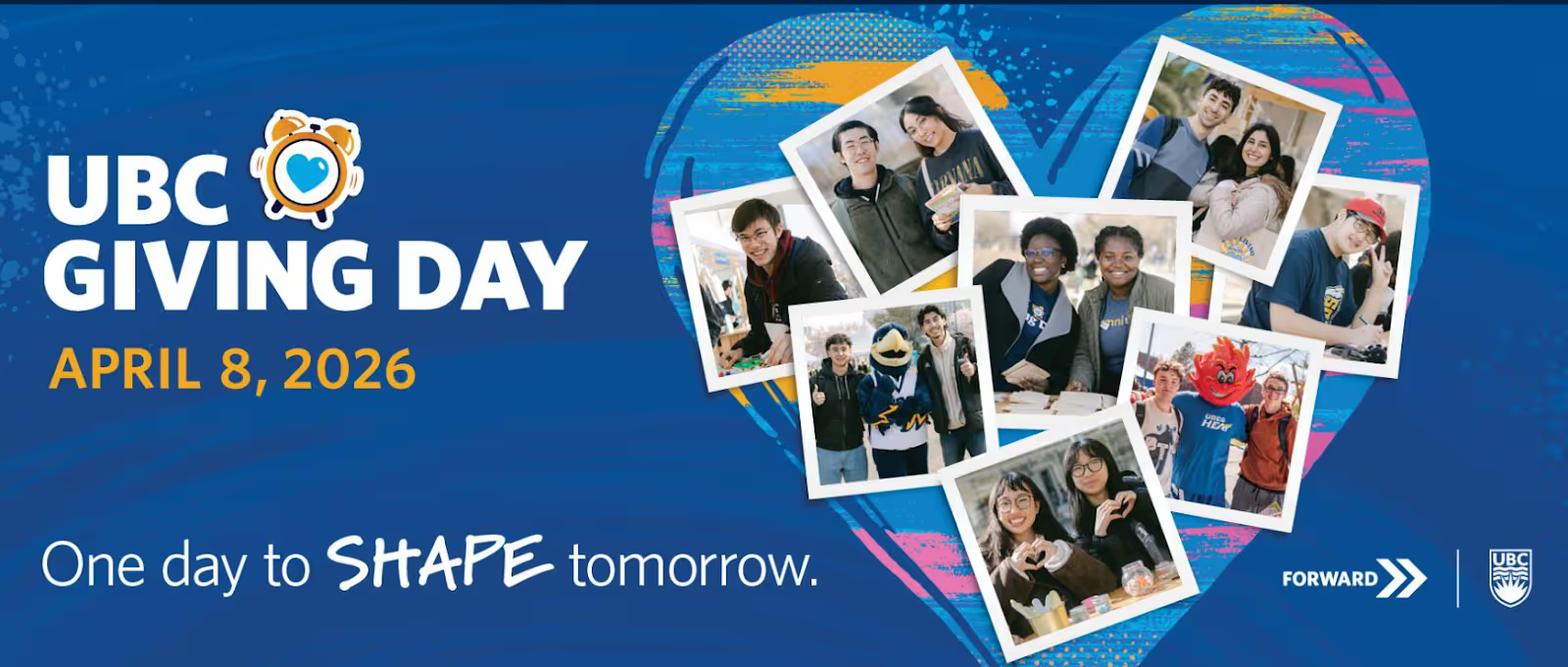
Once students are engaged with the event, the donation ask lands in a completely different context.
This format works particularly well as part of a broader giving day. Pair it with team challenges, faculty matching gifts, and a leaderboard, and the physical activity feeds energy into the digital campaign all day.
What you need to pull this off: a giving day or campaign framework to anchor it to, QR code generation (free tools work fine), trivia questions tied to your institution's history, prize sponsors or donated items, and a central HQ point for participants to report to.
Channel the energy of a graduating class into a lasting legacy. Let students have a say in where the gift goes, such as scholarships, equipment, or named spaces, which gives them ownership and pride.
Even if the amount per student is usually small, the collective impact makes the difference.
A carnival turns the campus into a high-energy hub where families and neighbors can connect for an afternoon. The fundraising success comes from a "pay-to-play" model, using a mix of game booth tickets, local food stalls, and raffles, which brings in much more than a simple entry fee would.
A 24-hour giving sprint is a powerful way to rally your alumni around a date that actually matters, like homecoming or your school's founding anniversary. Using live trackers and friendly department competitions keeps the energy high and makes the deadline feel real.

These are your "big swing" formats: signature events that have the potential to define your brand. They require more coordination and a larger team, but the payoff in high-level sponsorship and visibility can work wonders for your fundraising goals.
Turn your fundraising event into a celebration of what your alumni and your institution do best. By letting graduates demonstrate their skills or share their work, you create an experience that feels like a reunion or professional showcase with a donation ask that follows.
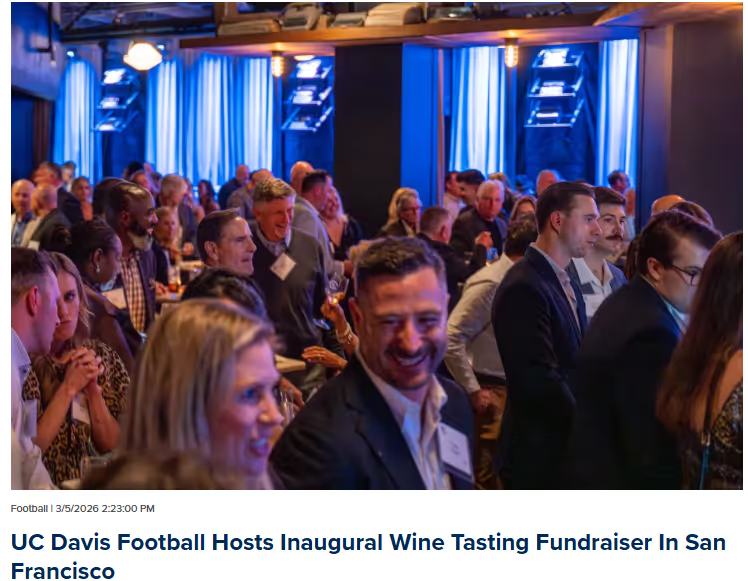
In March 2026, the UC Davis football program in California skipped the usual "meet the coach" dinner and launched an inaugural wine-tasting fundraiser in San Francisco. They invited alumni winemakers to pour their own vintages, turning a donor event into a high-end showcase of what a UC Davis degree can actually produce. The event was a massive hit, raising over $100,000 in a single night. Because the "entertainment" was provided by the alumni themselves, the evening felt more like a professional reunion than an ask.
The takeaway here is to lead with your institution’s "superpower." Whether your school is known for tech, nursing, or the arts, find a way to let your alumni show off their expertise. By keeping the focus on alumni success, you naturally attract donors who value networking and peer-to-peer connection.
What you need to replicate this for your institution: alumni "experts" willing to showcase their work, a venue that fits the theme, and a guest list targeted at mid-to-senior level professionals.
Create a fundraiser that does double duty: supporting your mission while creating networking opportunities for donors, alumni, and local businesses alike. Signature events build momentum and credibility over time, giving participants something to look forward to year after year.
Stockton University’s Golf Classic is proof that a strong tradition can weather any storm. Even a rainy day in 2024 didn't stop 200 golfers, local business owners and faculty, from raising over $105,000 for student scholarships. They topped that the following year by raising $115,000, showing just how much momentum a signature event can build.

The real draw here is the connection: local businesses value networking and visibility, while participants enjoy a consistent, engaging experience that ties directly to student impact.
Once an event becomes a tradition, people look forward to it, so consistency is key. You just need to make sure the networking is worth the ticket price. If you lock in sponsors early to cover the overhead, every dollar raised on the day goes straight to your students or community.
What you need to build your own version of this: A local venue partner, a sponsorship packet for businesses, and a clear "fund-a-need" moment during the post-event lunch or dinner to tie the day back to student impact.
A benefit concert works best when the artist has a real connection to your mission, like an alum, a local band, or even a talented faculty member.
You can layer in ticket sales and merchandise, but a live giving moment in the middle of the set is what draws in the funds. To keep the overhead low, try to land a sponsored venue or a corporate partner before you sign any contracts.
A friendly cooking competition is a warm, comforting setting with the power to bring a community together. Use entry fees for the chefs and "taster" tickets for the guests to keep your budget minimal while the energy stays high. If you can get a local business to sponsor the prize, you’ve got a repeatable event that people will look forward to every year.
A dodgeball tournament or an obstacle course taps into natural rivalries, like faculty versus students or department against department. These competitive formats drive sign-ups on their own, and you can easily add spectator tickets for the crowd.
Give your community a specific number to hit and a clear reason why it matters, like funding one specific scholarship or hitting a 40% participation rate. These targets give your team a clear goal to chase and show donors exactly how much more is needed to get you across the finish line.
Every hurdle between a donor’s decision and their gift costs you support. Stick to one clear CTA, a mobile-friendly page, and a two-minute checkout. If people have to search for the donation link, many will simply give up.
Most events are under-promoted. A six-week head start followed by a final push is the floor, not the ceiling. Word-of-mouth needs time to build, so give your community plenty of room to spread the news.
A match simply doubles every donation, making even a small gift feel like a big deal. It gives donors the satisfaction of knowing their money is doing twice as much work for the cause.
Long lines and tech glitches leave a bad taste that sticks around after your campaign is over. Test the process early and walk your volunteers through the flow so everything is seamless on the day.
Send a note while the energy is still high. A message that shows real impact is your best tool to make those donors come back, year on year.
The dollar amount is only half the story. Tracking new donors and retention rates tells you if your community is actually growing, which is the number that matters most for the future.
The best event is the one your community actually shows up for. Peer-to-peer campaigns, giving days, and events with a social or competitive element such as trivia nights, walk-a-thons, team challenges, scavenger hunts, tend to perform consistently well across the board.
High-ticket galas, golf tournaments, and large-scale peer-to-peer campaigns tend to raise the most. But they also carry the most overhead and planning time. For most teams, a well-run giving day tied to a strong matching gift will work just as well, and it's easier to repeat year on year.
Trivia nights, 50/50 raffles, bake sales, and virtual walks are all manageable with a small crew and a limited budget. If you're working in a school or university setting, incentive-based models tend to drive strong participation without requiring much overhead.
Online auctions, peer-to-peer livestream campaigns, virtual walks, and gameshow-style trivia nights all translate well to a digital format. The key is building in enough social energy to recreate the momentum of an in-person event.
Fun runs, senior giving campaigns, talent shows, and alumni giving days all have strong track records in school and university settings. Incentive-based models and peer-to-peer team competitions tend to drive higher participation than a straight donation ask.
Galas, community walks, and service-based fundraisers like shoe drives consistently perform well. The common thread in the strongest nonprofit events is that the mission stays visible throughout.
Coming up with a great fundraising event is just the start. Getting people to register, donate, and come back year after year is the true measure of a successful campaign. That’s where the right tools make all the difference.
Almabase brings together everything your team usually has to juggle across different systems: event management, online giving, donor engagement, and reporting. You can build giving pages for each campaign, handle registrations, and send targeted emails, all in one place.
For giving days and alumni campaigns, having everything connected means less time on manual admin and more time focusing on the parts of fundraising that actually need a human touch. You can see who participated, which donors are giving for the first time, and how each campaign performed. Having all this information in one place helps your team understand engagement patterns, identify what works, and plan stronger fundraising efforts.
If your team is running events across a patchwork of tools, a lot of effort doesn’t add up. Almabase is built to make it all stick.
Want to see how it all comes together for your next fundraiser? Request a demo today.
Table of Contents
Subscribe
See how modern advancement teams bring alumni engagement and fundraising together.
Alumni are more online today than ever before, and it’s important for your team to meet them where they are. While in-person events should remain the key focus, there are a variety of virtual alumni event ideas that remove the logistics and cost associated with traditional events that you should definitely consider for your event calendar.
With around 52% of event professionals claiming to have just as much attendance in online events, they’re clearly a great tool for community building.
On the flip side, it’s harder to emulate in-person alumni engagement activities in terms of meaningful connections and immersion. Alumni events require incentive to not be ‘just another virtual engagement event’.
Today, we explore 10 virtual alumni event ideas that focus on meaningful engagement and nurturing relationships, along with tips and best practices.
For both offline and virtual events, attendance is crucial. But by itself, it doesn’t give insights into the outcomes achieved or the relationships formed. Most institutions want an active alumni network that engages with them constantly. For any event to be successful, there are 3 important goals to be achieved:
Planning virtual engagement events effectively requires a great event management platform that lets you handle things end-to-end, from outreach to follow-up campaigns and everything in between. To realize the goals outlined earlier, keep the following pointers in mind while designing a virtual event:
Virtual engagement events come with their own set of unique challenges. Most of these are centred around fatigue, lack of engagement, and availability. The major ones that need to be addressed are:
Here are 10 high-engagement virtual alumni event ideas.
At any given time, various alumni are scaling their careers or building businesses. A big perk of being part of an alumni community are the opportunities to learn from industry leaders and entrepreneurs, especially for the ones early in their careers.
You can cover a variety of industries and niches, increasing inclusivity and participation.
Pointers and tips:
Engagement suggestion: Tie the event into another program. For example, assign the speaker as a mentor to interested alumni, or create a poll for gauging interest on further sessions.
For a lot of alumni, college events and competitions, especially sporting ones, were an integral part of campus life and tradition. University teams draw forth a sense of pride, competitiveness, and belonging even after graduation, as is evident from events like March Madness every year.
They lean into nostalgia, and attract alumni of all ages.
Pointers and tips:
Engagement suggestion: Have a virtual breakout session post-match with current and previous members of the team to drive conversations.
Nothing beats a good old fashioned happy hour for candid conversations and forming connections. Alumni can bring each other up to date on their lives, and old friends can reminisce on their university days. It’s usually hard for alumni spread across the world to meet each other informally, and a virtual happy hour makes it easier.
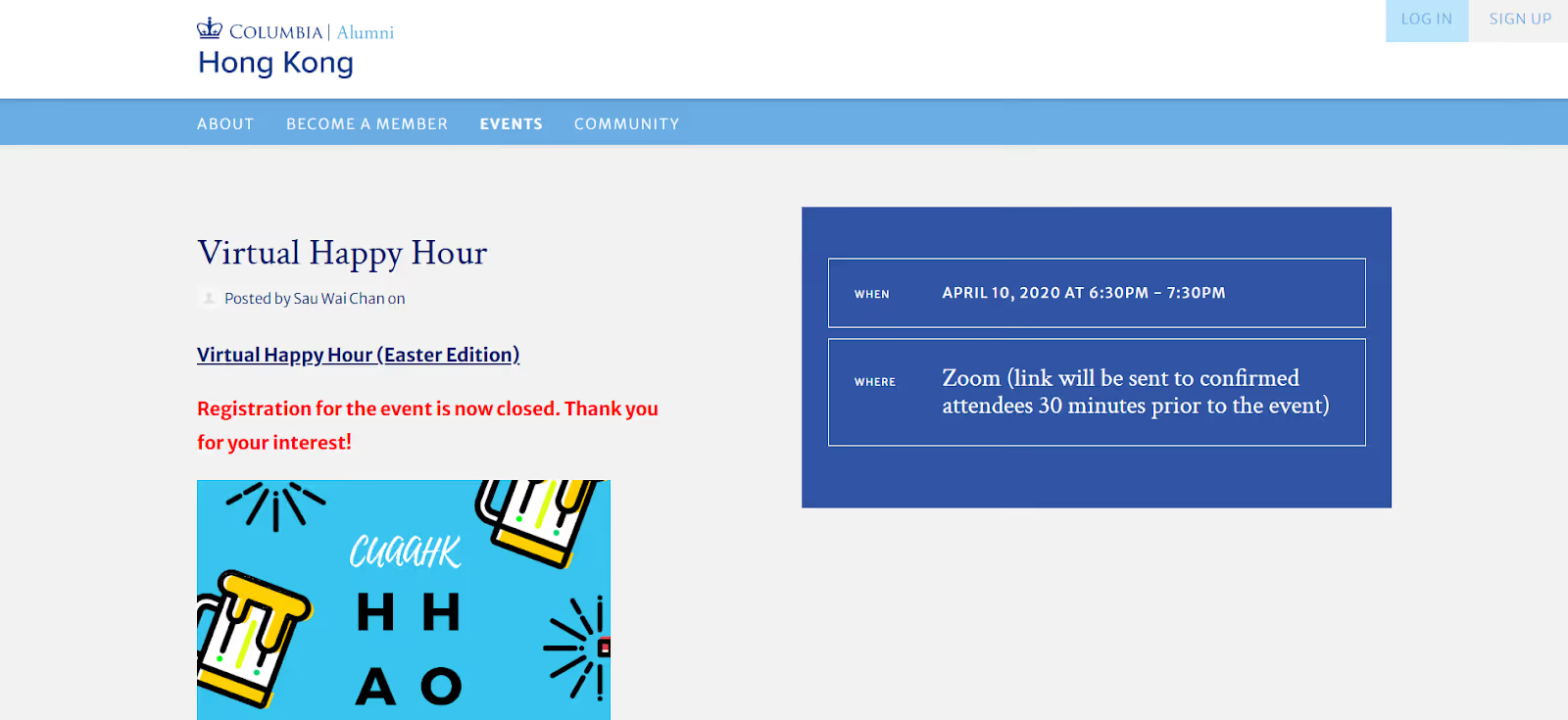
It can also be a way to highlight new initiatives and changes in your institution in a casual setting.
Pointers and tips:
Engagement suggestion: Incorporate a fun, low-stakes party game to make it engaging, something like ‘never have I ever’ is great for breaking ice.
Networking is a powerful tool for a lot of alumni, and offline, it is a very straightforward process. However, alumni are spread across various industries, roles, and geographies, making it difficult for them to network frequently.
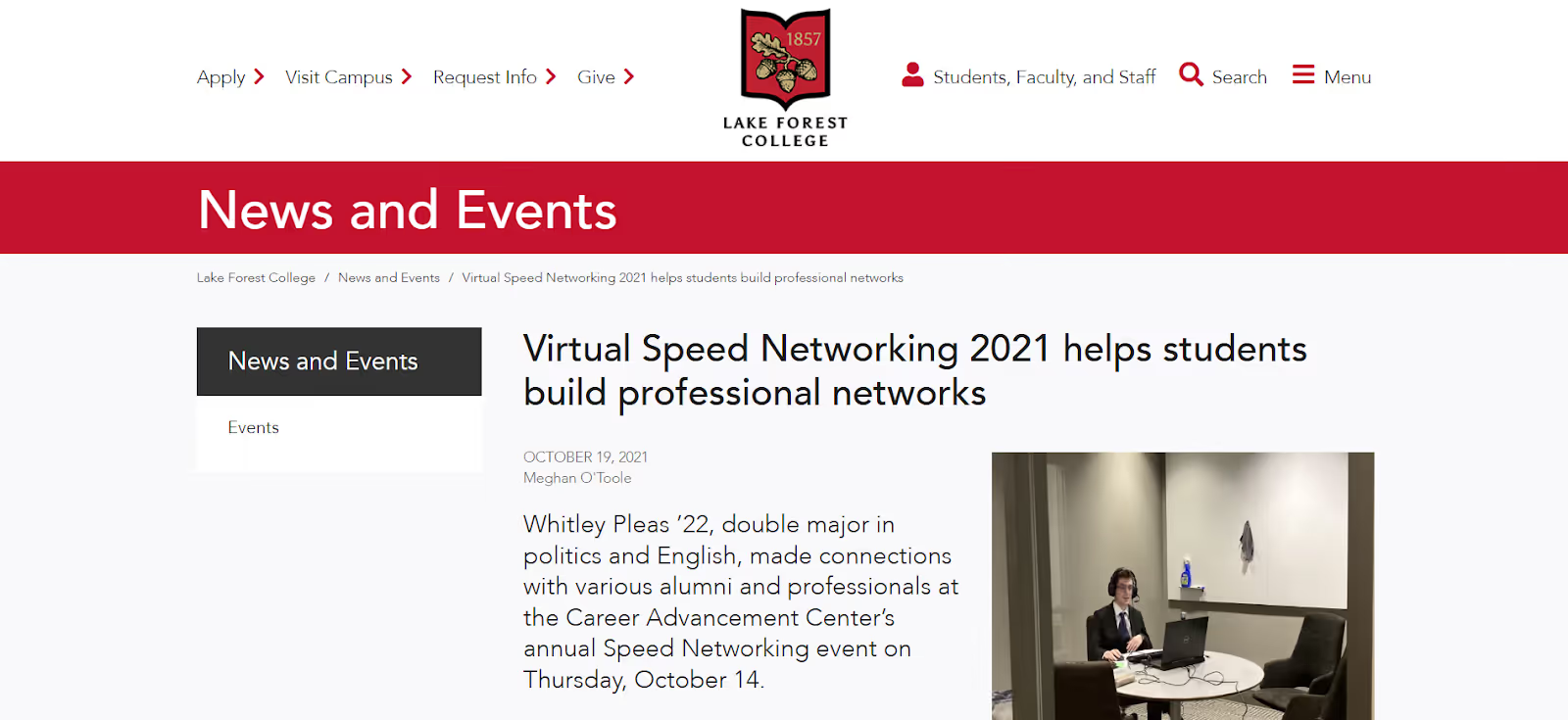
By pairing up early-career alumni with experienced professionals in a particular field, virtual speed networking sessions facilitate knowledge transfer and expose alumni to multiple mentors in a short time period.
Pointers and tips:
Engagement suggestion: Provide a fun, random fact about each person at the start of every rotation (their most ridiculous collection, a niche hobby) to reduce friction and keep things light-hearted.
For a number of topics like career strategy, job-seeking, business challenges, industry trends, current affairs - group discussions are an excellent way to gain new perspectives, engineer solutions, and stay up to date with the best practices.
Virtual roundtables with compact groups drive impactful discussions, while still being casual and engaging.
Pointers and tips:
Engagement suggestion: Create live polls throughout the session based on what’s being debated. They provide direction and it’s interesting to learn people’s opinions on matters.
Running any of these events? Almabase helps you manage invites, track engagement, and automate follow-ups so your team spends less time on logistics and more time building relationships.
Book a Free Demo | Explore the Platform
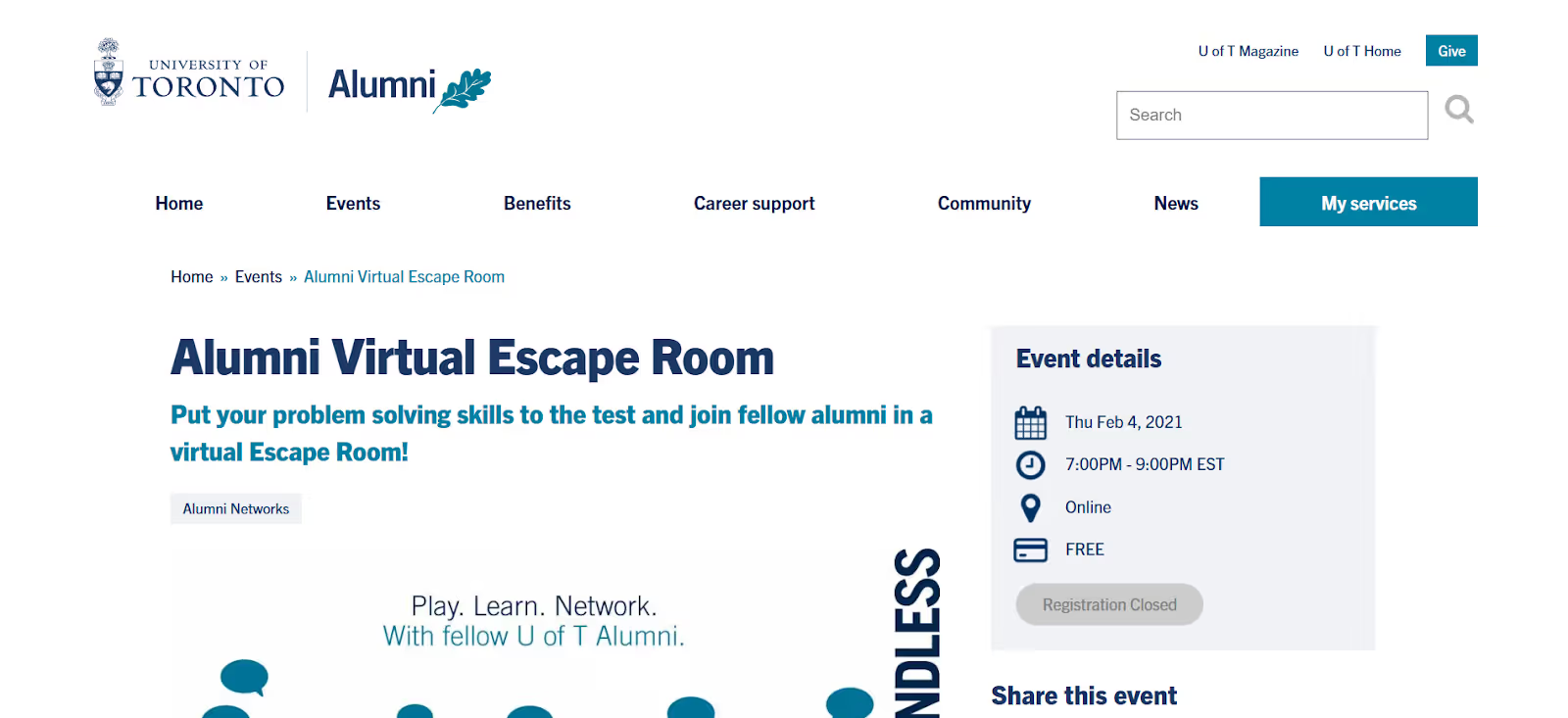
For alumni who may not naturally gravitate toward structured networking events, this format offers a fun way to interact and collaborate with others. It is especially effective for younger alumni and recent graduates.
Pointers and tips:
Engagement suggestion: Include one puzzle related to university trivia or traditions. It sparks nostalgia and gets alumni reminiscing together.
Trivia nights are simple to execute and highly engaging when done well. They appeal to alumni across generations and are particularly effective for building camaraderie among larger groups.
Trivia themes centered around campus history, pop culture, industry trends, or regional topics can keep things interesting and encourage participation.
Pointers and tips:
Engagement suggestion: Include a lightning round where alumni submit questions about their time on campus. It turns the audience into participants and adds a personal touch.
Skill workshops provide clear professional value and are particularly appealing to alumni focused on career growth or transitions. Sessions can cover a wide range of topics such as leadership, entrepreneurship, emerging technologies, financial planning, or personal branding.
Alumni who have developed expertise in these areas can serve as facilitators, strengthening peer learning within the community.
Pointers and tips:
Engagement suggestion: Ask attendees to submit one real challenge they are currently facing related to the skill being taught, and have the facilitator address a few of them live.
Reunions are a staple of alumni engagement and are often centered around nostalgia and reconnecting with old friends. While traditional reunions are usually held on campus, virtual versions allow alumni from around the world to participate without the need for travel.
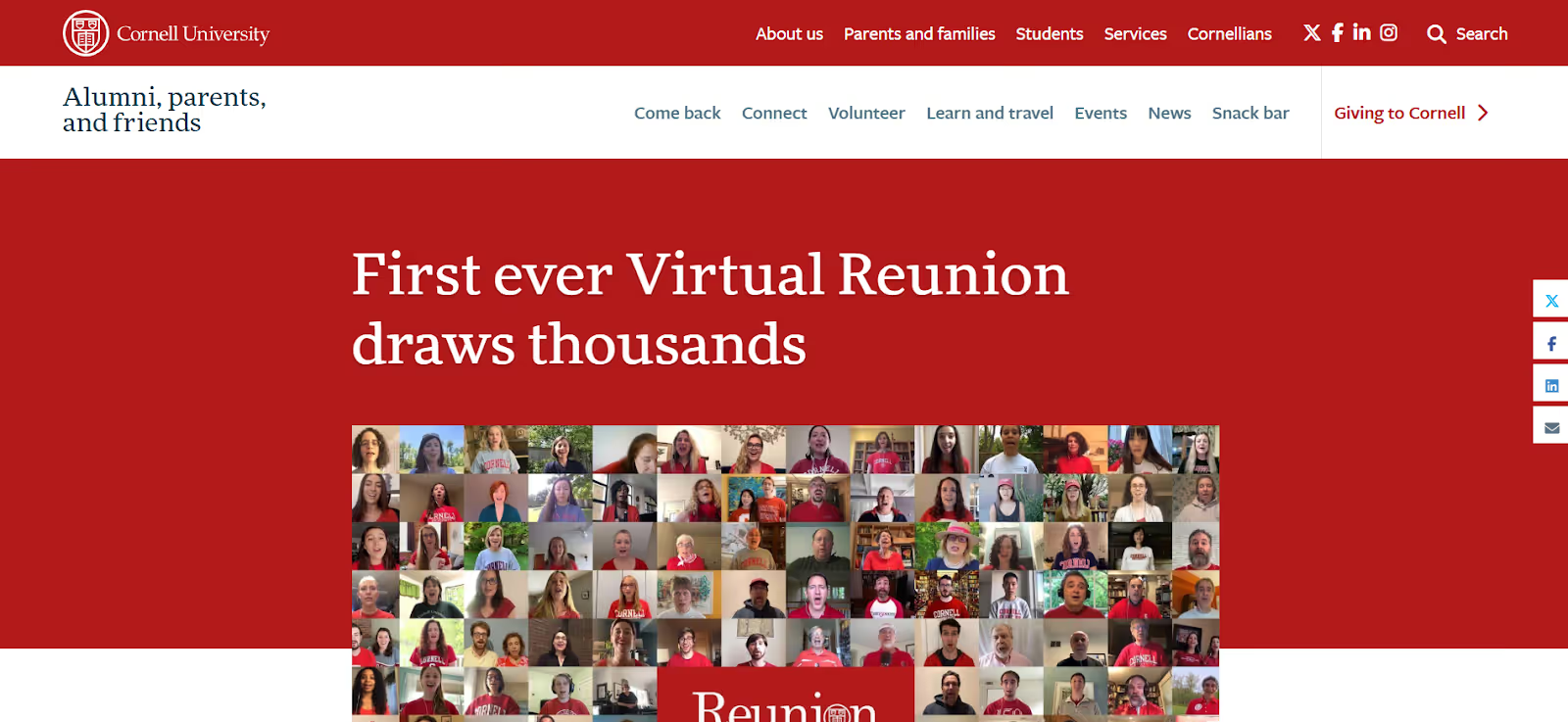
This format works well for milestone batches celebrating five, ten, or twenty years since graduation.
Pointers and tips:
Engagement suggestion: Ask attendees to bring an old photo or memory from their time at university and briefly share the story behind it.
Career-focused discussions remain one of the most valuable formats for alumni engagement. Panels featuring alumni from different industries or career stages provide insights into evolving job markets, emerging opportunities, and professional challenges.

These events are particularly useful for students and early-career alumni seeking guidance.
Pointers and tips:
Engagement suggestion: Ask panelists to share one unconventional career decision they made and how it shaped their journey. It often leads to unique perspectives and interesting discussions.
These virtual alumni event ideas can help institutions foster meaningful connections even when alumni are spread across the world.
Check out how Misericordia University transitioned to a virtual homecoming amidst the pandemic here.
As with any event, attendance still remains the biggest challenge while conducting virtual engagement events. You could plan the perfect event, come up with innovative ideas for alumni engagement, but its success is dependent on pre-event marketing and getting alumni to show up.
Generic emails and a couple of social media posts just don’t cut it anymore. For your event to stand out, you need a multi-channel approach that highlights the event’s value, or the chance to network productively.
Using an event management software to segment alumni based on data helps you design a targeted outreach strategy, and integration with advancement CRMs like Blackbaud's RE NXT streamlines the process. Here’s a quick walkthrough for setting up a killer outreach campaign:
Tracking event metrics go a long way in identifying what worked and what didn’t. Engagement data is very helpful to determine successful formats, group sizes, and scheduling. Since not all data is useful, track intentionally so data doesn’t end up becoming noise. Focus on metrics alumni leaders care about:
What exactly do you need to run virtual events smoothly? A database of alumni along with their details and interests (alumni directory), an event management software, and tools for outreach and email campaigns (that can pull lists and data from the CRM).
Almabase’s event management module integrates with your CRM, and has all the features necessary for end-to-end event management – bringing together outreach, logistics, and data into one holistic platform.
Here’s how Almabase helps you run virtual engagement events:
Your next virtual alumni event could be your most engaging one yet.
Interested in exploring how Almabase can enhance your alumni engagement activities? Book a free demo with Almabase here.

10 Virtual Alumni Event Ideas to Drive Engagement (2026)
A collection of neat virtual alumni event ideas to help you and your team plan the perfect online alumni event to engage and drive giving.
Lorem ipsum dolor sit amet, consectetur adipiscing elit. Suspendisse varius enim in eros elementum tristique. Duis cursus, mi quis viverra ornare, eros dolor interdum nulla, ut commodo diam libero vitae erat. Aenean faucibus nibh et justo cursus id rutrum lorem imperdiet. Nunc ut sem vitae risus tristique posuere.
March 24, 2026
12 minutes
We’ve talked in length about some good events and the event management or fundraising tools that can make them succeed consistently. This time, we’re taking a step back and at the basics of fundraising event planning.
In this blog, we’re going through the essentials to turn your fundraising ideas into successful events that don’t just reach your targets but create powerful memories to strengthen your cause. Let’s get started.
As with every advancement initiative, the goals are where everything starts and leads back to. We’ve talked about the importance of Smart, Measurable, Attainable, Relevant, and Time-based (SMART) goals in a past blog. While creating the goals that will define your fundraising event, keep the following questions your attendees would have in mind:
Apart from these questions, your available staff time, target audience, budget, and other upcoming institution events will play a big part in shaping your scope for your event. Take your time with this step as the right goals are the foundation of a successful event.
Depending on your audience, budget, and goals, you may choose from a variety of fundraiser ideas, such as:
No two events are truly alike, and depending on the success of your fundraiser, a bold new approach might just be your next hallmark annual event.
As you’re not just planning any event, how you want to introduce fundraising to your event is going to be very important. Remember, a fundraising event can have multiple revenue streams. For example:
Nowadays, institutions usually look to include diverse fundraising methods in their fundraisers. This is also where pairing the right event with the right fundraising method can greatly impact your raised amount.
Now that you know what type of event you want as well as how you’re going to raise funds during it, it’s time to put the right tools to work. Pretty much every modern institution uses a fundraising platform to streamline their events and fundraisers. These tools help you:
and much more.
Platforms like Almabase help streamline these logistical elements, allowing you more time and energy to focus on fostering genuine connections with your donors.
Now that the building blocks are coming into place, it’s time to decide on arguably the most important part of an event, the people. You’ll want to form a committee of people to take on and help with specific parts of the event including but not limited to:
Apart from the above, you’ll want to think about corporations, non-profits, and associations that may want to play a pivotal role in helping you bring your event to life.
Now that all the bits and bobs are there, it’s time to lock in a specific place and time. It seems fairly basic but keep in mind that:
You’ve got all the info ready to go. But it doesn’t mean anything if it doesn’t reach the right audience. And even if it does, what type of messaging should they receive and when should they receive it so that they truly feel like attending or giving? That’s where your event marketing comes into play. You’ll want to make use of channels such as:
and much much more to get your event and your cause heard. Make sure that your marketing emphasizes how your fundraiser can help your cause of choice.
Even the most tight-knit plans have a chance of going wrong. A 10-minute delay caused by faulty audio equipment might just be that small little factor that disinterests a potential first time donor.
These are good things to keep in mind but ultimately, your contingencies may have to be just as unique as your event.
Nowadays, the event doesn’t truly end when the last guest leaves. Following up with attendees is crucial to maintaining their engagement and potentially turning them into loyal supporters. Post-event action items include:
Gratitude and proactive follow-ups go a long way in building long-term relationships with your supporters.
The ultimate measure of a successful fundraising event isn’t just the dollar amount raised but also the connections made and how deep those connections go over time. To turn your attendees into loyal supporters, you’ll want to consider some steps such as:
By nurturing these relationships, you're creating a network of passionate supporters who are more likely to advocate for your cause and contribute to future initiatives.
Fundraising events have certainly not gotten any easier to plan and host in the past few years. Donors and alumni in general simply expect more, and you can’t just rely on your long-time donors alone. However, we hope that this guide, despite just scratching the surface, was able to give you some ideas for your next fundraising event.
If you’re looking for a partner to help you manage events, engage alumni, and raise funds, do give us a shout and we’ll happily walk you through how we can help with your own personalized demo! ⤵️

How to Plan a Fundraising Event to Maximize Donations
Learn how to craft successful fundraising events step by step. Maximize donations with actionable strategies and engage donors meaningfully.
Lorem ipsum dolor sit amet, consectetur adipiscing elit. Suspendisse varius enim in eros elementum tristique. Duis cursus, mi quis viverra ornare, eros dolor interdum nulla, ut commodo diam libero vitae erat. Aenean faucibus nibh et justo cursus id rutrum lorem imperdiet. Nunc ut sem vitae risus tristique posuere.
Beyond the homecomings and reunions, your alumni event calendar needs a whole host of events to round out the year and keep them engaged. These alumni events can either be one-off ideas or recurring occurrences that become a key part of your institution or organization’s brand.
Today, we’re helping you conceptualize those events with some alumni event ideas that you can host as their own thing, or alongside other events. So before we bore you like a nervous host, let’s get straight to the ideas!
✒️ Author’s note: The examples we list throughout this blog are purely appreciative and not a result of any promotion or partnership. If you know some good advancement work that you think deserves more attention, please let us know at marketing@almabase.com!
Let’s start with one of the more time-tested ideas that has evolved significantly: family weekends. Depending on your institution’s event calendar, these can be small one-time picnics, fairs, showcases, etc. or recurring major events that multiple generations of alumni come to appreciate over the years.

Family weekends are largely in-person although virtual or hybrid elements can certainly be introduced especially if you want to have your global alumni feel part of your event.
💡Looking for inspiration for your next family weekend? Check out these upcoming family weekend schedules!
- Syracuse University (link)
- University of Arkansas (link)
- Cornell University (link)
- Washington University in St. Louis (link)
- University of Colorado Boulder (link)
A popular notion that’s taken root over the past couple of decades is the fact that learning in your alma mater doesn’t stop after graduation. With job boards, mentorship programs, and placement opportunities, institutions have become springboards for career growth.

Career and skill-focused workshops can take this direction to the next level by providing valuable networking and upskilling opportunities (especially for recent graduates) that many people across industries often have to pay money to access.

Philanthropy is not just about financial donations. Service-based events attract alumni who want to make a tangible difference and live out the institution's mission. Think of a day of service centered around a theme that reflects your institution’s values or a current campaign. Examples include an environmental cleanup at a local park, a literacy drive for local schools, or a build-a-thon for a community housing project.
With both physical and mental health awareness becoming more widespread, institutions can lean into this by providing health and wellness focused events. These can be something educational (webinars, awareness sessions, etc.) or activity-focused (marathons, healthcare visits, care center volunteering, etc.).

Healthcare or health department alumni associations in particular are well suited for these events but they can extend their reach and invite more participation by collaborating with other departments or associations.
💡 Over time, these events can become recurring series and form support groups
For institutions that want to take their alumni’s career advancement a step further, an alumni venture acceleration event is a great idea to show how much your institution cares about inspiring innovators and creating jobs.
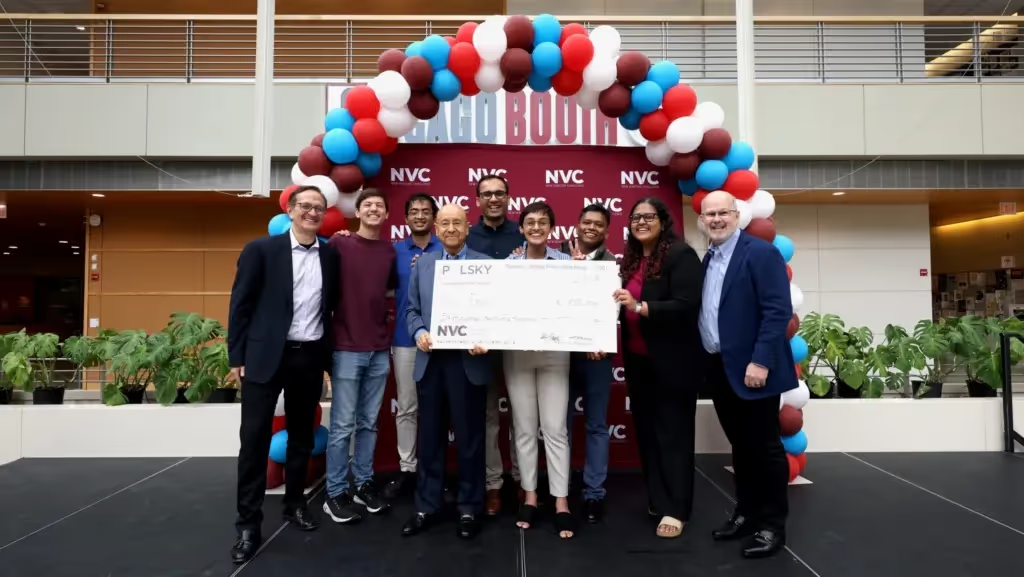
Take for example the Edward L. Kaplan, ‘71, New Venture Challenge (NVC) by the Polsky Center under The University of Chicago (that’s a mouthful 😝). The NVC invests more than $1 million in startups each year through the generosity of donors and investors. As a result, it claims to have graduated more than 600+ startups and created thousands of jobs in the process.
💡You can start small and help small or local alumni initiatives or businesses get their footing. An accelerator program doesn’t necessarily need to have a “shark tank” feel to it.

A casual, family-friendly, and low barrier of entry event you can consider is to host a movie screening on a suitable field, park, or similar campus area. It's an easy way for alumni to reconnect with the campus in a relaxed setting and is highly suitable for families and recent graduates. The communal experience of watching a film under the stars also makes for great material to promote on your social media channels.
💡 Movie screenings can also be an additional event on top of other events, say, a family weekend picnic or scavenger hunt.
Offer alumni exclusive access to a place not open to the general public. This could be a tour of a cutting-edge university research lab, the athletic team's new training facility, the university's special collections archive, or a local landmark led by a revered alumnus.

Looking outside the institution, you can plan small-scale outgoings for alumni to visit showcases, performances, museums, etc. You can book meals and other activities around the outings themselves so that your participants have time to bond and share their experiences.
💡 Need inspiration on what kinds of outings you can consider? Here are some examples you can look at:
- Wagner College - Moulin Rouge Alumni Outgoing
- Brown University - Private Tour of Stanford’s Cantor Museum
- Columbia College, NY - Asian Columbia Alumni Association’s Annual Lunar New Year Banquet
- USF Chicago Alumni Chapter - Millennium Park Summer Music Series
- Joint Ivy League (and select other university) Alumni - SF Opera’s Performance of Mozart’s Idomeneo
Based on your institution’s cultural heritage or alumni talents, you may be able to create a variety of incredibly personalized events for both general and specific alumni groups.

Dinner events can be surprisingly flexible. From small, recurring dinners for local alumni to reunion dinners as part of award ceremonies, you can make them as grand or as budget-friendly as you need them to be. These dinner events are also a great opportunity to build partnerships with local businesses and services. Even better if you can partner with an alumni-affiliated business!
Not all events need to be large parties or massive volunteering opportunities. Sometimes, a simple unfiltered town hall-style meeting between alumni and institution leaders or prominent alumni can help build trust and rapport within your community.
The best part is that these events can just as easily be in-person, virtual, or hybrid, making them one of the more flexible ideas on this list. It can also be a great follow-up to some of the other ideas we’ve presented throughout this list.
💡 These sessions can be repurposed into podcasts and key snippets can be used for other marketing material.
Pretty much any major alumni event today is powered by tools that handle minute details such as ticketing, giving, event pages, and more. Almabase offers a zero-code yet advanced set-up environment that streamlines how you plan your events from setting up pages and forms to integrated communications and enhancing guest experiences.
Yet Almabase is just one of many options available for advancement teams today. Depending on your needs and resources available, you may prefer a specialized tool just for events, or an integrated tool for which event management is just one of many modules.
Events remain one of the core pillars of alumni and donor engagement and the ideas and tools behind them have only continued to evolve. It’s certainly heartwarming to see that people and their experiences remain the ultimate goal of events and advancement teams as a whole.
If you’re looking for a partner to level up your upcoming events, request a personalized demo with us and we’d love to help!

10 Engaging Ideas for Your Next Alumni Event
Looking for ideas for you next alumni event? We've got you covered with plenty of creative ideas that we've found from institutions in recent years.
Lorem ipsum dolor sit amet, consectetur adipiscing elit. Suspendisse varius enim in eros elementum tristique. Duis cursus, mi quis viverra ornare, eros dolor interdum nulla, ut commodo diam libero vitae erat. Aenean faucibus nibh et justo cursus id rutrum lorem imperdiet. Nunc ut sem vitae risus tristique posuere.

.svg)

.avif)
.webp)