Beyond auctions, event tickets, and merchandise sales, here are some strategies you can add to your homecoming 2024 fundraising efforts.

Homecomings are usually a great opportunity for educational institutions to raise funds. With many alumni returning and campus spirits high, we’re sure that most institutions are already deep into their preparations already.
While auctions, themed events, merchandise sales, and event ticketing are all pretty much part of every institution’s homecoming inventory today, we’d like to introduce you to some of the less popular but upcoming ways that can help you get the most out of your fundraising efforts this homecoming season.
Take advantage of the community spirit of homecoming with a P2P fundraiser. These fundraisers allow your supporters to create their own pages where they can reach out to their network of friends, family, and colleagues. This is a great way to promote trust and get your active supporters more involved in your fundraising. Check out our blog earlier this year to learn more about P2P fundraising and how to use it effectively.
Over the past few years, matching gifts have emerged as a great way to maximize donations. Segment your potential donors that have matching gift opportunities and personalize your strategy accordingly. They are also a great way to celebrate the career success of your alumni.
While there is no substitute for physical presence, enhancing your events with virtual or hybrid capabilities will go a long way in drawing in interest and donations from alumni who cannot attend your homecoming events in person. For example, you can live-stream your homecoming parade through a platform that allows online donations. Be sure to make your virtual attendees feel included. They might just be tempted to make the trip next time!

Organizing a Giving Day during your homecoming is not a new thing. However, alumni today want to see more value out of their contributions. You can make your Giving Days more intriguing by matching donations, highlighting donors and recipients, or offering exclusive benefits such as tickets or merchandise to donors.
If your institution has a giving society, homecoming is a great opportunity to give back to their generosity by providing exclusive benefits such as discounts, free access, or extra tickets to share. If you don’t have one, homecoming is still a great opportunity to build one, as it provides a good opportunity to find out your most engaged and generous donors. The goal with giving societies and homecoming is to foster a sense of value and gratitude towards your most active benefactors (or to begin that path).
With so many people involved, your homecoming events are a great opportunity to announce or promote your new initiatives, such as mentorships, career partnerships with businesses, scholarship funds, or a crowdfunding campaign. While not a direct fundraising strategy, they are a great opportunity to inspire your alumni and help them visualize the value of their contributions, ultimately inspiring loyalty and support.
Even beyond your fundraising efforts, your homecoming 2024 is an invaluable step in your alumni relations efforts. By having the right infrastructure in place, you can collect valuable insights, user touchpoints, and feedback to make your next homecoming even better.
With that, we hope we’ve given you plenty to think about as you prepare for an exciting homecoming season. If you are done with or in the middle of one, we hope we have inspired some additional innovation through our suggestions.

Table of Contents
Subscribe
See how modern advancement teams bring alumni engagement and fundraising together.
Homecoming or Alumni Weekend days are one of the most significant events in an institution's calendar. These are opportunities to create memories and meaningfully engage with alumni across age groups, gather up-to-date data, as well as build lasting relations, hoping they’ll come back later for another milestone event.
As an advancement professional, we understand that you’re constantly looking for ways to improve engagement, retention, and fundraising drive.
Here's how some colleges leverage their creativity to make the most out of their homecomings and alumni weekends/reunions.
The Robert Wesleyan College Homecoming is a weeklong extravaganza of all things fun.
They have an exciting array of events planned for alumni and students alike, from live music performances and soccer games to reunions and awards ceremonies.
They also have panel discussions on navigating your next career change for middle-aged alumni, brunch and campus tours for older alumni celebrating their 50th reunion, and giant lawn games and an inflatable obstacle course for the younger ones. Truly alumni-centric!
But don't take our word for it—just look at all these events.
Everyone knows a party is all the more fun when you’re around someone you know. Similarly, the most effective way to get more alumni to attend your event is to ensure you know who else is attending.
Greenwich Academy leveraged this and displayed who else is attending the event by class years. This created FOMO for those who couldn’t attend and encouraged more alumni to show up!
.avif)
.gif)
Yes, that was our reaction to seeing the Homecoming schedule of the College of Idaho.
When all of us were on a break from the real world, cooped up at home in 2020, the College of Idaho hosted a friends-themed Homecoming - “The one where everyone stays home.” They were on point, from the color schemes to the events and messaging!
.avif)
Institutions often struggle to build and maintain a consistent relationship with their alumni. In an interesting response to this problem, NCSSM encourages alumni to volunteer as class representatives. These reps serve as ambassadors, help bridge the communication gap between the alumni office and alumni, and encourage their peers to participate.
You can see how they did it, here.
Homecoming is an exciting event for students, alumni, and parents alike. Homecoming 2020 at the University of The Ozarks struck the perfect balance of events for all its constituents through an amalgamation of three major events that are celebrated at the University - Alumni Weekend, Family Weekend, and Homecoming.

Trinity University’s Alumni Weekend is a three-day spectacle full of activities that host anywhere between 1000-1500 alumni across all age groups. They host their signature event -Block Party Reunions by allocating dedicated space for various class years.
Another cherished occasion when alumni and faculty members can meet is the ‘Fiesta with Faculty’. Alumni can meet former and current faculty members over a drink and enjoy a wonderful afternoon together. They also invite notable alumni writers and artists to participate.
Also popular is Alumni College. Without the grades and tests, it's exactly like going back to school. Who says learning needs to stop at college?
Here’s where you can find their schedule.
We’ve all heard of experts. But have you heard of Axe-perts? The folks at Misericordia University certainly have!
They have been throwing the best tailgates for years, and it has only gotten better this time. Their Homecoming is a mix of fun activities like Axe-throwing, caricature drawing, balloon art, and DJ music that'll keep everyone entertained for hours. They also honor alumni who've done extremely well academically and athletically.

The Alumni Relations team at Murray State, in collaboration with the Campus Activities Board and Racer Athletics, crafted a week-long hybrid homecoming - Healthy at Home(coming).
It included virtual 5k runs, reunions, campus visits, and more. The week's activities had the Racer spirit screaming from every corner. Healthy competition between the students and alumni made their e-sports tournament a huge hit!
.avif)
Despite being stuck at home during the pandemic, Evergreen State College ensured its alumni and students had meaningful experiences, through their virtual alumni weekend -Return to Evergreen 2020.
It featured four carefully curated programs (breakout sessions) that bring together alumni and faculty leaders to tackle social challenges through the lens of racial justice and equity. Issues such as wealth inequality, immigration, racism, climate change, and gun violence were integral parts of the talks.
Want more such ideas for your homecoming? You can watch our latest LinkedIn Live with Ryan Finnelly (Trinity University) and Mike Gombita (Misericordia University) where we spoke about the factors behind a successful Homecoming event.
.avif)
9 Homecoming Ideas You Can Steal
Here are some tried and tested homecoming ideas to engage alumni of all ages and increase participation in your next homecoming and beyond.
Lorem ipsum dolor sit amet, consectetur adipiscing elit. Suspendisse varius enim in eros elementum tristique. Duis cursus, mi quis viverra ornare, eros dolor interdum nulla, ut commodo diam libero vitae erat. Aenean faucibus nibh et justo cursus id rutrum lorem imperdiet. Nunc ut sem vitae risus tristique posuere.
As humans, we are attracted to narratives. It helps us make sense of the world and connect the dots in things we see and hear about. Storytelling has also become an important aspect of fundraising. Potential donors understandably need a good reason to contribute. Nonprofits that use storytelling in their fundraising efforts have a donor retention rate of 45? That's compared to 27% for organizations that do not focus on storytelling. In this blog, we’d like to equip you with the know-how to turn storytelling into a key part of your next fundraiser.
Instead of simply explaining it, we’d like to provide a couple of examples for you to feel the impact of storytelling:
The University of San Francisco has applied the power of storytelling since 2015 as part of their $300 million comprehensive campaign. By sharing authentic stories about philanthropy, they have engaged more audiences, especially alumni and donors, as they move towards the public phase of the campaign. In 2016 and 2017, the philanthropy stories consistently had a higher readership than other university news, demonstrating the effectiveness of their storytelling approach. Read more about it here.
The John Crosland School in California successfully reinvented its fundraising gala by shifting the focus of the event from being about the school to being all about the kids. They included anecdotes about the kids, their struggles, and their accomplishments in the event program. During the event, they started talking about how the school’s mission would improve the children’s future. During the gala and throughout the dinner, they had pictures of the students rolling on a slideshow. Read more about it here.
These examples are just a small glimpse into the power of storytelling. But how do you reach that point where storytelling gives you the impact you otherwise could? Let’s start by segmenting and personalizing your engagement with your potential donors.
Each alumnus is different, and they are much more likely to donate to a cause that resonates with their work or personal interests. This is where segmentation comes in. To put it plainly, segmentation is the process of creating specific groups of target audiences so you engage them in a way they would prefer. Let’s take an example:
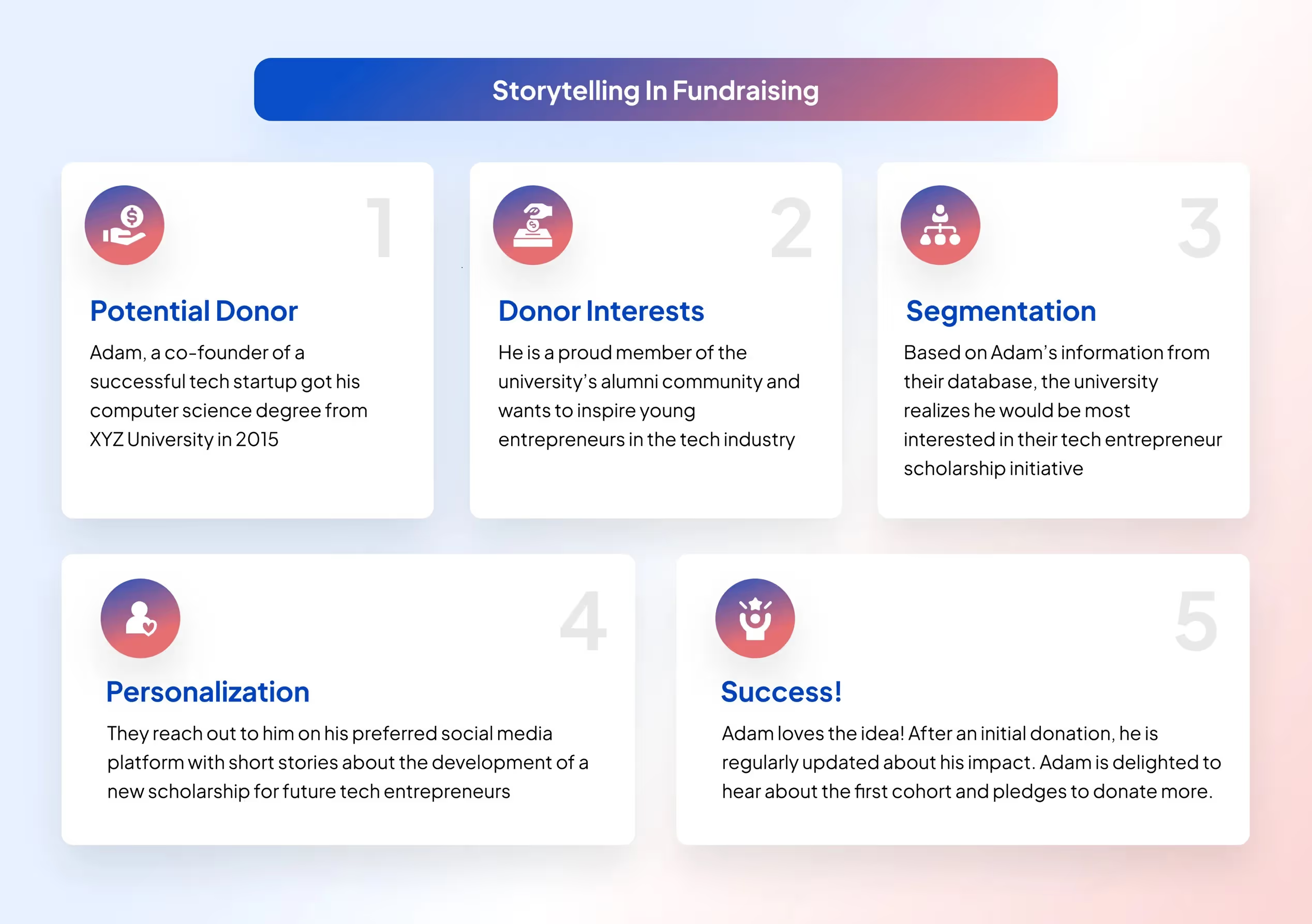
There are countless ways you can tell your story to make it special, but for now let’s take a look at the essential bits. We took some inspiration from this insightful article by Ioan Marc Jones for Charity Digital to outline some of the basic components of a good fundraiser story:
Remember that all things need to lead back to why you are reaching out to your alumni for a fundraiser in the first place. Tie things up by talking about how your fundraiser will help provide the ideal ending before directing them to your CTAs.
Today, advancement teams have a wide array of mediums and platforms to promote their fundraisers. That means there’s just as much choice when it comes to the stories. Our recommendation is to take advantage of all the channels available to you while focusing on your segmented target audiences. A good starting point is to consider your demographics. For example, Gen X and older generations may prefer written communication through email much more than younger generations, who are more open to social media and mobile platforms. Remember that which channel you use forms a part of your storytelling.
Today, a simple donate button won’t always cut it. You can take it a step further by helping your potential donors make an informed decision they will be happy with. Give clear objectives or milestones wherever you can. Let’s say you are fundraising for a mentorship program. Mention how long the mentorship will be, and whether you can guarantee opportunities based on it, or even further plans based on success.
Finally, ensure that your donors do not get left on an island. Keep them updated. Provide milestone updates. Celebrate your successes with them and inform them of any notable updates. Invite them for a big launch or send gifts. After all, the ultimate goal is to bring alumni closer to their alma mater.
This proactive approach to fundraising also creates better opportunities in the future. You could build online communities based on donor segments, a great source of user-generated stories. Satisfied donors who are kept engaged don’t just contribute to great stories but are also more likely to donate in the future.
We hope we have given you a decent broad overview of the power of storytelling in fundraising and how you, too, can use it to make your donors feel truly connected to your efforts.

The Power of Storytelling in Fundraising and How to Master It
Organizations have taken advantage of storytelling for decades. We’d like to equip you with the know-how to make storytelling a key part of your fundraisers.
Lorem ipsum dolor sit amet, consectetur adipiscing elit. Suspendisse varius enim in eros elementum tristique. Duis cursus, mi quis viverra ornare, eros dolor interdum nulla, ut commodo diam libero vitae erat. Aenean faucibus nibh et justo cursus id rutrum lorem imperdiet. Nunc ut sem vitae risus tristique posuere.
The past decade has seen data become a focal point across all industries, and that is no different for alumni relations and advancement services today. Your institution might already have a well-built CRM system that ensures you have up-to-date information on your alumni and events. In this blog, we’ll take a look at how data today can not just contribute but drive a successful fundraising campaign.
Your data is only as useful as your overall strategy. Before you can have a truly data-driven fundraising campaign, you need to make sure your institution has the right parts:
To maximize the effectiveness of your fundraising campaigns, you need to collect a variety of data that provides insights into your alumni's behaviors, preferences, and giving potential. Here are some of the commonly collected types of data for fundraisers:
• Demographic Data: This includes basic information such as age, gender, location, and graduation year. Demographic data helps you segment your audience and tailor your messaging to specific groups.
• Engagement Data: Track how alumni interact with your institution. This could include event attendance, email open rates, social media interactions, and website visits. Engagement data helps you identify highly active alumni who may be more likely to donate.

• Giving History: Understanding an alum's past donation behavior is critical. This includes the frequency, amount, and timing of their donations.
• Interest and Affinity Data: Collect information on what causes or programs your alumni care about. This can be gathered through surveys, social media, or past donations. Interest data allows you to create targeted campaigns that resonate with specific donor interests.
• Real-Time Insights: Real-time data refers to information that is available immediately, as events occur. This can include monitoring web traffic, social media interactions, or live updates from email campaigns. The advantage of real-time data is that it allows you to respond quickly to donor actions. For instance, if an alum shows interest in a particular fundraising campaign by clicking a link in an email, you can follow up with personalized content or a phone call shortly thereafter.
• Intent Data or Intent Signals: Intent data provides insights into the likelihood of a donor making a future gift based on their current behavior. This data is collected from various touchpoints, including website visits, content downloads, and email interactions. For example, if a donor frequently visits your scholarship donation page, this could indicate a strong intent to give toward that cause. With this knowledge, you can prioritize outreach to these high-intent donors, increasing your chances of securing a donation.
Once you've collected the data you’ll need, the next step is implementation. Here’s how to effectively put your data to work:
• Segmentation: Use your database to segment alumni into groups based on giving history, demographics, and engagement. Tailor your messaging to resonate with each group’s interests.
• Donor Journey Mapping: Map out the typical donor journey for each segment. Understand the touchpoints and interactions that lead to increased giving. Use this information to optimize the donor experience.
• Personalization: Craft personalized communication strategies. Address alumni by name and reference their past interactions with the institution to create a more engaging experience.
• Targeted Campaigns: Develop specific campaigns for different segments. For example, create a campaign focused on younger alumni that highlights the impact of their contributions on current students.
• Predictive Modeling: If you have the resources for it, you can also use predictive analytics to identify potential major donors and forecast future giving trends. This allows you to focus your resources on the most promising prospects and plan your campaigns more strategically.
Data visualization is essential for making complex data more accessible and actionable. By presenting data in visual formats like charts, graphs, and dashboards, you can quickly identify trends, patterns, and outliers.
Effective data visualization will benefit your staff at all stages of any fundraiser. For example, instead of donations received over the past 5 years, your staff may benefit from being able to view donations received from fundraisers in the summer season specifically. This is just an example and what you need and how you can implement it may vary wildly depending on your CRM.
It would be a shame to have all the parts you need only for it to not work as intended. Once you have the data you need and know how you would like to use them, it is time to ensure that your approach is optimized for efficiency. Here are some things to always keep in mind at every stage of your fundraiser:
• Are you using the right kind of tool for your institution?
• Do you need any additional tools or feature upgrades for your fundraiser?
• Is your data centralized? If not, can you get centralized reports from your tools?
• Are your tools/features communicating with each other well?
The key takeaway is that you need to have the right tools and a data strategy to tie it all together. If you are using multiple tools that do not communicate well with each other, you will be wasting time and efficiency when the same set of tools or features could have given you a perfect overview of all your campaigns with just a little bit more planning.

Maximizing Donations with Data-Driven Fundraising Campaigns
What goes into a truly data-driven fundraiser? What kind of data do you need to collect? How can you use that data effectively? All this and more in our blog.
Lorem ipsum dolor sit amet, consectetur adipiscing elit. Suspendisse varius enim in eros elementum tristique. Duis cursus, mi quis viverra ornare, eros dolor interdum nulla, ut commodo diam libero vitae erat. Aenean faucibus nibh et justo cursus id rutrum lorem imperdiet. Nunc ut sem vitae risus tristique posuere.

.svg)

.avif)
.webp)