Organizations have taken advantage of storytelling for decades. We’d like to equip you with the know-how to make storytelling a key part of your fundraisers.

As humans, we are attracted to narratives. It helps us make sense of the world and connect the dots in things we see and hear about. Storytelling has also become an important aspect of fundraising. Potential donors understandably need a good reason to contribute. Nonprofits that use storytelling in their fundraising efforts have a donor retention rate of 45? That's compared to 27% for organizations that do not focus on storytelling. In this blog, we’d like to equip you with the know-how to turn storytelling into a key part of your next fundraiser.
Instead of simply explaining it, we’d like to provide a couple of examples for you to feel the impact of storytelling:
The University of San Francisco has applied the power of storytelling since 2015 as part of their $300 million comprehensive campaign. By sharing authentic stories about philanthropy, they have engaged more audiences, especially alumni and donors, as they move towards the public phase of the campaign. In 2016 and 2017, the philanthropy stories consistently had a higher readership than other university news, demonstrating the effectiveness of their storytelling approach. Read more about it here.
The John Crosland School in California successfully reinvented its fundraising gala by shifting the focus of the event from being about the school to being all about the kids. They included anecdotes about the kids, their struggles, and their accomplishments in the event program. During the event, they started talking about how the school’s mission would improve the children’s future. During the gala and throughout the dinner, they had pictures of the students rolling on a slideshow. Read more about it here.
These examples are just a small glimpse into the power of storytelling. But how do you reach that point where storytelling gives you the impact you otherwise could? Let’s start by segmenting and personalizing your engagement with your potential donors.
Each alumnus is different, and they are much more likely to donate to a cause that resonates with their work or personal interests. This is where segmentation comes in. To put it plainly, segmentation is the process of creating specific groups of target audiences so you engage them in a way they would prefer. Let’s take an example:
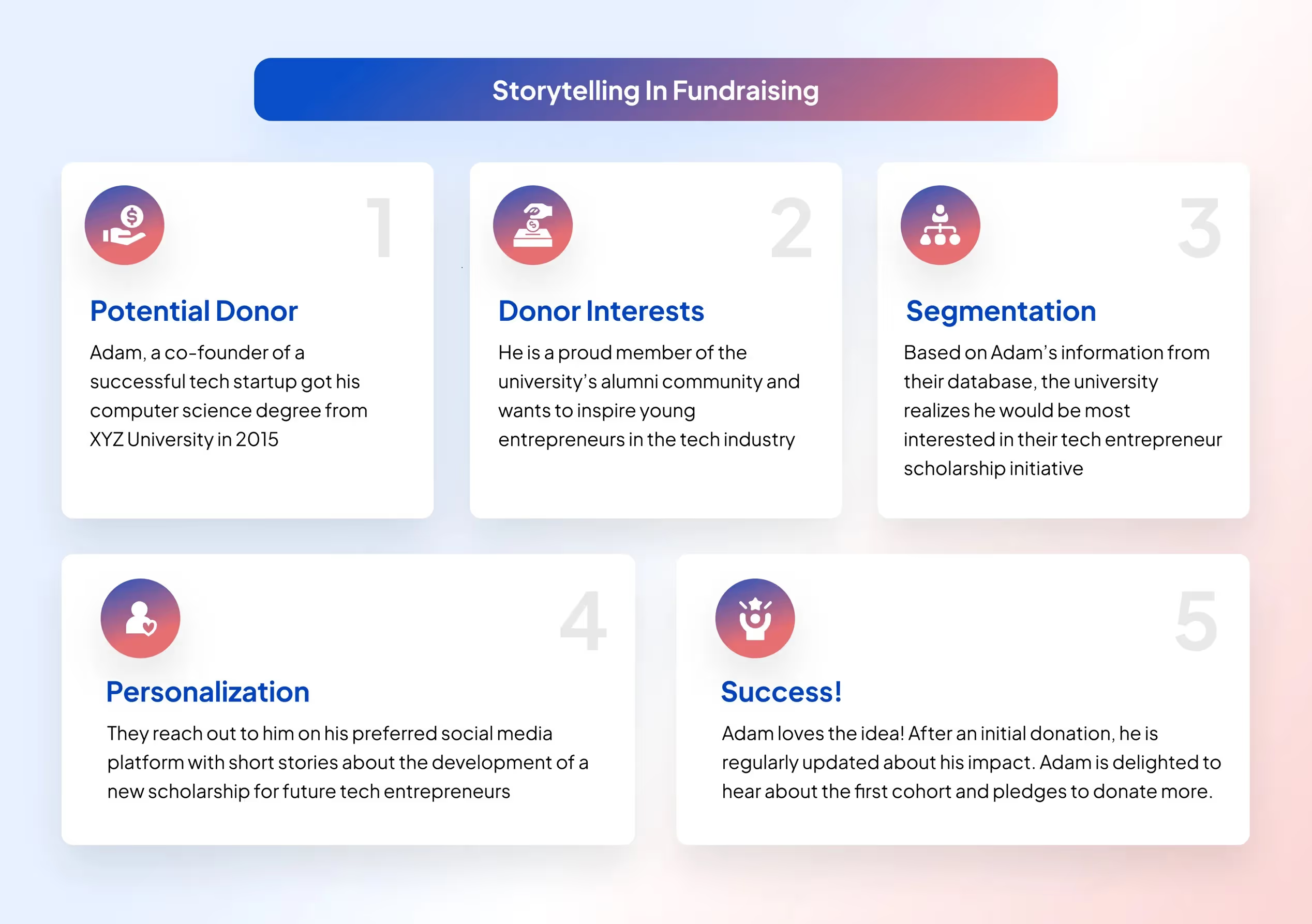
There are countless ways you can tell your story to make it special, but for now let’s take a look at the essential bits. We took some inspiration from this insightful article by Ioan Marc Jones for Charity Digital to outline some of the basic components of a good fundraiser story:
Remember that all things need to lead back to why you are reaching out to your alumni for a fundraiser in the first place. Tie things up by talking about how your fundraiser will help provide the ideal ending before directing them to your CTAs.
Today, advancement teams have a wide array of mediums and platforms to promote their fundraisers. That means there’s just as much choice when it comes to the stories. Our recommendation is to take advantage of all the channels available to you while focusing on your segmented target audiences. A good starting point is to consider your demographics. For example, Gen X and older generations may prefer written communication through email much more than younger generations, who are more open to social media and mobile platforms. Remember that which channel you use forms a part of your storytelling.
Today, a simple donate button won’t always cut it. You can take it a step further by helping your potential donors make an informed decision they will be happy with. Give clear objectives or milestones wherever you can. Let’s say you are fundraising for a mentorship program. Mention how long the mentorship will be, and whether you can guarantee opportunities based on it, or even further plans based on success.
Finally, ensure that your donors do not get left on an island. Keep them updated. Provide milestone updates. Celebrate your successes with them and inform them of any notable updates. Invite them for a big launch or send gifts. After all, the ultimate goal is to bring alumni closer to their alma mater.
This proactive approach to fundraising also creates better opportunities in the future. You could build online communities based on donor segments, a great source of user-generated stories. Satisfied donors who are kept engaged don’t just contribute to great stories but are also more likely to donate in the future.
We hope we have given you a decent broad overview of the power of storytelling in fundraising and how you, too, can use it to make your donors feel truly connected to your efforts.
Table of Contents
Subscribe
See how modern advancement teams bring alumni engagement and fundraising together.
Much like any other form of fundraising, your higher education institution must tell compelling stories that build relationships with your alumni audience, secure donations, and bolster event attendance. However, unlike other nonprofits, your school is the common thread directly tying the lives of thousands of alumni/ae together, all of whom have unique stories to tell about their relationship with your organization.
Collecting thousands of alumni voices together to tell a cohesive and vivid story for your outreach can be challenging. In this guide, we’ll review key strategies your school can use to bring these stories to life and fortify your fundraising efforts.
With over 460 million podcast listeners worldwide, your alumni/ae community likely has a few avid listeners already. Podcasts are a great way to tell many stories in a cohesive, organized format that complements your events and fundraising campaigns. Plus, with user-friendly and affordable software on the market, it’s easy for beginners to get started with these steps:
As you plan your alumni podcast, ensure each episode’s stories feed into a larger narrative about your school’s impact on your community. Pennington & Company states that this will help listeners feel more connected to your school and bolster your alumni/ae fundraising messaging. Also, include a link to your foundation’s website in the description of every episode so interested alumni/ae can easily donate.
Your school’s alumni/ae community is unique in that it has members from many different generations and eras. Tapping into nostalgia is a valuable storytelling asset, and there’s no better tool than physical mementos to evoke fond memories from the past.
Starting time capsules are a long-haul storytelling strategy, but when the time comes to open them, the emotional impact on alumni/ae is hard to beat. Try these tips to make your time capsule projects more impactful for your fundraising efforts:
You can include more overt fundraising appeals in your time capsule events, too. Mention current projects, like capital campaigns in the public phase, and how the project will look in a few years when it’s time for the time capsule to be unearthed with donor support.
Yearbooks are an iconic symbol of school life, and you can take yours to the level with digital tools. Here are some ideas for making a digital yearbook that tells a story:
Creating a digital yearbook is as easy as making a Canva account and embedding it into your alumni newsletter. However, consider building a graphic design consultation into your budget so the newsletter is easy to read and reflects your school’s brand. You could even create different yearbooks for different segments of your alumni/ae community. For example, you could make individual yearbooks related to sports teams, clubs, and different colleges for a greater degree of customization.
As you’re trying these new storytelling techniques, remember whose opinions matter most: your alumni/ae. Ensure your content resonates with them by frequently asking for and implementing feedback. Over time, you’ll find that seemingly disparate stories can come together nicely and make a messaging asset that just keeps giving to your school.
.webp)
3 Unique Storytelling Techniques for Alumni Outreach
Keeping alumni engaged after graduation is crucial for growing your school’s legacy. Follow these tips to tell alumni/stories for fundraising success.
Lorem ipsum dolor sit amet, consectetur adipiscing elit. Suspendisse varius enim in eros elementum tristique. Duis cursus, mi quis viverra ornare, eros dolor interdum nulla, ut commodo diam libero vitae erat. Aenean faucibus nibh et justo cursus id rutrum lorem imperdiet. Nunc ut sem vitae risus tristique posuere.

July 15, 2024
12 minutes
When it comes to personalization, we all know that a simple “Hi, {{${first_name}}}” is no longer enough. It involves understanding their interests, history with the institution, and current needs to deliver relevant and timely communication
While the topic of personalizing alumni engagement is no longer new to any of us, scaling personalization efforts is an increasingly important follow-up problem that needs solving. With thousands of alumni across different backgrounds, locations, and careers, how can institutions create a truly tailored experience for each individual?
In this blog, we’ll explore some strategies and tools that can help institutions scale their alumni engagement personalization efforts.
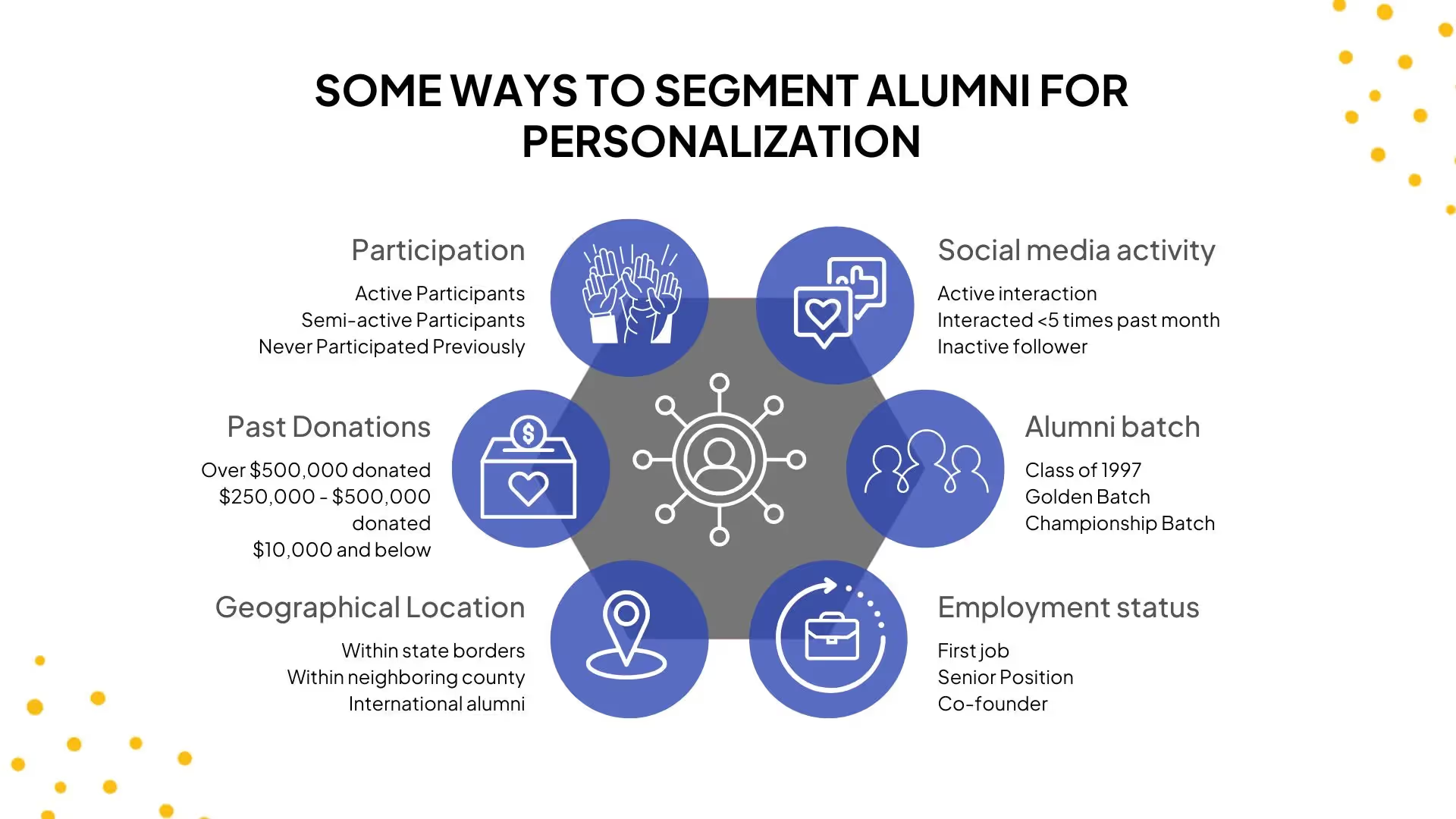
Start by segmenting your alumni based on various criteria such as graduation year, degree program, geographic location, and past engagement levels. Advanced segmentation can also include career fields, personal interests, and giving history. By creating detailed alumni profiles, you can tailor your messages to resonate with specific groups. If you already have all the required information you need, make sure that it is organized effectively for analytics tools to read from.
Utilize data analytics to gain insights into alumni behavior and preferences. This includes tracking event attendance, email open rates, social media interactions, and donation patterns. Let’s say you noticed that 30% of your alumni have browsed the mentorship program but haven't enrolled. With this insight, you can send targeted emails highlighting the benefits of joining, featuring success stories, and offering a simple sign-up process to boost participation. Analytics can help identify trends and identify gaps or pain points in your engagement strategy, allowing for more targeted and effective communication.
Invest in a robust CRM system that supports automation. Automated workflows today can trigger very well-personalized messages based on alumni actions or milestones. For example, an automated email congratulating an alum on their promotion could have details on their employer, how long they’ve been there, what roles they’ve worked there, and also mention any institution events or resources that they might be interested in.
.avif)
.avif)
Customize the content of your communications to align with alumni interests and engagement history. This could involve sharing news about specific academic departments, highlighting alumni success stories in relevant industries, or inviting them to events in their area based on their availability. Personalization should extend to all touchpoints, including emails, social media, and direct mail.
Dynamic content allows you to tailor the information presented to each alum based on their profile. For example, an email newsletter can have different sections that change according to the recipient’s interests or past interactions. This ensures that each alum receives content that is most relevant to them.
Provide alumni with engagement opportunities that match their interests and availability. This could include virtual events, mentorship programs, volunteer opportunities, or exclusive alumni groups depending on their professions, years of experience, past participation, etc. By offering a variety of options, you cater to diverse preferences and increase overall participation.
Different alumni prefer different communication channels. While some may prefer emails, others might be more active on social media or prefer text messages. Use a multi-channel approach to ensure you reach alumni where they are most comfortable and likely to engage. Be sure to maintain an active presence and make your institution as approachable as possible.
Surprisingly, 52% of alumni organizations have never conducted a survey of their alumni. Regularly seek feedback from your alumni to understand what’s working and what’s not. Surveys, focus groups, and direct conversations can provide valuable insights. Use this feedback to continuously refine and improve your personalization strategies.
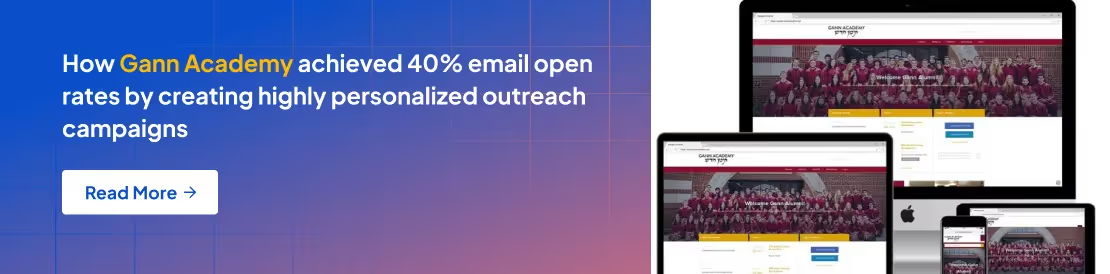
Most modern alumni engagement tools today support personalization to a good extent. However, you need to think of a long-term strategy when you consider scalability. [Whether you prefer to work with an integrated tool or multiple best-in-class tools], you need to make sure that it fits in with your existing systems and staff. Products/software such as Almabase also give you the choice of choosing a few features to complement your setup such as [automated emails], as well as a modular approach if you want something more extensive. If you plan to build a platform that your alumni will love engaging with, you need tools that centralize data, create effective segments, and enable personalized communication at scale, streamlining your engagement efforts.
Today, making your efforts at personalizing alumni engagement scalable is not only possible but also essential for building lasting relationships and fostering a loyal alumni community. By taking advantage of data, automation, and strategic segmentation, institutions can deliver tailored experiences that enhance engagement, drive participation, and strengthen the bond between alumni and their alma mater.

How can you personalize alumni engagement at scale?
Every institution knows the value of personalizing alumni engagement. But how can you scale your personalization efforts as your alumni base grows?
Lorem ipsum dolor sit amet, consectetur adipiscing elit. Suspendisse varius enim in eros elementum tristique. Duis cursus, mi quis viverra ornare, eros dolor interdum nulla, ut commodo diam libero vitae erat. Aenean faucibus nibh et justo cursus id rutrum lorem imperdiet. Nunc ut sem vitae risus tristique posuere.
From one-person teams to well-staffed offices, advancement, and alumni relations teams today take a variety of sizes and forms. The advancement space has never really had a frame of reference for what an ideal team should look like, as institutions can vary wildly in size and resources.
By looking back at the past several years, we would like to provide some characteristics that every forward-thinking advancement team today should look to incorporate in their approach to have a successful alumni program.
Ideally, an advancement team today should consist of people who are agile, data-driven, and technologically adept. They also need to have a good understanding of the evolving needs of a wide range of alumni. The pandemic and post-pandemic scenarios highlighted the need for teams that can innovate and ditch tradition when needed. Modern teams are ideally driven by digital tools and data analytics to make informed decisions, personalize interaction engagement, and be able to collaborate with other teams effortlessly.
If that all seems a bit too ideal, that is because, for many teams, it often is. The ideal modern advancement team takes years to develop to the level that they can reach, and it takes even more consistency to stay at that level. Below, we’ll break down some of the key components and pitfalls on the road to reaching your advancement team’s true potential.
Here are some things that you can look to incorporate. Remember that there is no one-size-fits-all all for advancement and that these are just the basics that you need to watch out for as you map your team’s journey:
• The right tool(s): Whether you are just starting to consider your long-term tools, or have some you have been using for a while, you need to choose the right tools. Take into account the resources, staff size, and staff expertise available to you
• Data-driven approach: Data is at the heart of most if not all alumni-centric communication, engagement, fundraisers, and so much more today. Having a reliable database and a CRM to make the most of your data is crucial for any modern advancement team. If you see your alumni base increasing exponentially in the future, you need to have the right infrastructure to scale alongside it as well.
• A Strong Global Alumni Network: A silver lining for advancement teams that emerged during the COVID-19 pandemic was the shift towards virtual and hybrid alumni engagement. The trends from that period have been carried over today to engage local, national, as well as international alumni to form strong global networks filled with regional enclaves of well-engaged alumni.
• Scalable Personalized Engagement: While personalization has become a core part of any alumni program, communicating with alumni while having personalization efforts that can scale with an increasing number of alumni is another issue that institutions are currently tackling. From segmentation and automation to collecting feedback, ensure that your institution’s alumni engagement is not just personalized but also able to personalize a growing alumni base meaningfully.
• Omnichannel Capabilities: Alumni nowadays expect some level of value even if they are located halfway around the world. Routine webinars alone will no longer do to engage these alumni segments. Modern advancement teams need to be able to take advantage of physical, online, and hybrid channels simultaneously and importantly, make each channel feed an overall goal. For example, how can you engage remote alumni in a way they feel equally as valued as your local alumni? Are you just relying on social media to reach them, or are you making communities, providing opportunities, and constantly making them feel just as appreciated?
• Providing Diverse Engagement Opportunities: Providing value lies at the heart of any modern advancement strategy. Your team needs to be aware of upcoming trends to freshen up and diversify your offerings. If an alumni is excited about publishing their first research paper, an email will help. But if you also invited them for a guest lecture or in a workshop panel, they might feel even more appreciated.

• Adaptability: Over the past few years, the pandemic and the constant fears of economic recessions have made clear the need for advancement teams to adapt to both expected and unexpected changes. With AI usage on the rise, it also raises the question of adapting to new technology and whether it is worth it. These are questions any competent advancement teams today will need to be on top of and make the right call on.
While aiming to be data-centric, your advancement team must have a thought-out data strategy that can handle alumni data for years to come. When it comes to having a data strategy, it is usually the sooner the better as data is always being added or modified as time goes.
We also cannot stress enough the importance of having tools that communicate well with each other. Having multiple tools or features is well and good until they all present a piece of the puzzle that you have to put together manually each time. Any new additions to your online toolset must be integrated into a well-connected software environment. This also gives your staff a good overview of where they are as a team and as an institution.
A common and perhaps under evaluated problem is how strategies and long-term planning are always talked about when the reality is often that advancement staff often get caught up in an endless loop of daily tasks and don’t get enough time to strategize creative initiatives. In a space where creativity can really engage alumni, it is important that your staff have time for both their daily tasks as well as to innovate.
Finally, it is important to know when to be stubborn and when to take a new path. Take periodic checks on the products you use and if they still fit your needs. Do the update cycles of the provider fit your needs? What do your staff think about their experiences within the past quarter? Will your current set of tools fit your needs in the next 5 years? These are just a few examples of questions that you need to keep asking yourself to stay on top of your game.
Ultimately, the goal is to create a dynamic, responsive advancement team that can effectively support your institution's mission while providing genuine value to your alumni community. Remember that alumni want an authentic human connection to their alma mater. A modern advancement team simply uses the best strategies and tools to build and maintain that connection.

What Makes a Modern Advancement Team?
We compiled our learning from the past several years to give you a quick look at what a modern advancement team should look and function like in this blog.
Lorem ipsum dolor sit amet, consectetur adipiscing elit. Suspendisse varius enim in eros elementum tristique. Duis cursus, mi quis viverra ornare, eros dolor interdum nulla, ut commodo diam libero vitae erat. Aenean faucibus nibh et justo cursus id rutrum lorem imperdiet. Nunc ut sem vitae risus tristique posuere.

.svg)

.avif)
.webp)