Your school’s alumni are likely some of your most essential supporters. Find out how you can optimize communication with the group this EOY giving season.
Published:
December 20, 2022
Updated:
December 20, 2022

It’s the most wonderful time of the year for alumni communication!
Double the Donation reports that over 30% of total annual giving takes place in December, with around 10% of all donations coming in the last three days of the year. That said, it’s an excellent opportunity for educational institutions to engage with their alumni, highlighting last-minute fundraising initiatives and wrapping up other loose ends.
If you’re looking to finetune your communication strategy this year-end giving season, particularly regarding alumni supporters, here are five key practices that your team can consider:
.jpeg)
Optimizing your communication strategy going into the last few weeks of the year makes a huge difference in terms of overall engagement and support. By incorporating these tried-and-true tips, you can set your team up for impactful conversations that position your organization for a successful new year as well.
Because the end of the year is such a significant period in terms of fundraising efforts, you likely have a lot going on. It’s important that you use your alumni communications to promote ways in which your supporters can get involved.
This may include:
Regardless of the engagement opportunities hosted by your institution, be sure your audience is aware of the various ways to support your efforts—especially when you know they’ll love the fundraisers you choose. Otherwise, you may have a sizable group of alumni who are eager to participate in the season of generosity; they’re simply unaware of how to do so.
You don’t want to move on to a new year without thanking those that played a role in getting your institution where it is now. And in the spirit of the holiday season, there’s no better opportunity to show appreciation for your alumni—especially those who have supported your fundraising and engagement efforts this year.
Ways to do so might include:
When displaying gratitude to your alumni and other major contributors, make an effort to do so using the methods they tend to respond to best; that way, your communications will be all the more meaningful.
More than likely, a lot has happened within your school community in the past twelve months. As you’re looking to communicate with alumni in the final weeks, providing year-end updates can be a great way to go.
Consider these ideas as you craft your messaging regarding updates from the previous year:
Your alumni care about the goings-on at your school, and keeping them in the know about current happenings is essential. By providing key updates surrounding your institution, you can help maintain that vital feeling of connection, regardless of the length of time an alumnus has been gone.
Your alumni have gone on from your institution to work for a wide range of businesses. More than likely, a significant portion of that group is now employed by companies that offer workplace giving programs. And those giving programs have the potential to benefit your school.
If you’re not already doing so, now is the time to begin promoting these corporate fundraising opportunities. And if you are already doing so, the end of the year is the perfect time to increase your efforts.
Why? Corporate matching gifts are one of the most popular and most-offered forms of workplace giving. When donors qualify for the programs, they are able to request a matching donation from their employers, often at a dollar-for-dollar ratio for their own. This allows supporters to amplify their own giving impact without reaching back into their own wallets.
And luckily, many individuals who have given to your school previously in the year will still qualify for corporate matching, despite not being aware of the opportunity or completing the matching process earlier. Similarly, alumni who have engaged with your institution as volunteers in the past year may qualify for corporate volunteer grants as well.
As you follow up on these opportunities, keep in mind that you may want to include a sense of urgency in your year-end workplace giving reminders, as many companies set their submission deadlines in line with the end of the calendar year! But don’t fret—matching gift software, such as Almabase’s integration with Double the Donation, makes triggering automated follow-ups as easy as can be.
While looking back at the past can be an excellent way to acknowledge support and wrap up the previous year, looking ahead to the new year can aid in inspiring alumni with ideas of what is to come.
Here are a few examples to show how your team can look forward to the new year by:
This type of messaging can even spill over into the new year as you continue encouraging your audience of alumni to get and stay involved.
As the end of the year comes to a close, it’s important that you and your team make the most of every opportunity available to you—whether that’s following up on previously-made donations or highlighting chances to further support your institution. Your alumni support your cause, and keeping them involved throughout the year is essential. Good luck, and happy holidays!

Adam Weinger is the President of Double the Donation, the leading provider of matching gift tools to nonprofit organizations and educational institutions. Adam created Double the Donation in order to help nonprofits increase their annual revenue through corporate matching gift and volunteer grant programs.
Subscribe
See how modern advancement teams bring alumni engagement and fundraising together.
Plan faster. Execute better
Explore free templates designed for alumni and fundraising teams.
.png)

.avif)
Estimated Reading time: 5 minutes
When you dig down to the fundamentals - the most significant challenge with alumni relations is the same for most of us.
“How do I continuously engage all my alumni, yet remain personal, at scale, with a small team and limited resources?”
Not easy. Certainly.
Over the last five years, we’ve been doing much research to try and address this.
What we’ve come to believe is that there isn’t a silver bullet that will solve this problem. What we’ve also come to realize is that alumni will not regularly engage amongst themselves without something external that drives them to do so.
This is precisely why social network groups (Facebook/LinkedIn) fall flat. Over time, the group and the content within it become stale. The content that does get added becomes irrelevant and fails to provide enough value to its members. Since there isn’t anything of value to bring people back to the group, the group eventually dies out.
This is an age of specialized solutions for specific problems. It’s no different with alumni. They are most likely to listen when they’re receiving communication relevant to and targeted at them. If not, they tune it out.
So, what is the solution?
Like I’d said - there is no silver bullet to this problem. However, we are attempting to solve it - step by step.
Our first step to address this was taken last year -- with v1.0 of the Groups module on Almabase. With this, we wanted to understand how effectively a group would engage when someone drove the engagement.
Of course, we understand how stretched alumni offices are. We needed to do this without adding additional load to you and your team.
So, we built groups 1.0 focused around ‘Group Admins’.This would help you break down your alumni into smaller chunks, and help you delegate this responsibility of engaging smaller communities to those who are possibly more attached to the community.
Like a class leader for a class, a football coach to former football players, or a chapter president for a regional group.
1. For the most part, Group admins, on their own are not always incentivized to drive engagement
2. Fresh, valuable content drives engagement - and the group admin(s) alone cannot generate enough content to keep a group from going stale.
3. Unlike social networks - the purpose of an alumni network is more specific. Members arrive with particular objectives in mind (attend an event, reconnect with classmates, career networking, seek advice, find a job, etc.) The frequency of interaction is much lesser - so it’s all the more critical that the content they interact with be very relevant to them.
4. Different kinds of groups have different requirements from their administrators - some might want to be deeply involved, and some just superficially.
5. The frequency of engagement is vital - too frequent, and your community tunes out. Too infrequent, and your loses relevance and becomes stale.
We summarized this into three key challenges that we need to address, to be able to engage alumni:
Creation: Creating valuable content, frequently, without the burden for this falling on one or a few people.
Curation: Collating content such that each member of the community receives relevant content that is of value to them
Distribution: Distributing this curated content to appropriate people at a frequency with which they are comfortable.
Earlier, each of these three challenges fell on the shoulders of you and your office.
We want to build a solution that shifts most of this responsibility to the technology that powers almabase. It will automatically take care of Curation and Distribution while driving people to Create more content.
We are building a ‘Feed.’ All users can now post, like, comment and react. Content creation is no longer a job for just admins. Everyone can contribute to communities that they care.
The system will look across the groups that are relevant to each alum, and curate content that they are most likely to find value. For instance, if someone is part of the groups for ‘Class of 86’, ‘Law Alumni,’ ‘Alumni in San Francisco’ and ‘Baseball,’ the system will take care of curating the most relevant content from those groups and then send it to this person.
The feedback loop. We’ll be building an automated digest that is curated and personalized for each member based on what they choose to stay connected with. It will then be delivered at a frequency of their choice. All without you having to get involved. This will drive alumni back to the platform and hopefully urge them to create more content and close the loop.
1. Groups are going to become very central to all engagement on your alumni platform.
2. As it ties together all these different components for engagement, the product going forward would focus a lot on ‘groups.’
3. Increased peer to peer alumni engagement
4. A ‘feed’ within each group or module will allow users to post, like, comment, and interact with others in the community.
5. Distributed Fine grain control for group administrators
6. You’ll have much more control over the permissions of each group administrator. You can set different levels/combinations of permissions for each. E.g., if you want a group admin to be able to approve users, or update profile data of members - but just within that group.
7. Personalization gets more powerful
8. Customized email digests, notifications, segmentation based on engagement on the ‘Feed.’
9. ‘Chapters,’‘MyClass,’’ Sub-Colleges’ will get deprecated by November 2019
10. These discrete modules all going to be absorbed into groups. For those of you that use it, we’ll help you migrate to Groups.
We wanted to be upfront about this.
All of these are hard problems to solve and will take time to get them right?
However, we’ll get there.
Such an integrated system is something that has not been attempted before in the industry, but we’re finally at a time where we have the technology to pull it off.
We’re going to build this step by step, and we’d love to hear feedback along the way. Bear with us till we reach the final state, and I’m sure you’ll come to love the product. :)
1. The first noticeable change on the product is going to be with events
2. You’ll now see a Feed within each of your events where alumni can post, like, comment, and interact with each other.
3. Events are always a gathering point for people to interact with. It’s currently the single most significant driver for online alumni engagement across our partners. Adding a feed within events first will give us a lot of great insights that we can take back to the drawing board before rolling it out to groups.
4. Within the next one-two months, you’ll see Feeds within Groups as well, as well as the first version of the notification system!
Big changes ahead!
We’re excited. Hope you are too :)

Building the Next Generation of Online Communities
Lorem ipsum dolor sit amet, consectetur adipiscing elit. Suspendisse varius enim in eros elementum tristique. Duis cursus, mi quis viverra ornare, eros dolor interdum nulla, ut commodo diam libero vitae erat. Aenean faucibus nibh et justo cursus id rutrum lorem imperdiet. Nunc ut sem vitae risus tristique posuere.
If you work in higher-education, you’re probably ramping up for Giving Tuesday, but if your organization is not already doing that, you better get started. If you’ve never heard of this day that’s filled with philanthropic spirit, no worries! Giving Tuesday, a day devoted to charitable giving, marks the beginning of the year-end giving season. It falls on the Tuesday directly after Thanksgiving and is one of the most highly-anticipated days of giving across the world.
This day alone brings in millions of dollars for higher education institutions, so it’s important to leverage it in your fundraising strategy. Specifically, the higher ed market stands to gain substantial sums of money from alumni and other major givers on this day.
This year, Giving Tuesday is in December, but it’s never too early to start prepping! To ensure your institution or organization reaches its maximum Giving Tuesday potential, do the following:
1. Create a reasonable timeline
2. Set aspirational goals
3. Communicate before, during, and after
4. Enable multiple donation platforms
5. Inquire about matching gifts
6. Rely on volunteer fundraisers
If you need a refresher on why the giving season is so important, visit this end-of-year fundraising guide.
Ready to have the best giving season ever? Let’s get started!
As with any fundraising endeavor, your institution can’t wait until the last minute to plan. Otherwise, you’ll wind up with a chaotic mess that doesn’t come anywhere close to its potential.
While it may just be one day of the year, it’s the most important day of the year for fundraising. So treat it as such. Crafting your Giving Tuesday plan requires a lot of careful planning and communication.
Specifically, you’ll need to engage two main groups of people before the big day: your employees and your supporters (both current and potential). Before you can even conduct outreach, your team needs to be on the same page. That means fully planning your campaign by doing the following:
- Setting goals and timelines. Remember, this day kicks off end-of-year giving. Span your timeline over the course of giving season, with the biggest goals set on Giving Tuesday. Read on to learn about the types of goals you should set.
- Planning your outreach strategy. Before contacting any prospects, you should plan your strategy. This means planning your posts, emails, and so on and determining what they’ll say. For posts after Giving Tuesday, plan outlines for different types of end results. For instance, you should outline separate posts for meeting your goals, not quite reaching your goals, and exceeding your goals.
When you plan ahead and consider multiple campaign outcomes, you set your institution up for fundraising success!
Your Giving Tuesday ideas (get inspiration here!) might be more creative than any other campaign you’ve ever created, but creativity means nothing without communicated goals. You need to make sure that your entire team is on the same page so that everyone is working towards the same overarching goal.
There are a number of goals you can set. For instance, your institution may set the following goals:
1. Financial goals
2. Total number of donors
3. Number of recurring donors
4. Number of new donors
5. Percentage of participating alumni
While these goals can be measured via metrics, there are others that don’t rely on numbers. While you should implement measurable goals, consider making qualitative objectives, too. For instance, maybe you want to provide donors with opportunities to actively engage with you. Perhaps you want to simply spread the word about your higher education organization. Regardless of the goals you choose, they should be aspirational but still attainable. That way, you don’t sell yourself short, but you don’t create goals that are impossible to reach, either.
As you’ve learned, before even launching your campaign, you should communicate the goals and explain the fundraising strategies to your team. Once the campaign is fully planned, your employees will need to conduct outreach to both current and potential supporters. Outreach should continue throughout the entire campaign. Throughout your campaign, keep both your staff and supporters updated on the progress. That way, they know when they need to step up their efforts to reach your goals.
Remember, whatever goals you choose, your employees need to be on the same page. That means continuous communication. Otherwise, neither your employees nor your donors will have a solid understanding of what they’re trying to achieve. Then, once your campaign wraps up, thank your donors personally via email, so they feel valued. Additionally, use social media to announce the end totals in relation to your goal.
Your campaign isn’t over until you announce your end totals. Since the giving season continues over the course of the next several months, you shouldn’t wrap up quite yet. Instead, you should post an update once Giving Tuesday ends and say where your organization stands in relation to its total goal for the rest of the giving season.
Planning, communication, and aspirational goals mean nothing if your donors don’t have a way to give! To ensure that your college or university receives the most funds possible on Giving Tuesday, you’ll need to enable multiple donation platforms. You likely already have the basics set up, like an online donation page or direct mail giving. However, if you don’t enable other ways to give, you won’t make as much revenue as you possibly can.
To start, look at the types of donations you allow. In other words, don’t just allow credit and debit card donations. Allow cash donations, check donations, donor-advised fund gifts, foundation giving, and so on. Also, for those who have the affinity to give but not the capacity, provide volunteer opportunities for events. By encouraging the philanthropic spirit, you let them know their efforts are recognized. Then, if they ever acquire the funds to donate, they’ll be more likely to give! Text-to-give is also on the rise. Get creative with your ways to give. Don’t limit your donors! Multiple donation platforms shouldn’t exist only on Giving Tuesday. Rather, you should enable several platforms year-round to accommodate all donors. That way, you boost your fundraising potential!
If you’re not already aware, corporate philanthropy has changed the fundraising game for all players in the nonprofit world. When an employee of a company with a matching gift program donates, the employer then matches that donation, so long as the donation meets the company’s criteria. In other words, eligible contributions might be doubled, or maybe even tripled depending on the program guidelines! Some major companies will even match the donations that your volunteers raise from their friends and family on your behalf! It’s all about locating those opportunities, so you don’t miss out on any revenue opportunities.
A good way to start the conversation about matching gifts is to create a dedicated matching gift page on your website. You can also add information about corporate giving on your Ways to Give page. From here, start devoting time to making matching gift appeals, such as direct mail, emails, social media posts, and so on. When valuable supporters learn their donations can be multiplied without reaching back into their own pockets, they’ll likely take an extra five minutes to fill out the necessary forms. As a higher education institution with a substantial donor base, you are undoubtedly missing out on major revenue opportunities. However, if you leverage dedicated software, you can pinpoint all of your matching gift opportunities.
Remember, Giving Tuesday produces substantial amounts of revenue for colleges and universities, so if you can multiply your donations through matching gifts, do it.
Just like corporate philanthropy, peer-to-peer fundraising is on the rise, too! Giving Tuesday is the perfect opportunity to reach out to your supporters to raise money on your behalf. Since your institution likely has more donors than the average organization, you stand to gain major revenue from volunteer fundraising.
If you’re unfamiliar with peer-to-peer fundraising, here’s how they typically work:
1. Your fundraising team sets goals and timelines like any other campaign
2. You choose a peer-to-peer fundraising platform
3. Your team recruits and trains your volunteers
4. Participants create personalized pages where they’ll fundraise for you
5. Volunteers share their pages and encourage friends and family to donate
Volunteer fundraising ensures that you’re reaching the widest possible audience. Instead of only reaching your current supporters, you’ll reach supporters’ friends and family, too! To kick off your peer-to-peer research, check out these six proven peer-to-peer fundraising strategies that bring success.
Plus, you can incentivize participants to raise more with gamification tools. Gamification can mean anything from leaderboards to badges to fundraising thermometers. Leaderboards show your participants those who have earned the most, and badges show up on participants’ profiles when they reach certain milestones. On the other hand, fundraising thermometers show overall financial progress toward your goal. There are several peer-to-peer fundraising platforms and tools on the market. Choose the ones that best align with your institution and its goals. That way, you enable your volunteer fundraisers to do the best campaigning possible!
The whole point of Giving Tuesday is to boost funds, but your institution can experience a number of other benefits, such as new donor acquisition and alumni engagement. The point is, the giving season represents a major opportunity for every organization in the nonprofit sector, including major schools. Remember, fully plan your campaign, set aspirational goals, and communicate effectively throughout the entire giving season. You should have multiple ways of giving, look for matching gift opportunities, and rely on your volunteers year-round. However, these strategies are especially important on Giving Tuesday. As always, remember to thank your supporters. Now, get out there, and plan for your institution’s best giving season ever!

Adam Weinger is the President of Double the Donation, the leading provider of matching gift tools to nonprofit organizations and educational institutions. Adam created Double the Donation in order to help nonprofits increase their annual revenue through corporate matching gift and volunteer grant programs.
.avif)
Prepping for Giving Tuesday: How to Get Ready for the Most Philanthropic Day of the Year
Lorem ipsum dolor sit amet, consectetur adipiscing elit. Suspendisse varius enim in eros elementum tristique. Duis cursus, mi quis viverra ornare, eros dolor interdum nulla, ut commodo diam libero vitae erat. Aenean faucibus nibh et justo cursus id rutrum lorem imperdiet. Nunc ut sem vitae risus tristique posuere.
The benefits of alumni reunions can be reaped by schools long after they’re over. Reunions offer alumni the chance to look back at the good old days and also act as a golden opportunity for making lasting relationships with their alma mater and fellow alumni.
While alumni reunions are clearly awesome, ‘when’ you choose to organize your reunion plays a pivotal role in its success.

After observing over a hundred schools organize successful alumni reunions, we’ve finally settled on the end-of-the-year/holiday season as the best time for high school alumni reunions.
High school reunions usually happen in the of Summer (June - August) or towards the end of the year (September - November). What works best for your alumni may vary from school to school but we'll make our case on why we think you should consider the latter part of the year.

Whether your alumni live in another state or halfway across the world, the end-of-the-year/holiday season is when they come home for homecoming and to spend time with their friends and family. It is therefore highly likely that your alumni will be in town to be able to attend your event.

With most offices already closed for the holiday season, alumni have abundant time on their hands to socialize and are often in the mood to meet classmates and revisit fond memories.

November (46.2%) and December (30.8%) are the most popular months for making year-end asks, but 7.7% of organizations start as early as September!
- Jeff Gordy
Co-Founder of Z2 Systems, Inc.
Since the end of the year is peak fundraising season, coupling your alumni reunion with a fundraising campaign can be highly effective for your institution. With the holiday season ringing in and alumni meeting up with old friends, there can’t be a better time to ask them to donate toward your cause.
If you're already prepping for your end-of-year alumni reunion for your school, here are some great tips on increasing alumni donations during the event.

While the best time of the year ultimately depends on your alumni base and can certainly vary from year to year, the end of the year lends itself to some great engagement and fundraising strategies that are exclusive to the fall season. If you've mostly been a summer reunion school, we hope you'll give fall a try this year.
High school reunions are typically held 10, 20, or 25 years after graduation, often during the late summer or fall.
September or October are popular months for reunions as the weather is pleasant and schedules are less hectic.
The end of the year is ideal because many people visit home for the holidays, making it easier to gather.
Plan a summer reunion for outdoor activities or a holiday reunion to coincide with people’s travel and festive spirit.

Why is the end-of-the-year best time for high school alumni reunions?
Lorem ipsum dolor sit amet, consectetur adipiscing elit. Suspendisse varius enim in eros elementum tristique. Duis cursus, mi quis viverra ornare, eros dolor interdum nulla, ut commodo diam libero vitae erat. Aenean faucibus nibh et justo cursus id rutrum lorem imperdiet. Nunc ut sem vitae risus tristique posuere.
If you’re involved in fundraising efforts for your school, chances are you’ve already been hearing a lot about Giving Days. With this year’s #GivingTuesday i.e. December 3rd fast approaching, it’s likely you won’t stop hearing about it any time soon.
.avif)
Giving Day was first introduced in 2012 and has since helped institutions around the world boost their fundraising efforts tremendously. A well-planned Giving Day can entirely transform your fundraising approach by helping you acquire new donors, enrich the giving experience, and instill a culture of giving in your constituents.
However, the success of a Giving Day depends not only on planning but equally on its promotion. While there are many ways to promote Giving Days, in this blog post, we’re looking at the 8 most effective ones that have helped our customers achieve Giving Day success.

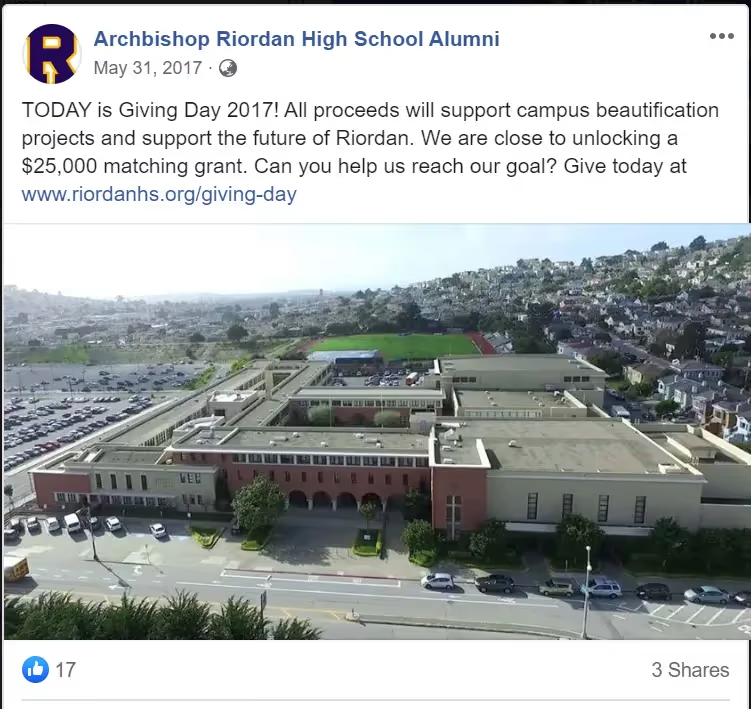
One of the best means for influencing donors is by carefully selecting a cause that they relate to and would most likely contribute towards. Making donors believe in your cause is pivotal to your fundraising efforts. Here’s how Archbishop Riordan High School targeted its alumni by asking them to contribute towards campus improvements.
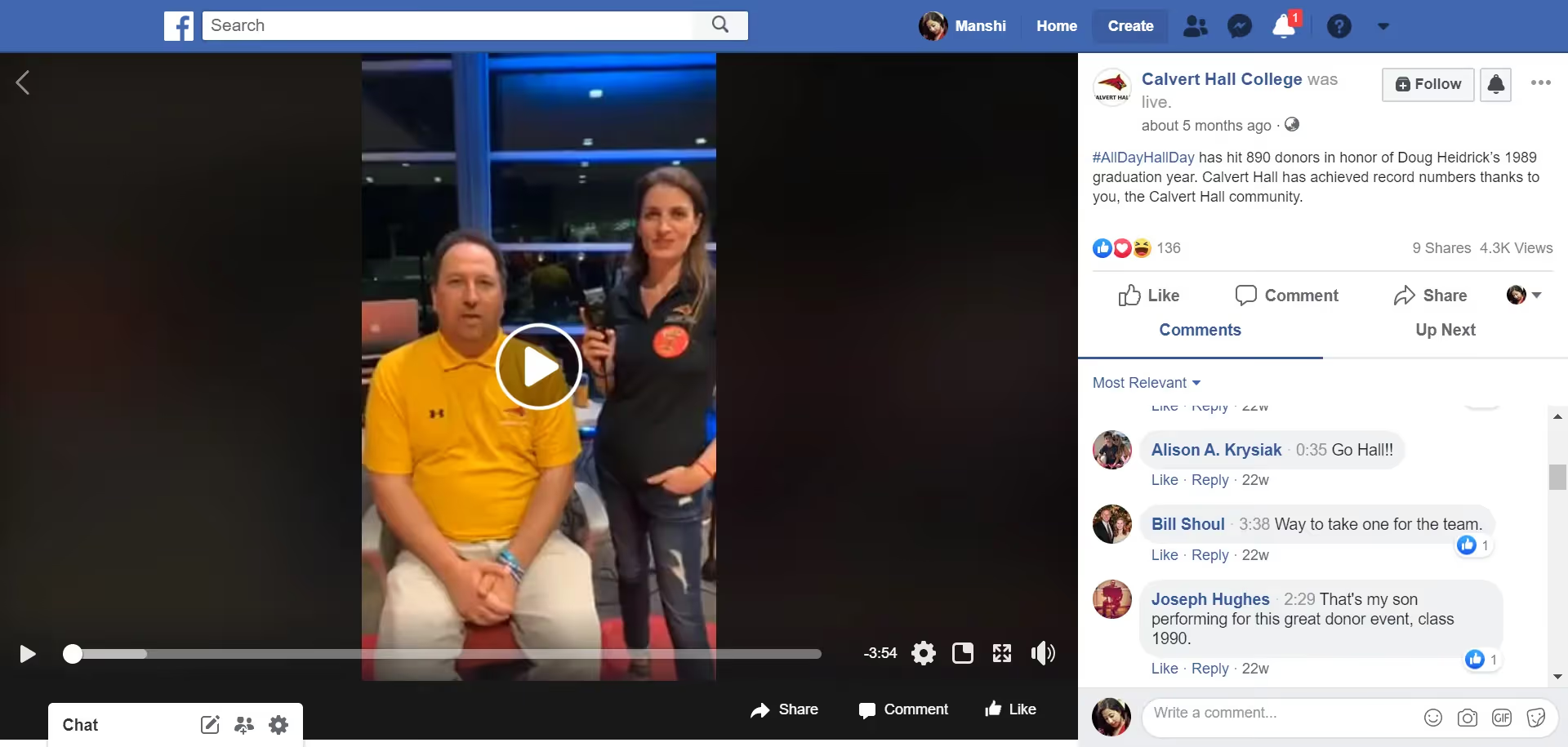
If you’re on social media, you obviously know how hashtags can boost your marketing efforts. While #GivingTuesday is a generic hashtag that almost everyone follows during the Giving season, creating a unique hashtag, relevant to your cause is highly recommended. Using your own unique hashtag makes it easier for your community to share your posts on their network, and for you to effectively monitor and further promote your social message. Calvert Hall College High School made great use of a unique hashtag. Check the full post here.
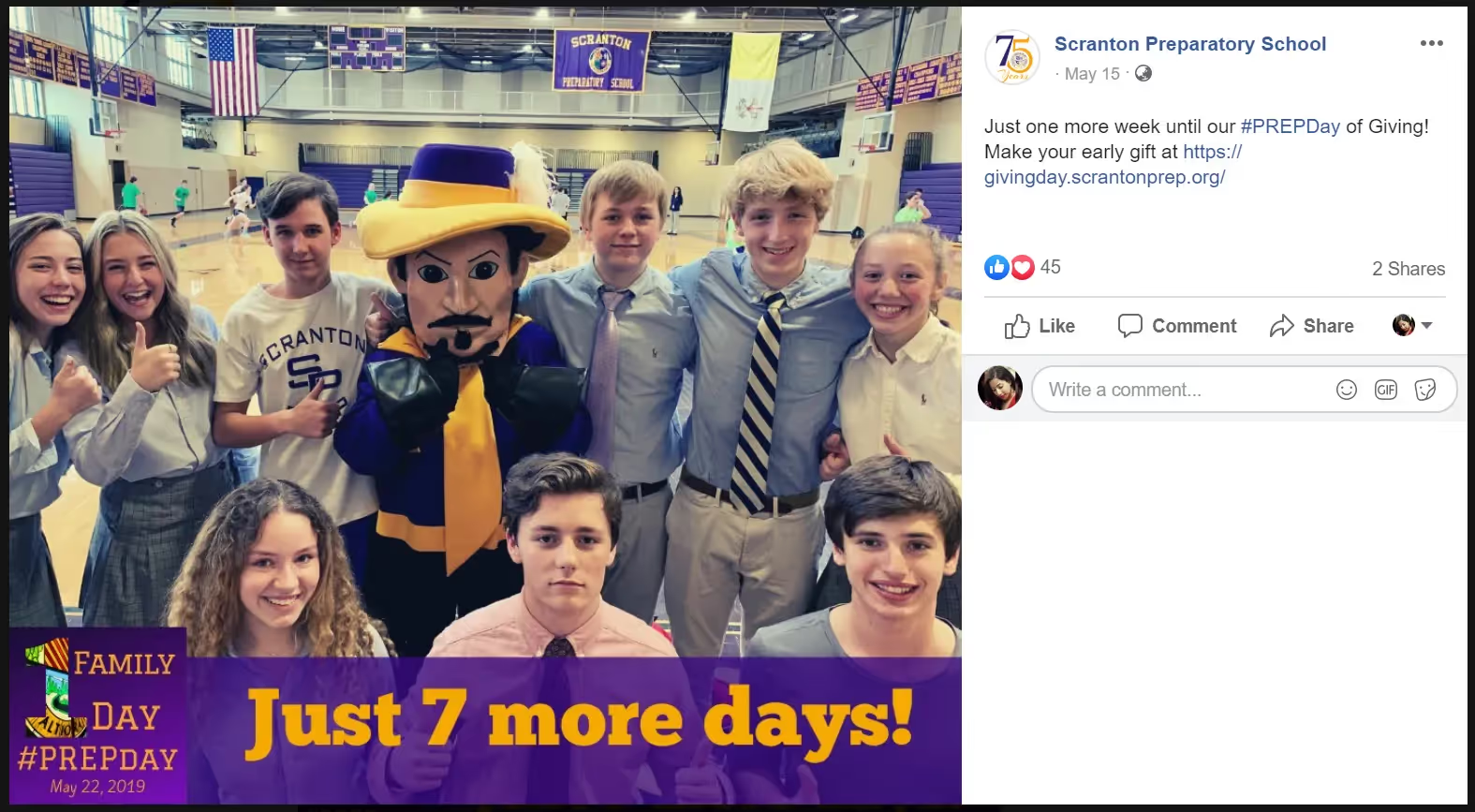
You might have seen a lot of people use countdown posts as a part of their social media marketing plan. They have proven to be highly effective as they help serve as constant reminders for the upcoming event and also arouse curiosity.
Here’s how Scranton Preparatory School got this right.
A great way to capture the attention of donors is to create opportunities that influence them to actively engage. Unlike fundraising campaigns that are run over a period of time, Giving Days provide an opportunity for your constituents to donate to your cause within a 24-hour time frame. Other than the sense of urgency already being created, any low-effort activities on your part can help channel your donors toward making a contribution.
For the college’s 3rd Annual All Day Hall Day campaign, Calvert Hall College High School asked its followers on Facebook to show support by applying the All Day Hall Day filter to their profile pictures. Calvert Hall’s followers loved this approach and many took to applying the filter to their profile picture and pledging support to the Giving Day campaign. Here’s how Calvert Hall creatively provided an opportunity for its Facebook followers to actively engage & support the upcoming Giving campaign.
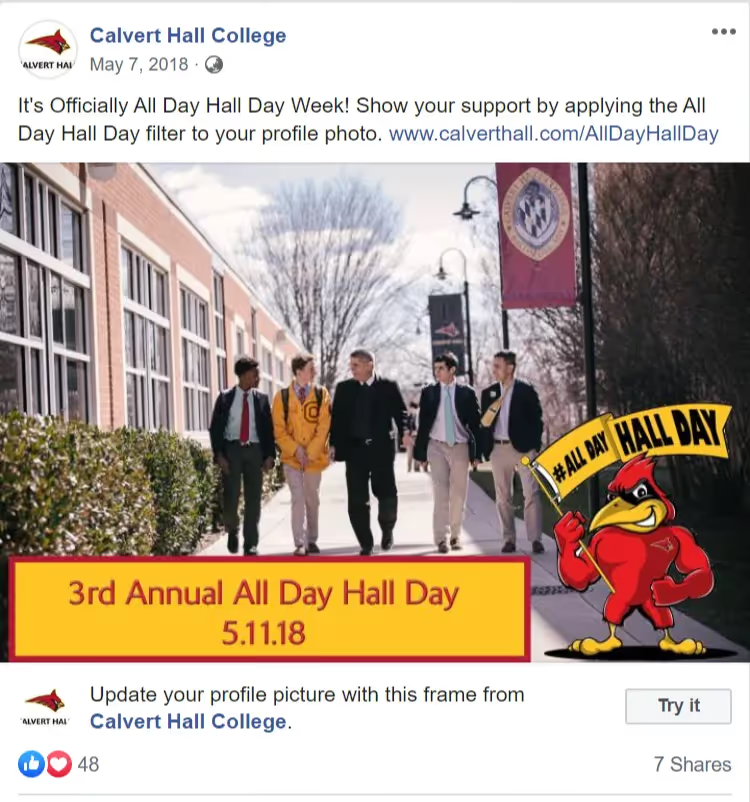
As of 2022, videos are undoubtedly the most powerful marketing tool.
People gaze five times longer at video than at static posts on Facebook & 71% of people have increased their online video viewing in 2018 alone.
As users on social media increasingly prefer the video format, it is a good practice to incorporate more videos in your Giving Day marketing strategy. Here are some ways in which schools have leveraged videos on their social media:
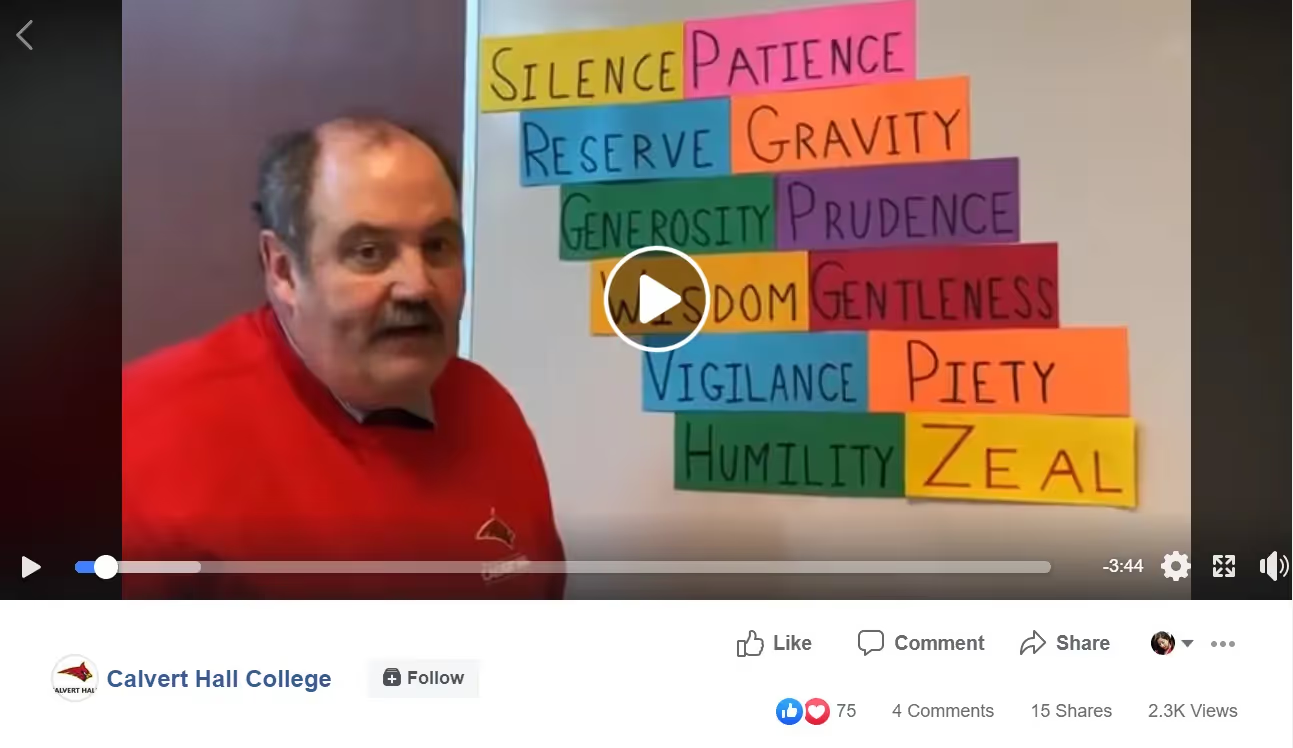
Creating a video that boasts of your school’s legacy is a great way of showing donors why their contributions matter. In this video, Calvert Hall College High School’s CAO/Director of Advancement, Joe Baker talks about all that Calvert Hall stands for and passionately urges donors to contribute to keep the tradition of the school intact. View the post here.
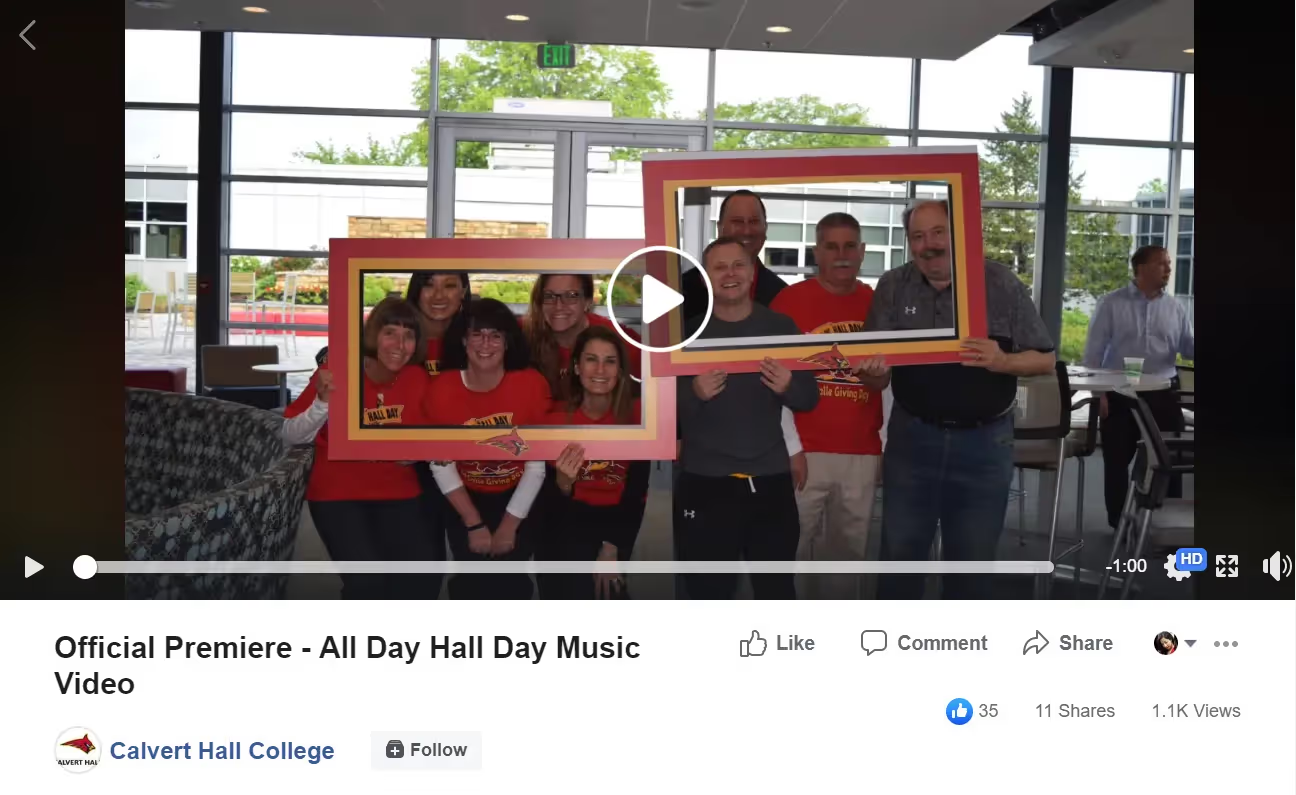
If you’re worried that a professional video might be too expensive or time-consuming, a simple slideshow video is the next best thing! Including pictures of students and faculty members clicked on-campus in the video can be a great way to influence participation from donors. Calvert Hall created an amazing music slideshow video for its 3rd All Day Hall Day giving campaign.
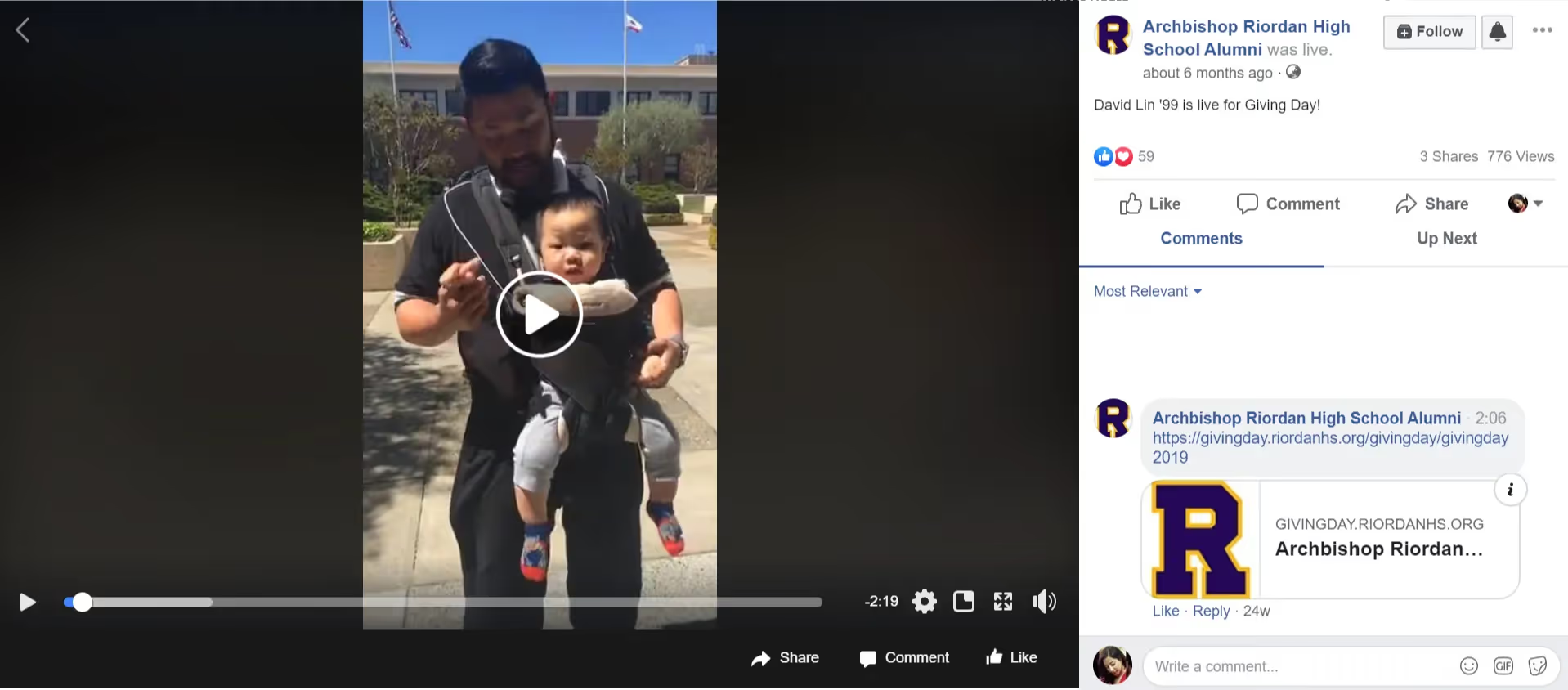
Going live on the day of the event is one of the most commonly employed methods to promote Giving Days. This helps donors view real-time progress and get an inside picture of the events and activities planned during the day.
According to SproutSocial, Facebook users spend 3X more time watching a live video than a pre-recorded one.
Here’s David Lin, Director of Boarding at Archbishop Riordan High School going live on the school’s campus, during 2019’s Giving Day campaign. View the post here.
When it comes to sharing updates about your giving day via videos, go beyond the usual formula of simply announcing these updates. Check out how Calvert Hall College High School created an awesome video, sharing updates from its 2018 All Day Hall Giving Day campaign.

The team responsible for running your giving campaign definitely deserves a special shout-out for their endless dedication and hard work. There’s no better way to do this than showcasing their efforts for donors to see. This creates a sense of gratitude and acts as a strong incentive for people to do their part by contributing towards a noble cause. Here again, Calvert Hall wins our hearts by creating a beautiful video dedicated to its passionate team members.
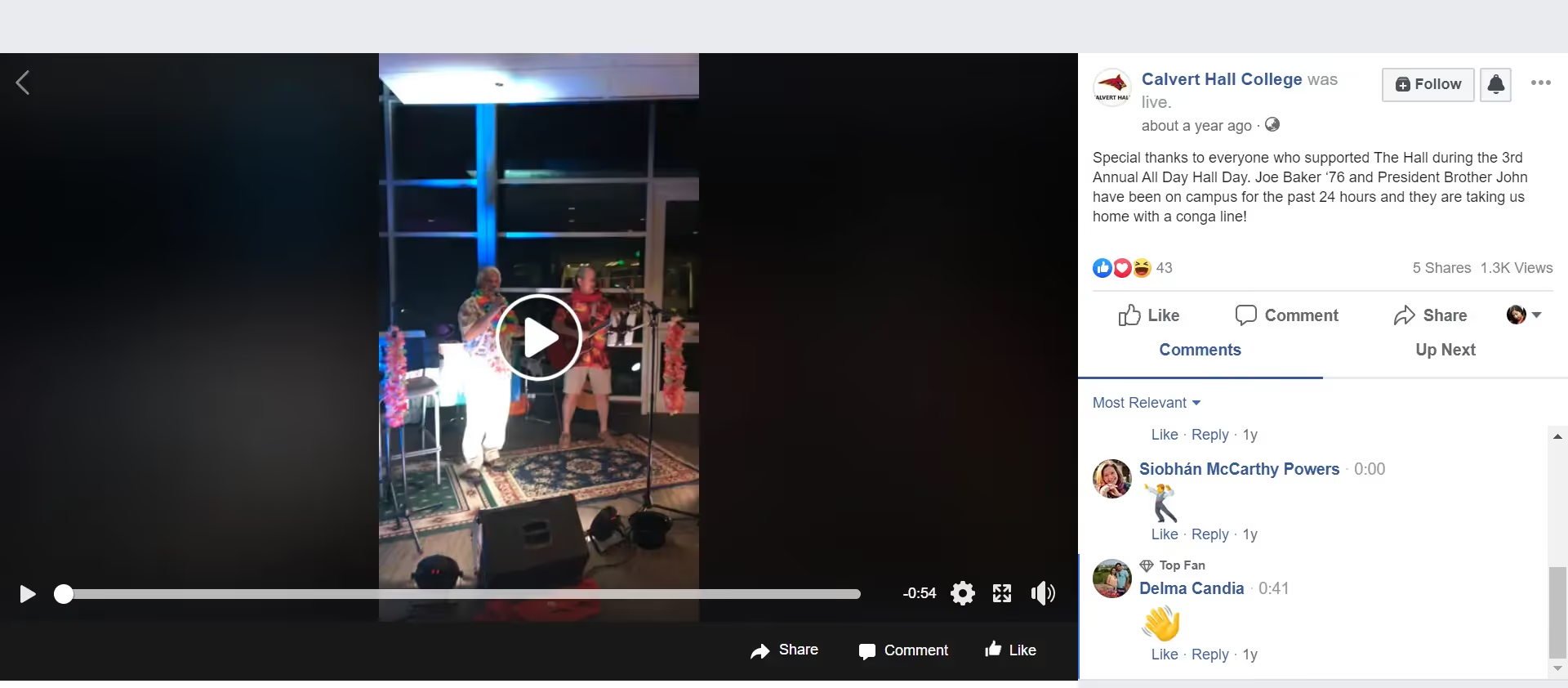
Email marketing continues to play a crucial role in the success of Giving Days for most schools.
Here’s a look at how email marketing has been leveraged by schools to boost Giving Day donations:
While schools start planning their Giving Days much ahead, why don’t a lot of them recognize the need to market their campaign in advance? From the initial announcement informing potential donors about the campaign right down to the thank-you email to all participants, every email must be well-timed and carefully crafted. At the same time, be careful not to overdo it by sending too many emails. Take a cue from Scranton Preparatory School’s immaculate planning for the school’s Giving Day 2022 campaign.
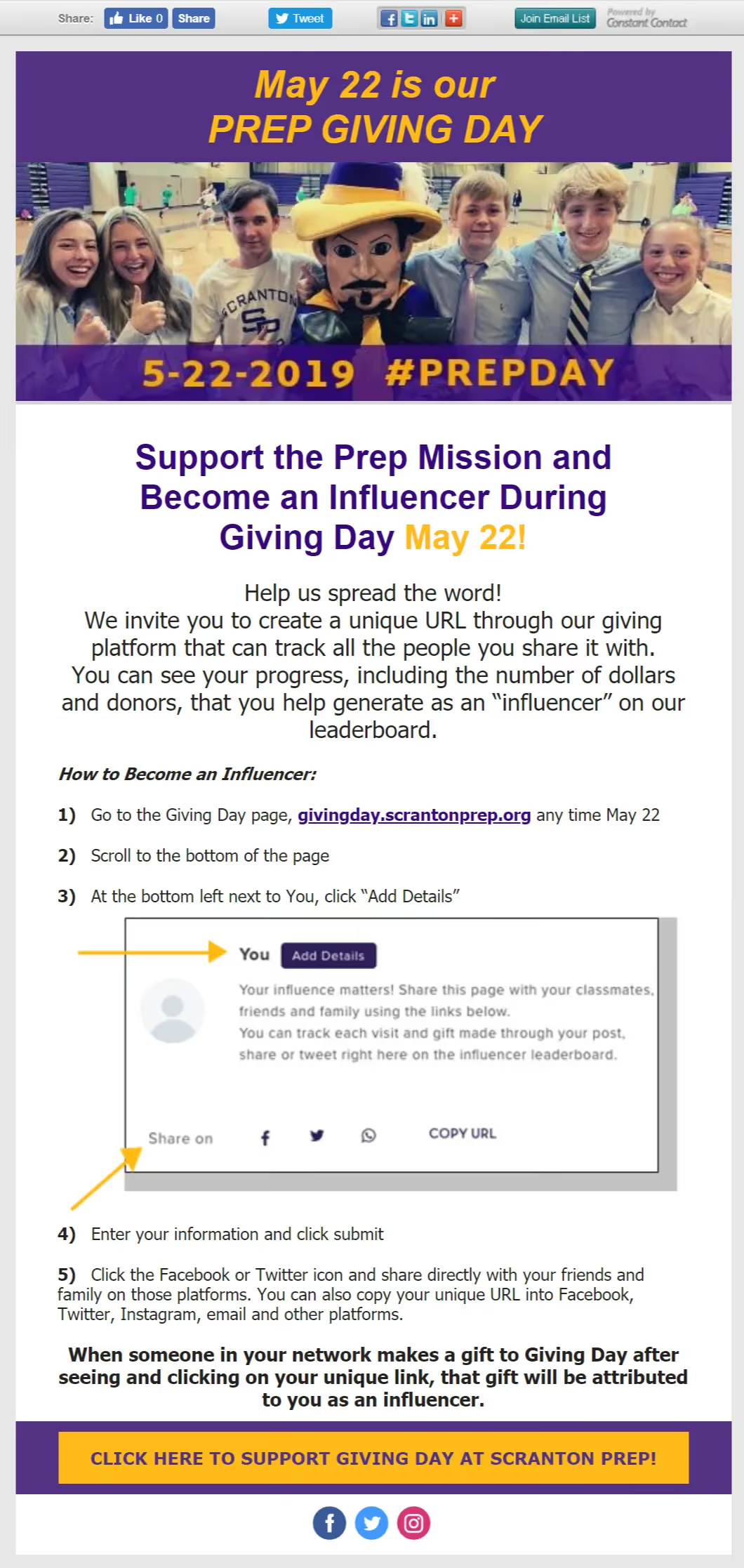
In addition to generating awareness about the upcoming Giving Day via emails, another way of capturing donors is by informing them of incentives. By providing exclusive benefits to select donors, the chances of securing early bird donations significantly increase.
Your approach to marketing a Giving Day can vary greatly depending on who you’re reaching out to. Long-time donors, for instance, are the most loyal of your followers and therefore, it is best to personalize your approach while asking for their contribution. Here’s how Scranton Preparatory School created a customized email invite for its Class of ‘79, asking for their support during the school’s Giving Day 2019 campaign.
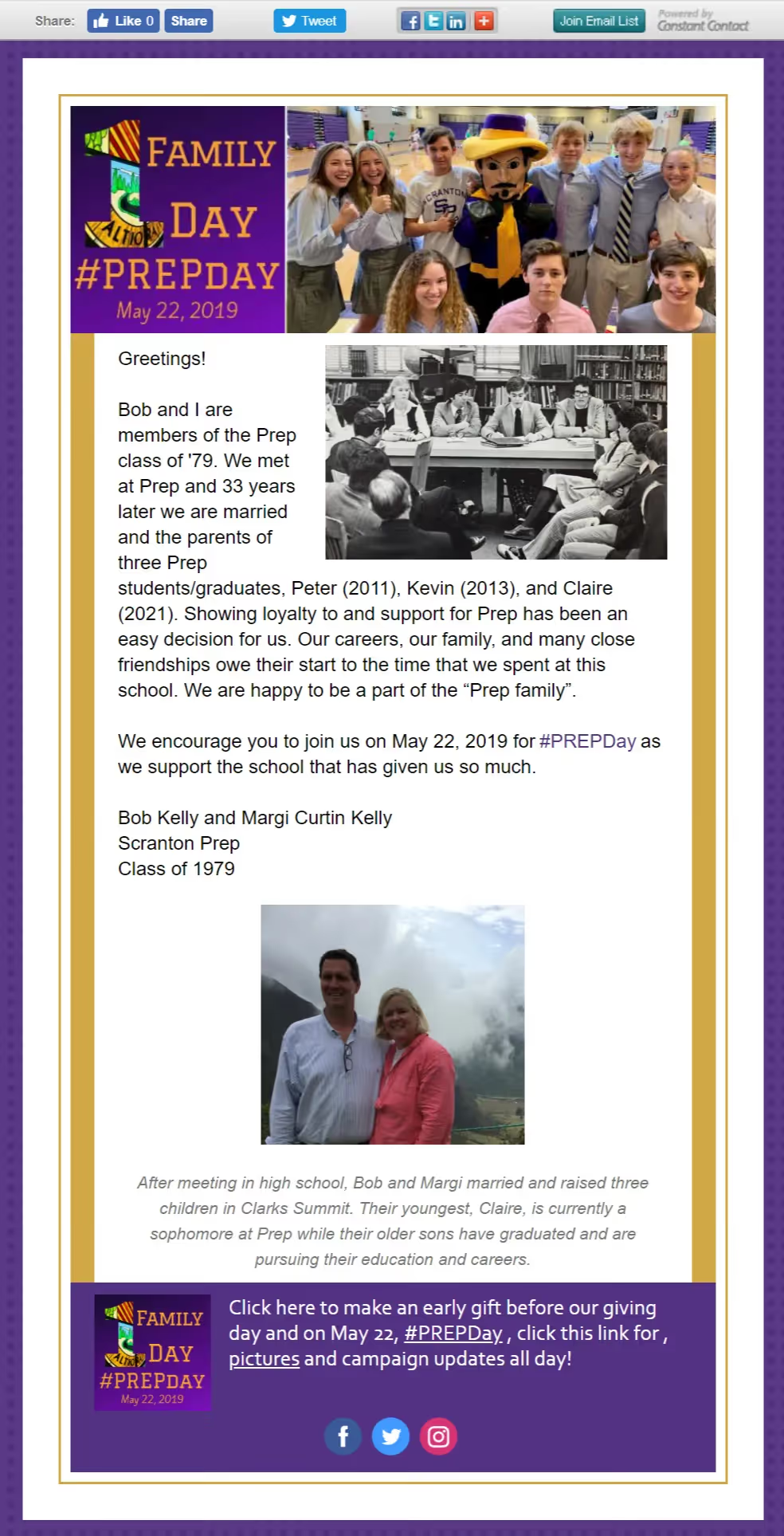
Peer-to-peer fundraising has proven to be highly effective for most schools. Emails or referrals from peers help create a personalized touch and act as a strong incentive for fellow alumni to contribute.

8 Proven Ideas for Promoting Giving Days
Lorem ipsum dolor sit amet, consectetur adipiscing elit. Suspendisse varius enim in eros elementum tristique. Duis cursus, mi quis viverra ornare, eros dolor interdum nulla, ut commodo diam libero vitae erat. Aenean faucibus nibh et justo cursus id rutrum lorem imperdiet. Nunc ut sem vitae risus tristique posuere.
%201.svg)
%201.svg)
%204.svg)




.svg)