The way alumni give is changing across generations. This blog explores what motivates today’s donors from cause-driven giving to long-term institutional loyalty and what advancement teams need to adapt.

Chetana More
Published:
June 18, 2026

Discover AI Summary
• Recognize that alumni generosity hasn't disappeared, it's diversified: Different generations care deeply about giving, but they express that generosity through different channels, causes, and decision-making processes.
• Shift fundraising conversations from institutional need to donor impact: Alumni are more likely to engage when they understand the tangible outcomes their support creates.
• Build giving experiences that match modern donor expectations: Mobile-first experiences, digital payment options, and frictionless donation journeys are no longer optional for reaching younger audiences.
• Personal relevance is becoming one of the strongest drivers of participation: Alumni respond more positively when campaigns align with their interests, identities, experiences, and values.
• Invest in connection long before a fundraising ask: The strongest donor relationships are often built through storytelling, volunteering, events, and community engagement long before a gift is requested.
If I had a penny for every time someone said ‘young alumni just don’t give back anymore’. I’d probably have enough to make a donation myself.
It’s one of the most common assumptions in advancement today, that younger alumni simply aren’t as philanthropic as previous generations.
But the data tells a much more interesting story!
Different generations aren’t less generous than each other. They just think about giving very differently.
A younger alum might donate to a student emergency fund late at night after seeing a story online. An older alum might make the same-sized gift weeks later after thoughtfully reading through a campaign email.
Same generosity. Completely different behavior.
That’s one of the clearest patterns emerging from the 2026 National Alumni Survey, which gathered responses from nearly 82,000 alumni across 31 institutions.
And honestly, it explains a lot about why some fundraising strategies feel harder than they used to.
One of the most interesting findings from the National Alumni Survey, 2026 is that younger alumni are still highly charitable. They’re just not prioritizing institutions in the same way older generations traditionally have.
While older alumni are more likely to give consistently to their alma mater, younger alumni tend to spread their support across causes that feel immediate, visible, and personally relevant.
That changes the nature of fundraising itself.
The question is no longer simply:
“Do alumni care about us?”
It’s:
“Why does supporting us matter right now?”
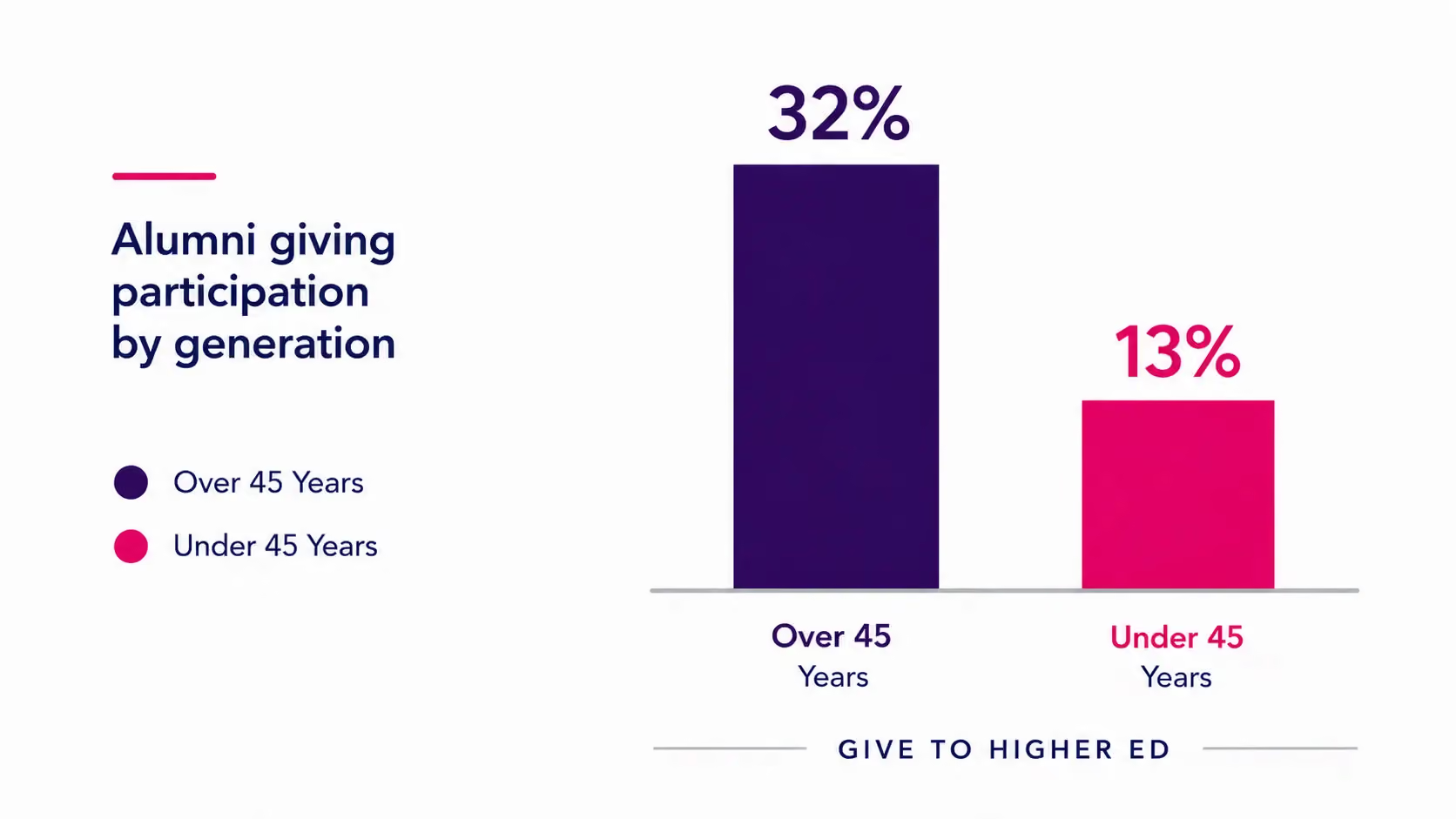
The survey found that only 13% of Millennial and Gen Z alumni reported giving to higher education in the past year, compared to 32% of older alumni.
At first glance, that sounds alarming. But the bigger story is what happens next because, younger alumni are giving. Just elsewhere.
For many older alumni, giving to their institution is often tied to long-term loyalty. It’s part of staying connected.
Younger alumni approach philanthropy differently. They’re more likely to support:
The NAS found that:
And honestly, this shift makes sense when you think about how people engage online today. Most younger donors are constantly exposed to stories that feel personal, urgent, and highly visible.
That preference matters. Because broad institutional messaging often struggles to compete with campaigns that feel deeply human and immediately tangible.
People want to know:
And institutions that answer those questions clearly are seeing stronger engagement.
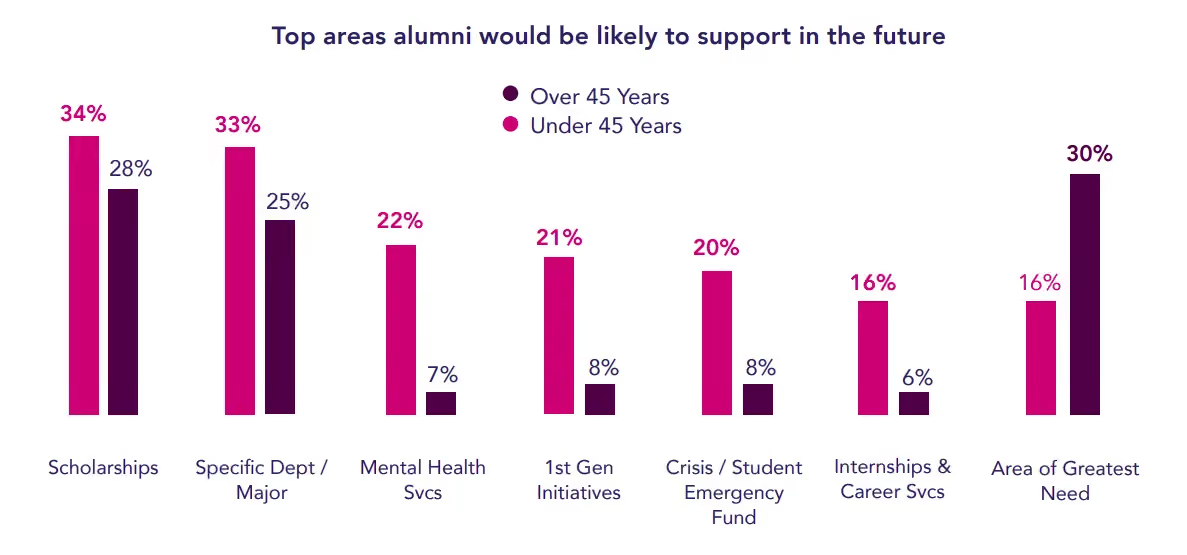
That’s part of why some of the strongest-performing campaigns right now tend to be highly focused:
Not because alumni suddenly stopped caring about institutions. But because specific impact feels easier to connect to.
The survey also revealed a major difference in giving behavior itself.
Older alumni are far more likely to give on a recurring or planned basis. Younger alumni? Much more reactive.
Many contribute when something feels urgent, timely, or emotionally compelling. That means traditional fundraising rhythms don’t always align with how younger donors make decisions anymore.
Annual campaigns and fiscal-year messaging still matter. But increasingly, alumni are responding to moments rather than schedules, and digital behavior plays a role here too.
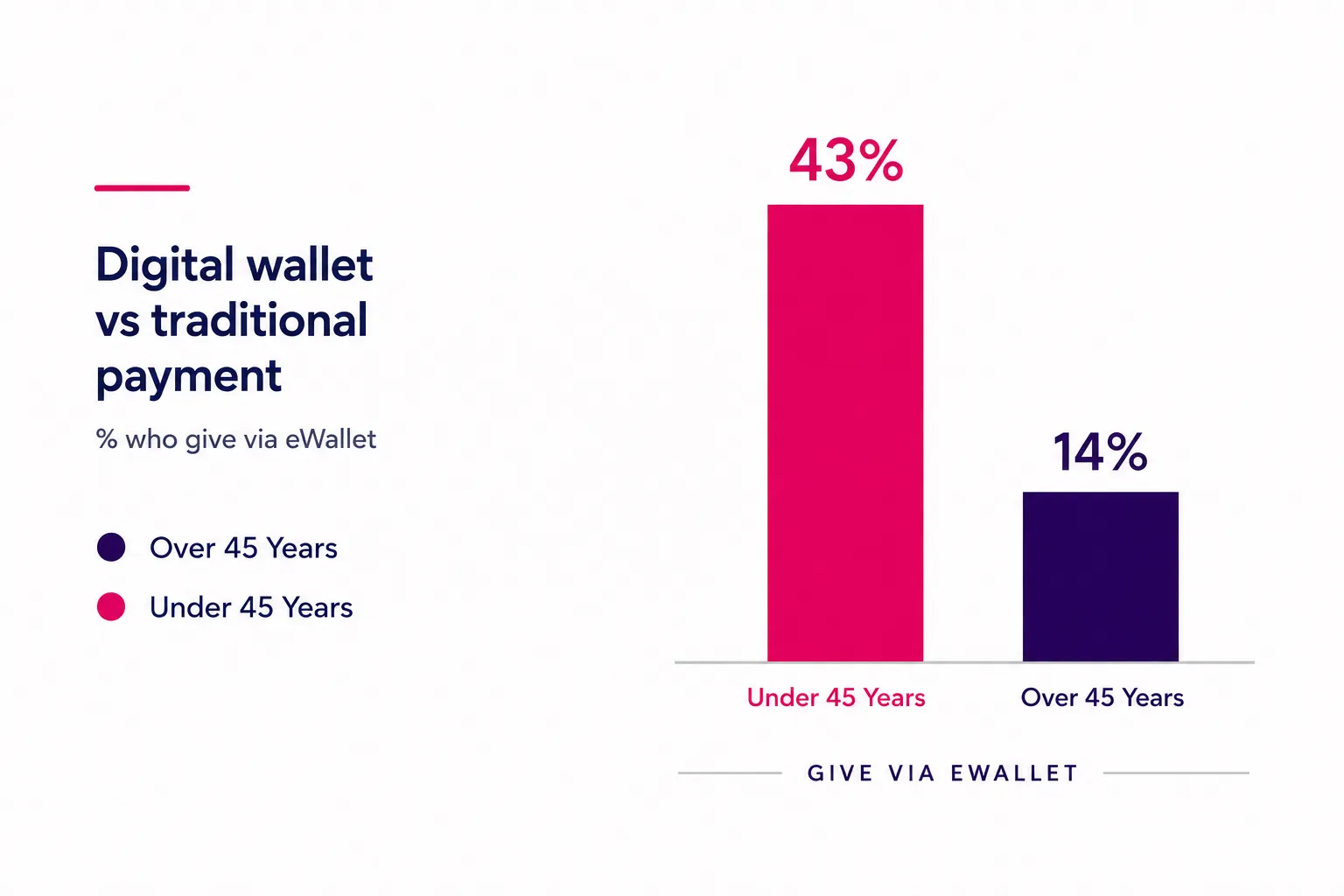
The NAS found that younger alumni were significantly more likely to use:
Meanwhile, older generations still showed a stronger preference toward traditional online giving methods and planned contributions.
And suddenly, small details matter a lot more.
A slow donation page. Too many checkout steps. A giving form that doesn’t work smoothly on mobile.
Those things create friction younger alumni rarely tolerate. Because digital experience is no longer separate from fundraising strategy. It’s part of the fundraising experience itself.
Another important shift from the NAS findings is around why alumni choose to give. Older alumni are often motivated by:
Younger alumni tend to prioritize:
And honestly, this shift makes sense too. Younger generations grew up in an environment where trust is earned constantly, not assumed automatically. So broad messaging around institutional pride often lands differently than it once did.
What tends to resonate more are things that feel specific and tangible. A student story, a visible outcome, or a campaign where alumni can clearly see the impact of their contribution.
The NAS doesn’t suggest abandoning traditional fundraising strategies. But it does suggest that relying on a single approach is becoming riskier. Because alumni expectations are diversifying faster than many engagement strategies are adapting.
Some patterns are becoming increasingly clear:
Especially with younger alumni. Broad “support the institution” messaging often underperforms compared to focused campaigns connected to specific outcomes or communities.
That’s part of why many institutions are seeing stronger engagement through Giving Days, crowdfunding campaigns, and donor-choice initiatives that feel more tangible and immediate.
For example, the University of North Carolina School of the Arts expanded its Giving Day campaign to include more than 40 donor-choice funds, allowing alumni to support causes they personally connected with rather than contributing to a single broad campaign.
And honestly, that shift reflects a larger behavioral pattern the NAS surfaced throughout the data: people are far more likely to engage when the impact feels visible and personally relevant.
The survey repeatedly showed that alumni who feel informed, understood, and connected are significantly more likely to give.
That means relevance matters more than frequency.
Increasingly, institutions are moving away from broad alumni-wide messaging and toward more targeted engagement, whether that’s identity-based campaigns, segmented storytelling, personalized event outreach, or communications tied to specific interests and life stages.
We’re already seeing this shift show up across alumni engagement strategies tied to volunteer communities, affinity groups, and donor interest areas, where institutions are focusing less on sending more communication and more on making communication feel genuinely relevant.
Because when communication reflects what alumni actually care about, engagement feels far more meaningful and less transactional.
Connection drives giving. The institutions seeing stronger donor participation are often the ones investing consistently in:
Because by the time someone makes a gift, the relationship has usually been building long before the donation page appears.
That’s also why volunteer engagement stands out so strongly in the NAS findings. Alumni who volunteer tend to feel significantly more informed and connected to their institution, and those feelings often translate into stronger long-term philanthropic behavior over time.
And that’s really the bigger takeaway here:
Fundraising outcomes are increasingly tied to how connected alumni feel before an ask is ever made.

This isn’t about one generation caring more than another. It’s about understanding that generosity now looks different depending on who you’re speaking to and the institutions adapting fastest are the ones paying attention to those differences early.
The biggest takeaway from the National Alumni Survey isn’t that alumni generosity is declining. It’s that alumni expectations are evolving.
Younger donors still want to support causes they believe in. Older donors still value long-term institutional connection. Both groups care deeply, just in different ways.
Which means advancement teams can no longer rely on a one-size-fits-all engagement strategy.
The institutions that succeed over the next decade will likely be the ones that understand this shift early and build fundraising experiences around relevance, trust, and connection.
Table of Contents
Subscribe
See how modern advancement teams bring alumni engagement and fundraising together.
Young alumni engagement has long been one of advancement’s most persistent challenges. Low event attendance. Limited giving. Minimal volunteer participation.
But what if the problem isn’t that young alumni don’t care?
In a recent webinar, Shweta Mathew sat down with Dr Amanda Shoemaker, Director of Advancement Operations at the University of Illinois’ College of ACES, to unpack exactly that. Drawing from Amanda’s doctoral research, the session moved beyond assumptions and into something more useful: real insights from young alumni themselves.
.png)
Across institutions, one pattern holds true:
Young alumni (graduates from the last decade) consistently engage less in events, volunteering, and giving, despite a wide range of opportunities available.
But this isn’t a story of complete disengagement. They’re still opening emails, following on social media, and staying loosely connected.
Which leads to the real question: Why does engagement drop off when it comes to deeper involvement?

Through in-depth interviews with recent graduates, Amanda identified three recurring themes that explain this gap.
Young alumni, along with attending something, want to see themselves involved in it. They’re asking questions that matter to them, such as, “Will I feel comfortable?” “Will I connect with someone?" etc.
In fact, one alum shared she avoided events where she’d be “the youngest person in the room by 20 years". That says it all.
Takeaway:
Engagement starts with peer connection.
Many young alumni want to get involved but don’t know how to. They aren’t aware of the opportunities that exist, or how to participate, or even what they will get out of it.
And when it comes to giving, misconceptions run deep:
At the core is one simple question:
“What’s in it for me?”
Takeaway:
Clarity and value communication matter more than volume of outreach.
Early adulthood is chaotic, where everyone gets busy paying off loans, building careers or saving up for big life milestones.
Even when intent exists, engagement often depends on whether it’s convenient, timely or easy to act on.
As Amanda put it, engagement needs to “fall into place".
Takeaway:
It’s less about willingness and more about whether opportunities “fit” into already busy lives.

One of the most surprising findings?
Many young alumni are open to giving. Even small amounts.
What stops them is perception because they end up assuming that small gifts don’t matter, or their impact won’t be visible, or they postpone their giving for “later in life”.
But consistent, small contributions are exactly what build long-term philanthropic habits.
A $5 gift today is more powerful than a $500 gift ten years later if it builds consistency.
The good news: solving this doesn’t require massive overhauls.
Small, intentional shifts can make a big difference.
The most engaged alumni?
Those who were engaged as students.
Build habits early around student-alumni programs mentorship opportunities, and exposure to advancement work.
Reframing the narrative around small, consistent contributions can help young alumni see that participation matters more than the amount.
Ultimately, the biggest shift is in perspective. Instead of asking why young alumni aren’t showing up, institutions might need to ask whether they are making engagement clear, relevant, and worthwhile. Because the reality is, young alumni aren’t disengaged; they’re just waiting for experiences that truly fit their lives.
If you’re interested in exploring Amanda’s research in detail, check out her full dissertation.
We also host Lunch & Learn sessions, smaller, personalized conversations where we dive into your institution’s specific challenges and opportunities around alumni engagement.
And if you’d like to see these insights come to life, watch the full webinar recording here.
Why Young Alumni Engagement Feels Difficult and What We Can Do About It
Why engaging young alumni often feels like an uphill task—and, in this webinar recap with Amanda Shoemaker, we unpack the small, strategic shifts institutions can make to turn it around.
Lorem ipsum dolor sit amet, consectetur adipiscing elit. Suspendisse varius enim in eros elementum tristique. Duis cursus, mi quis viverra ornare, eros dolor interdum nulla, ut commodo diam libero vitae erat. Aenean faucibus nibh et justo cursus id rutrum lorem imperdiet. Nunc ut sem vitae risus tristique posuere.

April 23, 2026
12 minutes
Gen Z is the generation born between 1997 and 2012. As current high school students, college students, and young alumni, Gen Z is the prime audience for your university’s digital content. But is your higher education website meeting their needs effectively?
The top college websites are user-friendly, accessible, mobile-compatible, and unique. They offer the authenticity that students and young alumni need to feel strongly connected to their alma mater. If your website isn’t clearing that bar, it could be time for a Gen Z-focused reset.
A Gen Z-friendly website is especially important as more Gen Z members become young alumni. Gen Z's philanthropic engagement has increased by 22% since 2021, making your young alumni a key audience for your university's fundraising efforts.
Below, we’ve created a self-assessment tool with questions to help you determine whether your website is meeting the needs of your Gen Z audience, organized by key website features. Use these guiding questions and tips to help you determine your website’s current state and growth path.
Morning Consult’s Most Trusted Universities report found that, among the four generations surveyed (including Millennials, Gen Z, and Baby Boomers), Gen Z is the least likely to trust higher education institutions. As your digital home, your higher education website is among your strongest tools for building trust with Gen Z students and alumni.
Gen Z craves social proof in the form of unfiltered reality rather than curated experiences. Your website should appeal to that preference by:
These content strategies ensure your digital presence reflects and prioritizes student voices.
Young alumni donors want to see the immediate, tangible impact their contributions will have before deciding to give or engage with your alumni giving program. To meet Gen Z's demand for authenticity, impact stories should focus on individual stories rather than general institutional updates.
For example, avoid generic, nebulous fundraising requests like “Please give to our annual fund.” Instead, send an email asking young alumni to “Help first-generation student Sarah fund essential cancer research to complete her senior thesis.” The second option pulls potential Gen Z donors directly into the story of a real student on your campus who needs help.
Your higher education website must be fully mobile-optimized, as a Harmony Healthcare IT survey found that Gen Z spends an average of 6 hours and 27 minutes on their phones every day.
A seamless, mobile-optimized giving experience is an essential step toward making alumni giving more convenient and less intimidating for Gen Z.
Your website should look good on any device, whether visitors are using a laptop, an Android device, or an iPhone. Keep these elements in mind when optimizing your website for mobile devices:
Your institution can further enhance engagement by creating mobile-friendly online forums or Facebook groups to foster a sense of community among young alumni.
Digital wallets such as Apple Pay, Google Pay, and PayPal are now the third most popular way donors give to nonprofits, surpassing traditional methods like checks.
If your donation checkout process requires entering a 16-digit credit card number and a billing address, Gen Z members won’t take the time to complete their transactions. Integrate one-touch payment options via digital wallets to reduce friction and increase young alumni giving.
An EAB survey found that nearly half of high school students now use AI tools such as ChatGPT and Gemini during their college search, a sharp increase from 26 percent in spring 2025. If your website is invisible to AI search tools, it’s invisible to potential applicants.
GEO is the term for optimizing a website to appear in generative AI search engines for specific queries. Users tend to interact with AI-powered search tools much more conversationally than with traditional search platforms, because they can ask multi-part questions and receive personalized answers.
To ensure your website appears for highly-targeted searches, Kanopi Studios’ guide to AI for higher education recommends providing “specific information on your website that highlights your unique credentials and offerings.”
For example, if your coastal university wants to increase traffic from potential applicants looking for schools by the beach, you could include keywords such as “universities with the best ocean views” and “colleges 30 minutes from the beach” on your student life page.
The National Alumni Survey discovered that only 14% of alumni believe their institution has a good understanding of their current career or life stage. Increase alumni engagement and retention by creating secure portals where they can log in and see personalized gated content, such as a custom alumni or student dashboard that displays relevant information, deadlines, and upcoming events.
Potential and current students, as well as young alumni, want to feel included in your university’s community. They want real-time, transparent information to help them navigate your application process, student life, or the post-grad experience.
Higher education website design and development isn’t just about how your website looks. Gen Z wants to find answers and information about the questions and causes they care most about, such as:
Don’t make website visitors hunt for this information. Use your main navigation menu to share links to essential resources, including your campus security details, environmental sustainability reports, and DEI policies.
The National Alumni Survey found that the vast majority of alumni (86 percent) are very satisfied or satisfied with their student experience, but just 50 percent feel very satisfied or satisfied with their alumni experience. This stark contrast highlights a critical gap that higher education websites can easily address by improving event discoverability.
Though considered a digital-native generation, Gen Z alumni actually crave community. They rank networking opportunities, career support, and sporting events as the three most valuable services offered by their alma mater, demonstrating a clear desire for engagement. By spotlighting relevant event opportunities, your website can help them find their alumni niche.
Make it easy for Gen Z website visitors to find opportunities to connect, such as fundraising events, sporting events, networking meetups, and giving days, on your online calendar. Ensure your calendar offers all the need-to-know information for each event, including how to register, date, time, location, and any associated costs. Additionally, to fully support their desire for community and career development, offer clear information about local alumni groups to join, virtual career prep panels and webinars, and mentorship opportunities with current students.
So, how did you do? If you answered yes most of the time, congratulations; your website is probably in pretty good shape for engaging Gen Z. If you had a few more nos than you’d like, don’t panic. Start by addressing your site’s infrastructure, ensuring it's mobile-friendly and optimized for AI search. Then, build on your approach by layering in the personalization, community-building, and authenticity that Gen Z is looking for. As a result, you’ll be able to build a website that engages your core audience and helps them feel at home with your university.

Is Your Higher Ed Website Meeting Gen Z’s Expectations?
Audit your higher ed website with this self-assessment. Get tips for digital fundraising, mobile UX, and AI discoverability to engage Gen Z students and alumni.
Lorem ipsum dolor sit amet, consectetur adipiscing elit. Suspendisse varius enim in eros elementum tristique. Duis cursus, mi quis viverra ornare, eros dolor interdum nulla, ut commodo diam libero vitae erat. Aenean faucibus nibh et justo cursus id rutrum lorem imperdiet. Nunc ut sem vitae risus tristique posuere.

April 23, 2026
12 minutes
Strong alumni engagement is one that can create relationships that actually last. Institutions need to show how engagement translates into real participation, better retention, and long-term giving. Just tracking activity numbers doesn't cut it anymore. And as alumni populations become more diverse and scattered across the globe, the playbook must evolve to keep up.
Alumni want communication that matters to them: flexible ways to stay involved, experiences that actually match their interests and where they are in life. Generic outreach and jam-packed event calendars deliver spotty results at best. That's why institutions are going back to the drawing board, looking for fresh approaches and building strategies they can actually measure and adjust as they go.
This blog breaks down what modern alumni engagement looks like, why the old methods might fall short, and how you can build a strategy that scales.
Alumni engagement could get mixed up with outreach, but they're not the same thing. Sending emails, promoting events, posting updates are just activities. Real engagement shows up in how alumni actually respond, participate, and stick around over time. The distinction matters because you can blast out communications all day long without building a single meaningful relationship.
These days, engagement comes down to relevance and consistency. Alumni expect you to meet them where they are now, not where they were when they graduated. A recent grad trying to figure out their career path needs something completely different from a mid-career professional who wants to mentor someone, or a senior alumnus thinking about their legacy. When you ignore these shifts, people don't usually make a big exit. They subtly slip away.
Another important shift is how alumni define involvement. Many are open to contributing time, expertise, or advocacy long before they are ready to give financially. Modern engagement recognizes these signals as meaningful indicators of affinity instead of treating fundraising as the first or only goal.
In this context, alumni engagement becomes an ongoing system rather than a series of touchpoints. It connects communication, participation, and insight into a continuous loop that informs what comes next. Institutions that approach engagement this way gain a clearer picture of who their alumni are, what they care about, and how relationships evolve after graduation.
If you’re exploring how institutions are rethinking alumni engagement, you may also find our blog on modern-day alumni engagement and fundraising useful.
A lot of traditional alumni engagement strategies fall short, and it's not because teams aren't trying hard enough. The real problem is that systems underneath were never built for how alumni actually engage today. Tools, data, and workflows have all evolved separately, leaving advancement teams with a patchwork view of their alumni and no clear way to act on what they're seeing.
One common issue is siloed data. Event attendance may live in one system, email engagement in another, and giving history somewhere else entirely. Without a shared view, it becomes difficult to understand patterns or tailor outreach in meaningful ways. Engagement decisions end up driven by habit over evidence.
Another challenge is one-size-fits-all communication. Alumni are frequently grouped into broad segments based on graduation year or geography. These categories miss what actually drives participation, such as career interests, past involvement, or preferred ways of contributing. The result is outreach that comes across as generic and is easily ignored.
Traditional approaches also rely heavily on a narrow set of channels. Email and in-person events remain important, but over-reliance on them creates engagement that is episodic rather than continuous. When engagement spikes only around reunions or campaigns, momentum is hard to sustain.
Finally, many institutions lack clear ways to measure engagement itself. Without defined metrics or feedback loops, teams are left reacting to declining participation instead of proactively shaping stronger alumni relationships over time.
Up next, we’ll look at the core elements that define a modern alumni engagement strategy and how they address these gaps directly.
A modern alumni engagement strategy is not built on isolated tactics. It rests on a small set of foundational elements that work together. When one pillar is weak, engagement tends to feel inconsistent or hard to sustain. But with all five in place, institutions can expect to gain clarity, scale, and momentum.
Engagement starts with knowing who your alumni are. Many institutions hold fragments of alumni data across multiple systems, which makes it difficult to understand behavior or track engagement over time. A unified data foundation brings profiles, interactions, and history into one view.
This matters because engagement decisions improve when teams can see patterns. For example, alumni who attend events, mentor students, or update their profiles often show higher long-term affinity. Without connected data, these signals remain invisible and underused.
Gone are the days when personalization meant adding a first name to an email. Modern engagement uses behavioral and interest-based signals to shape how alumni are invited to participate. What someone clicks, attends, or volunteers for should influence what they see next.
Institutions that move in this direction often see stronger participation because outreach aligns with alumni intent. Industry research frequently shows that relevance drives response, while generic messaging suppresses it. This shift allows teams to personalize without creating manual work for every segment.
Events still play a role, but they no longer carry engagement on their own. Modern strategies create ways for alumni to participate year-round through communities, mentoring, volunteering, directories, and peer interaction.
These touchpoints keep alumni connected even when they cannot attend in person. They also generate continuous engagement data, which helps institutions understand what resonates across different alumni groups.
Engagement becomes strategic when it can be measured and connected to outcomes. Participation trends, repeat involvement, and progression toward giving readiness provide a clearer picture than isolated activity counts.
Many institutions now track engagement as a leading indicator rather than looking at donation behavior alone. This approach supports smarter planning and better alignment between alumni relations and advancement teams.
Teams today are expected to do more with limited resources. Automation supports consistent engagement by triggering timely outreach, updates, and follow-ups based on alumni behavior. AI further helps by identifying patterns and recommending next actions.
Want to see how institutions put these pillars into practice? Check out this blog on how advancement teams can start by learning from peers who have modernized their alumni engagement strategy and turn engagement into sustainable fundraising.
A modern alumni engagement strategy becomes effective only when it is translated into a clear, repeatable plan. This plan should guide day-to-day decisions, not sit separately from execution. Each step below builds on the previous one, moving from clarity to action to continuous improvement.
Begin with a clear-eyed review of your existing engagement ecosystem. This includes tools, channels, data sources, and internal workflows. List every way alumni can currently engage, such as events, emails, mentoring, volunteering, communities, and giving, and note which systems capture those interactions.
This step is critical because many institutions significantly overestimate engagement. CASE research shows that fewer than 20% of alumni are meaningfully engaged in a given year when engagement is measured across participation, volunteering, and philanthropy.
Once activities are mapped, look for gaps. Identify where engagement data is fragmented, where follow-up depends on manual effort, and where teams lack visibility into alumni behavior. The goal is not to evaluate performance yet, but to understand what can and cannot currently be measured or scaled.
Define what your engagement is meant to achieve. When can it be considered a success? Modern engagement goals focus on outcomes such as participation depth, retention, pipeline to giving, and long-term relationship strength. They are not framed around volume alone.
Effective goals answer questions like how often alumni should engage, what progression looks like over time, and how engagement supports broader institutional priorities. This clarity helps teams move away from reactive planning and toward intentional design.
Goals should also be shared across alumni relations and advancement teams. When engagement is positioned as a contributor to long-term fundraising and advocacy, it becomes easier to align priorities and measure success consistently.
Modern engagement strategies nowadays reflect lifecycle stages, moving from students to young alumni, mid-career alumni, and senior alumni. Each stage should offer relevant opportunities, whether that is career support, mentoring, volunteering, networking, or leadership involvement. Journeys work best when they guide alumni forward instead of repeatedly inviting them to the same activities year after year.
Designing journeys also helps institutions anticipate needs rather than reacting after engagement declines. It creates continuity and makes engagement feel purposeful rather than sporadic.
Technology should play a supporting role to lift your strategy. At this stage, institutions should focus on capabilities rather than vendors. Key considerations include CRM integration, automation, reporting, community features, and the ability to scale without increasing manual workload.
The right platform enables consistent engagement, captures behavior across channels, and provides visibility into participation and readiness over time. Without these capabilities, even well-designed journeys become difficult to sustain.
Measurement turns engagement into a growth system. Instead of tracking isolated activities, focus on participation trends, repeat involvement, and progression across engagement types.
Institutions that consistently review engagement data and adjust accordingly perform better over time. Measurement only works when paired with iteration. Regular review cycles help teams identify what is resonating, where alumni disengage, and which experiences strengthen relationships. Check out this list of donor KPIs you can track for valuable engagement data
Alumni Engagement Ideas That Work in Modern Institutions
Building a strategy is one thing, but what really pays off is bringing it to life with ideas that actually resonate with alumni. Below are engagement ideas grounded in real examples from actual institutions and industry best practices.
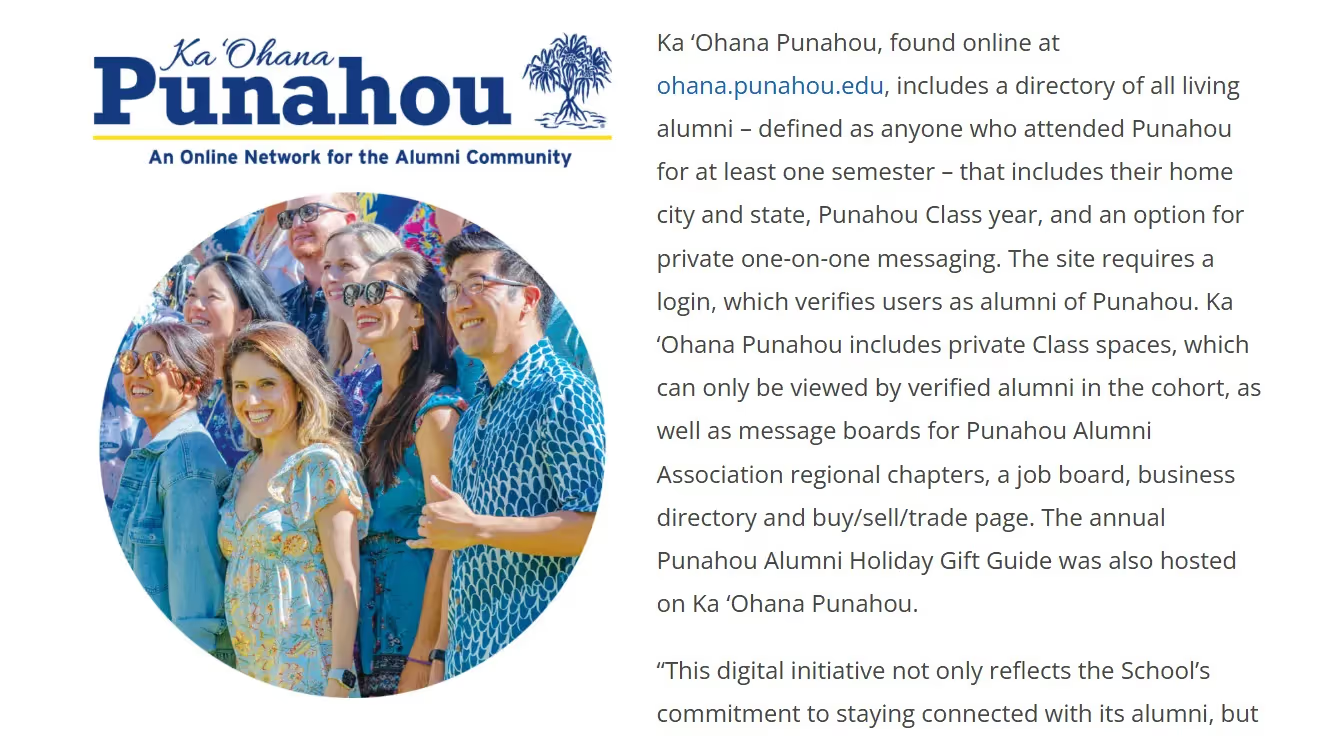
Punahou School in Hawaii created an integrated digital alumni platform called Ka ‘Ohana Punahou that goes beyond email newsletters. The portal includes an alumni directory, private class spaces, message boards for regional chapters, job boards, business listings, and more. Since its launch, about 7,000 alumni visit the platform monthly and roughly 70% of contactable alumni have engaged with it. This is a community hub that keeps alumni connected and interacting year-round.
What you can do:
This turns one-way communication into an always-on engagement hub.
Connecting alumni with current students through structured mentorship programs fosters meaningful relationships while enhancing career opportunities for students. These programs also provide alumni with a tangible way to give back beyond financial contributions.
William & Mary redesigned its alumni engagement by building the One Network. As part of this, the university rebranded traditional mentorship into a more accessible “career connections” program enabling alumni to mentor students and recent grads in professional development. Using this targeted platform helped the institution better match alumni capabilities with student needs and boosted engagement across career networking and event participation.
What you can do:
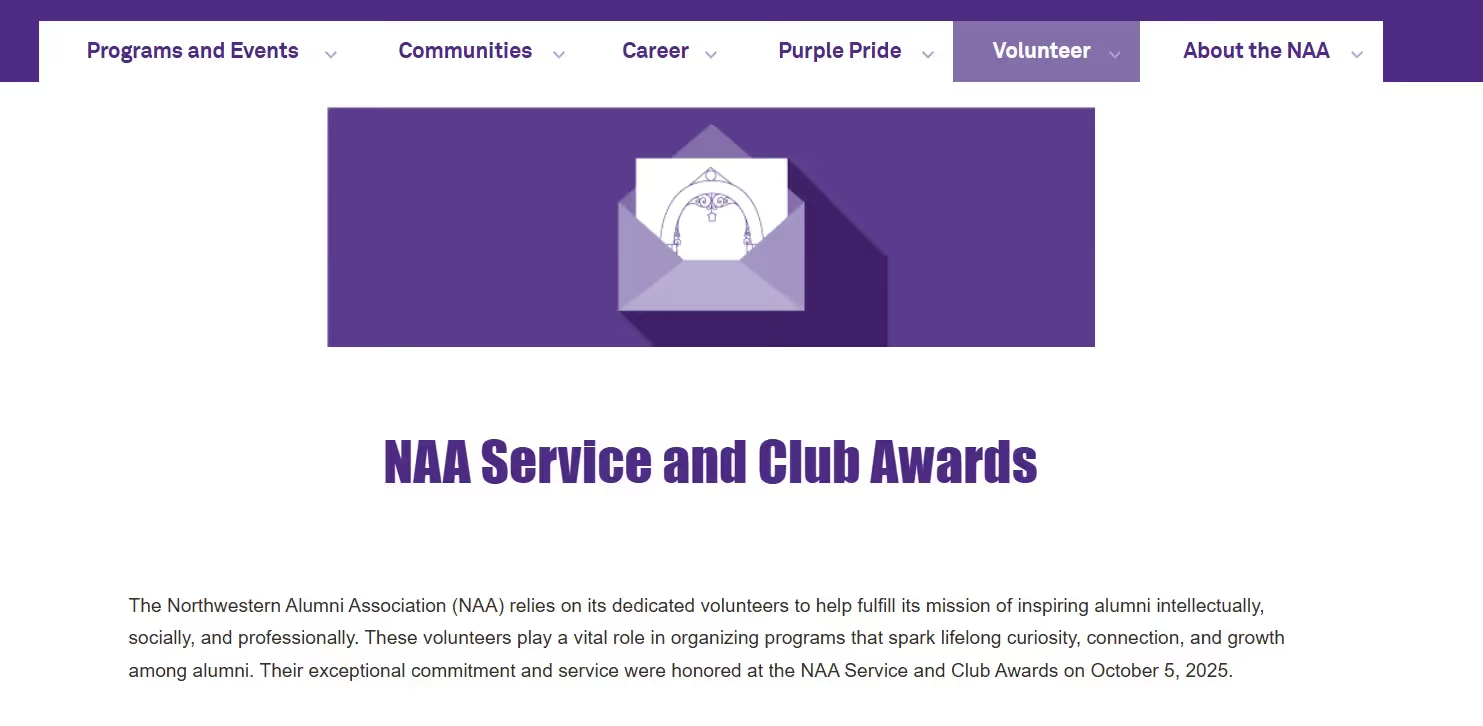
Northwestern University’s Alumni Association offers a variety of awards recognizing alumni achievements from career success to volunteer leadership and community involvement. These awards celebrate clubs, individuals, and volunteer contributions, making recognition a central driver of engagement and community pride.
How to turn this into action
This type of recognition reinforces alumni identity and gives alumni a reason to stay connected beyond transactional interactions.
Events remain one of the most powerful ways to bring alumni back into active engagement but the ones that truly work are purposeful, memorable, and tailored to alumni interests or milestones.
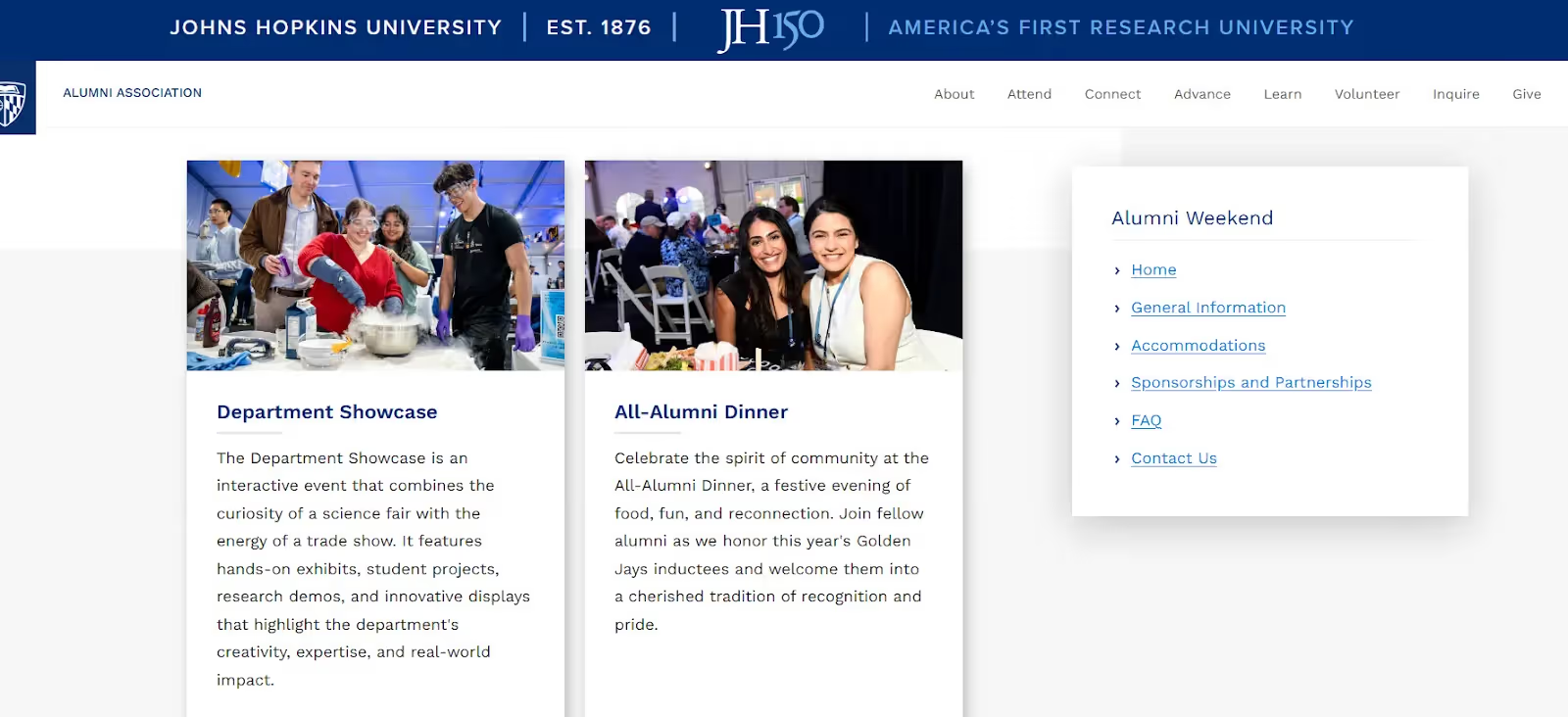
Johns Hopkins hosts an annual Alumni Weekend that goes far beyond a simple reunion. The multi‑day program includes signature events like interactive department showcases, alumni dinners, a traditional Crab Cake Lunch, social mixers, and even big‑game tailgates. It’s designed to appeal to diverse alumni interests from intellectual curiosity to social celebration, and draws alumni back to campus not just once, but year after year.
See the full list of signature Alumni Events here.
Effective alumni are more than simple gatherings. They offer:
What you can do to make events that drive engagement
These examples show that effective alumni engagement goes beyond newsletters and occasional reunions. Institutions meet alumni where they are and engagement becomes ongoing and mutually beneficial.
Alumni engagement works best when it is treated as a system that grows over time. When alumni stay involved through mentoring, volunteering, events, or community participation, they are more likely to remain connected to the institution’s mission. That connection fuels fundraising, strengthens advocacy, and supports retention across generations of graduates.
Modern alumni engagement strategies reflect this long-term view. They are robust, well-rounded and intentional about how relationships are built and maintained, and they rely on data to guide decisions rather than assumptions. Instead of asking how many activities were run, successful teams focus on whether alumni are returning, deepening their involvement, and moving along a meaningful engagement journey.
Technology plays a critical role in making this sustainable. Without the ability to capture engagement signals, personalize experiences, and measure outcomes, even well-designed strategies lose momentum. Institutions that invest in the right foundations are better positioned to scale engagement efforts, adapt as alumni needs change, and build durable relationships that extend well beyond individual campaigns.
Building a modern alumni engagement requires a platform that brings data, engagement, and outcomes together in a way that supports everyday work. Almabase is designed specifically for institutions to support the core pillars of modern alumni engagement.
By unifying alumni data, engagement activities, and insights in one place, Almabase helps teams move from disconnected tools to manual processes. This creates the clarity and consistency needed to execute engagement strategies at scale.
With Almabase, institutions can centralize alumni profiles and engagement data to create a single, reliable source of truth. Teams can personalize outreach and engagement journeys based on alumni interests and behavior rather than one-size-fits-all approaches. Always-on engagement is supported through online communities, events, mentoring, and directories that keep alumni connected throughout the year.
Almabase also enables teams to track engagement alongside fundraising readiness and participation metrics, making it easier to understand how relationships evolve over time. Automation and AI-powered workflows reduce manual effort, allowing teams to focus on strategy, relationship building, and continuous improvement.
For institutions looking to modernize alumni engagement without adding operational overheads, Almabase provides the foundation needed to scale engagement efforts, improve visibility, and build stronger, long-term alumni relationships. See for yourself by booking a personalized demo today.

How to Build a Modern Alumni Engagement Strategy That Drives Real Results
Let's break down what modern engagement looks like in 2026. We'll cover what alumni expect, what's not working, and how to modernize your engagement.
Lorem ipsum dolor sit amet, consectetur adipiscing elit. Suspendisse varius enim in eros elementum tristique. Duis cursus, mi quis viverra ornare, eros dolor interdum nulla, ut commodo diam libero vitae erat. Aenean faucibus nibh et justo cursus id rutrum lorem imperdiet. Nunc ut sem vitae risus tristique posuere.

January 29, 2026
12 minutes

.svg)

.avif)
.webp)