As we approach the tail-end of 2025, we'd like to take you through some of these key trends for your year-end giving season plans and long-term plans in 2026.

Year-end giving has transformed from a simple donation cycle to a deeply personal journey of connection and impact. As we approach the tail-end of 2025, we've witnessing a positive shift in how alumni engage with their alma maters—moving beyond traditional fundraising to create meaningful, lasting relationships that resonate with individual passions and institutional missions.
In this blog, we'd like to take you through some of these key trends that you can use to inspire your year-end giving season plans as well as your long-term plans heading into 2025.
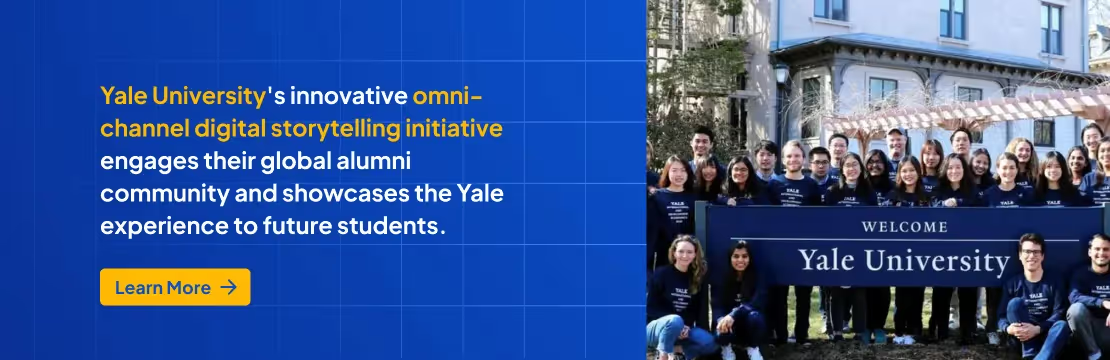
This year, storytelling has emerged as a powerful catalyst in alumni giving, transforming mere financial transactions into a method of reconnecting graduates with their institutional roots. Institutions are no longer just asking for donations; they're inviting alumni to be part of a continued journey of progress and shared achievement.
1. Boston College’s Soaring Higher campaign, for example, linked giving to community service. It shared stories of how alumni contributions directly supported real-world projects. This heartfelt storytelling created a strong emotional connection, driving donations.
2. Columbia University made giving simple and personal by offering various options, including one-time gifts, recurring donations, and planned giving. Alumni could support causes they cared about—like scholarships, research, or campus improvements—and even choose specific schools or initiatives. This personalized approach connected alumni across generations to the university’s mission.
Giving Tuesday has evolved from a single day of generosity to a global movement that captures the collective spirit of giving. We're seeing institutions harness this momentum not just as a fundraising opportunity, but as a platform for community building and shared purpose that extends beyond this 24-hour window.
1. The University of Cincinnati’s Bearcats Give campaign encouraged alumni to donate to causes that mattered most to them, from specific colleges to student programs. This tailored experience boosted engagement by making giving feel personal and impactful.
2. Kent State University also embraced this approach, allowing alumni to fund meaningful projects like study abroad scholarships or research fellowships. By incorporating matching funds and involving students in volunteer activities, they increased participation and contributions.
3. Boston University leveraged Giving Tuesday to promote sustainability initiatives. Their Sustainability Annual Fund supported programs such as the Climate Action Plan and Zero Waste Plans, drawing in alumni passionate about environmental causes.
The landscape of philanthropy is quietly being reshaped by Donor-Advised Funds, with 2026 marking a pivotal moment in how alumni approach strategic giving. What was once a complex financial tool has now become an accessible way for donors to create lasting impact, blending personal financial planning with meaningful, charitable contribution.
The National Philanthropic Trust reports that individual DAF donors granted $47.5 billion to charitable organizations in 2022, demonstrating their significant impact on philanthropic giving.
A Fidelity Charitable study found that 66% of DAF donors believe these funds allow them to be more strategic in their giving.
Many institutions are incorporating DAFs into their fundraising strategies to encourage larger and more sustained gifts from their alumni, particularly those interested in long-term impact.
1. The University of Michigan integrates DAFs into its planned giving strategies, helping alumni create legacies through endowments and large gifts. They provide resources to show donors how DAFs align with their goals.
2. Similarly, Harvard University promotes DAFs as a flexible giving option. High-net-worth individuals can support initiatives like student aid, endowed funds, or research while enjoying the tax benefits and simplicity DAFs provide.
DAFs simplify the giving process, allowing institutions to attract donors who might otherwise avoid the complexities of large-scale philanthropy. Additionally, they appeal to donors seeking flexibility in aligning their giving with personal or family charitable goals.
For too long, mid-level donors have been the unsung proponents of institutional fundraising. This year, we're witnessing a profound recognition of their true potential—not just as financial
contributors, but as the backbone of sustainable, long-term institutional support and community engagement.
Research from the Association of Fundraising Professionals reveals that mid-level donors are critical to nonprofit sustainability. The 2023 Fundraising Effectiveness Project found that mid-level donors (those giving between $1,000 and $10,000 annually) represent a crucial segment, with their contributions growing by 15.2% in the past year.
A study by the Nonprofit Research Collaborative shows that mid-level donors typically contribute at a more consistent level, with 68% maintaining or increasing their giving during economic uncertainties.
By cultivating these relationships with personalized communication and recognition, institutions can build loyalty and increase long-term support.
George Washington University launched the GW Loyalty Society to recognize alumni who consistently donate above a set threshold. Members receive exclusive updates and invitations to events, building loyalty without requiring major gifts. This approach aligns with research from the Center for Effective Philanthropy, which found that personalized recognition increases donor retention by up to 43%
As we look ahead to the remainder of the year, it’s clear that alumni giving trends are shifting in exciting and positive ways. From the emotional power of themed campaigns and storytelling to the growing impact of Giving Tuesday, institutions are finding creative ways to engage alumni.
The rise of flexible giving tools like Donor-Advised Funds and a renewed focus on mid-level donors are helping to build stronger, more sustainable connections.
What stands out most is the continued commitment to fostering a sense of community and connection. As alumni relations evolve, it’s heartening to see these efforts remain focused on creating meaningful, long-lasting ties with alumni. We hope these trends and strategies inspire you as you continue to strengthen your year-end giving campaigns and build lasting relationships with your alumni.
Subscribe
See how modern advancement teams bring alumni engagement and fundraising together.
Plan faster. Execute better
Explore free templates designed for alumni and fundraising teams.
.png)

.avif)
This is the season of charitable giving! We don’t know what it is about the holidays - the Christmas spirit of altruism or the December 31st tax receipt deadline. But we do know that we could expect an increase in donations coming in during this time of the year!
According to M+R Benchmarks Report, December giving accounts for 26% of annual nonprofit revenue.
This blog will help you amplify the impact of your year-end giving campaign. From crafting strategic partnerships to embracing innovative engagement techniques, we'll explore the key pillars that make a year-end initiative truly shine.
Achieving personalization at scale might seem daunting. Here's where donor segmentation steps in as a strategic powerhouse for a successful end-of-year campaign.
The essence lies in tailoring messages based on behavior or traits—grouping donors into categories like LYBUNT, SYBUNT, First-time donors, Young alumni donors, etc., and acknowledging their support through gift size categories. The mission is clear: make every message resonate uniquely.
You can also:
In the midst of the holiday hustle, Giving Tuesday stands out as the day for charitable giving. To harness its potential, precision is key—target the right donors with a compelling message that highlights your nonprofit's unique value proposition and the direct impact of Giving Tuesday contributions.
There are many ways you can make your Giving Tuesday a hit!
.webp)
.webp)
💡 With Almabase, you can seamlessly create engaging campaigns with leaderboards, thermometers, and more.
Strategic collaborations can elevate your year-end giving campaign to new heights. Imagine the resonance of every donation being doubled, not just by one entity but through a mix of foundations, companies, and dedicated alumni.
However, proposing custom matching gift initiatives to companies without existing programs may seem like opening new doors. The hack here lies in education and incentive. Provide a toolkit simplifying the process for both the company and your alumni, emphasizing the profound impact of matching gifts.
Personalization is your key to success. Tailoring messages to address donors by name, referencing their past contributions, and articulating specific impacts significantly elevates the efficacy of fundraising appeals.
.webp)
Some channels you can focus on:
.avif)
A robust follow-through strategy is essential in sustaining donor momentum throughout the year-end fundraising campaign. Continuous reminders, balanced urgency in messaging, and targeted follow-up appeals contribute to maintaining engagement without overwhelming donors.
We all know that swift acknowledgments significantly boost the likelihood of repeat donations, making prompt gratitude a strategic move. However, the art of appreciation extends beyond mere transactional gestures.
This might include weaving stories into thank-you letters that evoke emotion and connection, illuminating the journey of individuals or causes touched by the donor's support, emphasizing tangible change, or shifting the narrative to showcase the donor's role in solving the problem. You can also capture attention by strategically using visual cues such as brackets, PS lines, or bold/underlined text.

How to Amplify the Impact of the Year-End Giving Campaign?
Lorem ipsum dolor sit amet, consectetur adipiscing elit. Suspendisse varius enim in eros elementum tristique. Duis cursus, mi quis viverra ornare, eros dolor interdum nulla, ut commodo diam libero vitae erat. Aenean faucibus nibh et justo cursus id rutrum lorem imperdiet. Nunc ut sem vitae risus tristique posuere.
While the homecoming season is not over, 2024 has proven that educational institutions have learned much from previous years.
In this blog, we’d like to explore some interesting trends and strategies that we observed and what other institutions can learn from them. Let’s get started:
Author's Note: We chose these examples purely based on what we found interesting and no promotions, rewards, or affiliations were involved in the creation of this blog.
Many institutions continue to see the value of hybrid events to connect with a broader alumni base as it provide a mix of in-person and virtual experiences. By allowing alumni to participate regardless of their location, it reinforces the sense of community.
University of Maryland Global Campus (UMGC) and their Spirit Week featured global events, both virtual and physical, allowing alumni from different countries to join the celebrations. Participants engaged in creative challenges throughout the week via social media, using hashtags and even attending events in the Metaverse to feel more connected to their alma mater.

Illinois State University incorporated a hybrid approach with its "Town and Gown Hybrid 5K Run," combining a physical race and virtual participation to encourage broader alumni involvement. Virtual participants could run in their own location, submit their race times online, and even receive race shirts by mail. To foster engagement, participants were encouraged to share their experience on social media using the hashtag “#RedbirdHomecoming”.

It’s exciting to see that adding hybrid options to homecoming events is gaining popularity, with broadcasting key events like parades via live streams becoming a standard practice. This is a welcome development as it allows alumni to experience the vibrancy of campus life even from afar.
While post-event surveys are a valuable tool, simply sending out a form may not always entice alumni to participate. To improve engagement and gather richer feedback, institutions can enhance the way they collect and share insights. This year, we have noticed some of these insights being put into action:
St. John’s College had not hosted a homecoming event since 2019. As they planned to resume in 2024, they not only invited feedback but also announced the changes early in the year. Seemingly small steps like these can go a long way in fostering alumni trust and confidence.

Bowdoin College took an introspective approach by including a feedback link within a narrative recap of their Homecoming 2024. Alumni were encouraged to reflect on their experiences while reading a vibrant recap and visual gallery of the events, giving them value and encouragement to provide feedback for their next iteration. You can check it out here.

Recognizing outstanding alumni, supporters, and community members during homecoming can strengthen their connection to the institution while inspiring current students and fellow alumni. In addition to the typical alumni hall of fame, we’ve seen awards pop up to recognize younger alumni, active volunteers, and career spotlight awards.
Morehead State University (MSU) continued to host its annual Homecoming Awards to celebrate distinguished alumni who have made significant contributions. What we love about their approach is that they celebrate a diverse array of appreciations that cover various segments of their alumni at a banquet in addition to their hall of fame. You can find their list of award recipients here.
Another great way to appreciate alumni careers while engaging them is to use homecoming as an opportunity for them to give back. Some of the institutions that have taken this idea forward are:
These are just some examples of taking the homecoming spirit forward as a way to bridge the gap between present and future alumni.
Over the past few decades, Homecoming has proven to be one of the best opportunities to engage alumni while having some room to innovate and be creative. This year, several institutions continued to embrace creative events that provided unique experiences for all attendees.
Millerverse University hosted the Skully Shoppes, an event that promoted local artisans and student businesses. This initiative supported entrepreneurship by allowing alumni to connect with current students through shared interests and local culture.

Hesston College featured an art auction and exhibition showcasing art pieces made from local wood collected on campus. This creative twist encouraged alumni and community members to engage with the institution’s commitment to sustainability and artistic expression, making it a meaningful experience for attendees.
Kennesaw State University hosted a variety of esports tournaments as part of their homecoming celebrations, tapping into the growing interest in gaming and technology. This event not only attracted current students but also engaged alumni who share a passion for esports, fostering a lively atmosphere that appealed to diverse interests.

While there are many more exciting homecoming events to come, what we’ve seen so far this year has been very positive. Institutions seem to be easing into the pure net-positive additions such as adding live-streaming options to parades, and diversifying award categories to appreciate different alumni segments. What we love to see is that the unwavering sense of community-building and appreciation continues to be at the heart of all homecoming initiatives, both old and new.
We hope that some of our observations will have given you some insight into the homecoming season so far this year, as well as provided some inspiration for your continued advancement and alumni relations efforts.

Insights from Homecoming 2024: A brief early review
Lorem ipsum dolor sit amet, consectetur adipiscing elit. Suspendisse varius enim in eros elementum tristique. Duis cursus, mi quis viverra ornare, eros dolor interdum nulla, ut commodo diam libero vitae erat. Aenean faucibus nibh et justo cursus id rutrum lorem imperdiet. Nunc ut sem vitae risus tristique posuere.
It’s the most wonderful time of the year for alumni communication!
Double the Donation reports that over 30% of total annual giving takes place in December, with around 10% of all donations coming in the last three days of the year. That said, it’s an excellent opportunity for educational institutions to engage with their alumni, highlighting last-minute fundraising initiatives and wrapping up other loose ends.
If you’re looking to finetune your communication strategy this year-end giving season, particularly regarding alumni supporters, here are five key practices that your team can consider:
.jpeg)
Optimizing your communication strategy going into the last few weeks of the year makes a huge difference in terms of overall engagement and support. By incorporating these tried-and-true tips, you can set your team up for impactful conversations that position your organization for a successful new year as well.
Because the end of the year is such a significant period in terms of fundraising efforts, you likely have a lot going on. It’s important that you use your alumni communications to promote ways in which your supporters can get involved.
This may include:
Regardless of the engagement opportunities hosted by your institution, be sure your audience is aware of the various ways to support your efforts—especially when you know they’ll love the fundraisers you choose. Otherwise, you may have a sizable group of alumni who are eager to participate in the season of generosity; they’re simply unaware of how to do so.
You don’t want to move on to a new year without thanking those that played a role in getting your institution where it is now. And in the spirit of the holiday season, there’s no better opportunity to show appreciation for your alumni—especially those who have supported your fundraising and engagement efforts this year.
Ways to do so might include:
When displaying gratitude to your alumni and other major contributors, make an effort to do so using the methods they tend to respond to best; that way, your communications will be all the more meaningful.
More than likely, a lot has happened within your school community in the past twelve months. As you’re looking to communicate with alumni in the final weeks, providing year-end updates can be a great way to go.
Consider these ideas as you craft your messaging regarding updates from the previous year:
Your alumni care about the goings-on at your school, and keeping them in the know about current happenings is essential. By providing key updates surrounding your institution, you can help maintain that vital feeling of connection, regardless of the length of time an alumnus has been gone.
Your alumni have gone on from your institution to work for a wide range of businesses. More than likely, a significant portion of that group is now employed by companies that offer workplace giving programs. And those giving programs have the potential to benefit your school.
If you’re not already doing so, now is the time to begin promoting these corporate fundraising opportunities. And if you are already doing so, the end of the year is the perfect time to increase your efforts.
Why? Corporate matching gifts are one of the most popular and most-offered forms of workplace giving. When donors qualify for the programs, they are able to request a matching donation from their employers, often at a dollar-for-dollar ratio for their own. This allows supporters to amplify their own giving impact without reaching back into their own wallets.
And luckily, many individuals who have given to your school previously in the year will still qualify for corporate matching, despite not being aware of the opportunity or completing the matching process earlier. Similarly, alumni who have engaged with your institution as volunteers in the past year may qualify for corporate volunteer grants as well.
As you follow up on these opportunities, keep in mind that you may want to include a sense of urgency in your year-end workplace giving reminders, as many companies set their submission deadlines in line with the end of the calendar year! But don’t fret—matching gift software, such as Almabase’s integration with Double the Donation, makes triggering automated follow-ups as easy as can be.
While looking back at the past can be an excellent way to acknowledge support and wrap up the previous year, looking ahead to the new year can aid in inspiring alumni with ideas of what is to come.
Here are a few examples to show how your team can look forward to the new year by:
This type of messaging can even spill over into the new year as you continue encouraging your audience of alumni to get and stay involved.
As the end of the year comes to a close, it’s important that you and your team make the most of every opportunity available to you—whether that’s following up on previously-made donations or highlighting chances to further support your institution. Your alumni support your cause, and keeping them involved throughout the year is essential. Good luck, and happy holidays!

Adam Weinger is the President of Double the Donation, the leading provider of matching gift tools to nonprofit organizations and educational institutions. Adam created Double the Donation in order to help nonprofits increase their annual revenue through corporate matching gift and volunteer grant programs.

Optimizing Alumni Communication During EOY Giving Season
Lorem ipsum dolor sit amet, consectetur adipiscing elit. Suspendisse varius enim in eros elementum tristique. Duis cursus, mi quis viverra ornare, eros dolor interdum nulla, ut commodo diam libero vitae erat. Aenean faucibus nibh et justo cursus id rutrum lorem imperdiet. Nunc ut sem vitae risus tristique posuere.
%201.svg)
%201.svg)
%204.svg)


.svg)