Grateful patient fundraising programs provide vital revenue for hospitals and healthcare organizations. Learn how to start your program with these seven steps.
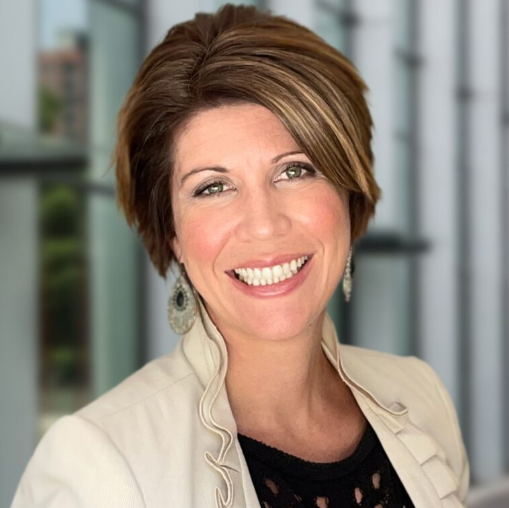
Nicole Antil
Published:
November 24, 2026
Updated:

Grateful patient and family fundraising programs provide hospitals and healthcare organizations with vital revenue. Grateful patient donors play an important role in supporting hospitals, helping source major capital campaign donors, fund essential resources, as well as programs that make quality care possible.
However, starting a grateful patient fundraising program can still be a challenge. Physicians may feel uncomfortable participating in fundraising, hospitals may have concerns about patient privacy, and identifying which patients are prospective donors is often a learning curve.
Fortunately, Graham-Pelton’s guide to grateful patient fundraising outlines how any hospital or healthcare organization can launch this key fundraising initiative. In this article, we’ll review these steps and how to implement them at your organization.
Before launching any processes or investing in new resources, healthcare organizations should determine what they need in place to launch or strengthen a grateful patient program. As part of this assessment, review:
Physicians and other clinical staff are a key part of healthcare fundraising. However, many hesitate to get involved. Some fear that fundraising may impact their patient relationships and quality of care, whereas others are simply uncomfortable with soliciting donations.
Hospitals and healthcare organizations must work through these reservations, as getting your clinical staff on board with your grateful patient and family fundraising program is essential for earning qualified referrals.
To improve staff buy-in and comfort, identify physician champions and give them a seat at the table for key decisions about your program. Outline clear expectations for their involvement, including that they will not be the ones asking patients for donations. Invite them to ask questions, and ensure they receive the training they need.
To get your grateful patient fundraising program off the ground and set it up for long-term success, consider investing in:
Determine your organization’s budget, how much you’re willing to invest in your grateful patient fundraising program, and your expected return on investment for all expenses.
To keep your grateful patient program going, set up standardized referral and qualification processes. By creating an established workflow, contributing to your grateful patient program can go from an ad hoc process to a regular part of both clinicians and fundraisers work together.
Establishing consistent processes requires:
Walk team members through your established processes, outlining exactly what they are expected to do. Run role-playing scenarios, partner with a fundraising consultant to provide direct coaching, and provide reference materials they can turn to for guidance.
Create training sessions and materials for each role. For example, training for physicians might focus on recognizing when a patient expresses gratitude and how to refer that patient to the development team through a process that maintains HIPAA compliance. In contrast, fundraising officers might receive training on how to have sensitive yet productive conversations about giving, even when patients and their families experience negative healthcare outcomes.
Patients and their families will have questions about your giving program and will need time to think over their decision to donate. Help keep them informed and ensure giving stays top of mind by sharing digital and printed materials about your grateful patient fundraising program.
Design brochures, web pages, and other informational materials that major gift officers can share with patients. These materials should include details about what giving entails, why it’s important, and any benefits your organization provides in exchange for a gift. For example, some organizations have giving societies for major and planned donors.
Ensure these materials are branded to your hospital or healthcare organization and easy to access. Additionally, treat these materials as supporting resources that can advance donor relationships, rather than something to hand patients in lieu of having a conversation about their philanthropic interests.
Healthy grateful patient fundraising programs have established structures for advancing donors through the giving process and sourcing new ones. In particular, your pipeline should include:
Make a dedicated effort to maintain these processes to keep your grateful patient program operating for years to come.
Grateful patient and family programs give patients and their loved ones a way to support the healthcare teams and institutions that made a difference in their lives. Before launching a program, take stock of your existing team, fundraising processes, and resources to understand what you'll need to get it off the ground. Consider whether your team has the capacity to manage the program, what technology you'll need, and where you might need additional support. With the right support in place, your team can build a program that makes it easier for grateful patients and families to give back to the healthcare community that cared for them.
Subscribe
See how modern advancement teams bring alumni engagement and fundraising together.
Plan faster. Execute better
Explore free templates designed for alumni and fundraising teams.

Nicole Antil
Capital campaigns are the ultimate test of your nonprofit’s fundraising strategy. Does your team have the capacity, experience, and resources necessary to raise millions over the course of several years?
For many nonprofits, the trickiest part of this question is whether they have enough major donor relationships for their campaign to succeed. Without proper preparation and strategy, it’s not uncommon for nonprofits to find themselves halfway through the quiet phase with little idea who to turn to for their next gift.
To help your nonprofit source the major donors it needs for its next capital campaign, we’ll explore three essential strategies for identifying and connecting with prospective major donors.
Often, nonprofits think they can’t run a capital campaign because they lack major donors. After all, if your top donors are only giving $10,000 or $25,000 a year, how can you expect them to donate $500,000?
However, just because a donor currently isn’t making major gifts doesn’t mean they lack the capacity or affinity to. Rather than trying to make brand new connections, start your campaign by assessing the donors who have already made a commitment to your cause:
Even if you overlook a prospective major donor during your feasibility study or quiet phase, you can still connect with them during the public phase. The public phase is an opportunity to invite the broader community to support a campaign that already has strong momentum. A donor may still come forward with a significant gift at this stage, but your campaign plan should not depend on unexpected gifts to reach its goal.
While you shouldn’t factor surprise gifts like these into your fundraising goal, be ready for them and ensure your fundraising team doesn’t overlook any of your current supporters.
Cold donation solicitations rarely work. However, introductions to new prospects facilitated by your top supporters frequently lead to successful conversions. Alongside making major gifts themselves, these supporters can help you connect with other people in their networks who may also be interested in making a major gift.
Before approaching your major donors about helping source new leads, follow these steps:
The earlier you can have productive conversations about your campaign with major donors, the better. Early conversations with top donors can help you identify whom to include in your feasibility study and begin building relationships. Use the study to test your case and working goal, and to understand donors’ interest and potential support before finalizing your campaign plan.
Individual donors are often the primary source of major campaign gifts, but foundations and businesses may also be prospects when their priorities align with your project. Before you begin your feasibility study, put together a campaign readiness checklist to help you prepare for the process and identify who you need to speak with. As part of your campaign readiness checklist, identify the people and organizations you should talk with during the study. This may include foundation leaders and influential business owners with a connection to your mission or project.
Before reaching out, do your homework:
Foundation and corporate gifts can strengthen a campaign, but they should complement a well-developed pool of individual prospects. Focus your outreach on organizations with a clear connection to your mission and project.
The more major donor prospects your nonprofit has, the more likely you are to reach your campaign goals. To improve your donor sourcing, start with the connections you have and focus on building relationships that can lead you to even more potential donors.

Sourcing Major Donors During a Capital Campaign: 3 Tips
Lorem ipsum dolor sit amet, consectetur adipiscing elit. Suspendisse varius enim in eros elementum tristique. Duis cursus, mi quis viverra ornare, eros dolor interdum nulla, ut commodo diam libero vitae erat. Aenean faucibus nibh et justo cursus id rutrum lorem imperdiet. Nunc ut sem vitae risus tristique posuere.
Steven Shattuck
October 28, 2026
12 minutes
Hospital foundations pour immense resources into signature galas, golf tournaments, and auctions, but without concrete data, how do you measure actual success?
These 2026 hospital fundraising event benchmarks show hospital foundation teams how to assess event performance, improve donor experience, and convert fundraising event attendees into long-term supporters.
To help healthcare teams bridge this gap, Almabase’s event management platform for healthcare foundations uses TrueSync integration to sync clean, real-time data directly into Raiser’s Edge NXT, enabling you to evaluate your hospital fundraising event metrics with significantly less manual effort.
The Benchmark: 75% of in-person fundraising events and 76% of hybrid fundraising events met or exceeded budget goals.
Why this matters: Face-to-face connection remains a reliable baseline for high-stakes fundraising, providing the space for grateful patient storytelling and high-touch donor cultivation.
How to use it:
The Benchmark: 77% of virtual-only events met or exceeded goals—a massive jump from 59% the previous year.
Why this matters: There’s a common misconception that virtual events were a "pandemic-only" trend, but the data tells a different story.
How to use it:
The Benchmark: 83% of nonprofits said their in-person auction events meet or exceed their fundraising goals.
Why this matters: Auctions are the highest-rated revenue drivers, signaling strong sector-wide confidence in their donor appeal.
How to use it:
The Benchmark: The average net worth of golf tournament attendees is $768,000.
Why this matters: Golf tournaments attract high-value corporate sponsors and offer predictable revenue potential and strong donor engagement.
How to use it:
The Benchmark: 39% of nonprofits plan on investing in more modern technology and automation in 2026.
Why this matters: Event technology platforms like Almabase’s reduce friction during high-emotion donor moments. Any technical barrier at check-in or bidding can break momentum and cost real revenue.
How to use it:
The Benchmark: 41% of Gen X donors attend in-person fundraising events.
Why this matters: Gen X is entering their highest-earning years. Ignoring this segment weakens your future donor pipeline.
How to use it:
The Benchmark: 50% of Baby Boomer donors don’t like attending fundraising events.
Why this matters: Boomers are major donors, but half actively dislike large events. Relying on broad invitations can weaken donor trust.
How to use it:
The Benchmark: Mid-level “Engagement Seeker” donors have a strong appetite for in-person involvement.
Why this matters: These donors are the most likely to respond to deeper cultivation and upgraded giving.
How to use it:
The Benchmark: 67% of donors who were asked to give again after attending a recognition event did so, and they attributed their willingness partly to the event.
Why this matters: Recognition events are not just stewardship; they are strategic revenue drivers that reinforce trust.
How to use it:
The Benchmark: Only 23% of first-time donors return for a second gift.
Why this matters: Event attendees often give impulsively and drift away without a structured touchpoint.
How to use it:
The Benchmark: Healthcare nonprofits retain just 14% of new donors—the lowest in the nonprofit sector.
Why this matters: Low retention erodes event ROI. When 7 out of 10 new attendees don’t turn into repeat donors, your hospital foundation is forced into a permanent, expensive cycle of donor acquisition rather than building on previous successes.
How to use it:
Evaluating your hospital fundraising event benchmarks is only possible with a clean data stream. Almabase simplifies performance management by:
Ready to turn your hospital foundation’s fundraising event data into a strategic advantage for 2026? [Request a Demo]
11 Hospital Fundraising Event Benchmarks to Track in 2026
Lorem ipsum dolor sit amet, consectetur adipiscing elit. Suspendisse varius enim in eros elementum tristique. Duis cursus, mi quis viverra ornare, eros dolor interdum nulla, ut commodo diam libero vitae erat. Aenean faucibus nibh et justo cursus id rutrum lorem imperdiet. Nunc ut sem vitae risus tristique posuere.

Wendy Johnson
December 23, 2025
12 minutes
Your fundraising team just spent 40 hours planning a successful gala that raised $250,000. Now they'll spend another 40 hours manually entering guest lists into spreadsheets, reconciling payments across multiple systems, and sending individual thank-you emails.
This is the hidden cost of manual event workflows. While manual processes might seem like a cost-saving measure, they drain staff time, increase error rates, create HIPAA compliance risks, and pull your team away from what matters most: building donor relationships.
Hospital fundraising teams lose nearly five hours every day to these repetitive tasks. Almabase's fundraising event management software eliminates manual data entry, keeps Raiser's Edge NXT data in sync, and can save hundreds of staff hours each year.
Hospital fundraising teams rely on galas and events to fund critical programs, but manual processes drain staff time, increase the risk of errors, and make it harder to measure results accurately.
Here are just five ways your hospital foundation loses opportunities, revenue, and time by relying on outdated manual processes to manage your galas, golf tournaments and other fundraising events.
Manual workflows force staff to re-enter information across multiple systems — CRMs, payment systems, spreadsheets, and more. One analysis found that nonprofit staff spend up to 50 percent of their time on manual data entry. This kind of work is boring, wasteful and can lead to burnout.
Almabase’s TrueSync™ integration with Blackbaud Raiser’s Edge NXT and Blackbaud CRM reduces manual handling of sensitive records while maintaining clean, consistent data across systems.
A gala can generate thousands of data points, from attendee names and guest additions to dietary preferences and sponsorship tiers. That leaves too much room for error, since there are errors in about one percent of manual data entry keystrokes.
The result is delayed or missed donations and inconsistent communications—a major turnoff for donors. These mistakes often ripple downstream, leading to inaccurate reports and missed follow-ups that weaken donor trust.
Every hour spent on repetitive administrative work, like re-entering event registrations or sending one-off acknowledgments, detracts from opportunities to build meaningful donor relationships, plan strategic campaigns, and focus on high-impact activities that drive ROI for your organization.
Nearly 75% of nonprofits report persistent job vacancies tied to heavy workloads and manual processes. But one study found that turnover drops significantly when organizations shift away from the soul-sucking “busy work” of manual processes.
Many third-party vendors aren’t HIPAA-compliant or won’t sign BAAs—making them risky for fundraising for healthcare. Almabase’s HIPAA-compliant event registration platform is designed specifically for healthcare foundations, maintaining data security and compliance while integrating seamlessly with Raiser’s Edge NXT.
Trying to manage event registration, ticketing, and communications manually creates major inefficiencies.
Almabase’s event management software gives hospital foundations a single, HIPAA-compliant event registration software solution to handle every step from setup to stewardship.
For teams used to navigating disconnected tools, the results are immediate: faster event setup, fewer errors, and greater visibility into event ROI. Dashboards track participation, sponsorships, and giving in real time, helping staff quickly identify top prospects and follow up while engagement is fresh.
Key Benefits:
Almabase’s ticketing software for healthcare simplifies operations and keeps all event data connected to Raiser’s Edge, allowing fundraisers to spend more time on what matters—strengthening relationships and driving impact in healthcare fundraising.
Hospital foundations juggling multiple systems from spreadsheets to payment platforms and CRMs often leave staff buried in administrative work instead of engaging donors. Almabase eliminates that burden by creating a single, accurate source of truth so teams no longer need to chase down lists or reconcile records after every gala.
By automating event ticketing and maintaining HIPAA secure event registration, Almabase helps foundations run compliant, efficient, and mission-focused events that fuel sustainable fundraising for hospitals.
See how Almabase's fundraising event management software helps hospital foundations save hours, ensure compliance, and raise more funds.

Almabase replaces time-consuming manual workflows with automation that integrates every step of your event management process. Hospital foundations can set up event registration, ticketing, sponsorships, and communications in minutes—not weeks—through one platform that syncs directly with Raiser’s Edge NXT.
That means no more redundant data entry, disconnected spreadsheets, or manual imports. Event data, donor engagement, and payments all flow seamlessly in real time, ensuring accuracy and saving hours of administrative work.
Yes. Almabase is built with healthcare fundraising compliance in mind, offering SOC 2 Type II certification and Business Associate Agreement (BAA) support to meet HIPAA standards. The platform separates patient health information from donor engagement data, so hospital foundations can manage events, donor communications, and grateful patient programs securely and confidently. Compliance, data protection, and privacy are embedded into every workflow.
Through TrueSync, Almabase’s bi-directional Raiser’s Edge NXT integration ensures that all guest registrations, donations, and communications automatically sync with your CRM. This eliminates data duplication, reduces reporting errors, and gives fundraising teams real-time insights into donor engagement and event ROI. It also allows fundraisers to identify follow-up opportunities faster—translating event participation into sustained donor relationships.

Five Hidden Costs of Manual Event Workflows in Healthcare Fundraising
Lorem ipsum dolor sit amet, consectetur adipiscing elit. Suspendisse varius enim in eros elementum tristique. Duis cursus, mi quis viverra ornare, eros dolor interdum nulla, ut commodo diam libero vitae erat. Aenean faucibus nibh et justo cursus id rutrum lorem imperdiet. Nunc ut sem vitae risus tristique posuere.
Wendy Johnson
November 6, 2025
12 minutes