Sourcing capital campaign donors is essential for reaching your fundraising goal. Discover new ways to uncover donors and set yourself up for successful asks.

Steven Shattuck
Published:
October 28, 2026
Updated:

Capital campaigns are the ultimate test of your nonprofit’s fundraising strategy. Does your team have the capacity, experience, and resources necessary to raise millions over the course of several years?
For many nonprofits, the trickiest part of this question is whether they have enough major donor relationships for their campaign to succeed. Without proper preparation and strategy, it’s not uncommon for nonprofits to find themselves halfway through the quiet phase with little idea who to turn to for their next gift.
To help your nonprofit source the major donors it needs for its next capital campaign, we’ll explore three essential strategies for identifying and connecting with prospective major donors.
Often, nonprofits think they can’t run a capital campaign because they lack major donors. After all, if your top donors are only giving $10,000 or $25,000 a year, how can you expect them to donate $500,000?
However, just because a donor currently isn’t making major gifts doesn’t mean they lack the capacity or affinity to. Rather than trying to make brand new connections, start your campaign by assessing the donors who have already made a commitment to your cause:
Even if you overlook a prospective major donor during your feasibility study or quiet phase, you can still connect with them during the public phase. The public phase is an opportunity to invite the broader community to support a campaign that already has strong momentum. A donor may still come forward with a significant gift at this stage, but your campaign plan should not depend on unexpected gifts to reach its goal.
While you shouldn’t factor surprise gifts like these into your fundraising goal, be ready for them and ensure your fundraising team doesn’t overlook any of your current supporters.
Cold donation solicitations rarely work. However, introductions to new prospects facilitated by your top supporters frequently lead to successful conversions. Alongside making major gifts themselves, these supporters can help you connect with other people in their networks who may also be interested in making a major gift.
Before approaching your major donors about helping source new leads, follow these steps:
The earlier you can have productive conversations about your campaign with major donors, the better. Early conversations with top donors can help you identify whom to include in your feasibility study and begin building relationships. Use the study to test your case and working goal, and to understand donors’ interest and potential support before finalizing your campaign plan.
Individual donors are often the primary source of major campaign gifts, but foundations and businesses may also be prospects when their priorities align with your project. Before you begin your feasibility study, put together a campaign readiness checklist to help you prepare for the process and identify who you need to speak with. As part of your campaign readiness checklist, identify the people and organizations you should talk with during the study. This may include foundation leaders and influential business owners with a connection to your mission or project.
Before reaching out, do your homework:
Foundation and corporate gifts can strengthen a campaign, but they should complement a well-developed pool of individual prospects. Focus your outreach on organizations with a clear connection to your mission and project.
The more major donor prospects your nonprofit has, the more likely you are to reach your campaign goals. To improve your donor sourcing, start with the connections you have and focus on building relationships that can lead you to even more potential donors.
Subscribe
See how modern advancement teams bring alumni engagement and fundraising together.
Plan faster. Execute better
Explore free templates designed for alumni and fundraising teams.

Steven Shattuck
Donors are the champions of your mission, your cause. The connection you have with them ultimately decides your ability to impact people and communities. So having a solid strategy for donor relationship management becomes a key part of ensuring your institution or nonprofit’s success.
In this blog, we’ll explore donor lifecycles, the best outreach and communication practices, helpful tools, and guide you in creating the best relationship management strategy for your organization.
Nonprofits focus on two things primarily to increase funds. Acquiring new donors, and retaining existing ones for continued contributions. Donor relationship management is the set of practices that are used to improve and maintain both.
This includes, but is not limited to campaigning, stewardship, and milestone recognitions, which will be expanded upon in the later sections. Ultimately, it boils down to fostering a positive culture and making donors feel like they’re making a difference.
It’s quite easy (and tempting) to go all-in on acquiring as many donors as possible. While this might lead to great gains in the short-term, building a reliable, sustainable pipeline of donations takes much more.
If you’re aiming for lasting impact and stability, deepening your relationships with your donor base is the way to go. A few important reasons to do this:
1. Improved Donor Retention: It’s a well established fact that retaining donors is a lot more cost-effective than acquiring new ones. Having solid engagement and stewardship plans gives you a much-needed edge in fundraising. Donor retention in the US sits at around 20%, with organizations often underutilizing recurring programs. Use it to your advantage.
2. Increased Donor Lifetime Value: The more loyal your donors are, the more they are likely to contribute. Retained donors have a higher likelihood of increasing their donation amounts, contributing to annual campaigns, and donating to emergency causes in a pinch. They end up feeding your cause a lot more throughout their lifetime.
Overall, organizations with great relationship management practices perform better in fundraising, and have higher DLVs.
3. Greater Advocacy and Support: New donors introduced through friends, family, or word-of-mouth in general tend to stick around. Engaged donors don’t just contribute more long-term, but also bring in new faces and spread word of your nonprofit’s impact and cause.
4. Success Beyond Numbers: Building trust and engaging donors in meaningful ways often is a great way of not only bringing in reliable, recurring revenue, but also creating a sense of community. Your mission is only as strong as the people supporting it. A satisfied donor base contributes in other non-financial ways too, like volunteering.
While coming up with a strategy for building relationships with donors, follow these practices to cover all bases efficiently.
A donor profile holds all the relevant information about your current and prospective donors. They live in your institution’s database or CRM, and have to be updated regularly. Treat them as live documents giving you the relevant, up-to-date data.
Donor profiles are used extensively for almost every step of the way in fundraising. Targeted outreach, reviewing campaign performance, and so much more require accurate donor data.
What do you include in a donor profile? There are some necessary fields that are useful for many fundraising activities. Some important ones are:
Different types of donors need different outreach strategies and messaging. You don’t want veteran donors looking at an introductory email with blank faces. Or scare away first time/casual donors with too much information.
Segmenting your donors based on their financial capability, giving history, volunteering interests, and associations with particular causes lets you execute targeted campaigns that have far more effective conversion rates.
Having segmented lists of donors helps greatly here. You can’t expect someone to be moved by your cause if the messaging sounds like generic marketing slop. While it’s impossible to personalize every single message, you can tweak outreach group-wise. Ask for small contributions from first timers, introduce recurring programs to existing donors.
With the right data and outreach tools, you can even personalize based on local events and non-philanthropic interests.
We probably know this all too well, but if there’s one thing that kills confidence, it’s getting ghosted. Timely recognition is non-negotiable unless you want donors feeling like they’re shooting money into a void.
Immediate thank-you messages acknowledge donors’ valuable time and contribution, and builds trust. Use multiple channels to thank your donors. Apart from one-off emails, social media can be used for collective recognition.
Knowing how exactly your contribution is being utilized is a great way of gaining trust and deepening your relationship with a nonprofit or a mission. Regularly update donors on ongoing initiatives, communities being helped, total money raised for causes, and overall impact.
Take this a step further by sharing video snippets, pictures, and other visual media to make them truly feel like they’re working together with you and are a part of your organization. Engaged donors are more likely to continue contributions long-term.
While emails get the job done, inboxes are more often than not flooded with unimportant emails and your messages can be lost among them. To increase interaction, plan an outreach strategy across multiple channels.
Aside from personalized email sequences, create a social media schedule to reach donors organically. Another underrated channel is text messaging – it feels a lot less formal and increases authenticity.
Your outreach plan should contain steps for initial campaign introduction, building up anticipation in the days leading up to it, live updates during the campaign, and nurture sequences post-event/campaign. Share relevant news and ask for donations every now and then, but don’t overdo it.
With the volume of donors and donations, it can sometimes be hard to track follow-ups manually, leading to gaps in communication. Having a dedicated platform for automating follow-ups makes sure that messages aren’t lost among the confusion.
Regular, timely emails constantly expose your nonprofit to potential donors. Consistent reminders and nudges are necessary as most people operate with tight and busy schedules.
Increasing your donations over time isn’t just about launching effective campaigns or reaching the most donors. It’s also about identifying the most engaged participants, seeing what drove the engagement, and replicating it for different donor groups.
Using a digital engagement platform, track metrics that give you an idea of donor engagement. This can include response rates across different channels (fundraising appeals, feedback requests, social media engagement), number of event/volunteer sign-ups, donor retention rate, and online engagement metrics such as email open rate, click-through rates, donation form abandonment rate, and website traffic sources.
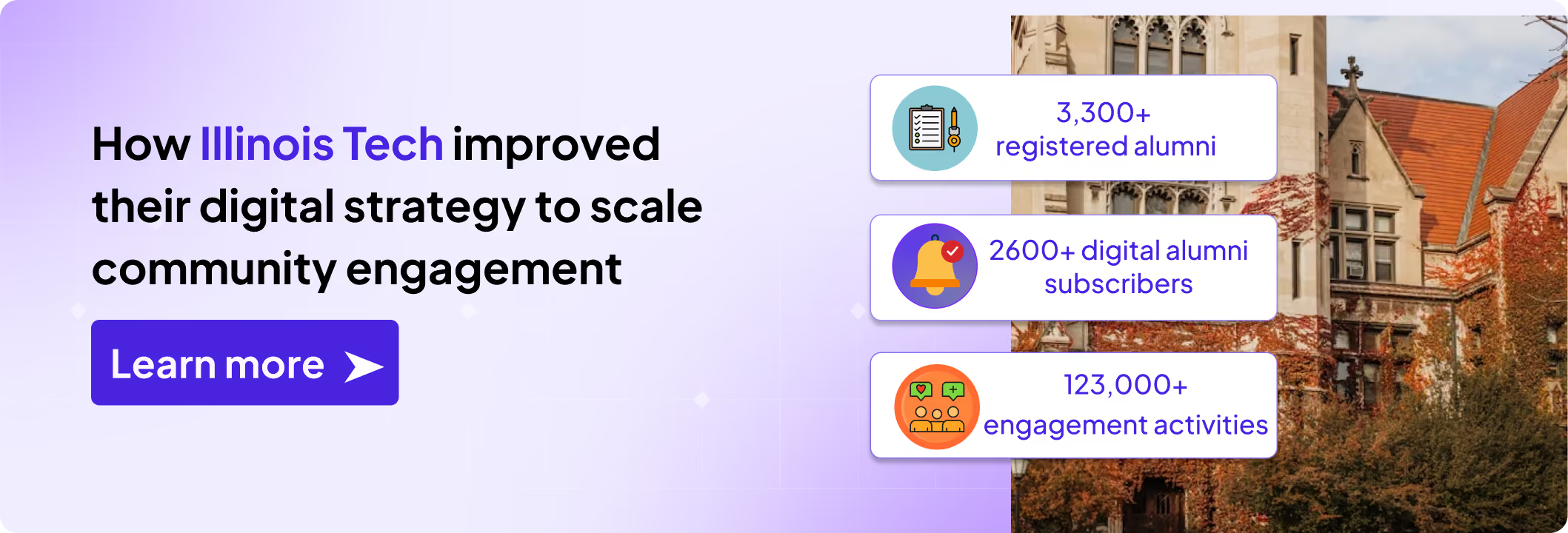
As emphasized earlier, your donor profiles are live documents that contain accurate, updated information at all times. Inaccuracies in donor data can lead to wrong segmentations, incorrect campaign enrollments, and mismatched donation data, all of which affect fundraising performance in subsequent campaigns significantly.
While it’s possible to manually update records, it can be very time consuming and leave your head spinning. Using workflows to auto-update fields and contributions is a lot more efficient and accurate.
Some essential metrics allow you to measure your progress and to see how good your donor management strategy really is. These are different from donor engagement metrics; evaluating fundraising performance can give you a good indication of how much donors are willing to contribute to your cause, which groups have the most capability, what segments are strong targets, and where your teams can improve.
Here’s a few of them in no particular order:
Donor lifecycle is the journey that unaware, potential donors make that ends in some form of contribution to your cause. There are various stages in the cycle, each requiring its own set of initiatives and strategies.
Understanding the donor lifecycle step-by-step can help you identify potential gaps in your donor management process, and gives you insight into the donor’s perspective leading to better outreach and retention methods.
Here are the 5 major steps that nonprofits take to manage donors:
This is the start of it all, when your nonprofit tries to identify prospective new donors and engage with them. To do this, you utilize paid ads, emails, and social media to reach low to mid-level donors.
They might also land in your website through referrals, word-of-mouth, or stumbling across some of your mass-communication material.
For acquiring major donors though, a more personalized approach is required. This usually means researching affluent donors who might be connected to your cause or willing to contribute to it and contacting them through their preferred channel of communication (calls, emails, etc).
In this stage, nonprofits start building their relationships with potential donors. For casual donors, this means introducing your nonprofit’s mission, the goals, initiatives and the like. The key here is to build trust; answering queries and showcasing impact are important.
Cultivating major donors isn’t as straightforward. Aim for long-term relationship building by meeting them one-on-one, developing consistent communication threads, and offering engagement opportunities that will expose them directly to your nonprofit’s work, like volunteering and attending events.
Again, keep in mind that major donor cultivation can take a long time. Constantly research, personalize, and meet. Fundraising performance depends on your charisma too, no pressure.
Once you’ve introduced your nonprofit and its causes, donors will evaluate if it’s worth contributing to. You will be asking donors to contribute for the first time, and this is easy with smaller gifts. After all, $10 isn’t exactly life changing for either party. The intent here is to get them to make a contribution, how much doesn’t really matter at this stage.
To turn interest into action, make your forms easy to fill (only the necessary details), and make it easy to contribute. Payment should be frictionless, and they should have multiple choices when it comes to payment modes.
Soliciting major donors might require a lot more presentation, involvement and relationship-building beforehand.
It’s very important to express gratitude for contributions, and make donors feel recognized. This can range from a simple thank-you email to major personalized gifts and plaques.
One good pointer to keep in mind is to match the scale of their contribution. For example, for small donations, a simple email might suffice. For major gifts, recognition should involve exclusive event invites, awards, etc.
After receiving donations, have nurture programs in place to ensure constant communication, awareness, and deeper relationships over time. Highlight new initiatives, invite for volunteering, host events, and provide impact updates regularly.
Your stewardship efforts directly tie into donor retention. Aside from that, there are a couple of things you can do to avoid driving them away.
Predicting churn proactively is a good way to boost donor retention. This can be achieved by thorough analysis of data, following up with lapsed donors to get feedback, and creating lists. Another thing you can do is alternating donation requests with other appeals to prevent fatigue.
What does upgrading your donors look like? It just simply means increasing their contributions; converting a one-time donor to a recurring donor, or a casual donor to a major donor are all upgrades. Keep tracking donor engagement and gifting data to determine the right time to ask for more.
We’ve laid out the best practices to cultivate long-term relationships with donors and build a pipeline of steady, reliable contributions over extended periods of time. There are a few minor tweaks which, though optional, can help you identify gaps quicker, save time, and just have an easy time of maintaining the hygiene of the overall process.
Taking a step back and experiencing your organization through a donor’s perspective can be massively helpful in seeing if your process is actually smooth and easy, and finding out where friction creeps in. What’s optimal for your team isn’t necessarily optimal for the average donor.
Often, prospective major donors are hidden in plain sight. By checking wealth data against donor profiles, you might be able to fish out members who are already aligned to your cause and have the ability to contribute a lot more.
Stewardship is a vital part of donor outreach management. Automating the generic follow-ups (immediate thank-you messages or gift acknowledgements) gives you more time to focus on personalized updates and asks.
To actually execute the best practices in donor relationship management, having the right tools is a must. The bare essentials include a nonprofit CRM to build and manage donor profiles, a digital engagement platform for donor outreach management, and an event management tool to coordinate volunteering, award ceremonies, and other interactions with donors.
Just like in real life, donors give subtle hints through the material they choose to interact with. Tracking non-financial activity like content downloads, visits to a particular program page, video views, and email click-through rates gives your team much needed signals on the donor’s affinities to various activities and causes.
The right donor management software can save your team a lot of time and frustration. The wrong one can turn even simple tasks like updating records or sending follow-ups into a headache.
Before evaluating platforms, think about your team's day-to-day work. A tool might have lots of advanced features, but if it has a tacky UI and a steep learning curve, your staff may end up avoiding it altogether. The best donor management software is the one your team will actually use consistently.
Below are a bunch of priorities to keep in mind while you’re on the lookout.
Segmentation is one of the foundations of effective fundraising. Your software should make it easy to group donors based on giving history, donation size, engagement levels, volunteer activity, interests, and other relevant criteria.
The easier it is to create and update donor segments, the easier it becomes to run targeted campaigns and personalized outreach.
Look for platforms that can track donation trends, campaign performance, donor retention, engagement levels, and other fundraising metrics.
Good reporting helps your team identify which donor groups are performing well, which campaigns are driving results, and where improvements need to be made.
Manually handling acknowledgements, follow-ups, reminders, and record updates can quickly become overwhelming as your donor base grows.
A strong donor management platform should automate repetitive tasks such as thank-you emails, recurring donation reminders, event follow-ups, and data updates. This allows your team to spend more time building relationships and less time managing spreadsheets.
Donor information often ends up scattered across spreadsheets, email inboxes, event platforms, and fundraising tools. This stands in the way of creating complete donor profiles like we outlined earlier.
Choose a platform that serves as a central source of truth for donor records, engagement history, campaign interactions, and contributions.
Fundraising teams rarely use a single platform. Your donor management software should integrate with donation forms, email marketing tools, event management platforms, and payment processors, or, better yet, have all that functionality built in.
It's also worth thinking long-term. A platform that works for 500 donors should still work when you're managing 5,000.
Ultimately, the goal isn't to find the software with the longest feature list. It's to find a platform that helps your team maintain accurate donor data, automate routine work, execute targeted outreach, and build stronger relationships as things scale without breaking anything.
Almabase brings fundraising and engagement data together in one place, helping teams understand how donors interact with the institution over time. With a connected view of donor activity, it's easier to identify engaged supporters, track interests, and build more meaningful outreach strategies.
The platform also helps teams segment donors based on giving history, engagement levels, event participation, etc. This makes personalized communication easy, allowing you to send more relevant appeals, updates, and stewardship messages to different donor groups, and with the workflow automation capabilities, automate general tasks and follow-ups.
If you’d like to see how Almabase can help you build and nurture your relationships with your donors, feel free to book a free personalized demo and we’d love to discuss how we can help!

10 Donor Relationship Management Best Practices
Lorem ipsum dolor sit amet, consectetur adipiscing elit. Suspendisse varius enim in eros elementum tristique. Duis cursus, mi quis viverra ornare, eros dolor interdum nulla, ut commodo diam libero vitae erat. Aenean faucibus nibh et justo cursus id rutrum lorem imperdiet. Nunc ut sem vitae risus tristique posuere.

Hari Govind
June 16, 2026
12 minutes
Donors are the foundation of your university, and getting new alumni and supporters to start their donor journeys can be a challenge. Small donations from first-time donors today can eventually by grown into recurring, planned, or even major gifts down the road. Cultivate donors at each step of the giving process to captivate their interest, garner their support, and steward recurring donations.
While your university has an obvious connection to new alumni donors, you can also connect with other new donors through a variety of channels, such as your networks of current supporters, volunteer opportunities, and community events. To reach potential donors, educate your current base about their donation’s impacts on your university and provide them with shareable content like social media graphics and forwardable email newsletters to help them reach out to their own networks.

To help your university connect with alumni and other first time donors, this article will explore three ways you can energize your current supporters and attract new ones. Let’s get started.
Awareness campaigns are a great way to reach new audiences. Try creating content that can easily be optimized for multiple platforms to spread awareness about your newest institutional projects.
Awareness campaigns should share information about what projects your institution is working on, who it helps, what you’re doing to make a difference, and if there are other opportunities for supporters to get involved in addition to donating. Keeping donors in the loop about your ongoing initiatives will make your university more transparent. Plus, many alumni donors will likely be interested in what their former departments, professors, and friends are doing now.
Spread the word about your ongoing projects on several communication channels. Choose your channels based on your new target audiences. For example, your university’s most recent graduates are Gen Z, who are more likely to be interested in social media platforms like TikTok and Instagram, rather than Facebook.
Take note of how your audience responds to your messages. While each platform you leverage in a multi-channel marketing strategy can help by creating a new touch point, some may have notably higher engagement and conversion rates than others. To start, try sharing your awareness campaigns through these channels:
To leverage your current supporters’ networks, have your school’s ambassadors share your campaign on their social media accounts and within their personal networks. You can also reach out to high profile alumni or nonprofit influencers with large social media followings and ask if they would be willing to share your current initiatives.
When reaching out to supporters, offer them multiple engagement opportunities. In addition to requesting donations, let them know when you have upcoming events, how they can learn more, and other activities open to supporters.
Many of your alumni will be excited at the opportunity to give back to their university. Your alumni volunteers dedicate their time because they believe in your school and want to invest in their alma mater. Inviting new alumni volunteers to your organization can be the first step in stewarding them to eventually become donors.
Your school should access your volunteer databases and alumni databases to see who has previously helped your organization. Take note of these volunteers and conduct prospect research to see who has the potential to give or even become a major donor.
As alumni join your volunteer programs, continue stewarding them by regularly messaging them about other opportunities, sharing your university’s latest news, and showing your appreciation. Here are just a few ways you can show your gratitude to your alumni volunteers:
Your volunteers can become some of your most reliable donors, and vice versa. Use your CRM to create profiles for each supporter and note if they’ve volunteered or donated. Then, send them messages that align with how they’re currently engaging with your university, as well as a few encouraging them to try getting involved in new ways
To get new donors involved with your university, host events that are open to the public, alumni, and major donors alike. You can charge an entrance fee, but be sure the main event is not donation based when trying to secure new donors. Here are some of the best ways to make your events more inviting and appealing to new donors:
If interested individuals are unsure about donating, encourage them to sign up for your newsletter or volunteer opportunities to stay engaged with your organization. This way you can collect their data and connect with them later to begin the stewarding process.
Your university needs new donors to continue funding your programs. To connect with alumni and community members who might be interested in giving, host a variety of opportunities to give them as many chances as possible to make that first step on their donor journeys. From there, you can begin stewarding monthly gifts and even uncover prospective major donors.

3 Ways to Connect with First-Time Donors
Lorem ipsum dolor sit amet, consectetur adipiscing elit. Suspendisse varius enim in eros elementum tristique. Duis cursus, mi quis viverra ornare, eros dolor interdum nulla, ut commodo diam libero vitae erat. Aenean faucibus nibh et justo cursus id rutrum lorem imperdiet. Nunc ut sem vitae risus tristique posuere.

Philip Schmitz
August 4, 2022
12 minutes
For nonprofits and institutions looking to raise funds, every dollar counts. So what if you could double or even triple your donations without asking your supporters to give more? That’s the power of matching gifts. Despite the enormous potential of corporate matching gift programs, billions of dollars in eligible donations go unclaimed each year. Why? Donors either don’t know their gifts can be matched or don’t know how to complete the process.
Integrating matching gifts into your fundraising campaigns is one of the most effective ways to increase revenue, deepen donor engagement, and amplify impact. But it doesn’t happen by accident—it requires strategy, timing, and the right tools.
Below, we’re sharing 10 actionable tips to help your team fully leverage matching gifts in your fundraising efforts. Let’s begin!
Before you can promote matching gifts to donors, it’s essential that your internal team understands how they work. From development staff to communications professionals, everyone should be familiar with the basics of corporate matching gift programs.
Therefore, it’s a good idea to hold a short training session or workshop to explain:
When your team is well-versed in all things matching, they can confidently communicate the opportunity to donors and answer questions effectively as they arise.
Many organizations send out generalized appeals without knowing which donors work for matching gift companies. That’s a missed opportunity. Using tools like matching gift software or employer appends, you can identify where your donors work and flag those who are likely eligible for a match.
Once identified, tailor your messaging for each individual. For example, after a donation is made, you can send a targeted follow-up like: "Thanks for your gift! Did you know your employer, XYZ Corporation, may match your donation? Here’s how you can double your impact in just a few clicks."
Personalized messaging increases the likelihood that donors will follow through, and makes it even easier for them to do so.
The fewer steps a donor has to take, the better. By embedding matching gift tools directly into your donation form, you make it easy for donors to check their eligibility and start the matching process instantly.
Software like Double the Donation (which integrates seamlessly with your Almabase fundraising tools) allows donors to search for their employer as they’re making a gift. It even provides forms, guidelines, and contact information in real time, streamlining the process dramatically.
This simple integration has been shown to significantly increase match completion rates and grow fundraising revenue with ease.
Even if a donor skips the matching gift process during checkout, you can still guide them afterward. Automated email follow-ups are a highly effective way to remind donors about their match eligibility.
Consider setting up a series of emails timed to go out after a gift is made. Here’s an example sequence:
In each message, make sure the language is friendly, encouraging, and focused on impact. Include clickable buttons or links to company lookup tools to remove friction and drive supporters through the process.
Your organization’s website is an essential resource. Hosting a dedicated landing page for matching gifts can serve as a central hub for all your related outreach efforts.
For the best results, this page should:
From there, you’ll want to link to this page from your main website navigation, donation forms, confirmation/thank-you pages, email footers, and social media posts. In other words, make it easy for donors to find and refer back to when they’re ready to learn more or initiate a match.
Matching gifts shouldn’t be an afterthought—they should be baked into the DNA of your campaigns.
Whether you’re running a year-end appeal, Giving Tuesday initiative, peer-to-peer fundraiser, or capital campaign, consistently highlighting matching opportunities goes a long way. Phrases like:
…can prompt curiosity and inspire action.
Add matching gift language and tools to appeal letters, emails, event materials, digital ads, and more. Repetition helps donors absorb the message, making them more likely to participate when the time comes.
Acknowledging and stewarding donors doesn’t end after the first thank-you. In fact, you can build stronger relationships by keeping them informed about the matching gift process.
If a donor completes a match request, send a separate thank-you noting their extra effort and impact. If their match is received, send a special acknowledgment with updated gift totals and a story about what that additional funding made possible.
You can even tag matched donors in your CRM and invite them into higher-touch stewardship journeys or giving circles, reinforcing their sense of value and connection to your cause.
If your nonprofit or institution has corporate sponsors or partners, work with them to educate their employees about matching gifts. Many employees aren’t even aware that their companies offer these programs, and a simple nudge from HR or internal communications can spark significant action.
For example, consider asking your corporate partners to:
This not only drives more matching donations but also deepens your relationship with the company—a win-win on all fronts.
People are inspired by stories. When you share a real story about a donation that was matched—and the tangible impact it created—it makes the concept of matching gifts come alive.
Here’s an example: "When Rachel donated $100 to support local tutoring programs, her employer matched it, bringing her impact to $200. That covered an entire month of tutoring for one child."
Include stories like these in newsletters, appeal emails, social posts, and annual reports. It helps donors visualize the extra power they have, simply by checking a box and requesting a match from their employer.
You can’t improve what you don’t measure. Therefore, try tracking key metrics related to matching gifts, such as:
Percentage of match-eligible donations
Match request initiation rate
Match completion rate
Total dollars matched
Fundraising increase due to matching gifts
From there, you can use this data to find gaps and opportunities. Are donors dropping off after the first email? Are small-dollar donors getting their gifts matched more often than major givers? Are some campaigns more successful than others?
By analyzing trends and experimenting with language, timing, and placement, you can continually refine your strategy for better results overall.
Matching gifts are one of the most underutilized fundraising tools available to both institutions and nonprofits. With a thoughtful approach and a few strategic integrations, you can unlock a hidden revenue stream that requires no extra money from your donors—just a little extra effort.
By educating your team, leveraging technology, telling powerful stories, and weaving matching gift opportunities throughout your campaigns, you’ll increase participation, raise more money, and deepen donor engagement.
Don’t let matching gifts be an afterthought. Make them an integral part of your strategy—and watch your impact grow.

5 Steps to Build a Strong Donor Pipeline
Lorem ipsum dolor sit amet, consectetur adipiscing elit. Suspendisse varius enim in eros elementum tristique. Duis cursus, mi quis viverra ornare, eros dolor interdum nulla, ut commodo diam libero vitae erat. Aenean faucibus nibh et justo cursus id rutrum lorem imperdiet. Nunc ut sem vitae risus tristique posuere.

Anwesha Kiran
June 24, 2025
12 minutes