Alumni Engagement

Best Alumni Database Software to Activate Alumni Engagement

Compare alumni database software for engagement, fundraising, CRM sync, and events. See features, use cases, and how to choose the right platform.

Handling alumni data is a delicate balancing act between the right infrastructure and the right strategies to support it. Your team most likely already has a system in place for this whether it’s an integrated CRM or an ecosystem of specialized tools. 

Relying on that data to run programs and track results however, is where your alumni database software gets put to the test. We often see instances where the records are available but using them consistently across teams becomes harder over time. 

This is where most institutions start looking beyond their database and start looking at the tools that make use of the data at hand.

In this blog, we will walk you through alumni database software and tools that help you work more effectively with your existing database, so you can keep data accurate and use it to drive ongoing engagement.

The Role of an Alumni Database Software in Alumni Data Management

An alumni database software is a centralized system that helps institutions maintain a reliable record of their alumni and how they stay connected over time. It allows teams to track interactions and update information as alumni participate in programs or contribute to the institution.

In most cases, this database sits within a CRM. Teams use it as a central place to manage alumni records so different departments are working with the same information. This becomes important when multiple teams are running outreach, events, or fundraising activities at the same time.

As engagement grows, maintaining accurate data becomes more demanding. Alumni participate in different programs, update their details, and interact across multiple channels. Without a consistent system, it becomes harder to keep records current and use them effectively.

Criteria Alumni Database (System of Record)
Core Design Centralized storage of alumni records and institutional relationships
Data Model Alumni profiles, giving history, engagement activity
Segmentation Class year, program, geography, participation history
Reporting Alumni engagement trends and fundraising visibility
Integrations SIS platforms, engagement tools, analytics systems
Governance Role-based access and institutional data controls

According to the 2024 CASE Insights Alumni Engagement Survey, 51.8% of institutions reported increased alumni engagement. As participation grows, institutions need systems that can keep up with these interactions and reflect them accurately in their data.

This is why many institutions rely on additional tools alongside their database. These tools help teams manage ongoing engagement and keep data aligned with actual activity, so decisions are based on current information.

When Institutions Add Supporting Tools to Their Alumni Database

A CRM is often where institutions begin managing alumni data. It works well when programs have limited scope and teams are focused solely on maintaining records and basic outreach. At this stage, the system supports day-to-day needs without much additional setup.

As the number and scale of your alumni programs expand, teams start working across more activities at the same time. This means engagement becomes harder to manage within a single system, and gaps begin to appear in how data is updated and used.

Common bottlenecks

  • Data updates rely on manual effort: Information from events or campaigns does not always flow back into the system automatically, which leads to delays in keeping records current.
  • Engagement activity is not fully visible: Teams cannot easily see how alumni are interacting across programs, which makes it harder to plan follow-ups.
  • Reporting takes longer than expected: Data often needs to be pulled from different sources, which slows down analysis and decision-making.

Kimberly Verstandig, Vice President for Fundraising and Senior Strategist at Mackey Strategies, describes this clearly:

“The CRM is kind of like the mothership, but then you have all of these other ships floating around it. Donor Relations wants one platform, Annual Giving needs another, Alumni Engagement wants something different for events. All of a sudden you have these disparate systems, and you're trying to figure out how they all connect back to the CRM in order to make use of that data effectively.”

In response, institutions start adding supporting tools around their alumni database. These tools help teams manage engagement as it happens and keep data aligned with actual activity, so records remain accurate and useful over time.

Best Alumni Database Software That Helps Institutions Activate Alumni Engagement

Advancement teams often use additional platforms alongside their alumni database when engagement programs become harder to manage within a single system. These tools help teams run programs more consistently and keep data aligned with actual activity.

The following categories reflect how institutions typically extend their alumni database to support ongoing engagement.

1. Alumni Management and Engagement Systems

Alumni management and engagement platforms are used to run programs that keep alumni involved over time. These platforms help teams move from storing data to using it in day-to-day engagement. They work alongside the CRM so teams can manage engagement as it happens and ensure that updates reflect back in the database without manual effort.

a. Almabase

Almabase is an alumni management and engagement platform built for Higher Ed and K–12 institutions. It works alongside an existing alumni database to help teams use their data during day-to-day programs, rather than only storing it.

At its core, the platform maintains a centralized alumni directory that updates as alumni interact with the institution. Alumni can update their own information, which helps keep records accurate without requiring constant manual work from internal teams.

Core database and lifecycle capabilities

  • Centralized alumni directory: Teams can search and manage alumni records in one place, which reduces time spent switching between systems.
  • CRM connectivity: Data updates from engagement activity flow into systems like Blackbaud Raiser's Edge NXT or Salesforce, which helps keep records aligned across teams.
  • Reconnect inactive alumni: Tools help identify and update records that are no longer active, which improves overall data quality over time.
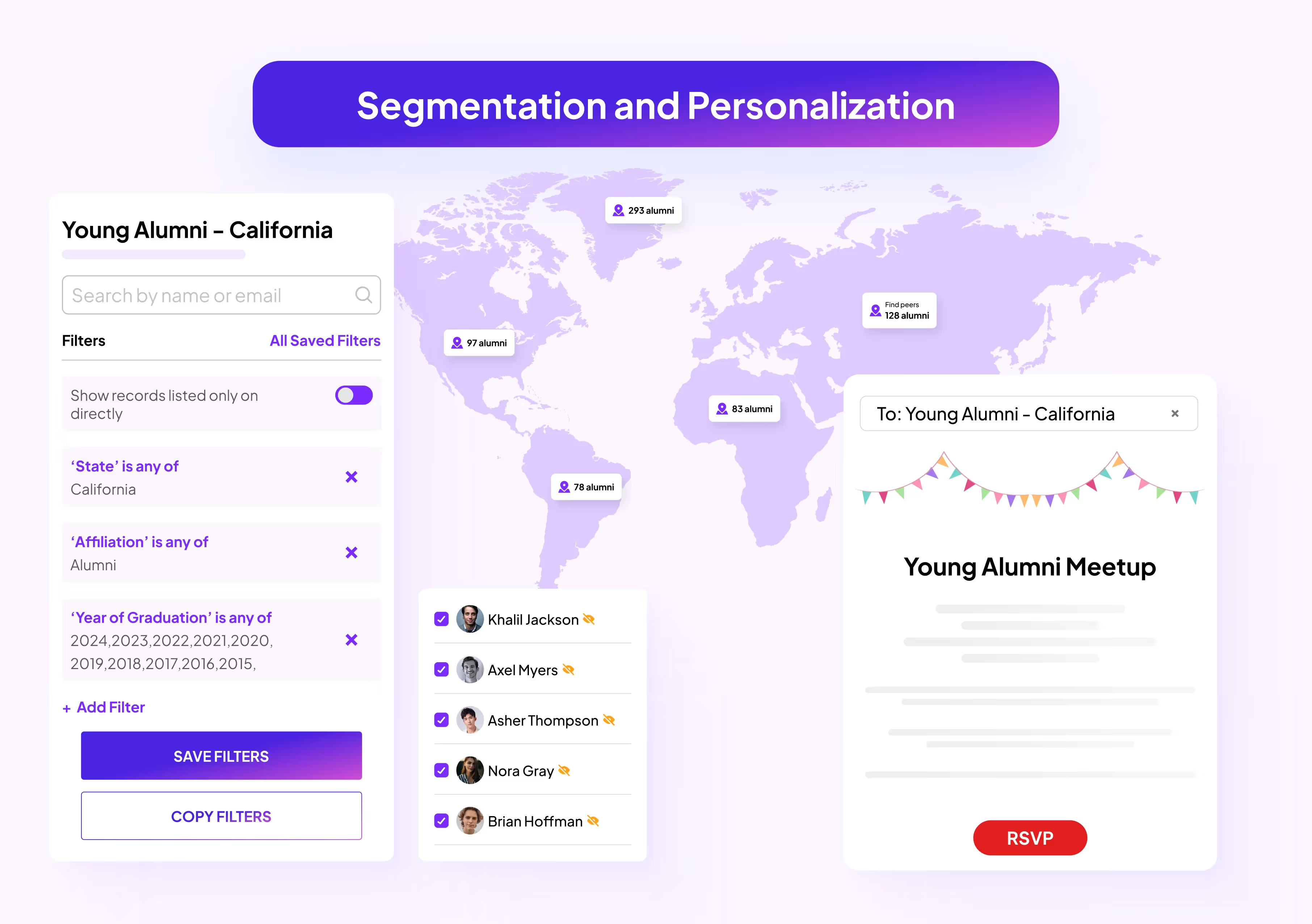
  • Targeted grouping of alumni: Teams can group alumni based on shared attributes, which helps when planning outreach or programs.

Engagement and advancement workflows

  • Event execution and tracking: Teams can manage registrations and track participation, which makes it easier to follow up after events.
  • Communication tied to activity: Outreach can be based on how alumni engage, which helps teams send more relevant messages.
  • Community interaction: Alumni can connect with each other within the platform, which supports ongoing participation.
  • Fundraising connected to engagement: Giving activity is linked with alumni profiles, which helps teams understand how engagement influences contributions.

This integration becomes important at scale. NACUBO reported that US higher education institutions received $61.5 billion in voluntary contributions in FY24, with alumni contributing a significant share. When engagement data connects with giving activity, teams can better track participation and follow up with donors in a timely way.

Governance and integrations

  • Controlled access for teams: Different roles can access relevant data, which helps maintain oversight without restricting day-to-day work.
  • Integration with institutional systems: The platform connects with existing tools like SIS and CRM systems so data remains consistent across systems.
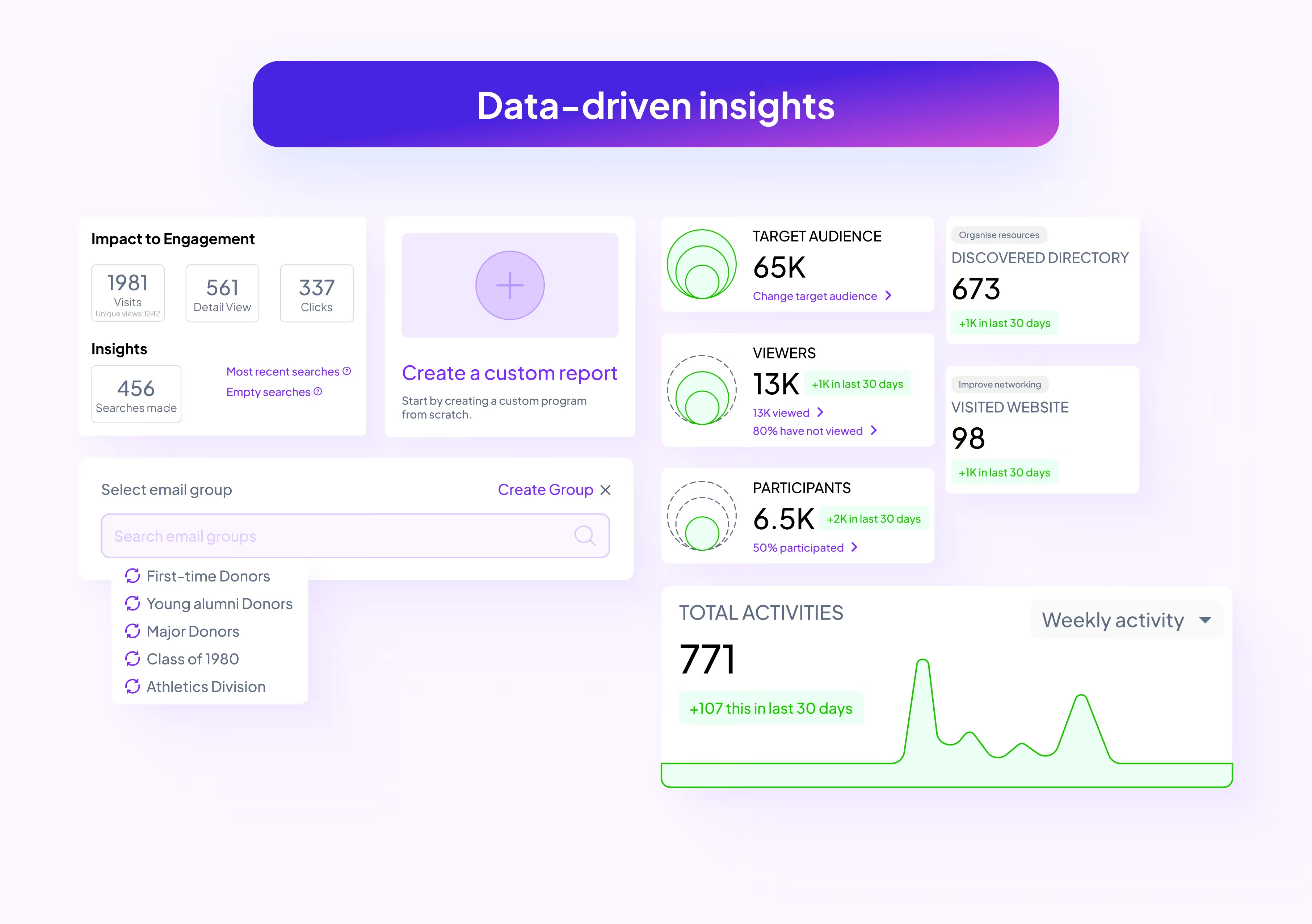
  • Reporting based on real activity: Teams can view engagement and giving together, which supports more accurate decision-making. 

By connecting engagement activity with alumni records, Almabase helps institutions use their database as an active system that supports programs over time.

b. Gravyty

Gravyty is used within advancement teams to support fundraising and donor engagement. It works alongside a CRM, where core alumni and donor records are maintained, and adds tools that help teams manage outreach and track activity during campaigns.

What Gravyty supports in an advancement workflow

  • Supports donor outreach within existing systems: Teams use it to manage communication with donors while continuing to rely on the CRM for maintaining records.
  • Works alongside CRM-based data structures: Alumni and donor data remain in the CRM, which means teams operate across systems when running campaigns.
  • Provides visibility into fundraising activity: Reporting is tied to CRM data, which helps teams track performance within their existing reporting setup.
  • Includes alumni community features through Graduway: Institutions can offer directory-style experiences and networking spaces, which support engagement alongside fundraising efforts.

In practice, Gravyty is used as an extension to CRM-led environments. Teams rely on it for fundraising and outreach while continuing to manage core alumni data within the CRM.

Alumni Database Software Comparison for Institutions

Criteria Almabase Gravyty
Primary Focus Alumni database + lifecycle engagement Fundraising and advancement workflows
Data Architecture Alumni-structured model CRM-dependent model
Reporting Engagement + database visibility Fundraising metrics
Alumni Portal Included Available via Graduway
Integration Scope SIS + fundraising + engagement CRM-centric

For institutions that want to manage engagement and reporting within the same system, Almabase provides a more unified setup. Teams can run programs and track outcomes without relying on multiple tools.

Also read → Alumni management software buying guide for Higher Ed and K-12 institutions | Almabase vs Vaave: Which alumni management platform is right for your institution?

2. Data Enrichment and Data Management Systems

Alumni data changes over time. People switch jobs, move locations, or stop using old contact details. Without regular updates, records become less reliable, which affects how teams reach out and plan programs.

Data enrichment tools are used to keep alumni records current. They help teams identify gaps in the database and update information so outreach is based on accurate data.

What these tools help with

  • Updating professional information: Employment and location details are refreshed, which helps teams understand where alumni are and how to reach them.
  • Resolving duplicate records: Multiple entries for the same person are identified and cleaned up, which improves data quality and reporting accuracy.
  • Reconnecting inactive alumni: Missing or outdated profiles can be updated, which expands the pool of alumni available for outreach.
  • Validating existing data: Records are checked for accuracy, which reduces errors during campaigns and communication.

Institutions often use these tools alongside their alumni database to keep records reliable over time. This becomes important when engagement and fundraising depend on current information.

Platforms such as Windfall, WealthEngine, and LexisNexis are commonly used for this purpose. They focus on improving data quality and donor intelligence, rather than running engagement programs.

When connected to the alumni database, these tools help ensure that outreach and fundraising efforts are based on accurate information.

3. Analytics and Prospect Research Tools

As alumni programs grow, teams need better visibility into which relationships to prioritize. Analytics and prospect research tools help by analyzing patterns in alumni activity and giving behavior.

What these tools help with

  • Identifying potential donors: Data is used to highlight alumni who are more likely to contribute, which helps teams focus their efforts.
  • Understanding giving capacity: External indicators are used to estimate potential, which supports more informed outreach planning.
  • Evaluating campaign performance: Teams can see how campaigns are performing, which helps them adjust strategy during execution.
  • Tracking engagement over time: Trends in participation are analyzed, which helps teams understand how alumni involvement is evolving.

Institutions use these tools alongside their alumni database to support fundraising strategy and planning. Platforms such as DonorSearch, iWave, and EverTrue are commonly used in this category. They focus on identifying donor potential and guiding outreach decisions.

When connected to the alumni database, these insights help teams prioritize relationships and improve the effectiveness of fundraising efforts.

4. Community and Networking Platforms

Community platforms help institutions move beyond storing alumni data and create ongoing interaction between alumni. These platforms are used to support networking, mentorship, and participation across programs, which helps keep alumni engaged over time.

As alumni begin interacting within these platforms, their activity also updates the database. This makes it easier for teams to keep records current without relying entirely on manual updates.

a. Almabase Community Platform

Almabase’s community platform provides a dedicated space where alumni can connect with each other and participate in programs run by the institution. Teams use it to support networking and mentorship while capturing engagement activity as it happens.

What this looks like in practice:

  • Search and connect with alumni: Alumni can find others based on professional background, which supports networking and outreach.
  • Run mentorship programs: Institutions can connect experienced alumni with students or early-career graduates, which helps structure mentorship initiatives.
  • Create groups and communities: Alumni can participate in shared-interest groups, which helps sustain interaction beyond one-time events.
  • Support career-related activity: Opportunities such as jobs or internships can be shared within the community, which keeps alumni returning to the platform.
  • Keep profiles up to date: Alumni can update their own information, which reduces the need for manual data maintenance.
  • Communicate based on participation: Teams can reach alumni based on how they engage, which helps make communication more relevant.

When networking activity and program participation are captured within the same platform, alumni data remains more accurate over time. This allows institutions to build stronger relationships while maintaining a database that reflects real engagement.

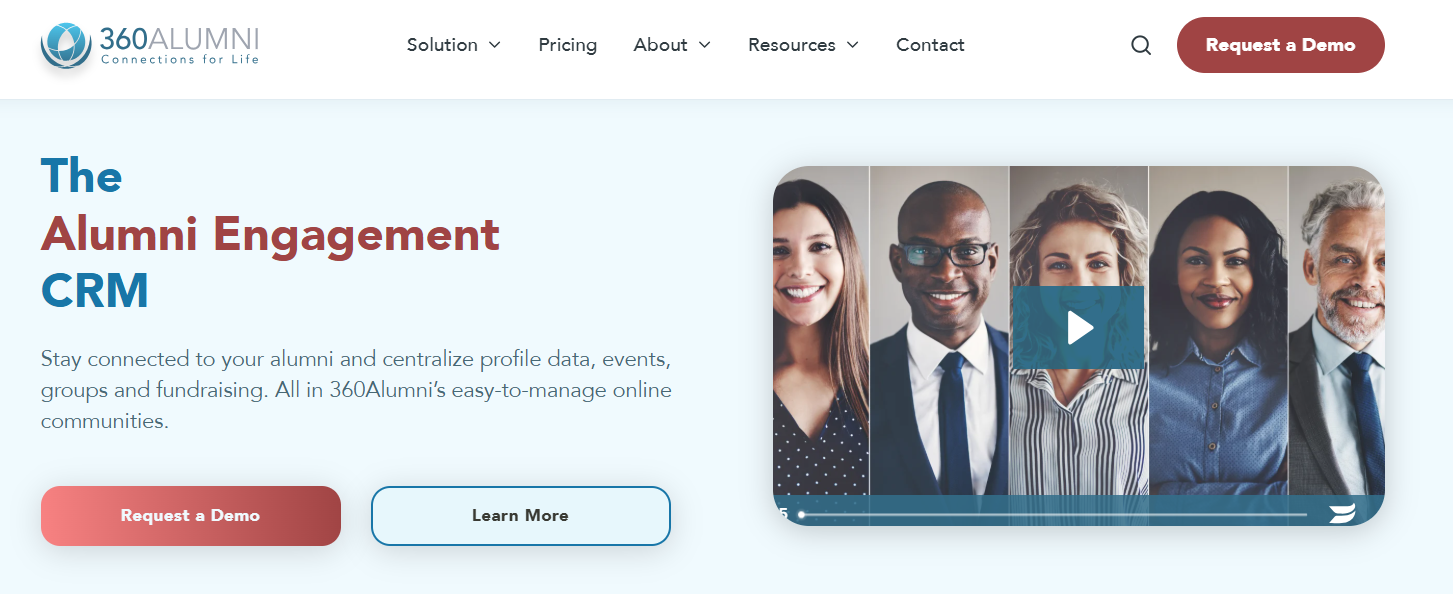
b. 360Alumni

360Alumni provides an online community platform that institutions use to connect alumni through ongoing interaction. It brings alumni activity into one place so members can engage with each other and participate in programs managed by the institution.

What this looks like in practice:

  • Find and connect with alumni: Alumni directories and maps help members locate others, which supports networking and outreach.
  • Manage events and reunions: Teams can organize registrations and track participation, which helps keep event activity structured.
  • Run mentorship programs: Alumni and students can be connected through guided programs, which supports career development.
  • Create discussion spaces: Groups allow alumni to interact around shared interests, which helps sustain engagement over time.
  • Share opportunities: Job postings and other updates keep alumni involved beyond events.
  • Communicate with participants: Teams can reach alumni based on their activity, which helps make communication more relevant. 

Institutions typically use platforms like 360Alumni to support community engagement, while maintaining core alumni records within their existing database or CRM.

Almabase vs Alumni360 - Quick Comparison

Criteria Almabase 360Alumni
Core focus Alumni engagement + community Alumni community portal
Networking Directory, mentorship, groups Directory, groups
Engagement tools Events, email, giving Events, messaging
Data sync CRM integrations Integrations available
Best fit Engagement + fundraising workflows Community networking portal

360Alumni is used primarily to support networking and community interaction. On the other hand, Almabase is used when institutions want community activity to connect with events and fundraising, so teams can track engagement and follow up within the same system.

How These Tools Work Together With Your Alumni Database

In most institutions, the CRM holds the primary alumni records. Teams rely on it to maintain contact details and track giving activity. But as programs expand, additional tools are introduced to support how teams run engagement and keep data current.

A typical advancement stack looks like this:

  • CRM / Alumni database – stores alumni records, giving history, and communication data
  • Engagement platforms – manage events, communications, and alumni programs
  • Data enrichment tools – maintain accurate alumni profiles and contact information
  • Analytics and prospect research tools – identify donor potential and engagement trends
  • Community platforms – enable networking, mentorship, and peer connections

When these tools work alongside the alumni database, teams can manage engagement while keeping records aligned with actual activity. This makes it easier to track participation, follow up with alumni, and maintain consistent reporting over time.

Evaluation Checklist for Tools That Support Alumni Database Management

At this point, the focus moves from comparing tools to deciding which one fits your institution’s setup. A structured checklist helps teams evaluate options during demos and internal discussions.

What to look for during evaluation:

  • Data alignment: 
    Does the tool work cleanly with your alumni database? It should support how your data is organized, including details like class year and program information. It should also reflect engagement activity and giving history without requiring manual updates.
  • Segmentation capabilities: 
    Can advancement teams group alumni based on how they interact with the institution? This includes participation levels, location, and past engagement. The goal is to support more relevant outreach.
  • Integration coverage: 
    Does the platform connect with the systems your teams already use? This includes your CRM and other tools that support day-to-day operations, so data can move without manual effort.
  • Reporting visibility: 
    Can teams track engagement and fundraising outcomes directly within the platform? Reporting should be accessible without relying on spreadsheets or pulling data from multiple sources.
  • Administrative usability: 
    Is the system easy for advancement teams to manage? Teams should be able to use it without depending on technical support for routine tasks.
  • Data governance and security: 
    Does the platform provide controlled access based on roles? It should also support consent management so teams can handle data responsibly.

Using a checklist like this helps ensure that new tools support your alumni database instead of adding complexity to your workflows.

Also read → The ultimate alumni engagement checklist for modern advancement teams

Why Institutions Use Almabase to Activate Their Alumni Database

Institutions choose Almabase when they want alumni data to stay connected with how their programs run. Instead of working across separate tools, teams can manage engagement and track outcomes within the same system. This reduces the effort required to keep data aligned during ongoing activity.

In practice, this becomes useful when teams are managing events and fundraising at the same time. Activity from these programs is reflected in alumni records, which helps teams follow up and report without switching systems.

What teams highlight in reviews

  • Ease of use during rollout: On Capterra, Almabase is rated 4.7 out of 5. Teams often point to how quickly they are able to start using the platform without heavy setup.
  • Works well with existing systems: On G2, Almabase holds a 4.6 out of 5 rating. Reviews frequently mention how data stays aligned with CRM systems, which helps teams maintain consistency. 

At Nicholls State University, Almabase helped bring alumni data into a single system used for engagement. The team reduced reliance on manual processes and improved how records were maintained. Within a year, they were able to reach 94% of contactable alumni and increased registered alumni by 159%.

For institutions looking to use alumni data across engagement and fundraising programs, Almabase helps teams manage activity within one system while keeping records accurate over time. Book a demo to see how this would work within your institution’s workflows.

Conclusion and Next Steps

Most institutions already rely on a CRM as their alumni database. The impact depends on how well that data is maintained and used across alumni engagement and fundraising programs.

Supporting tools help teams manage this in practice. They are used to run engagement activity and keep data updated as programs continue, which helps ensure records reflect actual participation.

For advancement teams looking to strengthen alumni engagement without adding operational complexity, the next step is to understand how these tools fit into existing workflows.

Book a demo with Almabase to see how institutions manage engagement and fundraising within the same system.

FAQs About Alumni Database Software

1. What is alumni database software, and how is it different from an alumni engagement platform?

Alumni database software is used to maintain accurate alumni records and track how alumni interact with the institution over time. Teams rely on it to keep data updated and consistent across departments.

Engagement platforms focus on how alumni participate in programs and interact with each other. In many institutions, both work together so that activity from engagement programs is reflected in the database.

2. What features matter most in alumni database software for universities?

The most important features depend on how teams manage alumni programs. Institutions typically look for tools that keep records updated as activity happens and support reporting across engagement and fundraising. Ease of use also matters, since teams need to work with the system regularly.

3. What integrations are essential for alumni database software?

Integrations are important when multiple systems are used to manage alumni programs. The database should connect with existing tools so that data flows without manual updates. This helps keep records consistent and reduces errors during reporting.

4. How does alumni database software support fundraising?

Integrations are important when multiple systems are used to manage alumni programs. The database should connect with existing tools so that data flows without manual updates. This helps keep records consistent and reduces errors during reporting.

5. How does alumni database software track engagement?

The system records how alumni participate in programs and interact with the institution. Teams use this information to understand patterns in participation and plan outreach based on past activity.

6. Which alumni database software works best for small and large institutions?

The right choice depends on how the institution operates. Smaller teams often prefer tools that are easy to manage and support multiple use cases in one place. Larger institutions usually look for systems that can handle higher volumes of data and support more complex workflows across teams.

Table of Contents

Subscribe

See how modern advancement teams bring alumni engagement and fundraising together.

Related Blog Posts

Handling alumni data is a delicate balancing act between the right infrastructure and the right strategies to support it. Your team most likely already has a system in place for this whether it’s an integrated CRM or an ecosystem of specialized tools. 

Relying on that data to run programs and track results however, is where your alumni database software gets put to the test. We often see instances where the records are available but using them consistently across teams becomes harder over time. 

This is where most institutions start looking beyond their database and start looking at the tools that make use of the data at hand.

In this blog, we will walk you through alumni database software and tools that help you work more effectively with your existing database, so you can keep data accurate and use it to drive ongoing engagement.

The Role of an Alumni Database Software in Alumni Data Management

An alumni database software is a centralized system that helps institutions maintain a reliable record of their alumni and how they stay connected over time. It allows teams to track interactions and update information as alumni participate in programs or contribute to the institution.

In most cases, this database sits within a CRM. Teams use it as a central place to manage alumni records so different departments are working with the same information. This becomes important when multiple teams are running outreach, events, or fundraising activities at the same time.

As engagement grows, maintaining accurate data becomes more demanding. Alumni participate in different programs, update their details, and interact across multiple channels. Without a consistent system, it becomes harder to keep records current and use them effectively.

Criteria Alumni Database (System of Record)
Core Design Centralized storage of alumni records and institutional relationships
Data Model Alumni profiles, giving history, engagement activity
Segmentation Class year, program, geography, participation history
Reporting Alumni engagement trends and fundraising visibility
Integrations SIS platforms, engagement tools, analytics systems
Governance Role-based access and institutional data controls

According to the 2024 CASE Insights Alumni Engagement Survey, 51.8% of institutions reported increased alumni engagement. As participation grows, institutions need systems that can keep up with these interactions and reflect them accurately in their data.

This is why many institutions rely on additional tools alongside their database. These tools help teams manage ongoing engagement and keep data aligned with actual activity, so decisions are based on current information.

When Institutions Add Supporting Tools to Their Alumni Database

A CRM is often where institutions begin managing alumni data. It works well when programs have limited scope and teams are focused solely on maintaining records and basic outreach. At this stage, the system supports day-to-day needs without much additional setup.

As the number and scale of your alumni programs expand, teams start working across more activities at the same time. This means engagement becomes harder to manage within a single system, and gaps begin to appear in how data is updated and used.

Common bottlenecks

  • Data updates rely on manual effort: Information from events or campaigns does not always flow back into the system automatically, which leads to delays in keeping records current.
  • Engagement activity is not fully visible: Teams cannot easily see how alumni are interacting across programs, which makes it harder to plan follow-ups.
  • Reporting takes longer than expected: Data often needs to be pulled from different sources, which slows down analysis and decision-making.

Kimberly Verstandig, Vice President for Fundraising and Senior Strategist at Mackey Strategies, describes this clearly:

“The CRM is kind of like the mothership, but then you have all of these other ships floating around it. Donor Relations wants one platform, Annual Giving needs another, Alumni Engagement wants something different for events. All of a sudden you have these disparate systems, and you're trying to figure out how they all connect back to the CRM in order to make use of that data effectively.”

In response, institutions start adding supporting tools around their alumni database. These tools help teams manage engagement as it happens and keep data aligned with actual activity, so records remain accurate and useful over time.

Best Alumni Database Software That Helps Institutions Activate Alumni Engagement

Advancement teams often use additional platforms alongside their alumni database when engagement programs become harder to manage within a single system. These tools help teams run programs more consistently and keep data aligned with actual activity.

The following categories reflect how institutions typically extend their alumni database to support ongoing engagement.

1. Alumni Management and Engagement Systems

Alumni management and engagement platforms are used to run programs that keep alumni involved over time. These platforms help teams move from storing data to using it in day-to-day engagement. They work alongside the CRM so teams can manage engagement as it happens and ensure that updates reflect back in the database without manual effort.

a. Almabase

Almabase is an alumni management and engagement platform built for Higher Ed and K–12 institutions. It works alongside an existing alumni database to help teams use their data during day-to-day programs, rather than only storing it.

At its core, the platform maintains a centralized alumni directory that updates as alumni interact with the institution. Alumni can update their own information, which helps keep records accurate without requiring constant manual work from internal teams.

Core database and lifecycle capabilities

  • Centralized alumni directory: Teams can search and manage alumni records in one place, which reduces time spent switching between systems.
  • CRM connectivity: Data updates from engagement activity flow into systems like Blackbaud Raiser's Edge NXT or Salesforce, which helps keep records aligned across teams.
  • Reconnect inactive alumni: Tools help identify and update records that are no longer active, which improves overall data quality over time.
  • Targeted grouping of alumni: Teams can group alumni based on shared attributes, which helps when planning outreach or programs.

Engagement and advancement workflows

  • Event execution and tracking: Teams can manage registrations and track participation, which makes it easier to follow up after events.
  • Communication tied to activity: Outreach can be based on how alumni engage, which helps teams send more relevant messages.
  • Community interaction: Alumni can connect with each other within the platform, which supports ongoing participation.
  • Fundraising connected to engagement: Giving activity is linked with alumni profiles, which helps teams understand how engagement influences contributions.

This integration becomes important at scale. NACUBO reported that US higher education institutions received $61.5 billion in voluntary contributions in FY24, with alumni contributing a significant share. When engagement data connects with giving activity, teams can better track participation and follow up with donors in a timely way.

Governance and integrations

  • Controlled access for teams: Different roles can access relevant data, which helps maintain oversight without restricting day-to-day work.
  • Integration with institutional systems: The platform connects with existing tools like SIS and CRM systems so data remains consistent across systems.
  • Reporting based on real activity: Teams can view engagement and giving together, which supports more accurate decision-making. 

By connecting engagement activity with alumni records, Almabase helps institutions use their database as an active system that supports programs over time.

b. Gravyty

Gravyty is used within advancement teams to support fundraising and donor engagement. It works alongside a CRM, where core alumni and donor records are maintained, and adds tools that help teams manage outreach and track activity during campaigns.

What Gravyty supports in an advancement workflow

  • Supports donor outreach within existing systems: Teams use it to manage communication with donors while continuing to rely on the CRM for maintaining records.
  • Works alongside CRM-based data structures: Alumni and donor data remain in the CRM, which means teams operate across systems when running campaigns.
  • Provides visibility into fundraising activity: Reporting is tied to CRM data, which helps teams track performance within their existing reporting setup.
  • Includes alumni community features through Graduway: Institutions can offer directory-style experiences and networking spaces, which support engagement alongside fundraising efforts.

In practice, Gravyty is used as an extension to CRM-led environments. Teams rely on it for fundraising and outreach while continuing to manage core alumni data within the CRM.

Alumni Database Software Comparison for Institutions

Criteria Almabase Gravyty
Primary Focus Alumni database + lifecycle engagement Fundraising and advancement workflows
Data Architecture Alumni-structured model CRM-dependent model
Reporting Engagement + database visibility Fundraising metrics
Alumni Portal Included Available via Graduway
Integration Scope SIS + fundraising + engagement CRM-centric

For institutions that want to manage engagement and reporting within the same system, Almabase provides a more unified setup. Teams can run programs and track outcomes without relying on multiple tools.

Also read → Alumni management software buying guide for Higher Ed and K-12 institutions | Almabase vs Vaave: Which alumni management platform is right for your institution?

2. Data Enrichment and Data Management Systems

Alumni data changes over time. People switch jobs, move locations, or stop using old contact details. Without regular updates, records become less reliable, which affects how teams reach out and plan programs.

Data enrichment tools are used to keep alumni records current. They help teams identify gaps in the database and update information so outreach is based on accurate data.

What these tools help with

  • Updating professional information: Employment and location details are refreshed, which helps teams understand where alumni are and how to reach them.
  • Resolving duplicate records: Multiple entries for the same person are identified and cleaned up, which improves data quality and reporting accuracy.
  • Reconnecting inactive alumni: Missing or outdated profiles can be updated, which expands the pool of alumni available for outreach.
  • Validating existing data: Records are checked for accuracy, which reduces errors during campaigns and communication.

Institutions often use these tools alongside their alumni database to keep records reliable over time. This becomes important when engagement and fundraising depend on current information.

Platforms such as Windfall, WealthEngine, and LexisNexis are commonly used for this purpose. They focus on improving data quality and donor intelligence, rather than running engagement programs.

When connected to the alumni database, these tools help ensure that outreach and fundraising efforts are based on accurate information.

3. Analytics and Prospect Research Tools

As alumni programs grow, teams need better visibility into which relationships to prioritize. Analytics and prospect research tools help by analyzing patterns in alumni activity and giving behavior.

What these tools help with

  • Identifying potential donors: Data is used to highlight alumni who are more likely to contribute, which helps teams focus their efforts.
  • Understanding giving capacity: External indicators are used to estimate potential, which supports more informed outreach planning.
  • Evaluating campaign performance: Teams can see how campaigns are performing, which helps them adjust strategy during execution.
  • Tracking engagement over time: Trends in participation are analyzed, which helps teams understand how alumni involvement is evolving.

Institutions use these tools alongside their alumni database to support fundraising strategy and planning. Platforms such as DonorSearch, iWave, and EverTrue are commonly used in this category. They focus on identifying donor potential and guiding outreach decisions.

When connected to the alumni database, these insights help teams prioritize relationships and improve the effectiveness of fundraising efforts.

4. Community and Networking Platforms

Community platforms help institutions move beyond storing alumni data and create ongoing interaction between alumni. These platforms are used to support networking, mentorship, and participation across programs, which helps keep alumni engaged over time.

As alumni begin interacting within these platforms, their activity also updates the database. This makes it easier for teams to keep records current without relying entirely on manual updates.

a. Almabase Community Platform

Almabase’s community platform provides a dedicated space where alumni can connect with each other and participate in programs run by the institution. Teams use it to support networking and mentorship while capturing engagement activity as it happens.

What this looks like in practice:

  • Search and connect with alumni: Alumni can find others based on professional background, which supports networking and outreach.
  • Run mentorship programs: Institutions can connect experienced alumni with students or early-career graduates, which helps structure mentorship initiatives.
  • Create groups and communities: Alumni can participate in shared-interest groups, which helps sustain interaction beyond one-time events.
  • Support career-related activity: Opportunities such as jobs or internships can be shared within the community, which keeps alumni returning to the platform.
  • Keep profiles up to date: Alumni can update their own information, which reduces the need for manual data maintenance.
  • Communicate based on participation: Teams can reach alumni based on how they engage, which helps make communication more relevant.

When networking activity and program participation are captured within the same platform, alumni data remains more accurate over time. This allows institutions to build stronger relationships while maintaining a database that reflects real engagement.

b. 360Alumni

360Alumni provides an online community platform that institutions use to connect alumni through ongoing interaction. It brings alumni activity into one place so members can engage with each other and participate in programs managed by the institution.

What this looks like in practice:

  • Find and connect with alumni: Alumni directories and maps help members locate others, which supports networking and outreach.
  • Manage events and reunions: Teams can organize registrations and track participation, which helps keep event activity structured.
  • Run mentorship programs: Alumni and students can be connected through guided programs, which supports career development.
  • Create discussion spaces: Groups allow alumni to interact around shared interests, which helps sustain engagement over time.
  • Share opportunities: Job postings and other updates keep alumni involved beyond events.
  • Communicate with participants: Teams can reach alumni based on their activity, which helps make communication more relevant. 

Institutions typically use platforms like 360Alumni to support community engagement, while maintaining core alumni records within their existing database or CRM.

Almabase vs Alumni360 - Quick Comparison

Criteria Almabase 360Alumni
Core focus Alumni engagement + community Alumni community portal
Networking Directory, mentorship, groups Directory, groups
Engagement tools Events, email, giving Events, messaging
Data sync CRM integrations Integrations available
Best fit Engagement + fundraising workflows Community networking portal

360Alumni is used primarily to support networking and community interaction. On the other hand, Almabase is used when institutions want community activity to connect with events and fundraising, so teams can track engagement and follow up within the same system.

How These Tools Work Together With Your Alumni Database

In most institutions, the CRM holds the primary alumni records. Teams rely on it to maintain contact details and track giving activity. But as programs expand, additional tools are introduced to support how teams run engagement and keep data current.

A typical advancement stack looks like this:

  • CRM / Alumni database – stores alumni records, giving history, and communication data
  • Engagement platforms – manage events, communications, and alumni programs
  • Data enrichment tools – maintain accurate alumni profiles and contact information
  • Analytics and prospect research tools – identify donor potential and engagement trends
  • Community platforms – enable networking, mentorship, and peer connections

When these tools work alongside the alumni database, teams can manage engagement while keeping records aligned with actual activity. This makes it easier to track participation, follow up with alumni, and maintain consistent reporting over time.

Evaluation Checklist for Tools That Support Alumni Database Management

At this point, the focus moves from comparing tools to deciding which one fits your institution’s setup. A structured checklist helps teams evaluate options during demos and internal discussions.

What to look for during evaluation:

  • Data alignment: 
    Does the tool work cleanly with your alumni database? It should support how your data is organized, including details like class year and program information. It should also reflect engagement activity and giving history without requiring manual updates.
  • Segmentation capabilities: 
    Can advancement teams group alumni based on how they interact with the institution? This includes participation levels, location, and past engagement. The goal is to support more relevant outreach.
  • Integration coverage: 
    Does the platform connect with the systems your teams already use? This includes your CRM and other tools that support day-to-day operations, so data can move without manual effort.
  • Reporting visibility: 
    Can teams track engagement and fundraising outcomes directly within the platform? Reporting should be accessible without relying on spreadsheets or pulling data from multiple sources.
  • Administrative usability: 
    Is the system easy for advancement teams to manage? Teams should be able to use it without depending on technical support for routine tasks.
  • Data governance and security: 
    Does the platform provide controlled access based on roles? It should also support consent management so teams can handle data responsibly.

Using a checklist like this helps ensure that new tools support your alumni database instead of adding complexity to your workflows.

Also read → The ultimate alumni engagement checklist for modern advancement teams

Why Institutions Use Almabase to Activate Their Alumni Database

Institutions choose Almabase when they want alumni data to stay connected with how their programs run. Instead of working across separate tools, teams can manage engagement and track outcomes within the same system. This reduces the effort required to keep data aligned during ongoing activity.

In practice, this becomes useful when teams are managing events and fundraising at the same time. Activity from these programs is reflected in alumni records, which helps teams follow up and report without switching systems.

What teams highlight in reviews

  • Ease of use during rollout: On Capterra, Almabase is rated 4.7 out of 5. Teams often point to how quickly they are able to start using the platform without heavy setup.
  • Works well with existing systems: On G2, Almabase holds a 4.6 out of 5 rating. Reviews frequently mention how data stays aligned with CRM systems, which helps teams maintain consistency. 

At Nicholls State University, Almabase helped bring alumni data into a single system used for engagement. The team reduced reliance on manual processes and improved how records were maintained. Within a year, they were able to reach 94% of contactable alumni and increased registered alumni by 159%.

For institutions looking to use alumni data across engagement and fundraising programs, Almabase helps teams manage activity within one system while keeping records accurate over time. Book a demo to see how this would work within your institution’s workflows.

Conclusion and Next Steps

Most institutions already rely on a CRM as their alumni database. The impact depends on how well that data is maintained and used across alumni engagement and fundraising programs.

Supporting tools help teams manage this in practice. They are used to run engagement activity and keep data updated as programs continue, which helps ensure records reflect actual participation.

For advancement teams looking to strengthen alumni engagement without adding operational complexity, the next step is to understand how these tools fit into existing workflows.

Book a demo with Almabase to see how institutions manage engagement and fundraising within the same system.

FAQs About Alumni Database Software

1. What is alumni database software, and how is it different from an alumni engagement platform?

Alumni database software is used to maintain accurate alumni records and track how alumni interact with the institution over time. Teams rely on it to keep data updated and consistent across departments.

Engagement platforms focus on how alumni participate in programs and interact with each other. In many institutions, both work together so that activity from engagement programs is reflected in the database.

2. What features matter most in alumni database software for universities?

The most important features depend on how teams manage alumni programs. Institutions typically look for tools that keep records updated as activity happens and support reporting across engagement and fundraising. Ease of use also matters, since teams need to work with the system regularly.

3. What integrations are essential for alumni database software?

Integrations are important when multiple systems are used to manage alumni programs. The database should connect with existing tools so that data flows without manual updates. This helps keep records consistent and reduces errors during reporting.

4. How does alumni database software support fundraising?

Integrations are important when multiple systems are used to manage alumni programs. The database should connect with existing tools so that data flows without manual updates. This helps keep records consistent and reduces errors during reporting.

5. How does alumni database software track engagement?

The system records how alumni participate in programs and interact with the institution. Teams use this information to understand patterns in participation and plan outreach based on past activity.

6. Which alumni database software works best for small and large institutions?

The right choice depends on how the institution operates. Smaller teams often prefer tools that are easy to manage and support multiple use cases in one place. Larger institutions usually look for systems that can handle higher volumes of data and support more complex workflows across teams.

Best Alumni Database Software to Activate Alumni Engagement

Best Alumni Database Software to Activate Alumni Engagement

Compare alumni database software for engagement, fundraising, CRM sync, and events. See features, use cases, and how to choose the right platform.

Alumni Engagement

April 21, 2026

12 minutes

Read

Most institutions evaluating alumni management software already have a CRM or an alumni database in place. What often changes over time is how difficult it becomes to run engagement programs consistently using those systems.

Teams often start seeing a gradual change in day-to-day execution where participation drops after initial campaigns, follow-ups take up more working hours and the data to tie it all together sits across multiple systems, eventually slowing down outreach and reporting. This is where the initial (or in some cases additional) platform choice starts to matter. 

Today, we have a blog that compares four platforms that institutions commonly evaluate, including Almabase, Graduway, PeopleGrove, and Hivebrite. We’ll walk you through how each one works in practice and what to consider when shortlisting the right option.

Shortlisting the Best Alumni Management Software

Alumni management software helps institutions manage alumni relationships across programs such as events, communication, and fundraising within a single system. It allows teams to track participation and connect engagement activity with giving, which reduces manual effort when data needs to be shared across departments.

Selecting the right platform depends on how well it supports your institution’s programs in practice. To begin, let’s compare the four mentioned platforms that institutions that we’ve picked out:

Software Best Use Case Core Strength
Almabase Alumni engagement and fundraising Full-service engagement suite with events, giving, and CRM sync in one workflow
Graduway (Gravyty) Branded alumni networks Directory-led engagement with customizable branding
PeopleGrove Career networking and mentorship Structured mentorship and career connections
Hiverbrite Customizable community building Flexible communities with strong customization

And a quick summary before we proceed with the detailed comparisons:

  1. Almabase is typically used by Higher Ed and K-12 institutions that want to manage engagement and fundraising within the same workflow, without relying on multiple tools.
  2. Graduway is more often used where the focus is on maintaining a branded alumni network and directory experience.
  3. PeopleGrove is adopted in cases where structured mentorship and career networking are a priority.
  4. Hivebrite is chosen when institutions want flexibility in building and managing online communities with a strong emphasis on customization.

The next section looks at how these platforms compare across specific institutional needs.

Comparison 1: Almabase vs Graduway for Alumni Engagement and Fundraising

For advancement teams, engagement and fundraising are deeply connected. Events drive participation. Participation drives giving. Giving drives long-term alumni relationships. 

The right alumni management software should support that entire cycle without forcing teams to stitch together multiple disconnected tools. 

Here’s how Almabase and Graduway compare when the priority is advancement-led engagement and fundraising.

Criteria Almabase Graduway
Alumni Directory and Data Sync Dynamic profile updates and CRM sync with Blackbaud, Salesforce, and Ellucian Alumni directory management within the platform
Event and Campaign Management Hybrid event workflows, RSVP automation, reminders, and engagement tracking Event management with RSVP tracking and communication tools
Fundraising and Giving Tools Built-in giving pages, peer-to-peer campaigns, CRM-connected donor tracking Fundraising functionality available within the broader Gravyty ecosystem
Personalization and Segmentation Advanced segmentation with built-in email and campaign targeting Audience segmentation within campaign tools
Ease of Use and Adoption Structured onboarding and administrative support  User-friendly interface with flexible configuration

Evaluating Key Criteria:

1. Alumni data and CRM connectivity

Almabase connects directly with systems such as Blackbaud, Salesforce, and Ellucian, which means engagement and giving activity flows back into the institution’s CRM as it happens. This reduces the need for manual updates and allows advancement teams to work with a consistent view of alumni participation and donor activity.

Graduway stores alumni data within its platform and links fundraising through the Gravyty ecosystem. The level of CRM synchronization depends on how those integrations are configured, which can affect how easily teams track activity across systems.

2. Event and campaign workflows

Almabase supports event execution with built-in workflows that carry through from registration to post-event tracking. Because participation data is tied to fundraising activity, teams can see how events contribute to broader advancement outcomes without additional reconciliation.

Graduway supports event coordination and communication within the platform, with a primary focus on facilitating alumni participation. When teams need deeper visibility into how events influence fundraising, they often rely on additional tools within the Gravyty setup.

3. Fundraising depth and integration

Almabase includes giving workflows within the same system used for engagement. Campaigns, donations, and participation data remain connected, which helps teams track outcomes without switching between tools.

Graduway supports fundraising through the Gravyty ecosystem, where campaign management may sit alongside other modules. This setup can work well for institutions that already operate within that structure, though it introduces additional coordination across systems.

Key Decision Considerations:

Almabase is typically used by teams that want engagement and fundraising to run within the same system, with shared data across workflows.

Graduway is used in setups where institutions rely on the Gravyty ecosystem and manage engagement and fundraising through connected modules.

The choice depends on how your team prefers to operate and how closely these workflows need to stay connected during execution.

Quick tip → According to the 2024 CASE framework, alumni engagement breaks down into four measurable modes: Communication (15.4%), Experiential (6.1%), Philanthropy (4.7%), and Volunteering (1.2%). Platforms are increasingly evaluated on how well they support each of these categories.

Comparison 2: Almabase vs PeopleGrove for Career Networking and Mentorship

Career networking and mentorship programs depend on how well institutions can connect alumni with students or peers in a structured way. This usually involves identifying the right participants, enabling interaction, and tracking whether those connections continue over time.

When institutions evaluate platforms for this use case, they look at how easily mentorship programs can be set up and how clearly participation can be measured.

Here’s how Almabase and PeopleGrove compare within this specific context.

Criteria Almabase PeopleGrove
Mentorship and Career Networking Built-in mentorship tools and career networking features Dedicated mentorship matching and career services platform
Program Structure Mentorship workflows integrated within broader alumni engagement system Structured mentor-mentee matching framework
Data Integration CRM sync with Blackbaud, Salesforce, and Ellucian LinkedIn-based profile syncing and career data enrichment
Administrative Controls Centralized admin controls within full alumni management system Program-level controls for mentorship initiatives
Reporting Reporting across engagement activity within platform Reporting focused primarily on mentorship participation

Evaluating Key Criteria:

1. Mentorship structure and platform scope

PeopleGrove is designed specifically for career networking and mentorship. Institutions use it to set up matching frameworks and run structured programs where participants are guided through defined interactions. This makes it easier to manage mentorship as a focused initiative with clear boundaries.

Almabase supports mentorship within its broader alumni system. Programs run alongside existing alumni data and communication workflows, so teams can connect mentorship activity with other forms of engagement. This is useful when mentorship is one part of a larger alumni strategy rather than a standalone program.

2. Data visibility and integration

Almabase connects mentorship activity with CRM systems, which allows teams to view participation alongside other engagement data. This helps when reporting needs to reflect overall alumni involvement instead of isolated program metrics.

PeopleGrove enhances participant profiles using LinkedIn data, which improves visibility into professional backgrounds during mentorship matching. Reporting remains centered on career program activity, which works well for teams focused on mentorship outcomes.

3. Scope of engagement

PeopleGrove is used primarily for career-focused engagement. Institutions adopt it when mentorship and professional networking are core priorities and require dedicated workflows.

Almabase supports mentorship within a broader engagement setup. Teams can manage events, communication, and fundraising alongside networking programs, which allows different initiatives to stay connected during execution.

Key Decision Considerations:

PeopleGrove is typically chosen when mentorship programs are a primary focus and require a dedicated environment for managing career interactions.

Almabase is used when mentorship is one part of a broader engagement strategy that includes events, communication, and fundraising within the same system.

The choice depends on how mentorship fits into your overall alumni strategy and how closely it needs to connect with other engagement activities.

Comparison 3: Almabase vs Hivebrite for Community Engagement and Building

Community engagement depends on whether alumni continue to participate after joining a platform. This usually happens when institutions create spaces where interaction is visible and tied to ongoing programs rather than one-time activity.

When evaluating platforms for this use case, institutions look at how community interaction is structured and how participation connects to events or broader engagement efforts.

Here’s how Almabase and Hivebrite compare within community engagement and building.

Criteria Almabase Hivebrite
Community Customization Branded alumni communities with built-in engagement modules Customizable community design and branded digital spaces
Event Management Hybrid event workflows, RSVP tracking, reminder automation, and donation-enabled events Event registration tools within community platform
Fundraising and Giving Integrated giving pages and peer-to-peer fundraising tools Limited native fundraising functionality
Community Interaction Engagement tools connecting profiles, events, campaigns, and networking Forums, groups, and mobile-first community interaction
Analytics and Reporting Real-time reporting across engagement, events, and donations Reporting focused on community participation metrics

Evaluating Key Criteria:

1. Community structure and engagement model

Hivebrite is built around digital community spaces where alumni interact through groups and discussions. Institutions use it to create branded environments that encourage peer-to-peer participation. Engagement tends to grow when members see activity from others within the same community.

Almabase supports community interaction within a broader alumni system. Activity from groups or discussions connects with events and institutional initiatives, which allows teams to track how engagement moves across different programs. This helps when participation needs to translate into measurable outcomes rather than remain limited to conversations.

A 2024 study on digital alumni platforms shows that visible peer activity influences whether users stay active over time. Platforms that make participation visible across programs often see more consistent engagement.

2. Events and engagement workflows

Almabase connects event workflows directly with alumni activity. Teams can track who participates and follow up within the same system, which helps when events are used to drive ongoing engagement.

Hivebrite supports event participation within its community environment. It allows institutions to manage registrations and track attendance, but teams may rely on additional processes when they want to connect event activity with broader engagement efforts.

3. Fundraising and integration depth

Almabase includes fundraising workflows that connect with alumni records and CRM systems. This allows teams to track how engagement activity contributes to giving over time.

Hivebrite provides limited fundraising functionality within the platform. Institutions often use additional tools when fundraising becomes part of their engagement strategy, which can add steps to tracking results.

Key Decision Considerations:

Almabase is typically used when community engagement needs to connect with events and fundraising within the same system, so teams can manage participation and outcomes together.

Hivebrite is used when the focus is on building a standalone community space where interaction between members is the primary goal.

The choice depends on whether community engagement needs to connect with other institutional workflows or operate as a separate initiative.

Why Institutions Choose Almabase for Alumni Management

After evaluating different platforms, institutions usually look for a setup where alumni activity stays connected across programs. This matters because teams often manage events, fundraising, and communication in parallel, and disconnected tools make it harder to track participation or follow up consistently.

Almabase

Almabase is used in these situations because it keeps engagement activity within a single system. Event participation and giving activity are recorded together, so teams can see how programs influence each other without switching tools.

What stands out in practice

  • Workflows stay connected during execution: Events and fundraising campaigns run in the same environment. Teams can follow up with participants while engagement is still active, instead of exporting data between systems.
  • Data remains aligned across systems: CRM synchronization ensures alumni records and donor activity stay consistent. This reduces manual reconciliation when teams prepare reports or track campaign outcomes.
  • Adoption is easier for internal teams: On Capterra, Almabase is rated 4.7 out of 5 based on 144 reviews, with strong scores for ease of use and customer service. These ratings reflect how quickly teams get comfortable using the platform during rollout.
  • Support matters during ongoing campaigns: On G2, Almabase holds a 4.6 out of 5 rating in the United States. Reviews often highlight responsiveness, which becomes important when teams need quick adjustments during live programs.

What this looks like in practice

At Thomas Aquinas College, 25% of alumni signed up within three months of implementation. This was driven by moving from a static alumni page to an interactive platform where participation was visible in real time. Features such as leaderboards, campaign progress tracking, and peer-driven challenges encouraged alumni to engage more actively, which helped the team sustain participation across both events and fundraising initiatives.

As Kalyan, Founder and CEO of Almabase, notes, “technology makes the donor experience significantly better, making the donor feel connected to the organization, whether you're making a $100 donation or $100,000,” highlighting how systems th ko at bring engagement and giving together can strengthen participation over time.

Also read → Alumni management software buying guide for institutions and advancement teams 

Conclusion and Next Steps

By now, you’ve seen how different platforms support alumni programs in practice. The key difference comes down to how workflows are structured and how easily teams can manage them together.

Almabase is used by institutions that want engagement activity, event participation, and giving data to stay connected within the same system. This makes it easier to track outcomes and coordinate work across teams.

If you’re evaluating platforms, the next step is to see how this works in practice. A demo can help you understand how your workflows would run within the system and how data flows across programs. Request a free demo to see how your workflows would run in practice.

Book a demo with Almabase

FAQs About Alumni Management Software

1. What is alumni management software?

Alumni management software is used by institutions to manage alumni relationships across programs. Teams use it to track interactions, run events, and manage giving activity within the same system, which helps reduce manual work when data needs to be shared across teams.

2. Which features matter most in alumni management software?

The most important features depend on how the institution runs its programs. Teams usually look for tools that support event execution and allow them to track participation over time. CRM connectivity also matters when reporting needs to reflect both engagement and giving activity in one place.

3. How is alumni management software different from a CRM or alumni community platform?

A CRM is typically used to store donor and contact records, while alumni platforms focus on engagement programs. Alumni management software connects these areas by allowing teams to run events and fundraising while keeping data aligned with institutional systems.

4. Can alumni management software integrate with CRM systems?

Many platforms connect with systems such as Blackbaud, Salesforce, or Ellucian. This allows engagement activity to reflect in donor records, which helps teams maintain accurate reporting without manually updating data across systems.

5. How does alumni management software support events and fundraising?

These platforms support event execution by allowing teams to manage registrations and track participation. Fundraising activity can then be linked to that engagement, which helps teams follow up with alumni based on their involvement.

6. How should institutions choose the right alumni management software?

The right choice depends on how your institution runs alumni programs. Teams should look at how well the platform supports their existing workflows and whether engagement activity connects with fundraising and reporting in a way that reduces manual effort.

Alumni Management Software: Best Platforms Compared

Alumni Management Software: Best Platforms Compared

Compare the best alumni management software for engagement, events, mentoring, and fundraising. See how Almabase stacks up against top platforms.

Alumni Engagement

April 20, 2026

12 minutes

Read

Alumni reunions are still a core part of how institutions stay connected with their communities. They’re familiar and often well-intentioned. But over time, the format can start to feel repetitive. Especially when the programme doesn’t really change: a cocktail hour, a speech from the Dean, or some time to catch up with people you’ve mostly lost touch with, alumni interest starts to taper off.

This could be because, at some point, alumni begin to weigh the effort of booking flights and stays, or taking time off of work or family against the payoff. Reunions are being compared against everything else people could be doing with their time. And in that comparison, a lot of programming starts to feel dated, even to a very seemingly engaged alumni community.

To help you keep up with the evolving expectations of your alumni, we’ve put together a range of alumni reunion activity ideas across formats. The idea is to give you options you can actually use, backed with real life examples and tips to help you make them work.

Why the Right Alumni Reunion Activities Matter

Alumni look forward to reunions because they miss each other, and the institution gives them a chance to relive a part of their student life with friends. That’s worth keeping in mind when you’re designing the programme.

This consideration also influences what the activities need to do. They should create space for those old friends to connect with each other in meaningful ways. The better ones bring together alumni who wouldn’t otherwise meet, and over time, build something that’s harder to measure: a willingness to give back. This may not always be financially or right away. It could look like year-on-year re-engagement, or just giving time, mentorship, introductions. Financial giving tends to follow when that relationship is in place.

It’s also worth recognizing that different activities serve different goals, and treating them as interchangeable could backfire. One thing that’ll help is clarity on the outcomes expected from these activities. Once you’re clear on what you want the reunion to do, the choice of activities becomes a lot more straightforward.

Alumni Reunion Activities to Boost Engagement in 2026 

In-Person Reunion Activities

In-person events are usually what people picture when they think of reunions. They’re also where the strongest connections happen. To embrace the potential for these connections, think of how interactive you can make the experience for attendees.

1. Campus Scavenger Hunt

A campus scavenger hunt gets alumni moving around. Routing participants past old lecture halls, favorite spots, and campus landmarks brings back memories and experiences from years ago. It gives organizers a chance to nudge people beyond their old cohort by combining folks across different graduating years within teams.

Reed college’s alumni reunion experience offers a scavenger hunt for the memories and a reunion shirt to keep as a memento.

Reed College runs ‘Foster's Quest’, a narrative-driven hunt where alumni follow 11 clues to 11 locations across campus, collecting letters that unscramble into a four-word phrase. The first 250 to finish get a special keepsake. It's built around the college's own history and folklore, which is what makes it stick.

Tips:

  • Mix graduation years within teams deliberately! When left to their own devices, people will want to cluster by cohort. 
  • Build in stops that only long-ago alumni would recognize; it rewards the ones who've been coming back longest.
  • Keep the hunt under 90 minutes. There's a lot of networking to be done at a reunion and a lot of sub-events to attend. This best not take up all of the attendees’ time. 

2. Alumni Trivia Night

Trivia nights are a classic because they’re low-barrier and customizable, but only worthwhile when the content is right. Generic questions miss the point of an alumni reunion. Instead, build rounds around the institution's history, notable alumni, campus lore, and the specific years of whoever's in the room. Done well, it can feel like a shared trip down memory lane.

Someone always takes trivia too seriously. That’s part of the fun at CBU’s annual Trivia Night.

Christian Brothers University runs an annual Trivia Night organised by its National Alumni Board where graduates form "legacy teams" of up to eight people, bring their own food and drinks, and are hosted by alumni rather than staff. The effect is closer to a house party than a formal event and that's what makes people show up with eagerness.

Tips:

  • Chat with alumni staff to dig up fun, unwritten campus stories, like that iconic security guard, old hangout spots, or inside jokes from certain graduating classes. 
  • Add a final “wager” question where teams can bet their points. It's an easy way to make things more exciting. If you want, you can turn this around into a small giving moment in the evening as well. 
  • Find an emcee with history with the university. This could be a beloved former faculty member, or the alumnus who enjoyed a level of celebrity or notoriety on campus. Encourage them to share their stories of the campus between rounds. 

3. Panel Discussion and Networking

Give your alumni a reason to come back beyond just seeing their old classmates with a well-run panel. Pair it with structured networking opportunities like faculty-led roundtables, speed-mentoring rotations, or breakout groups, and it can function as a career development event too. That makes it particularly valuable for younger alumni still building their networks.

At Stanford’s Reunion Homecoming, the smiles get wider when classes aren’t followed by quizzes!

Stanford's Reunion Homecoming has four days of "Classes Without Quizzes", which are faculty-led sessions on current research, running alongside class panels and networking opportunities. The programming is also flexible with Open Houses that do not have a set agenda. This allows alumni to socialise without the added pressure of adhering to a formal schedule.

Tips:

  • Give panellists a theme in advance to keep the conversation tight and leaves less room for the session to drift.
  • Set aside time for audience questions; that's where the most useful, unscripted exchanges happen.
  • Record it and share with all registered alumni afterwards. This extends the value of the event well beyond the people in the room and builds interest for the next chapter. 

4. An Experiential Element

Some of the most memorable reunion moments happen when people have something to do together. Building a hands-on activity into your programme gives alumni a chance to collaborate and create, together.

‘Billiken Days’ is SLU’s official alumni reunion programme

Built into Saint Louis University's Billiken Days (the university’s official alumni reunion) is a table decoration contest where alumni and families build themed displays for a cash prize. Past themes have ranged from "Candyland" to "SLU History." Teams end up debating which campus legend to include or which era deserves the spotlight, and those conversations often turn into some of the most fun parts of the event.

The same idea can be adapted in different ways: a collaborative mural, a trivia build-up round, a class scrapbook station, or even a cook-off by graduating cohorts.

Tips:

  • Anchor themes in shared history, such as "Freshman Year Memories" or "Campus Legends" to give teams something to argue about and a chance for stories and memories to emerge.
  • Let guests vote for their favorite table with a small donation. Giving moments work better when they’re built into something people are already enjoying.
  • Put a ‘basics’ kit out (streamers, tape, markers in school colors), so alumni don’t have to worry about carrying materials for the event.

5. Bring Your Family to Campus Day

Older alumni often come with children or grandchildren, so planning a family-friendly campus day removes a real barrier to attendance. Alumni gladly welcome the opportunity to bring their loved ones along. It gives them a chance to share stories, show off their old hangout spots, and relive their campus days through a more personal, “storied” tour of the place they once called home.

A University of Toronto alum has a moment with his daughter as part of the Kids’ Passport programme. 

The University of Toronto's Alumni Reunion runs a Kids' Passport programme alongside Stress-Free Degree lectures and an outdoor Alumni Fest. The Passport sends children around campus collecting stamps at activity stations run by university departments. This means alumni parents get to say "We're going to university!" rather than "You’re coming to my thing." 

Tips:

  • Consider the experience you’re offering to everyone visiting, be it your alumni or their families. Try to build small touchpoints that all attending can enjoy.
  • Designate specific sub-events for families so it doesn't bleed into everything else.
  • Stagger the schedule: family-focused afternoon, adults-only evening.

Hybrid Reunion Activities

Not everyone is going to make it back to campus, no matter how strong the programme is. Hybrid formats help you include those alumni without having to run a separate event altogether. Give yourself the best shot at engaging them too by extending your reunion online while still keeping the in-person experience intact.

1. Livestreamed Panel with Remote Q&A

Hybrid panels let you run a full in-person event while including alumni who can't be there physically. A good hybrid panel integrates the remote experience almost seamlessly into the event. If virtual attendees are just watching a stream with no way to participate, they’ll likely switch off quickly.

Cornell maintains a repository of livestreams from past years’ alumni reunions. 

Cornell Law School's Reunion Weekend runs a mix of in-person and virtual programming, with sessions explicitly flagged for virtual access on the published schedule so remote alumni can plan ahead. Cornell also offers a free virtual registration package open to all alumni, with featured events livestreamed.  The result is that remote participation feels intentional, not like an afterthought.

Tips:

  • Assign someone to focus on the virtual audience. Their role is to monitor the chat and bring questions into the discussion so remote participants are included.
  • Use a single Q&A platform like Slido for both in-person and remote attendees, so everyone can upvote and engage with the same questions.
  • Share recordings afterwards with chapter markers, so alumni can jump to the parts most relevant to them. 

2. Live-Streamed University Sporting Events

For alumni who follow their institution's teams, a live-streamed event with accompanying virtual watch parties is one of the more straightforward hybrid formats to run. The content already exists. The alumni relations job is packaging it: organizing viewing groups, adding commentary, and building in social moments around the broadcast.

The Beat 'SC Rally, live from Wilson Plaza, accessible to wherever Bruins happened to be sitting that night.

UCLA's Beat 'SC Rally, one of the largest annual on-campus spirit events held ahead of the UCLA-USC football game, was livestreamed (via YouTube) for alumni who couldn’t attend in person. The live chat quickly turned into its own space, with alumni cheering, reacting, and arguing over which dance team was better. It’s not the same as being there, but it comes pretty close. It works because it builds on something that already has meaning within the institution and makes it accessible to a wider audience.

Tips:

  • Coordinate with athletics teams early. Broadcast rights can be more complex than they seem.
  • Set up regional viewing group channels so alumni in the same city can connect and organize their own watch parties.
  • Enable live interaction like live chat or reactions for alumni to send in their views, reactions, and comments and respond to others. 

3. Guided Campus Tour

A hybrid version of a campus tour lets you run a physical walk through campus while bringing in remote alumni through a livestream.

What makes this work is how it’s structured. Instead of a passive walkthrough, think of it as a shared experience. A host can lead the tour on campus while a second person moderates questions and comments coming in from virtual attendees. Remote alumni can ask to revisit specific spots, share their own memories, or react in real time as the tour moves through familiar spaces.

It’s also worth thinking about pacing. Pausing at key locations, building in short interaction moments, and keeping the group small enough to manage helps both audiences stay engaged.

Tips:

  • Have a dedicated person managing the virtual audience so questions and comments don’t get missed.
  • Use simple, stable streaming setups. Clear audio matters as much as the video.
  • Plan a route, but keep it flexible enough to respond to what alumni want to see or talk about.
  • Share a recording afterwards so alumni in different time zones can watch it later.

Virtual Reunion Activities

Virtual reunions need more deliberate design than in-person ones. There's no ambient socialising, no hallway conversations, no accidental run-ins, so every connection point has to be built in. That means structured breakout rooms by cohort or industry, actual icebreaker activities, and transitions that keep energy up.

1. Virtual Alumni Reunion

A good virtual reunion treats the format on its own terms, like designing events around how people show up and interact virtually.

Opening shot of the Minecraft reconstruction of the MIT campus. There was also a guided tour of it, led by those involved in building it. 

During MIT's 2020 Virtual Tech Reunions, the Alumni Association the Alumni Association built a network of breakout rooms for affinity and interest group meetups, ran a student-built Minecraft campus tour, and hosted a live Alumni Quiz Bowl. The experience felt intentionally designed for a virtual setting, rather than a scaled-down version of an in-person event.

Tips:

  • Keep plenary sessions under 30 minutes and build in real breakout time.
  • Send something physical in advance. Even a small branded item can make the event feel more tangible.
  • Use polls and live reactions during presentations. Passive viewing leads to drop off.

2. Virtual Panel or Fireside Chat with a Notable Alumnus

A 45-60 minute interview-style conversation with a well-known alumnus can draw strong attendance even from people who rarely engage with reunion programming. The star of the event is obviously the person here.

Webinars hosted by the Penn Alumni Clubs trace their roots back to the Covid-19 pandemic but have since become a permanent fixture.

Penn Alumni's regional clubs run virtual happy hours and board meetings via Zoom that consistently pull in alumni who can’t attend in-person events (including people in the same city who simply hadn't engaged before). A virtual fireside chat with a compelling speaker operates on the same logic: the barrier to attend is low enough that people who would never book a flight will show up.
This format really took off during COVID, when institutions had to find new ways to stay connected. What carries over is the effectiveness.

Tips:

  • Choose speakers with a clear connection to the audience. Relevance matters more than name recognition alone.
  • Have a moderator who can guide the conversation and keep it moving at a steady pace.
  • Leave at least 10 to 15 minutes for live audience questions to keep the session interactive.
  • Share key moments or clips afterwards to extend the life of the session beyond the live event.

3. Virtual Escape Room

Escape rooms translate well to virtual because they're social, collaborative, time-bound, and require enough active participation that people can't quietly disengage. They work best with groups who already know each other reasonably well.

An alumni virtual escape room is equal parts problem-solving and talking to (or over) each other, just like when they were students!

The University of Toronto runs an Alumni Virtual Escape Room where alumni are teamed up with fellow graduates to work through riddles and puzzles via a third-party app over Zoom, with the fastest team to escape winning. The puzzle gives people a reason to talk, collaborate, and interact with others they might not otherwise meet. It’s a win-win for everyone involved.

Tips:

  • Keep teams to 6 to 8 people. Beyond that, it gets harder for everyone to participate.
  • Have a host to manage pacing and keep the energy up between rounds.

4. Digital Photo Wall / "Where Are They Now?"

A crowdsourced digital photo wall is a simple way to get alumni involved. Alumni submit a current photo along with a short update, which can then be showcased during the reunion.

What makes this work is its versatility. It can run as a live stream during the event, (virtual, in-person or hybrid), be displayed between sessions, and even act as a starting point for conversations. People look forward to familiar faces and compare where life has taken everyone. Reconnection is the next step from there. It's a low-lift activity to organize.

You can also pair it with a guided campus tour, with a host or student walking through familiar spaces while alumni engage in the chat. Together, it creates a low-effort but effective way to bring in both nostalgia and interaction.

Tips:

  • Keep submissions simple. A short form with no login required will get better participation.
  • Start collecting entries a few weeks in advance so there’s enough content to showcase.
  • Prompt alumni with specific questions like “Where are you now?” or “What’s changed since graduation?” to make responses more engaging.

Milestone Year Reunion Activities

Milestone reunions carry a different weight. Alumni coming to these events are often marking something significant in their own lives aside from the relationship with their alma mater. The programming should reflect that with more curated experiences and a genuine sense that the institution takes the milestone seriously.

1.Milestone Time Capsule Ceremony

A time capsule ceremony can turn a milestone reunion into a ‘must-attend’ milestone reunion. Because it’s tied to a specific moment, whether it’s being sealed or opened, it creates a sense of occasion that typical social events don’t always have.
It also works well as a paired tradition. A class can seal a capsule at one milestone with the understanding that it will be opened at a future reunion. That shared timeline gives alumni a reason to stay connected and come back.

The time capsule patiently sitting at Tillett Hall, waiting to be opened in 2029.

Rutgers University’s Livingston College offers a good example of this. The Class of 1999-2000 sealed a time capsule for the college’s 30th anniversary, with plans to open it in 2029 for the 60th. In the meantime, the capsule remains on campus in Tillett Hall, becoming something alumni can return to and talk about over the years.

Tips:

  • Encourage contributions that reflect shared experiences, like a favourite professor’s syllabus, a student club flyer, or even a well-loved local takeout menu.
  • Frame the ceremony as something that connects two moments in time. For younger cohorts, something like “letters to our future selves” can make it more personal.
  • Involve alumni from the cohort in collecting items. Peer outreach often works better than formal requests and leads to more meaningful contributions. 

2. "Back to the Classroom" Experiences

A “back to the classroom” session isn’t really about sitting through a lecture again. It’s more about seeing what’s changed since alumni were last on campus, and how the academic side of the institution has evolved.

There’s a lot of room to work with, depending on the cohort. For younger groups, it might be an industry-focused session that connects what they studied to where the field is now. For older cohorts, it could be a more informal conversation with a beloved faculty member or even time spent in a new lab or studio. The point is to give alumni something they wouldn’t get otherwise, so the trip feels worthwhile.

Alumni returning for their ‘Back to the Classroom’ experience at Phillips Exeter Academy.

Phillips Exeter Academy builds this into its milestone reunions with “Back to the Classroom” sessions where alumni sit in on faculty-led discussions alongside current students. It’s a simple idea, but it works because it brings people back into a familiar setting while also showing how things have moved on.

Tips:

  • Pair alumni with current students for a lunch or panel. Those conversations will be more interesting than anything scripted and build value for both groups.
  • Work with faculty to pick topics that connect to what the cohort studied, but reflect where things are today.
  • If it fits, add a small shared element for the class, like a message for future students or something they can contribute to together.

3. Milestone Recognition Ceremonies

A milestone ceremony makes the relationship feel intentionally recognised, which is exactly what it should aim for. This would work especially well for older cohorts, where there’s gathered interest in legacy and formal recognition, and more people are expected to show up.

Alumni cameo pin with a silhouette of the University’s namesake, Maj. Gen.

Brock University does this during its Homecoming weekend with commemorative pinning ceremonies. Different milestone classes receive distinct pins, like a silver cameo for the 25-year cohort and a golden badger for the 50-year group. These are usually built into formal receptions, which adds a bit of weight to the moment without overcomplicating it.

The format is easy to adapt. A 10-year reunion could have a “young alumni” marker, while a 40-year group might receive something more archival, like a limited-edition print. What matters more is consistency. Once alumni see this happening for other cohorts, it builds a sense of anticipation for their own milestone.

Tips:

  • Offer something alumni can take back with them, like a simple but well-made memento.
  • Involve current students in the ceremony where possible. It adds a cross-generational element that people remember and look forward to.

Giving-Focused Reunion Activities

Giving-focused activities work best when they’re part of an event alumni already want to attend. When they feel like a separate track, or the main agenda, engagement drops off. The goal is to make giving feel like a natural extension of the experience, not a transaction.

1. Peer-to-Peer Fundraising Challenge

Peer-to-peer fundraising changes who’s doing the asking. When class groups rally around a shared participation goal, it becomes less about the institution asking for money and more about showing up alongside and for your peers. That shift makes a real difference.

Yale maintains a dedicated Reunion Giving page to highlight student-led giving efforts.

Yale University’s Reunion Giving programme centers campaigns around class volunteers. Participation rate, not total dollars, is the primary metric. This positioning makes the campaign feel more inclusive and gives alumni something to rally around beyond just a number.

Tips:

  • Lead with participation rate in communications. It brings in alumni who might otherwise opt out.
  • Appoint class ambassadors to drive momentum within each cohort.

2. Choosing a Class Gift

A class gift gives alumni something to build together. When a cohort contributes toward a shared outcome, whether it’s a scholarship, a space, or a piece of equipment, the giving becomes part of the reunion story and a moment of pride.

Alumni giving celebrated by Northwestern University.

Northwestern University's Reunion Class Scholarship Fund allows each class to build an endowed scholarship in its name. It’s something that continues well beyond the reunion and gives alumni a lasting point of connection.

Tips:

  • Set a clear participation goal and share progress during the event.
  • Make the outcome visible. A named plaque, a board, or a small ceremony helps the contribution feel celebrated. 

3. Silent Auction Built Into the Reunion

A silent auction can raise funds while also giving people something to engage with during the event. It works best when it runs in the background across the reunion, rather than as a standalone session.

Items tied to the institution do better than generic ones. Experiences like a dinner with leadership, behind-the-scenes campus access, or alumni-donated items with a story behind them usually get more attention.

Tips:

  • Share items in advance so alumni come in knowing what they want to bid on.
  • Use mobile bidding. It keeps things moving and is much easier to manage than paper-based systems. 

How to Choose the Right Activity for Your Alumni Reunion

The list above covers a lot of ground and not all of it will fit your institution, your alumni base, or your specific reunion cycle. A few simple filters can help narrow it down.

Start with your goal. If you’re trying to re-engage lapsed alumni, in-person, experiential formats usually work better than virtual ones. If you’re running a giving campaign, build that into the main event itself, intentionally. Activities that feel like an afterthought could get ignored.

Milestone years need a different level of thought. A 25-year reunion, for example, carries more weight than a regular annual gathering, and the programming should reflect that.

And finally, leave some breathing room for organic connections. The best parts of a reunion are rarely scheduled. Conversations happen in the gaps before a panel starts, between sessions, over meals. If everything is tightly packed, you lose that.

How to plan a successful reunion effortlessly

Choosing the right activities is the visible part of reunion planning. What’s less visible (and sometimes more challenging) is everything that supports it: registrations, pre-event communication, attendance tracking, post-event follow-up, and any giving tied to the programme.
In most teams, this ends up spread across multiple tools. Registrations in one place, emails in another, attendance tracked manually, and follow-ups going out later than they should, or not at all.

It works, but it’s messy. Data gets fragmented, manual work piles up, and by the time everything is pulled together, the moment has already passed.

Use a dedicated event management platform to help you plan and execute events:

Purpose-built alumni platform like Almabase can make a huge difference for both staff and attendees. Instead of managing separate tools and trying to piece things together, everything sits in one place and works as a single system, which changes how the reunion is hosted, how alumni find and interact with the event, and how event data is captured and analyzed.

You have a clear view of who’s registering, who’s attending, and how alumni are engaging, without pulling data from multiple sources. Communication becomes more targeted because it’s based on real-time information. Follow-ups go out on time, while the event is still top of mind. And if giving is part of your reunion, it fits naturally into the same flow.

In practice, that looks like:

  • Event creation, registration, and ticketing in one place, so teams aren’t moving data between tools or fixing errors later.
  • Targeted event communication, which means the right alumni hear about the right events and show up more consistently.
  • Check-ins that feed directly into your CRM, giving you a clearer view of who’s engaging and helping you spot alumni who are ready for deeper involvement or giving.
  • Timely post-event follow-ups, so thank-you emails and giving asks go out while the experience is still fresh.
  • Fundraising built into the event flow, making it easier to introduce giving without it feeling like a separate ask. 

For teams running multiple reunions or managing large alumni bases, this kind of setup removes a lot of manual work and makes it easier to act on what’s happening in real time. If your team is spending more time coordinating tools than running the reunion, it might be worth taking a closer look at how Almabase brings it all together.

Book an events demo with Almabase.
Alumni Reunion Activity Ideas to Boost Engagement

Alumni Reunion Activity Ideas to Boost Engagement

We've compiled a collection of alumni reunion activities for your institution that your event attendees will love whether you want something simple or grandiose.

Events

Anwesha Kiran

April 15, 2026

12 minutes

Read