10 great practices and metrics for your advancement team to stay on top of in 2026 to really take your university fundraising strategy to the next level.

Sharada Koti
Published:
March 10, 2026
Updated:

Summary
•To keep donors coming back, really personalize your messages; using your CRM to tailor emails and texts based on their past giving or interests makes a huge difference in how valued they feel.
•Building strong alumni engagement through mentorship or volunteering before asking for donations can significantly increase donor participation, as people give when they feel connected and valued.
•Make sure your online donation pages are super easy to use, mobile-friendly, and offer various payment options, because a smooth digital experience means donors are much more likely to complete their gift.
•Leveraging data and analytics helps you understand who to ask, what to ask for, and when, by tracking engagement signals and running small tests to refine your fundraising campaigns for better results.
•Don’t just ask; consistently share the impact of donations through powerful stories and clear metrics, which builds trust and encourages donors to continue their support.
Have you ever thought about how the scholarships that change lives, the labs that spark innovation, and the alumni programs that keep communities connected all rely on fundraising? It is the backbone of a resilient, sustainable revenue stream. The numbers show just how big this responsibility is. In fiscal year 2024, U.S. colleges and universities received $61.5 billion in voluntary support, a 3% increase after inflation. Across all nonprofits, charitable giving reached $592.5 billion in 2024, setting a new record. But here’s the catch: all of this was not raised from a single source of funding, but rather multiple sources. So, to thrive, institutions need diversified strategies that draw on alumni, foundations, corporations, and community partners, ensuring stability even as donor expectations evolve.
So, how do you put all these insights into action for your institution? In this article, we will focus on the 10 best practices for university fundraising campaigns that advancement teams can put into play right away, helping institutions secure diversified funding, strengthen alumni engagement, and deliver results that leadership and donors can see.
University fundraising is the practice of building financial support by engaging alumni, parents, corporations, foundations, and other partners. Tuition and government funding only cover part of what a university needs. Scholarships, research, new facilities, and student programs often rely on philanthropy.
So why do universities fundraise? Because gifts make the difference. They open doors for students who need financial aid, fuel innovation in labs and classrooms, and keep alumni connected to their alma mater. It is as much about relationships as it is about dollars. Fundraising structures usually take shape in a few key ways:
Fundraising shouldn’t feel like a series of disconnected appeals. A well‑planned calendar ensures that every campaign and communication is tied to your institution’s mission and vision, keeping donors engaged consistently and reinforcing the bigger picture.
When institutions skip this, they often end up with last‑minute appeals or overlapping campaigns that confuse donors and dilute impact. A calendar keeps everything strategic, consistent, and mission‑driven.
Alumni give when they feel part of something bigger. When schools invest in relationships first, giving follows naturally. Engagement through mentorship, volunteering, and storytelling builds pride and loyalty, which makes financial support a logical next step.
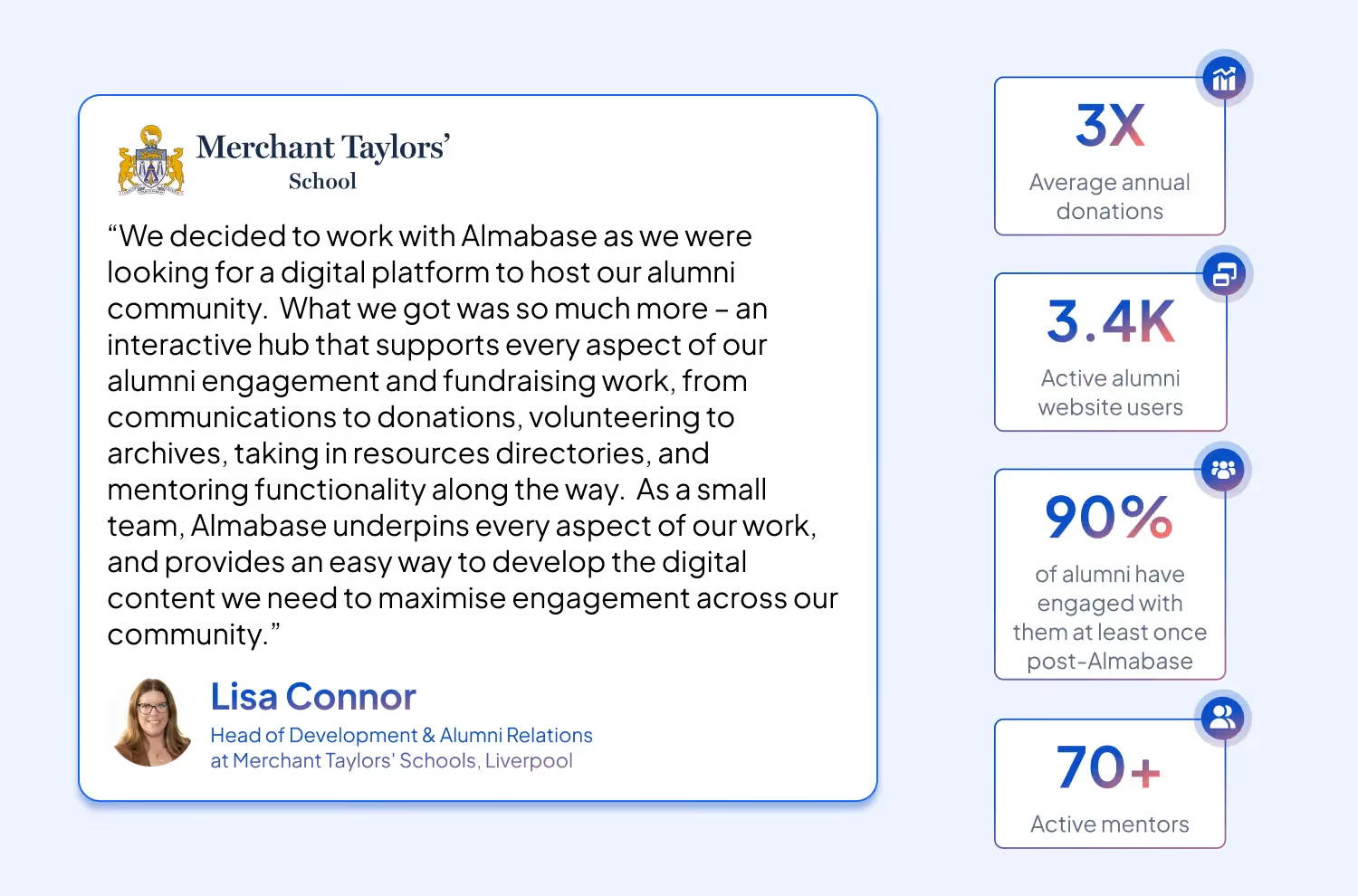
Merchant Taylors’ School showed how this works in practice. By encouraging alumni to contribute time and talent before asking for treasure, they built a strong community that later translated into higher giving and deeper involvement.
Donors stay loyal when communication feels personal. A generic “Dear alumni” message doesn’t build a connection, but a note that reflects their history with your institution does. Personalization shows alumni they’re valued, not just solicited.
The real impact comes when you combine these channels. A donor who gets a thank‑you text, sees their impact in an email newsletter, and later receives a tailored letter about a scholarship fund feels consistently valued. That’s what drives retention.
With Almabase’s Multi‑Channel Bundle, you can unify email, text, and video outreach in one place. Instead of juggling platforms, you can deliver authentic, multi‑channel communication that boosts engagement and keeps alumni connected year‑round.
Alumni expect donation pages to be quick, mobile‑friendly, and secure. If the experience feels clunky, they’ll drop off. A smooth digital journey shows donors you value their time and makes giving feel effortless.
You need a robust online fundraising platform to execute all of this seamlessly. With it, you don’t just make giving easy; you also get all the donor data seamlessly. Every gift, whether through a mobile wallet or a peer‑to‑peer campaign, flows directly into your CRM, so you can track impact, segment donors, and personalize future outreach without extra manual work.
Fundraising works best when alumni hear from you in ways that feel fresh and personal. Instead of relying on the same old email blasts, mix up the formats you use to connect, promote, and sustain giving.
These formats create social giving excitement. Shoutouts, leaderboards, and shared stories build a competitive spirit and make giving feel fun. Archbishop Riordan High School leaned into this approach for their Giving Day. By combining social shoutouts, storytelling, and a competitive edge, they turned their campaign into a community celebration and increased donations by 550%.
Dollar goals alone don’t inspire alumni. What really moves people is the chance to support something they care about. Themed campaigns let you tap into those passions and make giving feel personal.
Think beyond the generic “annual fund.” You could run an Athletics Challenge where alumni rally behind their old teams, with leaderboards showing which sport is winning. Or a Mental Health Fund that highlights counseling services and invites alumni to support student wellbeing.
Universities win when fundraising moves beyond one‑off asks and into sustained partnerships. Corporates and foundations bring multi‑year funding, program expertise, employee engagement, and credibility when you approach them with clarity and mutual benefit.
A data-driven approach to fundraising is crucial. You’ll want to measure key metrics to analyze this data and refine your strategies based on these metrics. Then your team can maximize its fundraising efforts and focus on creating positive change for the missions you serve. Use simple signals to decide who to ask, how to ask, and when to change course.
Stories create empathy; metrics create trust. When you combine both and make the next step obvious, donors understand the value of giving again, and your fundraising becomes a conversation, not a transaction.
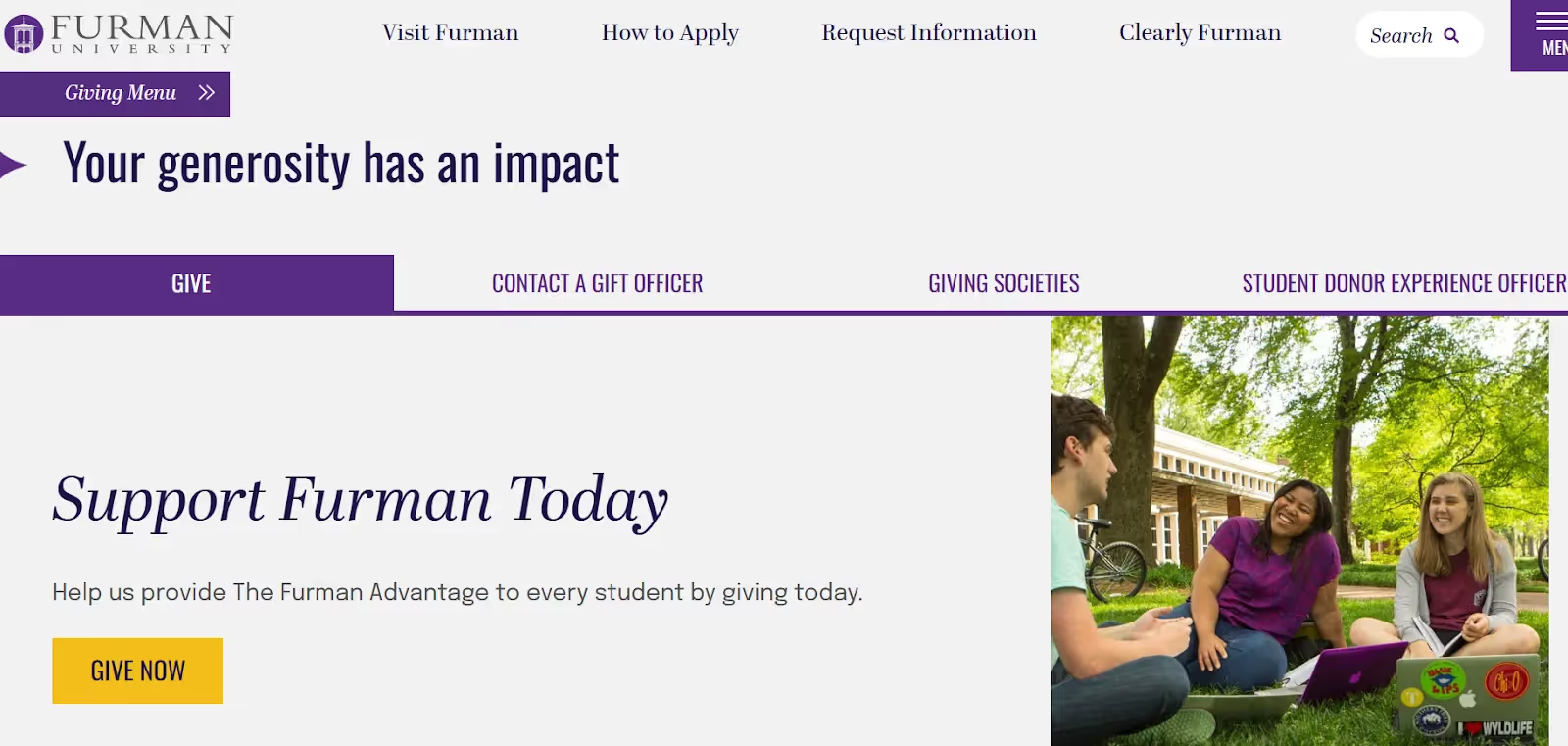
Take a look at how Furman University’s giving page models this approach: it pairs a concise case for support with clear institutional stats and direct CTAs that guide donors to give now or learn more, while highlighting priorities like student aid and placement rates.
Technology should remove friction, not add it. Pick systems that keep your data clean, connect donor touchpoints, and let your team move from manual busywork to strategic outreach.
Investing in the right technology means institutions can reduce downtime during migration, train staff quickly and with more flexibility, and realize ROI more rapidly. In today’s fast-paced environment, you need to look for higher education software that not only incorporates features that are easy to navigate but include support during the implementation process.
It’s one thing to run a campaign, but the real test is being able to show what worked, what didn’t, and why. Dollars raised are important, sure, but they don’t tell the whole story. To really prove ROI, you need to track metrics that show how engaged your alumni are, how efficient your campaigns are, and whether donors are sticking around for the long haul. Here are the metrics that matter most:
Almabase works on top of your CRM to clean data processes, personalized outreach, improve donor experiences, host fundraising events, and to make it as easy as possible to track numbers. Some of it’s key features include:
Almabase helps advancement teams move from juggling disconnected tasks to running fundraising strategies that are relationship-driven, data-informed, and sustainable.
Regardless of your institution or prior history of fundraising, with the right strategies, tools, and know-how, you can develop a robust and successful alumni fundraising strategy that yields lasting benefits for your institution.
By implementing thoughtful alumni fundraising strategies outlined above, you can look forward to fostering a culture of giving and generosity that extends far beyond graduation day.
Focus on storytelling that connects donors to student impact, diversify channels (email, social, events), and balance major gifts with annual giving. Always tie campaigns back to alumni engagement rather than just dollars raised.
Segment alumni by interests or milestones, personalize outreach, and show clear outcomes of their support. Peer-driven efforts, such as class captains or reunion challenges, consistently boost participation.
Energy and community are everything. Use matching gifts, hourly challenges, and real-time updates to keep momentum high, and spotlight authentic student and alumni stories to drive emotional connection.
Retention comes from consistent stewardship: thank donors personally, share impact updates regularly, and invite them into the campus community through events or student-led appreciation.
There are a lot of great fundraising platforms out there for different kinds of teams, events, and budgets such as Almabase, Givebutter, DonorPerfect, and many more. What’s best for one team might not be the best for another.
Subscribe
See how modern advancement teams bring alumni engagement and fundraising together.
Plan faster. Execute better
Explore free templates designed for alumni and fundraising teams.
.png)

.avif)
Sharada Koti
School fundraising software has come a long way from bake sales and car washes. Today, administrators, parent organizations, and athletic directors are turning to purpose-built fundraising software to run campaigns that are more complex than ever before.
But with dozens of platforms on the market, choosing the right one can feel overwhelming. Should you go with an all-in-one solution that handles donor management and online giving? Or do you need something specialized for auctions, walk-a-thons, or youth sports? In this blog, we want to walk you through the top fundraising software options for K–12 schools, depending on your needs so you can find the best fit for your institution.
Institutional fundraising has never been more data-driven than it is today, and your school (or team) needs to be able to make use of it to keep up with the increasing expectations of your constituents. Apart from that, here are some things that make fundraising software so important for schools today:
A search for the best fitting fundraising platforms for schools starts with features. However, consider an alternative starting point: the workflow. Where does friction show up in your current workflow? The right platform should reduce that friction.
Most donors give from their phones. A donation page that loads quickly, requires minimal steps, and clearly communicates impact can influence completion rates more than design aesthetics alone.
Look for clarity around how transactions are processed, what payment gateways are supported, and how refunds or chargebacks are handled.
Equally important is reconciliation. Can your finance team easily track revenue, fees, and deposits without rebuilding reports manually? The back-end experience matters as much as the front-end donation page.
Platforms should allow segmentation, automated thank-you emails, tax receipts, and visibility into donor history. If you cannot quickly identify repeat donors or first-time supporters, future outreach becomes guesswork.
K-12 schools frequently depend on events such as walk-a-thons, auctions, and ticketed fundraisers. Peer-to-peer tools, personal fundraising pages, and live progress tracking can increase visibility and participation, especially when families are sharing within their networks.

We have picked out some of the top options available in 2026 and categorized them by different use cases to suit your team’s current needs. Have a look!
For schools serious about building lasting donor relationships through event and donor management, an all-in-one platform might just be what you need.
Almabase is a fundraising and donor management platform built specifically for schools, higher-ed institutions, and nonprofits that want to build meaningful, long-term relationships with their alumni and donors. Almabase focuses on branding and easy to set-up giving pages, event management, memorable donor experiences and giving data sync to provide a comprehensive yet easy to use platform that both staff and donors will appreciate. Schools can run annual giving campaigns, peer-to-peer fundraisers, set up recurring gifts, and track engagement across touchpoints for better engagement and fundraising.
What sets Almabase apart is its focus on data-driven relationship building. It integrates well with popular education CRMs like Raiser’s Edge NXT, making it a strong fit for schools that want to get the most out of each fundraiser. For schools looking to grow their fundraising program and engage constituents over the long term, Almabase offers the infrastructure to support that growth.
Bloomerang is a popular nonprofit CRM and fundraising platform known for its clean interface and strong donor retention focus. The platform tracks donor engagement scores, helping development staff identify who is most likely to give again. Bloomerang includes online donation forms, email marketing tools, and reporting features that are accessible even for small development teams.
For schools without a dedicated development director, Bloomerang's simplicity is a major advantage. The platform is designed to be used by generalists, not just fundraising professionals. It is particularly well-suited for independent schools, charter networks, and private K–12 institutions that want a solid foundation for donor management without a steep learning curve.
DonorPerfect is one of the most established names in nonprofit fundraising software and offers a comprehensive suite of donor management tools. The platform handles recurring gifts, pledge tracking, grant management, event registration, and online fundraising all in one place. It is a strong choice for schools with larger development operations that need deep customization and integration options.
DonorPerfect's strength lies in its flexibility. The platform can be configured to match almost any fundraising workflow, and it comes with reporting capabilities. Schools with complex fundraising operations such as multiple campaigns, major gift programs, and foundation support may find DonorPerfect's depth particularly valuable.
Givebutter is a modern, all-in-one fundraising platform with strong auction and event features. It supports silent auctions, livestream fundraising, and ticket sales, all from a visually polished interface. The platform is free to use and relies on optional donor-covered tips to sustain operations. If you want to opt out of optional tips, a 3% platform fee applies to every donation on top of processing fees.
Schoolfundr is a fundraising platform built specifically for schools. Similar to Givebutter, it charges no subscription fees, relying on optional tips from donors as well as charging transaction fees.
🪶We’ve narrowed down the budget-friendly options to two choices which we think are the easiest to get started with whether you want to scale down costs or are looking to start small. However, we still highly recommend talking to each platform’s representatives to understand pricing models, data policies, and features. Also keep in mind how your donors might feel about adding a tip on top of a donation and try to find what works best for your school.
Auctions remain one of the most popular and lucrative school fundraising formats. These platforms are built specifically to make auction management simple.
OneCause (formerly BidPal) is purpose-built for nonprofit event fundraising and is widely used by schools running gala-style events and auctions. The platform covers everything from mobile bidding and item catalog management to paddle raise fundraising and live auction tools. It also handles event ticketing, seating management, and sponsorship tracking.
OneCause is particularly strong for schools that host large, formal fundraising events with hundreds of attendees. The platform's mobile bidding experience is intuitive for guests, and the backend management tools give event organizers full visibility into real-time results. The platform does come at a higher price point, making it better suited for schools with larger events that can justify the investment.
GoFundMe Pro (formerly Mightycause) is the enterprise tier of the widely recognized GoFundMe brand and is designed specifically for nonprofits and educational institutions. It offers peer-to-peer fundraising, event fundraising, and a suite of campaign management tools along with auction capabilities.
GoFundMe's brand recognition works in schools' favor when it comes to donor trust. Many parents and community members are familiar with the platform and are comfortable donating through it. GoFundMe Pro adds deeper customization, reporting, and donor management features on top of the consumer platform's usability.
Walk-a-thons, read-a-thons, and similar pledge-based events are a staple of school fundraising especially at the elementary and middle school level. These platforms are built for exactly this format.
99Pledges is one of the simplest and most popular platforms for running pledge-based fundraising events at schools. Students create personal fundraising pages, solicit pledges from family and friends, and the platform tracks all commitments and payments automatically. There is no app to download, no complex setup, and the per-student pages are easy to share via text and email.
What makes 99Pledges stand out is its sheer simplicity. Schools can launch a campaign in under an hour, and parents can make pledges in just a few clicks. The platform charges a small platform fee and standard payment processing fees but requires no upfront cost, making it accessible for even the smallest schools and parent organizations.
RallyUp is a versatile fundraising platform that supports a wide range of event-based fundraising formats, including walk-a-thons, jog-a-thons, read-a-thons, and virtual events. It includes peer-to-peer fundraising pages, donation tracking, and tools for motivating student participants through leaderboards and milestone celebrations.
RallyUp is particularly well-suited for schools that want to run engaging, gamified fundraising events that get students excited to participate. The platform's interface is colorful and student-friendly, and its reporting tools help organizers see participation rates and revenue in real time. It supports both pledge-per-activity and flat donation models.
Matching gift programs are one of the most underutilized sources of fundraising revenue for schools. Many constituents work for companies that will match their charitable donations dollar-for-dollar, or even two-to-one. But most donors never bother to check or submit a match request.
Double the Donation is a dedicated matching gift software for nonprofits and educational institutions. It integrates with most major fundraising platforms and automatically prompts donors to check their employer's matching gift eligibility at the point of donation. The platform maintains a database of over 20,000 companies and their matching programs, making it easy for donors to find and submit their employer's match.
For schools, even a modest improvement in matching gift submission rates can translate into thousands of additional dollars per campaign. Double the Donation's automation makes that improvement achievable without adding workload to development staff.
For schools, volunteers can often be one of the most important assets. However, not every school can afford or needs to have a dedicated volunteer management system. We’ve picked out some of the best options for schools looking to manage volunteer signups and related tasks such as scheduling, organizing, etc.
Many event management or donor management platforms also come with volunteer management features as a complementary tool or an add-on which can be a good choice. For any option you are considering, keep certain nuances in mind such as ad presence, ease of use for volunteers, and pricing structures to make sure you pick the right tool for your team.
With so many options available, the right can help you narrow down your choices:
What is your primary fundraising model? If you run a gala every year, prioritize auction tools. If your revenue comes from an annual giving program, prioritize donor management. If you rely on walk-a-thons, look at pledge-based platforms.
What do your donors want? Some donors might be turned away by pre-filled tips or ads while others may not mind. Some donors may prefer sleek UI elements and mobile-friendly design while others don’t mind as long as their donations go into a meaningful cause.
What is your team's capacity? A small PTA with volunteer leadership needs something simple and fast. A professional development office can handle more complex tools with greater customization.
What is your budget? Free platforms with optional tips work well for smaller campaigns. For larger programs, a platform fee may be worth paying for better support, integration, and features.
What is your long-term vision? If you want to build a lasting alumni and donor community, invest in a platform with strong CRM and relationship management capabilities now. Even if it costs more upfront, it can be more cost-effective than accumulating a ton of single purpose tools over the years.
What integrations do you need? Check whether the platform connects with your school's existing tools: your SIS, accounting software, email platform, or website CMS.
Taking the time to answer these questions before evaluating platforms will save significant time and help you avoid switching costs down the road.
Among the platforms covered in this guide, Almabase is a great choice for schools that are ready to build a serious, sustainable fundraising program. It goes beyond one-off campaigns to help schools develop the donor relationships that drive long-term revenue growth.
Almabase provides a unified platform for donor management, online fundraising, and event management.. Schools can launch giving day campaigns, manage peer-to-peer fundraising, track donor engagement over time, and generate detailed reports all from a single interface. The platform is originally designed for educational institutions, which means the tools, updates, and data models are built around real-world problems that schools face.
For schools that rely on annual fund campaigns, alumni giving, and major gift cultivation, Almabase provides the tools to segment donors, personalize outreach, and track the full donor journey from their first gift to becoming a loyal supporter. It’s integration with CRM systems means school data flows smoothly into the fundraising platform, reducing manual data entry and improving accuracy.
If your school is ready to move beyond spreadsheets and disconnected tools and invest in a platform that can grow with your program, Almabase is worth a serious look.
Free fundraising platforms usually mean no platform or subscription fees. However, they typically have transaction fees and depending on the platform, may come with a percentage of your raised funds as fees, ads, or per transaction fees.
A fundraising platform primarily helps you collect donations and run campaigns. A donor management system helps you track donor relationships and nurture relationships over time.
Yes, many schools use multiple platforms. Just be mindful of managing donor data across multiple systems and increasing the cost of stacking too many single-purpose tools.
Integrate a matching gift tool like Double the Donation with your primary fundraising platform. Prompt donors to check their employer's match eligibility immediately after they give, while the donation is still top of mind.
Even small schools and associations can benefit from the efficiency, and donor experience improvements that dedicated software provides. Many platforms are free or very low cost at smaller volume levels, making the ROI compelling even for modest campaigns.
The fundraising software landscape for schools has never been more robust. Whether you are running a walk-a-thon for a hundred elementary students or building a comprehensive alumni giving program for a private high school, there is usually a platform designed for your specific needs.
The most important step is to match your platform choice to your actual fundraising model, budget, and long-term goals. A well-chosen platform pays for itself quickly through higher donor conversion rates, reduced administrative burden, and stronger donor relationships over time.
If you are looking for a fundraising platform for your school or associated organization, Almabase can help you raise funds, manage donor relations, and streamline events and communications. Schedule a personalized demo to find out how it fits into your school’s needs.

The Best Fundraising Software Platforms for Schools in 2026
Lorem ipsum dolor sit amet, consectetur adipiscing elit. Suspendisse varius enim in eros elementum tristique. Duis cursus, mi quis viverra ornare, eros dolor interdum nulla, ut commodo diam libero vitae erat. Aenean faucibus nibh et justo cursus id rutrum lorem imperdiet. Nunc ut sem vitae risus tristique posuere.

Anwesha Kiran
February 26, 2026
12 minutes
The best peer-to-peer fundraising platforms help educational institutions and nonprofits boost donor engagement through personalized giving pages, social fundraising, and CRM integration. These tools streamline campaigns with built-in analytics, gamification, and mobile optimization. While some options are completely free, others cater to large-scale fundraisers that require advanced data synchronization and scalability.
The right tools can make all the difference in modern fundraising. In this blog, we’ll highlight some of the best options on the market and explore what you can expect out of them.
.avif)
Peer-to-peer fundraising, or P2P fundraising, is a type of crowdfunding in which your organization encourages its supporters to fundraise for your cause. Typically, these supporters will create an individual fundraising page and share it with their friends, family members, and social media followers to raise money.
A peer-to-peer fundraising site is the software that allows your supporters to create a donation page, share it with their personal network, and collect donations to support your mission.
Typically, most fundraising tools today include features such as:
When shopping for a peer-to-peer fundraising tool, you’ll need to weigh the cost of the tool against the value it provides. However, it can be difficult to know the true cost of using the platform, depending on the software’s pricing structure. Get familiar with these common structures:
To compare tools with different pricing structures, calculate what each platform will cost you, on average, for a certain period of time.
Whether you’re a K-12 school ,higher ed institution, or a nonprofit, in no particular order, here are some peer-to-peer fundraising platforms that you should consider:
(Prices are based on publicly available data at the time of writing and are subject to change over time)
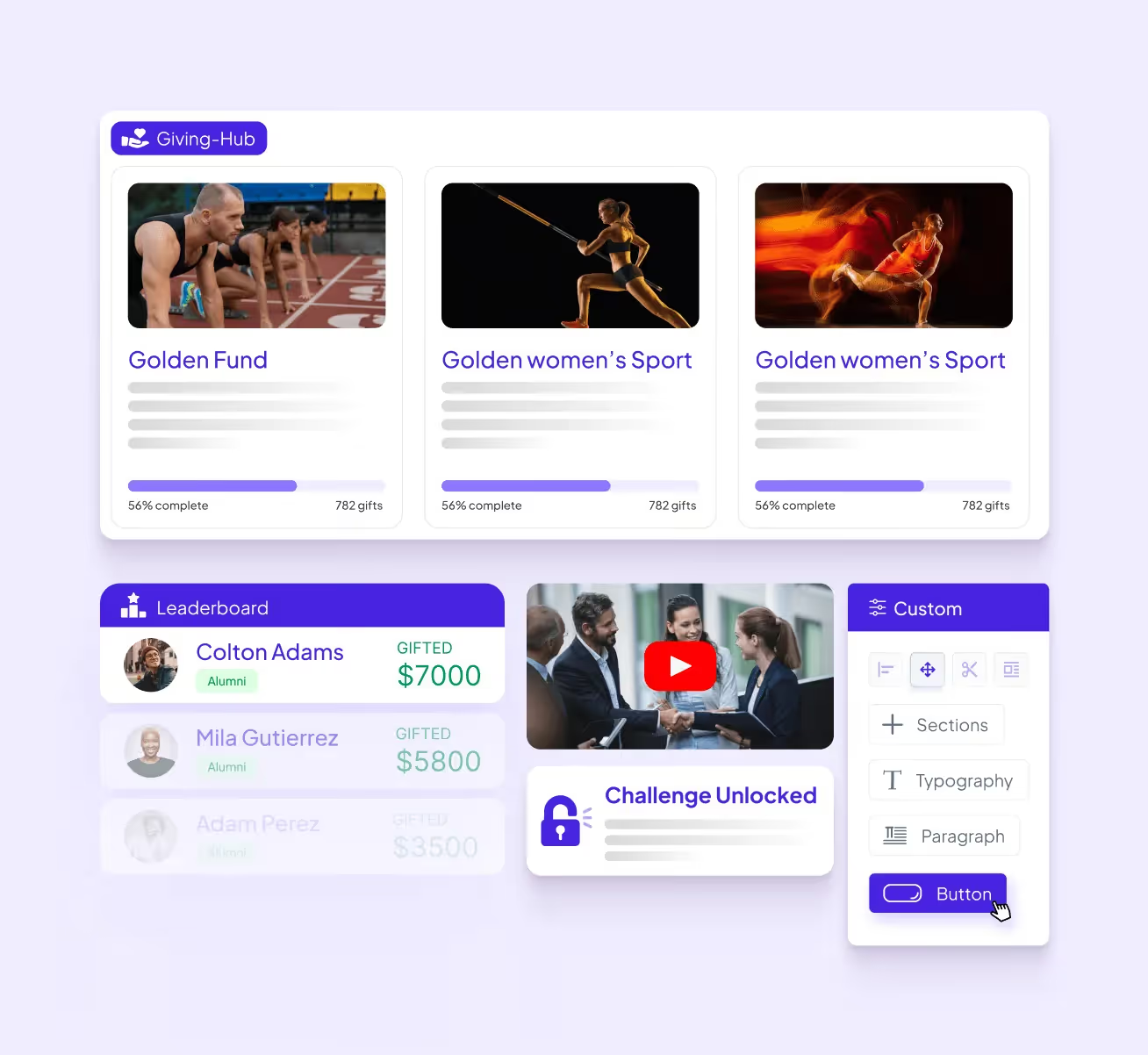
Almabase runs on a philosophy of integrating into your CRM and existing workflows, which remains true for their peer-to-peer fundraising features. Almabase boasts native sync with most higher-ed CRMs due to their TrueSync integration, combined with superior customer support and a willingness to integrate your ideas into their long-term vision. Almabase offers customizable pages and leaderboards powered with inbuilt text and email communication features built to drive donor engagement through organic and personalized communication.
Almabase’s pricing depends entirely on your needs. Learn how Almabase empowers your p2p strategy, Schedule a personalized demo and get a quote.
GoFundMe Pro (formerly Classy) is a peer-to-peer fundraising platform optimized for maximum nonprofit impact. It provides ready-to-use templates for scalable, high-impact campaigns and equips supporters with intuitive tools to advocate for the cause.
GoFundMe Pro offers features like campaign templating, embedded videos and livestreams, progress thermometers, team structures, and mobile-optimized pages. The platform also supports recurring gift options and flexible payment processing, and has a mobile- and user-friendly interface.
GoFundMe Pro offers a standard “Essentials” plan and a “Partner” custom plan.
Bloomerang Fundraising (formerly Qgiv) is a fundraising platform offering tools for donation management, event planning, and donor engagement. It provides features like customizable donation forms, peer-to-peer fundraising, and text-to-give options
Bloomerang Fundraising starts at $40 per month if purchased as part of a bundle with Bloomerang CRM.
Zeffy is a 100% free fundraising platform for nonprofits, offering peer-to-peer fundraising, crowdfunding, donation pages, and recurring giving options. This tool generates revenue through optional tips that donors can provide in addition to their donation. It allows fundraisers to join as individuals or teams and create their own fundraising pages. The platform is also known for being simple, intuitive, and customizable
Zeffy has no fees and instead runs on optional tips from donors.
Donorbox is a fundraising platform that allows nonprofits to launch peer-to-peer fundraisers in a few steps. It provides customizable donation forms and supports recurring donations via various payment methods.
Donorbox also offers features for managing donors, sending personalized emails, and recording donor communications. The platform provides resources like onboarding emails, courses, and templates to support nonprofits in their fundraising efforts.
For peer-to-peer fundraisers, Donorbox charges a flat 1.75% platform fee for a main campaign and 2.95% for a supporter’s campaign.
Bonfire specializes in fundraising through custom merchandise sales. Nonprofits, schools, and even individuals can design their own custom merch and sell it via Bonfire’s free online stores.
Bonfire supports peer-to-peer campaigns (which it refers to as “giving campaigns”) by allowing your supporters to create and share t-shirt fundraisers on behalf of your organization—then, all of the money they raise is sent directly to your nonprofit.
Bonfire is completely free to use, and your nonprofit keeps 100% of the profits. There’s an 8% processing fee on additional donations, but if you verify your nonprofit status with Bonfire, that fee is reduced to 3.5%
Givebutter provides tools to launch peer-to-peer campaigns, complete with donation forms, fundraising pages, event management, a built-in CRM, and marketing tools to analyze your progress and streamline workflows. Their fundraiser teams offer a great choice for organizations looking to gamify their peer-to-peer fundraisers as well.
Givebutter offers a popular “free forever” plan, as well as a paid option starting at $29/month. If your organization opts out of having donors cover fees, Givebutter charges 1% for donation forms, 3% for pages, and 5% for events and auctions, as well as a payment processing charge of 2.9% + ¢0.30 per transaction.
GiveCampus is a fundraising platform for educational institutions, providing solutions for online giving, giving days, crowdfunding, P2P fundraising, and more. It blends peer-to-peer outreach, social media, and gamification to engage more donors and increase fundraising. The platform allows schools to execute giving days, year-end appeals, and crowdfunding campaigns.
GiveCampus also offers features like matches and challenges to inspire donors and make them feel like their contributions are making a difference
GiveCampus has three platform plans: Essentials, Professional, and Enterprise. Additionally, pricing will vary depending on the modules you require.
As a Blackbaud product, JustGiving is a great choice if you are used to the Blackbaud CRM environment. Compared to other platforms on this list, JustGiving is relatively simple both in its presentation and its scope. This makes it an easy choice for teams just starting out or looking for something simple for a one-off event. However, there may be better choices for teams that want a more comprehensive solution that spans multiple fundraisers and year-long campaigns.
JustGiving charges platform fees and a standard payment processing fee based on your geographical location and payment platform. Crowdfunding pages are free to set up. While UK charities do not need to pay a platform fee, they do have a subscription model.
Gravyty leverages predictive AI technology to provide frontline fundraisers with personalized insights into donor behavior. This innovative approach helps organizations enhance their outreach efforts by automating email drafts tailored to individual donors while integrating seamlessly with existing CRM systems. Gravyty's focus on personalization empowers fundraisers to build stronger relationships with donors.
While some information is available online, interested organizations will need to contact Gravyty for a custom quote.
Bonterra’s peer-to-peer fundraising product (formerly DonorDrive) offers smart and customizable P2P fundraising solutions that empower supporters to create personalized experiences at scale. Its features include an intuitive event builder, personalized coaching for fundraisers, gamification elements like leaderboards, social media integrations, and seamless CRM integration, which enhances supporter engagement significantly
Bonterra offers three tiers—Essentials, Pro, and Enterprise—with pricing based on customer needs.
With so many unique platforms out there, choosing the right one can be a little overwhelming. However, there are several key factors to consider when selecting the right peer-to-peer fundraising software for your team:
Each platform will offer peer-to-peer fundraising capabilities, but you should dig a little deeper to find the right fit for your needs. For example, if you are a small team looking to organize a quick fundraiser, you may end up paying for features you don’t need. On the other hand, if you are looking for a long-term solution, a platform without built-in analytics would be a dealbreaker. Look for features that boost, rather than hamper, your fundraising efforts, and aim for a high return on investment.
Many teams want a tool that scales up alongside them as they engage more donors and alumni, but there is often a point where their needs outgrow the platform. To avoid this, consider both your short-term and long-term goals to determine if the platform’s upgraded pricing tiers will meet your team’s requirements later on. This way, you can simply upgrade to a plan with more advanced features or storage rather than migrating to a completely new platform.
Your staff, fundraisers, and donors should all have positive, smooth experiences when engaging with your fundraising pages. For example, if you want to sell custom merch, both the designing process and purchasing process should be easy and intuitive for supporters. From payment processing to reporting workflows to page load times, there are many aspects you should ask about or test out during a free trial or demo to see if a platform is the right one for you.
Some solutions come with a relatively low learning curve but offer limited functionality. Some, on the other hand, can be the driving force behind all your fundraising strategies but may require in-depth technical and/or coding experience. Try to find a balance between the training time required and potential functionality to ensure high adoption.
Pricing is a key consideration for any tool, but it’s also important to consider the nuances that may arise down the line. Always consider the rates associated with upfront costs, renewals, transaction fees, upgraded plans, and other relevant expenses. Additionally, switching to a new platform inevitably leads to more expenses through database transfers and staff upskilling. Consult with your database managers and other staff members before making a decision.
In the event that something goes wrong, you need to be able to reach the platform provider to resolve the issue. Keep factors like response times on live chat or email support channels in mind. For the long term, you also want to support platforms that onboard customer feedback and have detailed roadmaps for upcoming features.
Both your staff and donors need to be assured that sensitive data like payment information will be kept safe and secure. Always look out for a platform’s data encryption measures, as well as its compliance and authentication processes, to see if it inspires confidence from your donors.
Third-party review sites like G2 and Capterra offer insight into what customers think about specific tools. Keep in mind that these reviews are subjective, but they can be a great indication of how a platform is perceived overall, highlighting positive and negative software trends.
There is no single “best” fundraising website, but you can find the one that is best for your organization. Choose a platform that aligns with your goals, budget, audience, and campaign type.
Yes, a reputable fundraising platform should be able to integrate with your CRM to ensure donor data flows automatically into your central database. This eliminates data silos and the need for manual data transfers.
GoFundMe is a popular tool for personal crowdfunding, but it may lack the tools you need to run a full-fledged campaign. The platforms referenced in this guide offer the specialized tools mission-driven organizations need for branding, tracking donor data, and communications.
Crowdfunding is a centralized process led by your organization using a single donation page. On the other hand, peer-to-peer campaigns decentralize fundraising, empowering many supporters to help you raise money. Peer-to-peer campaigns empower supporters to help you raise money, meaning there are many people fundraising for your cause. Make sure your platform has the tools to support a peer-to-peer campaign.
Look for platforms that include gamification features, such as fundraising thermometers, badges, and leaderboards. These tools spark friendly competition among fundraisers and help them visualize their progress to maintain momentum and engagement.
We hope we’ve given you the tools you need to choose or at least consider some of the best peer-to-peer fundraising solutions out there, as well as the questions you need to ask yourself before adopting one. Whether you’re a higher ed institution optimizing your peer-to-peer fundraisers or a K-12 school just looking to get started, we hope you pick out the right solution and can make a great positive change.
If you’ve had successful peer-to-peer fundraisers before, learn how you can build a peer-to-peer fundraising community to help you keep providing meaningful experiences
.avif)
11 great peer-to-peer fundraising platforms for Institutions and Nonprofits 2026
Lorem ipsum dolor sit amet, consectetur adipiscing elit. Suspendisse varius enim in eros elementum tristique. Duis cursus, mi quis viverra ornare, eros dolor interdum nulla, ut commodo diam libero vitae erat. Aenean faucibus nibh et justo cursus id rutrum lorem imperdiet. Nunc ut sem vitae risus tristique posuere.
We’ve talked in length about some good events and the event management or fundraising tools that can make them succeed consistently. This time, we’re taking a step back and at the basics of fundraising event planning.
In this blog, we’re going through the essentials to turn your fundraising ideas into successful events that don’t just reach your targets but create powerful memories to strengthen your cause. Let’s get started.
As with every advancement initiative, the goals are where everything starts and leads back to. We’ve talked about the importance of Smart, Measurable, Attainable, Relevant, and Time-based (SMART) goals in a past blog. While creating the goals that will define your fundraising event, keep the following questions your attendees would have in mind:
Apart from these questions, your available staff time, target audience, budget, and other upcoming institution events will play a big part in shaping your scope for your event. Take your time with this step as the right goals are the foundation of a successful event.
Depending on your audience, budget, and goals, you may choose from a variety of fundraiser ideas, such as:
No two events are truly alike, and depending on the success of your fundraiser, a bold new approach might just be your next hallmark annual event.
As you’re not just planning any event, how you want to introduce fundraising to your event is going to be very important. Remember, a fundraising event can have multiple revenue streams. For example:
Nowadays, institutions usually look to include diverse fundraising methods in their fundraisers. This is also where pairing the right event with the right fundraising method can greatly impact your raised amount.
Now that you know what type of event you want as well as how you’re going to raise funds during it, it’s time to put the right tools to work. Pretty much every modern institution uses a fundraising platform to streamline their events and fundraisers. These tools help you:
and much more.
Platforms like Almabase help streamline these logistical elements, allowing you more time and energy to focus on fostering genuine connections with your donors.
Now that the building blocks are coming into place, it’s time to decide on arguably the most important part of an event, the people. You’ll want to form a committee of people to take on and help with specific parts of the event including but not limited to:
Apart from the above, you’ll want to think about corporations, non-profits, and associations that may want to play a pivotal role in helping you bring your event to life.
Now that all the bits and bobs are there, it’s time to lock in a specific place and time. It seems fairly basic but keep in mind that:
You’ve got all the info ready to go. But it doesn’t mean anything if it doesn’t reach the right audience. And even if it does, what type of messaging should they receive and when should they receive it so that they truly feel like attending or giving? That’s where your event marketing comes into play. You’ll want to make use of channels such as:
and much much more to get your event and your cause heard. Make sure that your marketing emphasizes how your fundraiser can help your cause of choice.
Even the most tight-knit plans have a chance of going wrong. A 10-minute delay caused by faulty audio equipment might just be that small little factor that disinterests a potential first time donor.
These are good things to keep in mind but ultimately, your contingencies may have to be just as unique as your event.
Nowadays, the event doesn’t truly end when the last guest leaves. Following up with attendees is crucial to maintaining their engagement and potentially turning them into loyal supporters. Post-event action items include:
Gratitude and proactive follow-ups go a long way in building long-term relationships with your supporters.
The ultimate measure of a successful fundraising event isn’t just the dollar amount raised but also the connections made and how deep those connections go over time. To turn your attendees into loyal supporters, you’ll want to consider some steps such as:
By nurturing these relationships, you're creating a network of passionate supporters who are more likely to advocate for your cause and contribute to future initiatives.
Fundraising events have certainly not gotten any easier to plan and host in the past few years. Donors and alumni in general simply expect more, and you can’t just rely on your long-time donors alone. However, we hope that this guide, despite just scratching the surface, was able to give you some ideas for your next fundraising event.
If you’re looking for a partner to help you manage events, engage alumni, and raise funds, do give us a shout and we’ll happily walk you through how we can help with your own personalized demo! ⤵️


How to Plan a Fundraising Event to Maximize Donations
Lorem ipsum dolor sit amet, consectetur adipiscing elit. Suspendisse varius enim in eros elementum tristique. Duis cursus, mi quis viverra ornare, eros dolor interdum nulla, ut commodo diam libero vitae erat. Aenean faucibus nibh et justo cursus id rutrum lorem imperdiet. Nunc ut sem vitae risus tristique posuere.
%201.svg)
%201.svg)
%204.svg)



.svg)