Explore university fundraising software for alumni giving, donor CRM, campaigns, reporting, and integrations. Compare top platforms by use case.

Discover AI Summary
• Start by clarifying your institution's main fundraising motion and team structure: The right university fundraising software isn't about having the most features, but about finding a tool that truly empowers your specific goals, whether that's boosting alumni participation or managing major gifts.
• Address common challenges like data silos and stagnant engagement head-on: A strong platform centralizes donor information, tracks engagement, and connects with your existing CRM to give you a unified view, improving reporting and nurturing donor relationships.
• Prioritize ease of adoption for your advancement team: Look for software that's intuitive and straightforward to use daily; this means less time on training and troubleshooting, and more time focusing on impactful fundraising and alumni engagement initiatives.
• Explore options based on specific use cases, from digital crowdfunding to advanced CRM: This post categorizes tools by their primary strengths, helping you quickly identify whether you need robust event management, comprehensive donor relations, or data-driven reporting.
• Beware of common pitfalls, like overly complex systems for small teams or rigid data models: Choosing a platform that truly aligns with your operational needs will help you avoid long-term administrative headaches and maximize your fundraising impact.
Selecting the right fundraising software for your university is rarely straightforward. You’re probably not starting from scratch. There’s already a CRM in place, maybe a separate event tool, perhaps something powering giving days.
The real question is whether the software you’re using empowers or limits your team’s potential.
Some teams we talk to require a lot of engagement features, while others want a simple fundraising tool to add to an existing toolset. So the question ultimately becomes “what fundraising software fits the gap we want to fill?”
In this blog, we’re mapping fundraising software for universities by use case. Whether you’re evaluating alumni crowdfunding platforms, donor management systems, or data-driven reporting tools, we hope it helps you find an answer.
University fundraising software helps advancement teams manage alumni donors, run giving days and campaigns, process online donations, and track results in one system.
The right platform supports alumni crowdfunding, donor CRM records, event and peer-to-peer fundraising, and real-time reporting. Strong tools also connect with existing CRMs and campus systems to reduce data gaps.
This guide maps university fundraising software by use case, so universities can shortlist options faster and choose the best fit for participation, retention, and fundraising visibility.
Here’s a quick comparison to orient your shortlist:
The key is alignment. If alumni participation is your priority, your shortlist will look very different from a university focused on enterprise-level donor reporting.
According to CASE, voluntary contributions to U.S. higher education reached $61.5 billion in FY24, reinforcing the scale and operational complexity advancement teams manage today.
Universities prioritizing participation, giving days, and alumni-led campaigns need platforms built for digital-first fundraising. These tools focus on alumni activation, branded giving experiences, and frictionless donation flows that reduce barriers during time-bound campaigns.

Almabase is a purpose-built fundraising and alumni engagement platform designed for Higher Ed and K–12 institutions focused on alumni engagement and digital-first giving. It combines crowdfunding, engagement, and CRM connectivity into one advancement-focused system.
It supports giving days, class campaigns, project-specific fundraising, and ambassador-led drives through branded giving hubs and structured campaign formats such as crowdfunding, competitive fundraising, and checkout pages.
Best suited for:
Higher Ed and K–12 institutions prioritizing alumni participation growth through structured giving days, class campaigns, and ambassador-led digital fundraising initiatives for advancement teams.
Core capabilities and strengths:
Almabase also earns strong third-party feedback on Capterra, with an overall 4.7/5 rating, and especially high marks for customer service (4.9/5), which matters when small teams need responsive support.
Why institutions choose Almabase
Institutions select Almabase because it directly addresses the challenge of stagnant alumni participation by improving digital engagement and conversion.
For example, Loma Linda University School of Medicine tripled its online alumni participation after launching giving day campaigns with Almabase’s mobile-first giving and leaderboard tools. The platform’s design helped them attract more donors and simplify campaign discovery.
Similarly, The University of Texas at El Paso saw a 309% increase in alumni membership within six months by leveraging tailored engagement workflows and segmented outreach, showing that combining fundraising with engagement deepens long-term supporter involvement.

Considerations before choosing:
For universities looking to strengthen alumni participation and modernize digital fundraising experiences within their broader cloud-based university fundraising system, Almabase is one of the best options to choose.
You can book a personalized demo to explore how it can support your campaigns, engagement goals, and CRM workflows.

GiveCampus is a digital giving platform designed for campaign-centric fundraising in higher education. It is commonly used by institutions running structured giving days, short-term drives, and ambassador-led outreach initiatives.
Best suited for:
Institutions running frequent, time-bound digital campaigns that rely on alumni ambassadors and peer-driven participation.
Core capabilities and strengths:
Considerations before choosing:
Campaign performance matters, but long-term fundraising growth depends on structured donor tracking and retention. This category focuses on platforms that centralize donor data, track giving history, and monitor engagement over time.
With total U.S. charitable giving reaching $592.5 billion in 2024, up 6.3% in current dollars according to Giving USA, competition for donor attention continues to intensify, making segmentation and stewardship discipline increasingly important.
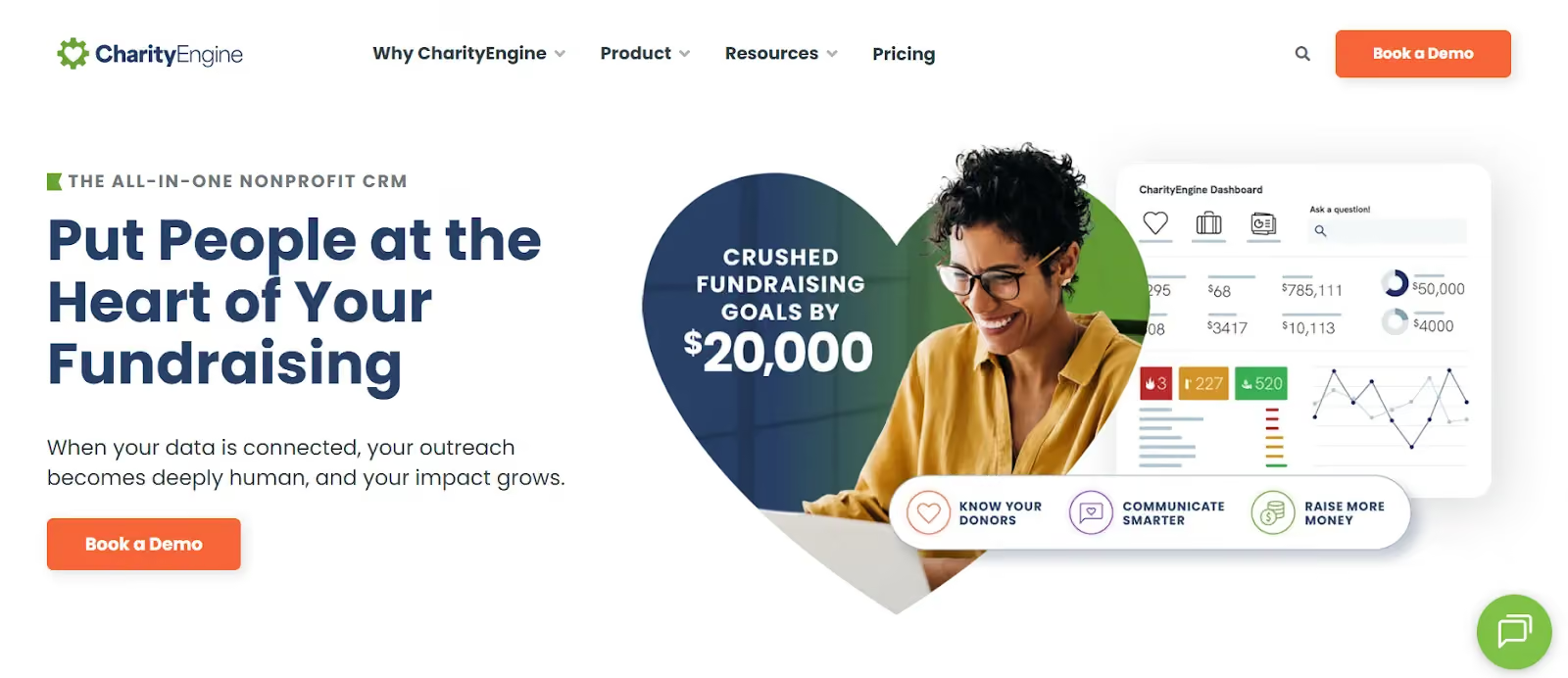
CharityEngine is a unified fundraising and donor management platform designed to centralize donor records and fundraising operations within a single system. It supports institutions that want donor data, recurring giving, and campaign activity managed in one environment rather than across multiple disconnected tools.
Best suited for:
Universities seeking to focus on managing donor records, recurring giving, and campaign activity within a consolidated fundraising and CRM environment.
Core capabilities and strengths:
Considerations before choosing:
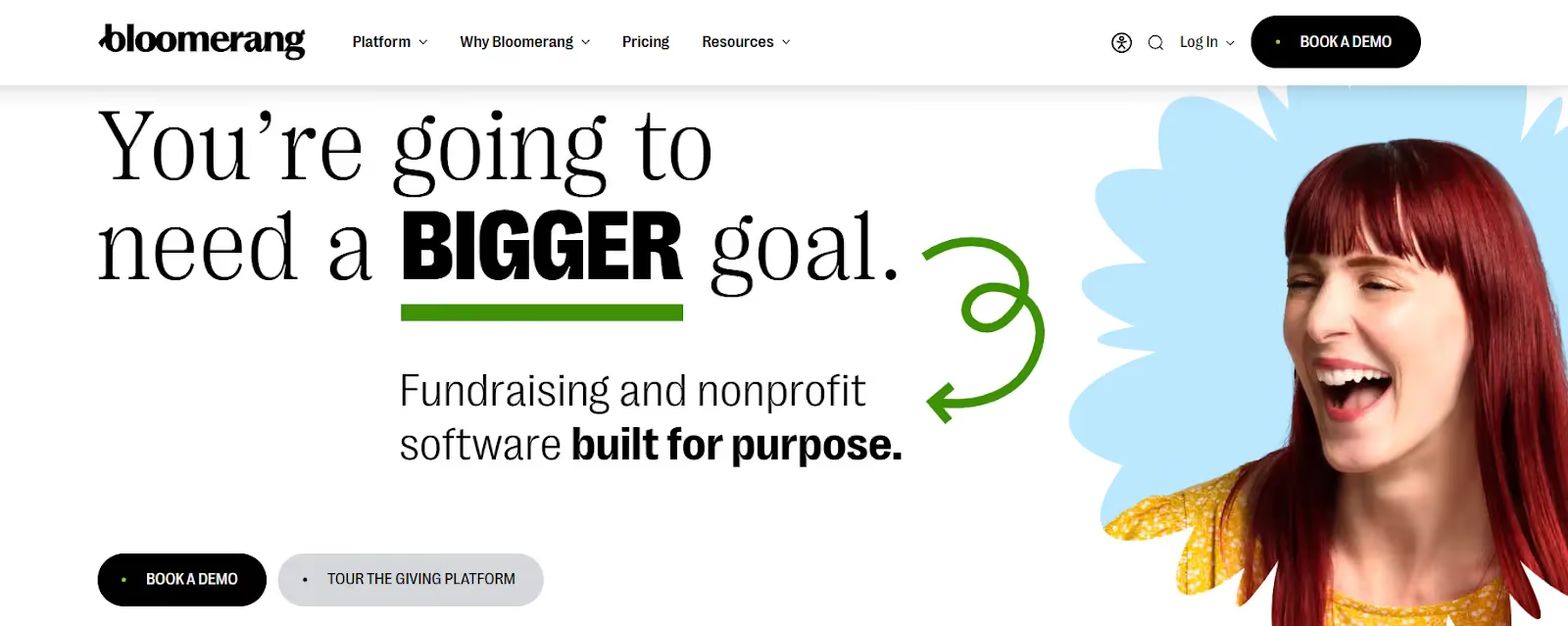
Bloomerang is a donor CRM focused on relationship tracking and donor retention. It is structured to help advancement teams monitor engagement trends, giving behavior, and long-term donor activity within a centralized system.
Best suited for:
Small to mid-sized advancement teams focused on donor retention, engagement tracking, and structured relationship management.
Core capabilities and strengths:
Considerations before choosing:
Large universities often manage extensive donor databases, structured major gift programs, and detailed institutional reporting requirements. This category focuses on systems built to support complex advancement operations and dedicated CRM teams.
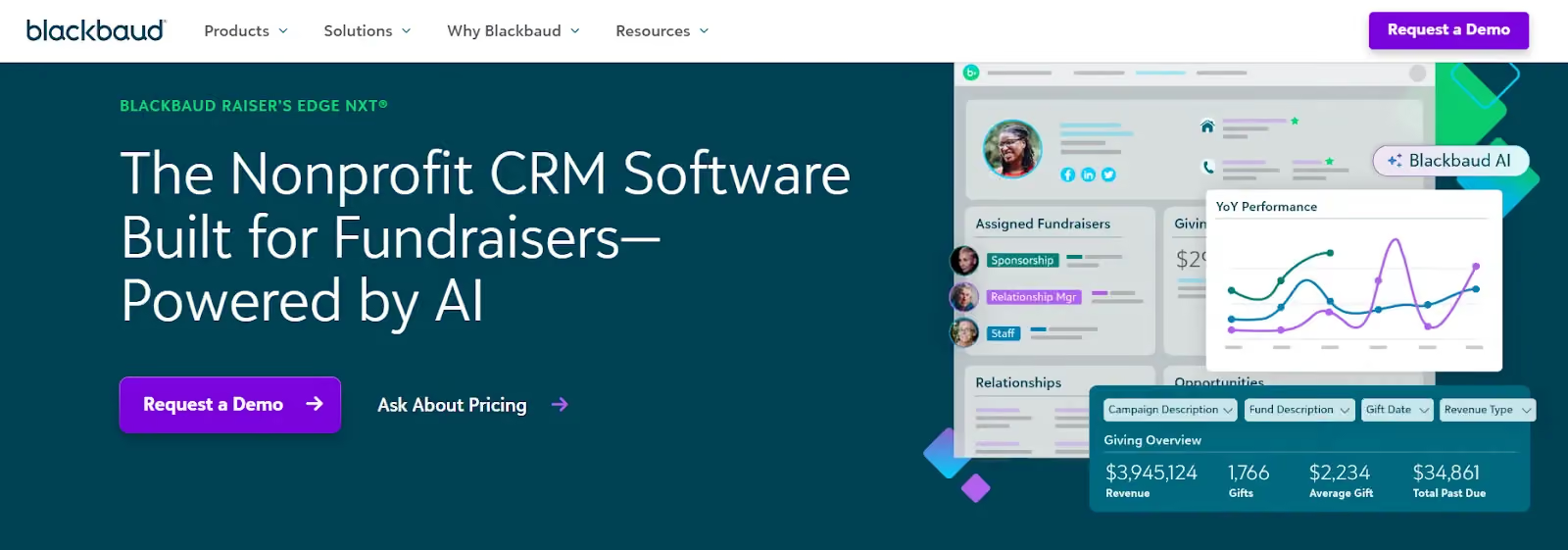
Raiser’s Edge NXT is Blackbaud’s enterprise donor management CRM designed to manage donor lifecycles, major gifts, and institutional reporting. While it provides strong giving and reporting capabilities, institutions often complement it with additional platforms like Almabase for digital fundraising, crowdfunding, and campaign activation.
Best suited for:
Universities with mature development operations managing large donor databases, major gift portfolios, and formal reporting workflows.
Core capabilities and strengths:
Considerations before choosing:

Ellucian CRM Advance is an advancement and donor management system designed specifically for higher-education institutions. It supports core fundraising operations while connecting constituent data with broader campus technology systems.
Best suited for:
Institutions with centralized advancement teams, particularly those already operating within the Ellucian campus technology ecosystem.
Core capabilities and strengths:
Considerations before choosing:
Some universities prioritize event-driven fundraising, reunion campaigns, and community-led initiatives. These platforms focus on event registration, peer-to-peer fundraising, and ambassador participation to mobilize networks around specific fundraising moments.
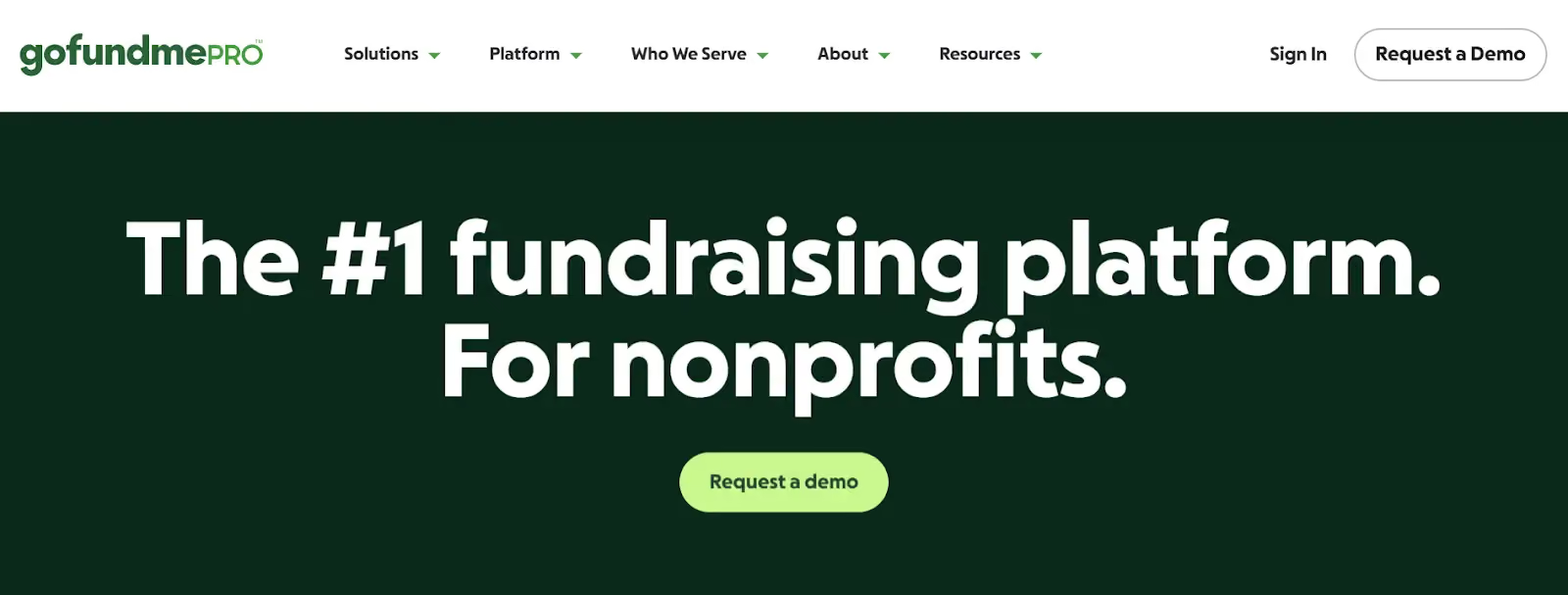
GoFundMe Pro (formerly Classy) is an online fundraising platform designed to support campaign and event-based fundraising initiatives. It provides digital infrastructure for managing donation pages, peer-to-peer campaigns, and event fundraising within a centralized environment.
Best suited for:
Universities organizing event-driven, peer-to-peer, and community-led fundraising initiatives with structured campaign timelines.
Core capabilities and strengths:
Considerations before choosing:
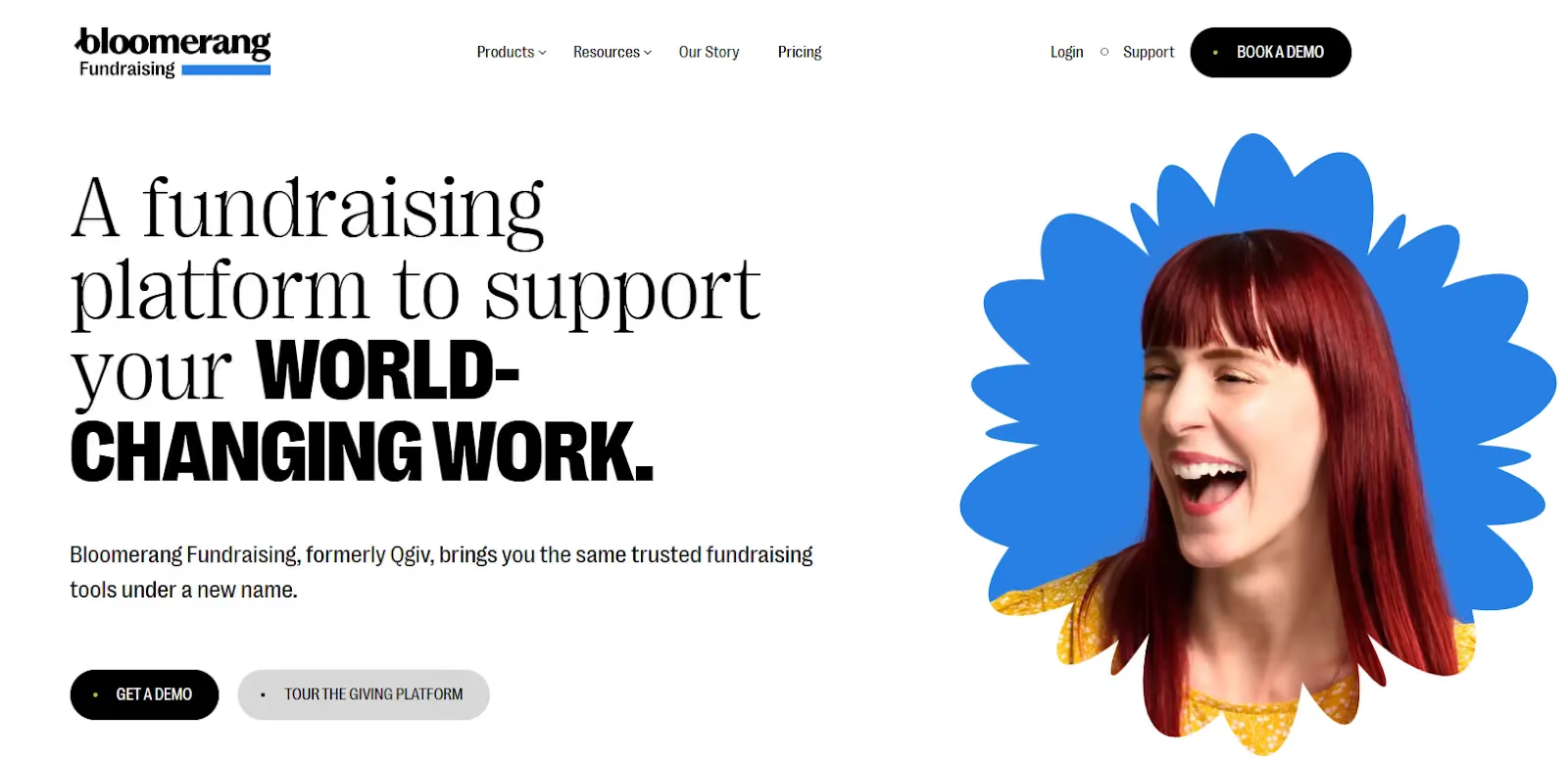
Bloomerang Fundraising, formerly known as Qgiv, is a digital fundraising platform designed to support event-linked and campaign-based giving initiatives. It provides tools for managing donation collection, event participation, and mobile fundraising within a unified interface.
Best suited for:
Institutions seeking flexible event-linked fundraising tools that combine donation forms, peer participation, and registration workflows.
Core capabilities and strengths:
Considerations before choosing:
Some advancement teams prioritize analytics, executive dashboards, and institutional reporting over campaign-specific tooling. These platforms focus on customizable data models, reporting depth, and ecosystem integrations that support long-term strategic planning.

Salesforce Nonprofit Cloud is a CRM for nonprofit and education organizations built on the Salesforce platform. It provides configurable data architecture and reporting capabilities designed to support complex fundraising and constituent management needs.
Best suited for:
Universities requiring highly customizable donor data models, advanced analytics, and dedicated Salesforce administration capacity.
Core capabilities and strengths:
Considerations before choosing:

Neon CRM is a donor management and fundraising platform designed to centralize donor records, online giving, and event management within a single system. It supports organizations that want CRM functionality combined with fundraising and communication tools in one environment.
Best suited for:
Growing advancement teams looking to combine donor management, online giving, and event tracking within a single platform.
Core capabilities and strengths:
Considerations before choosing:
After reviewing different categories of university fundraising software, the next step is not comparing feature checklists. It’s stepping back and asking whether your systems reflect how your fundraising actually operates and whether your resources are being directed where they create measurable impact.
As Michael Richmond, present Director of Annual Giving (Health Systems) at Tulane University, suggests about maximizing fundraising efforts, “Create a baseline so you know where you are. When resources are limited, it becomes very important where you seed those resources and to track what the return from those fundraising efforts actually is.”
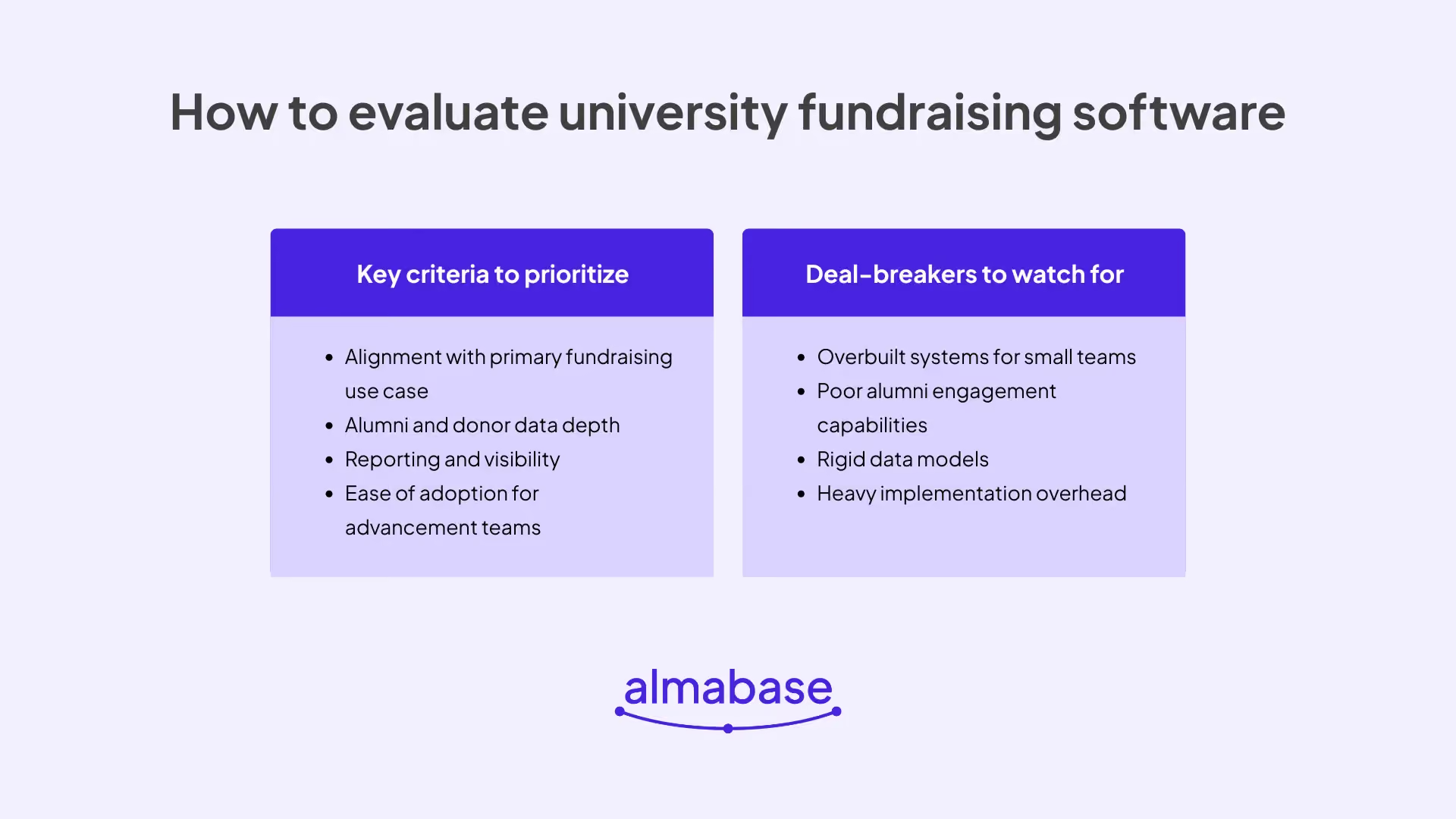
Shortlisting tools is only the first step. Universities make stronger decisions when evaluation criteria align with their fundraising motion, team structure, and long-term advancement goals rather than feature volume alone.
1. Alignment with primary fundraising use case
Start with clarity on your dominant fundraising motion. A university focused on giving days and alumni participation will evaluate platforms differently from one managing major gifts and capital campaigns. The system should directly support your highest-impact fundraising activity.
2. Alumni and donor data depth
Evaluate how well the platform captures donor profiles, giving history, engagement timelines, and communication records. Advancement teams should be able to see a unified view of alumni and donor activity without relying on multiple disconnected tools.
3. Reporting and visibility
Leadership reporting requirements often shape software selection. Assess dashboard flexibility, segmentation capabilities, and export options to ensure institutional reporting, board updates, and campaign analysis can be generated efficiently.
4. Ease of adoption for advancement teams
While endowments returned an average of 11.2% in FY24, according to the NACUBO-Commonfund Study of Endowments, advancement teams continue to diversify fundraising motions beyond investment performance alone.
Instead of complex systems, consider onboarding requirements, training needs, and day-to-day usability. Advancement staff should be able to launch campaigns, access donor data, and generate reports without constant technical support.
When all the above-mentioned criteria are applied in practice, the evaluation becomes clearer. For example, if a university is evaluating alumni crowdfunding software, it would look for a platform like Almabase that fulfils all the above-listed criteria.
Almabase aligns with the above evaluation lens by supporting giving days and class campaigns, syncing donor data with existing CRMs, offering real-time campaign dashboards, and enabling quick setup for digital fundraising initiatives without restructuring the broader advancement system.

Point to note → As institutions report a 10-year average endowment return of 7.7% and a one-year return of 10.9% in FY25, according to NACUBO, advancement leaders are expected to maintain steady fundraising performance alongside investment returns.
In that context, structural mismatches in fundraising systems can weaken pipeline discipline, reporting clarity, and long-term donor stewardship. Choosing the right platform often comes down to avoiding these structural mismatches early, before they create long-term operational friction for your advancement team.
Choosing the right university fundraising software becomes simpler when we filter options through alignment, not feature volume. The strongest outcomes usually come from matching the platform to how fundraising actually operates on campus.
Universities tend to succeed when their software aligns with:
When those three elements align, software supports execution instead of slowing it down.
If alumni engagement and digital participation are central to your strategy, reviewing how a platform handles crowdfunding, class campaigns, and ambassador-led giving can clarify fit.
Book a quick demo to explore how Almabase supports alumni-focused digital fundraising and campaign execution in practice.
University fundraising software is a platform that helps advancement teams manage alumni donors, run fundraising campaigns, track donations, and report on results. It supports activities such as giving days, peer-to-peer campaigns, donor relationship management, and event-based fundraising within higher education institutions.
University fundraising software centralizes donor records, campaign data, and donation activity in one system. Advancement teams use it to manage alumni engagement, track giving history, automate communications, and monitor campaign performance through dashboards and reports.
Key features include donor and alumni management, campaign and event tools, online and recurring donation processing, reporting dashboards, and CRM or SIS integrations. Universities should prioritize alignment with their primary fundraising motion, data visibility needs, and ease of adoption for advancement teams.
Many platforms integrate with existing CRMs or student information systems to sync donor records, gift data, and engagement history. This integration reduces data silos and supports consistent reporting across advancement and development operations.
Universities can raise funds more effectively by using software to run giving days, alumni crowdfunding campaigns, peer-to-peer initiatives, and event-based fundraising. Centralized donor data, automated communications, and real-time reporting help advancement teams increase participation and track outcomes across campaigns.
The best fundraising platform depends on a university’s primary use case. Some institutions prioritize alumni crowdfunding and giving days, while others focus on donor CRM, advancement reporting, or event fundraising. The right choice depends on team structure, fundraising motion, integration needs, and budgets.
Table of Contents
Subscribe
See how modern advancement teams bring alumni engagement and fundraising together.
Have you ever thought about how the scholarships that change lives, the labs that spark innovation, and the alumni programs that keep communities connected all rely on fundraising? It is the backbone of a resilient, sustainable revenue stream. The numbers show just how big this responsibility is. In fiscal year 2024, U.S. colleges and universities received $61.5 billion in voluntary support, a 3% increase after inflation. Across all nonprofits, charitable giving reached $592.5 billion in 2024, setting a new record. But here’s the catch: all of this was not raised from a single source of funding, but rather multiple sources. So, to thrive, institutions need diversified strategies that draw on alumni, foundations, corporations, and community partners, ensuring stability even as donor expectations evolve.
So, how do you put all these insights into action for your institution? In this article, we will focus on the 10 best practices for university fundraising campaigns that advancement teams can put into play right away, helping institutions secure diversified funding, strengthen alumni engagement, and deliver results that leadership and donors can see.
University fundraising is the practice of building financial support by engaging alumni, parents, corporations, foundations, and other partners. Tuition and government funding only cover part of what a university needs. Scholarships, research, new facilities, and student programs often rely on philanthropy.
So why do universities fundraise? Because gifts make the difference. They open doors for students who need financial aid, fuel innovation in labs and classrooms, and keep alumni connected to their alma mater. It is as much about relationships as it is about dollars. Fundraising structures usually take shape in a few key ways:
Fundraising shouldn’t feel like a series of disconnected appeals. A well‑planned calendar ensures that every campaign and communication is tied to your institution’s mission and vision, keeping donors engaged consistently and reinforcing the bigger picture.
When institutions skip this, they often end up with last‑minute appeals or overlapping campaigns that confuse donors and dilute impact. A calendar keeps everything strategic, consistent, and mission‑driven.
Alumni give when they feel part of something bigger. When schools invest in relationships first, giving follows naturally. Engagement through mentorship, volunteering, and storytelling builds pride and loyalty, which makes financial support a logical next step.
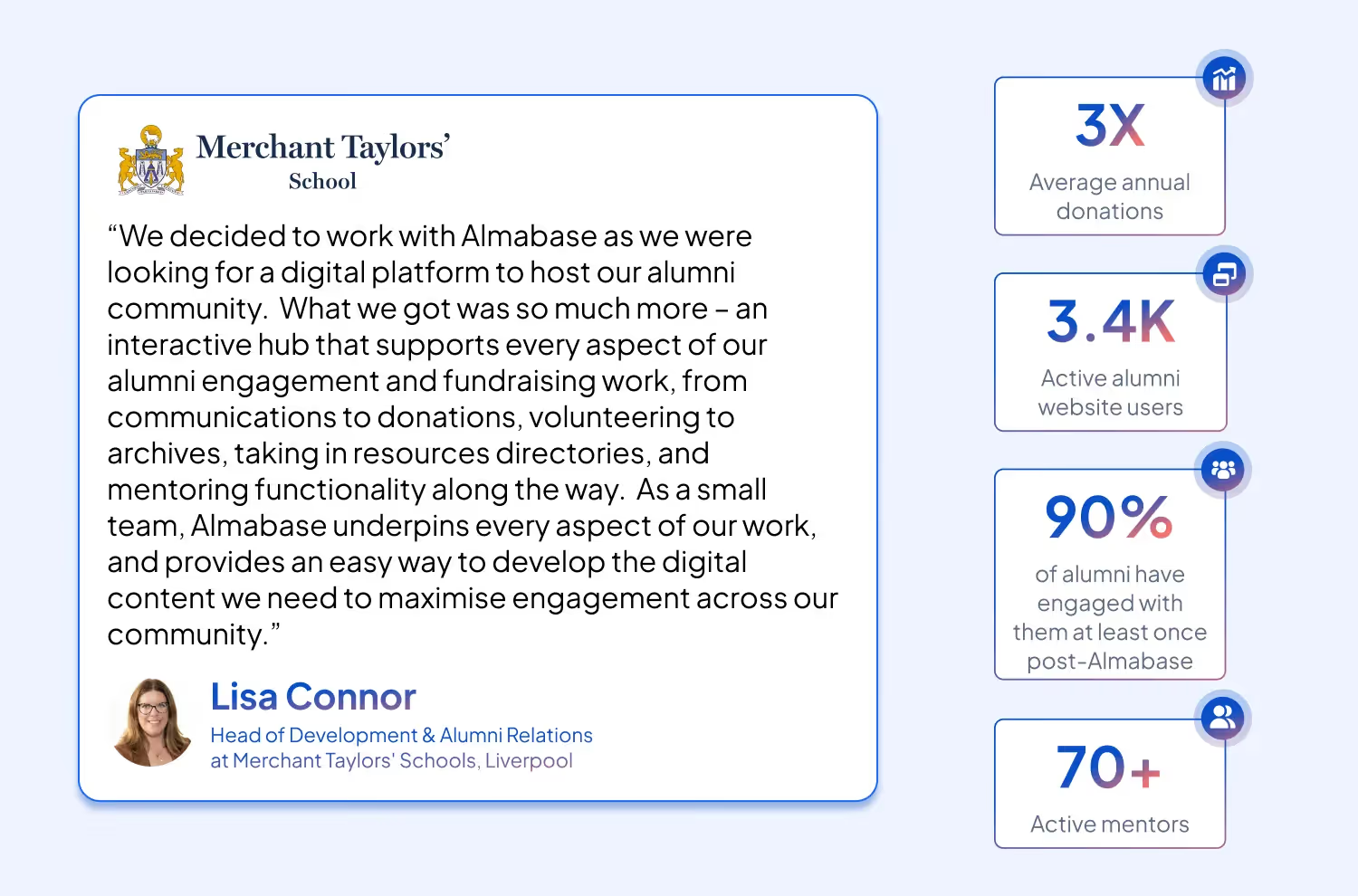
Merchant Taylors’ School showed how this works in practice. By encouraging alumni to contribute time and talent before asking for treasure, they built a strong community that later translated into higher giving and deeper involvement.
Donors stay loyal when communication feels personal. A generic “Dear alumni” message doesn’t build a connection, but a note that reflects their history with your institution does. Personalization shows alumni they’re valued, not just solicited.
The real impact comes when you combine these channels. A donor who gets a thank‑you text, sees their impact in an email newsletter, and later receives a tailored letter about a scholarship fund feels consistently valued. That’s what drives retention.
With Almabase’s Multi‑Channel Bundle, you can unify email, text, and video outreach in one place. Instead of juggling platforms, you can deliver authentic, multi‑channel communication that boosts engagement and keeps alumni connected year‑round.
Alumni expect donation pages to be quick, mobile‑friendly, and secure. If the experience feels clunky, they’ll drop off. A smooth digital journey shows donors you value their time and makes giving feel effortless.
You need a robust online fundraising platform to execute all of this seamlessly. With it, you don’t just make giving easy; you also get all the donor data seamlessly. Every gift, whether through a mobile wallet or a peer‑to‑peer campaign, flows directly into your CRM, so you can track impact, segment donors, and personalize future outreach without extra manual work.
Fundraising works best when alumni hear from you in ways that feel fresh and personal. Instead of relying on the same old email blasts, mix up the formats you use to connect, promote, and sustain giving.
These formats create social giving excitement. Shoutouts, leaderboards, and shared stories build a competitive spirit and make giving feel fun. Archbishop Riordan High School leaned into this approach for their Giving Day. By combining social shoutouts, storytelling, and a competitive edge, they turned their campaign into a community celebration and increased donations by 550%.
Dollar goals alone don’t inspire alumni. What really moves people is the chance to support something they care about. Themed campaigns let you tap into those passions and make giving feel personal.
Think beyond the generic “annual fund.” You could run an Athletics Challenge where alumni rally behind their old teams, with leaderboards showing which sport is winning. Or a Mental Health Fund that highlights counseling services and invites alumni to support student wellbeing.
Universities win when fundraising moves beyond one‑off asks and into sustained partnerships. Corporates and foundations bring multi‑year funding, program expertise, employee engagement, and credibility when you approach them with clarity and mutual benefit.
A data-driven approach to fundraising is crucial. You’ll want to measure key metrics to analyze this data and refine your strategies based on these metrics. Then your team can maximize its fundraising efforts and focus on creating positive change for the missions you serve. Use simple signals to decide who to ask, how to ask, and when to change course.
Stories create empathy; metrics create trust. When you combine both and make the next step obvious, donors understand the value of giving again, and your fundraising becomes a conversation, not a transaction.
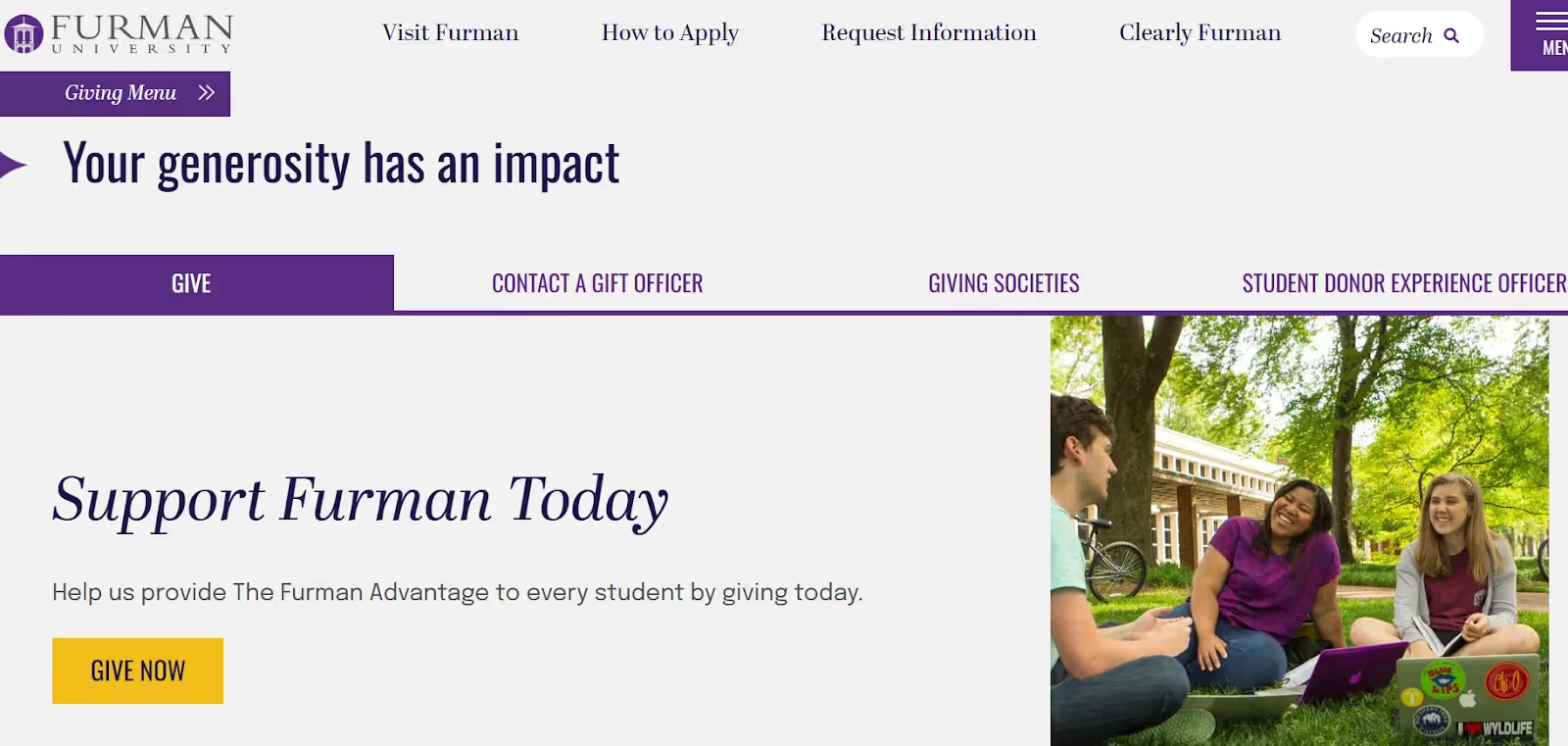
Take a look at how Furman University’s giving page models this approach: it pairs a concise case for support with clear institutional stats and direct CTAs that guide donors to give now or learn more, while highlighting priorities like student aid and placement rates.
Technology should remove friction, not add it. Pick systems that keep your data clean, connect donor touchpoints, and let your team move from manual busywork to strategic outreach.
Investing in the right technology means institutions can reduce downtime during migration, train staff quickly and with more flexibility, and realize ROI more rapidly. In today’s fast-paced environment, you need to look for higher education software that not only incorporates features that are easy to navigate but include support during the implementation process.
It’s one thing to run a campaign, but the real test is being able to show what worked, what didn’t, and why. Dollars raised are important, sure, but they don’t tell the whole story. To really prove ROI, you need to track metrics that show how engaged your alumni are, how efficient your campaigns are, and whether donors are sticking around for the long haul. Here are the metrics that matter most:
Almabase works on top of your CRM to clean data processes, personalized outreach, improve donor experiences, host fundraising events, and to make it as easy as possible to track numbers. Some of it’s key features include:
Almabase helps advancement teams move from juggling disconnected tasks to running fundraising strategies that are relationship-driven, data-informed, and sustainable.
Regardless of your institution or prior history of fundraising, with the right strategies, tools, and know-how, you can develop a robust and successful alumni fundraising strategy that yields lasting benefits for your institution.
By implementing thoughtful alumni fundraising strategies outlined above, you can look forward to fostering a culture of giving and generosity that extends far beyond graduation day.
Focus on storytelling that connects donors to student impact, diversify channels (email, social, events), and balance major gifts with annual giving. Always tie campaigns back to alumni engagement rather than just dollars raised.
Segment alumni by interests or milestones, personalize outreach, and show clear outcomes of their support. Peer-driven efforts, such as class captains or reunion challenges, consistently boost participation.
Energy and community are everything. Use matching gifts, hourly challenges, and real-time updates to keep momentum high, and spotlight authentic student and alumni stories to drive emotional connection.
Retention comes from consistent stewardship: thank donors personally, share impact updates regularly, and invite them into the campus community through events or student-led appreciation.
There are a lot of great fundraising platforms out there for different kinds of teams, events, and budgets such as Almabase, Givebutter, DonorPerfect, and many more. What’s best for one team might not be the best for another.

University Fundraising: 10 Best Practices + Metrics to Track in 2026
10 great practices and metrics for your advancement team to stay on top of in 2026 to really take your university fundraising strategy to the next level.
Lorem ipsum dolor sit amet, consectetur adipiscing elit. Suspendisse varius enim in eros elementum tristique. Duis cursus, mi quis viverra ornare, eros dolor interdum nulla, ut commodo diam libero vitae erat. Aenean faucibus nibh et justo cursus id rutrum lorem imperdiet. Nunc ut sem vitae risus tristique posuere.

March 10, 2026
12 minutes
School fundraising software has come a long way from bake sales and car washes. Today, administrators, parent organizations, and athletic directors are turning to purpose-built fundraising software to run campaigns that are more complex than ever before.
But with dozens of platforms on the market, choosing the right one can feel overwhelming. Should you go with an all-in-one solution that handles donor management and online giving? Or do you need something specialized for auctions, walk-a-thons, or youth sports? In this blog, we want to walk you through the top fundraising software options for K–12 schools, depending on your needs so you can find the best fit for your institution.
Institutional fundraising has never been more data-driven than it is today, and your school (or team) needs to be able to make use of it to keep up with the increasing expectations of your constituents. Apart from that, here are some things that make fundraising software so important for schools today:
A search for the best fitting fundraising platforms for schools starts with features. However, consider an alternative starting point: the workflow. Where does friction show up in your current workflow? The right platform should reduce that friction.
Most donors give from their phones. A donation page that loads quickly, requires minimal steps, and clearly communicates impact can influence completion rates more than design aesthetics alone.
Look for clarity around how transactions are processed, what payment gateways are supported, and how refunds or chargebacks are handled.
Equally important is reconciliation. Can your finance team easily track revenue, fees, and deposits without rebuilding reports manually? The back-end experience matters as much as the front-end donation page.
Platforms should allow segmentation, automated thank-you emails, tax receipts, and visibility into donor history. If you cannot quickly identify repeat donors or first-time supporters, future outreach becomes guesswork.
K-12 schools frequently depend on events such as walk-a-thons, auctions, and ticketed fundraisers. Peer-to-peer tools, personal fundraising pages, and live progress tracking can increase visibility and participation, especially when families are sharing within their networks.
We have picked out some of the top options available in 2026 and categorized them by different use cases to suit your team’s current needs. Have a look!
For schools serious about building lasting donor relationships through event and donor management, an all-in-one platform might just be what you need.
Almabase is a fundraising and donor management platform built specifically for schools, higher-ed institutions, and nonprofits that want to build meaningful, long-term relationships with their alumni and donors. Almabase focuses on branding and easy to set-up giving pages, event management, memorable donor experiences and giving data sync to provide a comprehensive yet easy to use platform that both staff and donors will appreciate. Schools can run annual giving campaigns, peer-to-peer fundraisers, set up recurring gifts, and track engagement across touchpoints for better engagement and fundraising.
What sets Almabase apart is its focus on data-driven relationship building. It integrates well with popular education CRMs like Raiser’s Edge NXT, making it a strong fit for schools that want to get the most out of each fundraiser. For schools looking to grow their fundraising program and engage constituents over the long term, Almabase offers the infrastructure to support that growth.
Bloomerang is a popular nonprofit CRM and fundraising platform known for its clean interface and strong donor retention focus. The platform tracks donor engagement scores, helping development staff identify who is most likely to give again. Bloomerang includes online donation forms, email marketing tools, and reporting features that are accessible even for small development teams.
For schools without a dedicated development director, Bloomerang's simplicity is a major advantage. The platform is designed to be used by generalists, not just fundraising professionals. It is particularly well-suited for independent schools, charter networks, and private K–12 institutions that want a solid foundation for donor management without a steep learning curve.
DonorPerfect is one of the most established names in nonprofit fundraising software and offers a comprehensive suite of donor management tools. The platform handles recurring gifts, pledge tracking, grant management, event registration, and online fundraising all in one place. It is a strong choice for schools with larger development operations that need deep customization and integration options.
DonorPerfect's strength lies in its flexibility. The platform can be configured to match almost any fundraising workflow, and it comes with reporting capabilities. Schools with complex fundraising operations such as multiple campaigns, major gift programs, and foundation support may find DonorPerfect's depth particularly valuable.
Givebutter is a modern, all-in-one fundraising platform with strong auction and event features. It supports silent auctions, livestream fundraising, and ticket sales, all from a visually polished interface. The platform is free to use and relies on optional donor-covered tips to sustain operations. If you want to opt out of optional tips, a 3% platform fee applies to every donation on top of processing fees.
Schoolfundr is a fundraising platform built specifically for schools. Similar to Givebutter, it charges no subscription fees, relying on optional tips from donors as well as charging transaction fees.
🪶We’ve narrowed down the budget-friendly options to two choices which we think are the easiest to get started with whether you want to scale down costs or are looking to start small. However, we still highly recommend talking to each platform’s representatives to understand pricing models, data policies, and features. Also keep in mind how your donors might feel about adding a tip on top of a donation and try to find what works best for your school.
Auctions remain one of the most popular and lucrative school fundraising formats. These platforms are built specifically to make auction management simple.
OneCause (formerly BidPal) is purpose-built for nonprofit event fundraising and is widely used by schools running gala-style events and auctions. The platform covers everything from mobile bidding and item catalog management to paddle raise fundraising and live auction tools. It also handles event ticketing, seating management, and sponsorship tracking.
OneCause is particularly strong for schools that host large, formal fundraising events with hundreds of attendees. The platform's mobile bidding experience is intuitive for guests, and the backend management tools give event organizers full visibility into real-time results. The platform does come at a higher price point, making it better suited for schools with larger events that can justify the investment.
GoFundMe Pro (formerly Mightycause) is the enterprise tier of the widely recognized GoFundMe brand and is designed specifically for nonprofits and educational institutions. It offers peer-to-peer fundraising, event fundraising, and a suite of campaign management tools along with auction capabilities.
GoFundMe's brand recognition works in schools' favor when it comes to donor trust. Many parents and community members are familiar with the platform and are comfortable donating through it. GoFundMe Pro adds deeper customization, reporting, and donor management features on top of the consumer platform's usability.
Walk-a-thons, read-a-thons, and similar pledge-based events are a staple of school fundraising especially at the elementary and middle school level. These platforms are built for exactly this format.
99Pledges is one of the simplest and most popular platforms for running pledge-based fundraising events at schools. Students create personal fundraising pages, solicit pledges from family and friends, and the platform tracks all commitments and payments automatically. There is no app to download, no complex setup, and the per-student pages are easy to share via text and email.
What makes 99Pledges stand out is its sheer simplicity. Schools can launch a campaign in under an hour, and parents can make pledges in just a few clicks. The platform charges a small platform fee and standard payment processing fees but requires no upfront cost, making it accessible for even the smallest schools and parent organizations.
RallyUp is a versatile fundraising platform that supports a wide range of event-based fundraising formats, including walk-a-thons, jog-a-thons, read-a-thons, and virtual events. It includes peer-to-peer fundraising pages, donation tracking, and tools for motivating student participants through leaderboards and milestone celebrations.
RallyUp is particularly well-suited for schools that want to run engaging, gamified fundraising events that get students excited to participate. The platform's interface is colorful and student-friendly, and its reporting tools help organizers see participation rates and revenue in real time. It supports both pledge-per-activity and flat donation models.
Matching gift programs are one of the most underutilized sources of fundraising revenue for schools. Many constituents work for companies that will match their charitable donations dollar-for-dollar, or even two-to-one. But most donors never bother to check or submit a match request.
Double the Donation is a dedicated matching gift software for nonprofits and educational institutions. It integrates with most major fundraising platforms and automatically prompts donors to check their employer's matching gift eligibility at the point of donation. The platform maintains a database of over 20,000 companies and their matching programs, making it easy for donors to find and submit their employer's match.
For schools, even a modest improvement in matching gift submission rates can translate into thousands of additional dollars per campaign. Double the Donation's automation makes that improvement achievable without adding workload to development staff.
For schools, volunteers can often be one of the most important assets. However, not every school can afford or needs to have a dedicated volunteer management system. We’ve picked out some of the best options for schools looking to manage volunteer signups and related tasks such as scheduling, organizing, etc.
Many event management or donor management platforms also come with volunteer management features as a complementary tool or an add-on which can be a good choice. For any option you are considering, keep certain nuances in mind such as ad presence, ease of use for volunteers, and pricing structures to make sure you pick the right tool for your team.
With so many options available, the right can help you narrow down your choices:
What is your primary fundraising model? If you run a gala every year, prioritize auction tools. If your revenue comes from an annual giving program, prioritize donor management. If you rely on walk-a-thons, look at pledge-based platforms.
What do your donors want? Some donors might be turned away by pre-filled tips or ads while others may not mind. Some donors may prefer sleek UI elements and mobile-friendly design while others don’t mind as long as their donations go into a meaningful cause.
What is your team's capacity? A small PTA with volunteer leadership needs something simple and fast. A professional development office can handle more complex tools with greater customization.
What is your budget? Free platforms with optional tips work well for smaller campaigns. For larger programs, a platform fee may be worth paying for better support, integration, and features.
What is your long-term vision? If you want to build a lasting alumni and donor community, invest in a platform with strong CRM and relationship management capabilities now. Even if it costs more upfront, it can be more cost-effective than accumulating a ton of single purpose tools over the years.
What integrations do you need? Check whether the platform connects with your school's existing tools: your SIS, accounting software, email platform, or website CMS.
Taking the time to answer these questions before evaluating platforms will save significant time and help you avoid switching costs down the road.
Among the platforms covered in this guide, Almabase is a great choice for schools that are ready to build a serious, sustainable fundraising program. It goes beyond one-off campaigns to help schools develop the donor relationships that drive long-term revenue growth.
Almabase provides a unified platform for donor management, online fundraising, and event management.. Schools can launch giving day campaigns, manage peer-to-peer fundraising, track donor engagement over time, and generate detailed reports all from a single interface. The platform is originally designed for educational institutions, which means the tools, updates, and data models are built around real-world problems that schools face.
For schools that rely on annual fund campaigns, alumni giving, and major gift cultivation, Almabase provides the tools to segment donors, personalize outreach, and track the full donor journey from their first gift to becoming a loyal supporter. It’s integration with CRM systems means school data flows smoothly into the fundraising platform, reducing manual data entry and improving accuracy.
If your school is ready to move beyond spreadsheets and disconnected tools and invest in a platform that can grow with your program, Almabase is worth a serious look.
Free fundraising platforms usually mean no platform or subscription fees. However, they typically have transaction fees and depending on the platform, may come with a percentage of your raised funds as fees, ads, or per transaction fees.
A fundraising platform primarily helps you collect donations and run campaigns. A donor management system helps you track donor relationships and nurture relationships over time.
Yes, many schools use multiple platforms. Just be mindful of managing donor data across multiple systems and increasing the cost of stacking too many single-purpose tools.
Integrate a matching gift tool like Double the Donation with your primary fundraising platform. Prompt donors to check their employer's match eligibility immediately after they give, while the donation is still top of mind.
Even small schools and associations can benefit from the efficiency, and donor experience improvements that dedicated software provides. Many platforms are free or very low cost at smaller volume levels, making the ROI compelling even for modest campaigns.
The fundraising software landscape for schools has never been more robust. Whether you are running a walk-a-thon for a hundred elementary students or building a comprehensive alumni giving program for a private high school, there is usually a platform designed for your specific needs.
The most important step is to match your platform choice to your actual fundraising model, budget, and long-term goals. A well-chosen platform pays for itself quickly through higher donor conversion rates, reduced administrative burden, and stronger donor relationships over time.
If you are looking for a fundraising platform for your school or associated organization, Almabase can help you raise funds, manage donor relations, and streamline events and communications. Schedule a personalized demo to find out how it fits into your school’s needs.

The Best Fundraising Software Platforms for Schools in 2026
We have looked at some of the best fundraising software for schools available in 2026 to help your school, club, or nonprofit raise funds according to your needs.
Lorem ipsum dolor sit amet, consectetur adipiscing elit. Suspendisse varius enim in eros elementum tristique. Duis cursus, mi quis viverra ornare, eros dolor interdum nulla, ut commodo diam libero vitae erat. Aenean faucibus nibh et justo cursus id rutrum lorem imperdiet. Nunc ut sem vitae risus tristique posuere.

February 26, 2026
12 minutes
With year-end giving season over and the chaos of the new semester settling down, the early months of the new year are the perfect time to revisit your university’s fundraising strategy and hone in on ways to raise more this year.
A great place to start is by analyzing how you’re currently using your database for fundraising. Your university’s constituent relationship management (CRM) system is a powerful tool for fundraising, so if you’re not leveraging it effectively, you’re missing out on valuable opportunities to build lasting donor relationships. In this article, we’ll discuss four ways you can leverage your database to improve this year’s fundraising results.
Before we dive in, make sure you’re up to speed on the latest data hygiene best practices. Keeping your constituent data clean and up-to-date is crucial for gaining the accurate insights you need to get results. Now, let’s explore what your database can do for you.
According to Redpath Consulting Group, one of the biggest benefits of using a comprehensive CRM for your university is that it houses all of your data in one place, showing you the full picture of each student, alumnus, and donor. This holistic view of donors helps you:
When you use the information in your database to get a better understanding of each donor, you’ll be better equipped to reach out to them in ways that resonate with their interests. For instance, one recent graduate’s profile in your database could provide you with the following information:
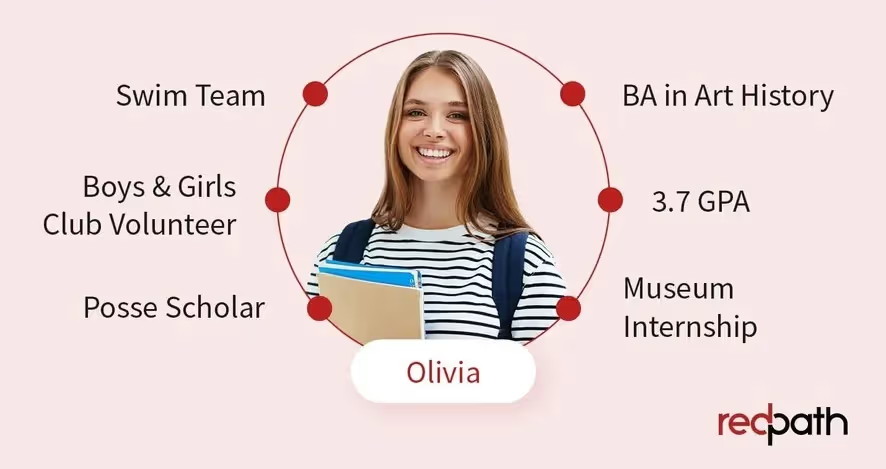
Knowing that Olivia was a frequent volunteer with an art history degree might prompt you to invite her to a volunteering event or ask her to donate to the art department’s scholarship fund.
All of this information helps you better understand donors’ interests and preferences, which you can use to build stronger relationships and more successfully solicit donations.
Once you have a holistic picture of your donors, you can greatly increase the personalization of your communications. Donors and alumni are much more likely to engage with messages tailored to their unique interests. Plus, when donors feel like you understand and appreciate them as individuals, they’re more likely to value your university’s community and continue giving long-term.
To boost personalization, create a variety of highly specific donor segments within your database. For example, you might create segments like:
Then, send personalized emails, mailers, and appeals that align with each segment’s interests. You might ask the group of alumni in the tech industry to give to your capital campaign funding a new computer science department building, while you promote an upcoming fundraising auction to the segment of alumni who frequently attend events.
Beyond segments of donors, your database can also help you personalize outreach to individual donors. Pull data from your CRM like past donation amounts, graduation years, and specific campaigns they supported, and mention them in your appeals for an added personal touch.
Whether you leverage features within your CRM or invest in an integrated marketing automation tool, automation can make a major difference in your fundraising team’s efficiency and success. By automatically updating your database, auto-filling emails with personal details, and triggering email streams based on certain criteria, these features cut down on manual tasks and improve the accuracy of your data.
For instance, say you want to create a process to engage first-time donors. If your CRM integrates with your university’s online donation platform, new donors will be automatically added to your database. When they are, you could leverage marketing automation to trigger a series of personalized welcome emails. This might look like:
Automated email series like this one will help you foster relationships with donors from the moment they decide to give to your university—all without lifting a finger.
Finally, your database’s reporting features can help you identify successes and challenges and improve your fundraising with data. In particular, monitoring the following metrics can help you understand how successful and cost-effective your fundraising strategies are:
With this information, you can investigate further to determine the cause of any major dips or increases and use your findings to adjust your fundraising strategies accordingly. For example, if you discover that a significant number of donors lapsed during an economic downturn, you might adjust your appeals to ask for smaller donations and emphasize the effects of the economy on students’ abilities to attend their dream school.
If you need help formulating strategies based on your fundraising data, consider partnering with a higher ed technology consultant. These experts can help you leverage your CRM more effectively and even customize it to fit your university’s unique needs. With the right tools and strategies in your toolbox, you’ll be able to boost your fundraising results in no time.

Caitlin leads the brand, creative and overall go-to-market strategy for Redpath. Offering over 10 years of experience in omni-channel and B2B marketing, she has a history of successfully implementing marketing plans and leveraging campaign analytics to drive revenue. She has a passion in communications and is skilled in empowering cross-functional teams to promote positive company culture and attain collective goals.
Caitlin has a Bachelors in Sociology from the University of Wisconsin-Madison and a Masters of Business Administration from the University of St. Thomas. When Caitlin is not at work, you can find her reading a good book, sipping on some chai tea, or enjoying activities with her family such as going on walks, boating, and traveling.
Using Your Database to Boost University Fundraising Results
Your university’s database is a powerful tool for fundraising. Learn four ways you can leverage your CRM to improve donor relationships and raise more funds.
Lorem ipsum dolor sit amet, consectetur adipiscing elit. Suspendisse varius enim in eros elementum tristique. Duis cursus, mi quis viverra ornare, eros dolor interdum nulla, ut commodo diam libero vitae erat. Aenean faucibus nibh et justo cursus id rutrum lorem imperdiet. Nunc ut sem vitae risus tristique posuere.

.svg)

.avif)
.webp)