Major gifts provide essential funding for many of your university’s most important initiatives. Discover three strategies for higher ed major gift fundraising.

Major gift fundraising is essential for your university to thrive. Whether you’re conducting a capital campaign to construct a building on campus, launching new academic and cultural programs, or expanding your scholarship offerings, major gifts provide the financial foundation to further your institution’s success.
However, requesting thousands of dollars from your donors isn’t something to undertake lightly. Instead, your university needs to approach the process strategically in order to ask the right donors for the right amounts of money to fund the right initiatives.
In this guide, we’ll walk through three strategies your university can use to secure more major gifts, including how to:
How you implement these strategies will likely vary depending on what type of institution you’re soliciting major gifts for. Every university has different needs and supporter preferences, so you’ll need to adapt your process to reach your specific goals. With that in mind, let’s dive in!
The first place to look for major donors is your university’s current donor base. In addition to identifying past major donors to reach out to again, you might discover other loyal supporters who have the financial capacity to upgrade their giving.
To make this process easier, DonorSearch recommends creating individual profiles within your donor database for each of your university’s current and prospective donors. These profiles should include key information about each donor, such as their:
Review and update these profiles regularly to ensure you can identify the correct donors to fulfill your university’s current major gift fundraising needs. Additionally, always follow data security best practices when it comes to your database so donors can trust that you’ll keep the sensitive information in their profiles safe.
Prospect research is useful for expanding your university’s existing donor profiles and finding brand-new major donors to reach out to. The most important thing to remember with prospect research is this: While wealth is an important indicator of a potential major donor, it isn’t enough on its own to make someone a viable prospect.
Instead, your university should take a more holistic approach to prospect research. To get a complete picture of each potential donor, look for the following three types of indicators:
Ensure your university is equipped with the best prospecting tools before you start. In addition to a comprehensive, accurate prospect research database, AI solutions that provide predictive modeling and prospect report generation can give you a more detailed overview of each potential donor and help you prioritize your outreach.

Asking for major gifts takes time and patience. Prospects will only make significant donations if they’re confident that your university will use the money to fund the initiatives that matter to them. They’ll also be more likely to give if they know you value them as individuals—after all, no donor wants to feel like an ATM with legs!
Here are some donor cultivation tips to try with your university’s major gift prospects:
There is no set time to ask for a major gift—you’ll need to monitor your relationship-building progress with each individual prospect to determine when to make your request. Since most major donors restrict their contributions to specific projects or programs, approach the prospect with a gift designation that aligns with their background and values, and have a few backups in mind in case they turn down your first ask.
Your major gift fundraising efforts aren’t finished when a prospect says “Yes!” to your donation request. Proper recognition and stewardship are essential to keep major donors engaged with your university and set up the possibility of soliciting additional contributions down the line. Additionally, collect and analyze data on major gifts to determine what your university is doing well and where you could improve your process going forward.
Subscribe
See how modern advancement teams bring alumni engagement and fundraising together.
Plan faster. Execute better
Explore free templates designed for alumni and fundraising teams.
.png)

.avif)
Major gifts can be real game changers for any institution. We’ve heard the stories of how alumni or donors made a major gift, which led to the creation of something marvelous for the institution. However, not many recognize the effort and time it took for the team to cultivate such a generous amount.
To understand one such incredible journey, from a student to a major alumni donor, we spoke to Adam Platzer, the AVP for college advancement at Rochester Institute of Technology. Adam developed, cultivated, and closed a $50 million gift – in collaboration with university leadership – delivering the largest philanthropic donation in RIT’s history!
.png)
Here's some quick context before we dive into the story: RIT is one of the finest institutions in upstate New York with a focus on technology, computing, design, and art. Furthermore, it promotes entrepreneurship and innovation.
It all started when Adam's career services team introduced him to Mr. X, a young RIT alumnus, who never really focused on academics when he was in college but always had a true entrepreneurial spirit. He’d started his own tech company upon graduating.
⏩Fast forward a few years, he was visiting RIT to recruit interns for his company. After a brief introduction, the team at RIT took a two-pronged approach by tapping into his passion and supporting his professional work.
Here are multiple ways in which they meaningfully engaged Mr. X -
.avif)
Give value before you seek value.
All this value-driven engagement, coupled with the amazing relationship the entire team built with him, eventually helped them make an ask.
When he sold his company, he was more than happy to give 10% of the value of his company — a whopping $50 Million!
This enormous amount went towards developing the Global Cybersecurity Institute and professorships at RIT, and the construction of the Students Hall for Exploration and Development (SHED).
The generous and humble person he is, Mr. X didn’t want anything named after him, but rather after his elementary school teachers who played an integral role in shaping his initial years. A dream donor indeed!
In retrospect, this wouldn’t have been possible if not for the various teams across functions - from Career services to University leadership, collaborating to engage with him meaningfully.
A major gift is a long-term game — it’s not possible to engage everyone. It’s important to focus on the top 20% of the donors and design a plan to meaningfully engage with them with the help of various departments across the advancement office.
Meaningful engagement can begin by tapping into a prospective donor’s passions and being resourceful. Help them further their career and pursue their passions in any way possible. Plan your programming around the top 20% — you could invite them as speakers, help them recruit, make them an active member of the board or do anything that would be of value to them.
“We play a small role in the donor’s lives, so it’s important to be lightning fast with your response.”
%2520(1).gif)
Here’s an action plan that Adam has drafted which you can start implementing right away!
.avif)
.avif)
Adam Platzer, the AVP for college advancement at RIT is an experienced university fundraiser who has secured transformational funding from alumni, corporations, and parents. Adam has traveled extensively throughout the country with the president, deans, and VP of Student Affairs. He specializes in developing creative engagement strategies that are matched with targeted solicitations – leading to maximum gift potential. He also started Forward Fundraisers in 2018.

What it takes to raise a $50 million gift?
Lorem ipsum dolor sit amet, consectetur adipiscing elit. Suspendisse varius enim in eros elementum tristique. Duis cursus, mi quis viverra ornare, eros dolor interdum nulla, ut commodo diam libero vitae erat. Aenean faucibus nibh et justo cursus id rutrum lorem imperdiet. Nunc ut sem vitae risus tristique posuere.
Is your university making the most of matching gift fundraising opportunities? Unfortunately, the answer is probably not. The truth is that matching gifts are a significantly underutilized form of funding for all sorts of schools, universities, and institutions. That means that to maximize your school’s revenue, the way you view and promote matching gifts to donors could likely use a revamp.
Matching gifts have the potential to fuel any organization’s fundraising efforts and help you secure the most revenue possible. Ready to drastically improve your matching gift marketing strategies and bring in more corporate dollars? Check out these five best practices if you’re looking to up your matching gift marketing strategies to encourage corporate giving participation among your university donors.
Many alumni enjoy supporting the schools that helped pave the way for their success. Effective fundraising campaigns can be an excellent means for engaging these former students long after they leave your campus. And taking things a step further is matching gifts.
According to statistics from Double the Donation, more than 18 million individuals are employed by companies with matching gift programs. More than likely, a good amount of your school’s alumni are among those people.
However, the vast majority of match-eligible donors are unaware of the programs offered by their employers — which often puts it on the organization to market these opportunities effectively. If you’re looking to promote matching gifts, consider the following powerful marketing and outreach avenues to use:
While it’s certainly a good idea to inform all sorts of people about the wide availability of matching gifts, taking an alumni-centered approach can be a great way to focus on these types of generous supporters and target your efforts accordingly.
Many donors use your university’s website to learn more about how to get involved and where to give as well as additional opportunities for support. As such, it’s important that you provide ample information about matching gifts on your site.
We suggest crafting a dedicated matching gifts web page with the following tips in mind:
Then, direct supporters to this informative resource by linking to it in your matching gift emails, school-wide newsletters, social media posts, and other fundraising materials.
Whether you’re looking to plan for a dedicated giving day or other fundraising occasion or simply optimize your long-term strategy, corporate matching gifts are a great way to go. When you integrate matching gift fundraising into your existing donation process, it allows donors to determine their own eligibility for a matching gift without ever having to leave your donation page.
Here’s how it typically works:
1. A donor fills out your school’s online donation form.
2. The donor is provided with a simple company search widget embedded in the page.
3. The donor fills in their employer’s name and submits the donation.
4. The donor is provided with guidelines for their employer’s matching gift program on the confirmation screen.
Supporters are usually at the peak of their engagement while completing your online donation form, so it makes sense that you’d want to incorporate matching gifts at this time. Plus, research shows that 1 in 3 donors report that they’d likely make a larger gift if they know it will be matched by their employer, which makes it an impactful strategy for increasing donation sizes as well.
When it comes to matching gift fundraising for universities, one of the best things you can do to set your team up for success is to keep a detailed record of companies with especially generous matching gift programs. Then, you can compare this information against the companies that your alumni are working for to get a better idea of your existing match-eligible prospects.
After all, a significant part of effectively leveraging matching gifts depends on having and using the right data to drive your fundraising strategies. For matching gifts, donor employers are the most important metric there is.
Following up with supporters after they’ve made their gifts is one of the best ways to take your donor relations to the next level and maximize the number of donors who request corporate matches. We recommend segmenting donors by their likely eligibility for a match (based on information collected during the donation process) to ensure your messaging is as tailored and relevant as possible. Consider these examples:
Luckily, if you’d like to streamline this process and save time and resources for your school, you can automate the follow-up process from beginning to end. All you have to do is invest in a matching gift automation tool, and the software will do the rest!
Failing to promote matching gifts to supporters is essentially throwing away free donations. When you take a strategic approach to marketing, however, you allow your generous donors to make an even larger impact on your school, establish corporate partnerships with businesses in your network, and secure additional revenue for your university’s needs.
Just remember to inform alumni and other supporters of these exceptional giving opportunities, promote matching gifts through your school website and donation page and follow up with donors to drive match requests to make the best of your fundraising efforts.
Matching Gift Marketing for Universities: 5 Best Practices
Lorem ipsum dolor sit amet, consectetur adipiscing elit. Suspendisse varius enim in eros elementum tristique. Duis cursus, mi quis viverra ornare, eros dolor interdum nulla, ut commodo diam libero vitae erat. Aenean faucibus nibh et justo cursus id rutrum lorem imperdiet. Nunc ut sem vitae risus tristique posuere.

Adam Weinger
October 29, 2021
12 minutes
As part of the higher education sector, your university likely depends on social campaigns like peer-to-peer fundraising and crowdfunding to fund its projects and initiatives. While these campaigns have the potential for a wide reach, they require effective promotion to maximize alumni support.
How can you retain alumni support long after they receive their diplomas? Let’s explore the top marketing practices your university should employ when planning your outreach strategy.
Your alumni may be eager to support your university, but many are unaware of the opportunities available to help them maximize their contributions—namely, matching gifts.
Matching gifts are a type of corporate social responsibility initiative wherein businesses match donations made by their employees. Double the Donation defines corporate social responsibility as “a company’s efforts to improve society” in a multitude of ways, from directly donating to supporting employee giving. Matching gifts combine both of these efforts and represent a major revenue opportunity for universities.
Identify match-eligible alumni by looking into your existing donor base. Specifically, take a look at your alumni and major donors who represent your largest match opportunities. Then, secure matching gifts from alumni by promoting the opportunity to match-eligible individuals through:
As you solicit matched gifts, maintain an open line of communication with major employers who offer matches. Periodically review their policies and ask them to notify you if any changes are made to their matching gift program. Both universities and donors should stay on top of employers’ match guidelines to avoid missing out on matching gift revenue.
Communication is the foundation of a successful fundraising campaign. While some approaches are more effective than others, the best results come from incorporating multiple channels—especially for larger donor bases.
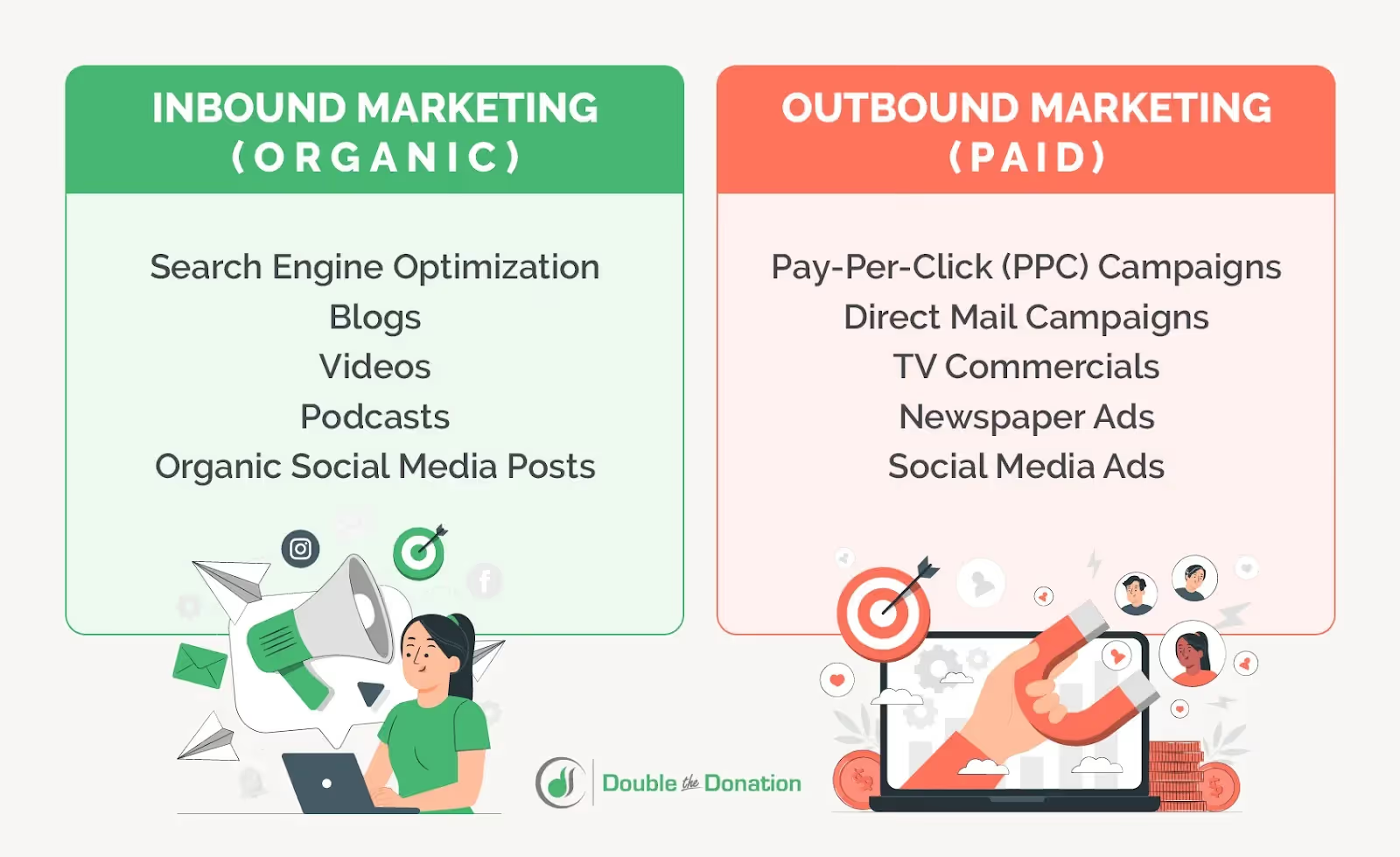
There are two types of marketing your university can leverage, and each type has a plethora of channels you can use to spread the word about your campaigns:
Remember, communication is a two-way street. You won’t just want to send messages to alumni, but to stay in touch with them over time. Ensure that alumni and any volunteer fundraisers feel free to voice their feedback or concerns.

Effective communication is about more than just an open line of communication—it’s about powerful storytelling, too. Stories encourage alumni to form stronger connections with your university’s mission, students, and impact.
As part of your marketing approach, implement the following storytelling strategies into your content:
Storytelling and powerful imagery compel users to share content with their networks, so it’s crucial that you make your storytelling components shareable. For example, you might place a “Share” button next to the content on your alumni website that makes it easy for viewers to repost an article or video to their social media channels.
In all your digital marketing materials, make it easy for viewers to take action by directing them to your donation page. Make the most of clear calls to action, prominent buttons, and QR codes across all the channels you use. To ensure shareability, use an effective social campaigning platform and the right social media platforms.
Additionally, when alumni land on your fundraising page, they should be able to take action easily. Check to ensure your donation form can be quickly completed and doesn’t require any unnecessary steps. With a compelling marketing strategy and simple form, your university can seamlessly convert alumni into dedicated supporters.
Now that you know the best marketing practices, share this information with your fundraising team, and plan your best campaign yet! Then, as donations start to roll in, be sure to show your appreciation for donors’ support and continue to engage them by offering additional involvement opportunities. The more active your donors are in your university’s activities, the more likely they’ll be to continue their support.

Adam Weinger is the President of Double the Donation, the leading provider of tools to nonprofits to help them raise more money from corporate matching gift and volunteer grant programs.
Double the Donation's robust solution, 360MatchPro, provides nonprofits with automated tools to identify match-eligible donors, drive matches to completion, and gain actionable insights. 360MatchPro integrates directly into donation forms, CRMs, social fundraising software, and other nonprofit technology solutions to capture employment information and follow up appropriately with donors about matching gifts.

4 Marketing Strategies University Fundraisers Need to Know
Lorem ipsum dolor sit amet, consectetur adipiscing elit. Suspendisse varius enim in eros elementum tristique. Duis cursus, mi quis viverra ornare, eros dolor interdum nulla, ut commodo diam libero vitae erat. Aenean faucibus nibh et justo cursus id rutrum lorem imperdiet. Nunc ut sem vitae risus tristique posuere.
%201.svg)
%201.svg)
%204.svg)


.svg)