Explore 25+ spring fundraiser ideas for schools, colleges, nonprofits, and clubs. Includes ideas by format, audience, execution tips, and campaign tools.

Almabase
Updated:
May 27, 2026

Summary
• Capitalize on spring's unique fundraising advantages, like increased donor optimism and better weather for events, to significantly boost participation and engagement across your community.
• Experiment with varied campaign formats, from outdoor community gatherings like walkathons to digital giving days, to match your budget and reach donors wherever they are.
• Tailor your fundraising approach to specific audiences; for example, class challenges effectively engage alumni, while school fairs can rally parents and students.
• Make donating frictionless with branded, mobile-friendly giving pages that offer quick checkout and easy options for recurring gifts, preventing donors from dropping off.
• Expand your campaign's reach by empowering peer-to-peer ambassadors and promoting across multiple channels like email, text, and video; this helps turn engaged supporters into fundraisers.
• Track your campaign's performance in real-time using dashboards to monitor participation and gift totals, allowing your team to make smart adjustments and meet fundraising goals as the campaign progresses.
Spring fundraiser ideas are campaigns and events that institutions run between March and June to raise money, grow donor participation, and bring their community closer together. Spring is one of the strongest fundraising windows of the year, and the reasons go beyond good weather.
Some of the best spring fundraiser ideas include:
In this guide, we’ll break down 25+ proven ideas across different formats and audiences. The goal is to help you identify ideas that align with your campaign goals and translate into measurable participation and fundraising outcomes.
Before we get into the details of each idea, it helps to understand why spring works so well for fundraising in the first place.
Spring is the perfect time for fundraising campaigns because donors are more willing to give, the institutional calendar is full of engagement moments, and the weather makes it possible to run event formats that other seasons cannot support.
Donors show up differently in spring. They are more social, more optimistic, and many have just received tax refunds. That is a hard mix to find at other times of the year. And because spring also lines up with graduation, reunions, homecoming, and end-of-year giving pushes, the ask lands when people already feel connected to your institution.
The weather plays a role, too. Outdoor events, hybrid formats, and in-person gatherings are all easier to pull off. That means your team can reach donors through real experiences instead of relying on emails and social posts to do all the heavy lifting.
The data backs this up. According to the 2024 CASE Insights Alumni Engagement Survey, 51.8% of institutions reported increased alumni engagement. A lot of that growth is tied to seasonal programming that gives people a concrete reason to show up and participate.
This is also why many advancement teams are starting to build spring into their annual giving strategy as a dedicated campaign window. When engagement is already high, pairing it with the right giving tools and campaign infrastructure can turn participation into actual donor growth. Almabase’s ‘planning a giving day’ ebook offers a guided explanation to plan a successful giving day and is a good place to get started with a spring fundraiser.
When it comes to planning, most teams start with a basic question: What format works for us? Can we do something outdoors? Should it be virtual? How much budget do we actually have?
Here are spring fundraiser ideas grouped by format to help you figure out what fits.
Outdoor fundraisers are some of the most popular spring fundraising event ideas because the weather finally lets you bring people together in person. And when people show up, they tend to give more.
Here are a few that work well outdoors:
The most important thing with outdoor fundraisers is making sure donations do not depend entirely on who shows up. If you pair your event with an online giving page, you can collect gifts before, during, and after the event. A registration-to-donation flow helps here. The person who signs up is already interested enough to give.
Cloud County Community College did this well. Their annual scholarship auction raised $67,000 and drove 3X click rates on alumni emails because event promotion and the giving ask were connected from the start. If you want to see how event and fundraising workflows can work together, the Almabase events platform is a good reference.
Virtual fundraisers take the venue and the weather out of the picture entirely. They cost less to run, they are easier to scale, and they often reach donors who would never show up to an in-person event.
Here are a few virtual spring fundraising ideas worth looking at:
With virtual fundraisers, the donor experience on the other end decides how well the campaign performs. If someone taps a link on their phone and the giving page takes too long to load or feels clunky, you lose them. The checkout needs to be quick, work well on mobile, and feel the same on every device. Teams using Almabase run their virtual campaigns by giving pages built around this kind of fast, clean checkout experience.
The other piece that matters is social sharing. When a donor can share their gift with one tap and tag someone else to give, the campaign starts reaching people your team would never have contacted on its own.
Not every spring fundraiser needs a big budget or a large team. Some of the most effective ideas are simple ones that can go from idea to launch in a few days.
Here are a few low-cost spring fundraiser ideas that are easy to get off the ground:
These ideas are a good fit for small teams with limited budgets who need to get something going quickly. The main challenge is that even simple campaigns create manual work when your team is handling receipts, tracking gifts, and following up with donors by hand.
Automating those steps changes the math. When gift receipts, thank-you emails, and donor tracking happen on their own, your team spends less time on admin and more time running the actual campaign. The Almabase eBook on eliminating inefficiencies goes deeper into how fragmented tools create extra work and what it looks like when you bring everything into one place.
Format is one way to choose a spring fundraiser. But the right idea also depends on who you are trying to reach, which is what we will cover next.
The best spring fundraiser idea for your team depends on who you are trying to reach. Schools do well with campaigns that get students and parents involved together. Colleges and alumni programs need campaigns that work across geographies and class years. Nonprofits lean on mission-driven storytelling. Sports teams and clubs benefit from the shared identity their members already have.
Here is how spring fundraiser ideas break down by audience.
Schools have a built-in advantage when it comes to spring fundraising. Parents are already involved, students are easy to rally around a shared goal, and the school calendar gives you natural moments to build a campaign around.
Here are a few that tend to do well:
School fundraisers work in the spring because students and parents are both engaged at the same time. When both groups are active, participation tends to take care of itself. Adding gamification, like progress bars and class rankings, gives people something to track and talk about.
Archbishop Riordan High School saw this play out at scale. After switching to a mobile-friendly giving experience with real-time campaign tracking, their giving day donations grew by 550%, going from $60,646 in 2017 to $338,724 in 2018. A big part of that was social giving, 20% of gifts were influenced by donors sharing their contribution and encouraging others to do the same. For more school fundraising ideas, this Almabase guide goes deeper into what works.
Spring fundraising for colleges and alumni programs looks different from school-level campaigns. Your donors are spread across geographies, they graduated at different times, and their connection to the institution varies. The campaigns that work here are the ones that make giving feel personal and tied to something specific.
A few ideas that fit this audience well:
The execution side matters a lot with alumni campaigns. Segmenting your audience by class year, location, or past giving behavior helps you send the right message to the right group. And peer-to-peer fundraising pages give your most engaged alumni a way to bring others in without your team having to do all the outreach.
Boyd-Buchanan School is a good example. Their first giving day on Almabase surpassed its goal by 201%. What made it work was that 60% of alumni signed up on the platform before the campaign even launched, and engaged users grew 5X within five months. When alumni are already active, the giving day becomes a moment to convert that activity into actual gifts. The Almabase annual fund page covers how this works in practice, and the State of Giving Days report has benchmarks from over 150 institutions.
Nonprofit fundraising in spring is less about institutional calendar moments and more about mission. Your donors give because they believe in what you do, so the campaigns that work best are the ones that make that connection feel real.
Ideas that tend to land well for nonprofits:
Storytelling is what ties all of these together. Donors want to see the impact of their gift, so building your campaign around a specific story or outcome makes the ask stronger. Reaching donors across more than one channel helps too. Running your campaign across email, text, and social at the same time gives you more chances to land the message. The Almabase multi-channel bundle is built around this idea, helping teams run coordinated outreach without managing each channel separately.
Sports teams and clubs have something most other groups do not: a strong shared identity. Members already see themselves as part of a team, which makes fundraising feel less like an ask and more like a group effort.
Ideas that work well for this audience:
Peer-to-peer fundraising is the strongest tool here. When each team member has a personal page and shares it with their own network, the campaign reaches far beyond the team itself. The competitive nature of sports also helps. Leaderboards showing which player or group has raised the most tend to push people to do more. Teams running campaigns through Almabase can set up these personal pages and leaderboards within the same system they use for tracking gifts and donor activity.
Choosing the right idea is one part of it. The next step is figuring out how to pick the best option for your specific goals and audience.
Picking a spring fundraiser idea is easier when you start with two questions: what are we trying to achieve, and who are we trying to reach?
Before picking an idea, get clear on what success looks like for this campaign.
The right idea also depends on who you are reaching and when they are most available.
Once you have the right idea picked out, the next step is making sure your campaign is set up to perform.
A high-performing spring fundraising campaign comes down to four things: a giving page that makes it easy to donate, a peer-to-peer structure that spreads the campaign beyond your team's reach, promotion across more than one channel, and tracking that shows you what is working while the campaign is still running.
Let's break down each of those.
Your giving page is where the campaign either converts or loses people. If it loads slowly, looks generic, or asks for too many steps before someone can complete a gift, donors will drop off.
A few things that make a real difference:
Almabase's giving platform is built around this kind of setup. Branded pages, fast mobile checkout, flexible gift types, and clean CRM syncing so advancement teams can focus on running the campaign instead of fixing data after it ends.
Your team can only reach so many people directly. Peer-to-peer fundraising solves that by turning your most engaged supporters into campaign ambassadors.
What that looks like in practice:
The numbers back this up. St. Ignatius College Preparatory saw an 80% increase in giving day donations by leaning into social giving, peer-to-peer fundraising, and personalized outreach. When donors can see others giving and share their own gift easily, the campaign builds momentum that your team could not create through direct outreach alone.
Email alone is not enough as most emails go unread. The ones that do get opened are generally competing with dozens of other messages in the inbox.
The campaigns that perform best use more than one channel to get the message across:
Teams using email, text, and video together through the platform have seen 3X the impact compared to running email-only campaigns.
Once your campaign is live, you need to see how it is doing while it is still running. Waiting until the campaign ends to look at the numbers means you have already missed chances to adjust.
What to keep an eye on:
Almabase gives advancement teams real-time reporting across engagement, events, and donations within the same platform. That means your team can track performance and act on it without pulling data from separate tools into a spreadsheet.
With the right idea, the right audience, and the right campaign setup in place, the last step is putting it all together.
Spring gives you a window where donors are more open, the calendar is on your side, and the format options are wide. The ideas are the starting point. The results come from picking the right campaign for your goals, reaching the right audience, and having the tools to execute it cleanly.
Whether you are running a giving day for alumni, a walkathon for parents, or a peer-to-peer challenge for students, what matters most is how easy you make it for people to give and how well you track what happens after they do.
If you want to see how that comes together in one system, book a demo with Almabase to see how it would fit your setup.
Giving days with matching gifts, auction events, and crowdfunding campaigns tend to bring in the most revenue. These formats create urgency and attract larger gifts, especially when paired with a clear goal and a deadline.
Read-a-thons, bake sales, classroom competitions, and dress-down days are easy to set up and run. They need minimal budget, get students and parents involved quickly, and can go from idea to launch in a few days.
Start by setting a clear goal, whether that is participation, revenue, or donor acquisition. Then pick a format that fits your audience and budget. Set up a branded giving page, plan your promotion across multiple channels, and build in tracking from day one.
Virtual 5Ks, online auctions, digital giving days, and livestream fundraising events all work well as virtual spring fundraisers. They cost less to run, scale easily, and reach donors who would not attend an in-person event.
Use peer-to-peer fundraising so your supporters spread the campaign through their own networks. Add leaderboards and challenges to create friendly competition. Promote across email, text, and social instead of relying on one channel alone.
Look for a platform that covers giving pages, peer-to-peer fundraising, event management, multi-channel promotion, and real-time reporting in one place. CRM integration matters too so gift data stays accurate without manual entry.
Subscribe
See how modern advancement teams bring alumni engagement and fundraising together.
Plan faster. Execute better
Explore free templates designed for alumni and fundraising teams.
.png)

.avif)
Almabase
Organizing a school fundraiser is no mean feat, and takes a lot of planning and effort. It’s also one of the most powerful vehicles to shape your community’s experience beyond just raising money. Over time, many of these events become traditions that people look forward to year after year.
Of course, turning an idea into a successful fundraiser isn't at all easy. Every school has different budgets, volunteer capacity, and fundraising goals, so what works for one community may not work for another. While there are many formats and ideas to choose from, finding the one that fits your school and the people who support it can seem just that much more overwhelming.
This blog brings together more than 25 school fundraising ideas, organized by type so you can quickly find the ones that make the most sense for your community. Along the way, you'll find real examples from schools and tips for organizing similar events, so you can put your own spin on these ideas.

A school fundraiser is an organized campaign or event run by a school, PTA/PTO, parent group, or student organization to raise money for a specific goal, which usually looks like buying new equipment, paying for field trips, extracurricular programs, facility improvements, or scholarships.
Modern school fundraisers today look very different from the humble bake sale: today's campaigns use digital giving, matching gifts, text-to-give platforms, and peer-to-peer fundraising to reach supporters, while also experimenting with fun new formats.
Today, fundraisers help schools in many ways including:
Successful fundraisers do raise money but they also support strong community bonds and remind supporters why their school matters.
These are low-lift ideas which require minimal planning and coordination but deliver dependably. They're perfect for filling gaps in your annual fundraising calendar, bringing novelty to your fundraising strategy with new formats, and are also launched relatively quickly.
Partner with a local restaurant that agrees to donate 10-25% of sales during a designated evening when customers mention your school or present a flyer or invitation. The restaurant handles the food and service and you bring in foot traffic for the evening.
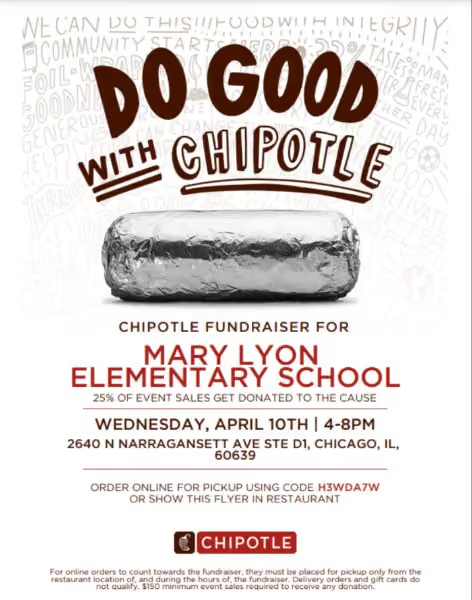
Mary Lyon Elementary School in Chicago partnered with Chipotle for a fundraising night on April 10, 2024, raising funds with minimal effort on the school's part. It largely looked like announcing the partnership, coordination and sending out an email reminder. Chipotle rang up sales from those who ordered and used a dedicated code in the designated location, and donated 25% of the sales.
Why it works: It requires very little set up and comes together quickly. It brings in traffic for the partner restaurant and builds giving into something attendees were going to do anyway.
💡 Restaurant partnerships are among the lowest-friction fundraisers you can run. You can build relationships with 2–3 local spots and rotate quarterly for recurring revenue.
For schools that already have an auditorium, organizing a school-wide tournament is an easy way to generate funds.

The 5th Grade Committee in Hendrick Hudson School District (Montrose, NY) organized a successful kickball tournament fundraiser on January 31, 2025, held in the Hendrick Hudson High School Dome. Multiple grades joined in, making it a huge success.
To organize something similar, you can begin with 6-10 teams, where each pays an amount to enter the tournament. Each match gives rise to multiple fundraising moments including tickets, concessions and merchandising. You can partner with local sellers for the latter.
Why it works: For very low overhead, it generates many fundraising moments and creates a high-spirits moment for all involved: parents, students and local businesses.
💡 To elevate the experience and ensure attendance, you could reach out to alumni athletes who might want to participate.
Create branded school apparel (hoodies, t-shirts, hats, stationery) and sell through an online platform or pre-order system on your school website. Students, parents and alumni browse an online catalog, pre-order their size, and the vendor ships directly to your school, from where buyers pick it up. You could even host sales each season (fall, winter, spring).
Why it works: It builds school spirit year-round, minimizes delivery-related expenses, and delivers results, since students and alumni are generally interested in school merchandise.
💡 You can use these sales to promote budding designers in your student body, by featuring their art on school merch. This brings an element of exclusivity and appreciation to the campaign and builds goodwill.
Hold a friendly competition between grades or classes to see who can bring the most coins or bills. Set up labeled jars in the main hallway (one per grade) and update totals daily or weekly on a poster. The winning grade gets a prize (extra recess, pizza lunch, or bragging rights).

Why it works: The competitive aspect keeps energy high, involves all students without much effort, and teaches giving habits early. It’s also a visibly exciting goal to work together towards for the grades.
💡Take this a step further by pairing the prize a secondary incentive ( for instance, everyone who brings money gets entered into a raffle) to boost participation beyond the classroom winners.
In this staple format, students and families bring baked goods to sell them at school events, outside grocery stores, or during lunch.

Why it works: For the low-lift set up of a table with homemade brownies, cookies, and cupcakes, it brings together the community effortlessly. It can be run during a school event or outside a location that gets a lot of footfall on a Saturday morning.
💡Stack your bake sale alongside another school event (game day, book fair) to leverage existing foot traffic. You could even make it a weekly or monthly affair if the format resonates with your community.
Have students pay a certain amount ($2-$5) to wear pajamas, sports jerseys, themed outfits, or other fun themes on designated days. It’s a fun idea that gets students excited and takes very little outside of verbal and email coordination, to set up.
Why it works: It has a remarkably low barrier to entry since students will be able to use mostly things in their closet to participate. It gives them something to look forward to, keeps spirits high and photos are shareable on social media.
💡Themed dress-up days (like "90s day" or "crazy hair day" ) drive higher participation than plain pajamas.
These events require more planning and upfront effort but deliver significantly higher returns. These can be built into your annual fundraising calendar as anchor events.
In Fun Runs, students collect pledges based on the number of miles or laps they complete during a school-wide run or walk. Alternatively, supporters can also pledge a fixed amount if participants finish the course without stopping.
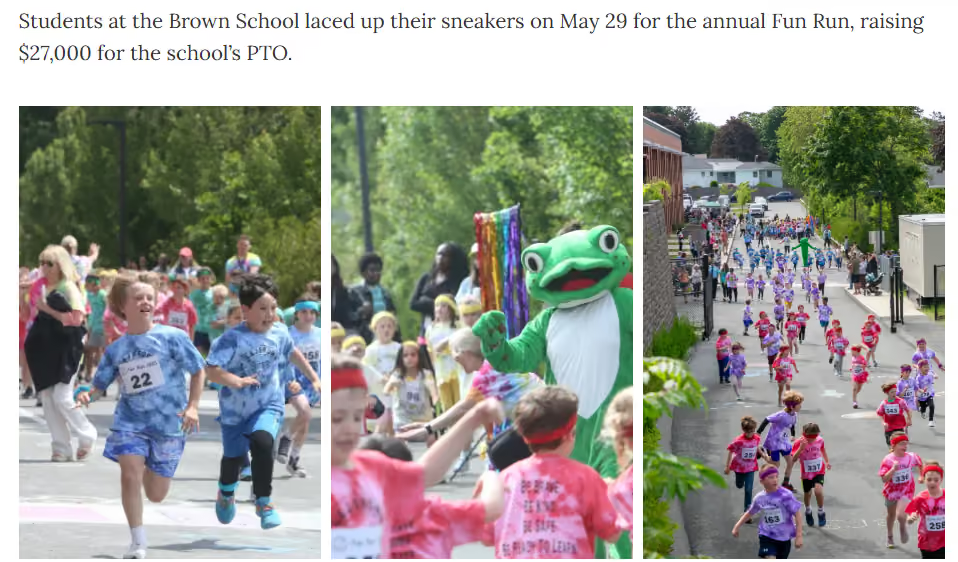
Brown School in Massachusetts hosted its annual Fun Run in 2025, raising $27,000 with the help of pledges from community members, local businesses, and alumni.
To organize something similar, set up a simple route around your campus and have students collect pledges on the days leading up to the event. On the day of, invite families and staff to cheer participants on and add fundraising opportunities through refreshments or school merchandise.
Why it works: It combines fundraising with physical activity, involves the entire student body, and gives your community an easy way to support students by sponsoring a child, grandchild, or favorite teacher.
💡 Set up an online peer-to-peer fundraising page so alumni who can't attend can still pledge and support participants from anywhere.
Similar to the Fun Run format, students collect pledges based on academic milestones such as books read, pages completed, minutes spent reading. Weave in friendly class competitions and small rewards help keep motivation high throughout the challenge.

Edgewood Elementary in Scarsdale, New York held its first Read-A-Thon in 2024. Held annually in March, this fundraiser has since raised more than $27,000, showing how fundraising can naturally tie into school routines.
Why it works: It reinforces academic goals while giving students an active role in fundraising. The impact is also easily observable, making donors more likely to participate.
💡 Consider running your Read-a-Thon during National Reading Month in March, when schools are already focused on reading and alumni may be especially eager to support the initiative.
A student talent show, concert, theatre production, or comedy night is a great fundraising opportunity with ticket sales, concessions, and community support.
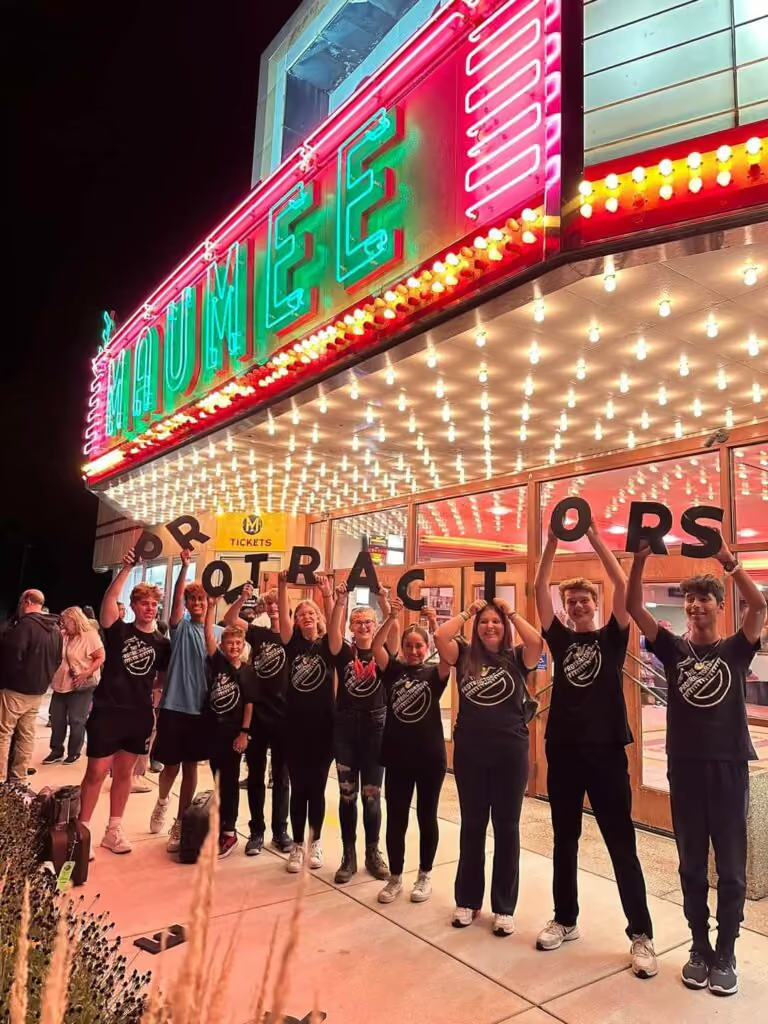
Teachers and students in Perrysburg, Ohio hosted a benefit concert that raised more than $4,000 for the district's Full Experience Fund, bringing the community together around student performances.
To organize something similar, invite students to audition and plan an evening of performances for families, alumni, and the wider community. Charge for admission and set up concession stands selling snacks and drinks before the show and during the interval.
Why it works: It celebrates student talent while creating multiple fundraising opportunities through ticket sales and concessions. It also gives families and alumni another reason to reconnect with the school.
💡 Record the performance and offer a virtual viewing option for alumni and supporters who can't attend in person.
Instead of a traditional bake sale, sell seasonal or specialty food items such as fruit boxes, chocolate, cookie dough, or candy through a pre-order campaign. Students collect orders, and the school earns a percentage from every sale.

Dow High School's music program raised more than $51,000 through its annual fruit sale during the 2025-26 school year, showing how a well-established seasonal fundraiser can generate significant revenue. Each student sold a $35 dollar box of fruits (navel oranges, grapefruits, tangerines) that families, friends and alumni bought as holiday gifts.
To organize something similar, partner with a vendor and ask students to collect orders from family, friends, and neighbours over a few weeks. Schedule deliveries around the holiday season, when many people are already buying gifts or stocking up on fresh produce.
Why it works: Seasonal food is easy to sell, and the fundraiser can become something your community looks forward to each year.
💡 Choose a vendor that handles packing and distribution, so your team can spend its time promoting the fundraiser instead of coordinating deliveries.
Turn your school grounds into a day of games, food, entertainment, and family activities. Revenue can come from admission tickets, game booths, food sales, and vendor partnerships.
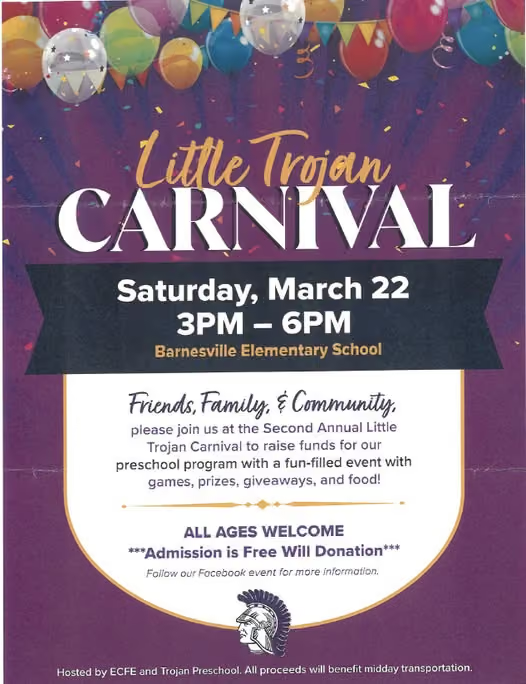
The Annual Little Trojan Carnival, hosted by Barnesville ECFE and Trojan Preschool, has become a community tradition by bringing together multiple fundraising activities in a single event.
To organize something similar, you need a host of easily set up, classic carnival games like the ring toss, face painting, and dunk tanks, alongside food stalls or local food trucks. You can also invite local businesses and community organisations to rent booth space, creating another source of income.
Why it works: Instead of relying on a single fundraiser, it brings together several revenue streams while creating a memorable community event that families look forward to each year.
💡 Start planning a few months in advance and partner with local businesses wherever possible to reduce costs and secure vendors early.
Host a trivia night or board game tournament where teams pay an entry fee to compete. To this, add prizes for the winners and refreshments for sale to create additional fundraising opportunities.
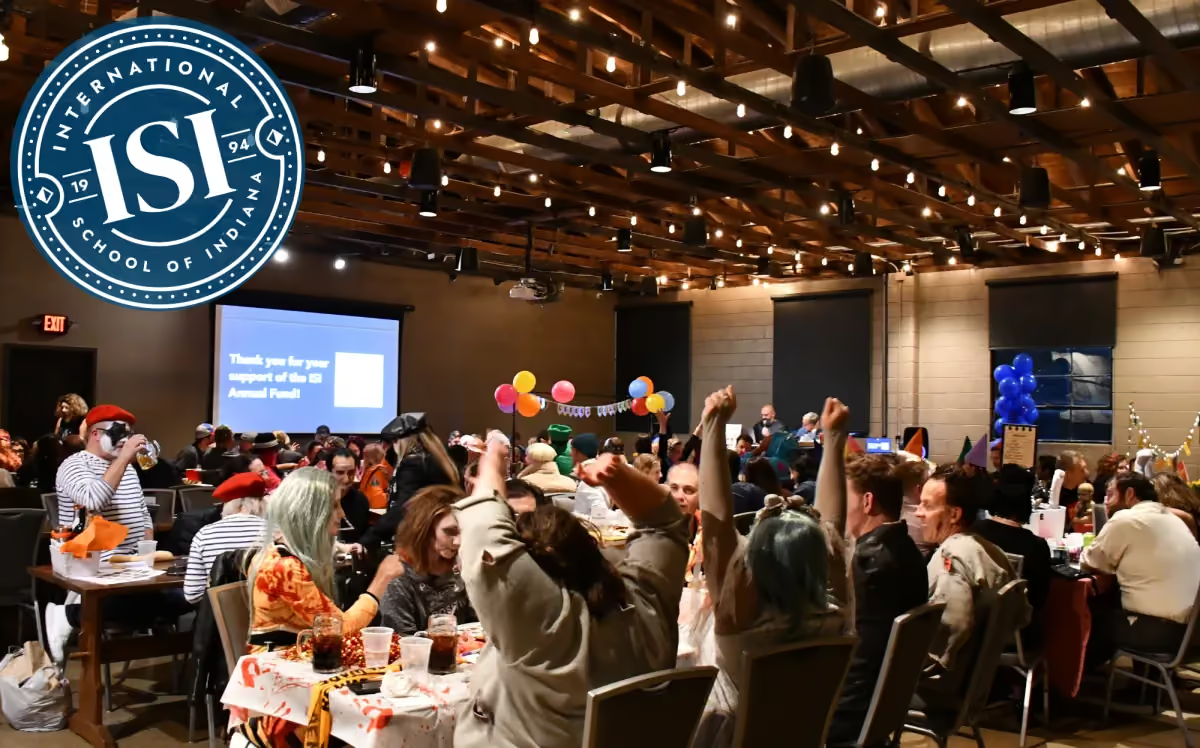
The International School of Indiana hosted a Trivia Night in 2024 that raised nearly $9,000 for its annual fund, showing how a simple evening event can attract strong community participation.
To organize one at your school, invite teams of parents, alumni, staff, and older students to compete across a mix of fun and accessible topics. Offer a small prize for the winners and keep refreshments available throughout the evening.
Why it works: It has relatively low setup costs, appeals to a wide audience, and creates a relaxed social event that encourages people to stay, compete, and support the school.
💡 Schedule it on a Friday or Saturday evening and include a few school-themed questions to bring back memories for alumni without making the quiz too difficult. A nostalgia angle built into the event might just increase willingness to give.
These ideas are especially well suited to PTAs and parent groups. They work well on their own but also alongside larger school fundraising campaigns.
A PTA walk-a-thon is a good way to bring families together while raising money for the school. Students collect donations in the weeks leading up to the event before walking laps around the school with classmates.

Sandy Hook Elementary School's PTA in Connecticut raised around $27,000 through its annual Walk-a-Thon in 2021. Students worked towards school-wide fundraising goals, unlocking rewards like pajama days, a homework-free week, and even a relay race where teachers dressed in costume.
For your own version of this, encourage students to collect donations ahead of the event and create fundraising milestones that the whole school can work towards. On the day, invite parents to cheer from the sidelines or walk alongside the students to make it a celebration for everyone.
Why it works: The fundraising spirit is brought alive well before event day, and shared goals encourage every classroom to participate. The celebration at the end gives the whole school something to look forward to.
💡 Instead of rewarding only the top fundraisers, set school-wide milestones with prizes everyone can enjoy. It keeps more students involved throughout the campaign.
Host an evening for parents with a silent auction, refreshments such as wine and cheese, and allow time to socialize. Funds would be raised through ticket sales, auction items, raffles, or combination of all three.

Lakewood Elementary School hosts a silent auction each spring, with the proceeds supporting the school through its PTA.
To organize something similar, ask local businesses and school families to donate auction items or experiences, and invite parents to an evening at the school or a nearby venue. You can also sell refreshments or raffle tickets to raise additional funds.
Why it works: It gives parents a chance to connect while supporting the school. Auction items donated by local businesses and families also help keep costs low.
💡 Include a segment to auction student artwork or handmade crafts in the evening. They're very popular and among the top sellers in a school auction.
Ask families to donate gently used books, toys, clothes, furniture, and household items, then organize a community yard sale with all proceeds going to the PTA or school.
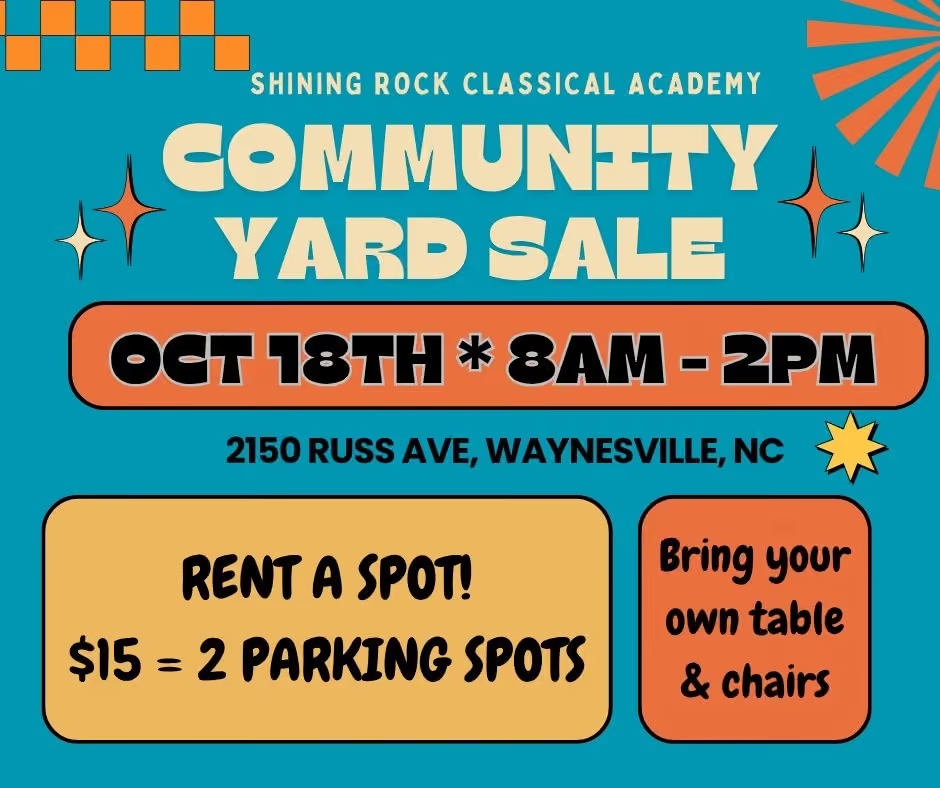
Shining Rock Classical Academy held its first community yard sale in 2025, turning donated items into a successful fundraiser for the school.
To organize your own yard sale, collect donations over a few weeks, ask your PTA to sort and price everything in advance, and hold the sale on a weekend when families are most likely to attend.
Why it works: Most of the items are donated, so costs stay low while the event brings families and neighbors onto campus.
💡 Start promoting the sale a few weeks ahead through neighborhood groups and school social media pages to attract more buyers.
Partner with a local organization or retailers to sell items. These could be gift cards or regular household items. The draw is that families get to purchase common items they were already planning to use, and the PTA or school gets to keep a portion of each sale.
To create your own version of this, partner with a gift card provider or local businesses and offer popular retailers that families are likely to shop with throughout the year. Parents can order online or through the school, making it easy to run more than once.
Why it works: It is simple to organize, requires very little storage or planning, and works because families are purchasing something they already intended to buy.
💡 Run gift card sales ahead of major holidays when many families are already buying gifts, making it an easy addition to their shopping.
These events scale easily and help you reach supporters who cannot attend in person. Given their digital nature, they integrate readily with matching gift programs for amplified results.
Instead of organizing a physical event, rally families, alumni, and the local community around a specific fundraising goal through an online campaign.

Beechen Cliff School's PTA in Bath, UK raised £20,000 (around US$27,000) in just one month through a crowdfunding campaign to improve mental health services, school facilities, and technology. The PTA promoted the campaign through weekly parent emails, QR codes around the community, local press coverage, and support from alumni, helping them reach their goal within weeks.
To organize something similar, start with a clear project that donors can easily understand, then promote it consistently across your school website, email newsletters, and social media. Share regular updates throughout the campaign so supporters can see how close you are to your goal.
Why it works: Supporters can give from anywhere, and smaller donation amounts make it easier for more people to participate. Regular updates also help maintain momentum throughout the campaign.
💡 Invite alumni to become campaign ambassadors by sharing the fundraiser with their own friends and colleagues. Personal recommendations often reach donors you wouldn't find otherwise.
Give supporters an easy way to donate by text message. Set up a text-to-give campaign through a fundraising platform and promote the keyword wherever your school communicates with families and supporters. Include it on event signage, email newsletters, social media posts, and printed materials so people can donate whenever they're ready.
Why it works: It removes barriers to giving by letting people donate in just a few steps from their phones. It also works well alongside other fundraising campaigns and events.
💡 Feature your text-to-give information on email signatures and event programs so supporters always have an easy way to give.
An online fundraising classic, this is a great way to mobilize your community. Create individual fundraising pages for students, teams, classrooms, or clubs, then combine every donation toward one larger school goal.
For example, you could ask each participant to personalize their fundraising page with a short message about why they're raising money, then encourage them to share it with friends and family. As donations come in, celebrate milestones and recognize top fundraisers to keep everyone motivated.
Why it works: Every participant reaches a different network of supporters, helping your campaign grow far beyond your immediate school community. Friendly competition between teams or classes also keeps the momentum going.
💡 Give participants an email or social media template so they can start sharing their fundraising page with little effort.
Offer parents, alumni, and other supporters the option to make a recurring monthly gift instead of a one-time donation. You can build this into your annual fundraising strategy: create a giving page with a few suggested monthly amounts and explain what each level helps fund. Once supporters sign up, donations will follow.
Why it works: Monthly giving creates predictable support for your school while making it easier for donors to contribute smaller amounts over time instead of making one large gift.
💡 Show supporters what a monthly gift can accomplish. For example, explain how $25 a month could help fund classroom supplies, field trips, or student scholarships.
These ideas lend themselves to the capabilities of high-school students as they grow up and take up more responsibilities.
Give high school students the opportunity to plan and run their own fundraiser, whether it's a car wash, clothing drive, or social media campaign. With a little guidance, they can take ownership of everything: promotion, invitations, partnerships and budgeting.
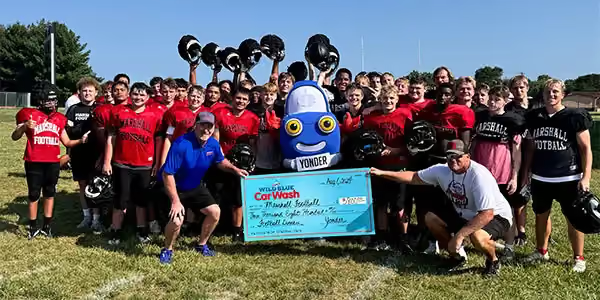
On July 27, 2024, the Marshall High School Football Team raised $3,800 at a fundraiser hosted by Wild Blue Car Wash. Wild Blue Car Wash donated 50% of their wash sales to the team, while team members and volunteers also sold refreshments and offered additional services like vacuuming and hand-drying for tips.
By allowing students to partner with local shops and businesses, you will be raising money for your school and teaching them the value of giving back to the community from a young age.
Why it works: It raises money while giving students real experience in planning, teamwork, and leadership. Older students are also more confident taking on larger projects and interacting with the community.
💡 Let students make the key decisions wherever possible. The more ownership they have, the more invested they'll be in making the fundraiser a success.
Turn student projects into a community event by inviting families, alumni, and local supporters to explore STEM exhibits, research projects, and other academic competitions. Charge admission or pair the event with another fundraiser, such as a silent auction.
To set this up, assign booths to students where they can demonstrate robotics projects, engineering prototypes, coding apps, or science research. As visitors move from exhibit to exhibit, students explain their work and answer questions, giving everyone a closer look at what they're learning in the classroom.
Why it works: It celebrates student achievement while giving families and alumni a reason to visit campus. It also connects fundraising with visible impact.
💡 Invite alumni working in STEM fields to attend as judges, guest speakers, mentors or even collaborators. Their participation adds another reason for families to attend.
These are your out-of-the-box ideas which have yielded results in fundraisers and are also easily put together.
Collect gently used shoes, electronics, aluminum cans, or other recyclable items, then partner with a local organization that purchases or recycles them. It's an easy fundraiser that also encourages students to think about sustainability.

Many schools across the U.S. have successfully run shoe drives, using them to raise money while teaching students about recycling and environmental responsibility. USAgain, for example, is an organization that sets up bins around campuses to collect these clothing and shoes and pays for every pound of donated items collected.
Why it works: It has very little upfront cost, requires minimal selling, and gives families an easy way to support the school while getting rid of items their kids have outgrown or no longer need.
💡 Work with a recycling partner that handles pickup so your volunteers only need to collect and sort donations.
Set up a book fair in your library or gym and partner with a book vendor to sell new books over several days. You can also include author visits, reading events, or family literacy nights to bring more people through the doors.

To make this format your own, start with scheduling the book fair over several school days so students can visit with their classes as well as after school with their families. If possible, add an evening event with a local author or guest reader to encourage even more visitors.
Why it works: It supports literacy, which is a cause that naturally generates interest. A vendor partnership also makes inventory much easier to manage.
💡 Hold your book fair during the back-to-school season or National Reading Month, when books are already top of mind for many families.
Host a pancake breakfast, chili cook-off, or family dinner and invite the community to enjoy a meal together. Charge per plate and keep the menu simple so volunteers can prepare and serve everything with ease.
To make this a success, choose a weekend morning or evening and recruit parents, staff, and older students to help cook, serve, and clean up. Pair the meal with another school event if you can, such as a game, concert, or open house, to encourage more families to attend.
Why it works: Sharing a meal naturally brings people together, and a volunteer-run menu keeps costs and efforts low, making the experience enjoyable for all involved.
💡 Check with local grocery stores or farms if they want to donate ingredients or offer discounts. Many are happy to support school events.
Turn the wealth of skills already available in your school community into a fundraiser by offering online classes in subjects like test prep, coding, acting, creative writing, music, or study skills. Invite teachers, alumni, or older students to lead short online courses and charge a registration fee. These live online sessions make it easy for families to participate from anywhere, and recordings can provide value for those who can't attend.
Why it works: It builds on expertise your school already has without requiring a venue and offers a platform for the community to show off their expertise and share it. This naturally builds credibility, which goes a long way.
💡 Promote classes beyond your own school community. Alumni and families from neighboring schools may also be interested in joining.
Open a small holiday gift shop where students can buy affordable gifts for family and friends before occasions like Thanksgiving, the winter holidays, Mother's Day, or Father's Day. Stock a selection of inexpensive gifts such as mugs, journals, candles, or handmade items, then open the shop during lunch periods or after school for a week.
Why it works: It gives students a fun shopping experience while raising money through items they’ll be able to afford.
💡 Include handmade gifts created by students or local artisans to make the shop feel more unique while supporting your wider community.
Every school community is different, and the fundraiser that works for one may fall flat for another. The key is to choose an approach that feels natural to your audience and achievable for your team. Here are a few things to keep in mind:
At this point, you’re not choosing from a long list anymore. You’re down to options that fit your audience, your timing, and your capacity, and that’s what you move forward with.
You’ve got the ideas lined up, and the D-day is near. But even the best idea won’t raise a dollar if people don’t know about it. This is where promotion comes in. Here are the best practices for how to spread the word and get the community genuinely excited to participate.
When promotion is planned this way, you don’t have to rely on one big push. It builds steadily through consistent, well-timed touchpoints.
Fundraising, especially at the school level, requires a great emotional connection. This means that school fundraisers have more people turn up when it starts to feel like something people are running with you rather than for you. That difference usually comes from how you involve them.
Here’s what helps make that happen:
Even the best fundraising ideas can fall short if they’re not executed thoughtfully. Schools often make the same mistakes, and avoiding them can save your team time, energy, and donor goodwill-
School fundraising can be challenging as it often involves complex planning and a lot of time and resources. But having the right fundraising platform that aligns with your mission and your capacity to deliver can be a game-changer. Almabase helps you do exactly that.
It provides an integrated platform designed specifically for advancement and alumni relations teams. You get purpose-built solutions that simplify your workload, including:
Almabase helps address all the challenges from infrastructure to logistics, so your team can focus on building authentic relationships and driving long-term support.
Successful school fundraising requires a thoughtful approach that considers your community's unique interests and capacity. The most effective fundraisers not only generate necessary funds but also build school spirit, engage families, and create lasting traditions that strengthen your educational community.
If you’re a school on the lookout for a partner for your next fundraiser, do give us a shout! We’d love to help 🤗
A school fundraiser is an organized campaign or event run by a school, PTA/PTO, parent group, or student organization to raise money for a specific goal. This could be equipment, field trips, facility improvements, extracurricular programs, scholarships, or emergency support.
Some of the most reliable school fundraisers include fun runs, bake sales, car washes, silent auctions, spirit wear sales, book fairs, restaurant nights, and text-to-give campaigns. The best choice depends on your school’s budget, volunteer capacity, and the kind of community participation you're hoping to create.
Fun runs and fitness challenges typically raise the most, often bringing in $5,000–$30,000+ depending on participation and constituent size. Silent auctions, peer-to-peer campaigns, corporate challenge fundraisers, and product sales can also generate anywhere from $2,000–$20,000+, especially when paired with matching gift programs or strong community support.
.avif)
25+ Proven School Fundraising Ideas That Actually Work (2026)
Lorem ipsum dolor sit amet, consectetur adipiscing elit. Suspendisse varius enim in eros elementum tristique. Duis cursus, mi quis viverra ornare, eros dolor interdum nulla, ut commodo diam libero vitae erat. Aenean faucibus nibh et justo cursus id rutrum lorem imperdiet. Nunc ut sem vitae risus tristique posuere.
Almabase
July 31, 2025
12 minutes
Picture the basket nobody glances at twice - shrink-wrapped, full of gift cards to popular stores and individually wrapped chocolates. It’s sitting next to a hand-packed wooden crate with a local chef's sauce, a pottery mug from a neighborhood studio, and a card that reads "Saturday Morning Trek in Our City." Both probably cost the same to assemble, but only one of them starts a bidding war.
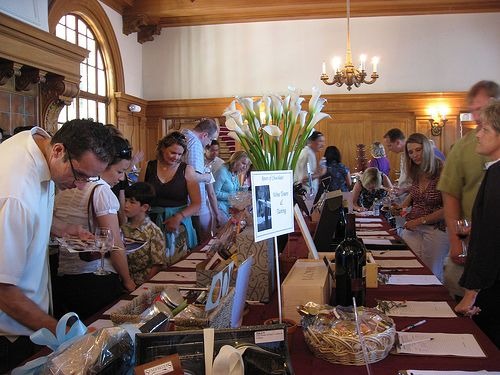
Research shows that experience-based and thoughtfully curated auction items raise 20 to 30 percent more than generic physical goods. This guide is for fundraisers putting those baskets together, whether for a school event, nonprofit gala, alumni weekend, or a community fundraiser. Below, you'll find 18 silent auction basket ideas, each with sourcing suggestions and best-fit audiences.
Baskets are easy to assemble: local businesses say yes, item prices are flexible, and a good theme easily travels from a school event to a nonprofit gala. Community-sourced items consistently out-earn generic catalog items, because a "Spa Day at [local wellness center]" carries weight a generic "$50 massage voucher" won’t. Local sourcing also gives you the flexibility to tailor baskets to different audiences, such as parents, alumni, donors, teachers, and local supporters.
There are maybe ten seconds before someone at the bidding table moves on. In that window, three things do the most work.
A bidder scans the table looking for something that catches their eye. The faster your basket answers "who is this for and what does it feel like to receive it," the better. BidBeacon recommends including a few items that clearly fit your theme, plus one standout piece that's valuable enough to drive competitive bidding.
Experience-based items raise 20 to 30 percent more than physical goods because winning one feels like getting access to an experience rather than collecting another mug for your crowded kitchen shelf. A cooking class, a fitness studio pass, a photographer session: these become the centerpieces that give the whole basket its pazazz.
The opening bid sets expectations in both directions - too low, and the basket reads as low-value; too high, and it doesn't get an early bid to anchor against. LuxGive recommends starting at 30 to 50 percent of fair market value, which tends to invite that first bid and let competitive psychology take over from there.
The audience here usually falls into a few predictable groups: parents who want a special memory from the year for their kids, community members drawn to anything that helps the school, and grandparents who will outbid everyone for something their grandchild's class made together.
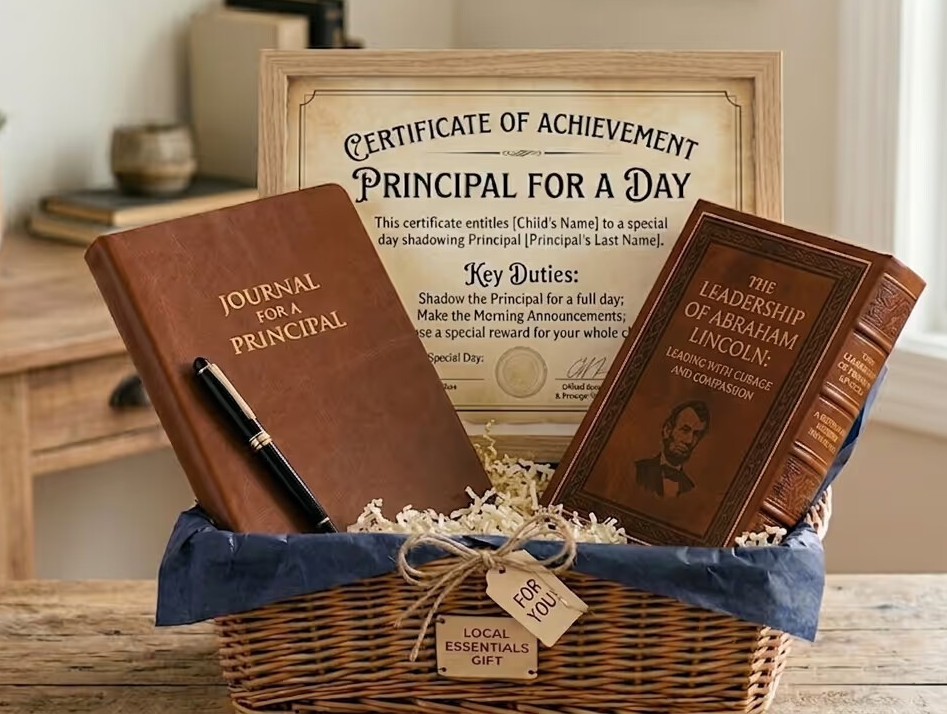
Principle for a day - the experience basket. This basket offers something that doesn't exist outside your school: a certificate for the winning child to shadow the principal for a day, make morning announcements, and choose a reward for their class. That specificity is what drives the bid; you can’t buy this at Staples.
What to include:
Best for: Elementary school fundraisers. For parent bidders who want to give their child a story to tell from the school year.
Pro tip: The experience basket can be adapted for any staff role - librarian, PE coach, cafeteria supervisor, and you've got a whole new basket
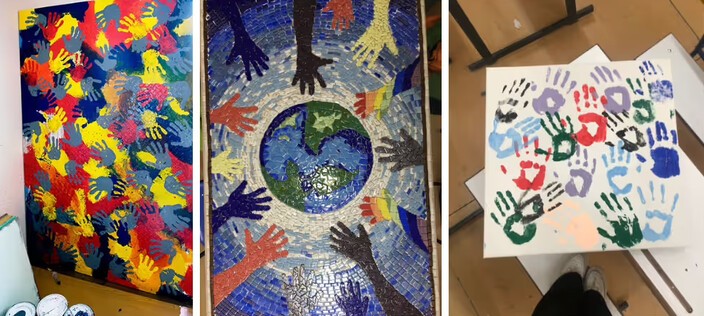
Every student in a class contributes to a collaborative piece of art: a painted canvas, a mosaic tile, a hand-stamped painting. The winning bidder takes home something that exists nowhere else on earth. The backstory of this project is the whole pitch.
What to include:
Best for: K-8 schools; parent and community bidders; particularly impactful at schools with arts programs.
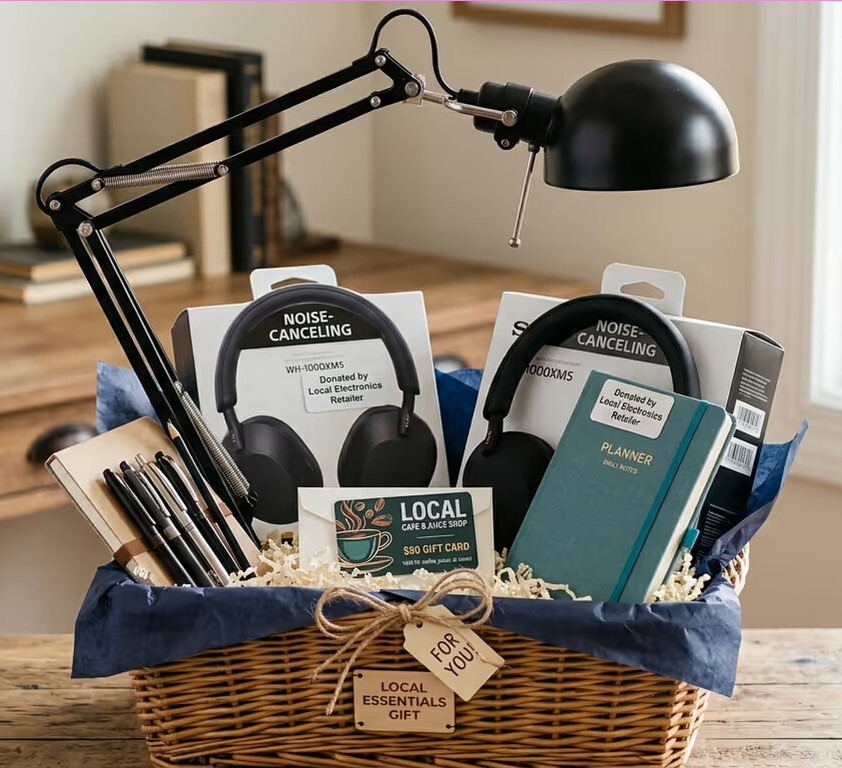
For middle and high school fundraisers, the baskets that do well usually connect to the specific stage of school life the kids are in. This one speaks to the parent who is already quietly thinking about what the next few years will look like.
What to include:
Best for: Middle and high school audiences, particularly strong with parents of juniors and seniors.
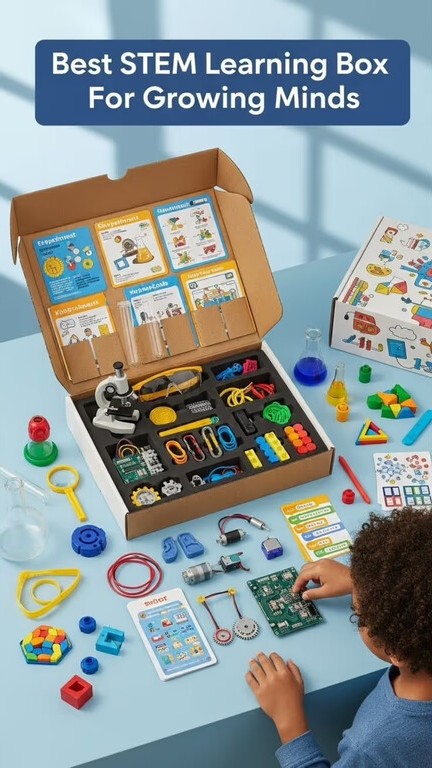
A great option for K-8 audiences where the bidding energy comes from parents who want to buy something that’s genuinely interesting for their kids and also directly useful for their school curriculum. The subscription box shows ongoing value, which makes the basket feel worth more than the individual items inside.
What to include:
Best for: K-8 fundraisers and STEM-oriented parent communities.
Pro tip: Reach out to STEM subscription companies directly and share your school’s 501(c)(3) information. Many do have donation or education-support programs that respond faster than general customer-service enquiries.

Before the event, survey your faculty. Ask what they'd actually want, not what a planning committee assumes teachers want. Build the basket from the real answers, and mention the source in the basket description at the event with a bit of humor. That extra effort and the funny detail give the basket an edge that a generic “teacher appreciation” basket doesn’t have.
What to include:
Best for: The Whole school community; families who want to give something meaningful back to their child's teachers; best at beginning-of-year and end-of-year events.
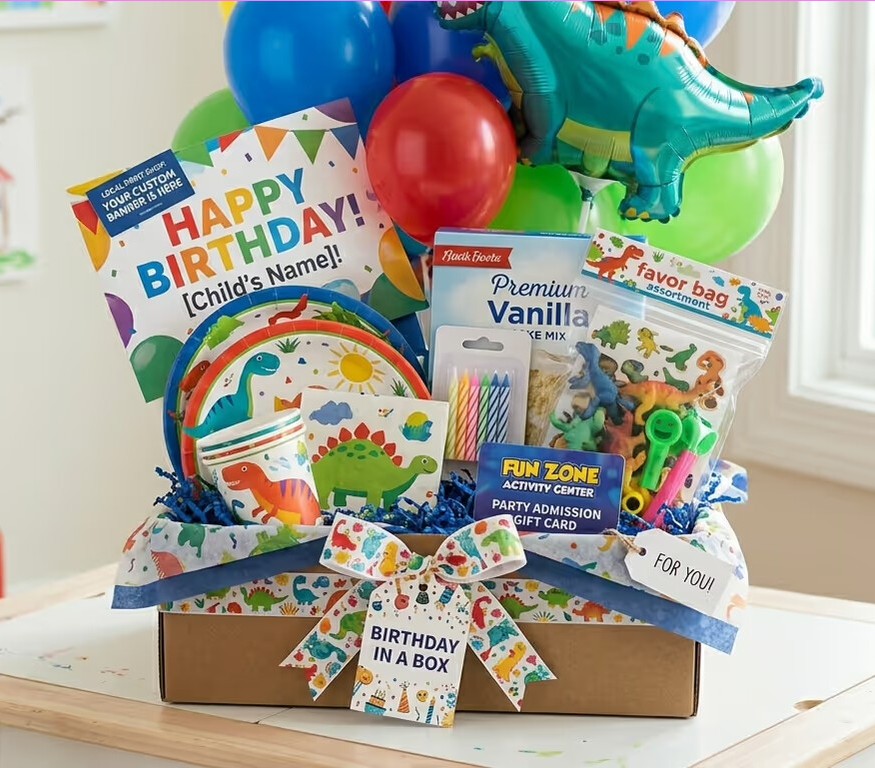
For parents of young kids, planning a birthday party is a yearly stress test. This basket takes away at least some of that stress, if not all. Any parent who’s been through it will recognize exactly what it offers.
What to include:
Best for: Elementary school audiences with young families; best at back-to-school and spring semester fundraisers.
Pro tip: If your parent community includes someone who does event planning or parties, ask them to donate a coupon. It adds real value and puts their name in front of an audience that will likely need their services soon.
These audiences have typically attended many of these events. They’ve seen all the standard basket types, and they’re not likely to get excited about anything that feels like a placeholder. The ideas below are specific - in theme or in how they’re put together. They will feel fresh in a room full of experienced donors.

A single dinner gift card is appreciated. Twelve of them - one per month, to a rotating set of well-regarded local restaurants is something people will actively try to win.
What to include:
Best for: Couples, young professionals, busy parents who'd genuinely use a monthly reason to get out; strong at galas and alumni events.
Pro tip: Approach the restaurants together, framing the "Year of Date Nights" as a package. Restaurants are more generous when they know they're featured alongside other well-regarded local spots. They're part of a curated package and not just donating free dinners.

Cooking classes with a local chef consistently land among the higher-bidding items at nonprofit events. Mainly because they're hard to arrange on your own. Winning this will feel more like an invitation than a purchase.
What to include:
Best for: Foodie donors, couples, professional communities; strong at spring and fall galas.

The version of this basket that wins bids goes well beyond a standard spa basket. The difference comes down to specificity and quality. For example, a membership to a local studio instead of a generic coupon, high-end skincare instead of a department store brand. Basically, items that come together around an idea of what it really means to relax and restore yourself.
What to include:
Best for: Professional donor communities; women's organizations; health-focused nonprofits; best at spring galas.
Pro tip: Approach the fitness studio as an event wellness partner and not just as a basket donor. Studios are often actively looking for community partnerships.
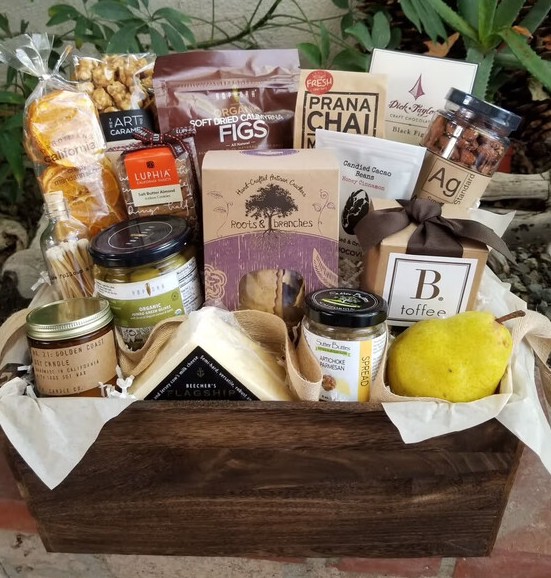
Every item in this basket comes from a local artisan or small producer, which means every item comes with a story. At a gala full of experienced donors who have bid on baskets after baskets of mass-produced items, something handmade and artisanal will hit the spot.
What to include:
Best for: Community-centered nonprofits; arts organizations; for any event/community with a "buy local" ethos.
Pro tip: Source the whole basket at a single local artisan/farmers market. You build multiple donor relationships in one trip, and "every item in this basket was made in our community" becomes its own selling point at the table.
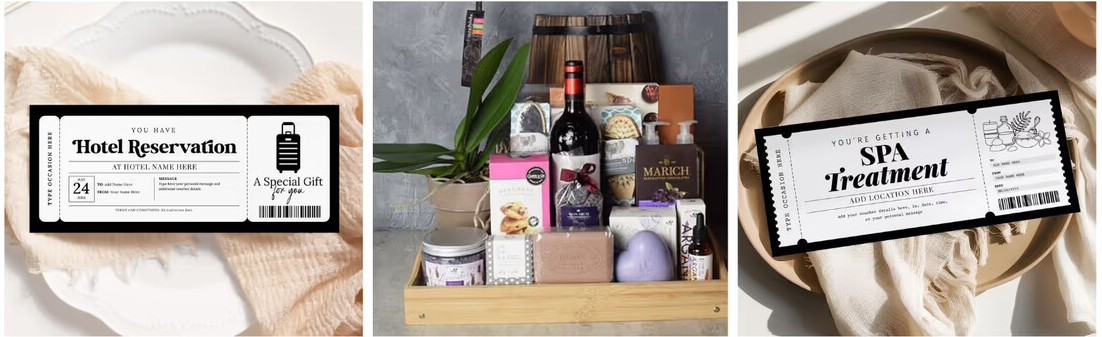
The version of this that actually draws bids makes the weekend feel fully formed and ready to go. Clear, specific details give bidders an immediate sense of the experience, so they can picture themselves already there and relaxing.
What to include:
Best for: Professional donors; couples and singles alike; best at galas and alumni events where attendees are busy professionals who need a break but won't take one unless it's handed to them.
Pro tip: Boutique hotels are significantly more open to donation partnerships than chains. Community visibility is a genuine advantage for them in a way that it isn't for national brands. You can make that part of your pitch.
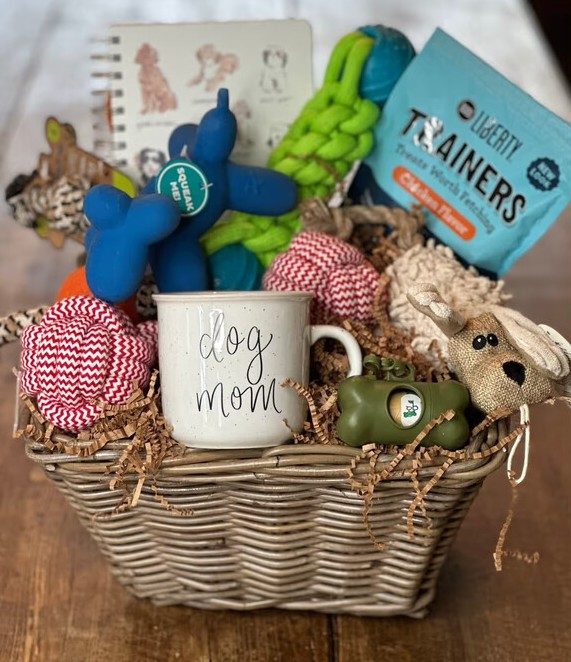
Pet owners are a loyal and enthusiastic group at auctions, but they’re often underrepresented at the bid table. A well-made pet basket can quickly become one of the most talked-about items in the room and spark the kind of competitive bidding that draws a crowd.
What to include:
Best for: Community nonprofits; animal rescue organizations; any event where a meaningful portion of the room might own pets.
These ideas don't belong to one event type. With light adjustments, they move from elementary school auctions to nonprofit galas to alumni events.

Seasonal relevance creates a different kind of urgency at the bid table, the sense that this basket is specifically for right now.
What to include:
A fall version can have:
A spring version can have:
Best for: Any event timed to a season; works for family audiences and professional donors alike.

This basket appeals to professionals who travel often - a group that shows up in strong numbers at galas, alumni events, and tends to bid on things they’ll actually use. The right mix of items makes frequent travel feel easier while still feeling a bit indulgent.
What to include:
Best for: Big galas, alumni events; Events with a strong base of frequent travelers.
Pro tip: An airport lounge day pass is a relatively low-cost addition that feels genuinely valuable to anyone who spends a lot of time in airports.
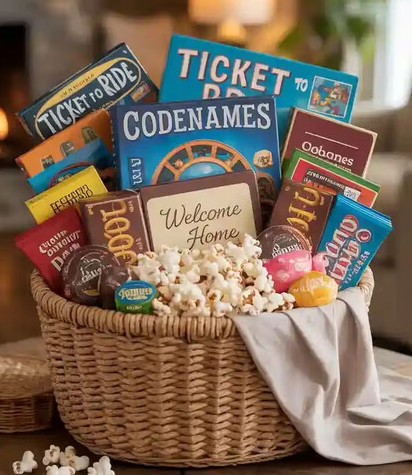
This basket works across age groups. It brings together everything needed for a relaxed, social evening, and the specific game choices help the basket feel thoughtful rather than generic.
What to include:
Best for: Family audiences at school events; younger professional donors at nonprofit galas; mixed-age events.

This buzz about this basket starts before the event. Poll your community through a parent newsletter, email list, or social media and ask what they’d most like to see in a silent auction basket. Then build it using the top responses and name it something like “The One You Asked For.” The process creates a sense of involvement early on, and the people who voted feel a stronger pull to bid on it.
What to include:
Best for: Schools with active parent associations; nonprofits with strong email lists; any community with high pre-event engagement.
Pro tip: Share the poll results in your event communications before the auction. It keeps the basket part of an ongoing conversation and builds anticipation.
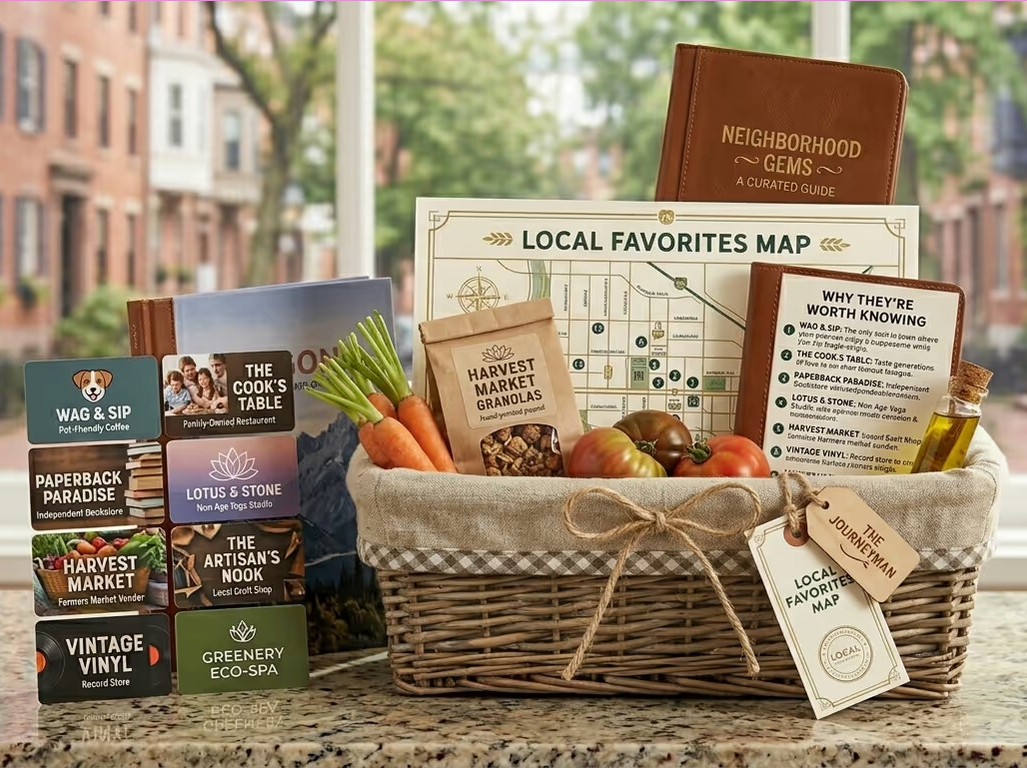
This basket highlights the best of the neighborhood. Include gift cards to six or eight local spots - a pet-friendly coffee shop, a family-owned restaurant, an independent bookstore, a new age yoga studio, a farmers market vendor - along with a simple map showing where each one is and a short note about why it’s worth knowing.
This basket tends to hold people’s attention at the table longer; more time at the table often means more competitive bidding.
What to include:
Best for: Community organizations; place-based nonprofits; any event with a strong geographic anchor.
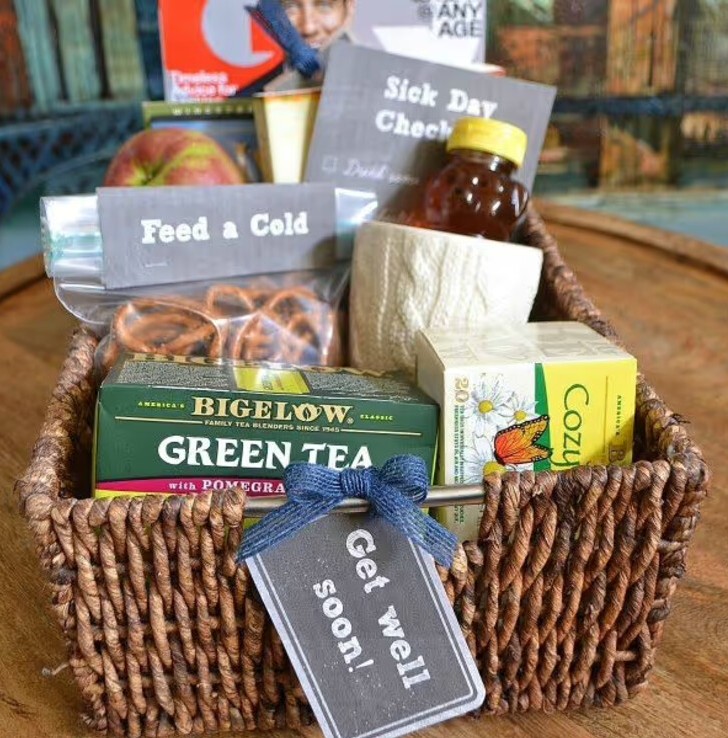
This basket is built for a very specific moment: when someone is sick, worn out, and just wants to feel taken care of. The more thoughtful and well-chosen the items, the more it feels like real relief rather than a generic comfort bundle. The basket name and item list together should answer one question: after what kind of week would someone really be thankful for having this basket around?
What to include:
Best for: Broad audiences - works well with families, professionals, and mixed-age donor groups; best at any event at the start of a new season/the flu season.
Pro tip: Add a simple “doctor’s note” style card with light humor. It makes the basket feel more personal and will make the winner chuckle through their blocked nose when they finally use it.
A silent auction does not start when the doors open. It starts when the first invitation hits someone's inbox, and it does not end when the winning bid is logged. What happens in the weeks before and the days after determines whether that night builds into something or stays a one-time event. Almabase is built for that full journey.
Almabase centralizes registration and ticketing in one place, so your team doesn’t have to juggle multiple systems in the days leading up to the event. Make it easy for your attendees, donors, parents, alumni, and supporters to register for your fundraising event by using a platform that integrates everything.
Send targeted reminders, invitations, and updates to the right audience segments before and after the event. Almabase helps you tailor communication for returning attendees, first-time supporters, and everyone in between.
The supporters who show up for a silent auction are exactly the people worth staying in touch with. Almabase gives teams the tools to keep that conversation going after the event closes - through community features, engagement tools, and communications.
Create a smoother path from participation to giving. Almabase connects event attendance, donation pages, and gift tracking, so supporters can move naturally from showing up to making a gift without switching platforms. Learn more here.
Capture the engagement data your team needs to strengthen future campaigns, donor outreach, and event planning. Almabase syncs this information to your CRM in real time, helping you build on each event rather than starting over.
If your school or nonprofit wants to run smoother, more effective fundraising events, especially if you're managing multiple events a year across disconnected tools, it’s worth exploring a more integrated approach. Almabase can help create a more organized, engaging experience for your community. Book a personalized demo to learn more!
.avif)
18 Silent Auction basket Ideas for Schools and Nonprofits
Lorem ipsum dolor sit amet, consectetur adipiscing elit. Suspendisse varius enim in eros elementum tristique. Duis cursus, mi quis viverra ornare, eros dolor interdum nulla, ut commodo diam libero vitae erat. Aenean faucibus nibh et justo cursus id rutrum lorem imperdiet. Nunc ut sem vitae risus tristique posuere.

Prajnya Yelamali
April 23, 2026
12 minutes
With donors more virtually active than ever, a successful digital fundraising strategy today does more than just getting the word out.
Your digital fundraising strategy now plays a large part in connecting the right donors to the right causes, and making the giving experience from first gift to repeated gifts as convenient as possible. For new and younger donors especially, digital modes are becoming the more obvious choice.
So what is digital fundraising exactly? How do you create a digital strategy for schools and nonprofits? How do you measure and track success? We’ll cover all that and more in this blog.
A digital fundraising strategy is your institution or nonprofit’s plan for for your online channels and tools to identify, engage, solicit, and steward donors. In advancement work specifically, it sits alongside (and increasingly integrates with) traditional fundraising pillars like major gifts, annual giving, planned giving, and corporate/foundation relations.
In terms of visibility, think of the following channels: email, social media, search, video, mobile, and LLMs nowadays.
Beyond visibility, it also means having digital interfaces that provide the right data for your analytics, and of course, your donor’s digital user experience from their first solicitation email all the way through to their giving and post-giving communications.
Many of the steps for any digital fundraiser such as setting financial goals, targeting segments, and performance reviews rely on the integrity of data, so this should be your first priority.
To start off, decide the fields associated with alumni or donors that are important to your organization and campaign goals. Some non-negotiables for universities and schools are program details, graduation year, giving history, geography, and contact information. Nonprofits might focus on age categories and volunteering preferences instead of program/graduation details.
Finally, add workflows inside to track activity automatically for each prospect ranging from email opens to donations to a particular cause.
Tips for schools/universities
Tips for Nonprofits
"Raise more money online" doesn't really help you decide whether to invest in paid social or hire a content writer or finally fix your giving page. A specific goal such as “$850,000 in digital-attributed gifts this fiscal year, with 30% from new donors” forces every downstream decision to justify itself against that target.
Always start off by reviewing past performance data for similar events. This would involve looking at old emails, attendance, campaign reports, and the like. It can lead you to many insights on the best event formats, messaging styles that worked, effective outreach channels, speakers that your audience resonated with, and so on.
Now that you have clean, dependable data, building different segments of alumni or donors based on a variety of factors is the next natural step.
Different prospects sympathize with different causes, prefer different methods of contribution, and have to be targeted accordingly.
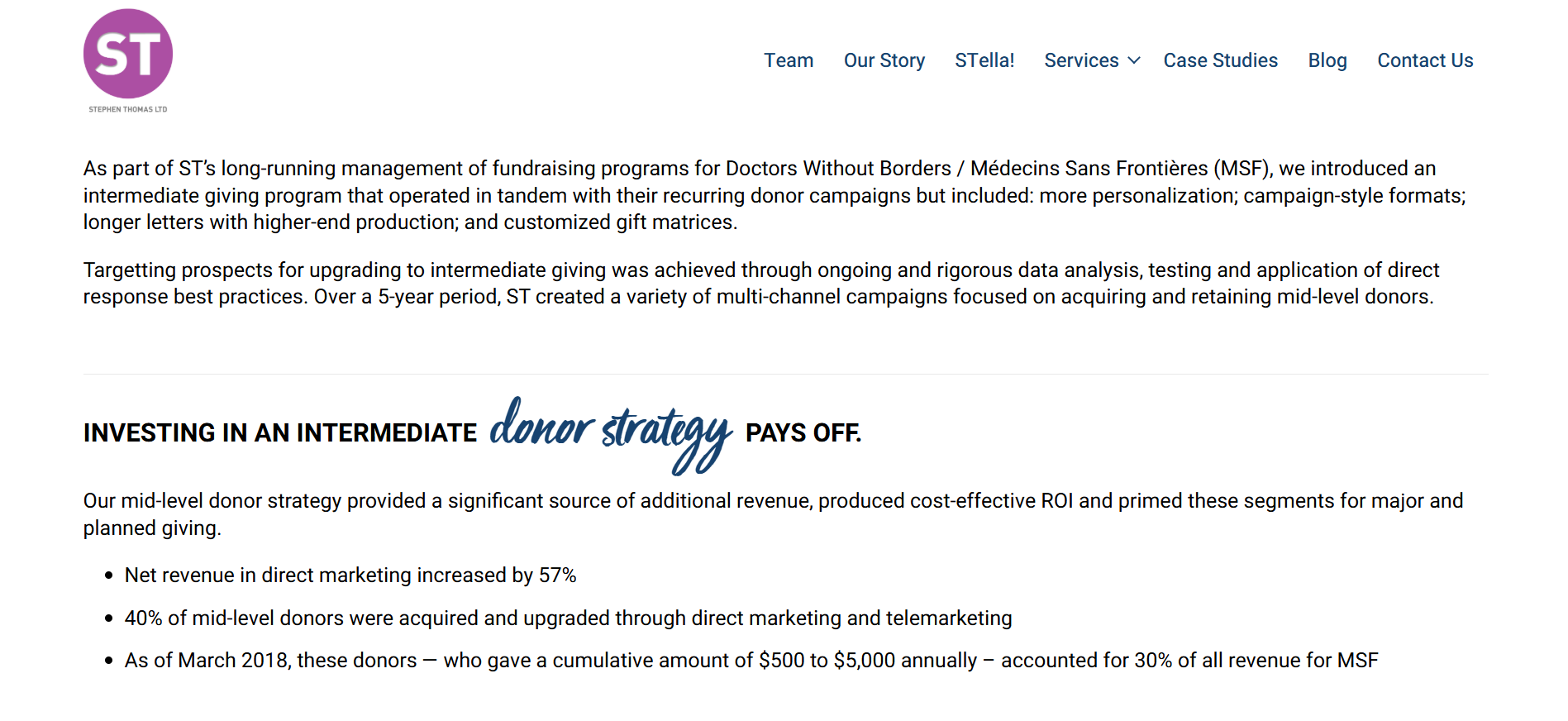
For schools, that usually means current parents, alumni by decade, grandparents, past parents, and faculty/staff. For nonprofits, it's often first-time donors, recurring donors, lapsed donors (12-24 months), mid-level donors ($1K–$10K), and event attendees who haven't given.
A working digital fundraising stack nowadays usually include:
This is just the bare minimum and you and/or your team will likely realize how many moving parts have dedicated tools as you build your strategy.
As for choosing the tools themselves, we usually see teams go for either an integrated platform that touches the entire donor journey, or a set of specialized tools to tackle each stage separately.
Ultimately, your mileage WILL vary even against similar teams but we recommend that all teams ask themselves these four questions:
Your website serves as the hub for all your digital efforts both for fundraising and beyond. Strong narratives, beneficiary accounts, and campaign updates give donors the context they need to feel connected to what they're funding. Other aspects such as donor testimonials or visible fundraising progress bars give them the confidence to act on it.
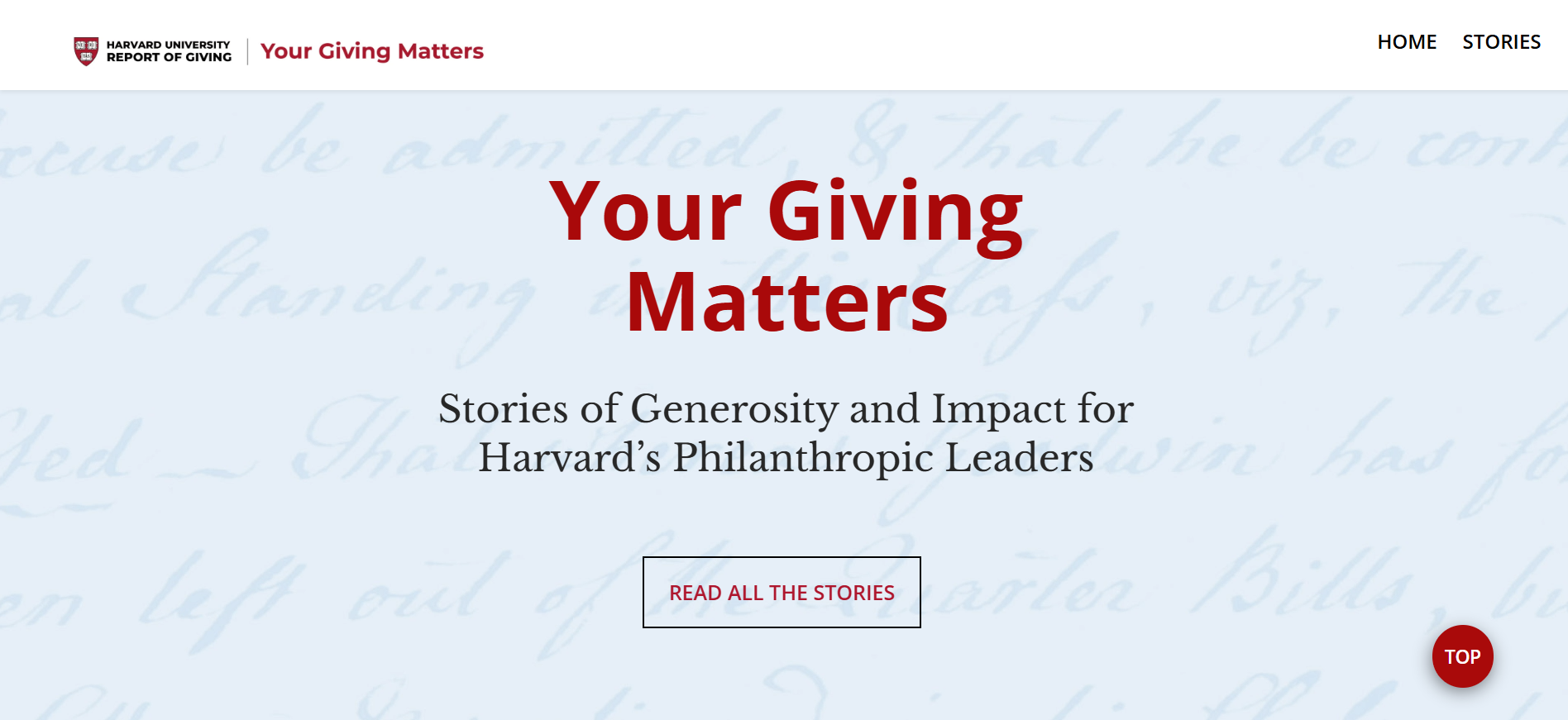
Closing the loop is just as important. Donors who can clearly see where their money went are significantly more likely to give again. Dedicated fund pages, impact summaries, and project updates go a long way toward building that transparency.
Website features to consider for schools and colleges:
Web features to consider for nonprofits:
A content calendar will naturally be a huge strategic checklist for your team. However, you might want to go one step further with a content engine (or at least a content strategy aimed long-term)
Both terms might seem synonymous but we do notice that many teams go from campaign to campaign, event to event, with only a few common threads between each other. The institutions and organizations that consistently raise money online have a small number of strong narratives that they tell in many forms across many channels. A research university might have three or four flagship stories per year and those stories show up as long-form features, short videos, Instagram carousels, email appeals, and giving day rallying cries. For teams without a dedicated video production resource, an ai video generator can help turn those stories into polished, shareable videos quickly without needing a full production budget.
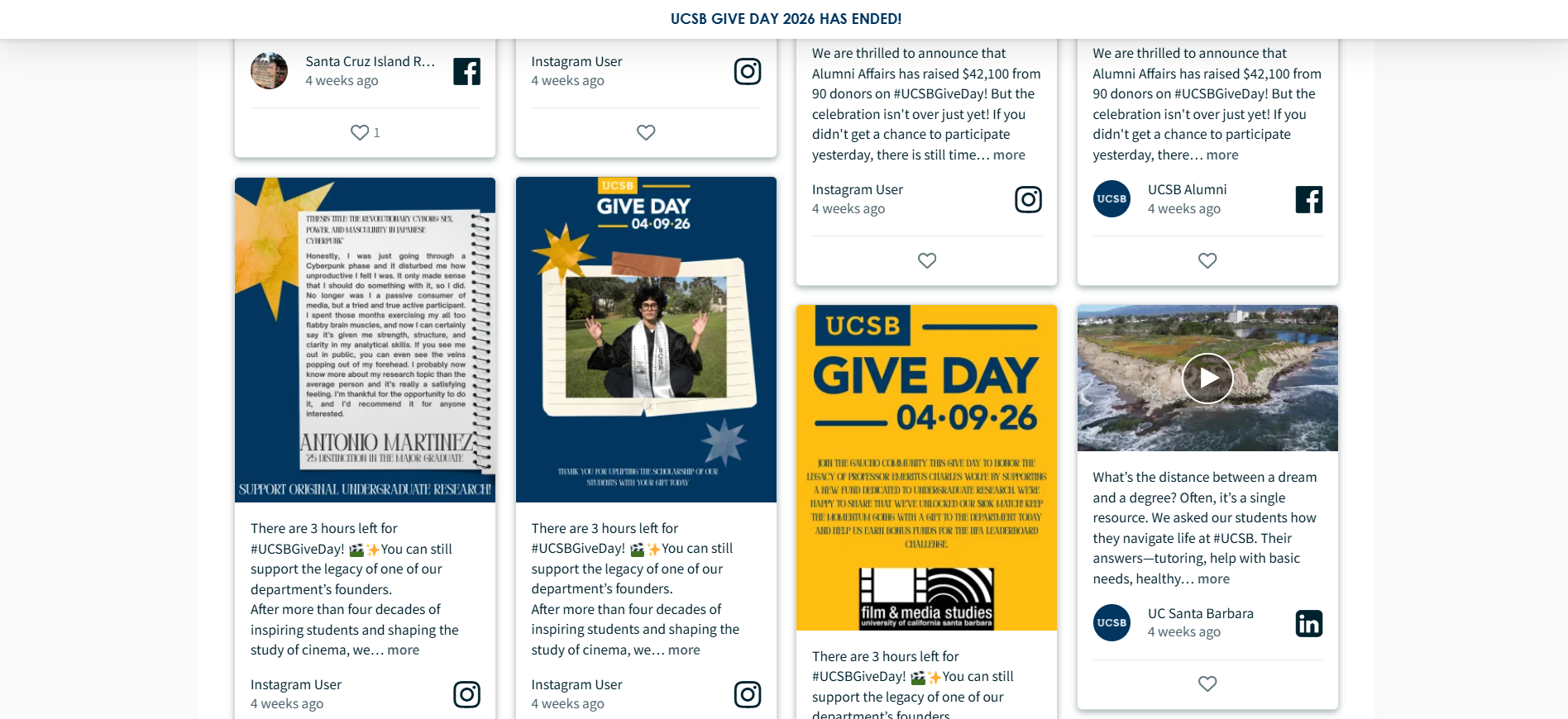
With donors becoming more selective than ever, you’ll need a content engine that unifies your storytelling across different channels, feels like communication worth listening to, and conveys your message at the right time to the right people.
Most fiscal years have natural high points such as year-end giving, giving days, spring appeals tied to graduations or mission moments, and fiscal year-end pushes in May or June.
When shaping your content engine, build the calendar around those anchors first. Layer in mid-level cultivation campaigns, recurring giving acquisition pushes, and lapsed donor reactivation between the peaks.
Leave room for reactive moments such as a news cycle that connects to your mission or a milestone that deserves a campaign. The best strategies don’t miss out on featuring a remarkable story
Beyond your institution or organization’s usual high and low points, also look at your year-on-year online traffic, event attendance, and giving patterns to surface potential yearly opportunities that you might have missed in the past. Together, these checks should give you a great idea of when you’ll want to push hard and how to go about it.
Vanity metrics will eat your strategy alive if you let them. The metrics that matter are:
Build a quarterly review rhythm where these numbers and their underlying causes get discussed honestly to constantly improve your digital fundraising strategy . While the strategy document you wrote in Q1 will remain useful, the tweaks you make in Q3 might be the turning point for years to come.
The sheer variety of data tools and metrics is a double-edged sword for advancement and nonprofit teams. Tracking way too many things at once can be counterproductive, so we’ve put together a table with the most helpful or insightful data points. Pick what’s needed based on your event formats, goals, and current capabilities.
| Category | Metrics to Track |
|---|---|
| Revenue | Total online revenue, average gift size, revenue by fund/designation, recurring vs. one-time revenue split, revenue per donor segment |
| Donor Growth | New donor count, first-time donor conversion rate, reactivated donor count, cost per acquired donor, channel attribution for new donors |
| Donor Retention | Year-over-year retention rate, lapsed donor rate, recurring donor retention rate, average donor lifespan, churn by segment |
| Engagement | Email open rate, click-to-open rate, event attendance rate, social media reach and shares, peer-to-peer participation rate |
| Conversion | Donation page conversion rate, form abandonment rate, CTA click-through rate, mobile vs. desktop conversion rate, average sessions before donation |
| Campaign Performance | Revenue per campaign, fund-specific revenue, giving day donor count, matching gift utilization rate, peer-to-peer revenue contribution |
| Email Health | List growth rate, unsubscribe rate, deliverability rate, bounce rate, revenue attributed per email send |
| Recurring Giving | Monthly recurring revenue (MRR), recurring donor upgrade rate, failed payment rate, recurring donor conversion rate from one-time donors |
| Fundraising Efficiency | Cost per dollar raised, fundraising cost ratio, return on ad spend (ROAS), staff hours per campaign |
| CRM Health | Duplicate record rate, missing or invalid email percentage, outdated communication preferences, untracked gift sources, data entry lag time |
Achieving high conversion rates boils down to one key aspect – providing a smooth, frictionless experience for the donors. Having said that, there are some common pitfalls teams might run into while organizing digital fundraising campaigns, highlighted below.
About 60% of regular donations were made through mobile. That’s a lot!
Forms, pages, and sites are often clunky, on a medium that offers the most convenience to donors. This often results in prospects dropping out at the last stage, after all the effort that went into convincing them. Make sure your pages are well-optimized for both desktops and mobile devices.
You might not be a fan of long screen times, but you can certainly take advantage of them.
People have grown accustomed to completing payments, big or small, through a single tap. They expect the same convenience here; donations are no exception.
Offer a good mix of payment options. Including credit cards, netbanking, and mobile-friendly options like digital wallets or text-to-give features means you won’t be missing out on the smaller donations especially.
The easier it is to donate, the more gifts you receive.
Whether it’s on your site, email campaigns, giving pages, or socials, having clear, concise messaging is extremely important. Get straight to the point, and avoid dumping jargon. Doing so might cause the prospect to lose attention and the interest to contribute.
Using simple, engaging language helps build trust and clarity. The objective, beneficiaries, and the importance of your campaign is all that matters, the rest is fluff.
Nothing is more annoying than processing fees, convenience charges or other unexpected components to show up out of nowhere on the final step. More often than not, this just leads to abandoned carts and you losing a potential donor.
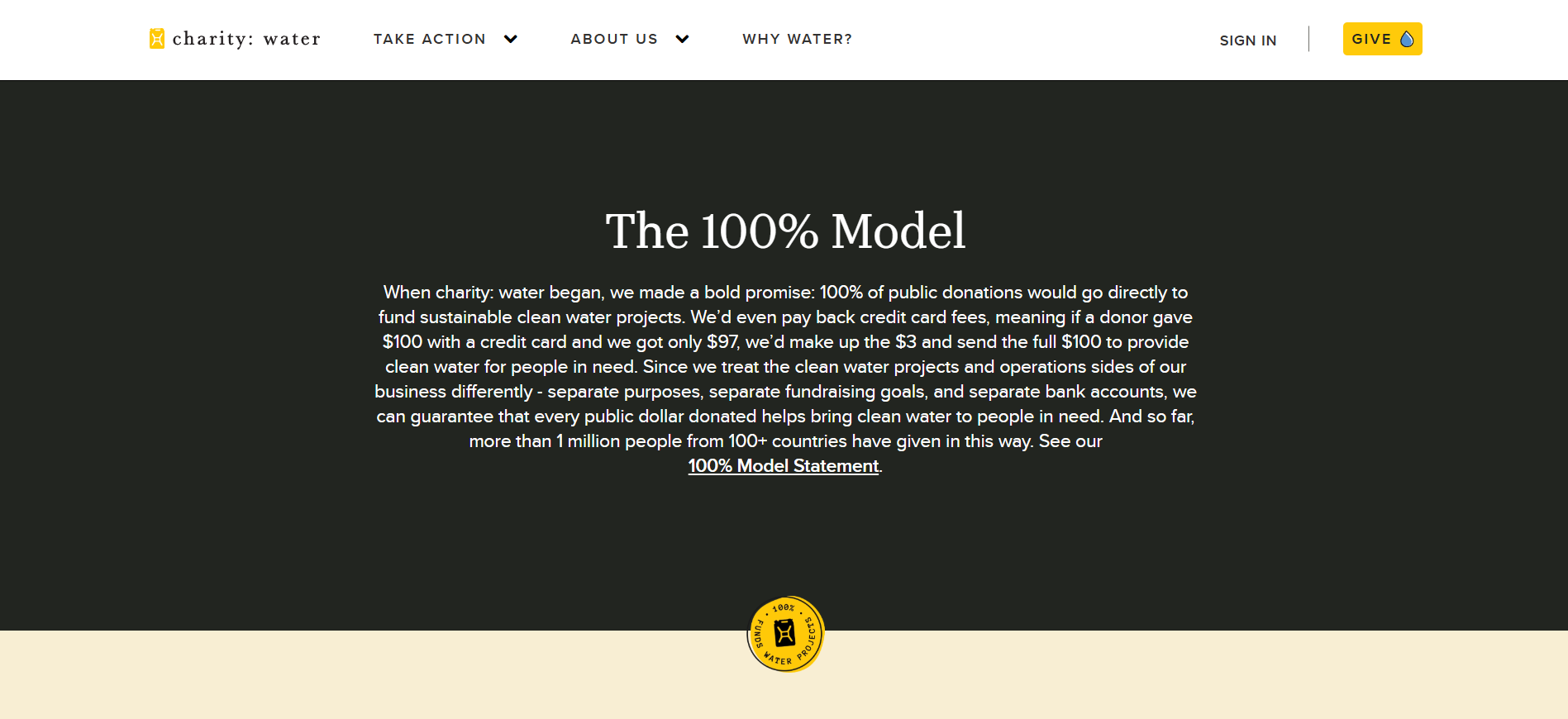
Always be upfront about all the costs involved during a transaction, or better yet, absorb them if you can.
Digital fundraising involves multiple teams and operations, often running concurrently. Scattering them across too many platforms is a recipe for chaos; a good platform should offer almost all the essential tools for online giving, while integrating seamlessly with other necessary software.
Almabase, in combination with a fundraising-focused CRM, is a powerful tool through which your team can frame and execute the strategies mentioned in this article. We can broadly classify the features under three important digital fundraising pillars:
If you’d like to explore Almabase’s capabilities more, it doesn’t get much better than a comprehensive tour of the platform. Book your demo here.

8 Step Digital Fundraising Strategy for Schools & Nonprofits
Lorem ipsum dolor sit amet, consectetur adipiscing elit. Suspendisse varius enim in eros elementum tristique. Duis cursus, mi quis viverra ornare, eros dolor interdum nulla, ut commodo diam libero vitae erat. Aenean faucibus nibh et justo cursus id rutrum lorem imperdiet. Nunc ut sem vitae risus tristique posuere.
Hari Govind
May 21, 2026
12 minutes
%201.svg)
%201.svg)
%204.svg)




.svg)