See how universities help donors connect with a cause through storytelling, matching gifts, ambassadors, and thoughtful campaign planning.
Almabase
Published:
August 5, 2026

Giving days have become a staple in most if not all institutions’ fundraising strategy, bringing alumni, parents, faculty, staff, and friends together around a shared goal. Pulling one off takes a lot: communications, marketing, matching gifts, clear goals, all acting together to build a strong sense of urgency and momentum.
Without clear ownership and the right systems in place, teams run the risk of spending more time chasing, reconciling data or troubleshooting problems.
In this article, we touch upon the key steps to planning a successful university Giving Day, hoping that it helps you and your team plan a smooth execution for your upcoming giving day.
A good rule of thumb is to make it easy for people to understand why their gift matters and make it just as easy to give. That means setting clear goals, reaching the right audiences with the right message, and making sure every gift is tracked accurately from the moment it comes in, on the backend.
Determining success metrics with your team will make it easy for you to choose the right set of metrics to track so that you can measure if the event achieved what it was supposed to, and if and where it fell short.
While some goals such as total dollars raised are obvious, it’ll likely only tell you half the story. To get the full picture, set goals for:
These numbers will tell you if you're expanding your donor base or simply raising more from existing supporters. You can also look at tracking channel performance and ambassador-driven gifts, as these reveal which outreach efforts brought donors to your campaign and where you can improve next time.
A successful Giving Day takes people across advancement working toward the same goal, with each team responsible for a different part of the campaign.
Build the right core team and divide responsibilities clearly.
Let annual giving or alumni relations lead the overall strategy, while the advancement services team oversees gift processing and CRM data.
Marketing and communications keep emails, social media, and campaign messaging on track. Major gift officers can help secure matching funds. You could even recruit student groups or campus partners to expand the campaign's reach across campus.
Well before launch day, during the planning stage, every major workflow should have a single owner so decisions can be made quickly and nothing falls through the cracks.
The best team is where each owner is clear about their responsibilities, as is the entire team, and each member holds the other accountable.
Audience segmentation makes your campaign more relevant by tailoring the appeal to each group's relationship with your institution. Every donor gives for a different reason, so they should also be receiving different messages. It also makes post-campaign stewardship and follow-up much easier and the better your segmentation, the more you’ll be thanking yourself a week after the event.
Common segments include:
Keep in mind that a recent graduate may be more motivated by stories about current students, while a long-time donor may respond better to an update showing the impact of previous gifts. You’re essentially creating a win-win situation for both, the sender and the recipient. 🤗
A good Giving Day theme is a great enhancement to your event because it gives people something to rally around. It should be memorable, easy to share, and, most importantly, make it clear what donors are helping to achieve.
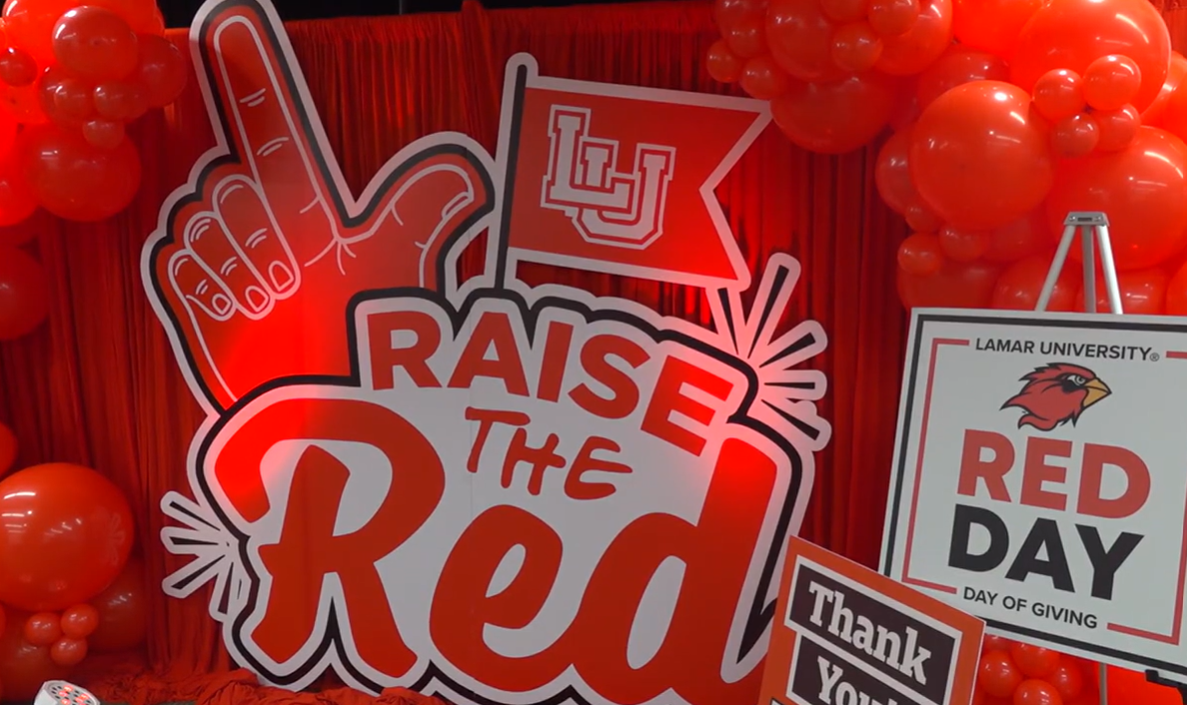
Lamar University did this with its "Raise the RED" campaign, tying the theme directly to academic programmes and endowed funds. The campaign surpassed its original goal of 500 donors, bringing in 610 donors and 727 gifts.
Here are some ideas from (a lot of) institutions doing things differently for their Giving Days in 2026.
One of the most compelling reasons donors feel inspired to give is knowing their contribution will be doubled or unlock an additional benefit. It makes the campaign feel more immediate, while also giving your team fresh moments to promote throughout the day.
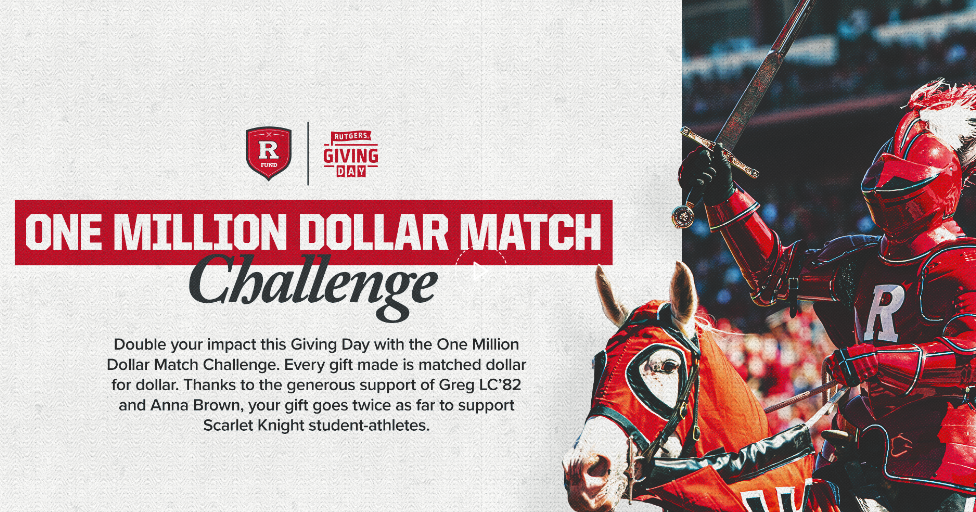
Rutgers Athletics, for example, announced a $1 million dollar-for-dollar matching challenge, doubling every qualifying gift made in support of student-athletes.
The best part is, the match needn’t even be institution-wide. You can tailor challenges to different donor groups or segments. For example:
Whatever format you choose, keep the rules easy to understand, and you’re golden! 🥳
Sometimes the most effective Giving Day messages could come from classmates, teammates, faculty or alumni who are already known, trusted and sometimes part of your donor group. This is obviously because they add an element of authenticity that no institution-led email blast could.
But ambassadors are busy and may not always have the time to make a video or write a message. The easier you make it for ambassadors to participate, the more likely they are to share consistently throughout the campaign.
You can solve for this easily by providing ready-to-use resources they can personalise and post in minutes. Put together a kit that includes email templates, campaign graphics, text message prompts, personal tracking links, and a suggested sharing schedule. This toolkit will ensure the content your ambassadors put out is equal parts on-brand and authentic.
A Giving Day campaign can generate excitement quickly, but to sustain that momentum you need the right systems: a fast check out process and gift tracking handled well.
Build your promotion plan weeks before event day. Give your messaging enough time to soak in for your donors. As the day gets closer, your messaging should become more frequent and more urgent, making it easy for people to recognise the urgency and get involved.
Your donors engage with your messages across different channels: someone will open an email, someone else will look at their text messages, while a third donor will find a reel from your ambassador on your social media. Allow your Giving Day campaign to show up across multiple channels instead of relying on a single announcement.
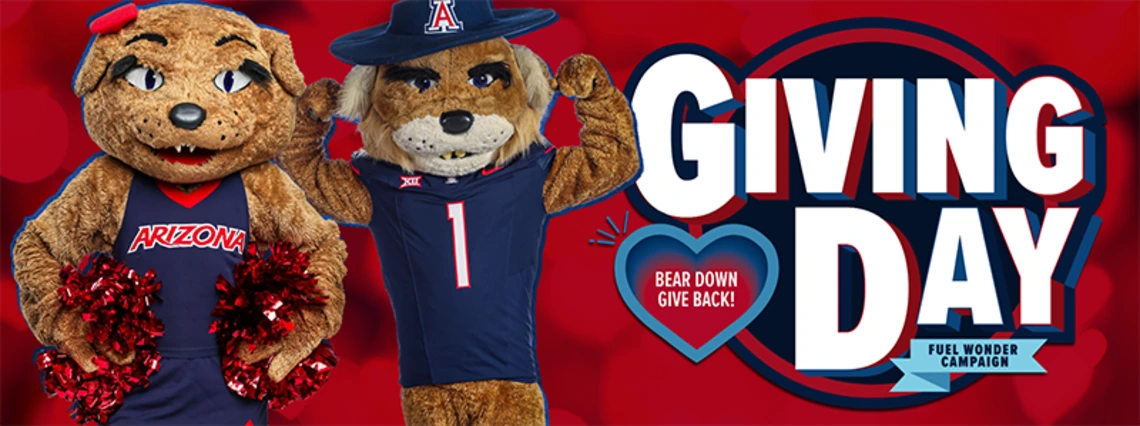
The University of Arizona took this multichannel approach by bringing together email, social media, and student text outreach into a single campaign hub. Held in February 2026, the campaign raised more than $25.6 million, comfortably surpassing the university's previous Giving Day record of $7.3 million.
Almabase’s integrated communications platform also makes it easier to see which channels are driving donations, so your team can adjust messaging while the campaign is still live.
A content calendar will keep your campaign moving at a steady pace and prevent your team from going into the scramble triggered by last-minute tasks.
Before Giving Day arrives, it helps to map out when each story, email, and social post will go live, so that it’s easy to coordinate across departments and avoid gaps in communication.
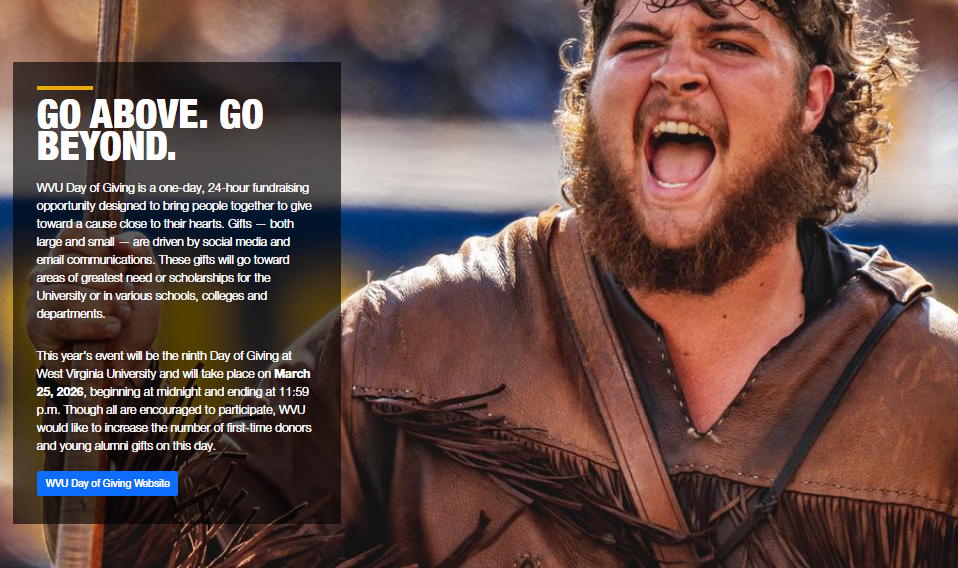
West Virginia University used a structured content calendar to build awareness before Giving Day and then shifted to targeted hourly updates once the campaign began. They also created a social media toolkit for their ambassadors to spread the word.
This consistency helped maintain momentum throughout the 24-hour campaign, resulting in 11,202 gifts and more than $22.8 million raised.
Planning that sequence in advance also gives ambassadors enough time to prepare and keeps everyone on the same page.
Storytelling is one of the best ways you have to demonstrate exactly the impact your donors make.In fact, data from the National Alumni Survey (2026) shows that younger donors especially respond to causes that they find emotionally compelling. The key is to show, not tell
The best Giving Day campaigns show donors the people and impact behind the fundraising goal, whether that's a student receiving a scholarship, a research project gaining support, or an athletics programme reaching more student-athletes. When donors can picture the impact of their gift, the ask feels natural.
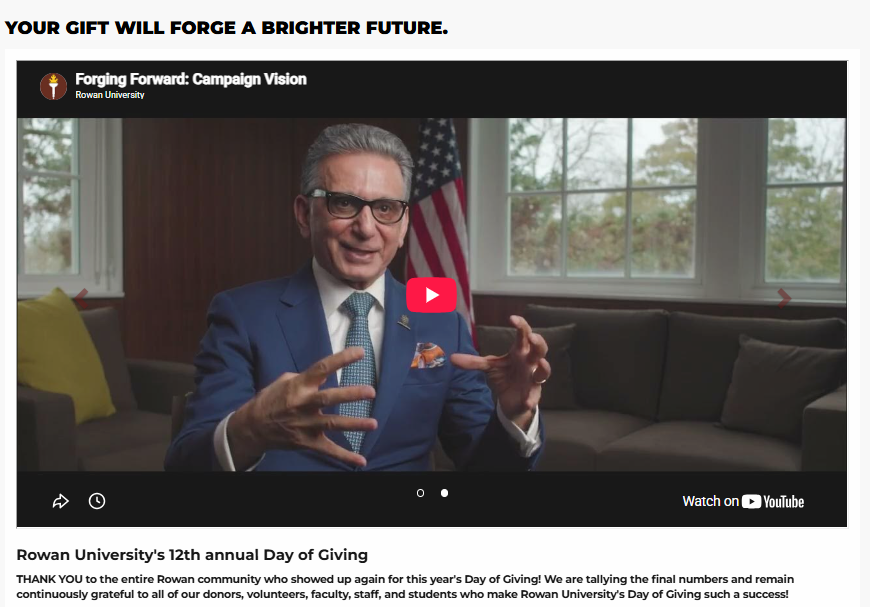
Rowan University centred its Giving Day around a story from its president, who shared how a single modest gift changed the course of his education. That message reinforced the idea that every donation, regardless of size, can make a lasting difference, helping the university raise $439,966 from 3,068 gifts.
The ideas that best convey the urgency of the cause are the ones that see higher participation. Here are a few ideas that universities return to, year after year.
We already touched upon this before: matching gifts are one of the simplest ways to create urgency. If donors know their contribution will be doubled or help unlock an additional gift, they're more likely to give while the campaign is live.
A little friendly competition can encourage donors to rally behind the communities they already identify with. Leaderboards, participation goals, and reunion challenges give supporters something to root for beyond the fundraising total.
They also create plenty of opportunities for updates throughout the day as different groups move up the rankings, adding to the energy and excitement of the event.
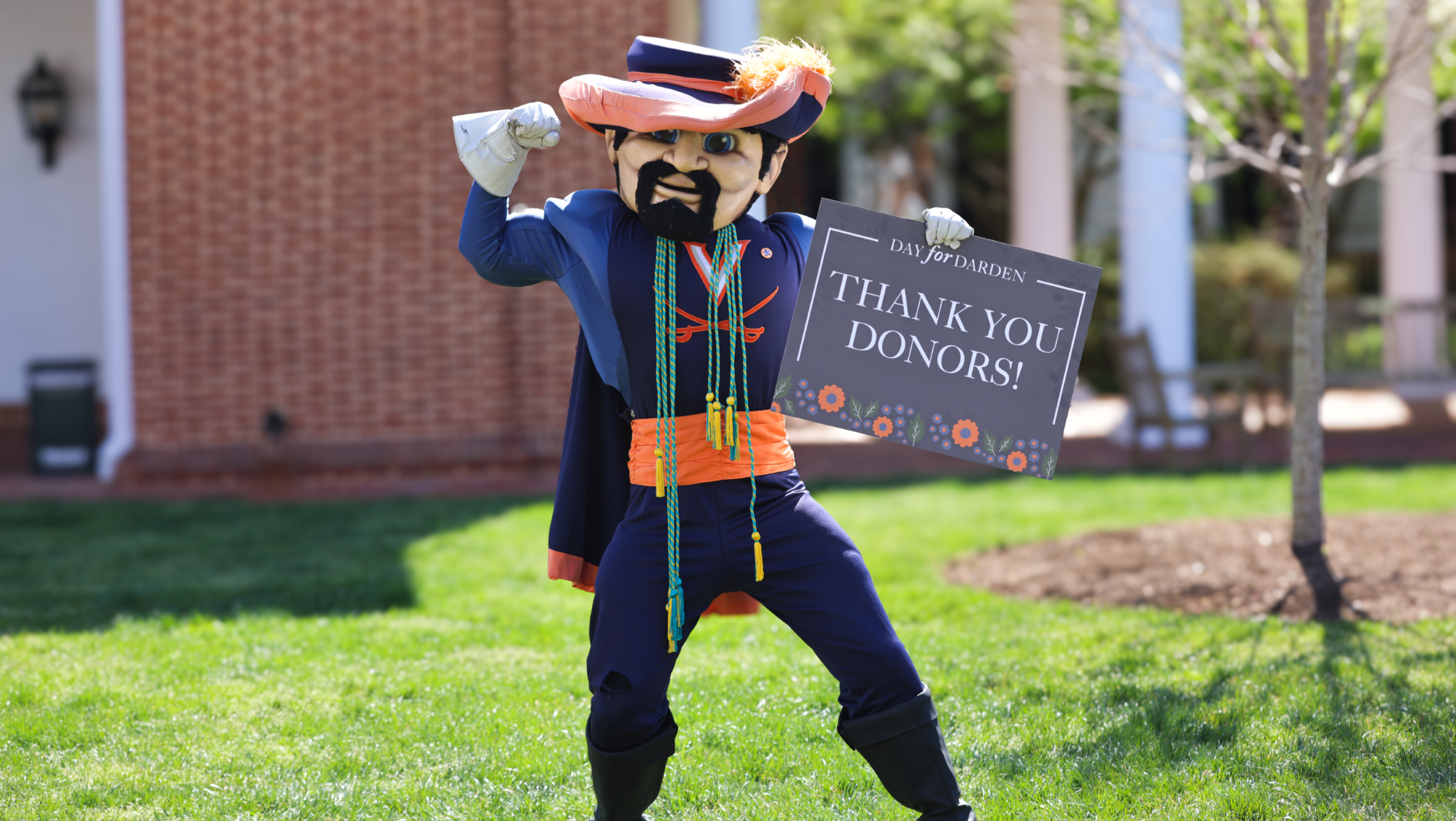
UVA Darden built its campaign around class participation brackets, spin-the-wheel pledges, reunion incentives, women's scholarships, and early-career alumni challenges. Alumni accounted for 77% of all donors, with the Class of 2011 recording the highest participation.
Progress bars, fundraising thermometers, and live leaderboards show how close the community is to reaching its goal, creating a very real reason for more to join in before the day ends.
Recognising donors along the way , too, can add to that momentum. This could look like celebrating milestone gifts, highlighting class standings, or sharing supporter shout-outs on social media, but all of them remind donors that they're part of a collective effort.
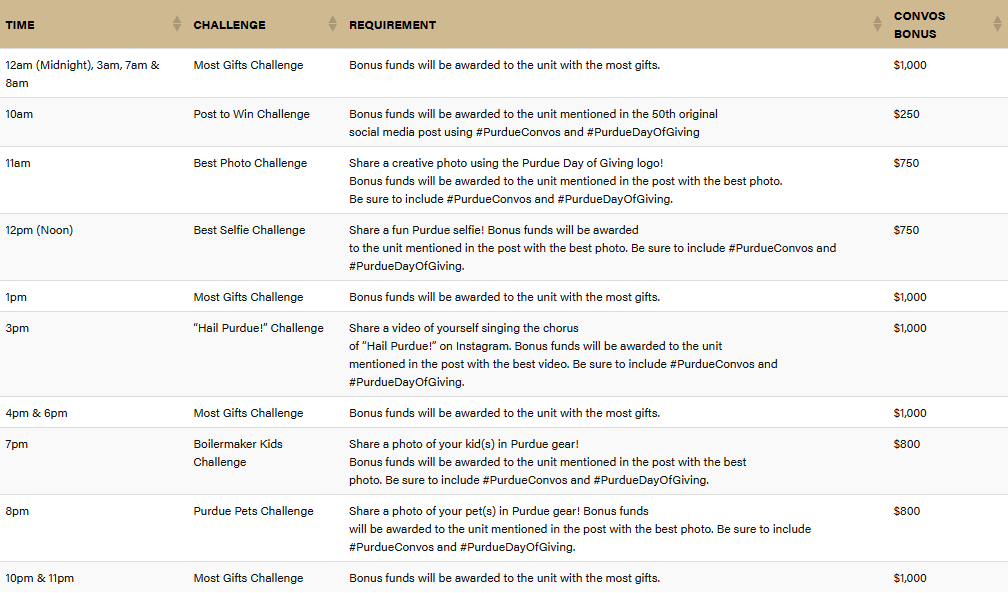
Purdue University famously uses gamification in their Day of Giving events. In their April 2026 edition, they used real-time leaderboards to put colleges, alumni clubs, and student organizations directly in competition for shares of matching pools. This strategy worked out beautifully for them because they were able to turn passive donors into active participants who were invested in the process of giving. The giving day, of course, was a smash hit, raising $ 95,456,146.
By the time Giving Day arrives, your team should be focused on engaging donors. This needs advance planning and a planning checklist would help everyone stay aligned.

Overall, these are the broad considerations your checklist should cover:
A successful Giving Day is the result of thoughtful planning, clear communication, and a campaign that's easy for donors to support, at a conceptual level and at the execution level as well.
Whether it’s introducing first-time donors, strengthening alumni participation, or working towards a fundraising milestone, bring as much intention as possible to every step of the donor journey.
Giving Day campaigns take a lot: fundraising, marketing, advancement services, and alumni engagement, all working together like a well-oiled machine.
Almabase helps advancement teams manage Giving Day campaigns from a single platform, bringing together donor-facing experiences and the backend workflows that support them. With fewer disconnected tools to manage, teams can focus on running the campaign instead of piecing and holding together multiple tools and the consequent manual overhead.
With Almabase, you can:
Book a demo with us to see how Almabase can support your next Giving Day campaign! 🥳

A university Giving Day is a focused fundraising campaign, typically held over 24 hours, that encourages alumni, parents, students, faculty, staff, and friends to support institutional causes. Many Giving Days use matching gifts, peer-to-peer fundraising, and real-time campaign updates to encourage participation.
Most institutions begin planning at least six to eight weeks before launch. This gives teams enough time to set goals, prepare campaign messaging, secure matching gifts, recruit ambassadors, and test their giving platform before the campaign begins.
Matching gifts are funded by major donors, alumni, or sponsors who agree to increase the value of donations made during the campaign. They may match gifts dollar for dollar or unlock additional funding when a participation or fundraising milestone is reached.
Campaigns that combine compelling storytelling with tactics that create urgency, such as matching gifts, class challenges, department competitions, peer-to-peer fundraising, and live progress updates have a good chance of increasing participation from donors.
Review both fundraising and participation metrics, including total dollars raised, donor count, first-time donors, recurring gifts, campaign performance by channel, and stewardship outcomes. Looking at these together helps identify what worked well and where next year's campaign can improve.
Popular Giving Day ideas include matching gift challenges, class-year competitions, department leaderboards, ambassador campaigns, student stories, and donor recognition throughout the day.
Table of Contents
Subscribe
See how modern advancement teams bring alumni engagement and fundraising together.
If I had a penny for every time someone said ‘young alumni just don’t give back anymore’. I’d probably have enough to make a donation myself.
It’s one of the most common assumptions in advancement today, that younger alumni simply aren’t as philanthropic as previous generations.
But the data tells a much more interesting story!
Different generations aren’t less generous than each other. They just think about giving very differently.
A younger alum might donate to a student emergency fund late at night after seeing a story online. An older alum might make the same-sized gift weeks later after thoughtfully reading through a campaign email.
Same generosity. Completely different behavior.
That’s one of the clearest patterns emerging from the 2026 National Alumni Survey, which gathered responses from nearly 82,000 alumni across 31 institutions.
And honestly, it explains a lot about why some fundraising strategies feel harder than they used to.
One of the most interesting findings from the National Alumni Survey, 2026 is that younger alumni are still highly charitable. They’re just not prioritizing institutions in the same way older generations traditionally have.
While older alumni are more likely to give consistently to their alma mater, younger alumni tend to spread their support across causes that feel immediate, visible, and personally relevant.
That changes the nature of fundraising itself.
The question is no longer simply:
“Do alumni care about us?”
It’s:
“Why does supporting us matter right now?”
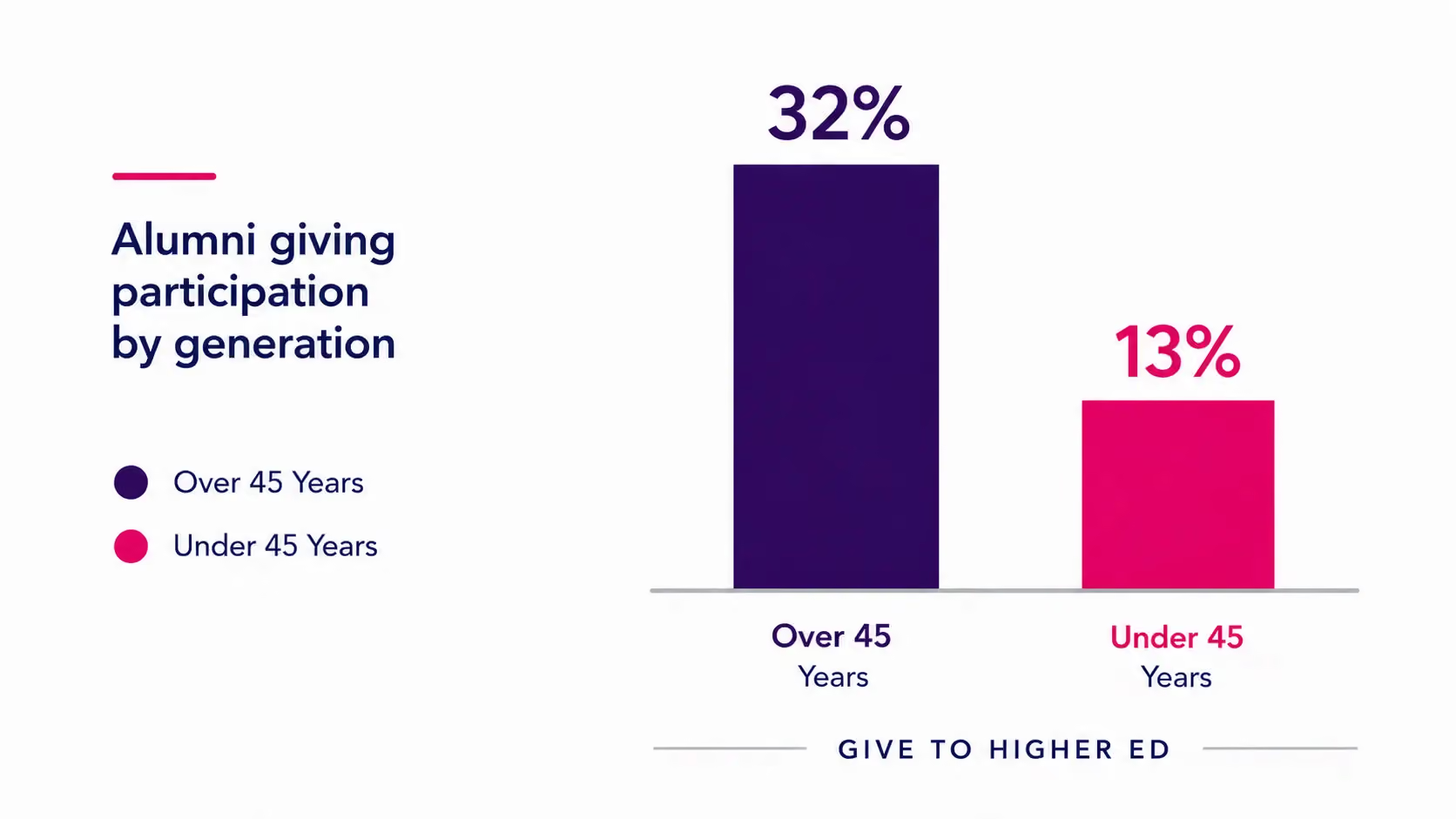
The survey found that only 13% of Millennial and Gen Z alumni reported giving to higher education in the past year, compared to 32% of older alumni.
At first glance, that sounds alarming. But the bigger story is what happens next because, younger alumni are giving. Just elsewhere.
For many older alumni, giving to their institution is often tied to long-term loyalty. It’s part of staying connected.
Younger alumni approach philanthropy differently. They’re more likely to support:
The NAS found that:
And honestly, this shift makes sense when you think about how people engage online today. Most younger donors are constantly exposed to stories that feel personal, urgent, and highly visible.
That preference matters. Because broad institutional messaging often struggles to compete with campaigns that feel deeply human and immediately tangible.
People want to know:
And institutions that answer those questions clearly are seeing stronger engagement.
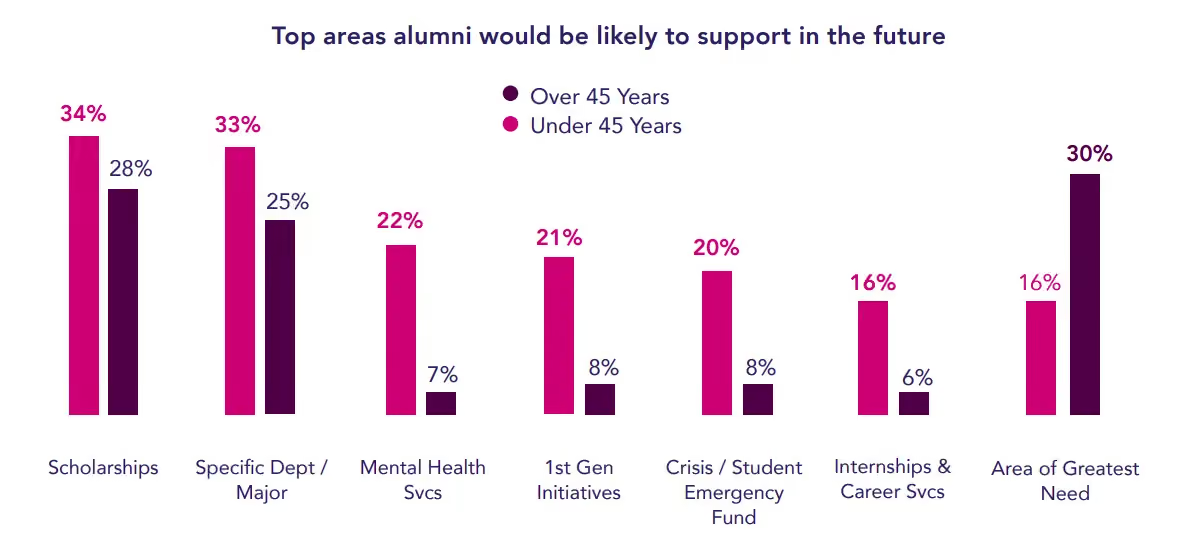
That’s part of why some of the strongest-performing campaigns right now tend to be highly focused:
Not because alumni suddenly stopped caring about institutions. But because specific impact feels easier to connect to.
The survey also revealed a major difference in giving behavior itself.
Older alumni are far more likely to give on a recurring or planned basis. Younger alumni? Much more reactive.
Many contribute when something feels urgent, timely, or emotionally compelling. That means traditional fundraising rhythms don’t always align with how younger donors make decisions anymore.
Annual campaigns and fiscal-year messaging still matter. But increasingly, alumni are responding to moments rather than schedules, and digital behavior plays a role here too.
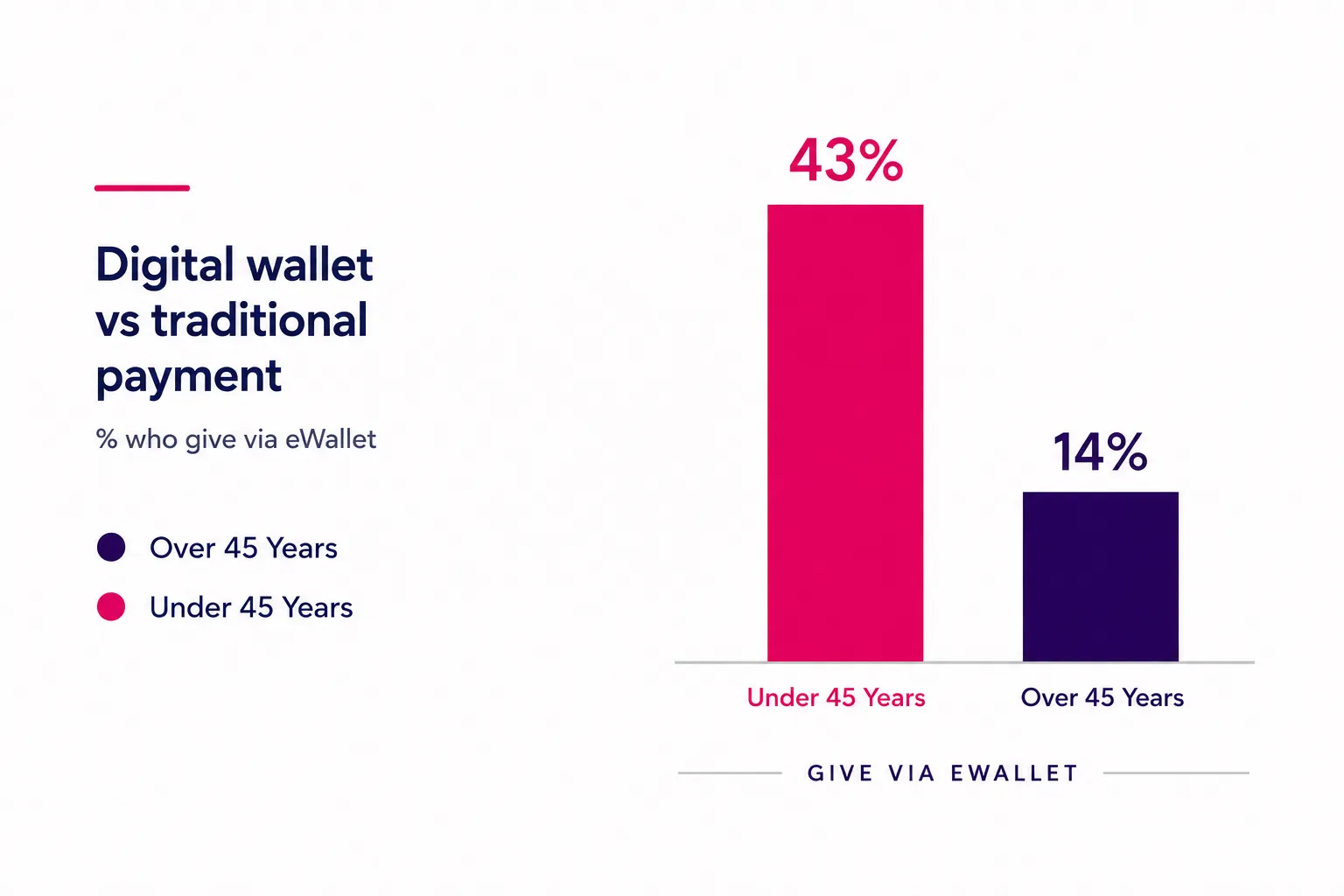
The NAS found that younger alumni were significantly more likely to use:
Meanwhile, older generations still showed a stronger preference toward traditional online giving methods and planned contributions.
And suddenly, small details matter a lot more.
A slow donation page. Too many checkout steps. A giving form that doesn’t work smoothly on mobile.
Those things create friction younger alumni rarely tolerate. Because digital experience is no longer separate from fundraising strategy. It’s part of the fundraising experience itself.
Another important shift from the NAS findings is around why alumni choose to give. Older alumni are often motivated by:
Younger alumni tend to prioritize:
And honestly, this shift makes sense too. Younger generations grew up in an environment where trust is earned constantly, not assumed automatically. So broad messaging around institutional pride often lands differently than it once did.
What tends to resonate more are things that feel specific and tangible. A student story, a visible outcome, or a campaign where alumni can clearly see the impact of their contribution.
The NAS doesn’t suggest abandoning traditional fundraising strategies. But it does suggest that relying on a single approach is becoming riskier. Because alumni expectations are diversifying faster than many engagement strategies are adapting.
Some patterns are becoming increasingly clear:
Especially with younger alumni. Broad “support the institution” messaging often underperforms compared to focused campaigns connected to specific outcomes or communities.
That’s part of why many institutions are seeing stronger engagement through Giving Days, crowdfunding campaigns, and donor-choice initiatives that feel more tangible and immediate.
For example, the University of North Carolina School of the Arts expanded its Giving Day campaign to include more than 40 donor-choice funds, allowing alumni to support causes they personally connected with rather than contributing to a single broad campaign.
And honestly, that shift reflects a larger behavioral pattern the NAS surfaced throughout the data: people are far more likely to engage when the impact feels visible and personally relevant.
The survey repeatedly showed that alumni who feel informed, understood, and connected are significantly more likely to give.
That means relevance matters more than frequency.
Increasingly, institutions are moving away from broad alumni-wide messaging and toward more targeted engagement, whether that’s identity-based campaigns, segmented storytelling, personalized event outreach, or communications tied to specific interests and life stages.
We’re already seeing this shift show up across alumni engagement strategies tied to volunteer communities, affinity groups, and donor interest areas, where institutions are focusing less on sending more communication and more on making communication feel genuinely relevant.
Because when communication reflects what alumni actually care about, engagement feels far more meaningful and less transactional.
Connection drives giving. The institutions seeing stronger donor participation are often the ones investing consistently in:
Because by the time someone makes a gift, the relationship has usually been building long before the donation page appears.
That’s also why volunteer engagement stands out so strongly in the NAS findings. Alumni who volunteer tend to feel significantly more informed and connected to their institution, and those feelings often translate into stronger long-term philanthropic behavior over time.
And that’s really the bigger takeaway here:
Fundraising outcomes are increasingly tied to how connected alumni feel before an ask is ever made.

This isn’t about one generation caring more than another. It’s about understanding that generosity now looks different depending on who you’re speaking to and the institutions adapting fastest are the ones paying attention to those differences early.
The biggest takeaway from the National Alumni Survey isn’t that alumni generosity is declining. It’s that alumni expectations are evolving.
Younger donors still want to support causes they believe in. Older donors still value long-term institutional connection. Both groups care deeply, just in different ways.
Which means advancement teams can no longer rely on a one-size-fits-all engagement strategy.
The institutions that succeed over the next decade will likely be the ones that understand this shift early and build fundraising experiences around relevance, trust, and connection.

Giving Behaviors Across Generations: What Actually Drives Alumni to Give Today
The way alumni give is changing across generations. This blog explores what motivates today’s donors from cause-driven giving to long-term institutional loyalty and what advancement teams need to adapt.
Lorem ipsum dolor sit amet, consectetur adipiscing elit. Suspendisse varius enim in eros elementum tristique. Duis cursus, mi quis viverra ornare, eros dolor interdum nulla, ut commodo diam libero vitae erat. Aenean faucibus nibh et justo cursus id rutrum lorem imperdiet. Nunc ut sem vitae risus tristique posuere.

June 18, 2026
12 minutes
Giving Days are one of the most important fundraising events today for institutions and nonprofits alike. According to EAB, 12.7% of private institution alumni and 19.8% of public institution alumni make their first gift on a giving day. In turn, powerful Giving Day platforms have cropped up to help teams get the most out of these events.
With so many excellent giving platforms available today, we’d like to zoom out and let you know which features you should consider essential and how you can make the most of your eventual choice. Let’s get started:
A good giving platform should ideally be:
Test your dashboards, giving pages, forms, and all other touchpoints to make sure all the people involved in your Giving Day have a smooth and memorable experience across all devices.
For social media, your team should be looking for features such as:
💡 Consider which social media your donors and supporters are most active in. You’ll want a platform that integrates to the same level of depth on those specific platforms.
Giving Days, due to the nature of being a focused fundraiser within a short window, will naturally need a platform that can handle many transactions at the same time. You will have bursts of transactions, such as when the campaign launches and after a successful promotion. A good Giving Day platform also needs to incorporate SSL/PCI-compliant payment processing as well as any other compliance requirements depending on the national or state laws applicable to your fundraiser.
You need to be able to engage donors and potential donors before, during, and after your Giving Day. Automated and personalized engagement through email, text, and social media may be crucial, especially if communicating with a larger pool of donors.
💡 Depending on your overall engagement strategy, you may want a fundraising platform that has a few donor engagement features on top or a dedicated engagement platform that works in tandem with your fundraising tool.
With a relatively short burst of high activity, you should be looking for platforms that support:
💡 Keep the above features as well as your needs in mind as different might CRMs interact with different tools in varying capacities.
Engaging and enabling donations from mobile device users are no longer something novel. Today, you’ll want a giving platform that not only engages mobile users but also optimizes their experience so that they don’t end up with an inferior experience.
Some platforms provide an app-based approach, while others go for mobile-optimized browser experiences.
💡Surveys and donor device metrics should help you get a sense of how much of a priority mobile features are for you as well as which method your donors prefer.
The cornerstone of any modern-day Giving Day campaign is a well-designed, customizable fundraising page that captures your organization's unique brand and mission. Customization is especially important for peer-to-peer fundraisers, where you’ll want to find the right mix between flexible templates and recognizable branding.
If you are regularly hosting Giving Day fundraisers, chances are that you have a long-term fundraising plan. This is where you’ll want a giving platform that is viable for both long-term and short-term fundraising efforts. Depending on your needs, look for platforms that include:
to make sure that your Giving Days produce an effective ripple effect.
It’s easy to get lost in all the fancy and innovative features that fundraising platforms offer today. Instead of trying to use a feature simply for the sake of trying something new, keep your mission and the people involved at the heart of your Giving Day campaign by enabling your storytelling and vision through the features available.
Whether it’s connected to an existing CRM or comes with its own, you will most likely get a good amount of data about your supporters, donors, and prospects throughout your campaign. Make detailed segments to optimize your outreach and communication efforts and enrich these segments after your campaign to make your engagement better with each fundraiser.
Always test your forms, pages, and communication efforts on mobile devices to check how they would feel for a donor trying to donate. Your CTAs might be a couple of scrolls away and on the side of your giving page when it’s front and center on other devices.
Your recent first-time donor might just be your next superstar supporter. Make sure your donors feel good about their contribution by keeping them informed on goals reached throughout the day. Keep them looped in on how the funds are being used and inform them about future initiatives coming up.
Giving Days are so integral to your long-term fundraising plan that you might feel like the choice of platform might make or break your strategy entirely. However, a lot of work goes into making these platforms work optimally for a specific institution or organization.
If you’re looking for a platform that syncs effortlessly with CRMs with a team committed to ensuring your giving day success, get in touch with us, and we’d be glad to show you how we can help. 🫡
Giving Day Platforms: Essential Software Features
With many excellent giving platforms available, learn which features to consider essential and how to make the most of your choice of fundraising platform
Lorem ipsum dolor sit amet, consectetur adipiscing elit. Suspendisse varius enim in eros elementum tristique. Duis cursus, mi quis viverra ornare, eros dolor interdum nulla, ut commodo diam libero vitae erat. Aenean faucibus nibh et justo cursus id rutrum lorem imperdiet. Nunc ut sem vitae risus tristique posuere.
As alumni events grow, so do the headcount and the complexity in executing them.
A Homecoming weekend, for example, has so many things to plan for and keep track of: registrations, sub-events, guest management, communications, fundraising, check-in, CRM updates, reporting, all happening simultaneously. This is a whole different ballgame than just a bigger pool of attendees.
Every successful event, whether it's a regional chapter gathering or a multi-day Homecoming celebration, moves through the same five stages:
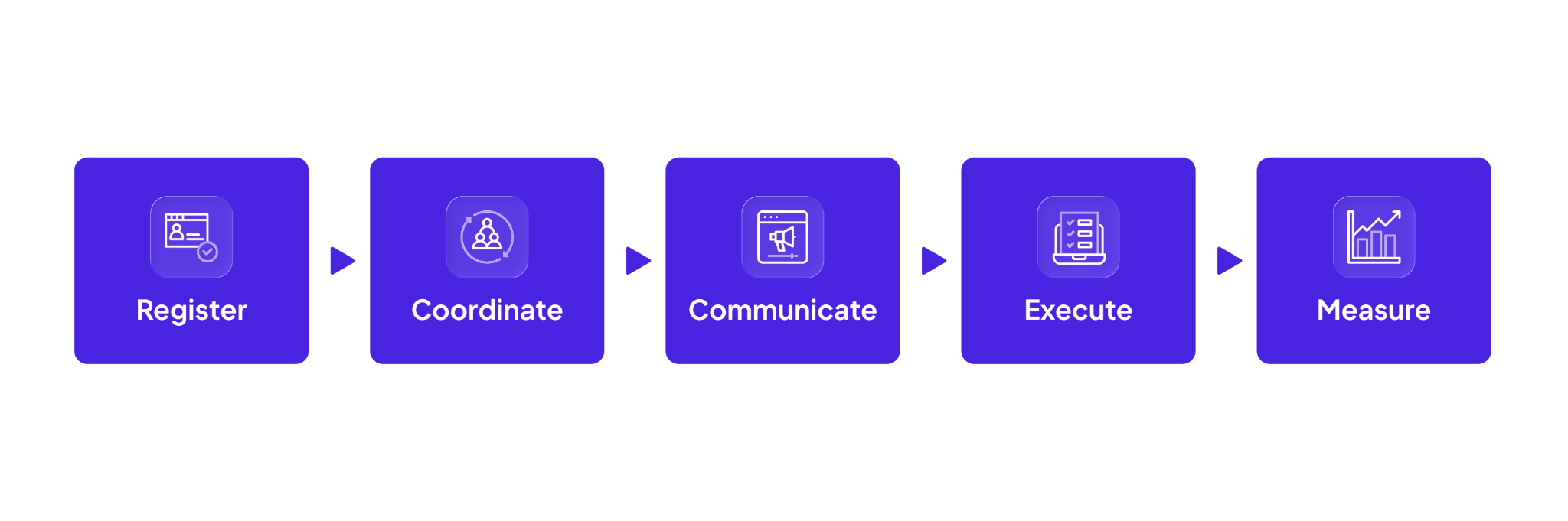
A Homecoming weekend or a Giving Day means these same five things, but now alongside multiple sub-events running in parallel, attendees taking completely different paths through the weekend, tighter timelines to pull it all together, and more data flowing between more systems than any one person can track by hand.
These learnings are gained over time and Almabase is built around them to support the entire event lifecycle, from the first registration to the insights that shape the next event.
Getting alumni to register sounds straightforward, but the complexity could already start building at this stage.
Attendees RSVP and bring guests, or sign up for a single session before opting into several others, which may carry different pricing tiers. Sometimes, they even change their minds midway through.
The organizers’ goal is to accommodate these compounding decisions seamlessly. A good registration experience makes all of these as effortless as possible, for attendees and for the team behind the scenes.
Regardless of when you start planning, your event page should be something your team can build themselves. It is very likely that you’ll need to make last-minute adjustments to keep up with changes to your strategy.
Almabase lets you build fully branded event pages with no code, reuse templates across events, and publish quickly while keeping everything aligned with your institution's visual identity.
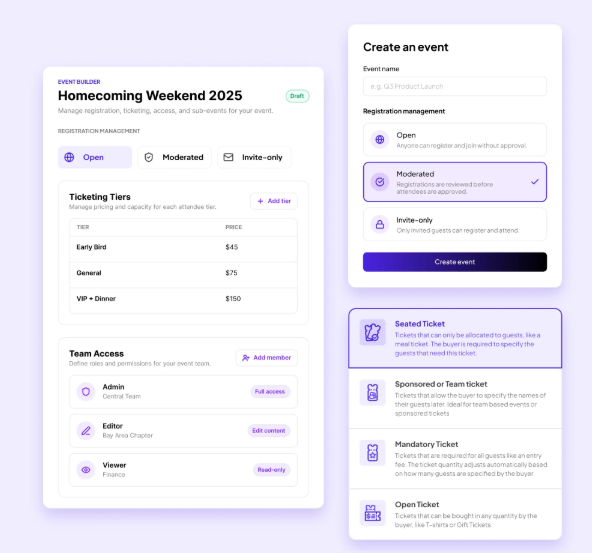
The result is faster launches and one less external dependency when timelines tighten close to event day.
Think about a typical alumni weekend or events scattered throughout spirit week. On the guests’ end, someone signs up for the Friday evening reception, skips the Saturday morning campus tour, buys tickets for the gala, and brings two guests to the football tailgate.
Behind the scenes, every one of those activities has its own capacity, schedule, pricing, and attendee list. If your systems don’t keep up at this point,tracking individual attendee schedules and ticket details becomes overwhelming. Information will slip through the cracks.
With Almabase, you can organize all of those experiences under one parent event, while giving each sub-event its own registration flow, ticketing, capacity limits, and logistics. Alumni still enjoy one seamless registration journey, while your team manages everything from a single backend instead of juggling multiple event pages and spreadsheets.
Cornell College runs its entire alumni program with 15,000+ alumni on a lean team, and it shows in what they've been able to pull off with one connected system: 1,008 donors on Giving Day, a 4.7/5 participant rating, and 430+ Homecoming attendees, all without adding headcount.
Read the full blog here.
Reunions are designed around reconnecting with classmates, old roommates, mentors, partners, and sometimes introducing children to the campus that's featured in so many family stories. The point is, these are not solo events, and the registration should reflect that.
Instead of asking every guest to complete a separate registration, Almabase allows alumni to register together. Families, spouses, classmates, and other guests need not separate out in the registration process, making for a smoother experience while helping your team keep relationships and headcounts organised.
You don’t want a reunion volunteer to see the same questions as a first-time attendee, and someone attending only the gala shouldn't have to scroll through options for every campus tour.
This is solved by the conditional questions that can be used in forms built with Almabase.
Based on an attendee's answers and preferences, you can choose to surface different questions, sessions, ticket options, or pricing automatically. The form adapts as people move through it, keeping the experience simple while ensuring your team still captures the information it needs.
While it is a small detail, saving your attendees unnecessary information overload definitely adds to their experience.
A tale as old as time, and perhaps the most unsurprising: a delayed flight means swapping the morning session for the afternoon one, or someone remembers (well after registrations have closed) that they wanted to bring their spouse along.
While it’s great to accommodate these changes, there’s no way to account for the manual overhead these create.
Instead of asking staff to rebuild registrations every time someone's plans shift, Almabase allows attendees to update registrations, cancel or switch sessions, or manage guests themselves. The time your team would’ve spent fixing records is now free to go into preparing for the event.
Once registrations start flowing in, your team then needs to focus on organizing an increasingly complex event without creating too much operational overhead.
Moments that get your attendees the most excited, such as when they walk in through the campus they once called home, catching up with old friends, watching current students with pride or recounting their campus experiences to their kids, are moments of pure connection.
Fundraising, when built into the event, must come as part of this experience, but not interrupt it. It takes a bit of careful planning to get this just right.
With Almabase, you can choose to build fundraising moments throughout the event journey: during registration, through dedicated giving pages, at check-in, or on-site through mobile giving. Whether someone wants to make a one-time gift, set up recurring giving, or add a donation alongside their ticket purchase, it all happens within the same experience.
Part of running a great event is watching popular sessions get sign ups beyond anticipation.
Without a structured way to manage this demand, your team might find itself needing to maintain manual waitlists, replying to individual emails, or trying to remember who expressed interest first. And when a spot opens up because someone cancels, the scramble unfolds: pulling sign-up data from multiple lists, checking who cancelled, who expressed interest and can be slotted in instead - it’s a lot.
Almabase's sub-event waitlists are built to handle that process for you. When a session reaches capacity, attendees can join a waitlist instead of being turned away. If a spot becomes available, whether through a cancellation or increased capacity, they're automatically (or manually, if you prefer) offered that spot with a time-bound registration link. If they don't respond in time, the offer moves to the next person in line.
For events where some attendees deserve priority, like reunion committee members, sponsors, or VIP guests, you can switch to manual mode, reorder the queue, and choose exactly who receives the next available spot.
It’s one of those details that you think you can manage, but it's exactly the kind of thing that saves event teams hours of back-and-forth while ensuring every available seat has the best chance of being filled.
The event begins much before event day for your team, but in many ways, for your attendees as well. Invitations and save-the-dates are followed by a period of planning: booking accommodation, transportation, taking time off work or family, or bringing someone along.
The communication should spark the decision to come and honor this commitment shown by your attendees. The reminder nudges them to finally register, while the confirmation reassures them they've signed up for the right sessions. The follow-up keeps the conversation going once the event is over. All of these parts come together to make sure the attendees feel like they’re wanted and welcome at the events, and more than just names off of a guest list.
Good communication matches the right receiver with the right message. As simple as it sounds, it can get really complicated in practice as you try and figure out ways to get different messages across to different segments of your audience.
Almabase lets you build audiences using the alumni data you already have. You can decide to segment them by class year, reunion cohort, geography, volunteer involvement, previous event attendance, or giving history.

Instead of blasting your entire database with one generic invitation, you can tailor outreach to the communities you're trying to bring together and no one gets blasted with one generic invitation. A little more thought for some really promising results.
Every event has almost the same email and communication cycle: the save-the-dates, the invitation, a couple of reminders and follow-ups, parking and general event information the day before (sometimes on the day of), and finally a ‘thank you’ once everything is over.
Writing, scheduling, and sending them one by one could take up a lot of time, time that leaner teams especially, could be spending on other, less-repetitive tasks.
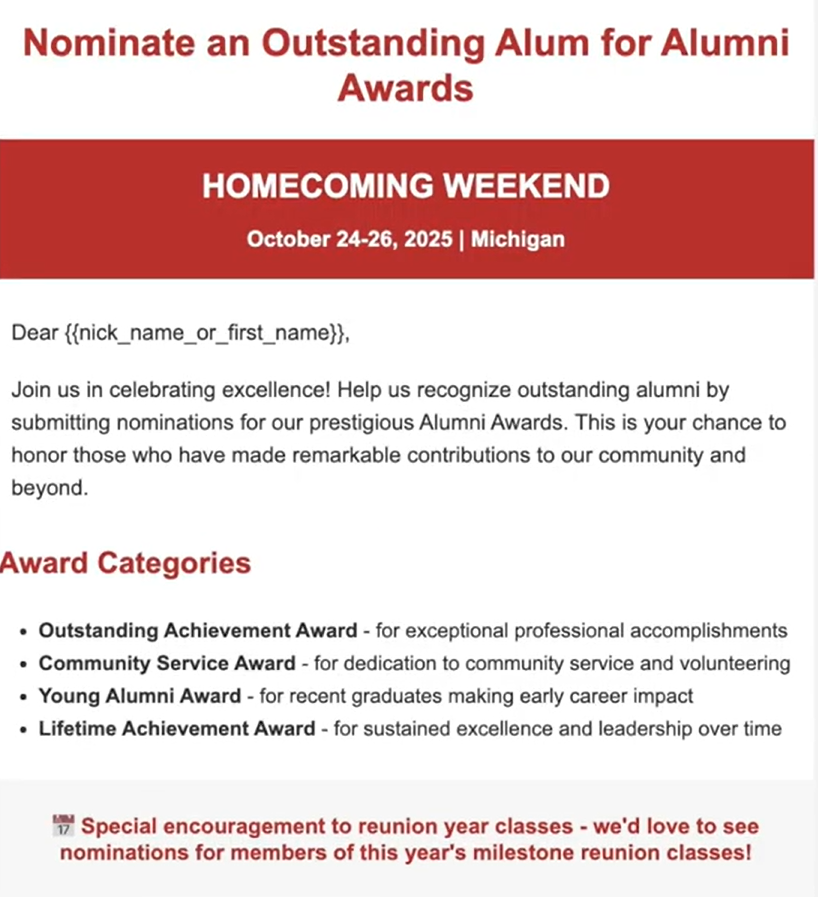
Almabase treats email communication as a workflow. With its Emily AI integration, your team can generate a context-aware first draft right inside Almabase's Email Center using a simple prompt like "Invite alumni to our 25th reunion in a warm, conversational tone".It can even pull details from your event page, like the event name, date, location, and registration link, so you're not starting from scratch every time. Once you have a draft, you can refine it, regenerate it, or send it through your usual workflow without ever leaving the platform.
From there the invite automation lets you build an entire invitation sequence upfront, complete with follow-up reminders that are sent only to alumni who haven't yet registered. As people respond, the workflow automatically adapts, so your team isn't manually tracking who still needs a nudge.
And because every email is sent from a sender identity you configure for your institution, the experience feels consistent and familiar to alumni from the very first invitation to the final thank-you. This goes far when your goal is to scale communication without losing the voice that resonates with your audience.
The days immediately after an event are when alumni feel most connected to your institution. The experience is fresh: reliving conversations, sharing photos, reconnecting with classmates, and thinking about when they'll come back next.
That's the perfect moment to keep the momentum going.
Send attendees a thank-you and earnestly ask for feedback while attendees care enough to write back. Share event photos. Reach out with event highlights for those who couldn’t make it. Invite those interested to volunteer at the next planning committee. If fundraising is part of your strategy, follow up with an ask while the emotional connection is still strong.
Almabase makes those conversations easier by letting you tailor follow-up based on what went on: who attended, who didn't, who volunteered, who donated, and who might just need another reason to reconnect.
We believe that the end of an event is a place to show gratitude and leave the door open for conversations about the next one.
Registrations have closed, reminder emails have gone out, and volunteers are at their stations, and everyone's hoping the weather holds up. Months of planning come down to a few hours or a weekend.
Ironically, the mark of a well-run event is when nobody notices the operations behind it.
Attendees notice whether they got through the door without a hitch.
Someone forgot to bring their confirmation email, or a spouse is tagging along but isn't sure whose name the registration is under. These last-minute oddities aren’t unusual, so Almabase equips you with exactly what you need to handle this.
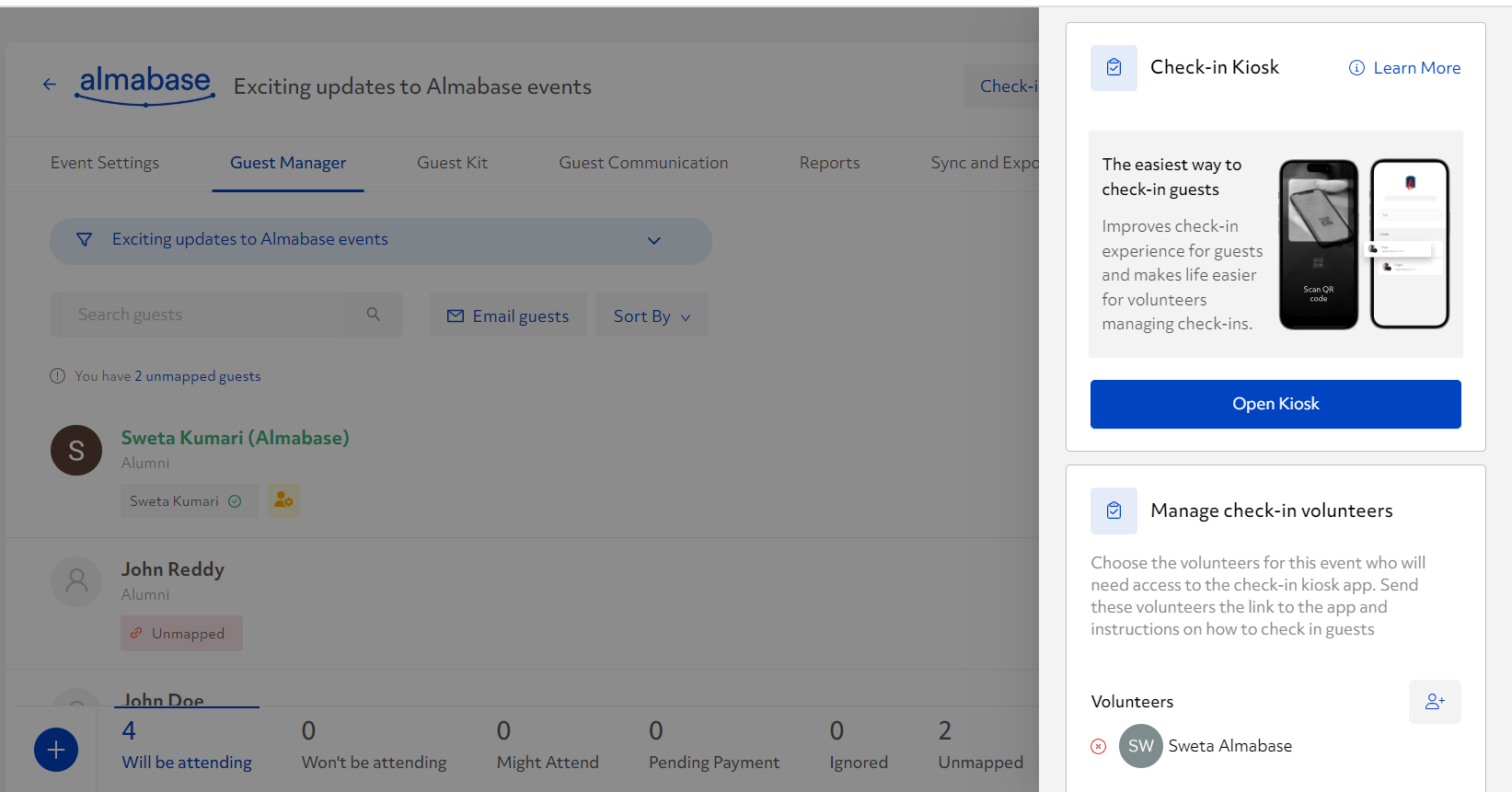
With the QR check-in option, volunteers can scan an attendee's QR code or search for them by name. If someone isn't registered, they can be added on the spot. And because you can assign check-in access to volunteers without giving them full admin permissions, it's easy to run multiple check-in desks without everyone working from the same laptop.
From the attendee's perspective, it's a smooth welcome. From your team's perspective, every check-in is automatically recorded, so you know who actually attended without spending half a day reconciling attendance lists.
Knowing the total headcount of your event is useful, but data that tells you what your attendance means looks like you knowing who showed up for the campus tour, how many stayed for the reunion lunch, and what percentage of your attendees were at the donor reception. This kind of data goes into informing decisions for the next edition of your event.
With Almabase, every sub-event has its own check-in flow. Attendees can scan the QR code from their confirmation email or be checked in by a volunteer, and participation is captured in real time for each individual session. That means you know who attended the event and which experiences they chose to be part of.
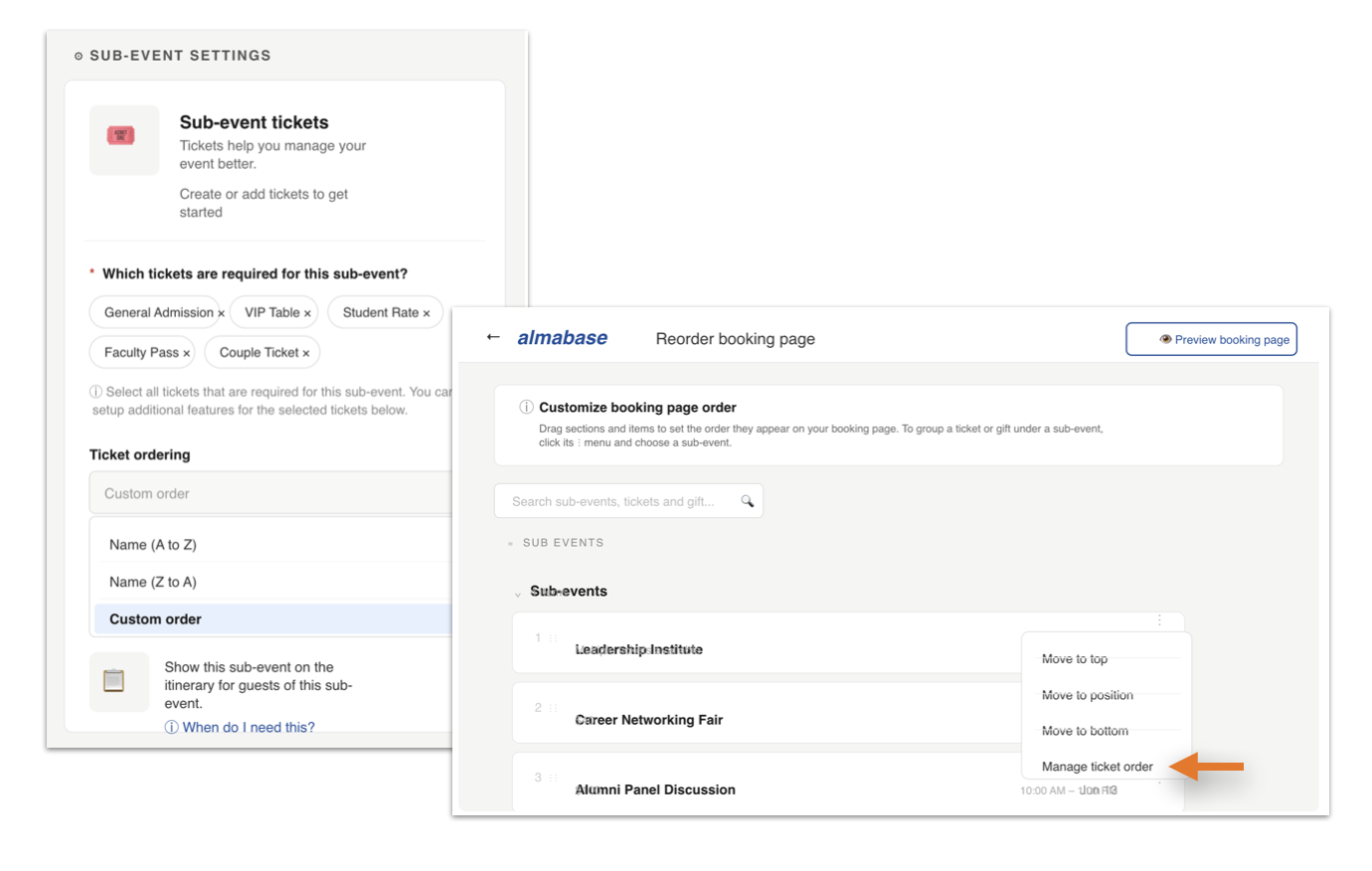
Behind the scenes, that attendance data is synced with your CRM, giving your team a complete picture of engagement.
One enduring change since the pandemic years has been the blending of in-person and virtual programmes throughout event experiences, allowing organizers to reach alumni who will not be able to make it in person.
Almabase understands the importance of providing a uniform experience across these formats. It supports in-person, virtual, hybrid, and multi-day events through the same registration, communication, and reporting framework, giving both attendees and event teams a familiar experience regardless of the format.
Now that the event is over, it’s time to unearth the wealth of insights provided by the data captured throughout all the previous stages.
Answering the ‘How did it go’ question depends on accurately reading the insights from this data. As your team embarks on this last project, your platform should be able to keep up by capturing this information for them.
With Almabase's TrueSync with Raiser's Edge NXT, constituent profiles, event registrations, guest information, gifts, ticketing, and sub-event participation stay synchronized between both systems. You decide how data should move, with flexible sync rules that let you automatically update records where it makes sense or review changes before they're pushed to your CRM.
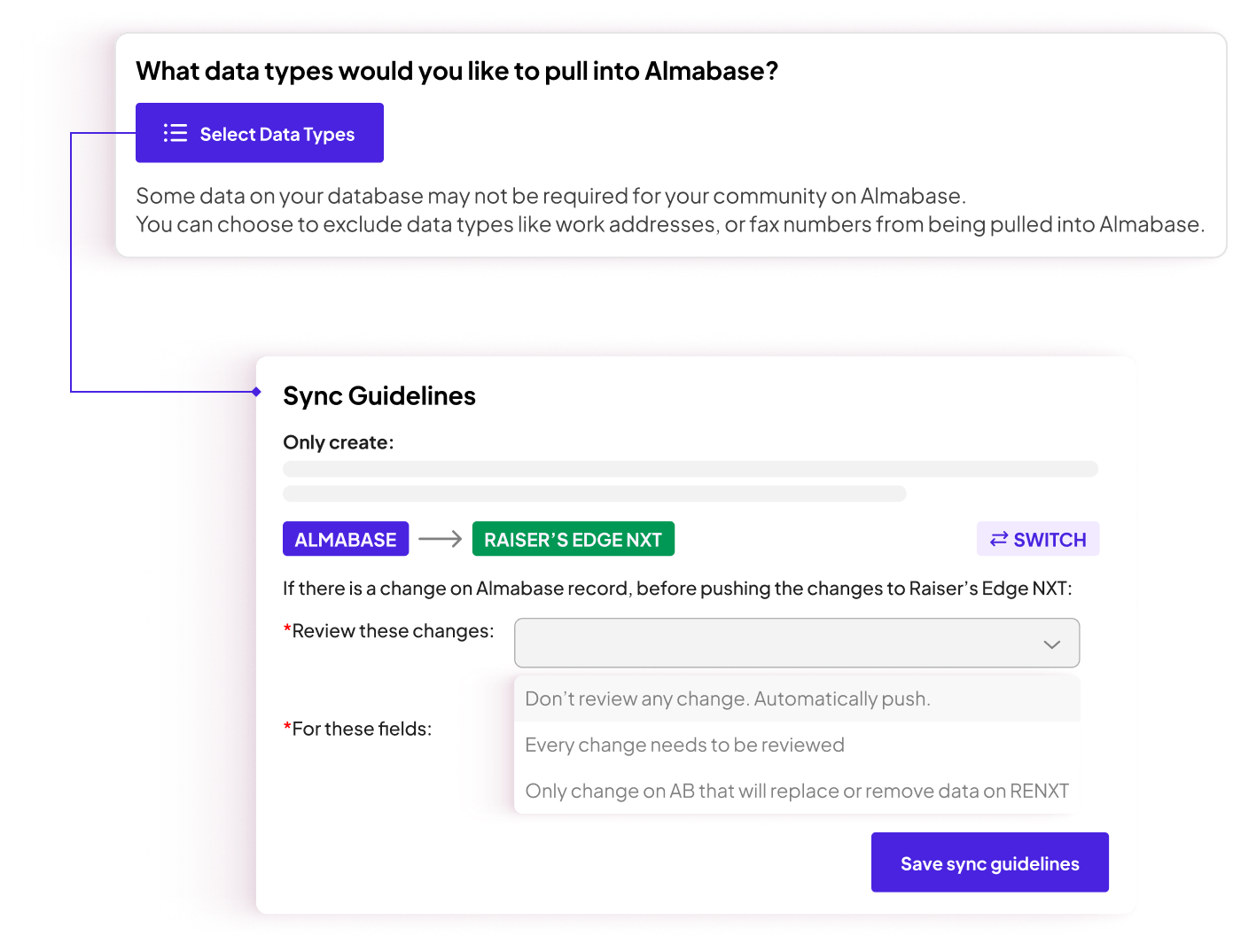
As a result, your team is always working with current, clean data: less time spent maintaining records and more time acting on the insights contained in them.
For MSUM, synced data turned into time they got back: Giving Day reconciliation dropped from four weeks to four days, freeing the team up to launch a stewardship campaign that brought in an additional $40,000 in follow-on gifts. Read more about it here.
Once the event wraps, everyone looks for different metrics for value: the alumni office wants attendance, the alumni relations officer wants to know which reunion class had the highest turnout and leadership wants information on the ROI for the event.
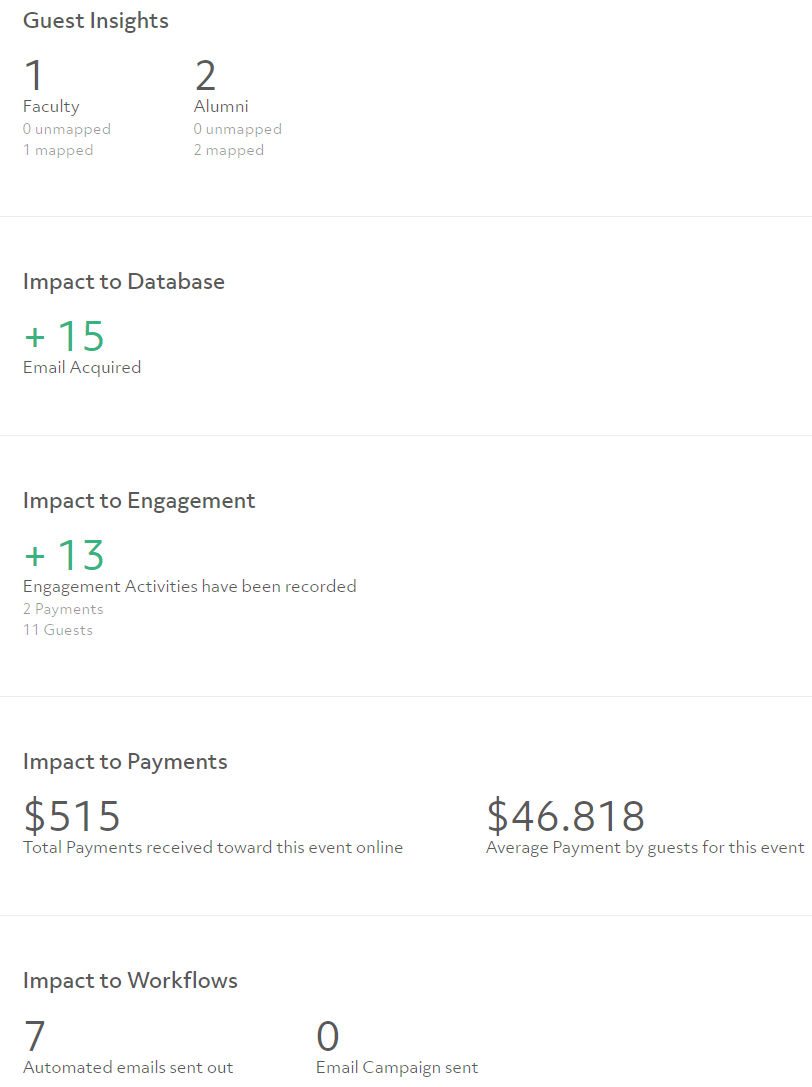
With Almabase, this information is easily accessed and you just have to put it together. Your team gets reports for registrations, attendees, guests, ticket sales, revenue, registration sources, and sub-events without having to export data from three different places first. All of this in a matter of a few clicks.
And because guest data, attendance, and registrations all stay connected via CRM sync, you're working from one version of the truth. Essentially, the data is as reliable as it gets.
Discussing all the stages so far, one thing becomes very clear: if the journey ends at ‘Measure’, you start from scratch with every new event.
Maybe regional events are outperforming expectations while a long-running format has started to plateau. Those patterns only become visible when your event history stays connected. The reports you've built, the attendance you've tracked, the registrations you've captured, and the gifts you've recorded all have another, more important job to do. They're meant to inform the next event.
That's why we'd add one more stage to the framework:

While Measure tells you what happened, Post-event Insights help you decide what to do differently.
Of course, this only works if your event data is complete and trustworthy. When registrations, check-ins, guest records, and gifts flow back into your CRM automatically, you're looking at one complete picture of how the event unfolded and using it to make smarter decisions about the next one.
In other words, you’re feeding the loop instead of closing it.
Every event should leave your team a little smarter than it was before. Over time, Almabase helps build that institutional knowledge, making it easier to compare events year over year, understand what drives engagement, and make decisions based on evidence instead of instinct.
It’s a bit of a misconception that a bigger headcount is what drives up the difficulty when it comes to scaling events. Issues start showing up because with multiple events, the complexity rises, demanding the right systems handle it. With Almabase, teams can handle this complexity while continuing to spend time on curating and creating experiences instead of wrestling with technology.
Scalable ▶️ repeatable ▶️ bigger and better, year on year.
Curious to see what that looks like for your institution? Request a demo with us now! 🤗
Yes. A reunion weekend, Homecoming, or Giving Day can run as one parent event with several sub-events underneath it, each with its own registration flow, capacity, and pricing. Your team manages it all from a single backend instead of juggling separate event pages.
Yes. In-person, virtual, hybrid, and multi-day events all run through the same registration, communication, and reporting framework, so attendees and staff get a consistent experience no matter the format.
Yes. Through TrueSync with Raiser's Edge NXT, registrations, guest information, gifts, and sub-event participation stay synced automatically, so your team is always working from current, clean data.
Almabase is suitable for teams of all sizes. The platform scales to the complexity of the event, keeping registration, coordination, communication, and reporting manageable across an entire calendar of events.
.jpg)
How Almabase Scales Alumni Events Effortlessly
Alumni events get more complicated as they grow. Here's how Almabase keeps every stage running smoothly.
Lorem ipsum dolor sit amet, consectetur adipiscing elit. Suspendisse varius enim in eros elementum tristique. Duis cursus, mi quis viverra ornare, eros dolor interdum nulla, ut commodo diam libero vitae erat. Aenean faucibus nibh et justo cursus id rutrum lorem imperdiet. Nunc ut sem vitae risus tristique posuere.

July 24, 2026
12 minutes

.svg)

.avif)
.webp)