.svg)
Blog Gallery
Build lifelong relationships
Latest stories, guides, and benchmarks from the world of alumni relations, fundraising, donor engagement, advancement services, events, and higher-education philanthropy
Blackbaud recently announced that support for Raiser’s Edge NXT’s database view and related functionality will end on September 15, 2027, affecting several Blackbaud products. These include Blackbaud Online Express and Blackbaud NetCommunity (BBNC). For advancement teams that have spent years building forms, pages, workflows, and other processes around the platform, this means choosing and migrating to a new platform. The prospect can feel like a lot to take on, especially if it wasn't something you'd anticipated.
If you're looking for an alternative, Almabase can help you replace the functionality you currently rely on across these products. We've already covered why teams might be thinking of a move off BBNC and how the main alternatives compare. In this article, we’ll be focusing on what happens once you've made that decision: what the migration process looks like, what your team can expect along the way, and how Almabase approaches the move.
In case you’re evaluating how Almabase stacks up against BBNC, check out our comparison blog here.
There’s also another question that comes up around a platform migration: How much is this going to cost?
This question extends beyond the immediate, visible technical costs. In fact, the technical side of the move might just be the simplest to figure out. It’s the broader, more abstract elements like shifting scopes, changing requirements, or even figuring out the right set of requirements in the first place that could end up costing the most amount of money and time, if not approached thoughtfully.
That's why we want to walk you through the Assisted Fast Pass Migration process upfront: what happens at each stage, what your team is responsible for, what our migration team handles, and where costs may come into the picture. We hope to give you a clear idea of what the move to Almabase will look like before you get started, so there are fewer surprises along the way.
Why transparency matters during a migration
A migration project always begins with an agreed-upon plan. But it’s also very likely that, a few weeks in, you discover a form that needs some additional customization or a request that seemed straightforward seems to fall outside the original scope, on second thought. These are perfectly reasonable hiccups during the migration, but if work is already underway, it could seem harder to understand what you're paying for, and even harder to plan around the rest of the project.
Clear expectations are at the heart of our migration approach, starting with total transparency around what extra requirements cost. With Almabase’s Assisted Fast Pass Migration, each stage gives you a chance to understand what's being proposed, what falls within the standard migration, and where something would require additional work.
Basically, you shouldn't find out about an extra requirement after the work has already been done. Your approval and sign-off comes first. The five steps in the migration process are built around this intention. Let’s get into them.
1. Kickoff: Getting the project off on the right foot
The migration process starts with a kickoff between your team, a dedicated CSM, and an implementation specialist. This is where we get the groundwork in place. This is usually access to your current site, your branding assets, and the dates your team needs to work around.
Another important step here is understanding your calendar and priorities. Your Giving Day, reunion, fiscal year-end, or another major event may determine what needs to happen first and we would be building the migration calendar around it. So, the migration sequence might look a little different for each institution, as each gets to choose which product goes first.
The kickoff is also a chance to flag anything unusual about your current NetCommunity setup.
After years on a platform, it's normal for your setup to have accumulated a few workarounds, custom configurations, or integrations that made sense when they were created. We don't need to solve all of those questions in the first meeting, but we do need to know about them.
That way, we can account for them during the next stage: the inventory. 🤗
Your team mainly needs to provide:
- Key dates and deadlines
- Relevant branding assets
- Access to your existing NetCommunity site
- Any known custom configurations, integrations, or unusual workflows
From there, you can let us take on the heavy lifting.
Your dedicated CSM and implementation specialist work with you throughout the migration, while your team focuses on the decisions and approvals. A migration shouldn't require your advancement team to take on managing a project full time on top of everything else they’re already handling.
Your data doesn't have to wait for the build
Your data migration is handled alongside the rest of the process. Almabase's bi-directional TrueSync integration connects with Raiser's Edge NXT and supports two-way syncing for configured entities and fields, including constituent, event, and gift data.
Admins can also decide which fields update automatically and which should be reviewed before they're pushed or pulled between systems.
That means your team doesn't have to wait until every page and workflow decision has been finalized before thinking about what happens to your data. The data side of the transition can move forward alongside the rest of the migration, with real time decisions being made.
2. Discovery and inventory: weeks one and two
Once kickoff is complete, your implementation specialist carefully starts building a complete inventory of what's currently running on NetCommunity: pages, forms, events, programs, memberships, and other key components of your site.
This process is useful in its own right, especially when taken on by someone external. After years on a platform, it's easy for a site to accumulate things that no one thinks about anymore, simply because they’re too involved in the process. The inventory gives you one place to see what's actually there, anything you might’ve forgotten about, and to make decisions about what needs to move vs what can be left behind.
Probably the most effective part of this is that it's a shared inventory that you can review alongside your specialist. If something looks outdated, doesn't need to move, or needs a closer look, you can flag it before it moves to the new product.
The inventory can surface things like:
- Duplicate or unused event pages
- Old forms or pages that are still live
- Site elements that don't need to be carried into Almabase
- Custom fields and configurations that don’t make sense on the new platform
This idea is to document your NetCommunity site so well that both teams end up on the same picture of what exists and what needs to happen next. The Almabase team handles the actual inventory work, and all you need to do is review the inventory and flag anything that should be changed, removed, or investigated.
3. Sign-off: deciding what moves forward
At this stage, the migration project starts taking on a more defined shape as you decide what you need to bring into Almabase. You and your implementation specialist review the inventory, decide what carries forward, and establish what the finished version should look like.
For each item being migrated, the team, along with you, defines the acceptance criteria before the building begins. If your existing alumni directory has eight fields and three filters, for example, those requirements can be documented as part of the scope. By the end of this discussion, everyone has arrived at the same definition of what needs to be delivered.
This is also where you’ll be able to clearly separate standard migration work from anything that requires additional effort.
If something falls outside the standard scope, you'll know before the work begins:
- What the additional work involves
- What's included and what's excluded
- The estimated effort
- The associated cost
You won’t have to decipher this from the invoice later on, because the work only moves forward once you’ve signed off on the scope.
This is exactly why your input here matters most. The Almabase team handles the building, but it’s you and your team deciding what is important enough to carry forward and what “done” needs to look like, within the standard process or with additional effort layered on.
4. Build and launch: 30 days for each product
Our team takes up building only once you’ve greenlit the scope. Each product gets its own dedicated 30-day track, with the order of products taken up built around your events and fiscal calendar.
This is to accommodate your calendar: giving days, reunions, Homecoming, we’ll build that product first so you’re ready in time for go-live day. If your immediate priority is your broader alumni site, we might begin with building that instead. The point is, even at this pace, you’re not forced to adopt a one-size-fits-all solution. Your implementation team works with you to determine what needs to come first.
The build itself happens on your Almabase pages, so you can review as it gets built while also familiarizing yourself with the new platform.
The timeline typically looks like this:
- 30-day build track: Each product moves through its own focused build.
- Weekly working session: Your team meets with the implementation team to review progress, provide input, and make decisions.
- Training as you go: Your team gets hands-on experience with the platform during the build, rather than waiting until everything is finished to start learning it.
- First launch: The fastest migrations can have their first product live around 45 days from kickoff, depending on the scope and sequencing of your project.
Having the scope agreed upon shows up in smoothness at this point: you can expect fewer decisions to make from scratch during this stage. Your team knows what's being built, your implementation specialist knows what they're working toward, and everything can move as planned, on track.
5. Cutover: moving from NetCommunity to Almabase
As you get closer to launch, the focus shifts from building to making the transition itself as smooth as possible.
The most important part of that is making sure people can still find the things they've been using. Your team receives a redirect map that pairs each carried-forward NetCommunity URL with its new Almabase destination. You'll also want to review where those old links appear outside NetCommunity: your main institutional website, email templates, QR codes, printed materials, and any other places where an old URL may still be in circulation.
The redirect map gives you a clear list of what needs to change and no one has to discover old links one by one after launch.
Before each product goes live, your team gets to review it thoroughly and explicitly approve the launch.
The aim, with these five steps, is to get your Almabase programs ready before your NetCommunity access ends, so the transition remains smooth and doesn't become a last-minute scramble.
What happens when something doesn't fit the standard scope?
Not everything that comes up during a migration falls neatly into the original plan. But there's also an important conversation to be had: what counts as additional scope and what is a limitation in the platform itself?
If something requires work beyond the standard migration scope, that's identified and quoted before the work begins. You can then decide whether you want to take it on.
But if there’s a requirement you have that Almabase cannot support yet, we’ll be fully transparent with you. Essentially, you haven’t asked for too much, we’re just not there yet. Depending on what you need, the team can look at a workaround or determine how the functionality could be addressed after launch.
This conversation is also one of the reasons the earlier stages matter. The shared inventory, defined acceptance criteria, and upfront scoping give everyone a common reference point throughout the project.
That's really the principle behind the entire migration process. You're not expected to know every detail of what needs to happen before the project starts. The process itself is designed to show you those details early, give your team a chance to make the calls that matter, and keep the build moving while minimizing unexpected, last-minute surprises.
Ready to make the move?
A BBNC migration may not have been on your roadmap, but that also doesn't mean it has to become a project that takes over your team's calendar.
With a clear process, an agreed scope, and the right support, you can move the parts of NetCommunity that matter to your team and work for your institution without having to figure everything out as you go. The Almabase team handles the build and migration work, while your team stays in complete control of the decisions, priorities, and final approvals.
And because the scope and any additional costs are addressed before the work happens, you can go into the migration knowing what to expect.
If you're planning your move away from BBNC, let's talk about what it could look like for your institution.
Talk to the Almabase team about your BBNC migration →

Moving from BBNC to Almabase: The Assisted Fast Pass Migration
Blackbaud is sunsetting support for Raiser’s Edge NXT’s database view and related functionality in September 2027. Learn how Almabase replaces your current functionality and how our Assisted Fast Pass Migration makes for a smooth switch without disrupting your campaigns or operations.

Anwesha Kiran
September 10, 2026
12 minutes
A paddle raise (also called a fund-a-need) is a great and simple fundraising format for nonprofits. It is easy to host, fun, and similar enough to auctions that if you have experience in one, you can easily incorporate the other.
All this is to say that, with proper planning, it is one of the most effective ways to get donations for your nonprofit or a particular project.
In this blog, we’ll look at what makes a typical paddle raise work, its benefits, and the essential steps to start hosting one on your own.
What is a Paddle Raise?
A paddle raise, also often called fund-a-need, is a live, direct appeal during a fundraising event such as a gala where donors pledge a financial contribution to a nonprofit, charity, or a particular cause. This is usually done by raising paddles containing varying numbers or ‘levels’, or through bidding devices and software.

Unlike charity auctions though, there aren’t any items or art involved, and attendees will not be bidding on a piece. An ask is made, and donors willing to contribute that amount raise their paddles. Due to the simpler setup and direct contributions, paddle raises have high ROI and are generally considered to be very effective.
How does a Paddle Raise work?
Usually taking place at the peak of the fundraiser, a paddle raise takes around 10-20 minutes (it happens quite quickly). This is typically how it unfolds:
- A designated speaker or emcee gets the event rolling by showing a video or narrating a quick story that introduces and emphasizes the impact of your mission.
- The emcee announces the fundraising target for the night, or if there are multiple causes, the goals for each.
- Tiers of contributions are planned beforehand ($10k, $7.5k and so on), and the emcee starts with the highest tier and works their way down to the lower tiers. When they ask for contributions, attendees express their willingness by raising numbered paddles.
- Volunteers and staff keep track of all the pledges and note it down.
- After going through all the tiers, the pledges are processed, and the total amount raised is announced. Attendees are thanked for their contributions and the event draws to a close.
Now that we’ve gone through what a paddle raise is and how it usually plays out, let’s get to how you can run one of your own.
How to Run a Successful Paddle Raise (Step-by-Step)
While paddle raises are simple enough in concept, they do require proper planning and coordination to capture pledges accurately and create good energy overall.
Here’s how you do it:
1. Pick the right cause/project for your targets and set your targets
Paddle raises are a lot more effective if you can tie them to a specific initiative that makes donors feel like they’re making a meaningful impact. It could be an annual raise for cancer, providing education to underprivileged children, etc.
Set a tangible goal and be clear on where the money goes. Sharing this with your donors builds trust. The goal shouldn’t be so high that hitting it feels impossible. All in all, you want to set a realistic but fairly ambitious figure.
2. Decide the contribution levels or tiers
You should aim for 5-10 levels and make sure it’s inclusive of everyone’s giving capabilities. You can discuss with your pre-committed donors (more on that later) to decide amounts for the higher giving tiers (or conversely for lower giving tiers depending on the situation).
This is where having a regularly updated donor database helps greatly, as you can base your levels off of giving history and data.
A basic example would be to have $15k as the highest tier, followed by $10k, $5k, $2k and so on all the way to $50. Remember that you have to be inclusive, so don’t skimp out on small or micro-level contributions.
3. Pick your emcee or host
The emcee is critical in setting the stage and the energy before the raise begins. An enthusiastic crowd can make a massive difference in contributions. If possible, hire a professional emcee who has been on the mic for other charity events before. You know your donors best; use that knowledge to pick out a host that can connect with them and elevate the room accordingly..
Alternatively, if your organization has deep ties with the attendees, you could consider a leadership figure (directors, chair, etc.) for familiarity. Of course, they need to be a good orator as well.
4. Decide the schedule and script
Since a paddle raise is relatively short, decide when the paddle raise should take place during your fundraising event or gala. You should aim to host the raise during the peak of the fundraiser, when everyone is energetic and receptive to instructions from you or your host.
Come up with a script, including your opening statement, tier announcements, anecdotes, and expressing gratitude at the end. Have alternative scripts ready for different scenarios since you can’t always predict if you’ll hit your target, overshoot it, or come close.
5. Pick the right tools for your event
You can choose to host your paddle raise with either physical paddles or through bidding software, though incorporating the former is heavily recommended.
You’ll need to assign numbers to each attendee and give them a paddle with the corresponding number. When a certain giving tier is called out, they can choose to pledge that amount by raising the paddle while volunteers keep track of it.
If you’re opting for a digital process, look for mobile-friendly bidding platforms. There are some other options as well like scanning QR codes to pledge. However, keep your attendees’ preferences in mind and try to find a balance between their experience and your team’s feature set. This is important, since the bidding and giving data will need to be synced to your CRM.
6. Running the paddle raise itself
When opening your event, it helps to set the energy high. Start with the mission statement and targets you set earlier. Here’s where the emcee does the heavy lifting. Videos and stories with emotional angles work really well at establishing a connection with your donors and creating empathy for your cause. If you have first time donors in the mix, a quick explanation of how the paddle raise works would also be helpful.
Make sure your volunteers are in place to clearly record everything. The emcee announces the levels in succession, starting with the highest one and working their way down.
Seeing major contributions right at the start might encourage the others to go beyond what they had originally planned. Make sure that the emcee acknowledges and celebrates pledges briefly for each tier before moving on to the next one.
How your staff records the pledges is up to you. You can use an app, spreadsheets, or simply pen and paper. Choose whichever would be the most convenient and accurate for your team.
7. Gratitude and stewardship
After going through all the levels, tally the total amount raised and announce it as the event draws to a close. Celebrate the impact everyone has created on the day. Tying the money raised to a tangible outcome (for example, 50 scholarships granted for struggling children, or feeding 100 people) creates even more positivity and really drives home a sense of accomplishment and giving.
After your fundraising event, follow up with your attendees to collect the pledged amounts, preferably within a day. Include key details like their paddle number, amount they pledged, and multiple payment options. Thank all the participants, regardless of whether they donated or not.
A Few Tips to Enhance Your Paddle Raise
Here are a few extra things to ensure you get the most out of your paddle raise(s):
- Pre-committing a handful of donors: Reach out to some of your long time supporters, and ask for an early commitment to a particular level, especially the higher ones. Hesitation in the opening rounds of the raise can affect the overall contributions negatively. When attendees see paddles being raised immediately even at higher tiers, it gives them confidence to donate more.
- Host it at the right time: If your paddle raise is part of a larger fundraising event (as is most common), avoid doing it right after a meal break when attendees are a bit languid, or at the very end of the event when a lot of them have left already.
- Celebrate milestones during the raise: Every time you get significantly closer to hitting the day’s target, celebrate it. For example, if your goal is to raise $30000, then announce and celebrate when the contributions reach $5000, $15000, maybe hit a gong at $25000, and so on. Also, make sure to recognize all contributions, big or small, with equal excitement.
Almabase - A Powerful Tool for Hosting Your Paddle Raise
At its core, a paddle raise is fairly simple. But behind that simplicity is a lot of manual tracking like volunteers noting down pledges, someone tallying totals, and follow-up calls or emails to actually collect what was pledged. This is usually where a platform like Almabase can take some of that load off your team.
Instead of clipboards and spreadsheets, Almabase gives you a real-time dashboard of the event as it unfolds, so pledges don't need to be re-entered after the fact. Since collecting payment is often the trickiest part, you can also capture a guest's card at registration and charge pledges automatically once the raise wraps, rather than chasing donors down individually.
A couple of other things worth mentioning: contributions can be routed straight to the fund or project they were raised for, and everything syncs directly with your CRM so your donor records stay accurate without extra data entry.
None of this replaces a great emcee or an emotionally engaged room, but it does mean less time spent staring at numbers, and more time celebrating what you raised.
Request a personalized demo to see how this would look for you!

How to run a successful paddle raise (fund-a-need) at your event
Learn what a paddle raise is, how you can run one successfully, as well as a few tips to make your paddle raise stand out.

Hari Govind
September 4, 2026
12 minutes
Modern donors expect deeply relevant, personalized communications, especially when it’s alumni hearing from their alma mater. Generic messages won’t cut it, but it can also be difficult to make your appeals stand out when you’re making the same ask every year. To develop annual fund appeal letters that drive revenue and deepen relationships, you need a strategic approach.
Annual fund appeals succeed when they have refined messaging, emotional resonance, and enough variation to win donors’ support outside of flashier, major campaigns. In this post, we’ll explore a few key ways to elevate your university’s next ask.
1. Center Authentic Student Storytelling
Donors give to people, not institutions, making personal narratives one of the most effective fundraising and marketing strategies you can use. By shifting the focus from university-wide achievements to the tangible success of individual students, you foster a direct emotional connection with your audience and demonstrate the real, lasting impact of their donations.
Instead of relying on generic asks for annual fund appeal letters, incorporate the stories of individual students and the scholarships and programs that empower them to thrive. For instance, you might share how a first-generation nursing student used a grant to complete their clinical rotations, or include a quote from a scholarship recipient about how attending your university made their dreams a reality.
No matter how you incorporate storytelling into your appeals, Meyer Partners recommends using the three R's of storytelling to make them as impactful and ethical as possible:
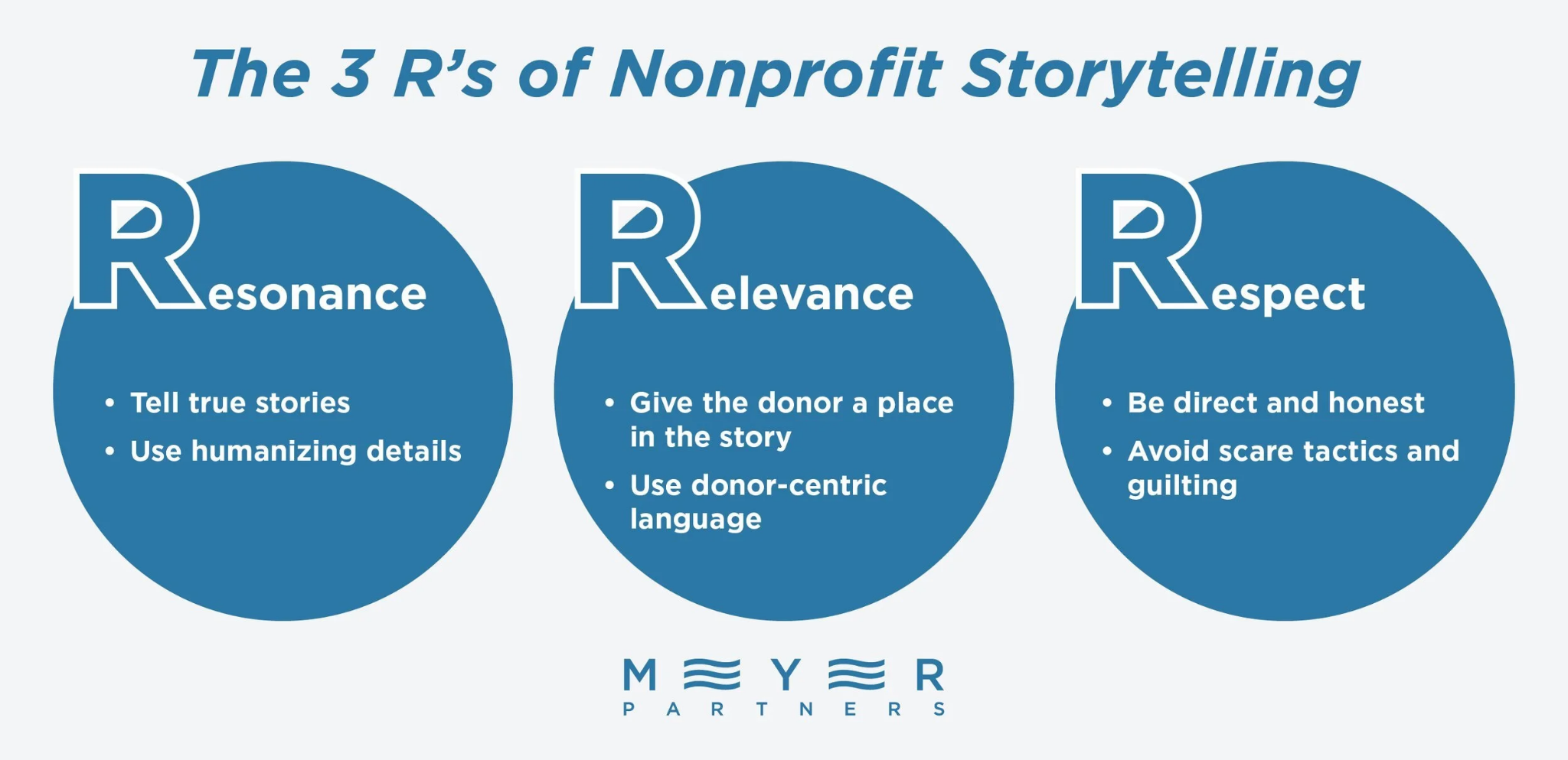
- Resonance: Every story should include real, humanizing details that resonate with donors. Let students tell their stories in their own words, and pair testimonials with photos whenever possible.
- Relevance: Make sure the donor can clearly understand their role in the story. Use donor-centric language that appeals directly to supporters’ values, inspiring them to become the changemakers who support the next generation of students.
- Respect: Respect both your readers and your storytellers by maintaining authenticity. Be direct and honest about what donations can achieve, and always focus on positive emotions like empowerment rather than guilt or scare tactics.
Incorporate these stories into multiple elements of your annual fund campaign to ensure maximum visibility and consistency. For example, you might include quotes from a student in your direct mail appeals, then post a selfie video of the same student telling their story on social media.
2. Highlight Impactful Giving Opportunities
To maximize revenue and increase average gift sizes, ask for more than standard, one-time cash gifts in your annual appeal letters. Offer additional giving options that provide greater flexibility and can increase donors’ long-term impact. These opportunities are often more compelling, especially for young alumni looking for accessible options and for high-capacity donors looking to make the most of their donations.
Specifically, use your annual appeals to highlight opportunities like:
Matching Gifts
The easiest way to make supporters’ donations go further is to double them. Typically, donors can double the impact of their gifts at no extra cost in one of two ways:
- Your university offers a matching donation challenge. Organizations often partner with a major donor who commits to matching every dollar donated within a set timeframe, up to a certain amount. These challenges motivate individual donors to give urgently so they don’t miss out on the match.
- Donors request corporate matching gifts from their employers. At any time, donors who work for participating companies can independently request matching donations from their workplaces. If the request meets the employer’s guidelines (e.g., a donation between $10 and $100 to a registered 501(c)(3) nonprofit), they’ll match their employee’s gift.
Either way, donation matching is a powerful motivator, especially during year-end giving season. Feature matching gifts prominently in your annual fund appeals, explaining how to participate and why these donations are so impactful.
Recurring Giving
Imagine you’re a recent graduate just starting your career and trying to pay off student loans. You wouldn’t want to donate $1,000 to the university you left last year, but it might be feasible to give $20 a month. In this case, you’re much more likely to respond to an appeal that highlights recurring giving.
Recurring gifts offer a more manageable opportunity to support your university while deepening donor relationships. In your annual fund appeal letters, include the option to give monthly and provide several accessible donation tiers.
Legacy Giving
Plant the seed for long-term support by introducing planned giving and bequest options in your annual appeals, too. These avenues empower alumni to leave a lasting mark on your institution without requiring an immediate, large-scale donation.
Even if most donors aren’t ready to commit to a legacy gift right now, just including information about planned giving in your appeal can get them thinking about it. Include links in emails and QR codes in direct mail letters so supporters can easily learn more on your university’s website or request a meeting with your major gifts officer. Note each donor who shows interest in the program so you can cultivate the relationship over time.
3. Leverage Donor Data for Highly Personalized Appeals
The best fundraising strategies reflect the unique relationship each supporter has with your university. Highly personalized appeals show each donor that you value them as an individual and respect their unique contributions.
Use your donor and alumni data to tailor your asks as much as possible. Go beyond addressing recipients by their preferred names—reference their specific past involvement, giving history, and personal connections to the university. Acknowledging that an alumnus was on the debate team or that a donor consistently supports the engineering department validates their identity and gives them clear, specific reasons to give again.
Segment your donor lists in several ways to maximize relevancy, and regularly audit your donor database to ensure all contact information and engagement records are accurate before sending appeals.
If you aren’t sure how to best segment your audience, hone in on the highest-value potential donors, or match supporters with the right requests, consider professional donor analytics services. Experienced fundraising consultants who specialize in data analysis can help you optimize your strategy for this year’s annual fund appeal and well into the future.
An effective annual fund approach relies on deep personalization, authentic narratives, and a variety of flexible giving options tailored to your audience. Upgrading the underlying strategy of your communications with these tips will help you build stronger relationships with alumni and secure the financial future of your core programs.

3 Ways to Build a Better Annual Fund Appeal for Higher Ed
Asking for donations to your annual fund can feel repetitive, but your appeal letters shouldn’t be. Learn how to develop better annual fund appeals here.
.jpg)
Alyssa Jefferies
September 3, 2026
12 minutes
LinkedIn continues to stay relevant for alumni outreach in 2026 as it is one of the most comprehensive self-updating directories from an advancement standpoint. Over 50% of LinkedIn’s user base holds a higher-education degree, and ~53% of US college graduates are active on the platform.
That means your alumni not only present but also likely engaging with a variety of content. But as far as reaching out to them goes, being present on LinkedIn and being reachable are two different things, and the wrong outreach strategy can disinterest or even alienate alumni.
In this blog, we’ll go through whether LinkedIn is worth your time for alumni outreach and how you can get your alumni’s attention effectively.
Is LinkedIn outreach worth the investment?
Let’s start with understanding why LinkedIn is different from the other channels
LinkedIn InMail gets a 10–25% response rate while cold email, by comparison, sits at 1–5%. The platform’s natural context is also a big factor here because when an alum receives an InMail from their alma mater, it’s in a different environment to when they’re sorting through personal emails and family messages. They log on to LinkedIn with a certain mindset, which makes them more open to professional conversations.
LinkedIn also gives outreach teams more context about who they’re reaching before they begin the process such as:
- Where an alum works currently
- What they’ve recently posted
- What groups and communities they’re in
- Who the common connections are
That’s a lot of helpful material to tailor the first message that will hopefully be the start of a donor’s journey. Combine all of this with the social media nature of the platform and you get a channel that has a lot of potential if you approach it right.
LinkedIn Alumni Outreach Strategies
Now that we’ve established that LinkedIn is at least worth a look, let’s set your team up for success so that your messages don’t go ignored.
1. Build an Active Presence Before You Send a Message
Advancement teams (and most teams in any field, to be fair) tend to treat LinkedIn outreach the same way they’d treat a cold email campaign. They find the person, write the message, hit send, and hope for the best.
But LinkedIn is, at it’s core, a social network. Your alumni notice who’s following you, who’s commenting on your posts, and whether your institution has a solid presence on the platform. If your university’s LinkedIn page hasn’t posted in months and the last post was a stock photo of a campus building, it hurts your cause already.
Before you start an outreach campaign, make sure you tick all these boxes::
- First, make sure your institution’s LinkedIn page is active. Posting once per weekday helps you reach 60% of your followers in a month. You should be aiming for consistent presence over viral content.
- Secondly, look for mutual connections, a shared connection increases reply rates by 27%. If a colleague or another alum is already connected,
- Thirdly, follow the alum you plan to message and leave a genuine comment on something they’ve posted. If possible, build and nurture your online relationship with them. You should be looking to gain a follow-back. This can be crucial since alumni who already follow your institution are 81% more likely to respond to your InMail.
2. Build a Segmented List
Use your CRM along with LinkedIn's alumni search tool to understand who you will be sending your messages to. Many alumni engagement tools also allow you to better find, segment, and automate outreach to the right people.
The segmentation itself will be crucial as personalization is a big part of making your message stand out (as we will explain later), so take your time and make sure all your segments and alumni information is updated, synced, and ready to go.
3. Get the Subject Line Right
LinkedIn InMail by default gives you a 200-character subject line limit. When an alum receives your InMail as a notification, they see roughly 25 to 40 characters before the preview cuts off.
For this reason, short, specific, and personalized subject lines can work really well. For example: “A quick question from [University]” or “Connecting with [Name] re: mentorship”.
What won’t work on the other hand, is anything that sounds like a mass email campaign. Something like “Exciting news from the alumni office!” might feel generic or may confuse recipients.
4. Keep the Message Short and Simple
LinkedIn’s own data shows that InMails under 400 characters get higher response rates. Many institutions sometimes write messages much longer than this and have their messages scrolled past.
For your first message, your alums only need enough to understand what you’re asking and if it's worth their time. If you have more context to give and more reasons to say why this outreach matters, that can follow later.
Write a ~300-character message that asks one clear question. The message can address the basics such as who you are, why you’re reaching out, and your one specific question.
5. Personalize Beyond the Name
Alumni can tell if a message was written for them or if someone just replaced a mail merge field, so you’ll want to go further than just swapping people’s first names. Here’s a few things that might help with personalization:
- Spend a couple of minutes on the alum’s profile; personalized InMails increase acceptance rates by about 40%, according to LinkedIn data. Mention a recent post they made, a project they were publicly credited for, a career transition they just went through, or a shared connection.
- Find a good natural connection between what you discover about them and what you’re reaching out about. If you’re inviting them to a career mentorship panel and they’ve been posting about early-career development, mention that. If you’re reaching out around their 10-year graduation anniversary, you definitely want to acknowledge it.
- Avoid mentioning generic and obvious things like “I see you graduated from [University].” Good personalization shows you’ve paid attention to their life after graduation and you have a brief window that you want to make the most out of, especially for less-engaged alumni.
6. Templates for Common Outreach Scenarios
Here are some templates that you could borrow and build on to personalize your next outreach message on LinkedIn:
General reconnect:
"Hi [Name], congrats on the move to [Company]. I'm on the alumni relations team at [University]. We're putting together a small group of alumni at your career stage to get some honest input on our programs. Would a 15-minute call work?"
Mentorship opportunity:
"Hi [Name], I work in alumni relations at [University]. Saw your recent post on [topic] and thought you'd be a great fit for our mentorship program. We're matching alumni with students in [field]. Would you have 30 minutes to hear more?"
Upcoming event:
"Hi [Name], I'm with alumni relations at [University]. We're hosting a small dinner for [City] alumni on [date] and wanted to make sure you were on the list. Can I send you the details?"
Giving day:
"Hi [Name], [University]'s giving day is [date]. This year all gifts are going toward [initiative]. Wanted to reach out personally before things kick off. Can I send you a bit more context on what it supports?"
What each of these has in common is one clear ask and customization that shows the sender did their homework before reaching out.
7. Time Your Outreach Well
LinkedIn data shows that Friday and Saturday see 4% and 8% fewer than average responses, respectively. Your alumni may want to relax and disconnect from the professional world on the weekends, so Monday through Thursday is a good window. However, depending on your event calendar, and past alumni engagement data, this can vary a bit so do double check!
Going back to the mentioned window, Sprout Social's analysis of nearly 2 billion engagements across major social platforms points to Tuesday through Thursday, 11 a.m. to 5 p.m., as LinkedIn's peak activity window. That's when professionals are most actively checking and responding on the platform, so it's your best shot at being seen before your message gets buried.
8. What to Do When Alumni Reply
Your next message after an alum replies sets the tone for the entire conversation that follows and the subsequent relationship. So here’s a few things to keep in mind:
- Reply quickly, ideally within a few hours of seeing their response.
- Thank them by name and reference something specific from their reply.
- Remember that this is a conversation on a social platform.
The goal should be to establish that your team and, by extension, your institution has a real interest in keeping in touch with them after graduation. For this reason, you’ll want to:
- Find out what they’re working on.
- Ask follow-up questions.
- Make it clear that there is no immediate ask attached.
💡This doubles as an opportunity to get updated information in case their profile information hasn’t been updated in a while.
Alumni who are connected to their institution are 23 times more likely to donate than those who aren’t. That connection, however, has to be built through consistent, genuine interaction over time. So, when it’s time to make an ask, it’s coming from the context of the conversation.
Build a LinkedIn Alumni Community (and not just another contact list)
At the end of the day, one-on-one outreach can only take you so far. Advancement and alumni relations teams that are able to keep alumni engaged are also building environments where alumni feel like they want to stay engaged.
If we are sticking to the platform at hand, LinkedIn Groups are a great way to do this. You can organize alumni groups around:
- Your institution
- Graduation cohorts
- Academic departments
- Regional chapters
- Donor groups
- Matching gift opportunities
…and much much more
AdvancementForm looked at what the institutions running active alumni groups have in common. Here are the main takeaways:
- Stay active every day: Keith Hannon of Cornell University shared that two-thirds of alumni relations professionals running thriving LinkedIn communities log in daily. That includes posting, answering questions, responding to comments, and engaging with what other members are sharing.
- Give alumni the spotlight: Spotlighting a graduate's career achievement or resharing something they wrote brings their audience into your content. Even the simple act of tagging alumni where needed will ensure that their network is notified as well.
- Share career resources such as job postings, industry reads/insights, career advice for alumni at different stages and make sure they are updated frequently. This is the content that consistently performs well as it provides a clear reason to engage.
- Mix up your content formats: Posts with images get a 98% higher comment rate than those without, and posts with YouTube videos (that play directly in the feed) get a 75% higher share rate. Varying your formats will keep the feed from feeling like a broadcast channel.
- Ask alumni to help current students: Academic Impressions flags this as an especially meaningful way to engage alumni because it gives them an opportunity to give back give back, even without a financial element. Posting something like "What do you wish someone told you in your first year in [industry]?" gets replies from alumni who would otherwise never comment on, say, an event announcement.
- Run polls: Lebanon Valley College asked their alumni "What career field are you currently in or looking to enter?" and it sparked a lively, ongoing discussion among their alumni. Polls can be a great icebreaker and contextualizing them to recent events, career stages, or other segmented needs is even better!
- Add in the nostalgia angle: Questions and posts about campus memories or institutional history give alumni interactive content that serves as a break on their feed from the usual LinkedIn content while also reminding them of why they feel connected to their school.
Finally, if you're thinking about content ratios, keep it weighted toward value-first content, career resources, alumni recognition, and conversation, with campaigns and event promotion playing a supporting role, not leading the feed.
Measure Your Progress and Know Your Blind Spots
You need to know whether your efforts are paying off. So, if you’re running structured outreach campaign on LinkedIn, here are the metrics which will help you track what's working:
- Connection acceptance rate: You generally want to aim for ~20% or above. If you're below that, check whether you're warming up contacts before sending requests and whether your institution's page looks active and credible.
- InMail response rate: With personalized, well-targeted outreach, this should sit between 10–25%. Single-digit numbers are an indication to look at your message length, your subject line preview, and how specific your personalization is.
- Conversation-to-action rate: This tracks what percentage of replies converts into whatever your goal is, whether that’s an event registration, a scheduled call, or a gift.
The Council for Advancement and Support of Education (CASE) tracks alumni engagement across four modes: philanthropic, volunteer, experiential, and communications.
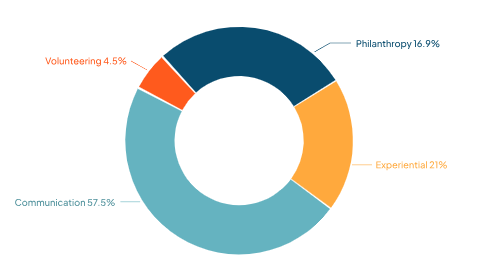
LinkedIn activity can feed into your experiential and communications metrics. If you’re not tracking LinkedIn engagement as part of your overall alumni engagement scorecard, you should consider starting now.
A few common blind spots that can be avoided include:
- Reaching out only when there's an ask: If alumni only hear from you around giving day or annual fund season, the outreach feels transactional. Only 27% of alumni who donate give to their alma mater. The most common reason others don't give is because they don't feel connected enough to make it a priority.
- Writing LinkedIn messages like emails: Avoid long messages, formal language, attached PDFs when LinkedIn is conversational. Keep messages short, and the tone conversational.Save the documents for follow-up conversations.
- Ignoring alumni who engage with your posts: When an alum comments on something your institution shared, respond to them, thank them by name, and if appropriate, send a connection request with a brief personal note referencing what they said.
- Not knowing what comes next when someone replies: Replying to a message without a clear next step might waste the opening you had spent time and effort on. Know what you’re trying to accomplish before you send the first message so that when someone replies, you’re ready to take the conversation forward.
Final Thoughts
We hope we’ve been able to give you and your team plenty of things to keep in mind. While LinkedIn outreach may seem like a simple game of numbers at first glance, any outreach campaigns involving social media rarely tend to be so predictable and you definitely want to keep that in mind.
To wrap things up, keep personalization (and segmentation by extension) at the heart of your strategy, have a consistent presence on LinkedIn just as you probably do with Facebook or Instagram, and make sure you are thinking about how to take the conversation forward many weeks ahead of time so that alumni feel appreciated after reacting to your outreach.
If you are looking for an alumni engagement platform to help you plan, execute, and measure your alumni outreach and engagement strategy, Almabase is built just for that so feel free to book a personalized demo with us!
How to Reach Out to Alumni on LinkedIn and Get Responses
Our article takes you through LinkedIn alumni outreach and how your team or institution can ensure that your alumni don't ignore your messages.

Prajnya Yelamali
September 2, 2026
12 minutes

With the fundraising landscape more competitive than ever, universities today are looking for new and innovative ways to engage donors, increase participation, and maximize revenue. Two strategies that have gained significant traction in recent years are crowdfunding and matching gifts. Individually, each has the potential to enhance donor engagement and raise critical funds. But together? They can create a powerful multiplier effect that brings your efforts to new heights.
In this post, we’ll break down what these strategies are, how they work together, and what universities need to know to make the most of both.
In this blog, we’ll cover:
- Crowdfunding for Universities: What to Know
- Understanding Corporate Matching Gifts
- How Crowdfunding and Matching Gifts Work Together
- Matched Fundraising Best Practices for Universities
Whether you're part of a development office, a faculty member leading a campaign, or a student organization hoping to raise support, understanding how to combine crowdfunding with employer matching gifts is essential. Read on to find out how you can do so!
Crowdfunding for Universities: What to Know
Unlike traditional fundraising campaigns that rely heavily on major gifts, crowdfunding leverages the collective power of many small-dollar donations—typically from students, alumni, parents, faculty, and friends—to reach a targeted goal. It’s fast-paced, digital-first, and deeply community-driven.
Crowdfunding in a university context generally involves launching time-bound, project-specific fundraising campaigns through online platforms. These campaigns are usually promoted via email, social media, and peer-to-peer outreach, encouraging supporters to give and share within their networks.
Universities use crowdfunding to support a wide variety of initiatives, including:
- Student-led projects – such as travel for academic competitions or service trips.
- Research and innovation – funding for faculty research or lab equipment.
- Athletics – team travel, uniforms, and training resources.
- Scholarships – to help students with financial need.
- Campus improvements – like sustainability projects or new student spaces.
These campaigns tend to be more successful when they are tied to compelling stories, clear outcomes, and enthusiastic champions, such as student leaders or faculty. All in all, crowdfunding offers several unique advantages for universities:
- Wider donor participation – It’s accessible and appeals to younger or first-time donors.
- Community engagement – Campaigns often rally support across departments, clubs, and alumni groups.
- Real-time momentum – Donors can see progress toward goals, creating urgency and excitement.
- Marketing and visibility – Campaigns often double as awareness tools, increasing visibility for university initiatives.
- Crowdfunding is not just about fundraising—it’s also about storytelling and building relationships. Universities that prioritize authenticity, transparency, and outreach often see the best results.
Understanding Corporate Matching Gifts
Corporate matching gifts are one of the most underutilized opportunities in university fundraising, despite their incredible potential to multiply donor impact. When donors give to your institution, many of their employers are willing to match that donation dollar-for-dollar, doubling or sometimes even tripling the original gift. Thousands of companies—ranging from small businesses to Fortune 500 corporations—offer these programs as part of their corporate social responsibility efforts.
In other words, a matching gift is a charitable donation made by a company to match an employee’s contribution to a nonprofit or educational institution. For example, if an alum donates $100 to your university, their employer may contribute an additional $100, effectively doubling the gift at no extra cost to the original donor.
For colleges and universities, matching gifts represent a low-effort, high-reward revenue stream. Here’s why:
- Increased donation value – You can double or triple gifts without asking donors for more.
- Higher donor satisfaction – Donors feel their contributions go further and have more impact.
- Potential for long-term engagement – Donors who give through their employer’s match program often remain engaged with both the company and your institution.
Despite the benefits, many institutions fail to maximize matching gift potential. As a result, billions of dollars in matching gifts go unclaimed every year, largely due to a lack of awareness and promotion.
By understanding the mechanics and benefits of corporate matching gifts, universities can take meaningful steps to close the gap and unlock a powerful source of untapped funding.
💡Bonus resource: Read How Higher Ed Leaders Leverage Matching Gifts for Success to gain insights from real university fundraising teams!
How Crowdfunding and Matching Gifts Work Together
On their own, crowdfunding and matching gifts are powerful fundraising tools. When combined strategically, they create a multiplier effect that can significantly boost the results of university campaigns while also enhancing donor engagement and satisfaction.
Here’s what you need to know: Crowdfunding campaigns are built around community engagement and momentum. When donors see their gifts being matched, they’re more likely to give and give more. Matching gifts…
- Motivate donations by showing increased value per dollar.
- Create urgency when time-limited matching opportunities are included.
- Encourage sharing as donors feel they’re maximizing their impact.
This synergy makes matching gifts a natural complement to crowdfunding efforts. Combining these two strategies is a simple but effective way for universities to raise more money, deepen donor relationships, and make every gift go further.
Matched Fundraising Best Practices for Universities
Successfully integrating crowdfunding and matching gifts into your university’s fundraising requires thoughtful planning, the right tools, and clear communication. Here are some best practices to ensure both elements work seamlessly together and drive maximum results.
1. Raise awareness around corporate matching gifts.
One of the biggest obstacles to maximizing matching gifts is simply a lack of awareness—both among donors and university staff. Many alumni, parents, and even employees don’t realize that their employers offer gift-matching programs—or those who do are unsure how to take advantage of them.
For this reason, we recommend:
- Incorporating matching gift language in all campaign materials, including emails, social posts, donation pages, and thank-you messages.
- Using a matching gift search tool (like Double the Donation) on your crowdfunding pages, so donors can check eligibility instantly.
- Creating a dedicated matching gift info page on your university’s giving website with FAQs and instructions.
- Highlighting success stories that show how matching gifts have made a tangible difference—thus illustrating the power of the opportunity.
By educating donors early and often, you’ll not only increase participation but also foster deeper donor engagement. It’s a win-win!
2. Integrate your crowdfunding and matching gift technology.
When your crowdfunding platform and matching gift tools work together, the donor experience improves dramatically. For this reason, we recommend selecting a crowdfunding platform that supports seamless matching gift integration. Look for compatibility with tools like Double the Donation and Almabase!
From there, you should be able to embed an employer lookup tool directly into your online crowdfunding forms so donors can easily determine their eligibility as they give. Not to mention, the system should automate post-donation follow-ups with personalized instructions and next steps for the individual’s employer.
The bottom line is this: When your tools communicate effectively, you reduce manual work, increase efficiency, and provide a better donor journey overall.
3. Track and celebrate matching gift & crowdfunding successes.
To build momentum and improve future campaigns,it’s essential to monitor your results and share wins not only in terms of crowdfunding but also matching gift success. Tracking not only helps you evaluate performance but also provides compelling proof points that encourage future participation from donors and corporate partners alike.
Recognition and transparency go a long way in building community, trust, gratitude, and ongoing support. Plus, showcasing results helps reinforce the value of matching gifts for donors.
Conclusion
When implemented strategically, crowdfunding and matching gifts can significantly expand a university’s fundraising potential. Crowdfunding opens doors to broader audiences and grassroots participation while matching gifts offer a unique opportunity to amplify impact at no extra cost to the donor.
By integrating these approaches, educating donors, and leveraging the right technology, universities can unlock new streams of support and make every dollar go further. Now is the time to evaluate your current fundraising strategy and consider how these two powerful tools can work in tandem to elevate your efforts. Good luck!
Crowdfunding & Matching Gifts: What Universities Should Know
Looking to bring your university’s fundraising strategy to new heights? Find out how crowdfunding and matching gifts can help uncover support in this guide!
Fundraising
To combat 2024’s drop in donors, universities are looking to focus on deepening donor relationships in 2025. By taking a targeted, personalized approach, universities hope to build stronger connections with major donors and reignite support from small and medium donors.
For most universities, these donors are alumni, and the key to deepening relationships is designing a compelling alumni engagement strategy. Alumni engagement includes events, volunteering, communication, and more; however, philanthropy only makes up 19% according to recent reports on university funding.
To secure gifts, you will need to take a diversified approach to alumni outreach. In this guide, we’ll explore four ways you can expand and engage your alumni community.
1. Create an alumni society
When students graduate, they enter a community of fellow alumni, tied together by their attendance at your university. Ensure this group feels like a community by forming a structured alumni society.
A valuable alumni society is not only a draw for potential students considering your school, but it also helps you stay in touch with alumni long-term, opening the door to potential gifts. You can create an engaging alumni society by:
- Setting up local chapters. Chances are that many of your students move away after graduation. Ensure that no matter where they are, they have a connection to your university by establishing local chapters. Ask passionate alumni living abroad to volunteer to help organize chapters and provide them with the tools they need to operate independently.
- Providing online resources. Ensure that no matter where alumni are, they have access to resources from your university at their fingertips. This might be an online community where alumni can network, a job board of opportunities perfect for recent graduates, or access to research published by your university. Additionally, be ready for paid members of your staff to lend a hand to ensure your alumni societies have the resources they need to adequately represent your university and create a positive experience for members.
- Hosting campus activities. Bring your alumni back to campus with events planned just for them. Host alumni gatherings on important dates, such as graduation anniversary milestones. These might be events for specific graduation classes or all of your alumni.
An active alumni society allows you to form long-lasting relationships that may lead to meaningful donations. For instance, alumni who are only capable of giving small or medium gifts now may eventually decide to pledge a significant planned gift, or prospective major donors may need to spend time engaging with your alumni society before confirming they want to give to your university.
2. Maintain consistent contact
In order to engage alumni, you need to be able to get in touch with them. From your website to email to social media, universities have a range of communication channels that allow them to reach their former students.
However, it’s still possible for alumni to drift away or even lose contact entirely. This often happens when alumni move away, change addresses, or have any other major life changes during which they may not think to keep your school updated about how to reach them.
If your university is no longer able to contact a significant number of alumni, consider investing in a data append. Appends provide missing information and correct outdated data, like your alumni’s:
- Contact information. Get up-to-date phone numbers, emails, and even social media profiles. This allows you to stay in touch, even as alumni change email addresses, change social media platforms, or update their phones.
- Addresses. Many alumni move after graduation, and with an address append you can discover where they are. This helps with mail communication, as well as setting up local alumni society chapters.
- Employer information. Discover where your alumni are working to send them relevant communications based on their profession. For instance, if an alumni has continued to work in a field they majored in, you might highlight department research or events open to alumni that relate to their sector.
When it comes to how often to contact alumni, you might create a university-wide newsletter that goes out on a weekly or monthly basis. Then, for special events, like Giving Tuesday or your university’s founding anniversary, you might ramp up communication to get more alumni involved.
3. Accept all types of support
As mentioned, philanthropy is just one type of alumni engagement. However, that doesn’t mean donations are the only way alumni give back. To connect with supporters, present your alumni with a range of ways to get involved.
A few types of engagement opportunities you might promote include:
- Mentorships. Connect alumni with current students through mentorships. Reach out to alumni to highlight students at your university who are interested in their field and invite them to lend a helping hand as they get ready to enter the job market. Many alumni are likely to remember their own experiences after graduating and want to support the next class of graduates going through the same thing.
- Event attendance. Host a variety of interesting events that appeal to alumni. These might be academic workshops and lectures or entertainment-focused, like book readings or orchestra performances. These opportunities bring alumni together and can bring in revenue if you charge a ticket price.
- Networking. Set up an online network for your alumni. Then, encourage them to complete profiles and reach out to one another. This can help alumni find job prospects, reconnect with old classmates, and discover new opportunities to engage with your university.
Some alumni may eventually become donors, while others will stick to supporting you through their preferred method. Both options can help your university build a vibrant community of support.
4. Highlight alumni impact
Alumni give to their former universities for a range of reasons, but chief among them is the desire to create a positive experience for new students. Encourage support by highlighting what your school is able to accomplish with alumni gifts and how meaningful these donations are to students.
For instance, you might:
- Have current students reach out. Get your current students to help out with fundraising by writing and sending emails to alumni. For instance, you might have a student contact alumni who share their major or attended a club they were a part of.
- Share photos and videos. Show alumni how things have changed but also stayed the same at your university by sharing photos and videos of the latest happenings at your university.
- Host campus tours. Invite alumni back to campus to reminisce and meet up with one another. You might host tours for new buildings, during special events, or for alumni who have provided major gifts.
Demonstrating impact is a key part of making a case for support. Be sure to provide facts and statistics to show why donations matter empirically, but also always provide context with examples and stories to allow alumni to better visualize their support.
Engaged alumni are one of your university’s greatest resources. Maintain these connections by staying in touch and providing a wide range of involvement opportunities.

Engaging Alumni: 4 Tips for University Alumni Engagement
An engaged alumni community is one of your university’s greatest fundraising resources. Learn how to build strong relationships with students after graduation.
Alumni Engagement
Event planning in the education sector is no small feat. From homecoming and graduation ceremonies to parent-teacher conferences and student workshops, K-12 schools and higher education institutions juggle a dizzying array of events each year. The right event management software can be a game-changer—streamlining registrations, automating communications, and ensuring every detail runs smoothly. In this guide, we'll break down what event management software is, what features to look for, and the top solutions for 2026 that are transforming event coordination software for schools, colleges, and universities.
.avif)
What Is Event Management Software?
An event management software is a digital platform designed to streamline the entire event lifecycle—from planning and promotion to registration, execution, and post-event analytics. These event planning software solutions centralize all event-related tasks, making it easier to coordinate logistics, track attendees, manage communications, and measure event success. For educational institutions, an event management tool can handle everything from classroom bookings and campus tours to large-scale conferences and alumni reunions.
Modern event management platforms often offer features such as:
- Online registration and ticketing
- Automated email reminders and updates
- Attendee check-in and badge printing
- Event website and mobile app creation
- Payment processing and fundraising tools
- Real-time analytics and reporting
By automating manual processes and centralizing information, these platforms help schools and universities save time, reduce errors, and deliver a seamless experience for staff, students, parents, and alumni.
What to Look For in Event Management Software
With so many event management tools on the market, it’s important to choose one that fits your institution’s specific needs. Here are key factors to consider:
- Ease of Use: Intuitive interface for both administrators and attendees.
- Customization: Ability to tailor event pages, registration forms, and communications to your school’s branding.
- Integration: Compatibility with your existing Student Information System (SIS), Learning Management System (LMS), or CRM.
- Communication Tools: Automated emails, SMS reminders, and in-app notifications.
- Payment Processing: Secure options for ticket sales, donations, or paid programs.
- Analytics & Reporting: Real-time dashboards and exportable reports for attendance, engagement, and ROI.
- Mobile Access: Event apps or mobile-friendly portals for on-the-go management.
- Support & Training: Responsive customer support and onboarding resources.
Best Event Management Software Options for K-12 & Higher Ed (2026)
Below, in no particular order, are our picks of some of the top event management software platforms making waves in the education sector this year.
1.Almabase
Almabase is an all-in-one event management platform designed specifically for educational advancement, alumni relations, and fundraising teams. It streamlines the planning and execution of complex events—whether in-person, virtual, or hybrid—while offering seamless CRM integration and a user-friendly interface.
Pros:
- Intuitive and easy-to-use for both admins and attendees, with quick event setup and branded registration pages.
- Seamless integration Raiser's Edge NXT, enabling real-time data sync and simplified gift reconciliation.
- Robust automation for event communications, reminders, and reporting, reducing manual work and errors.
- Flexible enough to handle everything from small gatherings to large, multi-day events, with strong tools for fundraising and stewardship
Cons:
- Almabase does not offer a free trial or free tier of it’s services
- No dedicated mobile app for on-the-go management
Pricing:
Almabase offers personialized custom pricing based on your needs, number of constituent records, etc. You can request a personalized demo here
2.Blackbaud
Blackbaud is a comprehensive solution built for large nonprofits and institutions, offering robust event planning, CRM, and analytics tools. Its event management features are deeply integrated with donor data to maximize fundraising outcomes.
Pros:
- Purpose-built for fundraising, with robust tools to manage donor relationships, track gifts, and run complex campaigns.
- Customizable reporting and analytics features enable organizations to tailor fundraising strategies and monitor progress toward goals.
- Integrated event management, online registration, and ticketing designed for nonprofit needs
Cons:
- High costs for training, support, and additional modules, which can be a barrier for smaller organizations.
- Data migration can be a lengthy and cumbersome process depending on your institution
Pricing:
Custom pricing. Request a quote.
3. Cvent
Cvent delivers enterprise-grade solutions trusted by higher education institutions managing complex, large-scale events—from campus-wide conferences to alumni reunions.
Pros:
- Supports mass updates and bulk communications.
- Deep integration with CRM and marketing tools, making it ideal for institutions with existing tech stacks.
- Advanced analytics and reporting for post-event insights.
Cons:
- The platform’s extensive options can be confusing and require significant onboarding, especially for smaller institutions.
- Some users report inflexible or slow support team responses at certain times
Pricing:
Custom pricing. Request a demo.
4. Bonterra
Bonterra’s fundraising software includes specialized solutions and features for nonprofit events, auctions, peer-to-peer fundraisers, and giving days, along with unified donor management tools. Its event management features include ticketing, sponsorship tracking, mobile bidding, and more. Ultimately, Bonterra helps organizations streamline their events with a centralized fundraising and donor management solution.
Pros:
- An intuitive interface that allows both seasoned admins and first-time users to easily set up and manage events.
- Comprehensive fundraising tools, including auction mobile bidding, donation tracking, event management, and credit card processing.
- Integrated marketing, fundraising, and donor management tools to support your events, campaigns, and initiatives year-round.
Cons:
- Bonterra’s diverse suite of event management and fundraising products may be overwhelming at first, and it might take time for your team to determine the right fit.
Pricing:
Custom pricing. Request a demo.
5. idloom
Idloom is crafted specifically for universities and colleges, supporting diverse academic events from online examinations to graduation ceremonies.
Pros:
- Flexible event structures—supports recurring sessions, multi-day events, and hybrid formats.
- Departmental autonomy: Each department can manage its own events with custom branding and access rights.
- Integrated communication tools for reminders, surveys, and post-event certificates.
Cons:
- Some users report that the interface, while powerful, can be less intuitive for non-technical staff.
- Advanced features (like custom badges or analytics) may require additional setup or training.
Pricing:
Custom pricing. Request a demo.
6. Eventbrite
Eventbrite is a versatile event management platform perfect for everything from concerts to community meetups. It offers intuitive tools for ticketing, promotion, and on-site check-ins, making it easy to manage both virtual and in-person events.
Pros:
- Highly accessible and easy-to-use event creation and ticketing tools for both in-person and virtual events of any size.
- Can handle donations directly through the platform, allowing organizers to create donation ticket types and collect contributions alongside ticket sales.
- Offers a 50% discount on all Pro plans for eligible nonprofits, making it a cost-effective solution for charitable organizations.
Cons:
- Limited customization options for event pages and registration flows.
- Some users report a steep learning curve for advanced features and event setup.
- Some users report occasionally slow responses from customer support as well as a lack of transaction security for attendees.
Pricing:
Pricing is 2% + $0.79 per paid ticket (Essentials) or 3.7% + $1.79 per paid ticket (Professional); free for free events. See pricing.
7. Eventcube
Eventcube is a white-label event management platform for K-12 schools and higher education institutions. It helps you manage all the in-person, virtual, and hybrid events with full control. This includes your branding, ticketing, and attendee engagement.
It is designed for flexibility and accessibility. This makes Eventcube reliable for day-to-day events like open days, student conferences, parent meetings, community gathering and even virtual graduation ceremonies.
Pros:
- Fully white-labeled ticketing and registration systems so schools and institutions can showcase their activities.
- Built-in tools for hybrid & virtual events with interactive features like Q&A, polls, breakout rooms along with HD streaming real-time captioning.
- Tiered memberships and season passes are perfect for managing specific alumnis, clubs, and student groups.
- Transparent, flexible pricing with instant payouts and no hidden fees.
Cons:
- Some setup features may require la level of technical onboarding
Pricing:
Eventcube offers tiered pricing. 5% of the transaction total for the Starter package which is free. 3% of the transaction total for Pro along $99 a month. And custom Enterprise options. You can start with a demo or create a branded ticket store directly on Eventcube.
8. Giveffect
Giveffect combines event management with nonprofit automation, allowing you to handle ticketing, email campaigns, and donor records in one platform. It’s ideal for organizations looking to unify event planning with fundraising and CRM.
Pros:
- All-in-one platform that centralizes event management, volunteer coordination, and donor tracking, reducing the need for multiple systems.
- Seamless integration of volunteer and donation data, allowing for comprehensive supporter profiles and easy access to analytics.
- Customizable event pages and donation forms that can reflect the nonprofit’s brand and include real-time fundraising progress bars
Cons:
- Higher price point, which may be prohibitive for smaller nonprofits despite the robust feature set.
- Data migration and automation can potentially be glitchy, leading to issues such as erroneous emails or incomplete data transfers during onboarding.
Pricing:
Custom pricing. Request a demo.
9. Remo
Remo, now integrated with Events.com, delivers an immersive platform for virtual, hybrid, and in-person events, with unique emphasis on networking and engagement.
Pros:
- Fast and simple check-in via app; supports QR code scanning and mobile access.
- Customizable event spaces and real-time networking tools for interactive experiences.
- AI-powered matchmaking and analytics for attendee engagement.
Cons:
- Unconventional interface: The unique, interactive design can be confusing for users accustomed to traditional event tools.
- Customization learning curve: Customizing event spaces and features requires time to learn.
Pricing:
Starts at $299 per month. See pricing.
10. Qgiv by Bloomerang
Qgiv supports nonprofits with customizable tools for event registration, peer-to-peer fundraising, and mobile giving. Its user-friendly interface makes it easy to plan and promote fundraising events of all sizes.
Pros:
- User-friendly interface designed specifically for nonprofit fundraising, making it easy to set up donation forms and manage events.
- Supports a variety of fundraising activities, including peer-to-peer campaigns, auctions, and ticketed events.
- Real-time analytics and reporting tools to monitor campaign performance and donor engagement.
Cons:
- Qgiv may feel limited for seasoned professionals who want to organize donor and transaction data in many different ways simultaneously.
- Advanced features, such as text-to-give and auction management, may require additional fees or higher-tier plans.
Pricing:
Plans start at $0/month with no contracts, plus a 3.95% + $0.30 per transaction fee. Learn more.
Conclusion
Choosing the right event management software can transform how your institution plans, promotes, and executes events—whether you’re managing a single school assembly or a multi-day university conference. The platforms highlighted above offer a range of solutions tailored for K-12 and higher education, each with unique strengths and a few caveats to consider. Take advantage of free demos, explore user reviews, and assess your specific needs to find the event management tool that will best support your school’s goals in 2026 and beyond.
Looking for more inspiration? Explore event ideas that raise money and connect with alumni or see how advanced event management can drive registrations and engagement for your institution.

Best Event Management Tools for K-12 & Higher Ed (2026)
We're helping you break down what you should look in an event management software, along with some of our top picks for 2026 to power your events.
Events
Anwesha Kiran
April 30, 2025
12 minutes
Modern alumni engagement starts long before the first donation appeal or reunion invitation. Proactive alumni engagement begins when students are still on campus and making a bond with the institution. Keeping those bonds strong, however, gets complicated fast. This is where purpose-built alumni management software have come in over the past few years to change the game and help you do more, earlier, and better.
In this blog, we’ll explain why starting sooner leads to better relationships, and how to set your institution up for long-term success by making the most of alumni management systems and engagement platforms to solve issues and empower your team. Let’s get started.
1. Provide Meaningful Career and Networking Opportunities
Today’s alumni are looking for real value from their alma mater, especially regarding career growth, mentorship, and professional networking. Trying to fulfill all of this manually is nearly impossible, and honestly, not optimal for a modern advancement team to try to do so. Recent graduates and soon-to-be alumni are at pivotal points in their careers, eager for guidance, mentorship, and meaningful opportunities.
- Mentorship matching: Advanced mentorship platforms use algorithms to match to connect students and young alumni with seasoned alumni professionals who share industry interests or locations.
- Job boards and career resources: Many platforms allow you to create job boards and alumni business directories to curate internships, job listings, and host workshops offered by fellow alumni or institution partners.
- Networking events: Event management tools within alumni software simplify scheduling and promote mixers (virtual or live) tailored for young alumni and students.
2. Make the Post-Graduation Transition Effortless
The months right after graduation are a critical and tricky window. New alumni are stepping into busy, unfamiliar lives, and staying connected with their alma mater isn't always at the top of their minds. That’s why meeting them where they are — with timely, meaningful touchpoints is so important. A modern alumni engagement platform helps you build those bridges early by having updated data, dedicated segments, and recent graduate-specific outreach to make the transition from student to alumni feel natural.
- Automated welcome journeys: Set up nurtured email sequences and alumni program onboarding content triggered as students approach graduation.
- Resource libraries: Share guides, video content, or webinars on topics like moving cities, interview guides, and other alumni-exclusive benefits.
- Integration with social channels: Many platforms come with a powerful alumni directory to help recent graduates connect instantly with affinity groups and local chapters, fostering immediate community.
3. Have a Scalable Personalization Strategy
As your alumni base increases, bulk emails or one-size-fits-all newsletters will become increasingly less useful. Modern alumni expect well-timed and relevant communication from their alma mater. Delivering these personalized experiences manually across thousands of graduates is simply not practical. To make your personalization efforts scalable, you’ll want to:
- Make use of a proactive alumni directory
- Create detailed lists and segments based on graduation year, interest, location, etc.
- Target content, events and giving opportunities to relevant alumni segments
- Create affinity groups based on event participation, volunteering history, or social media activity
- Provide a path for active supporters to become champions
- Automate your personalized outreach
- Build and maintain well-integrated feedback channels powered with automation
4. Encourage Life-Long Learning
You’ll want to present the idea of lifelong learning to your upcoming and recent graduates to highlight the idea that learning doesn’t end once they leave campus and that your institution is willing to be a long-term partner for their growth. Engaging young alumni with opportunities to further their skills keeps them connected long after graduation.
- Webinar and course integration: Offer alumni-exclusive online classes or workshops through built-in event management features.
- Certificates and digital badges: Track participation in learning events, awarding digital credentials shareable on social media or LinkedIn.
- Feedback tools: Use surveys to gauge areas of interest and continually refine offerings.
5. Foster a Culture of Giving Early
Philanthropy is a pillar of strong alumni programs, but it starts with cultivating the right mindset and experiences. Young alumni, in particular, are much more likely to give back when they feel involved and can see the impact of their contributions.
- Gamified campaigns: Use leaderboards, progress bars, or “challenge” donations to make participation fun and visible.
- Recurring giving signups: Allow recent graduates to set modest and flexible recurring donations.
- Impact storytelling: Display real-time outcomes of alumni giving, such as scholarships awarded or campus improvements.
6. Build Affinity Groups and Micro-Communities
Engaged alumni most often cite personal connections—to people, passions, or activities—as the reason they stay involved. Creating affinity groups and micro-communities around these interests supports a sense of belonging while also narrowing the focus for targeted engagement.
- Affinity group creation: Enable alumni to self-select into interest groups based on sports, professional fields, volunteering, identity, and more.
- Event scheduling and RSVPs: Empower groups to organize their own events, both online and off, directly through your groups and communities.
7. Have a Long-Term Data Strategy
Strong alumni engagement relies on accurate and up-to-date information. From the first student interaction, data should be captured, protected, and continuously updated to support outreach efforts and measure impact.
- Data integration: Sync student data from admissions, campus directories, and learning management systems at the outset.
- Ongoing data enrichment: Enable self-service profile updates and prompt alumni to keep information current.
- Reporting dashboards: Use built-in analytics to track what strategies resonate most, which groups are most active, and where gaps exist.
Conclusion
Early and intentional alumni engagement seems to be another underrated part of an increasingly complex alumni engagement process today. Alumni software empowers advancement teams to launch mentorship programs, simplify transitions, personalize outreach, nurture alumni volunteers, and connect across digital channels.
If you’re looking for a platform that provides:
- A dynamic and intuitive alumni directory
- Hassle-free mentorship programs
- Easy-to-set-up job boards
- Self-serve affinity groups
- Automated and personalized alumni communication
- Streamlined event management
- A reasonable fundraising platform
Give us a shout and we’d be more than happy to talk to you on how we can help 🔽

How to Engage Alumni Early Using Alumni Software
Discover strategies for early alumni engagement and how alumni software can enhance career connections, personalization, and lifelong giving.
Alumni Engagement

Sharada Koti
April 30, 2025
12 minutes
Almabase is thrilled to welcome Aaron Riley as its new Vice President of Sales. With a decade of experience leading high-growth SaaS sales organizations, Aaron brings deep expertise in scaling revenue, enabling teams, and delivering enterprise value to customers.
Aaron joins Almabase at a pivotal moment. As the company continues its mission to empower advancement teams with modern, unified digital tools, Aaron’s leadership will play a crucial role in accelerating growth and strengthening customer impact.

Over the years, Aaron has led sales at multiple fast-scaling technology companies. At Cirrus Insight, he helped drive growth from $3M to $12M in ARR. At PerfectServe, he joined at around $30M ARR and contributed to significant growth. Most recently, he served as VP of Sales at ThankView and EverTrue, leading revenue expansion from $5M to approximately $35M in ARR. His proven ability to scale teams and revenue makes him a valuable addition as Almabase charts its course toward the next growth milestone.
Fostering Lifelong Alumni Communities
Aaron joins Almabase with a shared passion for building enduring alumni connections. As he puts it:
“Community has always been a big part of my life. My alma mater gave me a strong connection through athletics, but as I moved through my professional career, I realized how much more alumni communities can offer. In today’s world, building those connections isn’t easy—but Almabase makes it possible. That mission really resonated with me, and I’m excited to help institutions create communities that add value long after graduation.”
This commitment aligns perfectly with Almabase’s mission to provide a unified platform that simplifies communication, event management, and donor campaigns—giving advancement teams the tools they need to cultivate vibrant, lifelong networks.
A Customer-Centered Vision for the Future
In his new role, Aaron will focus on ensuring that Almabase continues to deliver the most personalized and modern constituent experiences in the industry.
“Almabase has an incredible team, a strong culture, and the best product suite in the market,” he notes. “Over the next 6–12 months, our focus is simple: make our customers proud of the modern, personalized experiences their constituents receive when interacting with the organization.”
With a product that already empowers hundreds of institutions to run digital engagement, fundraising, and event campaigns from a single platform, Aaron is poised to deepen Almabase’s value to advancement teams.
Strategic Blueprint for Sustainable Growth
At the heart of Aaron’s approach is a belief that great outcomes start with great people. His experience leading successful sales organizations has taught him that talent, enablement, and a sharp customer focus are the foundation of any scalable system.
“True growth comes from bringing the right people together, empowering them to succeedexcel, and making customer needs the centerpiece of every decision,” says Aaron.
He plans to prioritize sales process optimization, proactive enablement, and aligning closely with institutional goals—ensuring that every engagement delivers measurable impact for Almabase’s partners.
Cultural Fit That Goes Beyond Skills
Aaron was equally drawn to the culture and values at Almabase. In his first conversations with co-founder and CEO Kalyan Varma, he found a shared belief in transforming how fundraising and alumni engagement should work in the modern world.
“It wasn’t just about building great software; it was about changing an entire approach to alumni and donor engagement,” says Aaron. “Combined with Almabase’s commitment to care deeply for both colleagues and customers, it was clear this team leads with both heart and ambition.”
That alignment—both in values and vision—made it clear that this was the right next step in his journey.
Looking Ahead
As Almabase moves into its next phase of growth, Aaron’s leadership will be instrumental in scaling operations and deepening relationships with advancement teams. His arrival strengthens Almabase’s commitment to helping educational institutions engage alumni meaningfully and grow donor participation through data-driven, personalized experiences.
Kalyan Varma, Co-Founder & CEO of Almabase, shares,
“Aaron brings exactly the kind of experience and leadership we need right now. His track record of scaling revenue, deep understanding of enterprise sales, and alignment with our mission make him an ideal fit. We’re excited to have him guide our next chapter of growth.”
Aaron began his journey with Almabase in April 2025.

Aaron Riley joins Almabase as VP of Sales
Join us in welcoming Aaron Riley as our new VP of Sales
Announcement
Text messaging has become an underrated channel for teams to connect with alumni and donors. With stacked mailboxes and email open rates proving a tricky problem, SMS provides a direct, personal alternative line to your community. But how do you use text messages strategically to maximize engagement and drive fundraising results?
In this blog, we’ll explain why text messaging works for donor engagement, offer best practices for using SMS in advancement and fundraising campaigns, and share actionable tips for integrating text into your advancement strategy.
Why Text Messaging Works for Donor Engagement
Text messaging stands out for several reasons.
- High Open and Response Rates: Studies show that over 90% of text messages are opened within three minutes. Compare this to email open rates that often hover below 25%.
- Direct and Personal: Most people carry their phones everywhere and treat texts as personal communications. This creates a closer, more immediate connection than email or social media.
- Convenience: Texts are concise and easy to digest. They’re perfect for busy donors who appreciate brevity.
- Accessibility: Text messaging doesn’t require internet access, making it accessible to a wider audience, including alumni who may not check email regularly.
As alumni and donor management software evolve, features such as built-in compliance and text channel analytics are also making the channel easier to use than ever before.

How to Use Text Messaging to Boost Donor Engagement and Fundraising
Effective SMS fundraising goes far beyond sending a generic message blast. Advancement professionals should use text strategically to create meaningful engagement, inspire action, and foster ongoing relationships. Here’s how:
1. Make Your Texts Meaningful
Every text you send should offer real value to the donor. Avoid sending generic updates or broadcasts that could be mistaken for spam. Segment your potential recipients and personalize your messages to deepen the relationship and provide value through your texting channel
- Personalize texts with donor names and relevant causes.
- Reference past gifting history when possible.
- Address donors’ interests or geographic location ("See the impact your gift made in Seattle!").
2. How to Appeal Through Text
While it’s tempting to use texts only for quick updates, they can be powerful tools for fundraising appeals when used with care and purpose. Craft concise asks that are donor-focused, and always include a clear, simple way to act.
Example:
“Anna, we’re $1,000 away from our goal! Will you help us reach it? Donate here [shortened link]”
Tips:
- Keep fundraising asks infrequent and personal.
- Limit messages to times when your appeal is urgent and relevant.
- Use merge fields to personalize asks (“Hi [First Name]”).
3. Use Texts to Keep Donors in the Loop
Share real-time updates about fundraising events, upcoming initiatives, or important milestones. Donors want to feel included and informed.
Example:
“Reminder! Tonight is our virtual gala at 7pm. Join us live here [link]. Your ticket helps local students thrive!”
4. Use Texts for Reminders Too Short for an Email
Text messages act as the perfect channel for reminders or urgent calls to action that don’t warrant a full email. Overflow content, last-minute changes, or quick nudges can keep participation high. A good example would be countdown texts and goal updates.
5. Use Texts for Campaign Updates
Donors care about progress and outcomes as they prove they are making a real impact. Use text messaging to broadcast campaign milestones, share tally updates, or announce when fundraising targets are reached.
Example:
“We did it! With your help, we raised $50,000 for new library books. Thank you for your incredible support!”
6. Use Texts for Thank Yous and Stewardship
Personal gratitude goes a long way. Automatic or manual thank you texts delivered within minutes of a donation build loyalty and trust.
7. Prioritize Two-Way Communication
Text messaging doesn’t have to be a one-way channel. Encourage engagement by inviting questions or feedback. Two-way texting can streamline event RSVPs, volunteer signups, and more. Do keep in mind that this will require implementing the appropriate workflows. However, it can make your text channels truly valuable
Examples:
- “Are you interested in volunteering? Reply YES for details.”
- “We’d love your thoughts on future events. Reply with your ideas!”
8. Segmentation and Personalization
Segment your contact lists by donor type, giving history, or area of interest to tailor messaging.
- Personalized Greetings: Use the donor’s name and reference their last gift or area of interest for a more meaningful touch.
- Targeted Appeals: Send athletics-related asks to sports fans or alumni supporters.
9. Don't Use Text Messages for the Sake of Novelty
Texting works best as part of a broader, thoughtful communication strategy, not as a novelty or “cool factor” add-on. Poorly thought-out texts can lead to opt-outs or disengagement.
- Ensure every SMS provides value and respects recipients' time.
- Comply with all consent regulations and privacy standards.
- Focus on building lasting, authentic relationships.
For example, avoid sending reminders that are better suited to email or phone calls, or repeated requests.
Wrapping it up
Text messages are a high-impact tool for advancement and fundraising, but its effectiveness depends on thoughtful strategy, personalization, and robust integration. As it has always been, the future of donor engagement belongs to those who meet their audience where they are, on their terms, with messages that truly resonate— and texting is one step forward in that direction.
For advancement and fundraising professionals seeking to modernize their engagement, integrating robust text messaging is essential. Platforms like Almabase’s integrated SMS tool deliver:
- CRM integration
- User-friendly segmentation and compliance management
- Easy real-time performance tracking
- Streamlined donor segmentation
Want to see how integrated text messaging can amplify your institution's fundraising and engagement efforts? Check out what we bring to the table by getting in touch with us! 🔽


How to use text messaging for donor engagement & fundraising
Boost donor engagement and fundraising with text messaging. Learn strategies and best practices for advancement teams and nonprofits.
Fundraising
When you think of a nearly 200-year-old institution like SUNY New Paltz, you think of history and tradition — and rightly so.
But what makes them stand out today is how they are building on that foundation with fresh ideas and a modern approach to alumni engagement.
At a recent webinar, Alyson Hummer (Alumni Engagement Officer) and Angelica McIntyre (Associate Director of Operations and Research) shared how they are reimagining alumni events to create even stronger connections.
✨First, a quick look at SUNY New Paltz and its event landscape
Nestled in the scenic Hudson Valley of New York, SUNY New Paltz is home to about 74,000 alumni and 120,000 total constituents. They have a small but mighty advancement team, with just 3.5 staff members dedicated to alumni relations (one of them part-time, of course).
And yet, despite its size, New Paltz hosts an impressive 25+ events every year. Some noteworthy events include:
• 40 Under Forty Awards: Celebrating rising alumni stars.
• Alumni Reunion: Their biggest and most complex event, drawing 380+ registrations in 2024.
• Regional gatherings: Connecting alumni pockets across states like California, Georgia, Florida, Illinois, and New York.
• Distinguished Speaker Series and Hudson Valley Future Summit: Big ideas and timely conversations.
• Golf tournaments, development gatherings, and student-alumni events: Keeping alumni connected at every stage.
💡What are they doing differently?
Alyson and Angelica decided to rethink their approach to events altogether, and here’s what changed:
• Shift the focus from class year to career field and major: Instead of organizing reunions by graduation year, they connected alumni through shared professions and passions, leading to more meaningful interactions.
• Lean into affinity groups like Greek life: Greek organizations already had strong bonds. New Paltz tapped into that loyalty, driving greater attendance and enthusiasm.
• Invite students and faculty to alumni events: Alumni valued the chance to mentor students and reconnect with faculty, making events feel even more rewarding.
• Consistent, transparent communication: From clear email branding to setting the right expectations upfront, every event invitation helped alumni feel informed and welcomed.

🎯What challenges did they face?
Behind the scenes, the old way of managing events was becoming unsustainable.
• Event setup was slow and complicated
• Registrations sometimes crashed the system, leading to frustrated alumni
• Manual data entry after events led to errors and lost records
• Finance reporting was inefficient
• Check-ins were done manually using paper sheets
Simply put, they needed a better way to scale their impact without scaling the chaos.
🚀Moving to Almabase
Reimagining the experience was one thing. Executing it smoothly was another. That’s where Almabase came in. After switching to Almabase, SUNY New Paltz was able to:
• Streamline event setup to under 10 minutes for most events.
• Simplify registrations and payments, avoiding crashes and frustrations.
• Integrate seamlessly with Raiser’s Edge NXT, eliminating tedious manual data work.
• Enable instant check-ins, even for walk-in guests.
• Create a better experience for both their team and their alumni.
Alumni consistently rated the registration process highly, with an average score of 4.6/5.
In just 10 months, they completed 21 events through Almabase!
🎁They also added a "gift ticket" option to every event registration page and have already seen an uptick in spontaneous alumni donations.

Success didn’t happen overnight. While Almabase made event management much simpler, Alyson and Angelica co-led the rollout, introduced staff in phases, and set up easy processes so that everyone on the team could confidently create events with minimal training.
Want to learn more? Watch our recent webinar with the team at SUNY New Paltz ⬇️

How SUNY New Paltz transformed its alumni events
See how a small team at SUNY New Paltz overhauled alumni engagement, hosting 25+ events a year with smarter tech and fresh event formats.
Live event recaps
Alumni are among the most valuable assets of any educational institution. They provide mentorship, offer career opportunities, donate generously, and serve as brand ambassadors. But maintaining meaningful relationships with a growing alumni base is no small feat. That’s why alumni management software such as Almabase have become essential, enabling advancement teams to streamline engagement, personalize outreach, and elevate alumni experiences.
Almabase is a leading alumni management software trusted by advancement teams at top institutions. Almabase stands out by helping institutions manage all aspects of alumni relations from one unified platform.
What Almabase brings to alumni management
1. A comprehensive feature set
Almabase is built to meet the practical, day-to-day needs of advancement teams:
- A centralized alumni directory: Almabase provides a dynamic alumni directory that auto-updates with alumni inputs and public data, helping teams maintain accurate contact details and build targeted segments. Alumni can also update their own profiles, increasing data reliability. The result is less manual work and better engagement for your alumni management system.
💡 Check out how Almabase helped Thomas Aquinas College alumni community grow 3x in just 3 months by setting up an online directory.
- Communication and engagement: Institutions often use Almabase as an alumni engagement platform to send personalized outreach campaigns, automate follow-ups, and segment audiences based on attributes or behavior. Built-in engagement metrics help teams understand what resonates, so future outreach is even more effective.
💡 Check out how we worked with Concordia College to level up their alumni communication and engage 10k+ alumni monthly.
- Streamlined event management: From alumni engagement events like reunions and fundraisers to virtual webinars, teams can manage all aspects of event logistics—ticketing, registration, check-ins, reminders—without juggling multiple tools. Attendees enjoy a seamless experience from RSVP to post-event follow-up.

- Fundraising and donor management: Almabase enables the creation of donor-friendly giving pages and tracks donor behavior to personalize stewardship. Integration with CRMs ensures all giving data is centrally recorded and acknowledged.
💡 Check out how Alumni Association, SMLLU successfully raised $1.15 million in a single giving day with Almabase.
2. User-friendly interface
Almabase’s interface is built with two things in mind:
- Ease of use: The platform is designed to be intuitive for both staff and alumni. Teams can launch pages, emails, or events with minimal training. Even small teams can execute large-scale initiatives without technical support.
- Customization: Recognizing that each institution has an identity, Almabase provides options to ensure brand consistency across alumni touchpoints. This includes customizing color schemes, logos, email templates, and giving pages to align with institutional branding. For institutions seeking more flexibility, Almabase offers integration with WordPress, allowing for customized website designs using themes and plugins without additional platform fees. This addresses a common software challenge: balancing simplicity with the need for tailored solutions.
- Automation: Almabase is constantly looking for ways to ease the burden that teams carry. This is seen in features such as Emily AI, an AI powered email writing assistant that creates customizable email templates.
3. Seamless integration
Almabase emphasizes the need for alumni software to integrate with existing technology ecosystems of educational institutions, particularly CRM systems and social platforms. This focus ensures data flows efficiently and remains consistent across tools.
- A cornerstone of Almabase's integration strategy is its native, two-way synchronization with Blackbaud’s Raiser's Edge NXT (RE NXT), branded as TrueSync. This integration eliminates reliance on manual data uploads/downloads or potentially costly third-party connectors. TrueSync maintains data consistency between Almabase and RE NXT. It automatically handles data updates, identifies and removes duplicate entries, and cleanses data based on customizable rules, ensuring accuracy and saving staff time. The native, two-way nature of this connection offers reliability and efficiency for institutions using RE NXT.
- Beyond RE NXT, Almabase also offers native integration with Blackbaud CRM (BBCRM), providing similar benefits. It integrates with Blackbaud Merchant Services (BBMS), allowing institutions to process donations through Almabase using their existing BBMS accounts without disrupting reconciliation processes.
- Complementing CRM integrations, Almabase enhances data quality by allowing alumni to automatically update directory profiles by pulling information from LinkedIn and Facebook. This feature taps into platforms where alumni often keep professional details current, providing an automated mechanism for data enrichment. This combination of CRM synchronization and social media data capture addresses a challenge for advancement teams: maintaining accurate information on alumni.
4. Exceptional customer support
Almabase distinguishes itself with stellar customer support as seen through their customer reviews in review websites like Capterra and G2:
- Active customer support: Almabase prides itself on it’s responsive chat and email support and has dedicated itself to reducing response and resolution times for any issues. Every onboarded customer also gets a persona assigned to ensure their first experience with Almabase goes smoothly.
- Feature requests: Almabase regularly builds new capabilities based on user feedback. Most of the platform’s recent updates are direct results of [suggestions from advancement professionals](https://feedback.almabase.com/).

5. Cost-effectiveness
Almabase offers pricing based on the size of your contactable alumni base, making it accessible for institutions of all sizes. For RE NXT users, the Blackbaud partnership also enables savings on payment processing if they use BBMS. With no hidden costs and flexible plans, Almabase delivers high value for the investment.
Frequently asked questions
What are the benefits of integrating alumni management software with CRMs?
It centralizes alumni and donor data in one place, reducing duplicates and manual work. You also get more targeted campaigns because engagement and giving history are synced for better segmentation.
Who should consider investing in alumni management software?
Any institution or nonprofit with a growing alumni base that runs events, communities, or fundraising should consider it. It’s especially useful once spreadsheets and email lists are no longer enough to manage outreach.
Can alumni management software work alongside existing fundraising or CRM systems?
Yes, platforms like Almabase and many others are built to integrate with popular CRMs like Salesforce or Blackbaud rather than replace them. Engagement data (events, communities, mentoring) syncs back to your main CRM and fundraising systems.
How does alumni management software improve long-term alumni engagement?
It brings profiles, communications, events, and mentoring into one hub, making it easier to stay in touch over time. Automation and analytics help you send more relevant messages and keep alumni active at different life stages.
Conclusion
Managing alumni relationships at scale requires more than spreadsheets and disconnected tools. Almabase brings together alumni data, engagement, events, and giving into a single, user-friendly platform that advancement professionals can rely on. From automation and integration to ongoing support, it’s a solution built for modern alumni engagement.
To see how Almabase can help your institution strengthen alumni relationships and increase fundraising outcomes, book a free, personalized demo at a time that works best for you 🔽


What makes Almabase a good alumni management software?
Manage alumni data, engagement, events & fundraising in one place with Almabase. See why it's a top choice for user-friendly, integrated alumni management.
Alumni Engagement
See how leading institutions put these ideas into action