A comparison of the best alumni management software for higher-ed and k-12 institutions when it comes to alumni engagement, directories, communities, and more.
Almabase
Updated:
September 29, 2026

Summary
Alumni management software offers a lot today, bringing together alumni engagement, events, fundraising, mentoring, networking, communications, and other programs that were once managed separately.
For institutions looking to connect alumni engagement with fundraising and advancement, Almabase brings those workflows together, while EverTrue takes a more specialized approach, for those interested in prospect and donor intelligence.
For alumni community-building, Graduway, 360Alumni, and HiveBrite offer tools for networking, groups, mentoring, events, and member interaction, with different levels of customization and community focus.
PeopleGrove focuses more heavily on structured alumni-to-student connections, mentoring, and career engagement, and Encoura Encompass offers a broader constituent engagement toolkit within the Anthology ecosystem.
A platform that works well for one institution may not be the right fit for another. Consider your specific set of requirements in the context of your engagement strategy, events you frequently run and processes your team is used to.
Pricing models vary widely across alumni management platforms, so consider what's included, what additional tools you may need, and how the platform will fit as your alumni program grows.
Alumni are among your institution's most valuable assets. They provide mentorship, career opportunities, financial support, and serve as natural, authentic brand ambassadors for your school. This, of course, depends on the extent to which they feel connected to their alma mater once they’ve graduated. But nurturing relationships is a complex undertaking, and especially so at scale. Keeping alumni engaged across multiple touchpoints like events, communications, giving, and career networking remains a persistent (as well as rewarding) challenge for advancement teams. The right alumni management software solves this by bringing engagement activity, fundraising, and community into a single system.
Choosing the right alumni management system cuts through the fragmentation that typically forces teams to stitch together multiple disconnected tools, and makes it easier to track which initiatives drive outcomes.
With so many options available, this blog compares the ten best platforms that could help you get there, based on your specific requirements.

Almabase brings alumni engagement and fundraising into the same workflow, connecting the activities between constituents and institutions. The platform builds interactions such as alumni events, email campaigns, or giving days into a shared engagement history rather than treating them as standalone features, giving your team a complete picture of constituents’ journeys.
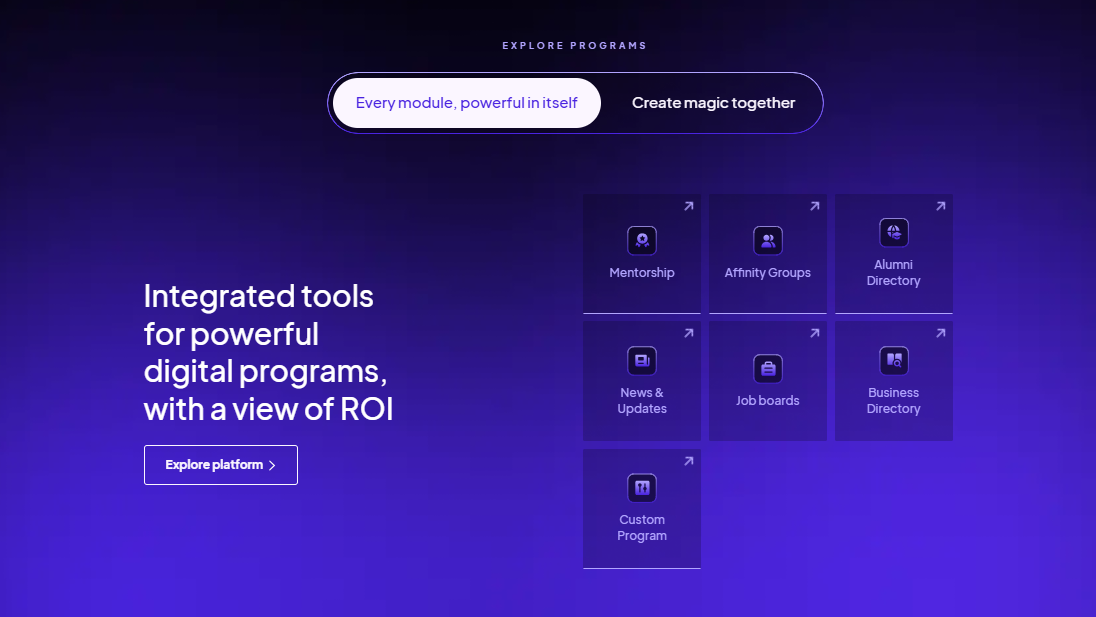
Almabase’s engagement tools connect with your CRM seamlessly. Its TrueSync integration with Raiser’s Edge NXT supports two-way, real-time data sync, so information can move between Almabase and RE NXT without the recurring exports, imports, and manual updates that can come with managing separate systems.
The platform also brings alumni-facing programs such as directories, mentorship, job boards, events, and email campaigns into the same environment. This means fewer disconnected tools and less work trying to piece together engagement data afterward for institutions running several of these programs at the same time.
That makes it relevant for teams of all sizes running all types of events: reunions, regional events, giving days, donor events, and ongoing alumni communications.
All of these features make Almabase particularly suited to advancement teams that want engagement activity and fundraising data to work together. It's also a natural fit for institutions already working in Raiser’s Edge NXT and looking to connect their alumni-facing activities more closely to their advancement database.
Pricing: Custom pricing based on institution size, requirements and alumni count.
EverTrue is a fundraising intelligence and donor engagement platform built to help advancement teams find better prospects, understand their constituents, and give fundraisers more context for their outreach. EverTrue sits alongside your CRM and enriches constituent records with engagement, career, social, and wealth information.
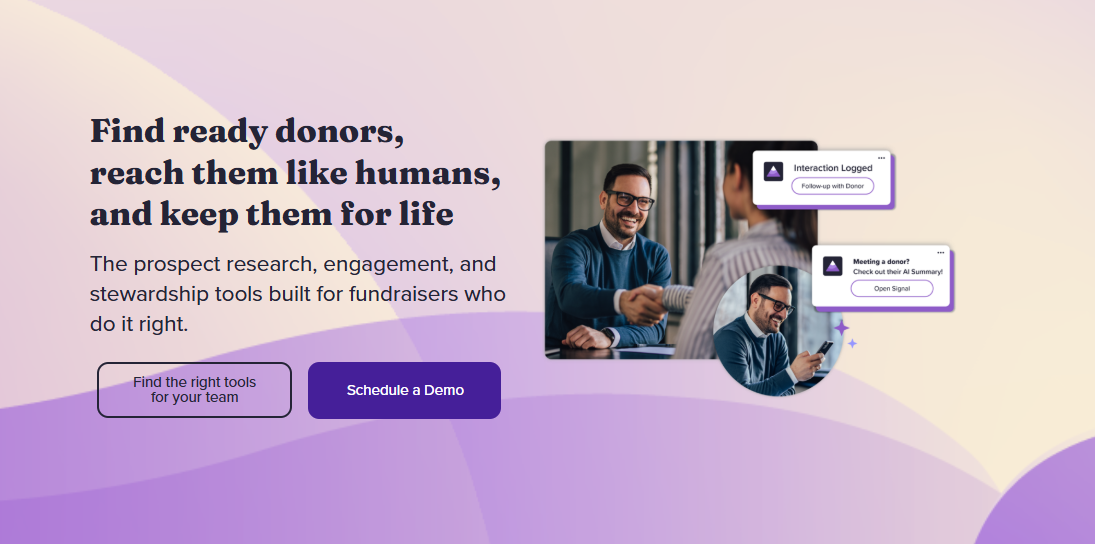
EverTrue brings a lot of external intelligence into constituent records. TrueView profiles can combine your existing CRM data with career changes, social media activity, donor interests, wealth indicators, and other signals, giving fundraisers a more current picture of the people they're trying to engage. The platform also supports prospect discovery, segmentation, mapping, and alerts to help teams identify people who may be worth a closer look.
It's a good fit when you already have a CRM you want to keep and need additional intelligence to help fundraisers identify prospects, prioritize portfolios, plan visits, and personalize outreach. However, it's less suited to institutions looking for a single platform to run their broader alumni engagement program.
Pricing: Custom pricing based on the EverTrue products and capabilities an institution selects. Estimates place the starting quote at about $5000 a year.
360Alumni brings together an alumni directory, networking, events, fundraising, mentoring, job boards, and email marketing in a single branded environment. Its focus is less on advancement operations and more on giving alumni a place to find each other, build connections, and participate in their alumni community.
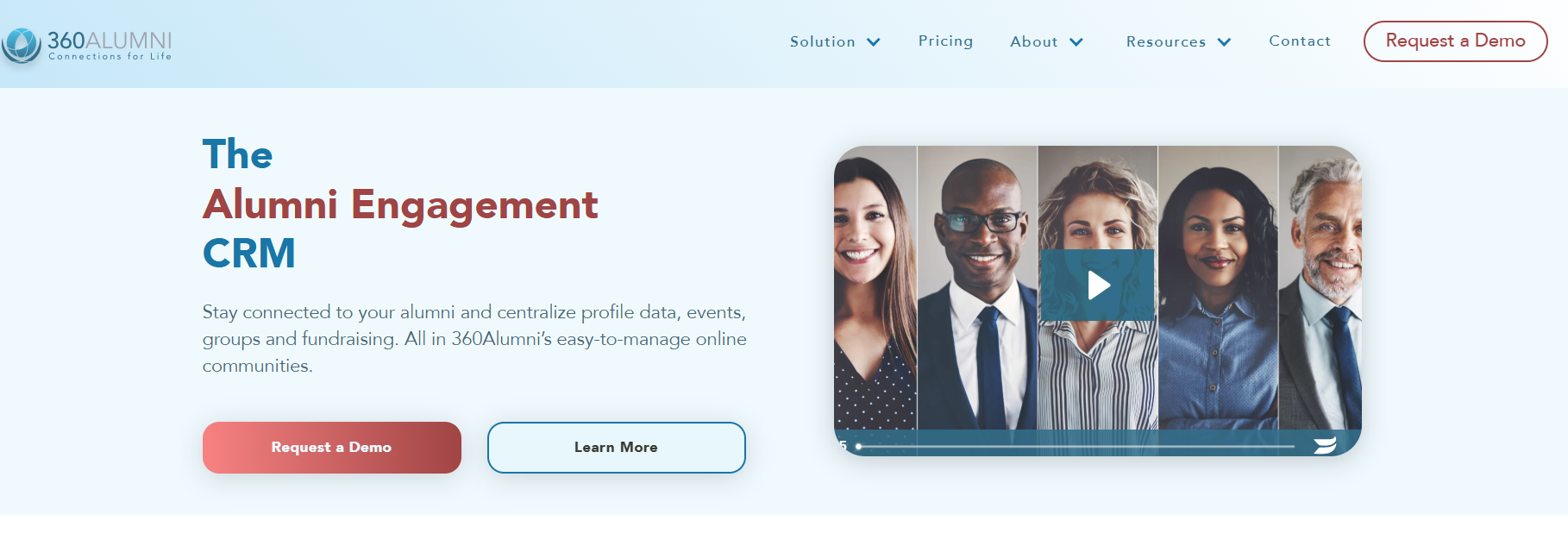
360Alumni stands out as being a more alumni-facing platform. It puts its interactive alumni directory and map at the center and makes it easy for users to search for other alumni by a range of metrics: location, profession, interests, and other criteria.
360Alumni is well suited for schools where an alumni directory, career networking, mentoring, and geographically based connections are all important parts of the engagement strategy.
Pricing: Custom pricing based on record count, with an initial setup cost and annual subscription. 360Alumni also charges a 3% credit-card processing fee plus a plan-dependent service charge on event ticket sales, donations, and membership payments.
Graduway is built around the idea of an alumni community as an active digital space, giving alumni a place to connect with each other as well as stay connected to their institution.
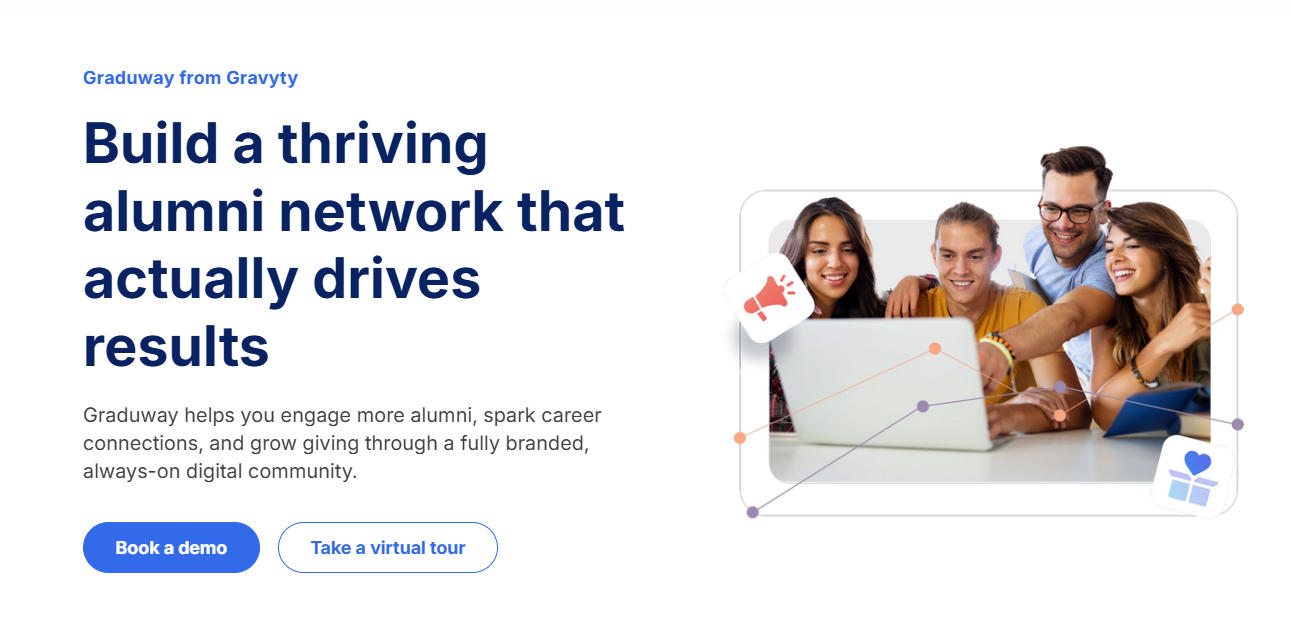
What sets Gravyty apart is alumni-to-alumni engagement. Alumni can connect with peers, participate in mentoring programs, join communities, and build professional relationships through the platform.
Graduway is particularly suited to institutions where community building, networking, and mentoring are central to the alumni engagement strategy. It's especially relevant for institutions with geographically dispersed alumni or large professional networks, where mentoring, career connections, affinity groups, and peer networking offer a major push to stay engaged throughout the year.
Pricing: Custom pricing based on the institution's requirements and alumni community size.
HiveBrite is a community platform designed for organizations that want more control over how their online communities look, work, and evolve. For higher education, it can bring alumni networking, groups, events, mentoring, career opportunities, and other engagement programs into a branded community environment.
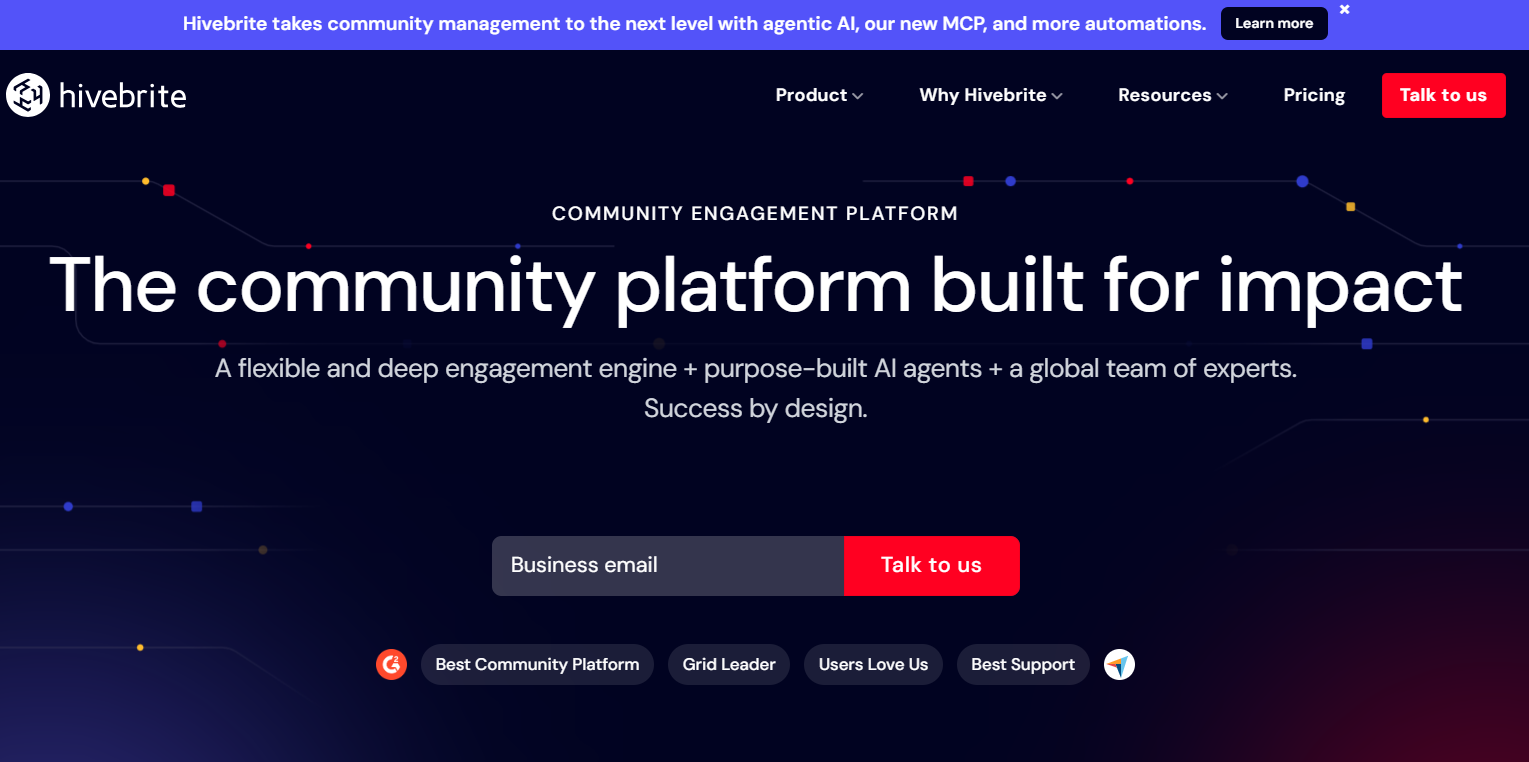
HiveBrite offers a good level of customization: institutions can shape member journeys, create different community spaces and permissions, customize the platform's design, and tailor experiences for different audiences.
The platform also supports events, groups, discussions, mentoring, career networking, and other community activities. Its multilingual capabilities and support for international communities make it relevant for institutions managing alumni networks across multiple countries and regions.
HiveBrite is particularly suited to larger institutions that want to build a highly tailored alumni community and have the resources to support implementation and ongoing administration.
Pricing: HiveBrite offers tiered and custom pricing starting at $895/month depending on the size and requirements of the community.
PeopleGrove is an alumni engagement platform built around helping institutions create stronger connections between students and alumni.
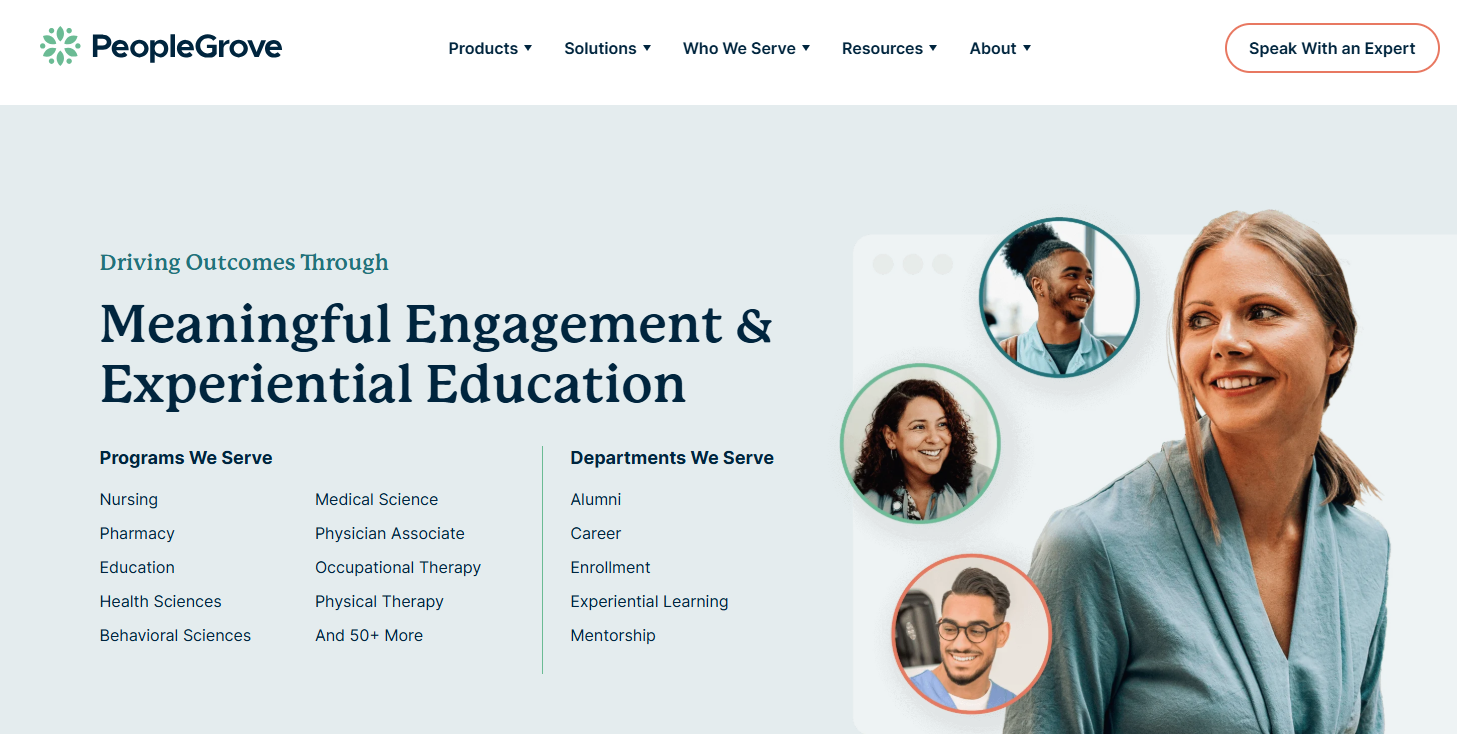
PeopleGrove particularly excels at structured program management. Teams can set up mentoring programs, match participants based on skills, interests, and goals, establish milestones, and track participation and outcomes. Rather than simply giving alumni a directory and letting them find one another, the platform gives institutions tools to actively shape how those connections happen.
The platform also enriches profiles with professional information from LinkedIn, helping you maintain more current information about where alumni work and what they do without relying entirely on manual profile updates. This information is useful when building targeted programs or helping users find relevant connections.
Pricing: Custom pricing offered based on the institution's requirements.
Encoura Encompass is a constituent engagement platform for higher education that brings website management, email marketing, event management, online giving, membership, and other alumni-facing functions into one system.
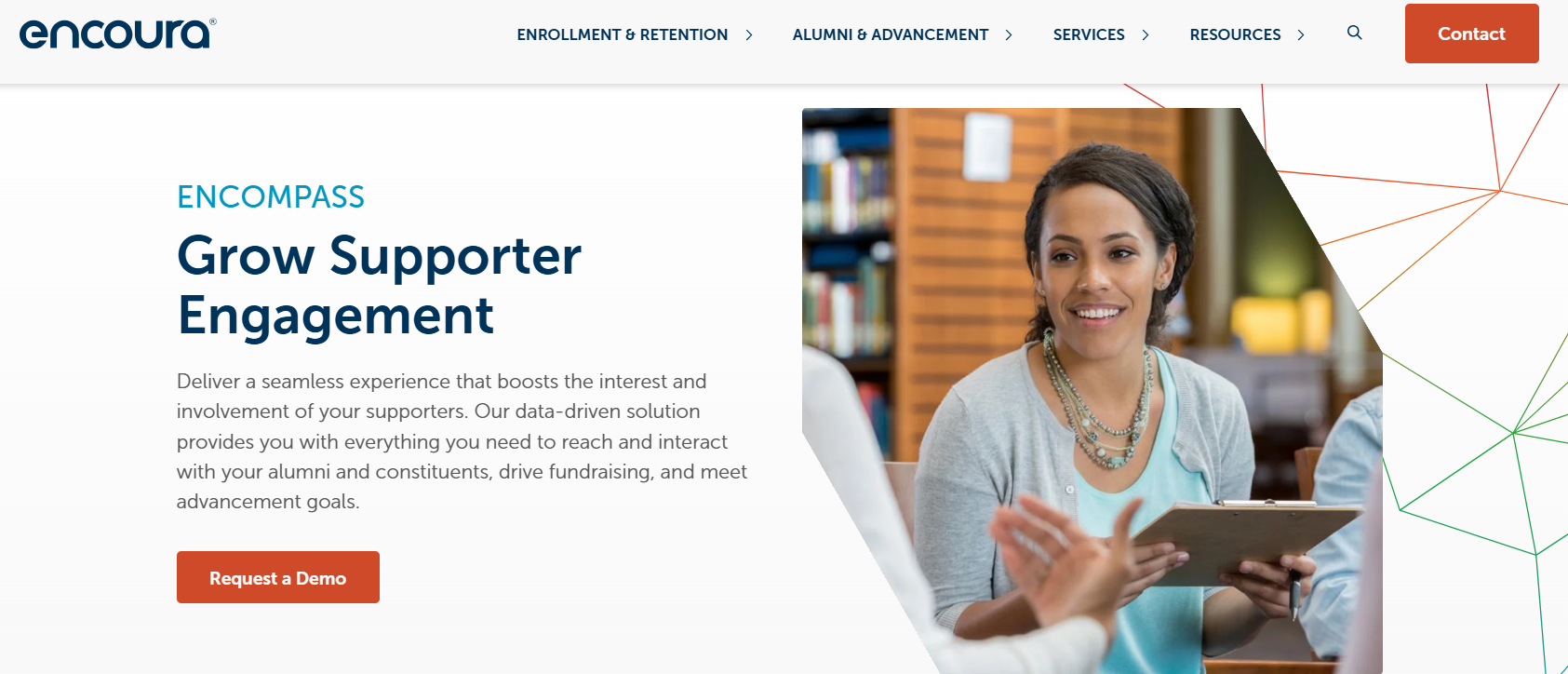
One of Encompass's biggest strengths is its breadth of constituent-facing functionality. Instead of using separate systems for an alumni website, communications, events, giving, and membership management, institutions can manage these activities through one connected platform. This breadth is particularly useful for institutions already working within the Anthology ecosystem.
For institutions evaluating it, the recent ownership transition is an important part of the conversation: Encoura acquired the service in 2026, so teams should evaluate the current product roadmap, support model, and integration plans alongside the platform's existing functionality.
Pricing: Estimate currently place pricing starting at $7,500 per year, but the platform does not publicly disclose its prices.
ToucanTech is an alumni and community platform that brings together an alumni database, website and portal, email marketing, events, fundraising, memberships, and career networking. Built specifically for schools and educational institutions, it aims to give teams a broad set of alumni engagement tools without requiring extensive technical configuration.
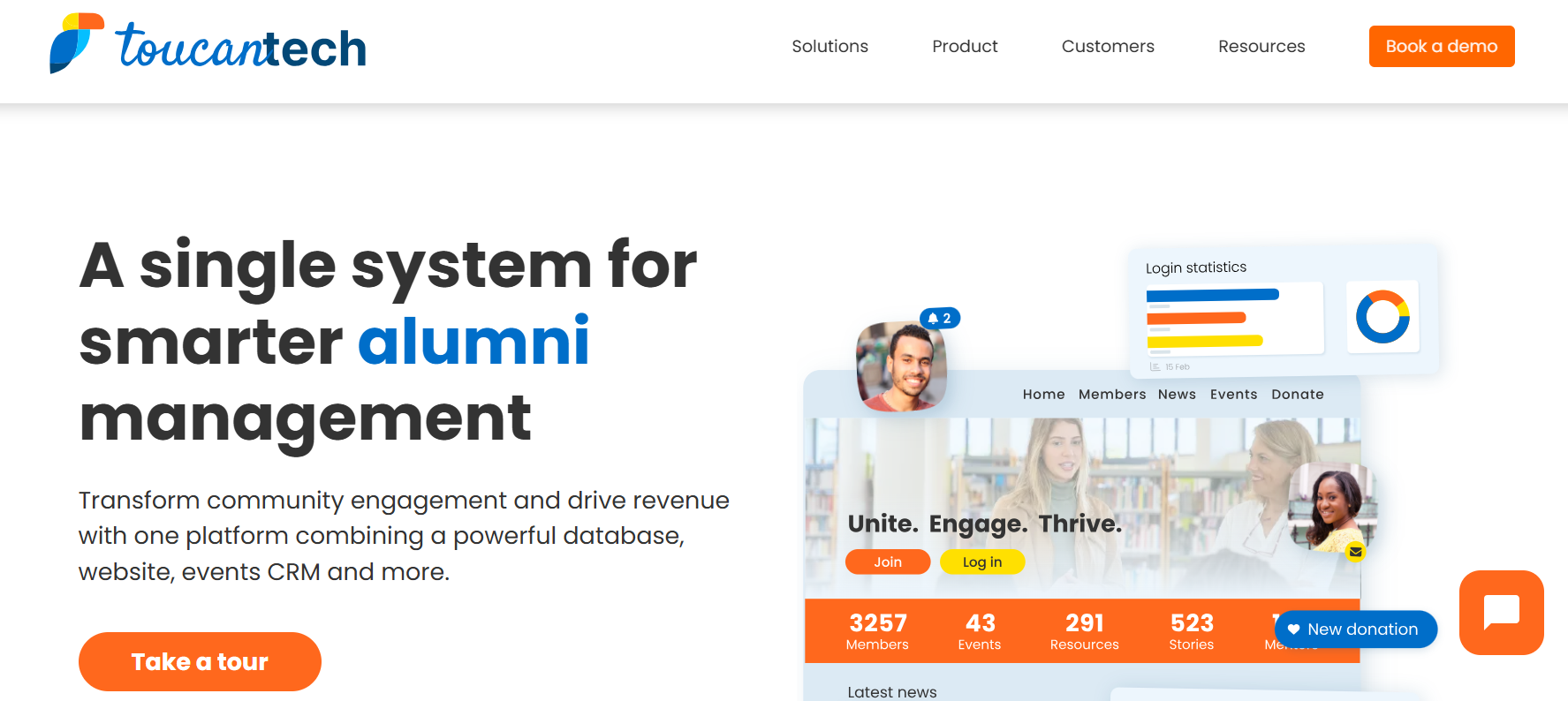
ToucanTech champions ease of use as one of its core principles. Users frequently highlight its intuitive interface and customer support. The platform also keeps common alumni activities connected. Event registrations, donations, communications, memberships, and constituent information can be managed within the same system, giving teams one place to work from rather than stitching together several point solutions.
It's a useful option for teams replacing a legacy alumni system, building a program with a relatively small staff, or looking to consolidate several alumni-facing tools into one platform.
Pricing: ToucanTech's core plan has a flat rate of $8,000 per year.
WildApricot is a membership management platform used by associations, nonprofits, and community organizations.
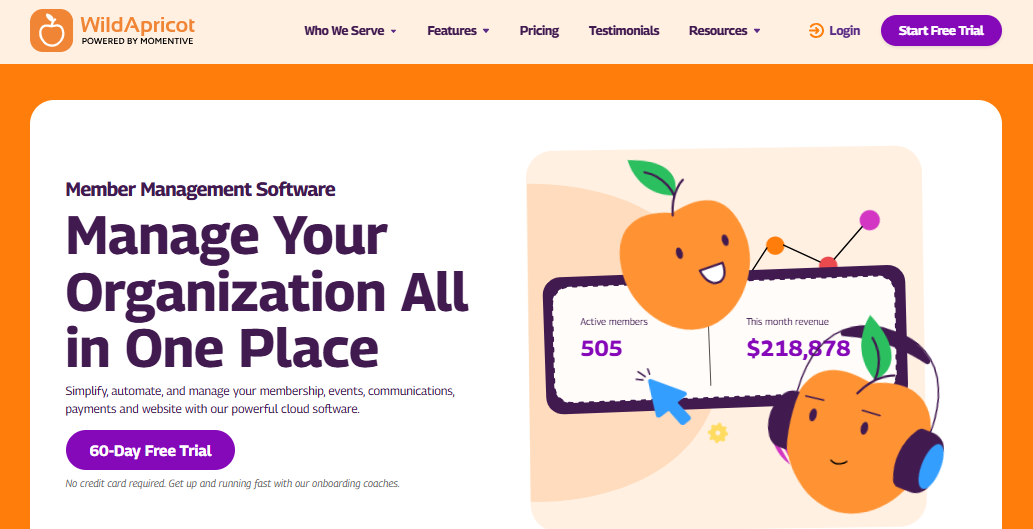
The platform sets itself apart with its straightforward pricing and setup. Unlike many enterprise alumni platforms that require a sales conversation before you can estimate costs, WildApricot publishes its plans based on the number of contacts you manage. It also offers a 60-day free trial, making it easier for smaller organizations to test the platform before committing.
The platform is also designed to be managed without extensive technical expertise. Teams can build a member-facing website, maintain a directory, create events, collect payments, and send communications from the same system.
WildApricot is a good fit for small alumni associations and organizations with simpler membership and event needs, such as maintaining a member directory, managing memberships, organizing events, sending communications, and collecting payments.
It may become less suitable as an institution's needs expand into larger and more specialized alumni engagement or advancement workflows.
Pricing: Plans are based on contact volume, starting at $63/month for 100 contacts and increasing with database size. WildApricot also offers a 60-day free trial.
GiveCampus is built around fundraising, alumni engagement, events, volunteer management, and frontline fundraising. As an engagement layer that sits on top of your CRM, it brings together constituent, gift, event, volunteer, and frontline fundraising data.
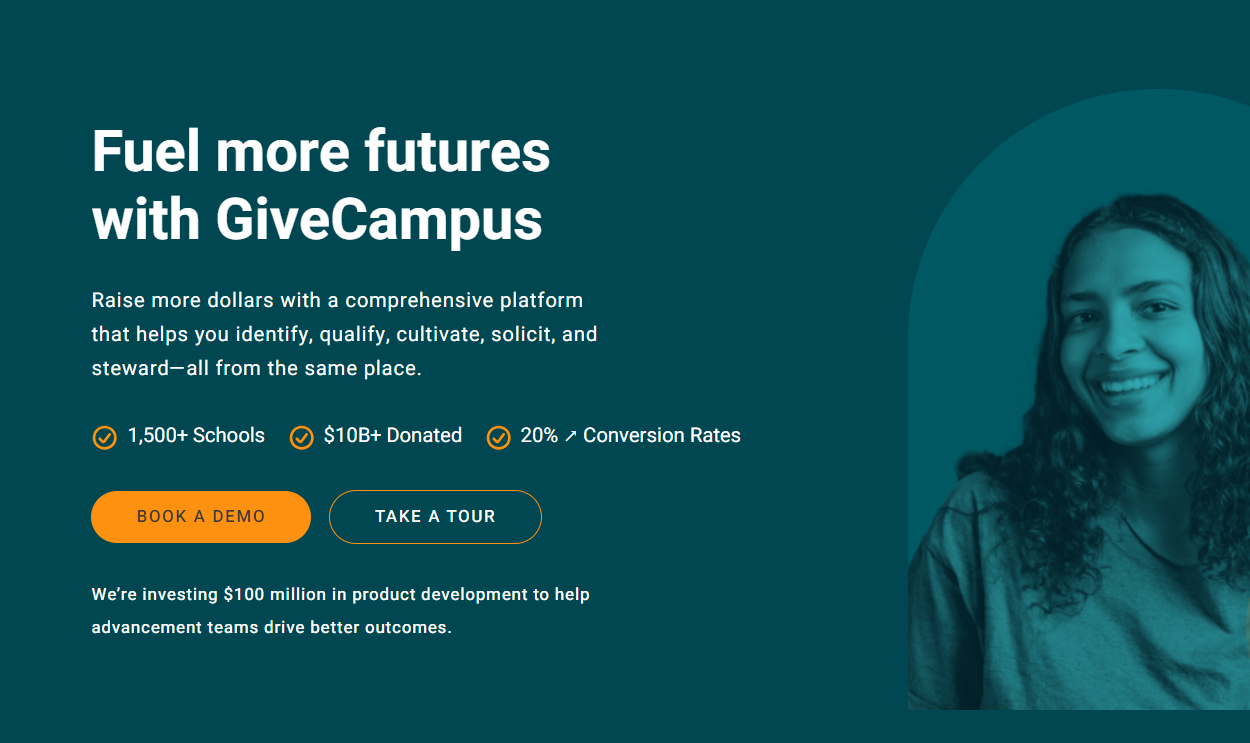
This is particularly useful for advancement teams that want events and alumni engagement to feed directly into fundraising workflows. GiveCampus also supports email and text outreach, volunteer management, and fundraising campaigns within the same ecosystem.
It's a strong fit for institutions running a lot of giving campaigns, reunions, alumni events, volunteer programs, and donor outreach from the same advancement operation.
It's less of a traditional alumni-community platform built primarily around directories, mentoring, or social networking.
Pricing: Custom pricing offered based on the institution and products selected.
There’s no single alumni management platform that will be the right fit for every institution. Think on the question of what you need the platform to do, and you’ll be able to approach the decision with much clarity.
If fundraising and advancement are at the center of your alumni strategy, look for a platform that can connect engagement activity with your CRM and give your advancement team useful donor context. Almabase and GiveCampus are worth a closer look here, while EverTrue makes more sense for teams that need deeper prospect and donor intelligence.
If your priority is building an active alumni community, Graduway and HiveBrite take a more community-first approach, with tools for networking, groups, mentoring, and member interaction.
For institutions where alumni-to-student connections, mentoring, and career engagement are a major part of the strategy, PeopleGrove is built around those programs rather than treating them as an add-on. And if you're looking for something simpler to get up and running, ToucanTech offers a broader set of alumni tools, but with less emphasis on extensive customization.
Before you start booking demos, definitely get clear on what your institution actually needs from an alumni management platform and what you can realistically expect from your budget, team, and existing tech stack. That’s exactly what we cover in our Alumni Management Software Buying Guide. It walks through the key features to evaluate, questions to ask vendors, implementation considerations, and how to compare platforms against your institution’s specific needs.
If you’re unsure what to prioritize, flipping through the guide before comparing vendors might help!
Choosing alumni management software is a big decision, especially when your team will be relying on it for everything from everyday alumni communications to major events and fundraising campaigns. Take the time to see how each platform handles your actual workflows, what implementation involves, and how well it works with the systems you already use.
Almabase is worth exploring if bringing alumni engagement and fundraising closer together is a priority. It brings events, communications, giving, and alumni data into one platform, with CRM integrations to reduce manual work for your team. 🤗
You can read more about what makes Almabase a good alumni management software and how it supports different alumni programs.
Ultimately, the goal is to find the platform your team can comfortably use, your alumni will want to engage with, and your institution can continue to rely on as its programs grow.
Request a demo today to see how Almabase can help your institution nurture deeper relationships with your alumni. 💜

An institution can get by with spreadsheets and basic CRM functions, but a dedicated alumni management software makes a huge difference when you need to map engagement, personalize communications, giving, and complex events. So while not always necessary, it becomes almost essential as an institution scales its alumni management efforts.
There’s no single best option for every institution. The right platform depends on your goals, existing technology, budget, and whether you need deeper capabilities or customizations. Ultimately it’s about finding the right fit for your requirements.
Pricing varies widely depending on the platform, number of alumni, and features you need. Some platforms offer tiered pricing, while others use custom pricing based on the institution’s requirements.
Free tools can work for institutions with smaller alumni programs or straightforward needs, but they often come with limits on features, users, data, or customization. If your programs are growing, paid software may offer more room to scale.
You might find the terms being used interchangeably, but an alumni platform usually focuses on the alumni-facing experience, while alumni management software could also include the operational side, including data management, events, communications, and fundraising.
Subscribe
See how modern advancement teams bring alumni engagement and fundraising together.
Plan faster. Execute better
Explore free templates designed for alumni and fundraising teams.
.png)

.avif)
Almabase
Alumni are among the most valuable assets of any educational institution. They provide mentorship, offer career opportunities, donate generously, and serve as brand ambassadors. But maintaining meaningful relationships with a growing alumni base is no small feat. That’s why alumni management software such as Almabase have become essential, enabling advancement teams to streamline engagement, personalize outreach, and elevate alumni experiences.
Almabase is a leading alumni management software trusted by advancement teams at top institutions. Almabase stands out by helping institutions manage all aspects of alumni relations from one unified platform.
Almabase is built to meet the practical, day-to-day needs of advancement teams:
💡 Check out how Almabase helped Thomas Aquinas College alumni community grow 3x in just 3 months by setting up an online directory.
💡 Check out how we worked with Concordia College to level up their alumni communication and engage 10k+ alumni monthly.

💡 Check out how Alumni Association, SMLLU successfully raised $1.15 million in a single giving day with Almabase.
Almabase’s interface is built with two things in mind:
Almabase emphasizes the need for alumni software to integrate with existing technology ecosystems of educational institutions, particularly CRM systems and social platforms. This focus ensures data flows efficiently and remains consistent across tools.
Almabase distinguishes itself with stellar customer support as seen through their customer reviews in review websites like Capterra and G2:

Almabase offers pricing based on the size of your contactable alumni base, making it accessible for institutions of all sizes. For RE NXT users, the Blackbaud partnership also enables savings on payment processing if they use BBMS. With no hidden costs and flexible plans, Almabase delivers high value for the investment.
It centralizes alumni and donor data in one place, reducing duplicates and manual work. You also get more targeted campaigns because engagement and giving history are synced for better segmentation.
Any institution or nonprofit with a growing alumni base that runs events, communities, or fundraising should consider it. It’s especially useful once spreadsheets and email lists are no longer enough to manage outreach.
Yes, platforms like Almabase and many others are built to integrate with popular CRMs like Salesforce or Blackbaud rather than replace them. Engagement data (events, communities, mentoring) syncs back to your main CRM and fundraising systems.
It brings profiles, communications, events, and mentoring into one hub, making it easier to stay in touch over time. Automation and analytics help you send more relevant messages and keep alumni active at different life stages.
Managing alumni relationships at scale requires more than spreadsheets and disconnected tools. Almabase brings together alumni data, engagement, events, and giving into a single, user-friendly platform that advancement professionals can rely on. From automation and integration to ongoing support, it’s a solution built for modern alumni engagement.
To see how Almabase can help your institution strengthen alumni relationships and increase fundraising outcomes, book a free, personalized demo at a time that works best for you 🔽


What makes Almabase a good alumni management software?
Lorem ipsum dolor sit amet, consectetur adipiscing elit. Suspendisse varius enim in eros elementum tristique. Duis cursus, mi quis viverra ornare, eros dolor interdum nulla, ut commodo diam libero vitae erat. Aenean faucibus nibh et justo cursus id rutrum lorem imperdiet. Nunc ut sem vitae risus tristique posuere.
Choosing the right alumni management software is a crucial decision for any advancement team. Even with changing alumni expectations, data across too many systems, teams are expected to drive engagement, events, and giving, all without adding more tools. This article is for teams that want clarity on what to look for, what actually matters, and how to avoid buying a platform that looks good in a demo but underperforms in practice.
In the sections that follow, we break down what modern alumni platforms are designed to do, how today’s alumni engagement software and alumni management systems differ from generic CRMs, and which capabilities directly support long-term relationships.
.avif)
An alumni management software is a centralized platform that helps institutions manage alumni data, communication, events, and giving in one place. It is built specifically for alumni teams. Most platforms in this category combine directories, messaging, events, online giving, and reporting so teams can run engagement programs without stitching together multiple systems.
The key difference is in how the software is used day to day. Alumni can update their profiles, register for events, join groups, or donate through a single experience, while teams can see how individuals interact across those activities over time. This makes it easier to understand who is engaged, who is drifting away, and where to focus outreach, which is why many institutions rely on alumni management software for ongoing alumni relationship management, rather than treating engagement and giving as separate efforts.
At the buying stage, the value of alumni management software is not about having more features. It is about whether those features reduce friction for your team and create consistent engagement for alumni. Most institutions already have email tools, event tools, donation pages, and spreadsheets. The real question is whether bringing these together in a single system actually improves outcomes for advancement.
At the buying stage, the value of alumni management software comes less from feature breadth and more about whether those features measurably improve engagement and giving. That matters because industry benchmarks show just how limited alumni participation typically is. Reports show that only 19-20% of alumni engage with their institution in any form, including communications, events, volunteering, or giving.
Keeping this in mind, the real benefit of an alumni platform is its ability to help teams identify areas that need support, focus effort where it counts, and reduce friction across engagement workflows.
Here’s a closer look at the core capabilities buyers expect from modern platforms and why they matter when you are comparing vendors side by side.
For most advancement teams, the alumni database is where trust is won or lost. Alumni management software replaces scattered spreadsheets and partial records with a single directory that alumni can interact with directly. Self-service profile updates, searchable records, and enrichment through integrations mean teams spend less time chasing correct information.
The practical benefit here is the ability to segment audiences confidently and act on that segmentation without second-guessing whether the list is accurate. Teams evaluating platforms should pay close attention to how easy it is to maintain data quality over time, not just how records look on day one. With engagement concentrated among a small subset of alumni, the role of alumni software is to help teams identify, deepen, and sustain those relationships without spreading effort too thin.
Most platforms promise multi-channel communication. What buyers quickly discover is that ease of use matters more than channel count. Alumni management software typically includes email campaigns, newsletters, automation workflows, and templates that are built for small teams managing ongoing outreach.
There is also a clear link between digital engagement and giving. A 2024 alumni trends survey found that 93% of alumni who donate are active on their institution’s alumni portal, highlighting how ongoing digital interaction supports philanthropic behavior.
The real value shows up in consistency. When communication tools are integrated with alumni data and activity, teams can move away from one-off blasts and toward regular, targeted messaging that reflects alumni interests and past engagement. This is often where generic CRMs fall short, requiring heavy configuration to achieve the same result.
The advancement outcome here is simple but critical: teams can confidently target alumni by location, interests, or past involvement, reducing wasted outreach and increasing relevance in both engagement and fundraising campaigns.
One of the clearest differentiators between alumni platforms and traditional advancement tools is the presence of community features. Groups, chapters, discussion spaces, and peer-to-peer interaction give alumni a reason to return even when there is no event or appeal running.
From a buyer’s perspective, this matters because engagement that happens between campaigns is easier to sustain. Institutions that rely only on email and events often see activity spike and drop. Community features help smooth that curve by keeping alumni connected to each other, not just to the institution.
Events are a major driver of alumni interaction, but they are often managed in isolation. Alumni management software brings event pages, registration, payments, check-in, and follow-ups into the same system as alumni records. Access to event management that feeds engagement data back into strategy is the real game-changer.
The benefit here is smoother logistics and visibility. Attendance, repeat participation, and post-event behavior become part of the engagement picture, making it easier to understand which events justify continued investment and which do not.
Most alumni platforms include online giving features such as campaign pages, giving days, recurring donations, and payment integrations. What buyers should look for is how tightly these tools connect to engagement history. Online giving tools are most effective when they are part of a broader engagement picture. Alumni management software links donations to communication history, event attendance, and other forms of involvement.
When giving activity is viewed alongside event participation, volunteering, or mentoring, teams gain a clearer sense of donor journeys. This reduces reliance on guesswork and makes it easier to time appeals based on demonstrated involvement rather than assumptions.
Career support and mentoring are often underestimated during evaluation because they do not immediately drive revenue. In practice, they are powerful engagement drivers, especially for younger alumni. This benefit is indirect but strategically important: perceived alumni value. For early-career alumni, relevance matters more than solicitation. Nearly half of alumni value career and networking opportunities as a primary reason to stay connected, which explains why institutions investing here often see steadier engagement over time.
Platforms that support job boards, mentoring programs, and alumni-student matching help institutions demonstrate value beyond fundraising. For many buyers, these features act as a long-term investment, strengthening relationships early and supporting future giving rather than forcing it.
No alumni platform exists in isolation. Integrations determine whether alumni data informs advancement strategy or sits in a parallel system. Advancement CRMs, student information systems, and finance tools still play a role. Strong alumni management software integrates cleanly with systems like Salesforce or Blackbaud to reduce duplication and manual reconciliation.
For buyers, this is often a deciding factor. Poor integrations create shadow processes and erode confidence in reporting. Good integrations make the alumni platform feel like part of the institutional ecosystem rather than another tool to manage.
Most platforms offer dashboards for email performance, event attendance, and giving. The difference lies in how actionable that data is. Buyers should look for reporting that helps answer real questions: who is engaged, who is slipping away, and where effort is paying off. Your dashboards should give you insights to support decisions.
Dashboards and engagement scoring support smarter allocation of effort, helping teams focus outreach where it is most likely to convert and clearly explain impact to leadership.
For advancement teams, security and compliance rarely influence engagement strategy until something goes wrong. Alumni management software handles personal data, communication preferences, and often payment information, which means gaps in permissions or consent tracking quickly turn into operational and reputational risks.
Platforms that support GDPR and CCPA requirements, granular permission controls, and clear opt-in and opt-out management make it easier for teams to engage alumni without second-guessing whether outreach is compliant. The practical outcome is reduced exposure for the institution and fewer internal blockers around campaigns, events, and giving. When compliance is built into day-to-day workflows, teams can move faster and engage more confidently at scale. As alumni become more conscious of data usage, transparency here increasingly influences willingness to participate, not just legal standing for advancement teams and institutions.
Once you shortlist a few platforms, the challenge is figuring out which system will actually work for your institution, your team size, and your advancement goals. Many platforms look similar on the surface. The differences show up after implementation.
Let us look at how advancement teams can evaluate alumni engagement software in practice:
Before comparing features or pricing, teams need internal alignment on what success looks like. Common goals include increasing participation, improving alumni data quality, expanding mentoring programs, or growing giving over time. The mistake many institutions make is trying to optimize for all of these at once.
At this stage, buyers should be honest about priorities. A platform that excels at community building may not be the best fit if your primary need is fundraising integration and event management. Clear goals help narrow options quickly and prevent overbuying. This is especially important if you are considering a product that is within an ecosystem of related modules.
When reviewing platforms, it is important to look beyond how vendors present their tools or how many features a platform has. Use a checklist to align with your team’s strategies and needs to best decide which software is your perfect match.
Tip: intentionally frame your checklist and evaluation criteria around operational impact to avoid getting caught in the details of feature depth.
Demos often highlight best-case workflows. Buyers should use this time to surface constraints and trade-offs. A few questions consistently separate strong platforms from polished presentations:
💡 Pay attention to the features that vendors emphasize but also keep an ear out for how they explain limitations. This transparency (or lack thereof) is often more revealing than feature lists.
Beyond features and demos, long-term fit often comes down to factors that are harder to spot early but expensive to fix later. Buyers who skip this layer tend to revisit the decision within a few years.
Even strong platforms struggle if onboarding is rushed or under-resourced. Institutions should look closely at how vendors handle data migration, training, and rollout. Think about the trade-offs: a shorter implementation timeline is not always better if it sacrifices adoption. Ask what successful launches typically look like and what internal effort is expected from your team.
Alumni management software is often priced based on alumni count, feature tiers, or modules. Buyers should confirm what is included upfront and what requires add-ons later. Costs tied to integrations, advanced reporting, or support can change the total investment significantly over time.
Some platforms evolve rapidly, while others remain static after core features are built. Ask yourself how product decisions are made and how often and to what extent customer feedback shapes the roadmap. This is especially important for institutions planning multi-year engagement strategies over short-term fixes.
Post-launch support matters more than pre-sales responsiveness. Clarify what support channels are available, response times, and whether customer success is proactive or reactive. This is especially relevant to advancement teams with limited technical capacity.
Almabase supports alumni engagement by helping advancement teams connect participation, communication, and giving in one place. For institutions evaluating alumni management software, this matters because engagement only becomes useful when teams can see which alumni are active, how they are engaging, and where to focus next.
The platform brings alumni profiles, communications, events, mentoring, and online giving into a single system. Engagement across these activities is tied back to individual alumni records, giving teams a clearer picture of involvement over time.
Where teams tend to see value is in how easily engagement data can be centralized without increasing operational overhead. Check out the top alumni management software for a broader comparison of tools and positioning.
Almabase also supports engagement across the alumni lifecycle. Institutions can onboard recent graduates, run mentoring and career programs, manage regional or virtual events, and maintain ongoing communication from the same platform. This approach helps alumni experience engagement as a continuous relationship rather than a series of disconnected touchpoints. Read more for a closer look at how institutions design these engagement journeys.
At Almabase, fundraising is embedded within the broader engagement experience. Online giving tools connect directly to communication and participation history, giving advancement teams better context when planning appeals and follow-ups. This alignment between engagement and giving is reflected in Almabase being recognized as the #1 donor management software by G2 Crowd, based on verified user reviews.
Overall, Almabase supports alumni engagement by giving institutions clearer visibility into participation, stronger coordination between alumni relations and advancement teams, and a more direct link between engagement activity and advancement outcomes.
Choosing alumni management software is less about finding a platform with the most features and more about finding one that fits how your institution actually works. At this stage, the most useful next step is to map your current engagement goals to your operational reality. That means understanding where alumni data lives today, how engagement is tracked, and which outcomes matter most to advancement leadership.
As you evaluate options, focus on how clearly each platform connects engagement activity to participation and giving, how easily teams can work together, and how much effort is required to maintain clean, usable data over time.
For institutions looking to centralise alumni engagement while keeping advancement outcomes in focus, Almabase offers a platform built around visibility, coordination, and scale. Exploring how it supports real engagement workflows can help determine whether it aligns with your needs.
At its best, alumni management software gives institutions clarity. Clarity on who is engaged, how relationships are evolving, and where to focus effort next. That clarity is what turns engagement into long-term impact.
Want to see for yourself how Almabase helps with alumni engagement and management? Book a personalized demo with us and we’d love to chat!
.avif)
Choosing the right alumni management software (2026 guide)
Lorem ipsum dolor sit amet, consectetur adipiscing elit. Suspendisse varius enim in eros elementum tristique. Duis cursus, mi quis viverra ornare, eros dolor interdum nulla, ut commodo diam libero vitae erat. Aenean faucibus nibh et justo cursus id rutrum lorem imperdiet. Nunc ut sem vitae risus tristique posuere.

Anwesha Kiran
January 20, 2026
12 minutes
Alumni relations have come a long way from simple newsletters and reunion invites. Today, institutions are embracing creativity, technology, and community-driven values to build meaningful, lasting connections with their alumni.
In this blog, we’ve curated 10 standout alumni initiatives that go beyond the ordinary. Whether you're looking to spark new ideas or elevate your existing engagement strategy, these examples are sure to inspire your next big move.
An alumni relations initiative refers to any program, event, or effort specifically designed to engage and strengthen ties with an institution’s alumni community. These initiatives aim to foster a sense of belonging, keep alumni informed, and encourage continued involvement in the life of the school or university. In essence, alumni relations initiatives are a focused subset of broader alumni programs—those that revolve around community-building rather than fundraising, career services, or admissions support.
These initiatives can take many shapes depending on the institution’s goals and audience. Across the US, UK, and Canada, schools and universities have adopted a wide range of strategies to stay connected with their alumni in meaningful ways. Below are some of the most common and effective alumni relations initiatives seen in practice today:
These are some of the most popular ways schools and universities stay connected with their alumni, but the real magic lies in how each institution puts its own spin on them. From small colleges to large universities, we’ve seen some truly creative and impactful ideas take shape.
In this section, we’re highlighting 10 real-life examples of alumni relations initiatives that stand out. Each one comes with a quick snapshot (literally, where possible!) so you can see how these ideas were brought to life and maybe even borrow a little inspiration for your own alumni strategy.
In a time when many new graduates feel uncertain about their next steps, Kent State University took a deeply human approach—picking up the phone. As part of their wonderful initiatives, the university launched Care Calls, where staff and faculty personally called recent graduates to check in, offer congratulations, and provide information on alumni resources and support.
What made this initiative so powerful wasn’t just the information shared—it was the gesture itself. A personal call during a major life transition reminded students that they remained part of the Kent State family even after crossing the graduation stage. It turned a one-way farewell into a two-way conversation, reinforcing lifelong belonging. The program’s success earned it a CASE Circle of Excellence Award in 2024.
Punahou School earned a 2024 CASE Circle of Excellence Award for its cutting-edge alumni engagement platform, built in partnership with Almabase. The platform brought together events, volunteer opportunities, career networking, and alumni directories—all in one easy-to-navigate space. The result? A dramatically improved alumni experience and increased participation.
This thoughtful integration led to a measurable impact: over 7,000 alumni became active monthly users, 70% of contactable alumni engaged with the platform, and more than 30,000 alumni profile views were recorded. Additionally, job boards saw 2,000+ self-serve interactions, and alumni resources received over 19,000 engagements. By leveraging Almabase’s tailored technology, Punahou not only modernized its engagement strategy but also built a stronger, more connected alumni community. The initiative demonstrates how the right tech partner can transform passive alumni databases into thriving, connected communities.

St. Lawrence College took a bold and refreshingly personal approach to alumni relations by sending their college president undercover. As part of this initiative, the president visited alumni at their workplaces, not just to observe, but to celebrate their post-college journeys in a deeply authentic way. These surprise visits were documented and shared as inspiring stories of alumni success, bridging the gap between the institution and its graduates in a memorable and human-centered way.
What made this initiative stand out wasn’t just the novelty; it was the genuine connection it created. Alumni felt recognized and valued, while the broader college community gained new appreciation for the real-world impact of their peers. The initiative earned St. Lawrence College a 2024 CASE Circle of Excellence Award for redefining how leadership can show up for alumni, literally and figuratively.
William & Mary's innovative approach to alumni engagement involved facilitating externship experiences that connected current students with alumni in their professional environments. This initiative earned the university a 2024 CASE Circle of Excellence Award in the Alumni Relations category.
By providing students with the opportunity to shadow alumni in various industries, the program offered real-world insights and fostered meaningful connections between students and graduates. These short-term experiences not only enhanced students' understanding of potential career paths but also strengthened the alumni network by encouraging alumni to actively participate in mentoring the next generation.

Texas Christian University (TCU) brought alumni together in a really fun and meaningful way with their Horned Frog Vendor Fair. This event isn’t just about catching up — it’s all about shining a spotlight on alumni-owned businesses and giving back to the community through scholarships. Imagine a campus filled with alumni entrepreneurs selling everything from handmade jewelry to tasty treats, creating a buzz and building connections that matter.
What makes this initiative so special is how it turns alumni support into action — fostering a sense of pride, community, and collaboration all in one place. Plus, it’s a win-win: alumni get to promote their businesses, students benefit from scholarships, and everyone leaves feeling a little more connected. No wonder it snagged a CASE Circle of Excellence Award in 2024!
At Thompson Rivers University, graduation was not just about crossing the stage—it was about stepping into a lifelong community. The New Alumni Welcome Reception, held in the nostalgic TRU Old Gym, gave fresh graduates a chance to celebrate with family, friends, faculty, and fellow alumni. Following each convocation ceremony, the gym transformed into a festive space filled with music, photo ops with iconic TRU symbols like the TRU letters and Wolfie, and light refreshments.
This warm tradition, in recent years, saw record-breaking attendance, welcoming nearly 10,000 guests over three days and six ceremonies. The event’s success didn’t go unnoticed; it earned TRU a Gold award for Best Special Initiative from the Canadian Council for Advancement of Education (CCAE) in 2023.

Aston University introduced the Aston for Life platform to provide its alumni with a centralized hub for personal and professional development. Launched in July 2023, the platform offers a range of resources, including career development tools, networking opportunities, and access to university news and events. This initiative earned Aston University a 2024 CASE Circle of Excellence Award in the Alumni Relations category.
By offering tailored content and opportunities, the platform ensures that alumni remain connected and supported throughout their careers. Features such as personalized career advice, industry-specific news, and community forums foster a sense of belonging and continuous growth among graduates.

The London School of Economics and Political Science (LSE) took a forward-thinking approach to alumni engagement by integrating artificial intelligence into their "Ask an Alum" program. This initiative earned LSE a Gold award in the 2024 CASE Circle of Excellence Awards.
By leveraging AI, LSE streamlined the process of connecting current students with alumni, facilitating meaningful conversations about careers, experiences, and advice. The AI-driven system efficiently matched students' inquiries with the most relevant alumni, enhancing the overall engagement experience.

Stanford University has been putting the power of alumni engagement directly into the hands of its recent graduates through the Young Alumni Opportunity Fund. This ongoing initiative has provided young alumni with micro-grants to create and host events that resonate with their peers, fostering a sense of community and connection beyond the campus.
From local meetups and virtual workshops to networking events, the fund has empowered alumni to take the lead in building meaningful relationships within the Stanford community. By supporting these grassroots efforts, Stanford continues to enhance alumni engagement while cultivating leadership and initiative among its recent graduates.

At the University of Saskatchewan (USask), the Golden Grads Program is a heartfelt tribute to alumni who graduated 50 years ago. Initiated in 2017, this annual celebration honors the enduring connection between the university and its alumni, recognizing their contributions and lifelong bond with the institution. Each year, Golden Grads receive a commemorative golden alumni pin and parchment, symbolizing their lasting place in the USask community.
The program also features "Memory Lane," a curated collection of stories, photos, and traditions shared by fellow Golden Grads, allowing alumni to reminisce and reconnect with their peers. It’s a beautifully simple idea that reminds us how powerful it can be to pause, look back, and celebrate the journey because alumni engagement isn’t just about the present, but honoring the paths that led us here.

These initiatives show that alumni engagement isn’t one-size-fits-all—it’s personal, thoughtful, and evolving. What ties them all together is a deep understanding of community and a creative commitment to keeping the alumni spirit alive.
No matter how creative or ambitious your alumni initiative is, a few foundational practices can go a long way in making sure it actually connects with your community. Think of these as the essentials—habits and principles that the most impactful alumni teams consistently follow.
Before launching any initiative, dig into alumni engagement analytics—email open rates, event RSVPs, survey feedback. This helps you prioritize what alumni actually respond to, not what you think they want.
Treat young alumni, mid-career professionals, and retirees differently. Use graduation year, location, and profession to personalize outreach and events. A mentorship invite for a recent grad isn’t going to resonate with a 1985 alum—and vice versa.
Create alumni champions or ambassadors for different regions, industries, or class years. When initiatives are peer-driven rather than institution-driven, they gain more traction.
Make alumni relations part of the student experience before graduation. Invite alumni to guest lecture, offer externships, or co-host events. This ensures students transition into engaged alumni, not distant observers.
Spotlight 10-year reunions, professional achievements, new parents, or business launches. Engagement doesn’t always need to lead to a donation—sometimes it starts with a simple celebration.
Platforms like Almabase can help automate communication, host events, and manage data to make sure your communication stays warm and human without having to write each email manually.
Don’t set and forget. Track KPIs like event attendance vs. registration, digital engagement, and volunteer sign-ups. Run quick pulse surveys post-events and use that insight to iterate.
Even with the best intentions, some common missteps can hold your initiative back. Here are a few pitfalls we’ve seen teams stumble into—and some gentle reminders to help you steer clear of them.
If your initiative lacks a clear “why” or value proposition, alumni will eventually struggle to relate to your cause. They need to understand why your initiative exists and why now, as well as what they are gaining from participating.
Jumping straight into donation appeals—especially with younger alumni—can backfire. Offer value first, whether it's through mentorship, events, or learning opportunities.
Personalization is simply not just a matter of luxury anymore but a growing necessity. Sending the same event invite or newsletter to a 23-year-old and a 60-year-old just won’t land the same way. Segmentation and personalization should be central to your communication and promotion efforts.
If your alumni office is working in a silo, you’re bound to not get the most out of your initiatives, whether that’s time wasted on manual syncs or solving redundancies. Sync with career services, student affairs, and advancement for richer programming and outreach.
Sending a thank-you is pretty much expected now, which means the standard is higher. Follow up with a thank-you, share event highlights, and suggest a next step (e.g., join a group, mentor, donate).
At the heart of every great alumni initiative is a simple goal: building genuine, lasting relationships. It’s about authenticity, continuity, and creating moments that make alumni feel seen, heard, and still part of the story. Whether you're just getting started or looking to level up, small, thoughtful steps can lead to a big, meaningful impact. So if you're designing your next initiative, let these ideas be a reminder: meaningful engagement starts with listening, builds with consistency, and grows with creativity.

10 Great Alumni Relations Initiatives to Inspire You
Lorem ipsum dolor sit amet, consectetur adipiscing elit. Suspendisse varius enim in eros elementum tristique. Duis cursus, mi quis viverra ornare, eros dolor interdum nulla, ut commodo diam libero vitae erat. Aenean faucibus nibh et justo cursus id rutrum lorem imperdiet. Nunc ut sem vitae risus tristique posuere.

Sharada Koti
May 29, 2025
12 minutes
%201.svg)
%201.svg)
%204.svg)



.svg)