Want to build community and boost donations? Learn how to design inclusive fundraisers that accommodate physical and cognitive needs in this nonprofit guide.

Barb McFarland
Published:
August 13, 2026
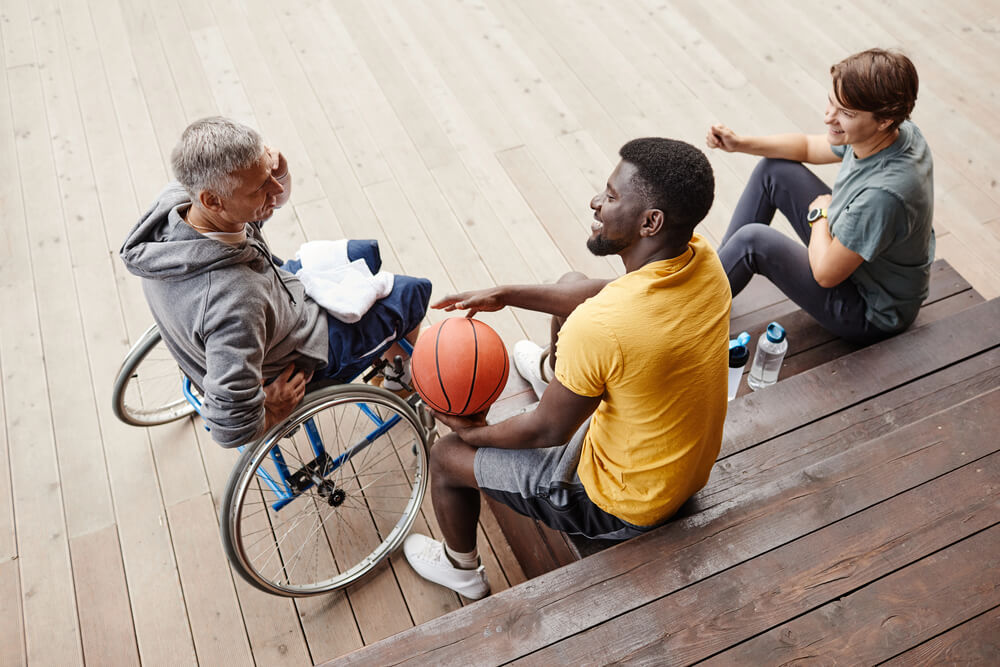
Did you know that more than one in four adults in the United States lives with a disability? Despite this, many fundraising events are inadvertently designed in a way that excludes a significant portion of potential donors. This not only jeopardizes your revenue but also harms your community engagement and ultimately hinders your mission.
For schools and other youth-focused organizations, it’s especially important to ensure that every child has the opportunity to participate in your fundraiser. Fundraising helps kids build social bonds and develop skills such as personal responsibility and perseverance, and every child should be able to get involved regardless of ability.
In this guide, we’ll explore strategies for creating an accessible and inclusive fundraiser that invites every supporter to fully participate in advancing your cause.
The first step in creating an inclusive fundraiser is to shift how your team thinks about accessibility. Accommodating supporters with disabilities should be built into your planning process from the get-go. Consider these logistics as you plan your fundraiser:
Remember to include people living with disabilities and their families in your planning process; those with lived experience will be the best judges of what truly makes an event accessible. If you can’t create an in-person committee, create an online forum where you can engage with your audience and ask how to make your events better.
For in-person events like live auctions, galas, or festivals, it’s important to find an ADA-compliant venue that’s not just accessible, but also comfortable for all. Keep in mind that just because a venue has a ramp, that doesn’t mean it’s a truly inclusive experience. It’s your nonprofit’s job to make everyone feel welcome; if a person has to enter from the back of the building, they might feel alienated despite your best intentions.
To ensure your venue is fully accessible, follow these steps:
Taking these details into consideration shows that your organization is doing more than the bare minimum to include supporters with disabilities. Oftentimes, it’s the small details that leave a lasting impression on your supporters, building a connection that will last for years to come.
Digital tools often enable participation for those who cannot attend in person or who require specialized assistance to engage with your content. By integrating technology thoughtfully, you ensure that physical or geographical barriers do not prevent a passionate supporter from contributing to your cause. Consider these digital best practices:
For many people living with disabilities, flexibility is key. Technology offers endless possibilities for involvement with your nonprofit, making it a crucial part of your ability to engage with your community members. If you’re updating any web content for accessibility, ensure it adheres to WCAG standards.
Too often, conversations about accessibility solely focus on physical disabilities and fail to address accommodations for the neurodivergent community. You can create a welcoming atmosphere for everyone by:
Making these changes will ensure your fundraiser is inclusive of supporters with disabilities that may not be immediately visible, allowing you to form deeper, more meaningful relationships.
Creating your first truly inclusive fundraiser will help you learn the ropes and pave the way for more accessible events down the line. When you remove barriers, you create a more vibrant, welcoming, and successful event for everyone. By prioritizing accessibility in your venues, tools, and planning, you prove that your organization’s values extend to every member of your community.
Table of Contents
Subscribe
See how modern advancement teams bring alumni engagement and fundraising together.
Nonprofit and university websites have made significant strides in the past several years to improve the accessibility of their websites. Web accessibility means that your organization’s website pages, including your online donation page, are usable and legible for all visitors.
Making your donation page more accessible involves following accessibility guidelines, but it also includes your efforts to make your donation form more visible and recognizable across your website and other digital platforms.
Specifically, we’re going to look at four ways to craft a more accessible donation page:
.jpeg)
Offering supporters an accessible, easy-to-use donation process is the first step of your overarching donor stewardship plan. When your donation form is easy to use, donors will face fewer barriers to giving, providing them with a positive experience.
The first step in making your organization’s online donation page more accessible is following the Web Content Accessibility Guidelines (WCAG). These are universally-recognized regulations for creating web content that’s usable for all.
When it comes to nonprofit and university web accessibility, these guidelines provide a clear checklist to review when updating your organization’s website. Here are just a few of the features your online donation page should include, according to the WCAG:
A WebAIM study of the top 1,000,000 home pages found that the most common accessibility errors include low-contrast text, missing alternative text for images, and empty links. The study points out that addressing just a few of these most common errors would significantly improve accessibility across the web.
The same concept is true for your organization’s donation page. Just a few quick updates can dramatically improve the accessibility of the page, making it available to a wider audience.
Another aspect of making your donation form more accessible is ensuring that it’s usable on all devices. This includes desktops, tablets, and mobile phones.
Bloomerang’s guide to donation page best practices recommends the following tips for creating a mobile-friendly donation form:
With a mobile-friendly donation page, your audience members can give online whenever they want without having to pull out their laptops.
Calls to action (CTAs) are links, buttons, and other digital elements you use to direct traffic to your online donation page. CTAs make your donation form easier to find, reducing the time required to submit an online donation.
Your digital fundraising strategy should include a variety of CTAs across your online marketing platforms, including:
Use eye-catching colors and large font sizes to make your donation page CTAs stand out. Also, make sure any buttons you create follow the recommended WCAG color contrast guidelines.
You can also use strategic wording to vary your CTAs. For example, instead of saying “Donate Now” on every CTA, you might say “Show Your Support” or “Leave a Legacy.” This catches donors’ attention and helps draw the connection between their donations and your organization’s ability to make a positive impact.
Supporters will feel more comfortable filling out your donation form when it’s fully branded to your organization. Including your organization’s branding makes it clear that donors’ gifts will go directly to your organization.
Familiar branding makes your donation page more trustworthy for supporters, especially first-time donors who aren’t as familiar with your organization’s donation process.
For example, your donation form should feature your organization’s recognizable:
Ensure that these branding elements adhere to accessibility standards. For instance, make sure your font is large and legible, use simple language in your written copy, and ensure there’s sufficient color contrast between your brand’s foreground and background colors. Include accessibility policies in your web style guide so that all of your online branding is uniform and accessible.
Creating an accessible donation page can improve your organization’s fundraising results for any campaign, from your annual fundraising efforts to your giving day and more. Your accessible donation page will make your giving options available to a broader audience, creating a more user-friendly experience for your supporters.

4 Strategies to Make Your Donation Page More Accessible
Making your donation page more accessible ensures all supporters can easily access and fill it out. Incorporate these four donation page accessibility tips.
Lorem ipsum dolor sit amet, consectetur adipiscing elit. Suspendisse varius enim in eros elementum tristique. Duis cursus, mi quis viverra ornare, eros dolor interdum nulla, ut commodo diam libero vitae erat. Aenean faucibus nibh et justo cursus id rutrum lorem imperdiet. Nunc ut sem vitae risus tristique posuere.

December 13, 2022
12 minutes
Engaging alumni has been a critical part of your alumni programming but, the bigger question here is - how many of these initiatives are truly accessible to every single one of your alums?
Traditional alumni engagement initiatives include organizing local mixers, career networking events, and workshops on campus but 2020 has put an end to all of these in-person activities. While these initiatives will continue to be an integral part of your alumni program in the longer run, the one downside that has become evident in these past few months is that they’re not accessible to everyone.
If your programming involves quarterly class reunions on campus or Friday night happy hours at a nearby club, alumni who live far away are most likely to miss out. Also, some of your busier alumni might not have enough time to come to your in-person event and some may not see enough value in providing their services as a mentor. Various factors such as location, time, and the right value are crucial in defining how accessible your alumni programming is.
As advancement teams increasingly need to think out of the box in order to penetrate wider segments of alumni, institutions have found the perfect way to make their alumni programming more accessible to everyone - On-Demand Alumni Programs. On-demand alumni programs are services that any alum can access from anywhere, ideally anytime they want.

As 2020 throws one curveball after another, here’s a closer look at how your peers are fighting these challenges by implementing on-demand alumni programs.
Events have and will always be at the forefront of your alumni programming. However, the pandemic has completely transformed the way alumni events are now being hosted. An increasing number of institutions are choosing to include virtual events in their alumni programming owing to strict social distancing measures in place.
Virtual events allow more flexibility and that’s also a major reason behind this format seeing a huge traction over the last few months. As your alumni mostly stay confined to their homes, time and location are no longer a constraint when it comes to participation. Moreover, events like social mixers and happy hours hosted virtually are also helping institutions provide their alumni with some much-needed respite in the face of rising anxiety and stress due to isolation.
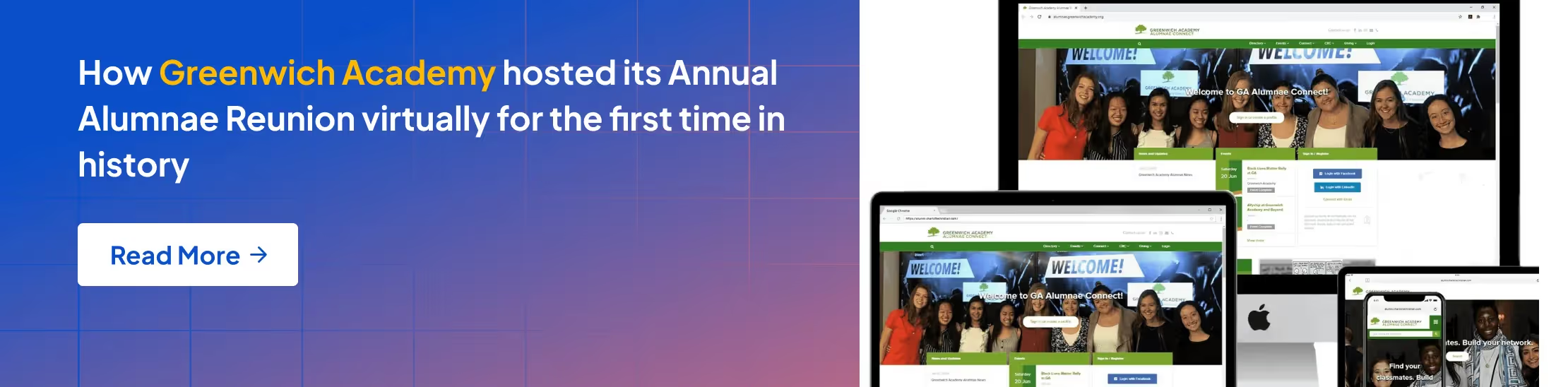
Career support networks offer incredible opportunities for alumni and students to interact with one another, increasing the chances of students landing job offers, internships, and finding the right mentors. For your alumni community, a career support network acts as a great source for professional networking opportunities and helps alumni make valuable connections to further accelerate their careers.
With unemployment an ever-looming problem on the horizon for students and alumni alike, career support networks have become even more relevant in 2020. As alumni and students count on their peers and alma mater respectively to navigate the tough job market, career support networks should be a mainstay feature to your alumni programming in 2020.
While traditional job fairs or in-person networking sessions are currently on hold due to the pandemic, institutions have switched to the virtual format to host these events.
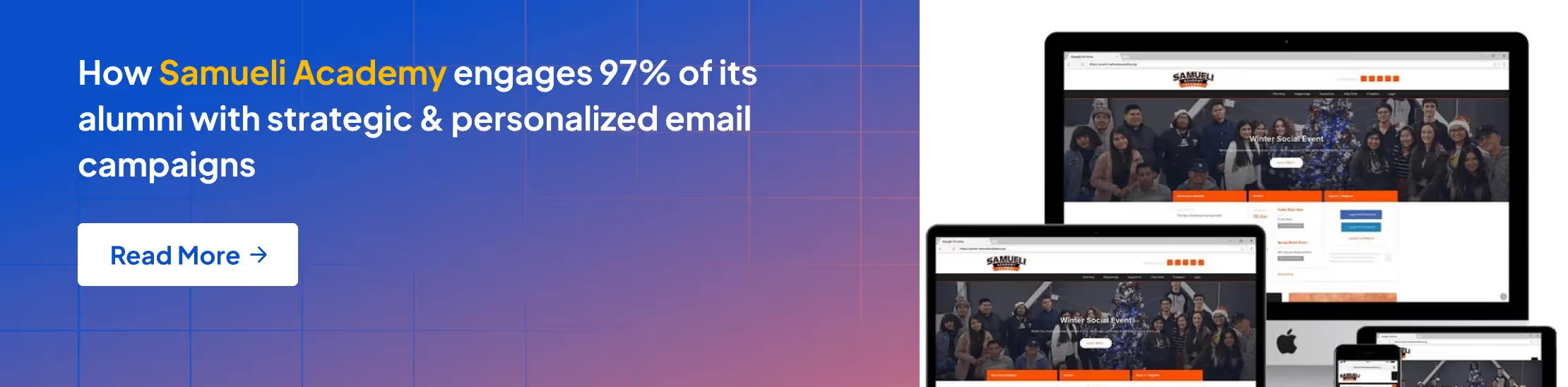
Alumni business directories are a great way to empower businesses owned by your community members. These directories are perfect for showcasing your solidarity with budding entrepreneurs in your community and help uplift their efforts by leveraging the power of your alumni network. Not only do these networks help promote local alumni businesses, they’re also super helpful in building avenues for collaboration between alumni business owners.
According to data from Yelp, a platform used widely by local businesses to advertise their services in the US, nearly 66,000 businesses have folded since March 1. Researchers at Harvard believe that the rates of business closures across various markets are likely to be even higher. (Information source: The New York Times)
If the above data is to be believed, investing in an online alumni business directory for your alumni may no longer be an option but a necessity in 2020.
If your institution believes in providing value to alumni and foster lasting relationships, you have to find ways beyond the traditional. Continued learning programs are a great way to ensure that your alumni stay actively engaged with you long after they’ve left campus.
While you may already have monthly guest lecture programs or seminars where your notable alumni come to campus and share their experiences with invited community members, just imagine the impact of doing all of this virtually. If you share the same resources in an educational webinar, podcast, or video format and live-stream it, or just publish it on your alumni website, your alumni community will be able to access all this information anytime they want, at their own convenience. More importantly, they can always come back to these resources and even re-share them with their own networks, helping you tap into a wider network of alumni.
The best way to identify what learning resources your alumni find valuable is by asking them. You could start by conducting a short survey to gauge their interest in different topics ranging from professional to personal development.
Take inspiration from Fielding Graduate University’s Alumni Association that did a phenomenal job of providing on-demand learning resources to their alumni community in the form of webinars, virtual workshops, and learning guides amidst COVID-19. Head over to Fielding Graduate University’s alumni website to learn more.
From increasing meaningful engagement to facilitating professional development for your alumni and students, a mentoring program is a great addition to your alumni programming. While some of you might already have this in place, how much of this is truly accessible for every single one of your constituents?
Do you have a mentoring program where your alumni have to visit your campus to talk to students or answer their questions, even if it is for a couple of days in a year? What if this process could be completely moved online adding more flexibility? Digitizing your mentoring program means increased flexibility for both alumni and students as they get to avail the benefits of this program right from their homes at their own convenience.
Now that your alumni program is accessible and easy to engage for all your alumni, let’s look at some of the things you can do with it.
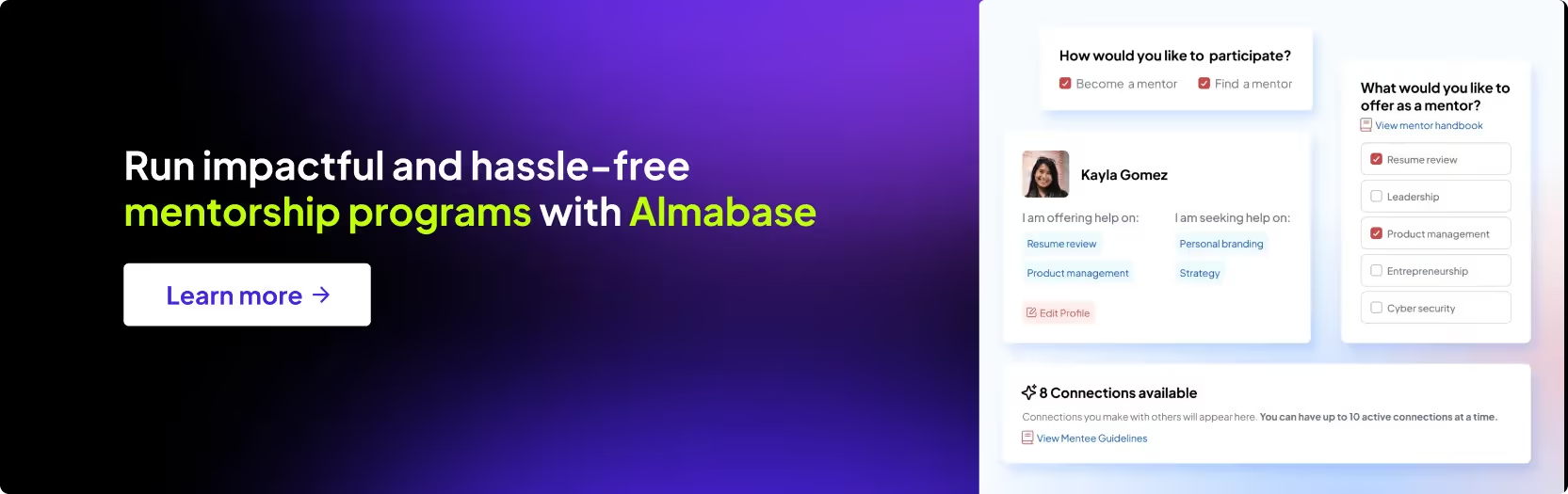
Alumni programs readily lend themselves to alumni engagement strategies. Your emails, newsletters, social media posts, and online communities all combine to keep your alumni engaged while providing a sense of community. What sets an accessible alumni program apart is its ability to provide personalized, two-way communication channels that make alumni feel valued and, therefore, willing to support.
💡Check out how Almabase empowers your alumni relations efforts
Alumni who are actively part of your program are more likely to have a personal connection and sense of loyalty. Nurturing these sentiments is a huge part of any institution’s fundraising strategy. An accessible alumni program should also help you nurture first-time donors and turn them into loyal supporters.
💡 Check out how we helped Boyd-Buchanan School turn alumni engagement into fundraising success.
Alumni programs provide a pool of well-nurtured contacts and probable volunteers for upcoming events such as your homecoming and reunions, among others. These programs become increasingly important for hosting affinity reunions or special events meant for a specific segment of alumni.
Your alumni should be able to easily see opportunities to help your next wave of graduates, either by providing mentorships or sharing career opportunities. A well-functioning and accessible alumni program reinforces a sense of lifetime partnership between your institution and your alumni to motivate both alumni and current students to get involved.
Alumni are not only stakeholders and supporters but can also be organic partners in shaping your educational programs. Your alumni program could either invite feedback or have a formal structure through, say, an **alumni advisory board** for specific departments or courses. Thesis assistance, curriculum enrichment, and extracurricular assistance are some other avenues through which your alumni program can become a valuable pool of educational partners.
An accessible and well-run alumni program naturally develops into a long-term partnership with a body of loyal supporters and advisors who share a common educational and philanthropic goal with you.
Today, there are a lot of tools and platforms out there that will help you build that partnership and nurture it. If you’re looking for a platform that integrates with your CRM, springboards your engagement, and streamlines your fundraising goals, why not give Almabase a try? 👇

5 ways to make your alumni program more accessible to all your alumni
Looking to make your alumni programming more accessible? Here are 5 ways to make alumni programs accessible in schools, colleges, and universities in the US
Lorem ipsum dolor sit amet, consectetur adipiscing elit. Suspendisse varius enim in eros elementum tristique. Duis cursus, mi quis viverra ornare, eros dolor interdum nulla, ut commodo diam libero vitae erat. Aenean faucibus nibh et justo cursus id rutrum lorem imperdiet. Nunc ut sem vitae risus tristique posuere.
For schools, universities, and nonprofits, organizing a fundraising event is a perfect opportunity to build connections and make an impact. However, there is another challenge before the progress bars start going up and that’s getting the word out.
Figuring out how to promote a fundraiser seems easy at first but overlooking crucial steps or messing something up can be the difference between a potential donor noticing your giving day or not, or even if they do, they might not feel as connected if your fundraiser’s first impression isn’t great.
In this blog, we will walk through how teams approach marketing a fundraiser across channels, what to focus on, how to keep it manageable, and how to turn visibility into actual donations.
Most campaigns you run will fall into a few familiar buckets. The way you promote each one changes slightly, but the goal of getting the people to walk through the door, notice, care, and act remains the same. Here’s how it usually plays out in practice.
You’ll see this across Giving Days, annual funds, scholarship appeals, emergency campaigns, crowdfunding, or even smaller department-level pushes. Everything centers around a campaign page, and most of your effort goes into driving people there.
Events give you a defined window to work with, but they need attention on both sides of that window. This includes galas, auctions, walkathons, runs, school fairs, reunions, homecoming, networking events, or even virtual sessions like webinars.
In institutions, you’re working within existing communities. You’ll see campaigns like annual funds, parent giving, student-led fundraisers, athletics drives, giving Days, reunion giving, or class-year challenges. Each one taps into a slightly different group.
These campaigns usually depend on participation as much as they do on donations. That could be recurring giving drives, peer-to-peer campaigns, emergency appeals, volunteer-led efforts, or partnerships with sponsors and local groups.
Monthly giving, memberships, sponsorships, and corporate programs stay active year-round. They don’t rely on one big push, so consistent visibility becomes the focus.
Emails hold an advantage over other channels in that they can come off as more authentic with your audience. Emails are not decided by algorithms and don’t need to follow trends. If you want to drive action, consider using emails to promote your fundraiser.
Most organizations already use email heavily, but it usually lands in one of two buckets: routine updates, or messages shaped to actually drive engagement. The ideas below might just help you move your email promotion to the latter bucket.
A broad mission statement will not be able to carry the weight that a single lived experience can. One of the best ways to make a fundraising email land is to narrow the lens: focus on one person or one visible change that donations made possible.
Instead of processing statistics or organizational language, people connect emotionally and start imagining a real outcome. As a result, your ask stops feeling too broad and becomes clear.
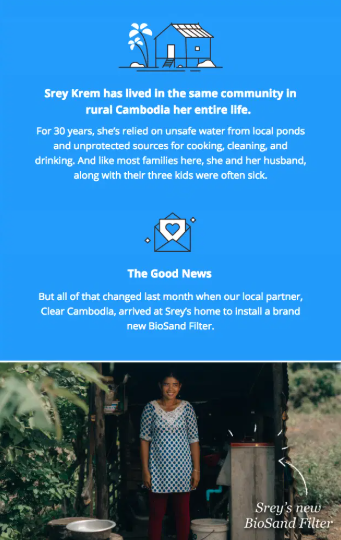
A strong example comes from charity: water’s email “A New Way of Life for Srey”. Rather than opening with urgency or fundraising targets, the email walks readers through one woman’s daily reality and how access to clean water changed it. When the ask follows such an impactful story, giving to the cause feels like a no-brainer.
Why this works: Regular donors have seen every version of “support our mission.” Impactful storytelling cuts through with specificity and emotion as the advantage. A single story gives people something concrete to hold onto, and that makes the impact feel both believable and personal.
Here’s an opportunity to use emails to do more than just persuade givers: remove uncertainty and confusion.
Once people are interested in participating, scattered information could still lead to drop offs. If you’ve faced this, the problem might not be visibility. Donors might be finding the process lengthy: one detail lives on the event page, another in a previous email, another in a PDF attachment nobody can find later. Supporters don’t consciously decide not to engage, they just decide to figure it out later. Chances are, by that time, the giving window is over.
This is where you can employ a well-structured logistical email.

An example of this comes from Mount Calvary Christian School’s fundraising auction campaign. The giving page led supporters to the email which had everything they needed to give, in one go: auction wish lists, sponsorship details, featured items, participation options, and next steps. Instead of pushing readers toward a single action, it gave them enough clarity to choose how they wanted to engage.
Donors need clear direction to participate in your cause, and this email gave them exactly that.
Why this works: Use complete emails to eliminate confusion and build momentum for your campaign. When supporters don’t have to search for information or second-guess what comes next, participation is easy and decisions are made much quicker.
One of the smartest ways to grow a fundraising campaign is to use your ambassador’s and supporters’ voices to amplify your cause.
The challenge here is that most people are willing to help spread the word, but very few have the time or resources to draft messages from scratch, resize graphics, or figure out what to say. Even highly engaged supporters tend to delay sharing when it feels like extra work.
This is where ‘ready-to-use’ email resources will come to your rescue.

For its Giving Day campaign, University of North Alabama created a resource hub with pre-written email templates that could be shared before their Founder’s Giving Day to spread word and on the day of, to share live progress. Instead of a more abstract, high-effort ask like “help promote the campaign,” they gave them a toolkit that made participation almost frictionless.
A huge advantage here is also that the campaign’s voice stays consistent even as more people start sharing it. You widen reach without diluting the message.
Ambassadors become visible contributors to the campaign’s momentum and sharing feels like joining something already in motion.
Why this works: Ready-made resources remove hesitation, keep messaging cohesive, and make it far more likely that people will actually share your cause with their own networks. It also makes them feel considered, which goes a long way in ensuring support, year-on-year.
No matter what kind of fundraising email you’re sending, a few small tweaks can have an outsized impact on engagement.
If you’re seeking immediate visibility, social media is the best bet to promote your fundraiser. People see your campaign and they also get to see see other people engaging with it in real time. That visibility creates a sense of urgency, especially during fundraising events where energy and community matter as much as the ask itself.
But the campaigns that perform best on social media rarely feel overly designed. They feel human and socially alive. The ideas below help you bring that authenticity into your promotion plan.
One of the easiest ways to make fundraising content more compelling on social media is to loosen institutional control a little.
Supporters are very used to the same formats, with polished graphics, campaign slogans, and branded messaging. And these best fit on your official giving page. On social media, lead with voices that feel immediate and personal. That’s why student takeovers, ambassador posts, and behind-the-scenes perspectives consistently outperform highly produced promotional content.

National English Honor Society (NEHS) used social media takeovers, where students shared their own experiences, perspectives, bits of the planning effort and their involvement, directly with followers. The organization was letting students speak for themselves.
That changes the tone of the campaign instantly. The content feels less like planned outreach and instead starts to feel spontaneous and authentic.
It also creates a kind of peer validation that cannot be manufactured, and these consistently perform better with younger supporters.
Why this works: social media runs on perceived authenticity. Real voices cut through polished feeds because they feel socially credible. Prospective donors, families, alumni, and community members are seeing a lot more than what programme matters: they are seeing who it matters to and why, and everyone involved in making it possible. Think of it like bringing the delight of bloopers and behind-the-scenes of a beloved movie to your supporters.
One reason live content works so well during fundraising campaigns is that it is essentially live proof. Updates are immediate. Wins are communal. Small moments that would normally stay invisible suddenly become part of the event itself.

The Community Foundation of Louisville leaned into this during its giving day campaign by using Facebook Live throughout the day. The team went live at least once every hour, sharing rallies, nonprofit interviews, campaign updates, and “power hour” competitions tied to fundraising milestones. Donors could watch organizations react to milestones, see communities rally around specific causes, and feel the pace of the day accelerating. The campaign ultimately raised more than $4 million.
Why this works: Visible momentum lowers hesitation. When supporters can see energy building around a campaign in real time, participation becomes socially reinforced and the dollars raised, a community win.
The strongest fundraising campaigns on social media feel less like the outcome of carefully planned content calendars and more like the result of spontaneity. Here are a few practices that could help you sustain that authenticity:
Text messaging changes the fundraising equation because it bridges the gap between intent and action. It works differently because a message arrives in a space people already check, and the response only needs a few seconds. In contrast, other channels ask supporters to pause what they’re doing: open a new tab, revisit the campaign later, check their inbox, remember to come back.
This immediacy is what makes SMS so effective for fundraising events, time-sensitive campaigns, and last-mile engagement. But it also means there’s very little room for wasted language.
One of the best ways you can use SMS for fundraising is reducing the number of decisions a donor has to make before contributing.
The more steps people encounter, the more likely it is for momentum to disappear somewhere along the way. Text-to-give campaigns work because they make this process instantaneous.
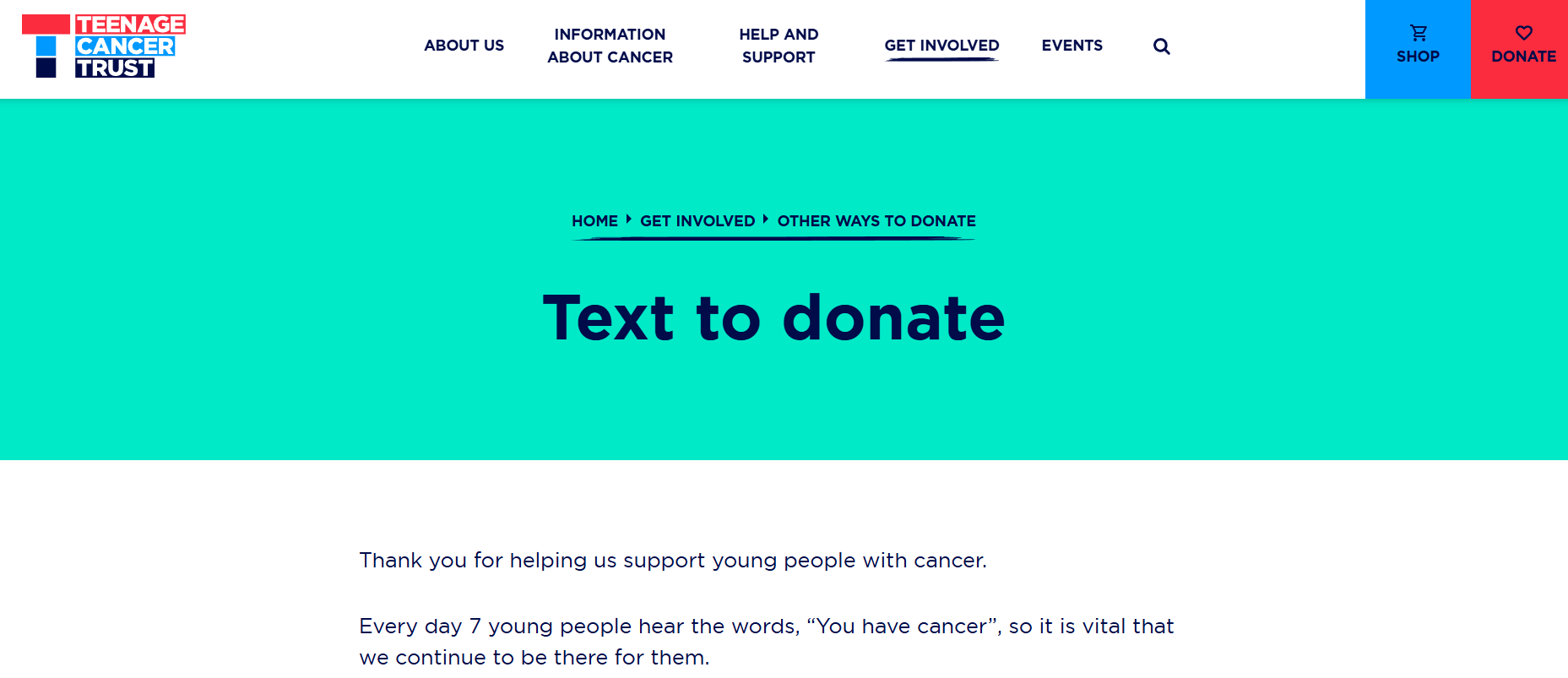
A good example is Teenage Cancer Trust’s text-to-donate campaigns, where supporters could contribute simply by texting a keyword. The interaction is familiar because it repurposes an action people already perform.
Why this works: Every additional step creates another opportunity for hesitation. You can remove that barrier by turning giving into a behaviour that already exists. Text-to-give succeeds because of this underrated advantage. Adding text message as a channel to your campaign also researches segments of your audience who aren’t present elsewhere.
SMS messaging, just like other channels, is not a one-size-fits-all tool.
Some messages are designed to create urgency. Others inspire emotional connection. Yet another simply reminds highly engaged supporters that it’s time to act. The effectiveness usually comes down to timing and audience readiness. A good approach is to treat SMS like a running conversation that changes as the campaign progresses:
The strategy shift here is that SMS is used to pace and guide donor attention over the course of a campaign.
Why this works: People respond differently depending on where they are emotionally and contextually. Let your message reflect the moment instead of repeating the same appeal every time.
Because SMS is such a direct channel, small execution details tend to have an outsized impact on response rates and supporter experience.
Physical media reaches people in those rare moments away from their screens. It also has one big advantage over digital channels: someone might scroll past a fundraising post once and forget it an hour later, but physical materials stay in the same space for days or weeks, building familiarity through repetition.
Physical promotion also makes a campaign feel more present in the real world. When people keep seeing posters or handouts across shared spaces, the fundraiser starts to feel more immersive.
One reason physical promotion gets delayed is the assumption that every campaign asset has to be designed from scratch. But if you’re able to find materials that already work and can be adapted quickly to fit their event, you can reach supporters that much better.

That’s what makes resources like Save the Children’s downloadable fundraising materials so useful. Their comprehensive collection of posters, banners, bunting, forms, totalisers and booklet templates give organizers a professionally structured starting point that can be customized with event details, school branding, or campaign messaging.
You can edit these downloadable resources and plan your campaign around those. Promotion starts earlier. And consistency across posters, handouts, and signage becomes much easier to maintain.
Why this works: professionally designed templates remove one of the biggest hidden bottlenecks in fundraising promotion: getting materials created in the first place. The easier assets are to customize and deploy, the more likely they are to be used effectively.
Design barriers are real constraints that fundraising teams face. Many don’t have an in-house designer available to design flyers to hand out to prospects for promotion. But if non-designers can still create usable flyers confidently, your campaign’s promotion and presence will be stronger.

That’s Canva’s library of fundraising templates becomes extremely usable. They’re thoughtful, structured, and have a visual hierarchy that guides attention toward a single next step, whether that’s a QR code, a donation prompt, or an event detail.
For teams without dedicated designers, this means you’re not choosing between “good design” and “getting it done.” You can produce materials that are both usable in real-world environments and fast enough to deploy while the campaign is active.
And another powerful change to your promotion strategy is that design stops being a decorative layer and becomes part of the conversion pathway.
Why flyers work: In physical environments, attention is brief and competitive. Lowering the effort required to create good promotional materials dramatically increases the likelihood that campaigns will consistently use them. Teams stop postponing promotional work because it no longer feels intimidating, with good quality resources at their disposal. Finally, good looking flyers are simply more likely to get taken seriously by supporters.
The most effective print materials succeed because they grab attention and make action feel obvious at a glance. A few small design and distribution choices can make a noticeable difference.
In-person fundraising works for a very fundamental reason: people remember experiences.
An event creates a shared memory, and yet no two attendees walk away with the exact same experience. People remember who they spoke to, what they participated in, and how the moment felt. That emotional residue often translates into stronger long-term giving behavior, even when attendance is relatively small.
One of the biggest constraints in school and community fundraising events is staff capacity. Teachers, coordinators, and volunteers often want to participate, but don’t have time to build an event structure from scratch.
That’s where plug-and-play toolkits make a real difference.

For example, Alex’s Lemonade Stand Foundation’s “Change Childhood Cancer” coin drive toolkit gives schools everything they need upfront: instructions, parent communication templates, and simple step-by-step guidance for running a classroom campaign.
Schools and teachers are being handed a complete, usable system that they can implement as is or tweak as they see fit. When setup effort drops close to zero, more classrooms opt in, even in already busy school environments.
In fact, putting together a toolkit is simpler than it sounds:
Why this works: The fewer decisions an organizer has to make, the more likely they are to run the event at all. Convenience directly increases participation.
In-person events work best when they feel tailored to the people attending them, instead of just broadly “for supporters.”
That’s why segmented programming outperforms one-size-fits-all activities, especially in school environments where age groups have very different engagement styles.
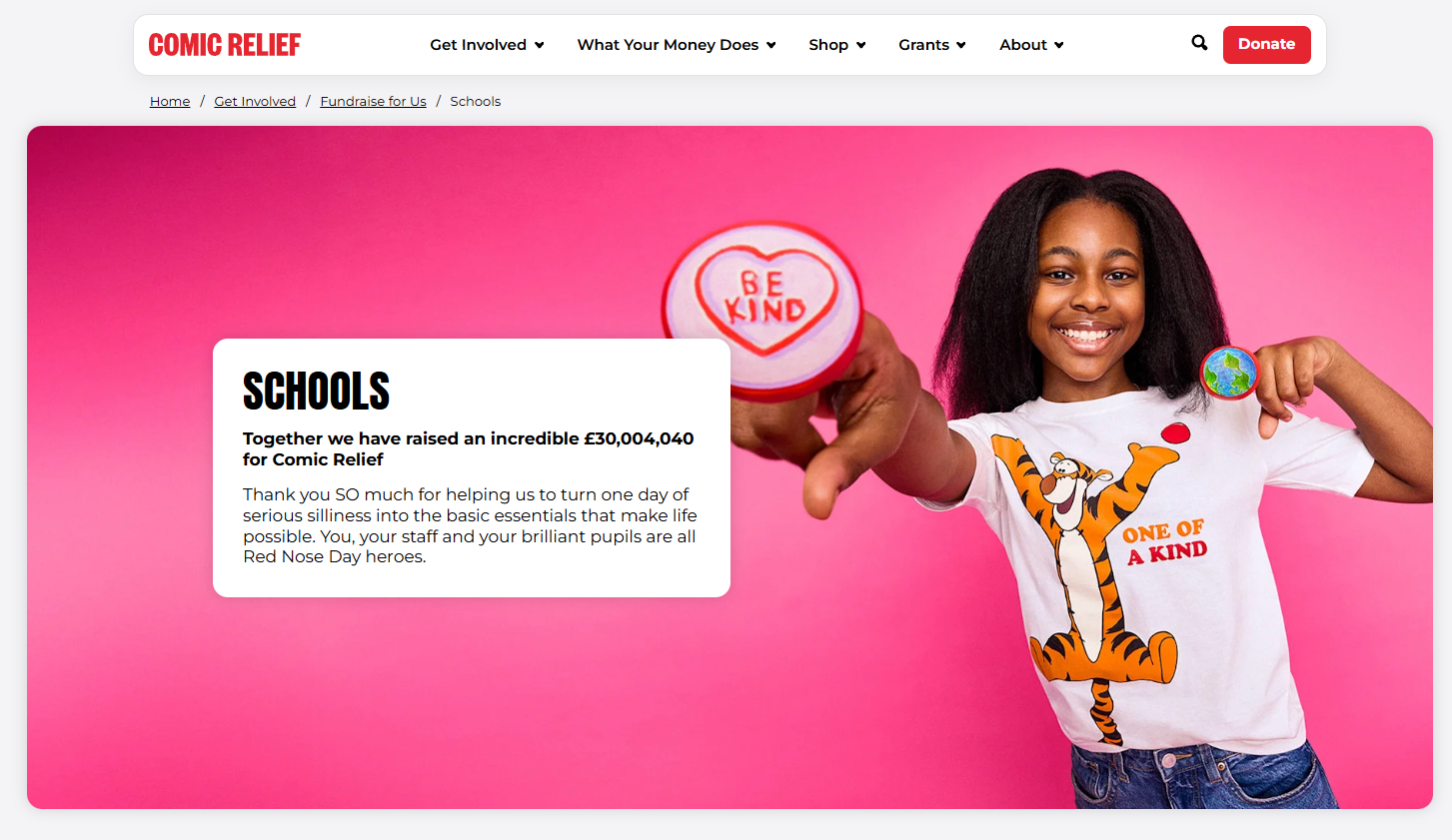
Comic Relief’s school fundraising approach in the UK understands this. Their materials structure participation by age group: Early Years, Primary, and Secondary, each with activity ideas suited to how those students naturally engage, from dress-up days to talent-based challenges.
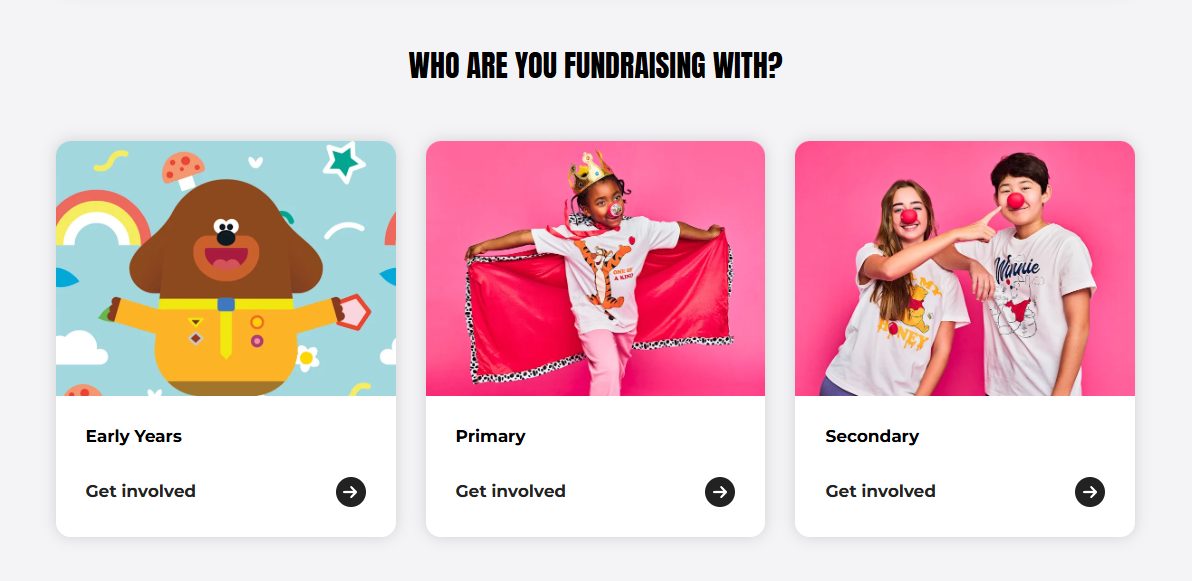
The underlying idea is simple: relevance drives participation. When an activity feels designed for a specific group, it doesn’t feel like an imposition, rather, it feels like something meant for them.
Why this works: People participate more when the experience matches their identity and context. Meet your participants where they are.
The most effective events succeed through consistent coordination across all phases, not just execution on the day itself.
Today, your team’s fundraiser promotion efforts happen through either a dedicated platform or a network of specialized tools. Almabase excels at integrating your promotion efforts into your larger engagement and fundraising strategy on many levels. Here’s how:
Almabase aims to bridge the gap between engagement and giving by providing specialized features built to complement each other. Take for example, the alumni directories and communities that make segmentation and personalized outreach much easier. This in turn makes post-event communications and donor follow-ups much more streamlined and interconnected.
Dynamic filters provide detailed insight into donors' interests, careers, and engagement history to personalize fundraising appeals. Past donation data can also be used to identify major gift donors and intensify retention and upgrade efforts.
Almabase acts as a one-stop shop for all things outreach especially for email/SMS campaigns through personalized outreach, segmented lists, or post-event communications.
Campaigns can be promoted across both texts and emails to drive real-time engagement, and advanced audience segments can be built to raise more from untapped donor opportunities. Beyond one-off fundraisers, it also empowers year-round campaigns and recurring giving as Almabase’s focuses on empowering your engagement and giving strategy beyond just short-term fundraising goals.
Almabase’s powerful sync with CRMs such as RE NXT (through TrueSync) means that when someone clicks a donation link and gives, that data flows back into the CRM automatically with no manual record updates or channel tracking required.
Text messages boast a 98% open rate and get responses much faster than email, making them perfect for urgent appeals like Giving Tuesday. Almabase pulls in donor data so teams can reference past gifts, event attendance, or volunteer history in their texts for highly personalized outreach.
Almabase is also easy to use with it’s no-code approach to building giving pages, checkout pages, leaderboards, and much more. For important giving days and events, customers get priority support on multiple channels.
Promoting a fundraiser today is a complicated process. Beyond just getting the word out, you and your team need to find the right platform, have the right strategy, and reach out to potential donors at the right time with the right message, and of course, execute the right ideas in the best way possible.
We have a few resources to ease the planning process:
And if you are looking for a partner to help you find success in your fundraising efforts, feel free to book a demo call personalized to you and your team’s needs! 👇

Fundraiser Promotion Ideas for Institutions and Nonprofits
Promoting your fundraiser right is crucial as you want to make sure your potential donors are alerted and also motivated to give. Check out these fundraiser promotion ideas.
Lorem ipsum dolor sit amet, consectetur adipiscing elit. Suspendisse varius enim in eros elementum tristique. Duis cursus, mi quis viverra ornare, eros dolor interdum nulla, ut commodo diam libero vitae erat. Aenean faucibus nibh et justo cursus id rutrum lorem imperdiet. Nunc ut sem vitae risus tristique posuere.

May 15, 2026
12 minutes

.svg)

.avif)
.webp)