.svg)
Blog Gallery
Build lifelong relationships
Latest stories, guides, and benchmarks from the world of alumni relations, fundraising, donor engagement, advancement services, events, and higher-education philanthropy
Blackbaud recently announced that support for Raiser’s Edge NXT’s database view and related functionality will end on September 15, 2027, affecting several Blackbaud products. These include Blackbaud Online Express and Blackbaud NetCommunity (BBNC). For advancement teams that have spent years building forms, pages, workflows, and other processes around the platform, this means choosing and migrating to a new platform. The prospect can feel like a lot to take on, especially if it wasn't something you'd anticipated.
If you're looking for an alternative, Almabase can help you replace the functionality you currently rely on across these products. We've already covered why teams might be thinking of a move off BBNC and how the main alternatives compare. In this article, we’ll be focusing on what happens once you've made that decision: what the migration process looks like, what your team can expect along the way, and how Almabase approaches the move.
In case you’re evaluating how Almabase stacks up against BBNC, check out our comparison blog here.
There’s also another question that comes up around a platform migration: How much is this going to cost?
This question extends beyond the immediate, visible technical costs. In fact, the technical side of the move might just be the simplest to figure out. It’s the broader, more abstract elements like shifting scopes, changing requirements, or even figuring out the right set of requirements in the first place that could end up costing the most amount of money and time, if not approached thoughtfully.
That's why we want to walk you through the Assisted Fast Pass Migration process upfront: what happens at each stage, what your team is responsible for, what our migration team handles, and where costs may come into the picture. We hope to give you a clear idea of what the move to Almabase will look like before you get started, so there are fewer surprises along the way.
Why transparency matters during a migration
A migration project always begins with an agreed-upon plan. But it’s also very likely that, a few weeks in, you discover a form that needs some additional customization or a request that seemed straightforward seems to fall outside the original scope, on second thought. These are perfectly reasonable hiccups during the migration, but if work is already underway, it could seem harder to understand what you're paying for, and even harder to plan around the rest of the project.
Clear expectations are at the heart of our migration approach, starting with total transparency around what extra requirements cost. With Almabase’s Assisted Fast Pass Migration, each stage gives you a chance to understand what's being proposed, what falls within the standard migration, and where something would require additional work.
Basically, you shouldn't find out about an extra requirement after the work has already been done. Your approval and sign-off comes first. The five steps in the migration process are built around this intention. Let’s get into them.
1. Kickoff: Getting the project off on the right foot
The migration process starts with a kickoff between your team, a dedicated CSM, and an implementation specialist. This is where we get the groundwork in place. This is usually access to your current site, your branding assets, and the dates your team needs to work around.
Another important step here is understanding your calendar and priorities. Your Giving Day, reunion, fiscal year-end, or another major event may determine what needs to happen first and we would be building the migration calendar around it. So, the migration sequence might look a little different for each institution, as each gets to choose which product goes first.
The kickoff is also a chance to flag anything unusual about your current NetCommunity setup.
After years on a platform, it's normal for your setup to have accumulated a few workarounds, custom configurations, or integrations that made sense when they were created. We don't need to solve all of those questions in the first meeting, but we do need to know about them.
That way, we can account for them during the next stage: the inventory. 🤗
Your team mainly needs to provide:
- Key dates and deadlines
- Relevant branding assets
- Access to your existing NetCommunity site
- Any known custom configurations, integrations, or unusual workflows
From there, you can let us take on the heavy lifting.
Your dedicated CSM and implementation specialist work with you throughout the migration, while your team focuses on the decisions and approvals. A migration shouldn't require your advancement team to take on managing a project full time on top of everything else they’re already handling.
Your data doesn't have to wait for the build
Your data migration is handled alongside the rest of the process. Almabase's bi-directional TrueSync integration connects with Raiser's Edge NXT and supports two-way syncing for configured entities and fields, including constituent, event, and gift data.
Admins can also decide which fields update automatically and which should be reviewed before they're pushed or pulled between systems.
That means your team doesn't have to wait until every page and workflow decision has been finalized before thinking about what happens to your data. The data side of the transition can move forward alongside the rest of the migration, with real time decisions being made.
2. Discovery and inventory: weeks one and two
Once kickoff is complete, your implementation specialist carefully starts building a complete inventory of what's currently running on NetCommunity: pages, forms, events, programs, memberships, and other key components of your site.
This process is useful in its own right, especially when taken on by someone external. After years on a platform, it's easy for a site to accumulate things that no one thinks about anymore, simply because they’re too involved in the process. The inventory gives you one place to see what's actually there, anything you might’ve forgotten about, and to make decisions about what needs to move vs what can be left behind.
Probably the most effective part of this is that it's a shared inventory that you can review alongside your specialist. If something looks outdated, doesn't need to move, or needs a closer look, you can flag it before it moves to the new product.
The inventory can surface things like:
- Duplicate or unused event pages
- Old forms or pages that are still live
- Site elements that don't need to be carried into Almabase
- Custom fields and configurations that don’t make sense on the new platform
This idea is to document your NetCommunity site so well that both teams end up on the same picture of what exists and what needs to happen next. The Almabase team handles the actual inventory work, and all you need to do is review the inventory and flag anything that should be changed, removed, or investigated.
3. Sign-off: deciding what moves forward
At this stage, the migration project starts taking on a more defined shape as you decide what you need to bring into Almabase. You and your implementation specialist review the inventory, decide what carries forward, and establish what the finished version should look like.
For each item being migrated, the team, along with you, defines the acceptance criteria before the building begins. If your existing alumni directory has eight fields and three filters, for example, those requirements can be documented as part of the scope. By the end of this discussion, everyone has arrived at the same definition of what needs to be delivered.
This is also where you’ll be able to clearly separate standard migration work from anything that requires additional effort.
If something falls outside the standard scope, you'll know before the work begins:
- What the additional work involves
- What's included and what's excluded
- The estimated effort
- The associated cost
You won’t have to decipher this from the invoice later on, because the work only moves forward once you’ve signed off on the scope.
This is exactly why your input here matters most. The Almabase team handles the building, but it’s you and your team deciding what is important enough to carry forward and what “done” needs to look like, within the standard process or with additional effort layered on.
4. Build and launch: 30 days for each product
Our team takes up building only once you’ve greenlit the scope. Each product gets its own dedicated 30-day track, with the order of products taken up built around your events and fiscal calendar.
This is to accommodate your calendar: giving days, reunions, Homecoming, we’ll build that product first so you’re ready in time for go-live day. If your immediate priority is your broader alumni site, we might begin with building that instead. The point is, even at this pace, you’re not forced to adopt a one-size-fits-all solution. Your implementation team works with you to determine what needs to come first.
The build itself happens on your Almabase pages, so you can review as it gets built while also familiarizing yourself with the new platform.
The timeline typically looks like this:
- 30-day build track: Each product moves through its own focused build.
- Weekly working session: Your team meets with the implementation team to review progress, provide input, and make decisions.
- Training as you go: Your team gets hands-on experience with the platform during the build, rather than waiting until everything is finished to start learning it.
- First launch: The fastest migrations can have their first product live around 45 days from kickoff, depending on the scope and sequencing of your project.
Having the scope agreed upon shows up in smoothness at this point: you can expect fewer decisions to make from scratch during this stage. Your team knows what's being built, your implementation specialist knows what they're working toward, and everything can move as planned, on track.
5. Cutover: moving from NetCommunity to Almabase
As you get closer to launch, the focus shifts from building to making the transition itself as smooth as possible.
The most important part of that is making sure people can still find the things they've been using. Your team receives a redirect map that pairs each carried-forward NetCommunity URL with its new Almabase destination. You'll also want to review where those old links appear outside NetCommunity: your main institutional website, email templates, QR codes, printed materials, and any other places where an old URL may still be in circulation.
The redirect map gives you a clear list of what needs to change and no one has to discover old links one by one after launch.
Before each product goes live, your team gets to review it thoroughly and explicitly approve the launch.
The aim, with these five steps, is to get your Almabase programs ready before your NetCommunity access ends, so the transition remains smooth and doesn't become a last-minute scramble.
What happens when something doesn't fit the standard scope?
Not everything that comes up during a migration falls neatly into the original plan. But there's also an important conversation to be had: what counts as additional scope and what is a limitation in the platform itself?
If something requires work beyond the standard migration scope, that's identified and quoted before the work begins. You can then decide whether you want to take it on.
But if there’s a requirement you have that Almabase cannot support yet, we’ll be fully transparent with you. Essentially, you haven’t asked for too much, we’re just not there yet. Depending on what you need, the team can look at a workaround or determine how the functionality could be addressed after launch.
This conversation is also one of the reasons the earlier stages matter. The shared inventory, defined acceptance criteria, and upfront scoping give everyone a common reference point throughout the project.
That's really the principle behind the entire migration process. You're not expected to know every detail of what needs to happen before the project starts. The process itself is designed to show you those details early, give your team a chance to make the calls that matter, and keep the build moving while minimizing unexpected, last-minute surprises.
Ready to make the move?
A BBNC migration may not have been on your roadmap, but that also doesn't mean it has to become a project that takes over your team's calendar.
With a clear process, an agreed scope, and the right support, you can move the parts of NetCommunity that matter to your team and work for your institution without having to figure everything out as you go. The Almabase team handles the build and migration work, while your team stays in complete control of the decisions, priorities, and final approvals.
And because the scope and any additional costs are addressed before the work happens, you can go into the migration knowing what to expect.
If you're planning your move away from BBNC, let's talk about what it could look like for your institution.
Talk to the Almabase team about your BBNC migration →

Moving from BBNC to Almabase: The Assisted Fast Pass Migration
Blackbaud is sunsetting support for Raiser’s Edge NXT’s database view and related functionality in September 2027. Learn how Almabase replaces your current functionality and how our Assisted Fast Pass Migration makes for a smooth switch without disrupting your campaigns or operations.

Anwesha Kiran
September 10, 2026
12 minutes
A paddle raise (also called a fund-a-need) is a great and simple fundraising format for nonprofits. It is easy to host, fun, and similar enough to auctions that if you have experience in one, you can easily incorporate the other.
All this is to say that, with proper planning, it is one of the most effective ways to get donations for your nonprofit or a particular project.
In this blog, we’ll look at what makes a typical paddle raise work, its benefits, and the essential steps to start hosting one on your own.
What is a Paddle Raise?
A paddle raise, also often called fund-a-need, is a live, direct appeal during a fundraising event such as a gala where donors pledge a financial contribution to a nonprofit, charity, or a particular cause. This is usually done by raising paddles containing varying numbers or ‘levels’, or through bidding devices and software.
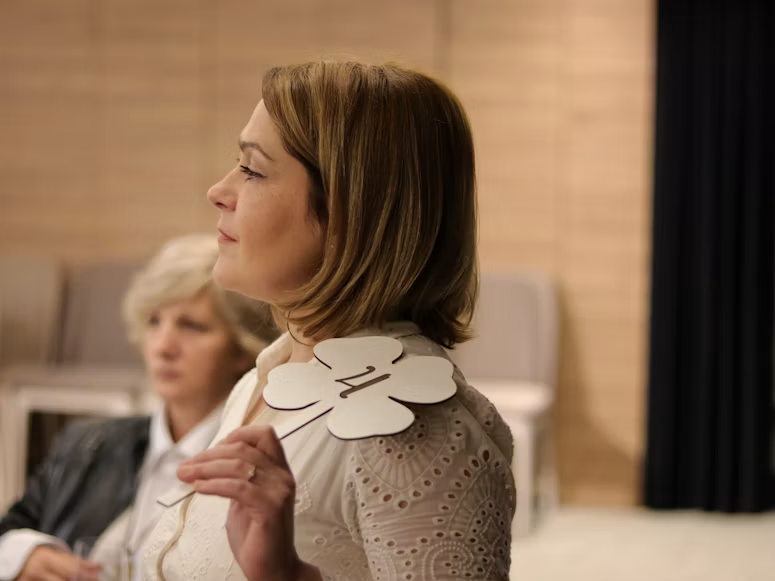
Unlike charity auctions though, there aren’t any items or art involved, and attendees will not be bidding on a piece. An ask is made, and donors willing to contribute that amount raise their paddles. Due to the simpler setup and direct contributions, paddle raises have high ROI and are generally considered to be very effective.
How does a Paddle Raise work?
Usually taking place at the peak of the fundraiser, a paddle raise takes around 10-20 minutes (it happens quite quickly). This is typically how it unfolds:
- A designated speaker or emcee gets the event rolling by showing a video or narrating a quick story that introduces and emphasizes the impact of your mission.
- The emcee announces the fundraising target for the night, or if there are multiple causes, the goals for each.
- Tiers of contributions are planned beforehand ($10k, $7.5k and so on), and the emcee starts with the highest tier and works their way down to the lower tiers. When they ask for contributions, attendees express their willingness by raising numbered paddles.
- Volunteers and staff keep track of all the pledges and note it down.
- After going through all the tiers, the pledges are processed, and the total amount raised is announced. Attendees are thanked for their contributions and the event draws to a close.
Now that we’ve gone through what a paddle raise is and how it usually plays out, let’s get to how you can run one of your own.
How to Run a Successful Paddle Raise (Step-by-Step)
While paddle raises are simple enough in concept, they do require proper planning and coordination to capture pledges accurately and create good energy overall.
Here’s how you do it:
1. Pick the right cause/project for your targets and set your targets
Paddle raises are a lot more effective if you can tie them to a specific initiative that makes donors feel like they’re making a meaningful impact. It could be an annual raise for cancer, providing education to underprivileged children, etc.
Set a tangible goal and be clear on where the money goes. Sharing this with your donors builds trust. The goal shouldn’t be so high that hitting it feels impossible. All in all, you want to set a realistic but fairly ambitious figure.
2. Decide the contribution levels or tiers
You should aim for 5-10 levels and make sure it’s inclusive of everyone’s giving capabilities. You can discuss with your pre-committed donors (more on that later) to decide amounts for the higher giving tiers (or conversely for lower giving tiers depending on the situation).
This is where having a regularly updated donor database helps greatly, as you can base your levels off of giving history and data.
A basic example would be to have $15k as the highest tier, followed by $10k, $5k, $2k and so on all the way to $50. Remember that you have to be inclusive, so don’t skimp out on small or micro-level contributions.
3. Pick your emcee or host
The emcee is critical in setting the stage and the energy before the raise begins. An enthusiastic crowd can make a massive difference in contributions. If possible, hire a professional emcee who has been on the mic for other charity events before. You know your donors best; use that knowledge to pick out a host that can connect with them and elevate the room accordingly..
Alternatively, if your organization has deep ties with the attendees, you could consider a leadership figure (directors, chair, etc.) for familiarity. Of course, they need to be a good orator as well.
4. Decide the schedule and script
Since a paddle raise is relatively short, decide when the paddle raise should take place during your fundraising event or gala. You should aim to host the raise during the peak of the fundraiser, when everyone is energetic and receptive to instructions from you or your host.
Come up with a script, including your opening statement, tier announcements, anecdotes, and expressing gratitude at the end. Have alternative scripts ready for different scenarios since you can’t always predict if you’ll hit your target, overshoot it, or come close.
5. Pick the right tools for your event
You can choose to host your paddle raise with either physical paddles or through bidding software, though incorporating the former is heavily recommended.
You’ll need to assign numbers to each attendee and give them a paddle with the corresponding number. When a certain giving tier is called out, they can choose to pledge that amount by raising the paddle while volunteers keep track of it.
If you’re opting for a digital process, look for mobile-friendly bidding platforms. There are some other options as well like scanning QR codes to pledge. However, keep your attendees’ preferences in mind and try to find a balance between their experience and your team’s feature set. This is important, since the bidding and giving data will need to be synced to your CRM.
6. Running the paddle raise itself
When opening your event, it helps to set the energy high. Start with the mission statement and targets you set earlier. Here’s where the emcee does the heavy lifting. Videos and stories with emotional angles work really well at establishing a connection with your donors and creating empathy for your cause. If you have first time donors in the mix, a quick explanation of how the paddle raise works would also be helpful.
Make sure your volunteers are in place to clearly record everything. The emcee announces the levels in succession, starting with the highest one and working their way down.
Seeing major contributions right at the start might encourage the others to go beyond what they had originally planned. Make sure that the emcee acknowledges and celebrates pledges briefly for each tier before moving on to the next one.
How your staff records the pledges is up to you. You can use an app, spreadsheets, or simply pen and paper. Choose whichever would be the most convenient and accurate for your team.
7. Gratitude and stewardship
After going through all the levels, tally the total amount raised and announce it as the event draws to a close. Celebrate the impact everyone has created on the day. Tying the money raised to a tangible outcome (for example, 50 scholarships granted for struggling children, or feeding 100 people) creates even more positivity and really drives home a sense of accomplishment and giving.
After your fundraising event, follow up with your attendees to collect the pledged amounts, preferably within a day. Include key details like their paddle number, amount they pledged, and multiple payment options. Thank all the participants, regardless of whether they donated or not.
A Few Tips to Enhance Your Paddle Raise
Here are a few extra things to ensure you get the most out of your paddle raise(s):
- Pre-committing a handful of donors: Reach out to some of your long time supporters, and ask for an early commitment to a particular level, especially the higher ones. Hesitation in the opening rounds of the raise can affect the overall contributions negatively. When attendees see paddles being raised immediately even at higher tiers, it gives them confidence to donate more.
- Host it at the right time: If your paddle raise is part of a larger fundraising event (as is most common), avoid doing it right after a meal break when attendees are a bit languid, or at the very end of the event when a lot of them have left already.
- Celebrate milestones during the raise: Every time you get significantly closer to hitting the day’s target, celebrate it. For example, if your goal is to raise $30000, then announce and celebrate when the contributions reach $5000, $15000, maybe hit a gong at $25000, and so on. Also, make sure to recognize all contributions, big or small, with equal excitement.
Almabase - A Powerful Tool for Hosting Your Paddle Raise
At its core, a paddle raise is fairly simple. But behind that simplicity is a lot of manual tracking like volunteers noting down pledges, someone tallying totals, and follow-up calls or emails to actually collect what was pledged. This is usually where a platform like Almabase can take some of that load off your team.
Instead of clipboards and spreadsheets, Almabase gives you a real-time dashboard of the event as it unfolds, so pledges don't need to be re-entered after the fact. Since collecting payment is often the trickiest part, you can also capture a guest's card at registration and charge pledges automatically once the raise wraps, rather than chasing donors down individually.
A couple of other things worth mentioning: contributions can be routed straight to the fund or project they were raised for, and everything syncs directly with your CRM so your donor records stay accurate without extra data entry.
None of this replaces a great emcee or an emotionally engaged room, but it does mean less time spent staring at numbers, and more time celebrating what you raised.
Request a personalized demo to see how this would look for you!

How to run a successful paddle raise (fund-a-need) at your event
Learn what a paddle raise is, how you can run one successfully, as well as a few tips to make your paddle raise stand out.

Hari Govind
September 4, 2026
12 minutes
Modern donors expect deeply relevant, personalized communications, especially when it’s alumni hearing from their alma mater. Generic messages won’t cut it, but it can also be difficult to make your appeals stand out when you’re making the same ask every year. To develop annual fund appeal letters that drive revenue and deepen relationships, you need a strategic approach.
Annual fund appeals succeed when they have refined messaging, emotional resonance, and enough variation to win donors’ support outside of flashier, major campaigns. In this post, we’ll explore a few key ways to elevate your university’s next ask.
1. Center Authentic Student Storytelling
Donors give to people, not institutions, making personal narratives one of the most effective fundraising and marketing strategies you can use. By shifting the focus from university-wide achievements to the tangible success of individual students, you foster a direct emotional connection with your audience and demonstrate the real, lasting impact of their donations.
Instead of relying on generic asks for annual fund appeal letters, incorporate the stories of individual students and the scholarships and programs that empower them to thrive. For instance, you might share how a first-generation nursing student used a grant to complete their clinical rotations, or include a quote from a scholarship recipient about how attending your university made their dreams a reality.
No matter how you incorporate storytelling into your appeals, Meyer Partners recommends using the three R's of storytelling to make them as impactful and ethical as possible:
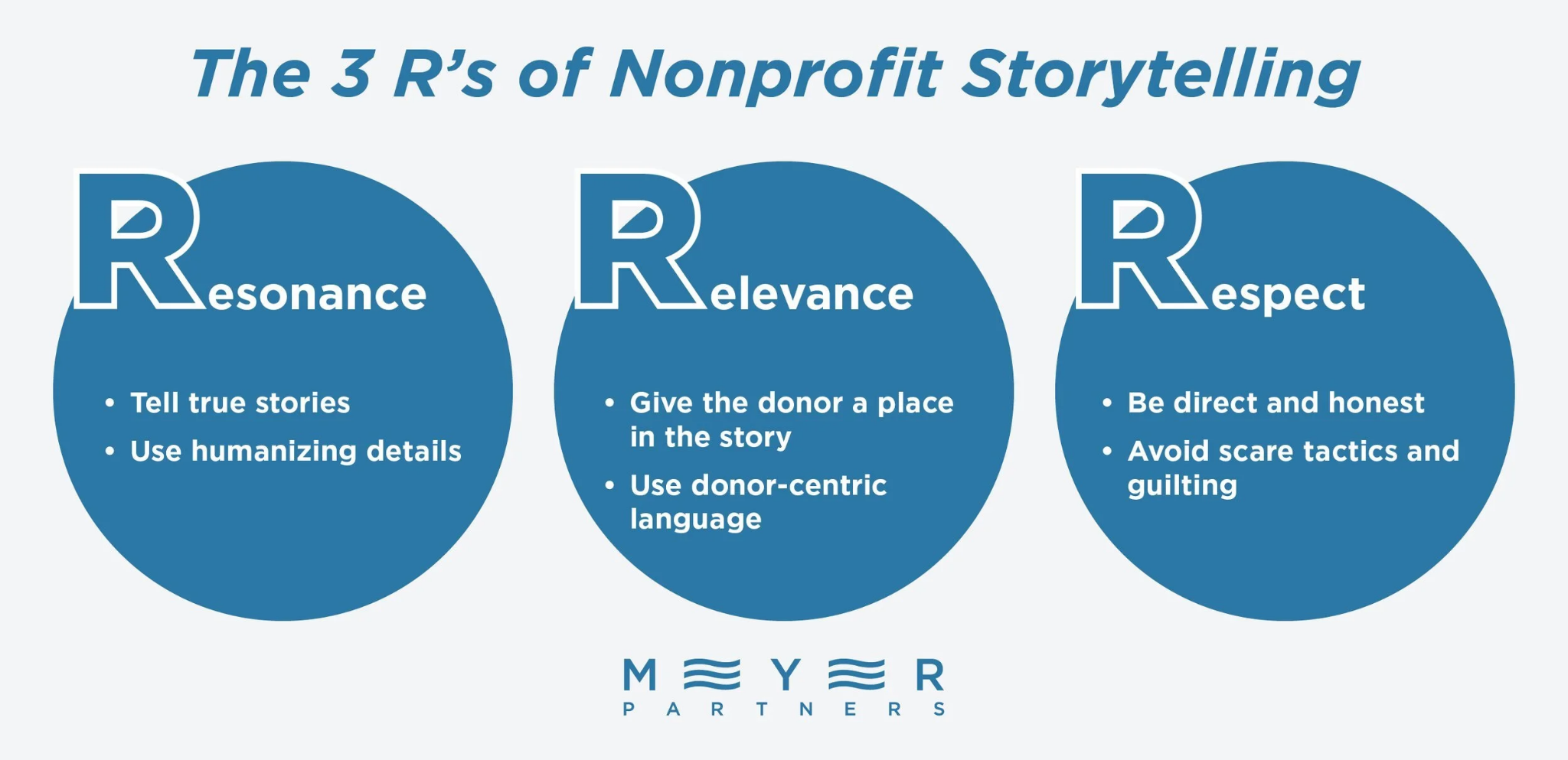
- Resonance: Every story should include real, humanizing details that resonate with donors. Let students tell their stories in their own words, and pair testimonials with photos whenever possible.
- Relevance: Make sure the donor can clearly understand their role in the story. Use donor-centric language that appeals directly to supporters’ values, inspiring them to become the changemakers who support the next generation of students.
- Respect: Respect both your readers and your storytellers by maintaining authenticity. Be direct and honest about what donations can achieve, and always focus on positive emotions like empowerment rather than guilt or scare tactics.
Incorporate these stories into multiple elements of your annual fund campaign to ensure maximum visibility and consistency. For example, you might include quotes from a student in your direct mail appeals, then post a selfie video of the same student telling their story on social media.
2. Highlight Impactful Giving Opportunities
To maximize revenue and increase average gift sizes, ask for more than standard, one-time cash gifts in your annual appeal letters. Offer additional giving options that provide greater flexibility and can increase donors’ long-term impact. These opportunities are often more compelling, especially for young alumni looking for accessible options and for high-capacity donors looking to make the most of their donations.
Specifically, use your annual appeals to highlight opportunities like:
Matching Gifts
The easiest way to make supporters’ donations go further is to double them. Typically, donors can double the impact of their gifts at no extra cost in one of two ways:
- Your university offers a matching donation challenge. Organizations often partner with a major donor who commits to matching every dollar donated within a set timeframe, up to a certain amount. These challenges motivate individual donors to give urgently so they don’t miss out on the match.
- Donors request corporate matching gifts from their employers. At any time, donors who work for participating companies can independently request matching donations from their workplaces. If the request meets the employer’s guidelines (e.g., a donation between $10 and $100 to a registered 501(c)(3) nonprofit), they’ll match their employee’s gift.
Either way, donation matching is a powerful motivator, especially during year-end giving season. Feature matching gifts prominently in your annual fund appeals, explaining how to participate and why these donations are so impactful.
Recurring Giving
Imagine you’re a recent graduate just starting your career and trying to pay off student loans. You wouldn’t want to donate $1,000 to the university you left last year, but it might be feasible to give $20 a month. In this case, you’re much more likely to respond to an appeal that highlights recurring giving.
Recurring gifts offer a more manageable opportunity to support your university while deepening donor relationships. In your annual fund appeal letters, include the option to give monthly and provide several accessible donation tiers.
Legacy Giving
Plant the seed for long-term support by introducing planned giving and bequest options in your annual appeals, too. These avenues empower alumni to leave a lasting mark on your institution without requiring an immediate, large-scale donation.
Even if most donors aren’t ready to commit to a legacy gift right now, just including information about planned giving in your appeal can get them thinking about it. Include links in emails and QR codes in direct mail letters so supporters can easily learn more on your university’s website or request a meeting with your major gifts officer. Note each donor who shows interest in the program so you can cultivate the relationship over time.
3. Leverage Donor Data for Highly Personalized Appeals
The best fundraising strategies reflect the unique relationship each supporter has with your university. Highly personalized appeals show each donor that you value them as an individual and respect their unique contributions.
Use your donor and alumni data to tailor your asks as much as possible. Go beyond addressing recipients by their preferred names—reference their specific past involvement, giving history, and personal connections to the university. Acknowledging that an alumnus was on the debate team or that a donor consistently supports the engineering department validates their identity and gives them clear, specific reasons to give again.
Segment your donor lists in several ways to maximize relevancy, and regularly audit your donor database to ensure all contact information and engagement records are accurate before sending appeals.
If you aren’t sure how to best segment your audience, hone in on the highest-value potential donors, or match supporters with the right requests, consider professional donor analytics services. Experienced fundraising consultants who specialize in data analysis can help you optimize your strategy for this year’s annual fund appeal and well into the future.
An effective annual fund approach relies on deep personalization, authentic narratives, and a variety of flexible giving options tailored to your audience. Upgrading the underlying strategy of your communications with these tips will help you build stronger relationships with alumni and secure the financial future of your core programs.

3 Ways to Build a Better Annual Fund Appeal for Higher Ed
Asking for donations to your annual fund can feel repetitive, but your appeal letters shouldn’t be. Learn how to develop better annual fund appeals here.
.jpg)
Alyssa Jefferies
September 3, 2026
12 minutes
LinkedIn continues to stay relevant for alumni outreach in 2026 as it is one of the most comprehensive self-updating directories from an advancement standpoint. Over 50% of LinkedIn’s user base holds a higher-education degree, and ~53% of US college graduates are active on the platform.
That means your alumni not only present but also likely engaging with a variety of content. But as far as reaching out to them goes, being present on LinkedIn and being reachable are two different things, and the wrong outreach strategy can disinterest or even alienate alumni.
In this blog, we’ll go through whether LinkedIn is worth your time for alumni outreach and how you can get your alumni’s attention effectively.
Is LinkedIn outreach worth the investment?
Let’s start with understanding why LinkedIn is different from the other channels
LinkedIn InMail gets a 10–25% response rate while cold email, by comparison, sits at 1–5%. The platform’s natural context is also a big factor here because when an alum receives an InMail from their alma mater, it’s in a different environment to when they’re sorting through personal emails and family messages. They log on to LinkedIn with a certain mindset, which makes them more open to professional conversations.
LinkedIn also gives outreach teams more context about who they’re reaching before they begin the process such as:
- Where an alum works currently
- What they’ve recently posted
- What groups and communities they’re in
- Who the common connections are
That’s a lot of helpful material to tailor the first message that will hopefully be the start of a donor’s journey. Combine all of this with the social media nature of the platform and you get a channel that has a lot of potential if you approach it right.
LinkedIn Alumni Outreach Strategies
Now that we’ve established that LinkedIn is at least worth a look, let’s set your team up for success so that your messages don’t go ignored.
1. Build an Active Presence Before You Send a Message
Advancement teams (and most teams in any field, to be fair) tend to treat LinkedIn outreach the same way they’d treat a cold email campaign. They find the person, write the message, hit send, and hope for the best.
But LinkedIn is, at it’s core, a social network. Your alumni notice who’s following you, who’s commenting on your posts, and whether your institution has a solid presence on the platform. If your university’s LinkedIn page hasn’t posted in months and the last post was a stock photo of a campus building, it hurts your cause already.
Before you start an outreach campaign, make sure you tick all these boxes::
- First, make sure your institution’s LinkedIn page is active. Posting once per weekday helps you reach 60% of your followers in a month. You should be aiming for consistent presence over viral content.
- Secondly, look for mutual connections, a shared connection increases reply rates by 27%. If a colleague or another alum is already connected,
- Thirdly, follow the alum you plan to message and leave a genuine comment on something they’ve posted. If possible, build and nurture your online relationship with them. You should be looking to gain a follow-back. This can be crucial since alumni who already follow your institution are 81% more likely to respond to your InMail.
2. Build a Segmented List
Use your CRM along with LinkedIn's alumni search tool to understand who you will be sending your messages to. Many alumni engagement tools also allow you to better find, segment, and automate outreach to the right people.
The segmentation itself will be crucial as personalization is a big part of making your message stand out (as we will explain later), so take your time and make sure all your segments and alumni information is updated, synced, and ready to go.
3. Get the Subject Line Right
LinkedIn InMail by default gives you a 200-character subject line limit. When an alum receives your InMail as a notification, they see roughly 25 to 40 characters before the preview cuts off.
For this reason, short, specific, and personalized subject lines can work really well. For example: “A quick question from [University]” or “Connecting with [Name] re: mentorship”.
What won’t work on the other hand, is anything that sounds like a mass email campaign. Something like “Exciting news from the alumni office!” might feel generic or may confuse recipients.
4. Keep the Message Short and Simple
LinkedIn’s own data shows that InMails under 400 characters get higher response rates. Many institutions sometimes write messages much longer than this and have their messages scrolled past.
For your first message, your alums only need enough to understand what you’re asking and if it's worth their time. If you have more context to give and more reasons to say why this outreach matters, that can follow later.
Write a ~300-character message that asks one clear question. The message can address the basics such as who you are, why you’re reaching out, and your one specific question.
5. Personalize Beyond the Name
Alumni can tell if a message was written for them or if someone just replaced a mail merge field, so you’ll want to go further than just swapping people’s first names. Here’s a few things that might help with personalization:
- Spend a couple of minutes on the alum’s profile; personalized InMails increase acceptance rates by about 40%, according to LinkedIn data. Mention a recent post they made, a project they were publicly credited for, a career transition they just went through, or a shared connection.
- Find a good natural connection between what you discover about them and what you’re reaching out about. If you’re inviting them to a career mentorship panel and they’ve been posting about early-career development, mention that. If you’re reaching out around their 10-year graduation anniversary, you definitely want to acknowledge it.
- Avoid mentioning generic and obvious things like “I see you graduated from [University].” Good personalization shows you’ve paid attention to their life after graduation and you have a brief window that you want to make the most out of, especially for less-engaged alumni.
6. Templates for Common Outreach Scenarios
Here are some templates that you could borrow and build on to personalize your next outreach message on LinkedIn:
General reconnect:
"Hi [Name], congrats on the move to [Company]. I'm on the alumni relations team at [University]. We're putting together a small group of alumni at your career stage to get some honest input on our programs. Would a 15-minute call work?"
Mentorship opportunity:
"Hi [Name], I work in alumni relations at [University]. Saw your recent post on [topic] and thought you'd be a great fit for our mentorship program. We're matching alumni with students in [field]. Would you have 30 minutes to hear more?"
Upcoming event:
"Hi [Name], I'm with alumni relations at [University]. We're hosting a small dinner for [City] alumni on [date] and wanted to make sure you were on the list. Can I send you the details?"
Giving day:
"Hi [Name], [University]'s giving day is [date]. This year all gifts are going toward [initiative]. Wanted to reach out personally before things kick off. Can I send you a bit more context on what it supports?"
What each of these has in common is one clear ask and customization that shows the sender did their homework before reaching out.
7. Time Your Outreach Well
LinkedIn data shows that Friday and Saturday see 4% and 8% fewer than average responses, respectively. Your alumni may want to relax and disconnect from the professional world on the weekends, so Monday through Thursday is a good window. However, depending on your event calendar, and past alumni engagement data, this can vary a bit so do double check!
Going back to the mentioned window, Sprout Social's analysis of nearly 2 billion engagements across major social platforms points to Tuesday through Thursday, 11 a.m. to 5 p.m., as LinkedIn's peak activity window. That's when professionals are most actively checking and responding on the platform, so it's your best shot at being seen before your message gets buried.
8. What to Do When Alumni Reply
Your next message after an alum replies sets the tone for the entire conversation that follows and the subsequent relationship. So here’s a few things to keep in mind:
- Reply quickly, ideally within a few hours of seeing their response.
- Thank them by name and reference something specific from their reply.
- Remember that this is a conversation on a social platform.
The goal should be to establish that your team and, by extension, your institution has a real interest in keeping in touch with them after graduation. For this reason, you’ll want to:
- Find out what they’re working on.
- Ask follow-up questions.
- Make it clear that there is no immediate ask attached.
💡This doubles as an opportunity to get updated information in case their profile information hasn’t been updated in a while.
Alumni who are connected to their institution are 23 times more likely to donate than those who aren’t. That connection, however, has to be built through consistent, genuine interaction over time. So, when it’s time to make an ask, it’s coming from the context of the conversation.
Build a LinkedIn Alumni Community (and not just another contact list)
At the end of the day, one-on-one outreach can only take you so far. Advancement and alumni relations teams that are able to keep alumni engaged are also building environments where alumni feel like they want to stay engaged.
If we are sticking to the platform at hand, LinkedIn Groups are a great way to do this. You can organize alumni groups around:
- Your institution
- Graduation cohorts
- Academic departments
- Regional chapters
- Donor groups
- Matching gift opportunities
…and much much more
AdvancementForm looked at what the institutions running active alumni groups have in common. Here are the main takeaways:
- Stay active every day: Keith Hannon of Cornell University shared that two-thirds of alumni relations professionals running thriving LinkedIn communities log in daily. That includes posting, answering questions, responding to comments, and engaging with what other members are sharing.
- Give alumni the spotlight: Spotlighting a graduate's career achievement or resharing something they wrote brings their audience into your content. Even the simple act of tagging alumni where needed will ensure that their network is notified as well.
- Share career resources such as job postings, industry reads/insights, career advice for alumni at different stages and make sure they are updated frequently. This is the content that consistently performs well as it provides a clear reason to engage.
- Mix up your content formats: Posts with images get a 98% higher comment rate than those without, and posts with YouTube videos (that play directly in the feed) get a 75% higher share rate. Varying your formats will keep the feed from feeling like a broadcast channel.
- Ask alumni to help current students: Academic Impressions flags this as an especially meaningful way to engage alumni because it gives them an opportunity to give back give back, even without a financial element. Posting something like "What do you wish someone told you in your first year in [industry]?" gets replies from alumni who would otherwise never comment on, say, an event announcement.
- Run polls: Lebanon Valley College asked their alumni "What career field are you currently in or looking to enter?" and it sparked a lively, ongoing discussion among their alumni. Polls can be a great icebreaker and contextualizing them to recent events, career stages, or other segmented needs is even better!
- Add in the nostalgia angle: Questions and posts about campus memories or institutional history give alumni interactive content that serves as a break on their feed from the usual LinkedIn content while also reminding them of why they feel connected to their school.
Finally, if you're thinking about content ratios, keep it weighted toward value-first content, career resources, alumni recognition, and conversation, with campaigns and event promotion playing a supporting role, not leading the feed.
Measure Your Progress and Know Your Blind Spots
You need to know whether your efforts are paying off. So, if you’re running structured outreach campaign on LinkedIn, here are the metrics which will help you track what's working:
- Connection acceptance rate: You generally want to aim for ~20% or above. If you're below that, check whether you're warming up contacts before sending requests and whether your institution's page looks active and credible.
- InMail response rate: With personalized, well-targeted outreach, this should sit between 10–25%. Single-digit numbers are an indication to look at your message length, your subject line preview, and how specific your personalization is.
- Conversation-to-action rate: This tracks what percentage of replies converts into whatever your goal is, whether that’s an event registration, a scheduled call, or a gift.
The Council for Advancement and Support of Education (CASE) tracks alumni engagement across four modes: philanthropic, volunteer, experiential, and communications.
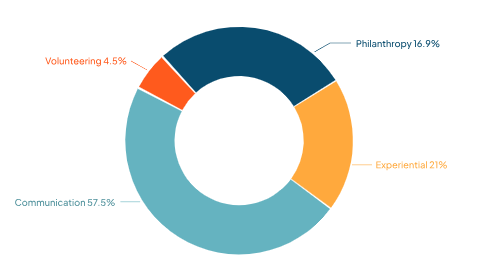
LinkedIn activity can feed into your experiential and communications metrics. If you’re not tracking LinkedIn engagement as part of your overall alumni engagement scorecard, you should consider starting now.
A few common blind spots that can be avoided include:
- Reaching out only when there's an ask: If alumni only hear from you around giving day or annual fund season, the outreach feels transactional. Only 27% of alumni who donate give to their alma mater. The most common reason others don't give is because they don't feel connected enough to make it a priority.
- Writing LinkedIn messages like emails: Avoid long messages, formal language, attached PDFs when LinkedIn is conversational. Keep messages short, and the tone conversational.Save the documents for follow-up conversations.
- Ignoring alumni who engage with your posts: When an alum comments on something your institution shared, respond to them, thank them by name, and if appropriate, send a connection request with a brief personal note referencing what they said.
- Not knowing what comes next when someone replies: Replying to a message without a clear next step might waste the opening you had spent time and effort on. Know what you’re trying to accomplish before you send the first message so that when someone replies, you’re ready to take the conversation forward.
Final Thoughts
We hope we’ve been able to give you and your team plenty of things to keep in mind. While LinkedIn outreach may seem like a simple game of numbers at first glance, any outreach campaigns involving social media rarely tend to be so predictable and you definitely want to keep that in mind.
To wrap things up, keep personalization (and segmentation by extension) at the heart of your strategy, have a consistent presence on LinkedIn just as you probably do with Facebook or Instagram, and make sure you are thinking about how to take the conversation forward many weeks ahead of time so that alumni feel appreciated after reacting to your outreach.
If you are looking for an alumni engagement platform to help you plan, execute, and measure your alumni outreach and engagement strategy, Almabase is built just for that so feel free to book a personalized demo with us!
How to Reach Out to Alumni on LinkedIn and Get Responses
Our article takes you through LinkedIn alumni outreach and how your team or institution can ensure that your alumni don't ignore your messages.

Prajnya Yelamali
September 2, 2026
12 minutes

Homecoming is one of the most anticipated events of the school year for both students and alumni. Picking the perfect high school homecoming theme means balancing what attendees are excited about with what your school can realistically pull off on budget. The goal is simple: create an experience people will remember.
Planning your theme early makes that much easier. It gives you more time to organize everything smoothly and avoid last-minute surprises. To help you get started, we’ve put together 20+ high school homecoming themes ranging from classic and elegant to trendy, easy to pull off and unique.
Classic High School Homecoming Theme Ideas
Classic themes are a mainstay for homecoming week. They’re visually rich, they age well, and alumni can connect with them just as easily as current students, which makes them a smart pick if you want homecoming to feel like a true community event.
1. Under the Stars / Starry Night
A night sky theme is one of the most enduring homecoming themes, and it's easy to see why. Dark blue drapes and shimmering lights can transform almost any gym or hall into something that feels magical without requiring a massive budget.

Both Lincoln High School in Nebraska and Socorro High School in Texas ran 'Starry Night' themed homecomings in 2024, leaning into deep blue and silver palettes, complete with photo booths. The theme works across different school sizes and budgets, which is a big part of why the theme is here to stay.
Why it stands out: It's romantic, timeless and photographs well, which makes it a win. Done well, it is a very shareable theme for social media, which boosts engagement with your events.
Decor ideas:
- Hang silver and gold star cutouts at different heights for a layered look.
- Use LED string lights or fairy light curtains as a glowing backdrop.
- Set up a photo booth with a moon or constellation theme.
- Encourage colors like deep blues, blacks, silvers, and golds for outfits.
- The dress code can be semi-formal or formal depending on the event.
2. Hollywood Red Carpet
A Hollywood theme holds the potential to give every attendee their A-list moment. It’s high-energy, glamorous, and everyone knows what to wear and how to act when there's a red carpet involved.
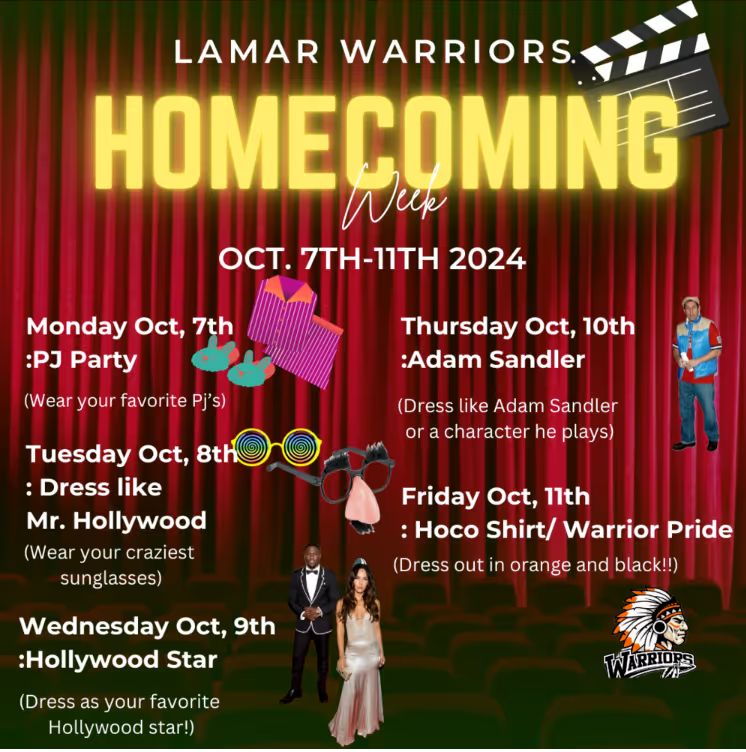
Lamar High School made Hollywood the centerpiece of their 2024 homecoming, building spirit week dress-up days around students channeling their favorite stars. The theme gave every student a chance to feel like a million dollars!
Why it stands out: It's flexible enough to work for spirit week (dress as your favorite celebrity one day, arrive at the dance like you're walking into the Oscars the next), which keeps things exciting and new even while being on-theme.
Decor ideas:
- Roll out an actual red carpet at the entrance for a classic photo-op.
- Add gold star cutouts or a backdrop for pictures.
- Put your school’s name on the wall in Hollywood-style lettering.
- Use a spotlight or two to boost immersion, even on a budget.
3. Enchanted Forest
“Enchanted forest” is a theme that can transform a school gym into something that feels straight out of a storybook. Decorations can be as simple or elaborate as your budget allows, and the theme still comes across clearly. You could go for fairy tale elements, a more natural woodland look, or something in between, tailored to your school’s style.

Herndon High School in Virginia took this theme for their 2025 homecoming, incorporating nature-inspired floats in the parade and floral decor throughout the week, proving that the concept carries through spirit week activities as well as the dance itself!
Why it stands out: It feels immersive because of the fantasy element and also lends itself beautifully to photography.
Decor ideas:
- Wrap columns with ivy and add branches with fairy lights.
- Use fog machines and soft amber and green lighting for a magical feel.
- Add floral centerpieces to bring in natural forest details.
- Create a tree tunnel entrance using greenery and pinecones.
- Suggest green, gold and amber tones for outfits/dress code.
4. Masquerade Ball
A masquerade theme introduces an air of mystery to a regular homecoming week. Masks are an accessory to look forward to, and the Venetian inspiration lends to striking decor in almost any venue.

Fremont Christian School in California ran a masquerade-themed homecoming dance in 2024, leaning into the mystery and elegance of the format.
Why it stands out: It's inherently formal and visually unique. Even those who don't go all-out on their outfit can look the part with just the right mask. It also doubles well as a semi-formal or formal event.
Decor ideas:
- Use purple, gold, and black for the color palette.
- Add feather centerpieces and ornate masks as wall decor.
- Use candelabra lighting for the atmosphere.
- Drape walls, archways, and doors with fabric.
- Set the dress code as masks with black tie attire.
Trendy and Retro Homecoming Theme Ideas for High School
Retro themes have been making a comeback, something reflecting on student culture right now as well. Driven by the wave of nostalgia running through fashion and social media, these ideas tap directly into that energy, making them some of the best themes to get excited about.
5. Retro Decade Theme
A decade-hopping retro theme is an energetic format for homecoming week. You can draw inspiration from the decades related to past generations of students, incorporating music, fashion, and popular trends from each era.

Artesia High School in New Mexico themed their entire 2024 homecoming week around "Groovin' into HoCo," running decade-dedicated dress-up days from the '60s through the '00s, complete with an enchilada supper, bonfire, parade, and assembly.
Why it stands out: It's extremely flexible. Every student can find a decade they connect with, whether it's flower-power '60s, disco '70s, or MTV '80s.. And because most of the "costume" is just clothing, there's almost no financial barrier or prior planning, increasing participation.
Decor ideas:
- Use decade-specific decor like Volkswagen buses and peace signs for the 60s.
- Add mirror balls and disco platforms to represent the 70s.
- Include neon colors and scrunchies for the 80s.
- Decorate the dance with a retro palette of warm colors like orange and yellow.
- Add a groovy typographic backdrop to complete the retro vibe.
6. Retro Revival (1950s–60s)
Leather jackets, sock hops, and drive-in vibes: the 1950s and 60s are full of ideas that can easily be incorporated into a homecoming theme. The looks are fun, accessible, and lend themselves naturally to a full week of themed activities.
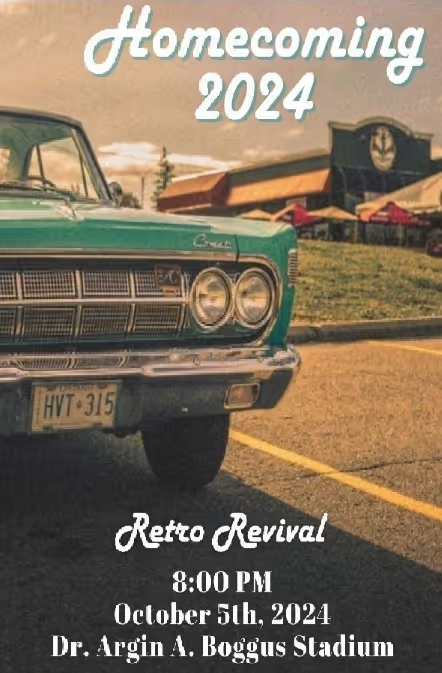
Tavares High School in Florida ran a 'Retro Revival' homecoming in 2024, planning their spirit week around decade-specific themes. The day-by-day format kept students engaged all week, with a retro aesthetic tying everything together.
Why it stands out: It tends to have high dress-up participation because the looks are fun and easy to create. The costume options are wide enough for everyone to find something they're comfortable wearing.
Decor ideas:
- Set up diner-style tables with pastel and checkerboard patterns.
- Add retro jukeboxes or jukebox-style signage for decor.
- Use classic car cutouts as fun photo props.
- Encourage vintage outfits like poodle skirts and leather jackets.
- Include accessories such as cat-eye glasses and saddle shoes.
7. Y2K / 2000s Throwback
The early-2000s nostalgia wave isn't slowing down any time soon! From butterfly clips to shiny tech-inspired accessories, Y2K is having a full cultural moment and high school students are very much along for the ride. There's also a fun generational connection when teachers, parents and alumni join in, having lived through these moments themselves.
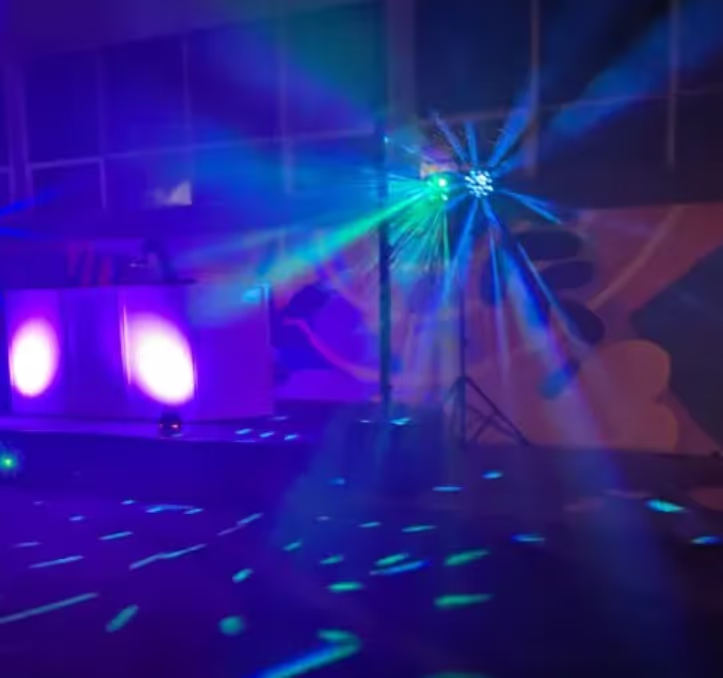
Sunset High School in Portland ran a Y2K homecoming in 2024.
Why it stands out: It reflects what's trending on social media and in fashion right now, which means attendees can simply pick items from their wardrobe and create their costumes.
Decor ideas:
- Use shiny streamers and holographic accents for decoration.
- Add bright pop-art colors throughout the space.
- Include early-internet-inspired signage and graphics.
8. Neon Glow Party
A neon or glow theme turns any venue into a high-energy, visually electric experience. UV black lights do most of the heavy lifting, which makes this a surprisingly easy theme to execute well.
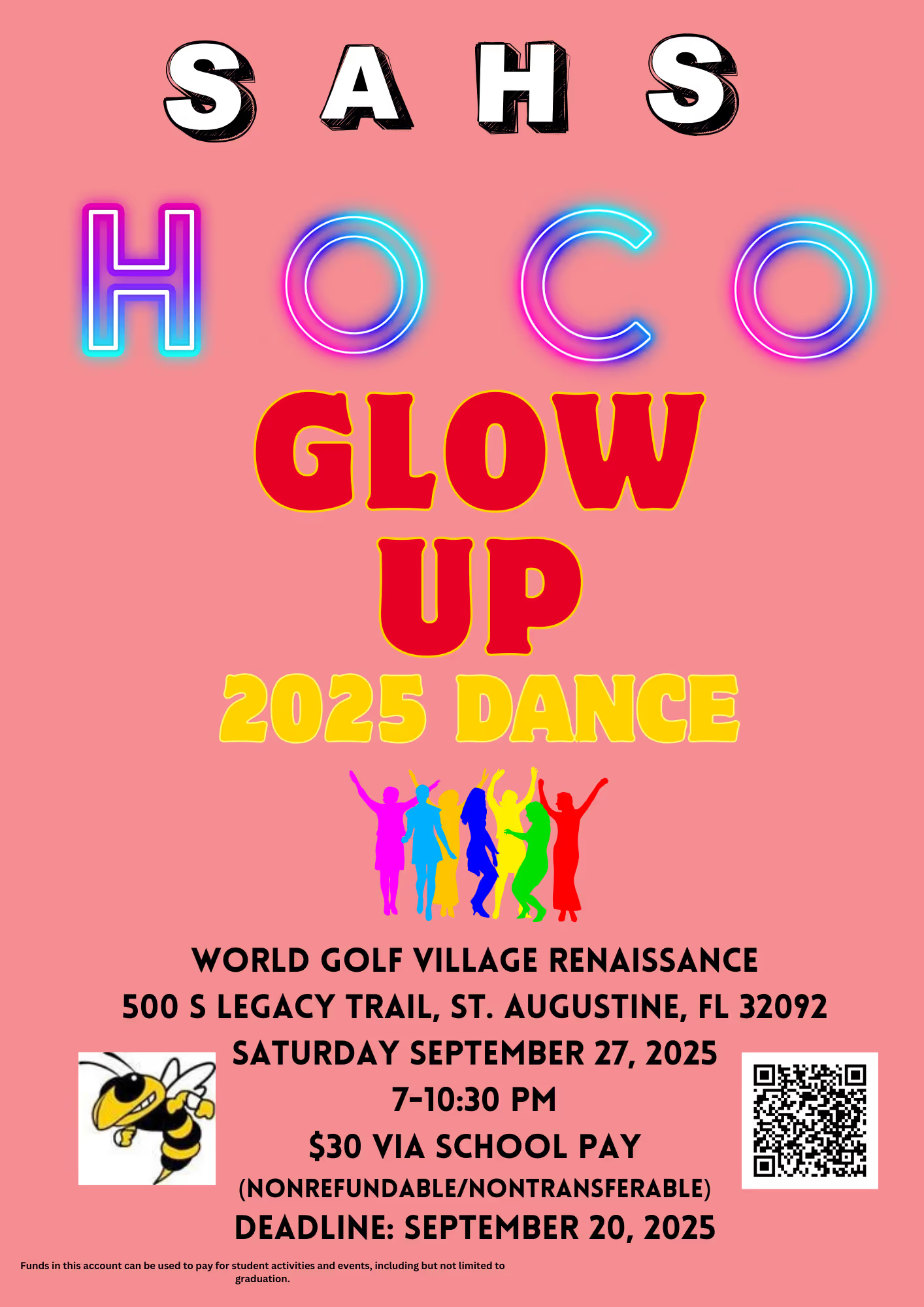
St. Augustine High School in Florida made their 2025 homecoming theme 'Neon Glow Up!', hosting the dance at a local hotel to add an upscale feel to the vibrant concept. Taking the theme off school grounds gave it an elevated atmosphere.
Why it stands out: Neon and glow accessories are easy to find, so attendees at every budget level can fully participate. The visual impact in photos is also huge, which drives social sharing and school spirit.
Decor ideas:
- Install UV black lights throughout the venue for effect.
- Add neon streamers to brighten the space.
- Keep room lighting low to make the UV effect pop.
- Hand out glow-in-the-dark bracelets and necklaces at the door.
- Encourage neon or bright-colored outfits to match the theme.
Easy Homecoming Theme Ideas for Schools on a Budget
The best homecoming themes don't need to be expensive ones. These ideas require no elaborate venue transformations and those attending can put their look together from things they already own.
9. Wild West / Western Spirit Week
A western theme works because it builds the week around something attendees can dress for without spending a dime. Flannel, boots, denim, and cowboy hats are already in most wardrobes.
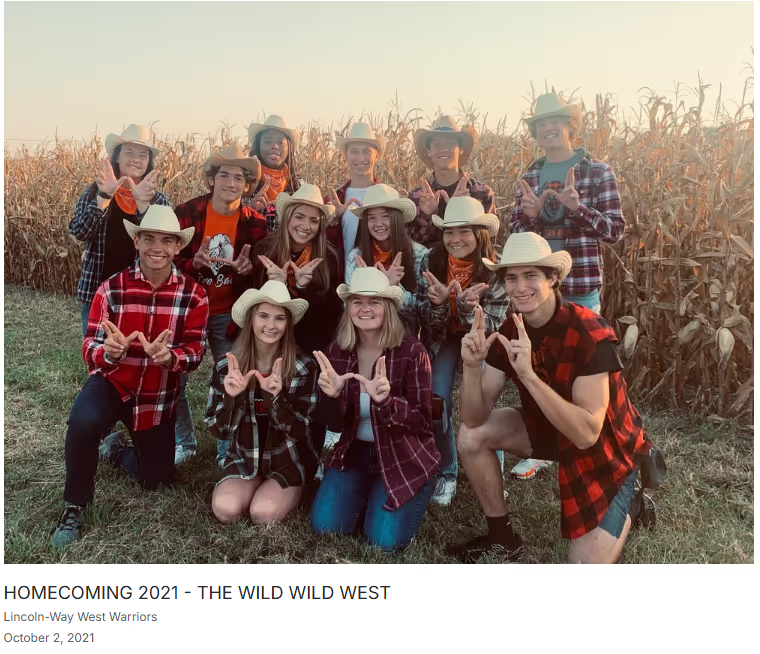
Lincoln-Way West High School in Illinois ran a "Wild Wild West" homecoming week, with flannel day, class color day, and a western-themed spirit day leading into a Friday night game. The dance itself was held off-campus at a local commons, with food trucks adding to the casual, community feel of the event.
Why it stands out: When those attending don't need to buy anything to create looks around the theme and participate, attendance goes up across the board.
Decor ideas:
- Use burlap table runners and mason jar centerpieces for decor.
- Hang bandana bunting and use hay bales for that rustic touch in the venue.
- Set up a 'wanted poster' photo booth for fun, along with matching props
- Choose warm browns, reds, and denim blues for the color palette.
10. Music Festival / School Palooza
A music festival theme is flexible enough to run all week across different genres: country, hip-hop, pop, throwback, while keeping a concept that ties everything together. It is essentially a theme with the spirit week inspiration built-in.
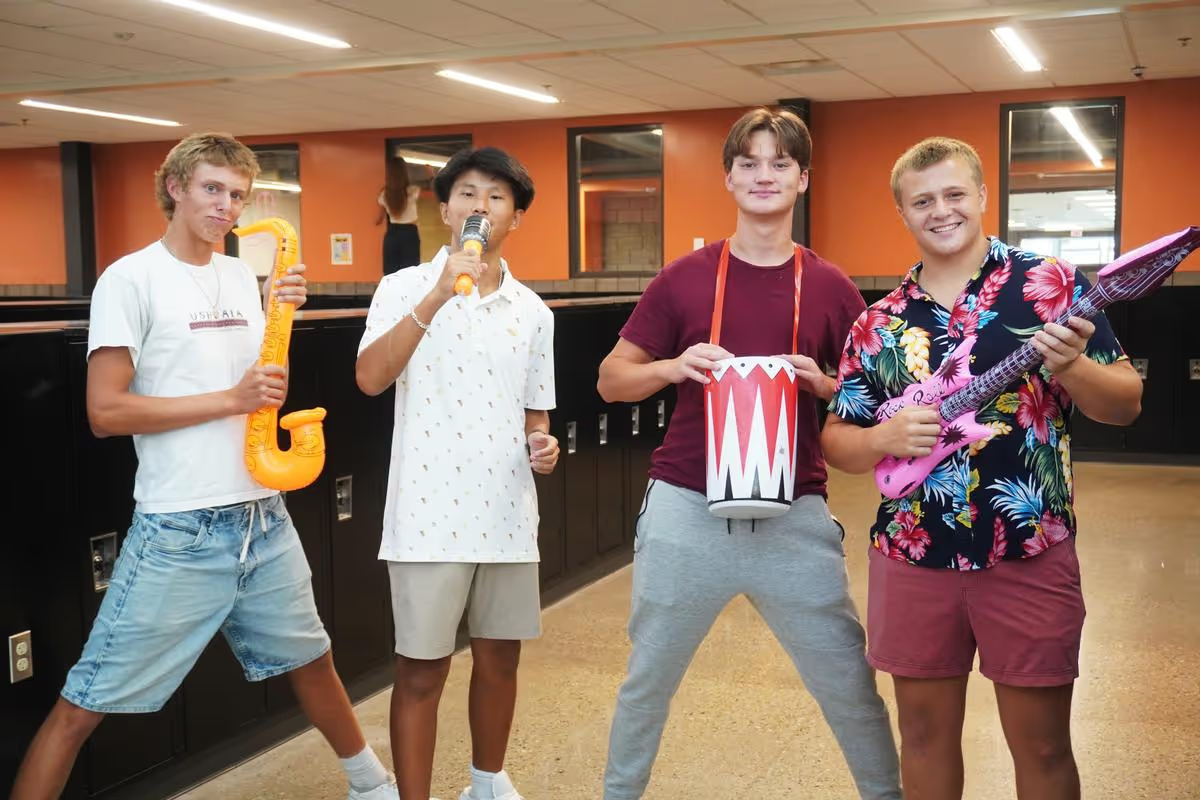
Thornapple Kellogg High School in Michigan made their 2024 homecoming theme 'TK Palooza', with each spirit day dedicated to a different music genre: Country Day, Hip Hop Day, Pop Music Day, and Throwback '60s Day. The school-wide rollout extended the theme across all grade levels, making it a community-wide event pulled off with a low budget.
Why it stands out: Every student has a musical genre they love, which means every student can find a day they're excited to dress for. It keeps the week feeling fresh, without needing expensive venue transformations.
Decor ideas:
- Hand out genre-wise festival wristbands at the door.
- Rent out stage-inspired lighting rigs for atmosphere.
- Hang musical note bunting around the space.
- Display a 'festival lineup' poster with the week's events.
- Keep the overall aesthetic (dress code, props, activities) casual and fun.
11. Denim and Diamonds
The denim-and-diamonds concept is a smart budget theme because it pairs something everyone owns (denim) with glamorous accessories. It’s elevated but at the same time accessible.
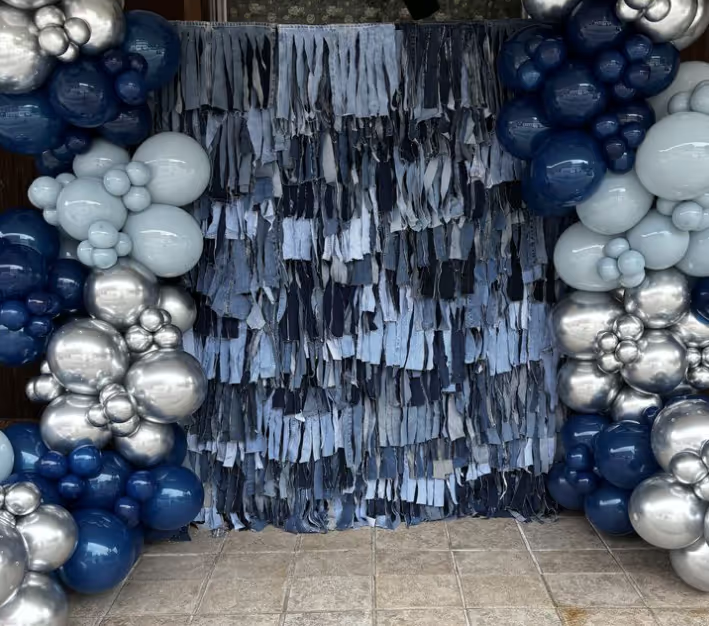
Why it stands out: Attendees can wear their own jeans and elevate the look with jewellery or sparkly accessories. There is no formal wear required, in fact, the contrast between casual and glam is the whole point.
Decor ideas:
- Decorate with denim blue and silver balloons, fairy lights, and streamers.
- Add denim drapes on the walls to reinforce the theme.
- Use crystal or rhinestone centerpieces with mason jars and wooden signs.
- A few mirror balls across the ceiling are a low-cost addition to the ‘diamond’ part of the theme.
This theme is the one to pick for schools that want an accessible, fun dress code that still photographs well and feels like a proper event. It's a great pick if your student body is mixed on how formal they want things to be.
12. School Colors Night
Sometimes the simplest idea is the best one. A school colors night strips the theme back to its most essential element: pride in your own school.
Why it stands out: Participation is essentially guaranteed. Every student owns something in their school colors, which means no one is left out for financial reasons. It also doubles as a lead-in to the Friday night game, keeping energy high all week.
Decor ideas:
- Set up a backdrop featuring the school name with bold graphics or 3D elements.
- Use streamers, balloons, and tablecloths in school colors with playful patterns or textures.
- Include a photo booth with the mascot and fun props for memorable photos.
- Encourage attendees to dress in school colors or mix in creative twists like glitter, themed accessories, or custom face paint.
13. Rustic Fall Night
Homecoming already falls in autumn, so leaning into the season is an easy creative decision. A rustic fall theme ties the event to the season and delivers a warm, inviting atmosphere that works with almost any venue.
Why it stands out: The dress code is accessible: flannel shirts, boots, denim, and cozy layers are things folks already own. There’s no shopping required, which means higher participation across income levels. The aesthetic also scales naturally: it looks just as good in a school gym as it does in a rented hall, which keeps anticipation high.
Decor ideas:
- Use burlap table runners and mason jar centerpieces with dried wildflowers and tea lights.
- Hang string lights overhead for a warm, cozy glow.
- Choose burnt orange, burgundy, and mustard for the color palette.
- Set up a barn-door or wooden arch photo backdrop that can be reused as props.
Elegant Homecoming Themes for Formal School Events
Some schools want their homecoming dance to feel distinctly formal: a step up from the usual school social. These themes are designed to set that tone from the moment guests walk in the door.
14. Galaxy Ballroom
A galaxy-inspired formal theme takes the classic 'stars' concept and gives it a more sophisticated, high-design treatment. The vision: a ballroom that looks like the inside of a planetarium.
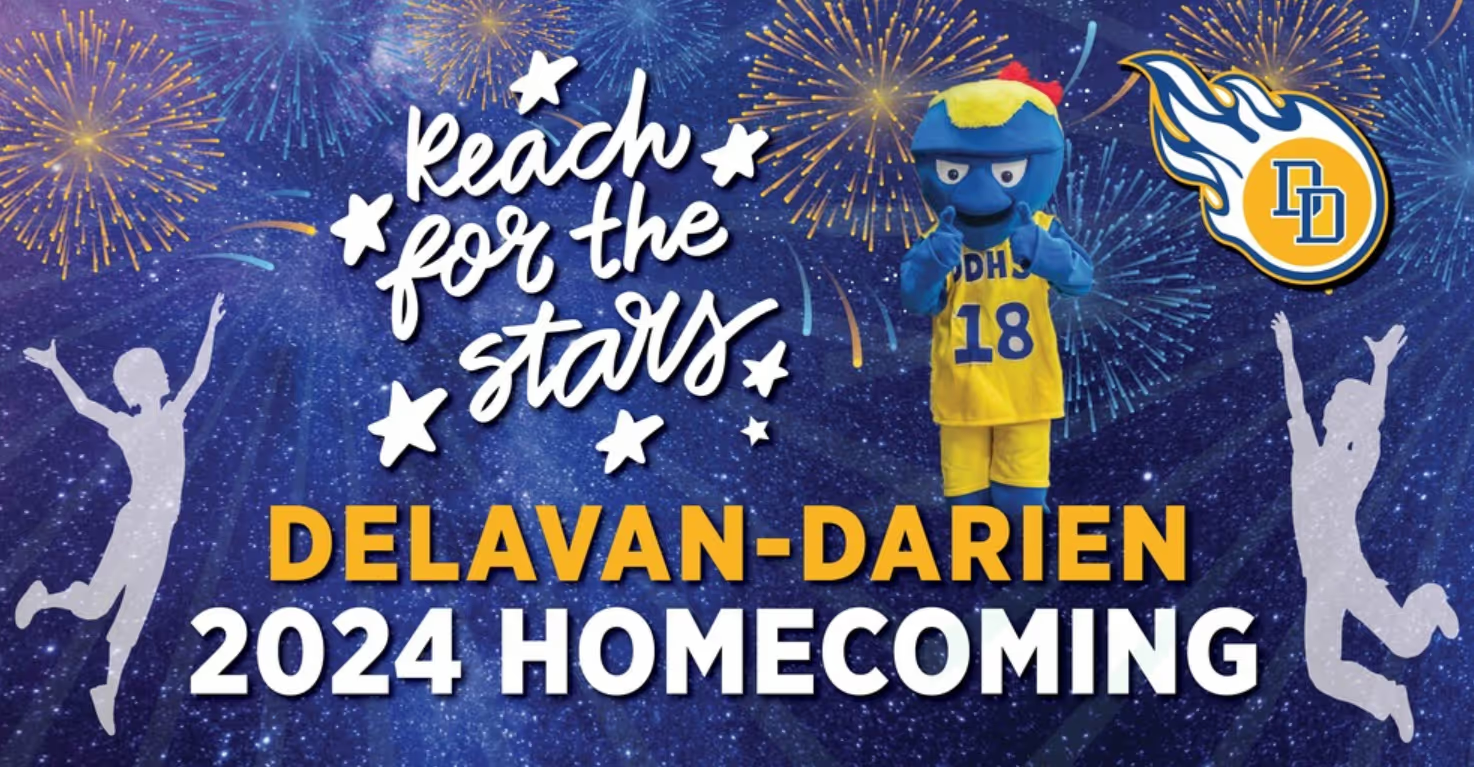
Delavan-Darien High School in Wisconsin chose 'Reach for the Stars' for their 2024 homecoming, turning their gym into a galaxy-inspired ballroom. The focus was on creating an atmosphere that felt special and formal and a genuine upgrade from the standard decorated gym.
Why it stands out: It clearly differentiates the formal dance from the casual spirit week activity days. Attendees immediately understand this is the 'elevated' event of the week. The visual effect, done well, is genuinely breathtaking.
Decor ideas:
- Use bold colors and dark drapes to set a cosmic mood.
- Hang ceiling installations of stars, planets, and moons.
- Cover tables with galaxy-print tablecloths or shimmering overlays.
- Display slow-moving nebula visuals with projectors or LED panels.
- Add silver and purple uplighting to enhance the galaxy effect.
15. Black and Gold Gala
A black and gold color scheme is one of the most reliably elegant choices for a formal school event. It's sophisticated, visually cohesive, and gives the room an immediately prestigious feel.

Trinity Academy in North Carolina runs an annual Black and Gold Gala that has become a school tradition, celebrated for the sense of occasion it creates and its role in bringing the community together. It isn't technically a homecoming event, but the combination of a strict dress code, a formal venue, and a consistent visual identity makes it work, and any school can apply that same idea to homecoming.
Why it stands out: The dress code requirement creates a visually unified room that looks stunning in photos. The formal nature raises the perceived status of the event, which motivates those attending to show up in elegant garb..
Decor ideas:
- Use black tablecloths with gold centerpieces for each table.
- Add gold balloon arches around the room.
- Place candelabras with gold accents on tables and near entrances.
- Set up a formal welcome arch at the entrance.
- Encourage formal attire in black and gold to match the theme.
16. Champagne Dreams
Only a few themes can make a school gym feel genuinely luxurious, and Champagne Dreams is one of them. Built around a palette of whites, creams, gold, and shimmer, the entire aesthetic signals "special occasion".
Why it stands out: It holds a lot of potential for a transformative set up. It's the kind of night guests talk about for years because it gives them an elevated experience within the school itself.
Decor ideas:
- Use white and ivory draping throughout the venue.
- Add crystal bead centerpieces and satin table runners.
- Place gold balloon columns around the room.
- Use soft warm lighting to create an elegant atmosphere.
- If budget permits, install chandeliers, and hanging lanterns for a layered look.
17. Moonlight and Marble
A sophisticated take on the celestial theme, Moonlight and Marble evokes a Grecian feel with cool whites, soft greys, gold accents, and a venue that feels like a high-end art gallery crossed with a ballroom.
Why it stands out: The theme is visually striking without being loud. The color palette white, ivory, grey, and gold, is elegant and photographs really well..
Decor ideas:
- Recreate Greek columns with white and grey draping.
- Use marble-print tablecloths or table runners on tables.
- Add gold geometric centerpieces throughout the space.
- Use soft warm or cool-white lighting for a moonlit effect.
- Set the dress code as white dresses or suits with gold and silver accents.
18. Celestial Elegance
Where Moonlight and Marble is cool and architectural, Celestial Elegance is warmer, more whimsical. It mixes soft lighting, hanging stars, and glowing centerpieces to create grandeur that feels special but is easy to achieve with simple decorations.
Why it stands out: It treads the line between formal and magical. Attendees feel like they're attending something truly special and memorable. The palette also allows for a wide range of dress options, from classic black tie to rich jewel tones.
Decor ideas:
- Use deep blue and purple draping throughout the venue.
- Hang gold and silver stars and moons from the ceiling.
- Place crescent moon table centerpieces with candle-style LED lighting.
- Set up a statement entrance arch with hanging moon and star garlands.
- Set the dress code as formal attire as deep blue or purple with golds accents.
Unique Homecoming Theme Ideas for Schools That Want to Stand Out
If your school is ready to move beyond the standard theme ideas, here are some out-of-the-box ideas that get people talking.
19. A Beloved Movie or TV Show
Basing your homecoming theme on a specific film or show is one of the most effective ways to generate real buzz from the moment it's announced. You get to harness the emotional connection that students already have to the source material. The best picks are ones that have a strong visual world with vivid color and a recognizable aesthetic.

RHCS, California chose Rio as their 2024 homecoming theme, building an entire spirit week around the film's world. Each day had its own twist drawn from the movie, like twin days inspired by characters Blu and Jewel, and surfers vs. tourists, or animal print day. The theme was planned months in advance specifically to deliver a "wow factor,".
Why it stands out: A specific, well-chosen idea gives the planning committee a complete creative brief from day one: the color palette, the soundtrack, the decor style, and the dress code all flow naturally from the source. Planners and attendees don't need to interpret a vague concept, they just need to channel their connection with the story.
Decor ideas:
- Base decorations on the film’s iconic scenes and visuals.
- Use color blocking from the movie’s palette throughout the space.
- Add character-inspired centerpieces on tables.
- Create a photo backdrop that recreates a recognizable movie moment.
20. Around the World
An Around the World theme is a great way to give each class a unique experience within the same theme. Each class claims a different country or region, then competes through hallway decorations, float design, and dress-up days. This means the creative energy runs school-wide for the entire week.
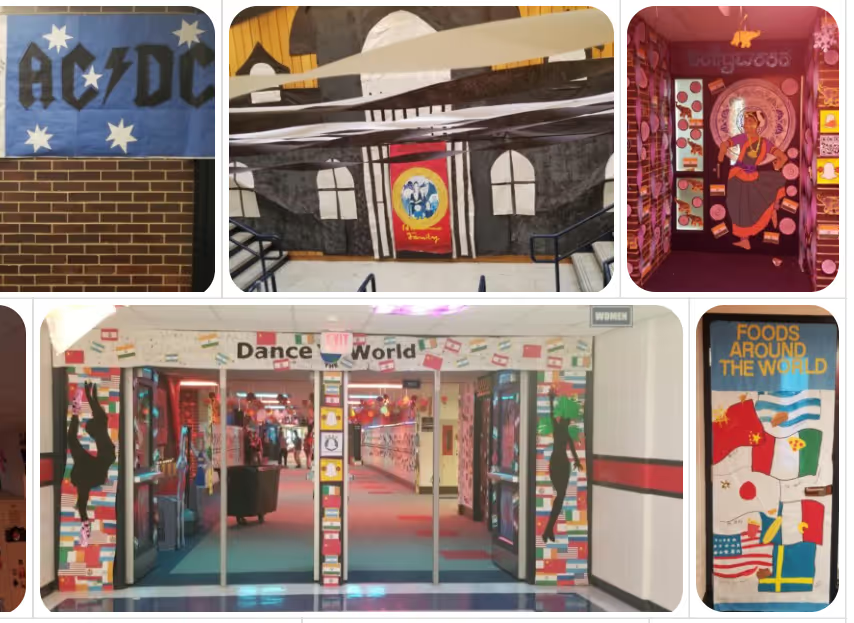
Conant High School in Illinois used "Around the World" as their homecoming theme and had student decorate different hallways, each representing a different global destination. The result was a school-wide installation that turned the building itself into an event.
Why it stands out: It naturally distributes participation and encourages creativity since each grade has to think differently about their assigned region. It's also one of the most inclusive homecoming themes available. Every cultural background has a place in it.
Decor ideas:
- Have each grade decorate their hallway as an assigned destination.
- Use landmarks, flags, traditional patterns, and food as inspiration for decor.
- Set up a world map backdrop for the dance.
- Add airport or destination signage/props to tie the theme together.
21. Candyland / Storybook
A Candyland theme is immediately fun and community-facing. It's vivid, playful, and translates beautifully to parade floats and family-friendly events. It's also a great way to involve younger students and the broader community beyond high school.

Westminster High School in Colorado went all-in on 'Candyland' for their 2024 homecoming parade, with bright color schemes and giant candy-themed float designs. The community event aspect worked particularly well; the theme is welcoming for all ages, which brings more families out to the parade and builds school spirit.
Why it stands out: It’s a fun theme that works well for homecoming parades and encourages community interaction with the floats. Giant candy-themed props and bright primary colors have a huge visual impact, increasing participation and excitement.
Decor ideas:
- Use oversized candy cutouts and inflatable sweets as entrance props and floats.
- Give out small candies or treats throughout the parade
- Decorate tables and walls with bright rainbow-colored drapes.
- Add lollipop centerpieces on tables.
- Set up a photo booth with candy-themed frames.
22. Fairytale Night
An enchanting theme with castles, magic, and the feeling that anything could happen, this is the perfect one to pick for an unforgettable night. It's immersive, visually rich, and gives attendees full permission to go all-out with their looks.
Why it stands out: It moves beyond the typical school dance atmosphere and creates a sense of occasion. Those who might not otherwise dress up find it easier to commit. The theme invites imagination and they can put their own spin on it..
Decor ideas:
- Set up castle-gate entrance arches to welcome guests.
- Use draped fabric in soft golds and purples throughout the venue.
- Add oversized flower arrangements and twinkling fairy lights on the ceiling.
- Include storybook-inspired signage like “Once Upon a Homecoming…” in corridors.
- Create a photo booth with a carriage or throne chair for the homecoming court.
23. Music Festival (Immersive / Zone Edition)
This is a step up from the standard music festival concept: instead of a single-room dance, the school is divided into "zones," each with a different genre, playlist, and visual aesthetic. Students move between zones throughout the night, making homecoming feel more like a live experience than a standard dance.
Why it stands out: It keeps attendees moving and engaged all night rather than clustering in one corner. It also naturally accommodates different tastes: one who loves country music and one who lives for hip-hop, both have somewhere to feel at home.
Decor ideas:
- Give each zone its own treatment:
- Design a neon-lit EDM corner with bright lights and bold colors.
- Create a rustic country area with string lights and hay bales.
- Set up a hip-hop zone with graffiti-style signage.
- Include a throwback pop section with retro album cover prints.
- Use a central main stage area to connect all the zones.
How to Choose the Right Homecoming Theme for Your High School
Just choosing a good theme isn’t enough; it has to fit your school. Here’s how to choose one that works.
1. Consider your students
Trends shift quickly, so last year’s idea might already feel outdated. Ask your student council or run a quick poll. Participants are more likely to show up and take part if they have a say in the events.
2. Match the theme to your venue
Some themes are flexible, others need specific setups. A Celestial Elegance theme needs height and space for hanging decor. An Enchanted Forest needs room to build things out. A Neon Glow Party only works if you can control lighting. Take a walk through your venue and be honest about what you can pull off.
3. Choose based on budget and staff capacity
Pick something your team can actually execute. A Western Week or Music Festival is simple and easy to set up. A Masquerade Ball or Galaxy Ballroom takes more planning and resources. If you’re stretched thin, go simpler and do it well.
4. Think beyond decor: consider the full experience
The theme should help guide everything else. Music, outfits, photo spots, even small activities should all connect. A groovy retro night, for example, makes it easy to choose mirror balls for decor, vintage looks for dress code, and backdrops and photo booths in bold, warm colors and patterns. When it all lines up, the event just feels more cohesive and better.
5. Make sure the theme feels inclusive and easy to participate
The more effort or money it takes to participate, the more people will sit it out. Choose a theme that’s easy to show up for. The goal is simple: everyone should feel like they can be part of it.
Homecoming Planning Tips to Make Your Theme Work
Once you’ve picked the theme, you arrive at your real challenge: making it come to life across an entire week of events. Here are some planning moves that will aid you in delivering a memorable experience:
1. Keep everything in one place:
Have a single page with all the details: schedule, dress-up days, tickets, and updates. When information is scattered, people miss things and you end up answering the same questions over and over.
2. Simplify RSVPs and ticketing:
Skip paper lists and manual tracking if you can. Use one system so you know your numbers ahead of time and avoid last-minute confusion.
3. Send a few reminders:
People rarely act on the first message. Send a reminder when you announce, another a week out, one a couple of days before, and one on the day. It makes a big difference in turnout.
4. Keep communication clear:
You’re talking to students, parents, and sometimes alumni. Send each group what they need so no one gets overwhelmed or misses something important.
5. Share what happens after:
Don’t let it end when the night is over. Share photos, post a quick recap, and thank the people who helped. It keeps the energy going and makes next year easier to build.
How Almabase Can Help You Plan and Run a Better Homecoming Event
Managing a multi-event Homecoming week and everything around it can get messy. Registrations, communication, tracking attendance, and follow-ups all take time, and small gaps can turn into bigger issues.
That’s where having a system like Almabase’s event solution helps by bringing everything into one place so your team isn’t juggling tools or chasing information. This is done through a few core functions
A central homecoming page:
Instead of spreading details across emails, social posts, and flyers, you can set up a single event page in Almabase. This includes sub-events with customized access and admin features so that students, parents, and alumni know exactly where to go for schedules, registration links, and updates. This keeps everyone informed and cuts down confusion from scattered information.
Make registrations and ticketing easy to manage:
Almabase lets you handle RSVPs and ticketing in one place without manual tracking. You can see your numbers in real time, which makes planning everything else a lot more straightforward. This gives you clarity early, so you can plan with fewer last-minute surprises.
Keep communication clear and on time:
You can send reminders, updates, and follow-ups directly through Almabase. It helps make sure people don’t miss key details and saves your team from answering the same questions repeatedly. This improves turnout and reduces last-minute back-and-forth.
Stay on top of attendee data:
With everything in one system, you can track who registered, who attended, and how different groups engaged. That visibility makes it easier to plan future events and improve each year. This helps you make better decisions instead of guessing what worked.
Keep the connection going after the event:
Almabase also helps you follow up after homecoming, whether that’s sharing photos, sending a recap, or staying in touch with alumni and families. It turns a one-night event into something that builds longer-term engagement, so people keep coming back.
Planning your next school event? See how Almabase can help you manage registrations, communication, and community engagement more smoothly. Request a demo to get started.


20+ Inspiring High School Homecoming Theme Ideas (2026)
Homecoming tends to center around higher-ed but there are plenty of interesting high school homecoming theme ideas your team can use to make your 2026 homecomings truly memorable!
Events
Anwesha Kiran
April 10, 2026
12 minutes
The transition from an engaged student to a loyal alum is arguably the most critical phase for higher education institutions, as alumni are more likely to donate and become advocates for your institution. Unfortunately, according to recent studies, 43% of alumni do not connect with their alma mater at all after graduation.
By leveraging the right technology, higher ed institutions can stay connected with alumni to ensure students feel consistently valued and supported after they leave campus —and win their long-term loyalty.
Let’s explore how adopting robust data systems, personalized communication platforms, and dynamic engagement tech can transform the student-to-alumni lifecycle into a seamless process that preserves relationships.
1. Improve Data Usage
To create a cohesive experience, educational institutions must dismantle data silos separating admissions, student affairs, and advancement. Establishing a single source of truth helps your team track every constituent's journey, from their first campus tour to their tenth reunion.
Here’s how to leverage data effectively:
- Break down departmental silos. Admissions, student affairs, and advancement teams often operate within separate technological ecosystems, leading to fragmented profiles. Integrating these disparate platforms ensures that a student’s entire campus footprint seamlessly transfers to their permanent alumni record.
- Audit your database. Without accurate data, your engagement strategy is flying blind. Conduct regular, rigorous data hygiene checks by consolidating duplicate records, ensuring consistent formatting, and removing records for inactive constituents.
- Enforce strict access controls. Only grant access to sensitive data to specific, trained team members, and immediately revoke access for former employees.
- Segment data dynamically. A centralized system allows you to segment your audience by groups like class year, degree program, giving history, and digital engagement level. This enables deep personalization, ensuring your messaging always hits the mark.
Instead of waiting for an annual IT review or reacting when issues occur, establish a proactive monthly data governance cadence to monitor database health, map upcoming integration points, and agree on standard data-entry protocols.
2. Bridge the Gap Between Students and Alumni
By intertwining current student experiences with alumni networking, you can build a solid foundation of lifelong loyalty and encourage alumni to pay forward the support they received as students. Here’s how to use tech to achieve this:
- Introduce the network early. Make the benefits of your alumni network a tangible part of the daily student experience. Use digital platforms to facilitate matching for alumni relations initiatives like mentorship programs, career fairs, and interview prep.
- Establish a culture of philanthropy. Show students the tangible, campus-wide impact of alumni giving before ever asking them to open their own wallets. Gamify these early giving experiences through leaderboards or peer-to-peer sharing, making philanthropy more accessible and engaging.
- Manage the digital transition. The physical transition away from campus can be chaotic, so your digital transition must be flawless. Create automated workflows in your alumni program guide that make profile setup easy. Prompt them to update their school email addresses to personal ones, join post-grad digital communities, and download alumni networking apps before losing access to student portals.
Map out the exact digital touchpoints of a student's senior spring semester and configure mandatory prompts within your student portal that require them to update their contact information before graduating.
3. Personalize Communication and Outreach at Scale
Modern marketing automation and CRM tools (like Salesforce) allow institutions to deliver highly relevant messages. Consider these best practices for managing communications:
- Automate the journey. Set up automated email sequences that nurture constituents without burdening a small team. Trigger highly specific welcome emails for new graduates, curate monthly newsletters tailored to their college or major, and send localized event reminders based on their current zip code.
- Match the message to the milestone. The most effective outreach goes beyond asking for money to celebrate life events. For example, send congratulatory messages for a new job promotion, acknowledge a 10-year reunion milestone, or send a welcome packet when an alum relocates. Celebrating these milestones proves that the institution values the individual, not just their contributions.
- Adopt SMS alongside email. Relying solely on email means missing out on alumni segments that prefer other channels. SMS is the other main channel to consider here; according to Tatango, texting consistently boasts exponentially higher open and engagement rates among younger demographics than email.
Conduct a thorough content audit of your current post-graduation communications and design three distinct, automated welcome drip campaigns based on a graduate's specific college. That way, their first year as an alum feels uniquely tailored to their academic background and interests.
4. Foster Engagement Through Virtual Communities and Events
Physical distance should never dictate the end of a constituent’s relationship with their alma mater. With the right tech, institutions can cultivate active, self-sustaining communities that transcend location.
Events are a cornerstone of any successful alumni engagement program, and you can conduct them online to reach larger audiences. Use comprehensive event management software to host a dynamic mix of virtual, hybrid, and in-person events. These might include industry-specific webinars, virtual career fairs, and online social events that allow alumni from across the globe to participate.
Tech can also help you spark alumni connections outside of events. Meaningful connections often happen in smaller, focused groups rather than massive university-wide forums. Use community platforms to host secure subgroups based on shared interests, specific academic programs, or student organizations. This allows engagement to happen organically without requiring constant staff moderation.
At the highest level, you can empower alumni to connect with one another without needing a staff member to mediate. A centralized, self-service portal acts as an interactive alumni network, allowing graduates to search for former classmates, network by industry, and independently update their own profiles.
5. Implement Change Management
Ensuring that your staff actually embraces and uses these new tools is what truly unifies the constituent journey. Navigating this shift requires a deliberate change management strategy that prioritizes people and processes. For instance, Heller Consulting uses this approach:

Alt text: Heller’s change management approach: implementation readiness, user, adoption, and enablement.
- Implementation readiness. Getting student affairs, IT, admissions, and advancement on the exact same page is crucial. Communicate the shared benefits of implementing new tech to avoid friction and foster a collaborative environment. During this phase, implement key performance indicators (KPIs) to track success while you work.
- User adoption. Once you lay the foundation, you can create training materials specific to each team’s platform use (e.g., creating a more technical guide for system configuration and a more surface-level guide for daily users).
- Enablement. At this stage, your team should be confidently using new tools on their own. Track your KPIs, review them with your cross-departmental team, and iterate on the strategy to ensure long-term adoption and success.
Before kicking off this process, designate a system point person in each core department who receives advanced training from the vendor and acts as the designated frontline support, advocate, and feedback liaison for the new system. That way, staff have a trusted team member they feel comfortable asking for help.
Building an intelligent technology stack takes time, but the resulting alignment between your software vendors and internal team is what drives sustainable growth. When your systems securely share data and handle the administrative heavy lifting, your development professionals can finally focus their energy on building nuanced relationships with major donors.
To start stress testing your current setup today, sit down with your database administrator to map the exact digital lifecycle of a complex planned gift and identify where the automated data transfer currently breaks down.

How to Unify the Student-to-Alumni Journey With Tech
Technology bridges the gap between graduation and lifelong alumni engagement. Learn how to unify the student-to-alumni journey using the right tech tools
Alumni Engagement

Lyndal Cairns
April 7, 2026
12 minutes
Institutions and organizations host many fundraising events throughout the year. And while your team might have certain events that have become a mainstay of your calendar, sometimes you just want to switch things up and try something new, or maybe you want a budget-friendly option for a particular event. In that case, a few fresh event ideas might be just what your team needs.
To help you brainstorm your next fundraiser, we’ve curated 28 fundraising event ideas across six essential categories from budget-friendly, low-lift options to high-impact campaigns (backed by real life examples) designed to energize your community and elevate your story.
Easy Fundraising Event Ideas
Not all fundraisers need to be a fancy gala. Sometimes the best event for the occasion can be as simple as having a clear ask, a bit of social energy, and ideally, something that makes giving feel like part of the fun.
1. A ‘Membership’ Class Gift
One challenge with student giving is making it feel immediately worthwhile. A simple way to do that is by turning a class gift into something students use.
Instead of asking for a one-time donation, position the gift as entering a shared experience. Tie it to a price that feels personal (like their class year), and pair it with a tangible benefit, like something that fits naturally into their daily routines.
An example in action is William & Mary’s Mug Club. Seniors make a class-year gift (donating $20.26, for example) and receive a mug that unlocks rotating deals at local businesses: everything from discounted meals to drink specials. By expanding local partnerships each year and keeping the offer relevant to student life, the program stays useful, visible, and easy to say yes to.
Any institution with a graduating cohort can build a version of this. All you need is a student-led committee to drive peer engagement, a giving page with flexible fund designation, a small group of local business partners willing to offer simple, repeatable deals, and a clear participation goal set at the start of the year.
2. Trivia Nights
Trivia nights have become one of the most reliably successful fundraisers, and ticket sales just make up a part of the funds raised. By layering in small "pay-to-play" options like raffles, mid-round hints, or a fee to reverse a wrong answer, guests have plenty of fun ways to keep giving all through the evening.
When guests can contribute in the moment, it keeps the energy high and the giving consistent. This steady stream of small donations adds up quickly, all within an event that feels more like a fun night out than a fundraiser.

The University of Toronto’s Faculty of Law hosts an annual trivia night to raise funds for several causes.
A key advantage of a trivia night is also format flexibility. While in-person is the classic setup, hybrid versions where some teams join via livestream while others sit in the venue have become increasingly common.
What you need for your own fundraising trivia night is a host (can be someone internal), a venue with basic AV, answer sheets or a mobile quiz platform, a raffle or auction component, and a payment method set up in advance.
3. A Karaoke Night
Karaoke nights are a low-lift way to turn energy and participation into steady, incremental giving, which works especially well with younger or campus-based audiences.
Charge a simple entry fee, then layer in pay-per-song and optional add-ons like “donate to skip the queue.” Keep the vibe casual, the song list broad, and the giving options easy to access, such as quick, mobile-friendly payments that guests can complete in under 30 seconds without interrupting the flow of the night.
4. An Ice Cream Social
An ice cream social is a familiar, community-friendly format that works especially well during spring and summer seasons.
You can sell tickets for servings or partner with local vendors for a percentage of sales and add a clear donation touchpoint like a QR code or short giving moment during the event. Keep it easy, visible, and family-friendly to maximize attendance and add-on gifts.
5. A Restaurant Partnership Night
Restaurant nights are one of the simplest ways to fundraise without taking on operational complexity. They work because they’re extremely accessible: a regular meal turns into a reason to give.

Applebee's Flapjack Fundraiser, for instance, lets groups take over the restaurant for a breakfast shift and keep most of the ticket revenue. But you don't need a chain; a local spot with a community-minded owner works just as well.
Cost-Effective Fundraising Event Ideas
Great returns don’t always require a big investment. The most cost-effective reframe the ask and find a more creative way to invite people to give.
6. A Social Enterprise Partnership - Shoe Drive
Even old everyday items have fundraising potential. You can work with a social enterprise or nonprofit partner to collect gently worn, used, or new items. This makes it easy for supporters to give. This removes the barrier of a cash ask, and anyone can join by simply giving items they already have.

Funds2Orgs runs a Shoe Drive fundraising program where schools, nonprofits, and community groups collect gently worn, used, and new shoes from their networks and get paid by weight. Funds2Orgs handles the pickup and logistics.
You can pitch it to your community as simply cleaning out their closet for a cause. Those who might feel uncomfortable with a cash ask are suddenly able to contribute meaningfully.
To set one up, sign up with Funds2Orgs, choose a collection period (60 days is typical), promote collection points at your campus or organization, and coordinate pickup with their logistics team.
7. Turn Giving into a Friendly Competition
Transform a regular donation drive into a high-energy, community-wide challenge by having teams or departments compete to raise the most money or collect the most items. Competition drives promotion and motivation, while giving remains simple.
Westminster's Food Fight is a competitive, community-wide food and fund drive that elevates a straightforward donation campaign into a fun event. Seeing exactly where contributions go keeps people engaged, and the competitive format naturally encourages participation without heavy supervision or involvement.
This format is quite adaptable: any organization with internal teams or departments can run a version of this.
You could also play around with a number of budget-friendly additions to create buzz - a leaderboard, a small prize for the winning team, or even just a deadline.
Announce the mission, set the competition, the deadline, and let peer pressure do the rest.
8. A Car Wash
A car wash is a quick, low-cost way to raise money while engaging your community. It works because people enjoy supporting a visible effort.
All you need for this is a weekend, a car park, a hose, and a group of enthusiastic volunteers. Charge a flat fee per vehicle or accept donations. This works particularly well for school sports teams, student clubs and local communities.
9. A Movie Night
Movie nights are a simple, repeatable way to fundraise while giving your community a fun experience. Outdoor screenings or themed nights can tie into your mission and draw larger crowds. Rent a projector, pick a movie everyone loves, and sell some snacks. It’s a classic fundraiser format that’s easy to theme around your mission, plus, an outdoor summer screening is always a hit.
10. A Secondhand Sale
A secondhand sale turns donated items into fundraising revenue while emphasizing sustainability, an idea that resonates strongly with younger donors. Host a pop-up market with items donated by your community. It’s a great way to lean into sustainability, a big win with younger donors, and while it takes a bit more legwork, the proceeds are usually well worth the effort.
Virtual Fundraising Event Ideas
Virtual fundraising is the go-to for those trying to reach donors who cannot show up to an in-person event.
11. Turn Livestreams into Interactive Fundraisers
Tap into the power of online communities by letting supporters give while engaging with content in real time. This approach works especially well for younger audiences and alumni networks who are active on streaming platforms.

St. Jude PLAY LIVE has raised more than $75 million through one of the most distinctive virtual fundraising models out there: gamers and content creators livestream themselves playing while their audiences donate in real time to St. Jude Children's Research Hospital.
When streamers bridge a cause with their content, their communities naturally show up. By letting viewers pay to trigger challenges or vote on what happens next, donation becomes an interactive part of the show.
To set up a similar campaign, create a dedicated fundraising page, recruit enthusiastic streamers or content creators, define a clear goal, and build in real-time incentives to keep donors engaged.
12. Turn Giving into a 24-Hour Virtual Celebration
Transform a standard giving day into an immersive, all-day virtual experience that energizes your community and encourages frequent, small donations. This format works because it makes giving visible and fun, sparking friendly competition and community pride.
Because it’s entirely virtual, anyone can participate from anywhere, making it easy for alumni and supporters worldwide to join in.
Purdue University has turned the traditional giving day into a global digital event, raising a staggering $76.5 million in just 24 hours during their 2024 campaign. It shifts the focus from a simple "ask" to an all-day social media celebration. By using live leaderboards and hourly social media challenges like posting photos of pets in Purdue gear, the campaign keeps energy high and participation consistent.
To replicate this, you'll need a dedicated 24-hour window, a "social ambassador" toolkit for your supporters, and a platform that can show real-time progress to create friendly competition and sustain momentum.
13. A Virtual Game Show
A virtual game night is a great way to bring people together without anyone having to leave their couch. Formats like digital Bingo or board game tournaments keep participants engaged while making giving part of the fun.
You can raise funds by charging a small "buy-in" for entry, selling extra Bingo cards, or even letting players pay for "mulligans" and power-ups that help them stay in the game.
Fundraising Event Ideas for Nonprofits
Every event hosted by a nonprofit is, in some way, a trust exercise. Donors give money to a cause they believe in, and the event needs to honour that. The best nonprofit fundraisers know how to tell their story.
14. Build Your Gala Around Storytelling and Mission Visibility
A gala can be the perfect stage for your mission. Use it as an opportunity to immerse guests in your mission, showing them exactly how their support makes a difference. Blend storytelling, visuals, and strategic moments of impact into the evening to turn donations into a shared experience that inspires both generosity and long-term loyalty.

The 2024 Children's Gala hosted by Sanford Health Foundation exemplifies this approach. Beyond the $1.2 million raised, this event served as the launchpad for the announcement of South Dakota’s first dedicated pediatric emergency department.
The gala also gave donors the chance to witness the change they’re influencing. Guests experienced the daily reality of care: the equipment, the families, the staff. When it was time to make donations, the room knew what the donations would do.
The takeaway here is to build your gala around moments of mission visibility. What you need to achieve this is a venue, a clear messaging around your mission, a paddle raise or live ask element, a smooth check-in and payment system, and ideally a headline announcement or challenge gift to create a moment.
15. A Fun Run for a Mission-Driven Community Event
A fun run or walk can be used to achieve more than just getting people to move. It's a way to rally your community around a cause everyone can see and feel. Team-based challenges and multiple distance options make it inclusive, letting anyone participate while giving them a sense of impact.
Miles for Moffitt is a community fitness event that has developed over 20 years with a clear mission. What started as a local running race in Tampa has grown into one of Florida's largest annual charity events. The 20th annual event drew more than 11,000 participants and raised over $1.6 million for cancer research.

This setup is inclusive by nature. With a 10K, 5K, and even virtual options, anyone can join in, regardless of their fitness level. The peer-to-peer element is what really lets the event scale. Supporters can build their own pages and rally their own networks, turning the fundraiser into a friendly competition to see which team can make the biggest impact.
To bring this to your institution, you’ll need a solid venue, a few distance options, and a reliable peer-to-peer platform to handle registrations. It all comes together with a strong, recurring brand that your community can recognize and look forward to every year.
16. Silent Auctions
A fundraising classic, silent auctions almost gamify the giving experience. Guests bid on items or experiences at their own pace, and the competition naturally drives generosity.
Focus on unique or high-interest items like trips, behind-the-scenes access, or themed packages, and make bidding easy and accessible with a mobile platform. Whether paired with a gala or hosted on its own, a well-curated auction keeps energy high and funds flowing.
17. A Holiday Giving Event
The final months of the year are a massive window for donations. A themed event or digital campaign makes it easy for supporters to give while riding the wave of end-of-year excitement.
Plan a festive gathering or online push, highlight clear impact goals, and set a hard deadline (like December 31) to inspire action. Add small touches like holiday-themed incentives, ‘thank you’ goodies or shareable content to make participation fun and visible.
18. A Donor Appreciation Dinner
This isn’t a fundraiser in the usual sense, but sometimes the best investment is to simply say ‘thank you’.
Bringing your top supporters together to share the real impact of their gifts makes them feel truly valued. Keep it personal and intimate, with stories and visuals that show impact. Whether in person or virtual, make the evening memorable, gather feedback, and reinforce the sense that every gift truly matters. The payoff shows up as long-term loyalty in your next campaign.
Fundraising Event Ideas for Schools and Colleges
Schools and universities enjoy the fundraising advantage of built-in communities with a shared identity. Between alumni nostalgia and student pride, there is already a deep connection. The most successful campaigns lean into this shared identity and friendly competition.
19. Recurring Giving Made Personal with a Legacy Circle
You can sustain and encourage small, regular donations by connecting them to a story or historical milestone. Framing giving as part of a legacy makes donors feel like they’re contributing to something bigger than themselves, and turns it into a tradition.
The Warwick Schools Foundation runs a monthly giving circle called the 914 Society, open to anyone who donates £9.14 or more each month. This figure signifies the year the first school was founded. It's a small detail, but the impact shouldn’t be dismissed; it gives donors a story to tell.

Recurring giving programs perform better when donors feel like a part of the story. A fair price point with a story attached is one of the simplest ways to create that feeling.
All you need to recreate this is a historically significant number, a clear cause to fund (bursaries, scholarships, a specific program), a recurring giving setup on your donation platform, and messaging that frames the gift as part of an ongoing legacy.
20. Turn Fun into Fundraising
Turn your campus into the site for a game that raises funds and makes participation meaningful for your students. As they search for hidden codes and solve challenges, tie each interaction to a donation, turning excitement and curiosity into real support for your cause.
UBC's annual Giving Day has grown into one of Canada's largest university-wide giving campaigns, and in 2025 it added a physical activation on the Okanagan campus that's worth borrowing: a campus-wide scavenger hunt where participants tracked down QR codes hidden across campus, scanned them to answer trivia questions, and unlocked secret code words to redeem for prizes.
Once students are engaged with the event, the donation ask lands in a completely different context.
This format works particularly well as part of a broader giving day. Pair it with team challenges, faculty matching gifts, and a leaderboard, and the physical activity feeds energy into the digital campaign all day.
What you need to pull this off: a giving day or campaign framework to anchor it to, QR code generation (free tools work fine), trivia questions tied to your institution's history, prize sponsors or donated items, and a central HQ point for participants to report to.
21. A Senior Class Gift Campaign
Channel the energy of a graduating class into a lasting legacy. Let students have a say in where the gift goes, such as scholarships, equipment, or named spaces, which gives them ownership and pride.
Even if the amount per student is usually small, the collective impact makes the difference.
22. A School Carnival
A carnival turns the campus into a high-energy hub where families and neighbors can connect for an afternoon. The fundraising success comes from a "pay-to-play" model, using a mix of game booth tickets, local food stalls, and raffles, which brings in much more than a simple entry fee would.
23. An Alumni Giving Day
A 24-hour giving sprint is a powerful way to rally your alumni around a date that actually matters, like homecoming or your school's founding anniversary. Using live trackers and friendly department competitions keeps the energy high and makes the deadline feel real.

Creative and High-Impact Fundraising Event Ideas
These are your "big swing" formats: signature events that have the potential to define your brand. They require more coordination and a larger team, but the payoff in high-level sponsorship and visibility can work wonders for your fundraising goals.
24. Showcase Alumni Expertise
Turn your fundraising event into a celebration of what your alumni and your institution do best. By letting graduates demonstrate their skills or share their work, you create an experience that feels like a reunion or professional showcase with a donation ask that follows.

In March 2026, the UC Davis football program in California skipped the usual "meet the coach" dinner and launched an inaugural wine-tasting fundraiser in San Francisco. They invited alumni winemakers to pour their own vintages, turning a donor event into a high-end showcase of what a UC Davis degree can actually produce. The event was a massive hit, raising over $100,000 in a single night. Because the "entertainment" was provided by the alumni themselves, the evening felt more like a professional reunion than an ask.
The takeaway here is to lead with your institution’s "superpower." Whether your school is known for tech, nursing, or the arts, find a way to let your alumni show off their expertise. By keeping the focus on alumni success, you naturally attract donors who value networking and peer-to-peer connection.
What you need to replicate this for your institution: alumni "experts" willing to showcase their work, a venue that fits the theme, and a guest list targeted at mid-to-senior level professionals.
25. Turn a Signature Event into a Community Classic
Create a fundraiser that does double duty: supporting your mission while creating networking opportunities for donors, alumni, and local businesses alike. Signature events build momentum and credibility over time, giving participants something to look forward to year after year.
Stockton University’s Golf Classic is proof that a strong tradition can weather any storm. Even a rainy day in 2024 didn't stop 200 golfers, local business owners and faculty, from raising over $105,000 for student scholarships. They topped that the following year by raising $115,000, showing just how much momentum a signature event can build.

The real draw here is the connection: local businesses value networking and visibility, while participants enjoy a consistent, engaging experience that ties directly to student impact.
Once an event becomes a tradition, people look forward to it, so consistency is key. You just need to make sure the networking is worth the ticket price. If you lock in sponsors early to cover the overhead, every dollar raised on the day goes straight to your students or community.
What you need to build your own version of this: A local venue partner, a sponsorship packet for businesses, and a clear "fund-a-need" moment during the post-event lunch or dinner to tie the day back to student impact.
26. A Benefit Concert
A benefit concert works best when the artist has a real connection to your mission, like an alum, a local band, or even a talented faculty member.
You can layer in ticket sales and merchandise, but a live giving moment in the middle of the set is what draws in the funds. To keep the overhead low, try to land a sponsored venue or a corporate partner before you sign any contracts.
27. A Cook-Off or Chili Challenge
A friendly cooking competition is a warm, comforting setting with the power to bring a community together. Use entry fees for the chefs and "taster" tickets for the guests to keep your budget minimal while the energy stays high. If you can get a local business to sponsor the prize, you’ve got a repeatable event that people will look forward to every year.
28. A Dodgeball or Obstacle Course Tournament
A dodgeball tournament or an obstacle course taps into natural rivalries, like faculty versus students or department against department. These competitive formats drive sign-ups on their own, and you can easily add spectator tickets for the crowd.
Tips for Running a Successful Fundraising Event
Set a specific goal
Give your community a specific number to hit and a clear reason why it matters, like funding one specific scholarship or hitting a 40% participation rate. These targets give your team a clear goal to chase and show donors exactly how much more is needed to get you across the finish line.
Make donating as simple as you can
Every hurdle between a donor’s decision and their gift costs you support. Stick to one clear CTA, a mobile-friendly page, and a two-minute checkout. If people have to search for the donation link, many will simply give up.
Start promoting earlier than feels necessary
Most events are under-promoted. A six-week head start followed by a final push is the floor, not the ceiling. Word-of-mouth needs time to build, so give your community plenty of room to spread the news.
Bring in a sponsor or a matching gift if you can
A match simply doubles every donation, making even a small gift feel like a big deal. It gives donors the satisfaction of knowing their money is doing twice as much work for the cause.
Sort your registration experience in advance
Long lines and tech glitches leave a bad taste that sticks around after your campaign is over. Test the process early and walk your volunteers through the flow so everything is seamless on the day.
Follow up within 48 hours
Send a note while the energy is still high. A message that shows real impact is your best tool to make those donors come back, year on year.
Track participation alongside dollars raised
The dollar amount is only half the story. Tracking new donors and retention rates tells you if your community is actually growing, which is the number that matters most for the future.
Frequently Asked Questions About Fundraising Event Ideas
What are the best fundraising event ideas?
The best event is the one your community actually shows up for. Peer-to-peer campaigns, giving days, and events with a social or competitive element such as trivia nights, walk-a-thons, team challenges, scavenger hunts, tend to perform consistently well across the board.
What fundraising events raise the most money?
High-ticket galas, golf tournaments, and large-scale peer-to-peer campaigns tend to raise the most. But they also carry the most overhead and planning time. For most teams, a well-run giving day tied to a strong matching gift will work just as well, and it's easier to repeat year on year.
What are easy fundraising event ideas for small teams?
Trivia nights, 50/50 raffles, bake sales, and virtual walks are all manageable with a small crew and a limited budget. If you're working in a school or university setting, incentive-based models tend to drive strong participation without requiring much overhead.
What are good virtual fundraising event ideas?
Online auctions, peer-to-peer livestream campaigns, virtual walks, and gameshow-style trivia nights all translate well to a digital format. The key is building in enough social energy to recreate the momentum of an in-person event.
What fundraising event ideas work best for schools?
Fun runs, senior giving campaigns, talent shows, and alumni giving days all have strong track records in school and university settings. Incentive-based models and peer-to-peer team competitions tend to drive higher participation than a straight donation ask.
What fundraising event ideas work best for nonprofits?
Galas, community walks, and service-based fundraisers like shoe drives consistently perform well. The common thread in the strongest nonprofit events is that the mission stays visible throughout.
How Almabase Can Help You Run More Effective Fundraising Events
Coming up with a great fundraising event is just the start. Getting people to register, donate, and come back year after year is the true measure of a successful campaign. That’s where the right tools make all the difference.
Almabase brings together everything your team usually has to juggle across different systems: event management, online giving, donor engagement, and reporting. You can build giving pages for each campaign, handle registrations, and send targeted emails, all in one place.
For giving days and alumni campaigns, having everything connected means less time on manual admin and more time focusing on the parts of fundraising that actually need a human touch. You can see who participated, which donors are giving for the first time, and how each campaign performed. Having all this information in one place helps your team understand engagement patterns, identify what works, and plan stronger fundraising efforts.
If your team is running events across a patchwork of tools, a lot of effort doesn’t add up. Almabase is built to make it all stick.
Want to see how it all comes together for your next fundraiser? Request a demo today.

28 Fundraising Event Ideas That Drive Donations and Giving
Looking for fundraising event ideas in 2026? We've compiled 28 creative ideas for different causes, budgets, and event types to help you plan your next event.
Events
Anwesha Kiran
March 31, 2026
12 minutes
Not long ago, Giving Days were simple.
They were calendar events.
They were email-heavy.
But in 2026, Giving Days have become something else entirely.
Today, Giving Days connect fundraising, engagement, and community-building in a giving world that is more complex, focused on fewer donors, and driven by relationships than ever before.
In partnership with CASE, we surveyed 150+ colleges, universities, and independent schools to understand how Giving Days are evolving and what advancement teams are doing differently in response to today’s realities.
What we found was not just a set of tactical changes but a deeper strategic shift. Giving Days are no longer treated as standalone fundraising events. They are becoming central to how institutions engage communities, rebuild donor pipelines, and sustain philanthropy over time.

A Landscape That Demands a New Approach
Across education and the nonprofit sector, giving is holding steady. Institutions are raising meaningful support, major gifts are increasing, and global giving remains strong.
In the UK and Ireland, institutions secured £1.52 billion in new commitments, an increase over the previous year. Australia and New Zealand have also seen steady growth over the past five years. In the U.S., independent schools raised $2.82 billion in 2024, with parents and guardians contributing a quarter or more of total funds.
At the same time, a quieter challenge remains: fewer people are taking part.
Data from the Fundraising Effectiveness Project shows that the sharpest drop is happening among the small-dollar donors.
This tension of more dollars and fewer donors is the context in which Giving Days are being reimagined.
Giving Days Move Beyond Alumni-Only Campaigns
Giving Days used to focus mainly on alumni. Messages relied on shared memories, school pride, and the idea of “giving back”.
Today, donors are more diverse. Parents, families, foundations, donor-advised funds, faculty, staff, students, and community members all play a bigger role.
As a result, institutions are turning Giving Days from alumni-only campaigns into events for the whole community.
The question has shifted from “How do we get alumni to give today?” to:
- Who already feels connected to us?
- Who is involved in other ways, even if they don’t donate yet?
- Who might give if the invitation was easy, meaningful, and well-timed?
By including more people, Giving Days are becoming open entry points, not exclusive events.
In Action: NC State University Designing Giving Days for Every Donor Level
- Small gifts and major gifts are both part of the same experience
- Major donors can confirm their gifts early through a VIP pre-Giving Day window
- Real-time recognition and leaderboards make Giving Day feel shared and celebratory
- Giving Day has become a natural, expected moment for supporters to give
- The focus goes beyond one day of fundraising to building a lasting culture of giving
From Revenue Events to Engagement Engines
One clear takeaway from the CASE data is that institutions are changing how they define success.
When asked what drives their Giving Day:
- Boosting alumni engagement and participation
- Raising total dollars
- Others focused on building a culture of giving or growing the donor pipeline
Giving Days now account for a meaningful share of annual fundraising:
- 25.5% of institutions raise 11–25% of their annual giving through Giving Days
- 11.8% raise 26–50% of their annual goal through these events
In short: Giving Days can do what traditional campaigns often can’t. They make it easy for lots of people to participate.

In Action: Pacific Northwest University Makes Participation Without a Price Tag
- Alumni shared that they wanted to give back but couldn’t always donate
- PNWU added non-monetary ways to take part in Giving Day
- Options include mentorship, admissions support, and serving as preceptors
- These opportunities match real needs across the institution
- Alumni can stay involved even without making a gift
- The approach reinforces a clear message: engagement comes before giving

How Institutions Are Designing Giving Days Differently
As Giving Days grow, institutions are using smarter strategies.
- Nearly 87% use matches and challenge gifts to create excitement and friendly competition.
- About half include time-based challenges, like Power Hours, to keep energy high throughout the day.
Digital tools are key:
- 75% have a special Giving Day microsite
- 64% post live updates on social media
- 63% use interactive leaderboards
But Giving Days aren’t just online.
- Over 60% hold on-campus events
- 55% use volunteer ambassadors
- More than half create personalised videos or thank-you messages featuring students, faculty, or staff
The goal is to make Giving Day feel personal, celebratory, and human, so donors can see themselves as part of the story.

Giving Days as Learning Moments
One of the biggest changes is how institutions measure success.
Instead of just looking at total dollars, most now track:
- First-time donors
- Faculty and staff participation
- Parents and family donors
- Young alumni
- Average gift size
Looking ahead, many plan to track even more: retention, donor upgrades, gifts from ambassadors, leadership giving, and which email subject lines work best.
The takeaway: Giving Days are no longer just experiments. They are data-driven opportunities to learn and grow the donor base year after year.
In Action: Central Queensland University Using Giving Day as a Strategic Reset
- CQU used its 10th Giving Day as a moment to pause and reflect
- The team looked beyond results to review performance and operations
- They examined audience changes and which causes resonated most
- The review also considered the wider giving environment in Australia
- What began as a check-in became a deeper, institution-wide review
- University leaders are now involved in shaping the next Giving Day approach

The Bigger Story Giving Days Are Telling
Looking at the bigger picture, Giving Days in 2025 tell an important story about philanthropy.
They show how institutions are responding to fewer donors, but not by inviting everyone to take part. They show a focus on engagement as a long-term goal, rather than chasing quick spikes in donations.
Most importantly, they reveal a change in mindset:
- From fundraising events → to community moments
- From urgency → to belonging
- From dollars alone → to lasting relationships
Colleges and universities doing Giving Days differently understand this. They aren’t just raising money; they are building a culture of giving, one person and one Giving Day at a time.


Giving Days in 2026: What 150+ Institutions Are Doing Differently Now
In partnership with CASE, we surveyed 150+ institutions to understand how Giving Days are changing in 2026.
Fundraising

Sanna Bara
March 31, 2026
12 minutes
For advancement and alumni relations teams, giving season pressure is familiar. Your database grows bigger each year, yet it's harder to convert. Much of your energy chases new donors and prospects, but some of the most valuable people in your database aren't new at all. They're alumni who gave once, or several times, and then quietly stopped.
These are your lapsed alumni donors, and re-engaging them is one of the highest-return moves an advancement team can make. Reactivating a lapsed donor is five times more likely to succeed than acquiring a new one. Yet most institutions still base their pre-season strategy on acquisition.
Blackbaud’s research shows that alumni who stopped giving in the last one to five years reactivate at a rate of 8.2%, and that number rises sharply when outreach is personalized and well-timed. In a competitive giving environment, the alumni who already believe in your institution’s mission remain your strongest place to start.
This guide helps advancement professionals, alumni relations teams, and annual giving officers segment lapsed donors, understand why they lapse, and build a pre-season outreach plan that reconnects before it asks.
What Are Lapsed Alumni Donors?
A lapsed alumni donor is a graduate or former student who has given at least once to their institution but has not donated within a defined period, typically one financial year or longer. Unlike non-donors, lapsed alumni have already demonstrated the intent to give towards your school. They crossed the threshold once. Re-engagement works best when it helps donors rediscover what made them give in the first place.
In fundraising terms, these alumni appear in your LYBUNT and SYBUNT reports. A LYBUNT (Last Year But Unfortunately Not This) gave during the previous financial year but has not yet given in the current one. A SYBUNT (Some Year But Unfortunately Not This) gave at some point in the past, but has skipped all opportunities after. Both groups require outreach, but not the same outreach.
Segmenting lapsed alumni by how long ago they last gave is crucial to any reactivation strategy. Below is how most advancement teams break it down.
Recently Lapsed Alumni Donors (0–18 Months)
This group is your warmest prospect pool. Because their last gift is recent and their connection still fresh, they will respond to a timely, personalized outreach. They likely lapsed not out of a disconnect but simply because no compelling prompt reached them at the right moment. A focused reactivation campaign targeting this group should be the first priority for any advancement team heading into giving season.
Moderately Lapsed Alumni Donors (18 Months–3 Years)
Alumni in this group have allowed more distance to accumulate. Their connection to the institution may not have broken but is no longer active. Life stage changes (new job, moving cities, financial recalibration) often play a role here. The reactivation goal is to rebuild relevance first before soliciting. A value-forward outreach that shares impact stories and campus updates before making any ask is more effective for this group than a direct appeal.
Deeply Lapsed Alumni Donors (3+ Years)
Approaching a deeply lapsed alumnus with a gift solicitation request as the opening move is one of the most common and costly mistakes in alumni fundraising. These individuals need relationship rebuilding before they're ready to consider a donation. Think of this segment as people you need to reintroduce yourself to. Nostalgia-led content, community updates, event invitations, and volunteer opportunities are the right first steps. The ask comes later.

Why Alumni Donors Lapse: Common Causes Behind Donor Attrition
The first step in winning alumni back is knowing what led them to disengage. In higher education, the reasons for donor attrition fall into two broad categories: alumni-specific and institutional. Both are important and addressable.
Alumni-Specific Reasons for Lapsed Giving
The emotional connection between an alumnus and their institution evolves over time. For many graduates, that sense of connection is strongest around graduation and gradually fades as careers and family life take priority. Life stage transitions are among the most common silent reasons for lapsing. Someone who gave at 27 may simply have less room for it at 34, with student loans, a mortgage, and a growing family in the picture.
Beyond finances, there's the question of relevance. According to RNL's 2024 National Alumni Survey, alumni who feel connected to their alma mater are 23 times more likely to donate than those who feel disconnected. When alumni stop seeing your institution as part of their present life, the giving stops too.
In other common reasons, some alumni disengage because they feel the institution no longer reflects their values. Others believe their gift is too small to matter, or simply don't know what their giving actually supports.
Institutional Factors That Hurt Alumni Donor Retention
Institutions bear significant responsibility for donor attrition, too. The most common institutional failure is treating alumni like targets on a solicitation list rather than individuals with a genuine relationship with the school. When every touchpoint is an ask with nothing given in return (no stewardship, no impact reporting), and past generosity goes unacknowledged, alumni pull away.
Research cited by CASE shows that 50% of alumni donors are less likely to give due to what they feel are excessive fundraising asks and a lack of compelling reasons to give. Another 49% feel their contributions aren't valued beyond the transaction itself. Meanwhile, 41% report receiving communication through channels they don't prefer, which means the message isn't just landing, it’s not even taking off.
Weak stewardship, contact records that haven't been updated in years, and mass emails that ignore giving history, class year, and area of study are the institutional patterns that quietly bleed a donor base over time.
10-Week Alumni Donor Reactivation Plan Before Giving Season
At most colleges and universities, the spring giving season is built around giving days in March or April. In fact, 79% of institutions host their giving day in the spring, with most choosing March or April. This creates a clear pre-season window for advancement teams, typically beginning in late January or early February. Here’s how to make the most of it:
Weeks 1–2: Audit, Clean, and Segment Your Lapsed Donor List
Goal: Build a clean, tiered list you can act on.
You cannot run an effective reactivation campaign on a messy database. Start by pulling your LYBUNT and SYBUNT reports from your CRM. Layer in recency, frequency, and monetary (RFM) analysis to prioritize who you approach first. Segment into your three lapsed tiers (0–18 months, 18 months–3 years, 3+ years). Flag and remove deceased records, bounced emails, and opted-out contacts. Cross-reference the communication history to see who received previous outreach and never responded. It will matter for channel selection.
Who to prioritize: Recently lapsed alumni who have previously given $100 or more. Data from the Fundraiser Performance Management community, cited by Blackbaud, shows that donors at the $100+ level are significantly more likely to be retained and progress through the giving pipeline.
Weeks 3–4: Start Value-First Outreach with No Ask
Goal: Work on the relationship before discussing money.
The biggest mistake advancement teams make with lapsed donors is leading with a solicitation. Alumni who've been quiet for 18 months need to be reminded of the reasons that made them give in the first place before you make an ask. In weeks three and four, focus on mission-driven content — campus news, recent student achievements, or an alumni story from someone with a similar background or era on campus.
What to send: A brief, warm email with a subject like: What's happening at Institution Name since you last connected. No donation link. A campus update newsletter. A short video of a current student sharing their experience.
Who to prioritize: Moderately and deeply lapsed alumni who haven't opened communications in 12+ months.
Weeks 5–6: Use Impact Stories to Rebuild Alumni Connection
Goal: Make the donor's past gift feel consequential.
This is where you close the loop on stewardship. Show lapsed donors what happened because of gifts like theirs. Specific impact stories outperform vague institutional gratitude every time. Instead of "your support helps students succeed," try "since the Class of 2018 last gave, 340 students received scholarships averaging $4,200 each." The Association of Fundraising Professionals notes that up to 87% of donors are influenced by emotional appeals in their decision to give.
What to send: A personalized impact report. A student testimonial tied to the donor's class year or area of study. A short video from a scholarship recipient. Personalize by graduation decade or area of study, where possible.
Weeks 7–8: Introduce a Soft Ask and Matching Gift Opportunity
Goal: Lower the barrier to re-entry as a donor.
By this point, you've spent four to six weeks adding value without asking for anything. Now it's appropriate to introduce a low-friction giving opportunity. Keep the ask small and specific. Mention a matching gift opportunity if one exists - One in three donors says they would give a larger amount if their gift were matched. Add a "save the date" for your spring giving day, with the tone of an invitation to a community event and not a financial obligation.
What to send: A short email with a clear, single call to action. A recurring gift option at a lower monthly amount ($10 a month adds up to $120 a year in scholarships). A matching gift prompt, if applicable.
Who to prioritize: Recently lapsed donors and any moderately lapsed alumni who engaged with previous emails (opened, clicked).
Weeks 9–10: Launch Urgency Messaging Before Giving Season Peaks
Goal: Convert warm alumni donors into active donors before Giving Day.
In the final stretch before your Giving Day, shift tone to urgency. Countdowns, challenge unlocks, matching deadlines, and class-year competition leaderboards all work well at this stage, but only with alumni you've already warmed up. Cold-blasting an urgency appeal to deeply lapsed donors with no prior touchpoints is counterproductive.
What to send: A "last chance" email 48 hours before giving day. SMS reminders to alumni who opted into text. A personal note (or personal-feeling email) from the dean, a faculty member, or a current student to high-value lapsed donors.
Who to prioritize: Alumni who engaged with weeks 3–8 outreach but have not yet given. Treat these as warm prospects and not cold contacts.
Re-Engaging Lapsed Donors
How to Re-Engage Recently Lapsed Donors
Alumni who lapsed within the last 18 months are your most forgiving audience. Their connection is still warm, even if it's been quiet. A brief, personalized email that acknowledges their previous gift and shares a specific impact story is often enough to prompt re-engagement. Keep the ask simple by giving them one clear link, one giving amount, and one compelling reason to give now.
Annual fund messaging works well here because it connects their gift to a living, ongoing mission rather than a one-off project. This is also the right time to introduce recurring giving: smaller monthly contributions feel more manageable, and retention rates for monthly donors are much higher than for one-time annual givers.
How to Win Back Deeply Lapsed Donors
Deeply lapsed alumni (three or more years out) need to be approached with patience and a fundamentally different model. Soliciting them cold treats the relationship as purely transactional, and that's exactly the kind of approach that likely contributed to their lapse in the first place.
The most effective strategy here is nostalgia-led reconnection. Reference their class year, or bring up a campus landmark, tradition, or program from their era on campus. Share what has changed since they graduated and what hasn't. The goal of first contact is not an immediate gift but any signal of engagement — a click, an RSVP, or an open.
How to Reconnect Before Asking for a Gift
Across all segments, the strongest predictor of reactivation success is demonstrating value and rebuilding the relationship before making an ask. Concrete re-entry tools that work well in higher ed include:
- Event invitations: virtual or in-person, with no giving component
- Alumni profile update requests: "Tell us what you've been up to" drives engagement and cleans data simultaneously
- Alumni surveys asking for input on institutional priorities, which also yield valuable data
- Alumni spotlights: being featured by the institution is a reason to reconnect, with no giving ask attached. It also signals to the broader group that the community is alive
- Volunteer opportunities such as career mentorship, campus panels, or class ambassador programs
- Peer-to-peer outreach, where a classmate or class agent reaches out personally
Best Channels for Alumni Donor Outreach by Generation
Channel selection is not just a logistics decision because it signals respect for the alumni's preferences. Mismatched channels are one of the most cited reasons for disengagement.
For high-value lapsed donors across all generations, a personalized phone call or handwritten note will consistently outperform digital outreach — whether it comes from a gift officer, a faculty member, or a current student. Student caller programs are effective for recently lapsed alumni in particular, as they respond strongly to hearing directly from the students their gifts support.
Alumni Re-Engagement Messaging Frameworks That Actually Work
Lead With Gratitude, Not Guilt
Shame-based appeals: "You haven't given in three years.." are a well-documented fundraising backfire. They make your donors defensive. Research tells us that emotional appeals have donors respond positively to impact and warmth, and negatively when messaging feels accusatory or transactional.
The better frame: remind lapsed alumni that they are valued members of a community, and that the community has missed their presence. The opening line of any lapsed donor outreach should make the recipient feel appreciated. Acknowledge their previous support as something meaningful rather than an unpaid debt.
Use Nostalgia to Reconnect Alumni Emotionally
Campus life holds a specific, emotionally rich space in most alumni's memories. Referencing something from their time on campus, whether a tradition, a beloved building, or a faculty mentor, creates an immediate sense of shared experience. Nostalgia creates a bridge back to the version of the institution an alumnus first fell in love with.
Class year messaging is particularly effective. "Your Class of 2007 peers have funded two new research fellowships this year" is both social proof and community invitation.
Tie Donor Impact to the Alumni Experience They Remember
The most effective impact stories connect what is happening on campus today to the experience the lapsed alumnus had when they were there. If they majored in biotechnology, show them what the biotechnology program produced this year. If they received a scholarship, tell them about a student whose trajectory mirrors their own. It shows them that what they once cared enough to support still exists, still matters, and still makes a difference.
Offer Soft Re-Entry Options Before a Donation Ask
For alumni who have been lapsed for more than 18 months, offer a low-stakes re-entry point before making a financial ask. This drastically increases the likelihood of them eventually giving. An RSVP to a free webinar, a survey with three questions about their career, and a prompt to update their alumni profile are all micro-commitments that rebuild a habit of engaging with the institution.
Once an alumnus has re-engaged in a non-financial way, the psychological barrier to a donation is significantly lower. Now, when it’s time for the next appeal, it feels like an extension of the relationship they’ve built rather than an unexpected ask. They will remember that they have re-entered the community on their own terms.
Common Alumni Fundraising Mistakes That Reduce Reactivation Rates
Asking for a Gift Too Soon
Sending a solicitation as the first communication to a lapsed donor signals that the institution sees them as an ATM or a revenue source rather than a valued member of the alumni community. It triggers disengagement rather than re-engagement. This is especially true for younger alumni, whose giving rates have fallen by 18% over the past decade. They often say that they don’t feel genuinely engaged or see value beyond the asks they receive. The 10-week plan above is designed to avoid this: lead with four to six weeks of value-first outreach before introducing a giving request.
Forgetting Deceased Suppression and Data Hygiene
Sending a giving appeal to a deceased alumnus is not only a wasted outreach but also damaging to family relationships and institutional reputation. Before launching a reactivation campaign, tasks like updating deceased records, removing undeliverable addresses, and verifying email validity are essential, not optional. It is a basic requirement of responsible data stewardship.
Over-Soliciting the Same Alumni Segment
CASE data shows that alumni who receive more than six fundraising appeals per year are 35% more likely to unsubscribe from communications. Institutions that solicit recent graduates more than ten times per year see a 15% higher opt-out rate. In practice, over-solicitation is one of the primary reasons donors lapse, and repeating the same tactic in a reactivation campaign guarantees the same outcome.
KPIs and Benchmarks for Measuring Alumni Donor Reactivation Success
Donor Reactivation Benchmarks to Know
Blackbaud’s research shows that donors who lapsed within the past one to five years return at a first-year reactivation rate of 8.2%. This remains the most commonly referenced benchmark for alumni reactivation in higher education and is a solid baseline to plan against. Teams that build well-targeted, segmented campaigns with personalized outreach regularly exceed this number.
For additional context, donor retention at private institutions has declined from 67% in 2014 to 64% in 2023, while public institutions continue to hover around 55%. The takeaway is clear: every lapsed donor you bring back and keep has a meaningful role in slowing and reversing a long-term downward trend, not just this year's campaign total.
Metrics to Track During Your Re-Engagement Campaign
How Almabase Helps Advancement Teams Re-Engage Lapsed Alumni at Scale
Running a structured reactivation campaign is resource-intensive, especially for small advancement teams. Almabase helps bridge the gap between what a best-practice campaign looks like and what a small team can actually execute.
The platform automates the value-first, multi-touchpoint journey described in this guide reliably without needing manual effort at every step. Segmentation tools let you pull LYBUNT, SYBUNT, and deeply lapsed donors and build targeted campaigns for each group. Engagement tracking keeps you informed about email opens, event RSVPs, and profile updates so you know which alumni are warming up and ready for a giving ask.
Personalized giving campaigns tied to class year, area of study, or past giving are straightforward to build. The event and communication workflows are designed to help teams reconnect with alumni before asking for anything.
When donor counts are declining, and the pressure to reactivate has never been higher, having the right infrastructure matters as much as having the right strategy.
FAQs
What is a lapsed alumni donor?
A lapsed alumni donor is a graduate or a former student who has given at least once to their institution but has not donated within a defined period, typically 12 months or longer.
What is LYBUNT in fundraising?
LYBUNT stands for Last Year But Unfortunately Not This — donors who gave in the previous financial year but haven't given in the current one. SYBUNT (Some Year But Unfortunately Not This) covers donors who gave in a year prior to last year but have been absent since.
When should you start re-engaging lapsed donors before giving season?
Start 10 weeks before your giving day. For most institutions with a spring giving day in March or April, that means mid-to-late January. That’s enough time for the full value-first plan before urgency messaging begins.
How do you write a re-engagement email to a lapsed alumni donor?
For a re-engagement email, open with appreciation for their past support, share one specific impact tied to their era or field of study, and offer a soft ask or a non-financial re-entry point like an event RSVP. Keep it under 200 words and don't lead with a donation link.
What is a good donor reactivation rate for universities?
Blackbaud's 8.2% first-year reactivation rate for alumni lapsed within the last one to five years. Well-segmented campaigns that lead with relationship-building rather than solicitations can exceed this number. Teams using RFM segmentation and prioritizing recently lapsed, higher-value alumni should expect to exceed 10–15% in their first year of structured outreach.

How to Re-Engage Lapsed Alumni Donors Before Giving Season
Your past donors, both active and dormant, are a vital asset for your fundraising strategy. Find out how to re-engage lapsed alumni donors to maximize giving.
Alumni Engagement
Prajnya Yelamali
March 30, 2026
12 minutes
If you’ve run fundraising campaigns, you know that email is crucial for sending reminders, continuing donor conversations, and broadcasting updates. And yet, writing those emails over and over again isn’t always easy. Keeping them clear, relevant, and worth opening without slipping into repetition can be annoying and time consuming. That’s where having fundraising email templates starts to help by giving you an easy to follow starting point.
We’re bringing you 10 practical templates you can use across different scenarios with alumni fundraising examples. Along the way, we’ll also look at best practices that can improve open rates and responses without adding more complexity to your workflow, and get results.
Why fundraising emails remain an effective tool for donor campaigns
Even with the rise of social media, texting, and peer-to-peer apps, email continues to be one of the most reliable ways to reach and inspire donors. Alumni may scroll past a post or miss a text, but emails land in their inbox and give them space to read, reflect, and act. Its strength lies in:
- Unfiltered access to donors
Emails land directly in inboxes, bypassing social media algorithms or ad budgets. This makes them one of the few channels where you control delivery and ensure your appeal is seen. - Personalization at scale
Modern email platforms allow you to tailor content by donor history, alumni year, or campaign interest. A first-time donor can receive a welcoming appeal, while a loyal supporter sees recognition of their past impact, all in the same campaign. - Cost-efficient compared to print or phone outreach
Direct mail requires design, printing, and postage; phone campaigns demand staff time. Email eliminates those costs while still reaching thousands of alumni, making it ideal for campaigns with limited budgets. - Measurable engagement for continuous improvement
Email provides real-time data open rates, click-throughs, and conversions that let you test subject lines, refine calls-to-action, and adjust timing. This feedback loop makes email uniquely adaptable compared to traditional channels. - Integration with broader donor strategy
Email acts as the anchor channel, linking donors to donation pages, event registrations, or social pushes. It ties together multiple outreach efforts, ensuring campaigns feel cohesive and coordinated.
10 fundraising email templates for advancement teams
To help you get started, here are 10 fundraising email templates you can adapt across different campaign scenarios, depending on who you’re writing to and when you’re reaching out.
1. Annual fund donation request email
This usually goes out at the start of your annual fund campaign or early in the cycle when you’re setting the tone. A good donation request email at this stage keeps it simple and gets the campaign moving. A clear ask, a quick line on where the money goes, and a direct link to give.
What makes this email work is its simplicity. There’s no competing message, no urgency to explain everything. It gives the reader just enough context to understand where their contribution goes and lets them decide without friction. That clarity is what drives early participation.
subject line examples
- Join your batch in supporting this year’s fund
- A quick ask for this year’s Annual Fund
- Be part of this year’s alumni giving
- Help us reach [X]% participation
- One small gift this year and a milestone forever
Email template
Hi [First Name]
Each year, alumni support plays a crucial role in sustaining student experiences across [Institution Name]
This year, the Annual Fund is focused on supporting [scholarships / student initiatives / a specific area] where consistent funding makes a difference
If this is something you’d like to be part of, you can make your gift here
[CTA: Make your gift]
Every contribution helps keep this moving forward
Warm regards
[Name]
2. Giving day campaign email
This goes out on D-Day itself or in the final lead-up, when momentum matters. What works here is showing that something is already happening; people are giving, progress is moving, and there’s a shared push.
What makes this effective is the timing and the momentum. People are more likely to act when they see others already participating and when the window to join is short. The email works because it feels current rather than planned.
Subject line examples
- It’s Giving Day at [Institution Name]
- We just crossed [milestone]
- Help us reach [goal] today
- Giving Day ends tonight
- Class of [year] is already in
Email template
Hi [First Name]
Giving Day is underway at [Institution Name], and we’re already seeing strong participation from alumni across batches
Today’s support is going toward [specific area scholarships student programs a named initiative], and the early response has helped us reach [progress update if available]
There’s still time to be part of this
You can make your gift here
[CTA: Give now]
We’re working toward [goal] before the day ends, and every contribution helps carry this forward
Thanks for being part of the community
[Name]
3. Reunion fundraising email
This goes out in the lead-up to a reunion, often alongside event communication or just after registrations open. At this point, alumni are already thinking about their time on campus, their batch, and whether they’ll show up.
What makes this work is the shift from an individual ask to a collective moment. Reunion emails that perform well usually do three things: remind alumni of a shared experience, show that others are already participating, and position the gift as part of marking the milestone.
Subject line examples
- Class of [year], we’re getting close
- Your reunion, your class gift
- Join your cohorts in making a difference
- Class of [year], we’re building this together
- A quick note before the reunion
Email template
Hi [First Name]
With our [X] year reunion coming up, this has been a good moment to look back at what [Institution Name] has meant to all of us
A lot has changed since then, but the one thing that stays consistent is how each batch shows up during reunion year
Many in the Class of [year] have already contributed toward this year’s class gift supporting [specific area scholarships, programs, etc.]
You can take a look at where things stand and add your name here.
[CTA: Give to your class gift]
It’s a simple way to be part of this year as a batch
Hope to see you at the reunion
[Name]
4. First-time donor welcome email
This goes out to alumni who haven’t given before. It works well after an event, a recent touchpoint, or as part of an early-stage campaign when you’re reaching out to first-time prospects. You’re not asking for a big commitment here, just opening the door.
What makes this effective is how it lowers the barrier. Instead of positioning it as a donation decision, it frames it as a first step. Clear, simple, and easy to act on.
Subject line examples
- A first step if you’ve been thinking about it
- You don’t have to wait to get involved
- If you’ve never given before
- This is a good place to start
- A simple way to get involved
Email template
Hi [First Name]
Many alumni choose to stay connected in different ways, and for some, that starts with a first contribution. For [years/months], we’ve been dedicated to [briefly describe your mission], and with your help, we can continue to make a real impact.
If you’ve been considering it, this is a simple way to get involved. As a first-time donor, your contribution of just [amount] can help us [specific impact, such as provide meals, fund a project, etc.]. Your support is critical to our work, and we would be honored to have you join us in our mission. We look forward to having you as part of our team and making a difference together.
Making your first donation is easy- simply click here: [Link to donation page]
Thank you for your consideration
[Name]
5. Lapsed donor re-engagement email
This goes out when someone hasn’t given in a while. The tone needs to feel like a continuation, not a fresh ask. Start with what they’ve already done, bring in what’s changed since, and then open the door again. That’s usually enough to restart the conversation.
It works because it reminds them of a decision they’ve already made. You’re not introducing the institution or the cause again. You’re reconnecting them to something they were part of and showing where it has moved since.
Subject line examples
- Since your last gift to [Institution Name]
- Your last gift is still at work
- Coming back to something you started
- You were part of this effort
- A small update on what you supported
Email template
Hi [First Name]
It’s been some time since your last contribution, but your past support has made a real difference.
It helped [specific impact scholarships program students], and that continues to carry forward.
Since then, we’ve seen [one update or change tied to the same area]
Sharing this in case you’d like to be part of what comes next.
You can take a look here
[CTA: Give again]
Thank you for the role you’ve already played
[Name]
6. Scholarship support email
This works well when you want to bring the focus back to students. It can go out mid-campaign or alongside broader fundraising emails when you want to make the impact more visible and immediate.
What helps here is staying close to one story or one outcome. Instead of listing everything scholarships support, narrowing it down to a single student experience or moment makes the ask easier to connect with.
Subject line examples
- This made it possible for her to stay
- This is what a scholarship changes
- One student, one opportunity
- What support looks like this year
- This started with a scholarship
Email template
Hi [First Name]
This year, students at [Institution Name] are continuing their education with support that comes directly from alumni
For many, scholarships are what make it possible to stay on track and take part fully in campus life. One student recently shared how this support helped them [brief specific moment or outcome]
If you’d like to be part of this, you can contribute here
[CTA: Support scholarships]
Your support goes directly toward students who need it most
Warm regards
[Name]
7. Event follow-up email
This goes out within 24-48 hours after the event. At this point, people still remember specific moments. It could be something a speaker said, a student interaction, a conversation that turned into an actionable item. That’s what you build from.
What tends to work is picking one concrete moment or takeaway and extending it. When the email reconnects them to something they experienced, you can open multiple next steps: staying involved, attending future events, mentoring, or giving.
Subject line examples
- That moment from [event name]
- Picking this up from [event name]
- A quick follow-up from [event name]
- Continuing this from yesterday
- That conversation at [event name]
Email template
Hi [First Name]
Thank you for being part of [event name]
One moment that stayed with many of us was when [specific reference to a student story, a line from a speaker, a moment in the event]
That piece of the conversation is already shaping how we’re taking this work forward, especially around [specific scholarships/ programs/ initiatives discussed at the event]
If that resonated with you, there are a few ways to take it forward-
[CTA 1: Stay involved / Join the community]
[CTA 2: Attend upcoming events / Volunteer / Mentor]
[CTA 3: Support this work]
It was good to have you in the room and part of that conversation.
[Name]
8. Matching gift fundraising email
This works when you have a confirmed match in place and a clear window to communicate it. It can go out as a standalone email or as part of a broader campaign.
What makes this effective is the multiplier. People respond differently when they know their contribution will be doubled or matched against a goal. The email works when that’s made clear early, along with how much of the match is already claimed and what’s left.
Subject line examples
- Your gift will be matched today
- Double your impact this week
- Every gift is being matched
- Your contribution goes twice as far
- Help us unlock the full match
Email template
Hi [First Name]
A matching contribution has been set up for [specific area scholarships programs initiative], which means every gift made right now will be matched
So far, [progress update if available eg X% of the match has been claimed], and support is already moving toward [specific outcome or area]
If you’ve been considering a contribution, this is a good moment to make it count twice. The match is available until [deadline or condition].
You can take part here
[CTA: Double your impact]
Thank you for continuing to support [MISSION] and for being part of our journey!
[Name]
9. Year-end appeal email
This goes out in the final stretch of the year when people are already closing things out. A quick recap of the year, notes on what’s being carried forward, and a simple next step is enough.
It works because it aligns with timing. There’s a natural pause at year-end where people take stock and act on things they’ve been putting off. When your emails reflect that moment and give the alumni a nudge, it yields better results.
Subject line examples
- Before the year wraps up
- One quick note before year-end
- Be a part of the change for (year)
- A small step before we close the year
- Closing this out together
Email template
Hi [First Name]
As the year comes to a close, this is a quick note to share where things stand
This year, alumni support has helped move [scholarship results, student initiatives, campaign outcomes/results] forward in a steady way
(Include stats of year-end goals - Our goal is to raise [$ AMOUNT] by Dec 31. Your donation will help ensure we can [OUTCOME]. We’re so grateful that you continue to stand up for [MISSION]. )
You can take a moment to contribute here.
[CTA: Give before year-end]
We are thankful for your support throughout the year.
[Name]
10. Donor impact update email
This works best a few weeks or a month after a campaign, when you have something real to point to. It’s not a thank-you, not a soft ask, but rather just an update that closes the loop.
What tends to hold attention here is detail. By providing the impact, you give concrete evidence that a donor can picture: where the support showed up, who it reached, and what changed because of it.
Subject line examples
- Where your support showed up this term
- What changed on campus this month
- Impact of your donation
- A quick look at what moved
- Your generosity changed a life
Email template
Hi [First Name]
Over the past few months, a lot of what was set in motion earlier this year has started to take shape on campus.
Support from alumni has been going directly into [specific area scholarships, lab upgrades, student programs, etc.], and that’s already visible in a few ways.
[Example 1: one clear outcome, e.g., X students received support this term or a specific facility upgrade]
[Example 2: one more grounded detail, e.g., a program launched or expanded]
[Example 3: One moment that stood out recently was when [short student or campus moment- be specific and visual]
All of these wonderful changes are taking shape because of your contribution. Your generosity brings support to those who need it most and fuels hope in the lives of those we work to serve.
Thank you for being part of this. Want to continue making a difference?
[CTA: Click here to know more]
[Name]
Best practices for writing fundraising emails that convert
Fundraising emails work best when they guide the reader smoothly from opening the message to taking action. Beyond personalization and segmentation, here are practices that add extra weight and help drive conversions:
- Start with a strong subject line
Keep it short (under 45 characters) and specific. Subject lines that highlight impact or urgency (“XYZ student needs your help today”) consistently earn higher open rates than generic appeals. - Hook readers with a human story
Combine storytelling, video, and social proof into one opening. A short anecdote about a student, paired with a 30-second video clip or a donor testimonial, makes the need tangible and trustworthy. Example: “Meet Marcus, your gift helped him walk into his first engineering lab with the tools he needed.” - Make the call-to-action clear and effortless
Use a bold button that stands out visually: “Equip one student today.” Link it directly to a mobile-friendly donation page. The fewer clicks, the higher the conversion rate. - Add a countdown or deadline
If your campaign has an end date, show it. A countdown timer or a simple line like “Only 3 days left to reach our goal” prompts quick action. - Close with gratitude and impact
End by thanking donors and reinforcing the difference their gift makes. Say something like “Because of alumni like you, 12 students received scholarships last year. Thank you for being part of that story.” - Send at the right time
While there are plenty of stats about “best send times,” the real key is knowing your alumni. Track when they tend to open and respond, maybe it’s Tuesday mornings, maybe it’s Sunday evenings, and build your schedule around that pattern. Consistency beats chasing generic benchmarks.
How advancement teams can scale fundraising emails
For most advancement teams, sending one or two fundraising emails isn’t the problem; it’s keeping up when you need to reach thousands of alumni across different segments, events, and campaigns. Emails quickly become generic, and alumni tune out. To avoid this, it’s necessary to scale, as it lets you maintain that personal touch while expanding your reach without overwhelming your staff. Let’s take a look at some practical ways to make that happen for your team:
- Donor segmentation
Break alumni into meaningful groups by class year, giving history, event attendance, or volunteer involvement. This ensures each email feels relevant to the recipient rather than generic. - Personalized outreach at scale
Use automation to insert names, graduation years, or references to past involvement. Even small touches make alumni feel recognized, while automation saves hours of manual editing. - Automated follow-ups
Trigger thank-you notes, reminders, or updates based on donor actions (like clicking a link or making a gift). This keeps the conversation going without adding to staff workload. - Campaign tracking in real time
Monitor open rates, click-throughs, and donations while the campaign is live. This lets teams adjust subject lines, timing, or content midstream instead of waiting until the campaign ends. - CRM integration
Sync donor data and engagement history directly with systems like Raiser’s Edge. This eliminates manual exports, keeps records up to date, and ensures every interaction is logged in one place.
Platforms like Almabase bring these steps together, helping advancement teams send personalized emails, track engagement, and sync with CRM data. Ready to see how scaling can feel simple? Request a demo and explore smarter email fundraising today.
Fundraising Email FAQs
What makes a good fundraising email?
It’s short, personal, and focused. A clear subject line, a quick impact story, and one strong call-to-action that makes it easy for alumni to read and give without distraction.
How often should I send fundraising emails?
Send 3-4 fundraising emails per semester. Space them out: too frequent, and alumni feel overwhelmed; too rare, and they forget your cause. Balance consistency with respect for their inbox.
How long should the email be?
Stick to 100-150 words, 200 at maximum. Anything longer risks losing attention.
What if someone unsubscribes?
Respect it. But make sure your system doesn’t cut them off from non-fundraising updates like events or volunteer opportunities. Alumni may want a connection without solicitation.
How do I measure success?
Track open rates, click-throughs, and actual donations. Opens tell you if your subject line worked, clicks show interest, and donations prove impact
If you’re trying to start afresh or scale this across campaigns, batches, and donor segments, Almabase is built to take that operational load off, so your team can spend more time on the outreach that actually moves people.
Explore how Almabase supports fundraising outreach across your institution across email and beyond.

10 Fundraising Email Templates to Increase Donations
10 practical fundraising email templates for you to use and adapt for your next fundraising campaign. Cut down on time spent creating email drafts from scratch.
Fundraising

Sharada Koti
March 25, 2026
12 minutes
Every year, institutions pour significant energy into Giving Days and fundraising campaigns. They craft compelling stories, set ambitious goals, and send thousands of emails. And yet, a surprising number of donors land on the giving page, and leave without giving.
It's rarely about a lack of generosity. More often, it's about a lack of connection.
The donor who graduated from the School of Medicine doesn't see themselves in a generic, one-size-fits-all giving page. The parent who cares deeply about student scholarships scrolls past a cluttered layout with no clear place to land. They came ready to give, but the page didn't meet them where they were.
The solution isn't more urgency or a louder call-to-action. It's relevance. And relevance starts with how you design the donor experience from the very first impression, to the moment they find their cause.
Critical Things Your Giving Page Needs to Do
A giving page has three distinct jobs, and most fall short on at least one of them.
Think of it as the entrance to a building. When the lobby is warm, well-designed, and clearly organized, people feel confident walking further in. A giving page that earns the donor's attention opens the door to everything that comes next.
The first is to earn attention to make an immediate impression that signals this campaign is worth a donor's time and trust. The second is to create a path to guide each donor toward the specific cause that personally resonates with them.
Most giving pages are built to do neither particularly well. They look like every other page from the last five years, and they treat every donor the same regardless of their connection to the institution.
The good news is that both problems are now very solvable. Let's walk through how.
1. Help donors find the cause that matters to them
A university isn’t one cause. It’s dozens. The alumna from the law school and the parent supporting student life are both valuable donors, but they’re looking for completely different things. If your giving page treats them identically, you’re asking both of them to work for it. Most won’t.
This is the discoverability problem, and it’s especially acute for large institutions running Giving Days with many departments, schools, and funds competing for attention on a single page.

Tiered Giving solves this. Within a single Competitive Giving Page, admins can create Subpages, one for each school, department, or priority cause. Each subpage gets its own card image, summary, campaign goal, and leaderboard. The School of Business tells its story. The School of Medicine shows its momentum. Everything still lives under one Giving Day with one consistent checkout.
Think of it as “n” mini giving pages inside one. A donor lands on the main page, sees the cards, and immediately knows where to go. No scrolling through a flat list hoping to spot the right fund.
For donors who already know exactly what they want to support, fund search lets them look it up directly. Type a name, find the designation, and you’re done. No browsing required.
2. Make the experience tell a story worth caring about
Discoverability gets donors to the right place. Once they are there, the page still has to earn their attention.
Most giving pages don’t do this well. They look like every other giving page from the last five years. The same layout. The same stock thermometer. The same default sections in the same order. It’s functional, but it doesn’t signal that this campaign is any different from the last one or from the one at the university down the road.
Donors notice this, even if they don’t voice it out. A page that feels generic unintentionally suggests that the institution may not have invested much in the moment either.
The Customize Page on Almabase changes this. It gives admins direct control over the visual identity of their giving page. Concretely, that means multiple layout options for the hero section, leaderboard, and tributes. A built-in content editor for adding richer storytelling sections beyond the standard fields. Drag-and-drop reordering so the page flow reflects what matters most to your donors. There is also control over elements like the donor ticker, so you decide how social proof appears.
Everything updates in real time through live preview, and it is safe to change during active campaigns. The people closest to the campaign, the ones who know the story, the audience, and the institutional voice, can shape the page directly.
This matters more than it might seem. A giving page that looks considered, with a clear visual hierarchy and a narrative arc that matches the campaign’s energy, sets the tone for everything that follows.

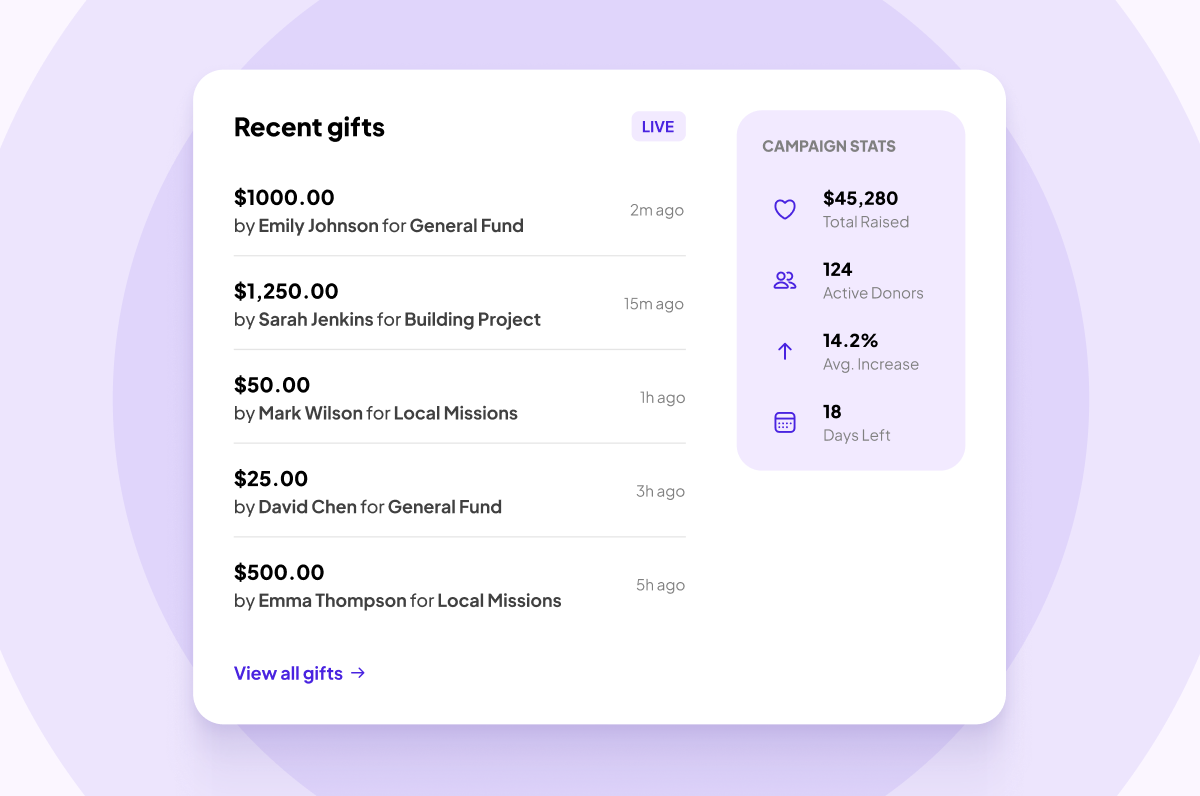
It is the difference between a donor who scrolls passively and one who leans in.
3. Put donors at the center of the giving experience
A donor has found their cause. The page has earned their attention. Now comes the part that should be the simplest: making the gift. Yet this is where a surprising number of donors drop off.
Sometimes the donation form feels disconnected from the page they just experienced. Sometimes donors cannot give the way they want to. Sometimes the options on the form don’t help them decide how much to give or why.
These are small friction points, but they add up. They are also fixable.
Donation options can now be configured with preset amounts and labels. Instead of a blank field and a generic “Other” button, donors see choices like “Fund a Scholarship: $100” or “Sponsor a Meal: $25.” Each option communicates impact, which makes the decision easier and the gift feel more meaningful.
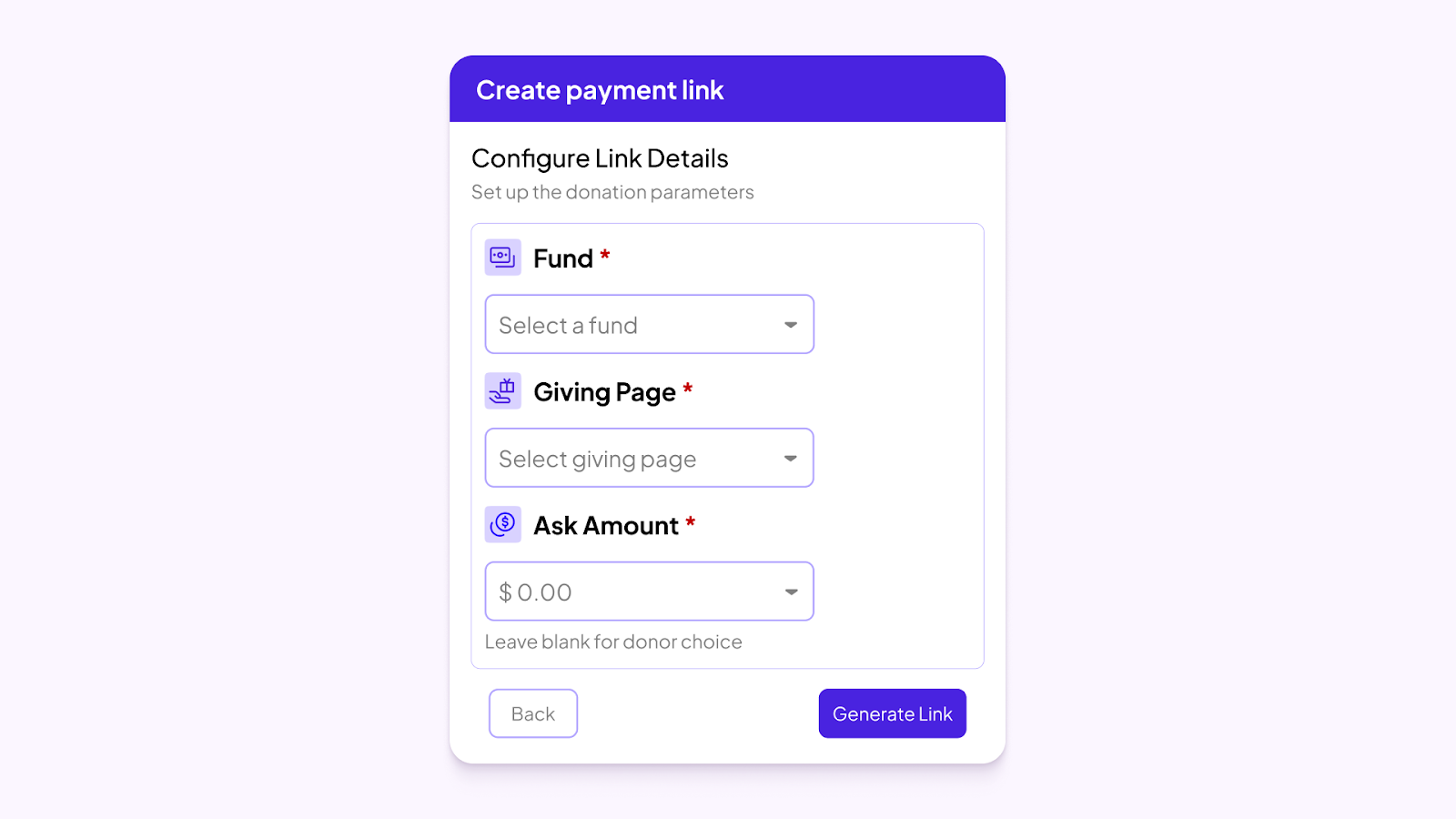
Payment methods matter too. Donors have strong preferences here. If their preferred method is unavailable, some will simply leave. Almabase supports Cards, ACH, PayPal, and Venmo. It now also supports Donor-Advised Funds through DAFpay. DAFs are one of the fastest-growing giving channels, and many donors already have funds set aside for giving. If they cannot use those funds easily on your page, the gift often doesn’t happen. With DAFpay, DAF appears as a native payment option directly in the form, and donors complete the gift without leaving the page.
Across all of this, checkout stays consistent. Whether a donor is giving through a subpage, a main campaign, or a specific fund they searched for, the experience remains the same. The flow doesn’t break. They never lose the thread of where they are or what they are supporting.
What this means for your next campaign
These are not three separate features solving three separate problems. They are one experience.
A donor lands on your Giving Day page and immediately finds the school or cause they care about. The page feels intentional and designed for this campaign, not recycled from last year.
Conversion is not about tricks or urgency tactics. It is about removing every unnecessary step between a donor’s intent and their gift. When the path is clear, people follow it.
That is the goal.
As you plan your next Giving Day, it is worth asking a simple question. Does your giving page help donors find their cause, tell a story worth their time, and make giving feel easy?
If not, the opportunity is right there on the page.
Both Customize Page and Tiered Giving are opt-in. If you are running a simpler campaign, nothing changes. For institutions that need their page to reflect the full depth of what they offer, these tools are in your arsenal!.
.webp)
Why Generic Giving Pages Cost You Donors & How to Fix Them
Learn why generic giving pages hurt fundraising results and how customization and tiered giving experiences help universities increase donor conversion rates.
Fundraising
Alumni are more online today than ever before, and it’s important for your team to meet them where they are. While in-person events should remain the key focus, there are a variety of virtual alumni event ideas that remove the logistics and cost associated with traditional events that you should definitely consider for your event calendar.
With around 52% of event professionals claiming to have just as much attendance in online events, they’re clearly a great tool for community building.
On the flip side, it’s harder to emulate in-person alumni engagement activities in terms of meaningful connections and immersion. Alumni events require incentive to not be ‘just another virtual engagement event’.
Today, we explore 10 virtual alumni event ideas that focus on meaningful engagement and nurturing relationships, along with tips and best practices.
What Makes a Virtual Alumni Event Work (Beyond Attendance)
For both offline and virtual events, attendance is crucial. But by itself, it doesn’t give insights into the outcomes achieved or the relationships formed. Most institutions want an active alumni network that engages with them constantly. For any event to be successful, there are 3 important goals to be achieved:
- Forming new connections, revitalizing older ones
- Providing value to alumni and gaining value from them (financial or otherwise)
- Gaining momentum and scaling alumni engagement activities
Planning virtual engagement events effectively requires a great event management platform that lets you handle things end-to-end, from outreach to follow-up campaigns and everything in between. To realize the goals outlined earlier, keep the following pointers in mind while designing a virtual event:
- Provide a clear reason/incentive to show up - this could be the topic itself (like changing industry trends), the people attending (industry experts, alumni with successful businesses), or exclusivity (an event for the highest donors). This emphasizes the value alumni gain from attending the event.
- Make sure there is interaction every 3-5 minutes - encourage questions, and take time to answer them, host polls, keep the chat active by providing engagement prompts, and organize breakout sessions. This helps the alumni connect with both the institution and with each other better.
- Plan for next steps - virtual events are never one-and-done. Include CTAs throughout. Ask for donations, encourage volunteering, assign mentors, inform alumni about your next event. This builds momentum, which is important for long-term engagement.
Challenges in Virtual Alumni Engagement
Virtual engagement events come with their own set of unique challenges. Most of these are centred around fatigue, lack of engagement, and availability. The major ones that need to be addressed are:
- A lack of personal recognition - Unlike offline events where there are plenty of cues for conversations and recognition, virtual events can end up feeling like a sea of rectangles resulting in attendees feeling anonymous and disengaged.
- Screen/Zoom fatigue - A lack of interaction opportunities can lead to passive participation due to screen fatigue. Alumni struggle to have meaningful conversations and form real connections.
- Logistics hurdles - While virtual events make it possible for alumni from various geographies to attend, co-ordinating schedules across timezones is easier said than done, and international students end up being left out.
- Low engagement - Oftentimes, a one-size-fits-all approach is taken, which doesn’t always provide value to all the segments of alumni. A lack of personalization means a lot of alumni just don’t find the need to engage.
10 Virtual Alumni Event Ideas to Boost Alumni Engagement
Here are 10 high-engagement virtual alumni event ideas.
1. Host Alumni Interviews
At any given time, various alumni are scaling their careers or building businesses. A big perk of being part of an alumni community are the opportunities to learn from industry leaders and entrepreneurs, especially for the ones early in their careers.
You can cover a variety of industries and niches, increasing inclusivity and participation.
Pointers and tips:
- Pick an industry or niche, regardless of whether it’s career guidance or entrepreneurial advice. Tightens the crowd, but increases relevance and boosts participation.
- Prior to the event, collect questions from the attendees
- Keep the format short and engaging - an introduction, 15-minute interview, and a 15-20 minute Q&A session at the end.
- Address current trends and issues with insightful questions like, “How is AI affecting your role/business at the moment?”
- Record the interview for later on-demand access, and post snippets on socials to gain traction and give visibility to the alumni speaking.
Engagement suggestion: Tie the event into another program. For example, assign the speaker as a mentor to interested alumni, or create a poll for gauging interest on further sessions.
2. Live Stream University Events
For a lot of alumni, college events and competitions, especially sporting ones, were an integral part of campus life and tradition. University teams draw forth a sense of pride, competitiveness, and belonging even after graduation, as is evident from events like March Madness every year.
They lean into nostalgia, and attract alumni of all ages.
Pointers and tips:
- Keep it casual and fun. Host a virtual watch party for inter-collegiate events or internal competitions like athletic meets.
- Have a host to keep things interactive. Come up with anthems, chants, and maybe even friendly bets.
- To ensure active participation, have attendees show up with posters, team kits, and slogans, and pick one every now and then to showcase their support for the team.
- Emotions usually run high during these events. Depending on the team’s progression, end the watch party with a CTA asking for donations that will fund sports infrastructure in the institution.
- Include some fun awards like ‘funniest chant’, ‘most creative poster’, etc. and small prizes (a mascot plushie, team kit) for the winners.
Engagement suggestion: Have a virtual breakout session post-match with current and previous members of the team to drive conversations.
3. Host Virtual Happy Hours
Nothing beats a good old fashioned happy hour for candid conversations and forming connections. Alumni can bring each other up to date on their lives, and old friends can reminisce on their university days. It’s usually hard for alumni spread across the world to meet each other informally, and a virtual happy hour makes it easier.
It can also be a way to highlight new initiatives and changes in your institution in a casual setting.
Pointers and tips:
- Take into consideration different timezones, and ensure the timing aligns with everyone. Don’t have a strict schedule or agenda; a one-hour session with activities or prompts sprinkled in works.
- Host smaller groups. Here is where a lot of virtual happy hours go wrong. Since it isn’t a structured activity, having too many attendees will be chaotic and conversations won’t flow as well.
- Have a theme, and related activities. Virtual beer-tasting, custom card games, karaoke, or even an online activity with breakout sessions in-between is a good formula to work with.
- Happy hours work great for younger and middle-aged folks. A mixed crowd opens up new perspectives.
- End the session with a form asking feedback and preferences for future sessions. Assign mentors if the attendees express interest.
Engagement suggestion: Incorporate a fun, low-stakes party game to make it engaging, something like ‘never have I ever’ is great for breaking ice.
4. Conduct Speed Networking Sessions
Networking is a powerful tool for a lot of alumni, and offline, it is a very straightforward process. However, alumni are spread across various industries, roles, and geographies, making it difficult for them to network frequently.
By pairing up early-career alumni with experienced professionals in a particular field, virtual speed networking sessions facilitate knowledge transfer and expose alumni to multiple mentors in a short time period.
Pointers and tips:
- Have small groups of experts and early-career alumni segmented based on either their industry or their field of work.
- The overall session should be around an hour long. Pairs will be shuffled or rotated after 10-minute conversations.
- To make it even more interactive, and to initiate conversations better, provide a set of questions (‘What are the biggest challenges in this industry?’, ‘How have the trends shifted over the past decade?’) or prompts that elicit valuable information.
- Have a notetaker present, and provide transcripts to the attendees to review insights.
- After the session, gather feedback, and match alumni with their desired mentors. Collect preferences for future sessions, and provide the pairs with a flexible program or schedule to ensure continuous mentorship and communication.
Engagement suggestion: Provide a fun, random fact about each person at the start of every rotation (their most ridiculous collection, a niche hobby) to reduce friction and keep things light-hearted.
5. Arrange Virtual Roundtables
For a number of topics like career strategy, job-seeking, business challenges, industry trends, current affairs - group discussions are an excellent way to gain new perspectives, engineer solutions, and stay up to date with the best practices.
Virtual roundtables with compact groups drive impactful discussions, while still being casual and engaging.
Pointers and tips:
- Pick an issue or a topic, and stick to it. This could be decided through a poll or forms sent to alumni beforehand.
- Have every attendee speak their initial thoughts for a short duration, about a minute or so, before jumping into discussion. This establishes their stances early on, and everyone gets a chance to share their views.
- Have a moderator to prevent interruptions or irrelevant content. To ensure active participation, have them pick attendees at random to contribute to the discussion.
- Provide an opening question to kick things off, and transition into informal discussions after.
- Collect feedback, and obtain attendees’ preference for the next topic or issue to deliberate on.
Engagement suggestion: Create live polls throughout the session based on what’s being debated. They provide direction and it’s interesting to learn people’s opinions on matters.
Running any of these events? Almabase helps you manage invites, track engagement, and automate follow-ups so your team spends less time on logistics and more time building relationships.
Book a Free Demo | Explore the Platform
6. Host a Virtual Escape Room
For alumni who may not naturally gravitate toward structured networking events, this format offers a fun way to interact and collaborate with others. It is especially effective for younger alumni and recent graduates.
Pointers and tips:
- Divide attendees into smaller teams of 4 to 6 participants. Each group will work together to solve puzzles, uncover clues, and complete challenges within a set time limit.
- Choose themes that resonate with your alumni base. Mystery scenarios, university-themed storylines, or industry-inspired puzzles can make the experience more memorable.
- Encourage teams to assign roles like note-taker, puzzle solver, and timekeeper to ensure everyone participates actively.
- Have a facilitator monitoring the rooms and offering hints if teams get stuck for too long. This keeps the momentum going and prevents frustration.
- End with a leaderboard highlighting the fastest teams and the most creative problem-solvers. Small prizes or digital certificates can make it more exciting.
- After the event, share the leaderboard and recognize the winning teams across alumni channels. Include a quick follow-up asking participants if they would like to volunteer as team captains or organizers for future virtual events, helping expand your alumni engagement initiatives.
Engagement suggestion: Include one puzzle related to university trivia or traditions. It sparks nostalgia and gets alumni reminiscing together.
7. Organize a Virtual Trivia Night
Trivia nights are simple to execute and highly engaging when done well. They appeal to alumni across generations and are particularly effective for building camaraderie among larger groups.
Trivia themes centered around campus history, pop culture, industry trends, or regional topics can keep things interesting and encourage participation.
Pointers and tips:
- Break attendees into teams so they collaborate instead of competing individually. Teams of 4 or 5 tend to work best for balanced participation.
- Create multiple rounds with different themes. A mix of university trivia, general knowledge, and current affairs ensures inclusivity and keeps the pace lively.
- Use live polls or quiz platforms to collect answers quickly and keep the event moving. Reveal answers immediately to maintain excitement.
- Encourage teams to come up with creative team names and briefly introduce themselves before the game begins. This helps break the ice and adds personality to the session.
- After the event, share a leaderboard and highlight interesting facts or moments from the quiz. Tie the trivia themes to specific university initiatives and include a short follow-up inviting alumni to support those programs through donations or volunteering.
Engagement suggestion: Include a lightning round where alumni submit questions about their time on campus. It turns the audience into participants and adds a personal touch.
8. Conduct Skill Workshops
Skill workshops provide clear professional value and are particularly appealing to alumni focused on career growth or transitions. Sessions can cover a wide range of topics such as leadership, entrepreneurship, emerging technologies, financial planning, or personal branding.
Alumni who have developed expertise in these areas can serve as facilitators, strengthening peer learning within the community.
Pointers and tips:
- Pick a specific skill or topic and keep the workshop focused. Narrow themes tend to attract the right audience and make discussions more productive.
- Structure the session into three parts: a short presentation, a practical activity or demonstration, and an open discussion where attendees can ask questions or share their experiences.
- Encourage participants to actively practice the skill during the workshop. For example, in a personal branding workshop, attendees could draft a short LinkedIn headline or elevator pitch.
- Use polls and chat prompts throughout the session to keep the discussion interactive and gather insights from the group.
- Share resources, templates, or recordings after the workshop so alumni can continue applying what they learned. Invite interested participants to sign up as future workshop facilitators or mentors, helping build a recurring alumni-led learning series.
Engagement suggestion: Ask attendees to submit one real challenge they are currently facing related to the skill being taught, and have the facilitator address a few of them live.
9. Host a Virtual Alumni Reunion
Reunions are a staple of alumni engagement and are often centered around nostalgia and reconnecting with old friends. While traditional reunions are usually held on campus, virtual versions allow alumni from around the world to participate without the need for travel.
This format works well for milestone batches celebrating five, ten, or twenty years since graduation.
Pointers and tips:
- Create batch-specific breakout rooms so alumni can reconnect with classmates they know, while still allowing movement between rooms for broader networking.
- Begin with a short welcome session featuring updates from the institution, followed by time for open conversations and informal catch-ups.
- Incorporate nostalgic elements such as old photos, videos, or short campus tours to recreate the feeling of being back at university.
- Invite a few alumni from the batch to share short updates about their journeys since graduation. This adds depth to the conversations and celebrates individual achievements.
- After the event, send attendees a recap along with a short form asking if they would like to contribute to their batch fund, support scholarships, or participate in planning the next reunion. Milestone reunions are often a strong opportunity to encourage giving back.
Engagement suggestion: Ask attendees to bring an old photo or memory from their time at university and briefly share the story behind it.
10. Host Career Panel Discussions
Career-focused discussions remain one of the most valuable formats for alumni engagement. Panels featuring alumni from different industries or career stages provide insights into evolving job markets, emerging opportunities, and professional challenges.

These events are particularly useful for students and early-career alumni seeking guidance.
Pointers and tips:
- Select a theme for the discussion such as career transitions, emerging industries, leadership journeys, or entrepreneurship. Curate a panel of alumni who bring diverse perspectives.
- Keep the panel concise. A 30-minute moderated discussion followed by a 20-minute Q&A session ensures that the conversation stays engaging.
- Collect questions from attendees beforehand to ensure the discussion addresses topics alumni are genuinely curious about.
- Encourage panelists to share practical experiences rather than generic advice. Real stories about challenges, decisions, and lessons learned resonate strongly with the audience.
- After the event, share recordings and key takeaways with attendees and invite interested alumni to join structured mentorship programs or career advisory groups that support students and recent graduates.
Engagement suggestion: Ask panelists to share one unconventional career decision they made and how it shaped their journey. It often leads to unique perspectives and interesting discussions.
These virtual alumni event ideas can help institutions foster meaningful connections even when alumni are spread across the world.
Check out how Misericordia University transitioned to a virtual homecoming amidst the pandemic here.
How To Promote Virtual Alumni Events
As with any event, attendance still remains the biggest challenge while conducting virtual engagement events. You could plan the perfect event, come up with innovative ideas for alumni engagement, but its success is dependent on pre-event marketing and getting alumni to show up.
Generic emails and a couple of social media posts just don’t cut it anymore. For your event to stand out, you need a multi-channel approach that highlights the event’s value, or the chance to network productively.
Using an event management software to segment alumni based on data helps you design a targeted outreach strategy, and integration with advancement CRMs like Blackbaud's RE NXT streamlines the process. Here’s a quick walkthrough for setting up a killer outreach campaign:
- Determine your audience - Who is the event meant for? Is it for recent graduates? Early-stage entrepreneurs? Speaking to the right audience is essential to ensure relevance.
- Segment your alumni based on various parameters - Having a comprehensive alumni directory helps you build lists and target specific sections of alumni based on class year, location, career field, industry, and prior data on donations and attendance at previous events.
- Showcase value and impact - In the outreach campaign, include the following: what professional or emotional value will alumni take away? What is the specific problem that is being addressed? How does your event differ from the many others?
- Prioritize your channels - For email, build targeted lists and personalize at scale. Use workflows to automate outreach. For LinkedIn, leverage social proof and partnerships. Encourage your speakers to share updates, post polls, conduct quizzes, and consistently share promo.
- Multi-step outreach - Implement an email campaign that generates interest throughout the weeks leading up to the event. Include engaging subject lines; a few good examples are “Career advice from those who’ve done it”, “Prove you paid attention in college”, “Alumni trivia night is back”.
30 days out, send initial emails with the dates and event details. 2 weeks out, highlight speakers or activities you’ve arranged, along with RSVP reminders. A week out, post polls, countdowns, and banners. Record the event to repurpose it for post-event outreach. - Post-event - Send out event recaps and recordings to be accessed on-demand. Snippets on socials generate FOMO, potentially increasing anticipation for upcoming events.
What To Track After Each Event
Tracking event metrics go a long way in identifying what worked and what didn’t. Engagement data is very helpful to determine successful formats, group sizes, and scheduling. Since not all data is useful, track intentionally so data doesn’t end up becoming noise. Focus on metrics alumni leaders care about:
- Event Participation: Track the proportion of registrations to actual attendance. Low registration points to a lacklustre outreach campaign.
- Engagement Rate: During the event, observe poll participation, activity in chat, and retention rate after breakout sessions. Lower engagement is a good indicator that the format, content, or program needs tweaks. It also helps identify active alumni for targeted outreach.
- Mentorship Signups: For networking and alumni showcase events, track the total mentorship signups relative to the total attendees. This helps with determining if value is being provided during these sessions.
- Volunteer Opt-ins: Alumni who sign-up for volunteering are your most engaged prospects. They’re the most loyal, and their relationship should be further nurtured. You can also highlight their efforts in various channels.
- Fundraising/Giving Clicks: If your event involves a fundraising CTA, track click-through rates and donations. This helps you identify committed donors for future stewardship programs and fundraising campaigns.
How Almabase Helps You Run Virtual Events
What exactly do you need to run virtual events smoothly? A database of alumni along with their details and interests (alumni directory), an event management software, and tools for outreach and email campaigns (that can pull lists and data from the CRM).
Almabase’s event management module integrates with your CRM, and has all the features necessary for end-to-end event management – bringing together outreach, logistics, and data into one holistic platform.
Here’s how Almabase helps you run virtual engagement events:
- Targeted invites and list management: With an in-built email marketing tool, you can create segments and pull in outreach lists from your CRM, and setting up email campaigns is a breeze. Almabase tracks email opens, clicks, and bounce rates within the platform.
With the ability to create templates and integrate dynamic personalization, quality outreach can be scaled with ease. Designing and implementing follow-up campaigns for giving, volunteering, or mentorship can be done within the platform, maximizing event ROI. - Setting up registration: Almabase’s platform helps you set up and customize registration pages to align with your brand - without a single line of code. Wordpress integration gives you total control over visuals. Event registrations can get complex, and with Almabase, setting up multiple tiers, ticketing options, discounts, and custom registration flows are highly intuitive.
- Event tracking: Event teams should worry about elevating experiences and flawless execution, not operation workflows or setting up trackers. Almabase offers capacity planning, RSVP tracking, and real-time attendee engagement tracking (quest tracking) for both events and the possible sub-events that might be embedded within.
- Reporting: You don’t need to be a data nerd to evaluate outcomes (or ROI). With pre-built reports encompassing advancement KPIs, Almabase provides all the necessary insights such as participation/giving segmented by class year and region, email engagement for specific alumni sections, volunteer/mentorship involvement dashboards, and in case leadership wants more, a custom report builder.
Your next virtual alumni event could be your most engaging one yet.
Interested in exploring how Almabase can enhance your alumni engagement activities? Book a free demo with Almabase here.

10 Virtual Alumni Event Ideas to Drive Engagement (2026)
A collection of neat virtual alumni event ideas to help you and your team plan the perfect online alumni event to engage and drive giving.
Events
Hari Govind
March 24, 2026
12 minutes
See how leading institutions put these ideas into action