.svg)
Blog Gallery
Build lifelong relationships
Latest stories, guides, and benchmarks from the world of alumni relations, fundraising, donor engagement, advancement services, events, and higher-education philanthropy
Blackbaud recently announced that support for Raiser’s Edge NXT’s database view and related functionality will end on September 15, 2027, affecting several Blackbaud products. These include Blackbaud Online Express and Blackbaud NetCommunity (BBNC). For advancement teams that have spent years building forms, pages, workflows, and other processes around the platform, this means choosing and migrating to a new platform. The prospect can feel like a lot to take on, especially if it wasn't something you'd anticipated.
If you're looking for an alternative, Almabase can help you replace the functionality you currently rely on across these products. We've already covered why teams might be thinking of a move off BBNC and how the main alternatives compare. In this article, we’ll be focusing on what happens once you've made that decision: what the migration process looks like, what your team can expect along the way, and how Almabase approaches the move.
In case you’re evaluating how Almabase stacks up against BBNC, check out our comparison blog here.
There’s also another question that comes up around a platform migration: How much is this going to cost?
This question extends beyond the immediate, visible technical costs. In fact, the technical side of the move might just be the simplest to figure out. It’s the broader, more abstract elements like shifting scopes, changing requirements, or even figuring out the right set of requirements in the first place that could end up costing the most amount of money and time, if not approached thoughtfully.
That's why we want to walk you through the Assisted Fast Pass Migration process upfront: what happens at each stage, what your team is responsible for, what our migration team handles, and where costs may come into the picture. We hope to give you a clear idea of what the move to Almabase will look like before you get started, so there are fewer surprises along the way.
Why transparency matters during a migration
A migration project always begins with an agreed-upon plan. But it’s also very likely that, a few weeks in, you discover a form that needs some additional customization or a request that seemed straightforward seems to fall outside the original scope, on second thought. These are perfectly reasonable hiccups during the migration, but if work is already underway, it could seem harder to understand what you're paying for, and even harder to plan around the rest of the project.
Clear expectations are at the heart of our migration approach, starting with total transparency around what extra requirements cost. With Almabase’s Assisted Fast Pass Migration, each stage gives you a chance to understand what's being proposed, what falls within the standard migration, and where something would require additional work.
Basically, you shouldn't find out about an extra requirement after the work has already been done. Your approval and sign-off comes first. The five steps in the migration process are built around this intention. Let’s get into them.
1. Kickoff: Getting the project off on the right foot
The migration process starts with a kickoff between your team, a dedicated CSM, and an implementation specialist. This is where we get the groundwork in place. This is usually access to your current site, your branding assets, and the dates your team needs to work around.
Another important step here is understanding your calendar and priorities. Your Giving Day, reunion, fiscal year-end, or another major event may determine what needs to happen first and we would be building the migration calendar around it. So, the migration sequence might look a little different for each institution, as each gets to choose which product goes first.
The kickoff is also a chance to flag anything unusual about your current NetCommunity setup.
After years on a platform, it's normal for your setup to have accumulated a few workarounds, custom configurations, or integrations that made sense when they were created. We don't need to solve all of those questions in the first meeting, but we do need to know about them.
That way, we can account for them during the next stage: the inventory. 🤗
Your team mainly needs to provide:
- Key dates and deadlines
- Relevant branding assets
- Access to your existing NetCommunity site
- Any known custom configurations, integrations, or unusual workflows
From there, you can let us take on the heavy lifting.
Your dedicated CSM and implementation specialist work with you throughout the migration, while your team focuses on the decisions and approvals. A migration shouldn't require your advancement team to take on managing a project full time on top of everything else they’re already handling.
Your data doesn't have to wait for the build
Your data migration is handled alongside the rest of the process. Almabase's bi-directional TrueSync integration connects with Raiser's Edge NXT and supports two-way syncing for configured entities and fields, including constituent, event, and gift data.
Admins can also decide which fields update automatically and which should be reviewed before they're pushed or pulled between systems.
That means your team doesn't have to wait until every page and workflow decision has been finalized before thinking about what happens to your data. The data side of the transition can move forward alongside the rest of the migration, with real time decisions being made.
2. Discovery and inventory: weeks one and two
Once kickoff is complete, your implementation specialist carefully starts building a complete inventory of what's currently running on NetCommunity: pages, forms, events, programs, memberships, and other key components of your site.
This process is useful in its own right, especially when taken on by someone external. After years on a platform, it's easy for a site to accumulate things that no one thinks about anymore, simply because they’re too involved in the process. The inventory gives you one place to see what's actually there, anything you might’ve forgotten about, and to make decisions about what needs to move vs what can be left behind.
Probably the most effective part of this is that it's a shared inventory that you can review alongside your specialist. If something looks outdated, doesn't need to move, or needs a closer look, you can flag it before it moves to the new product.
The inventory can surface things like:
- Duplicate or unused event pages
- Old forms or pages that are still live
- Site elements that don't need to be carried into Almabase
- Custom fields and configurations that don’t make sense on the new platform
This idea is to document your NetCommunity site so well that both teams end up on the same picture of what exists and what needs to happen next. The Almabase team handles the actual inventory work, and all you need to do is review the inventory and flag anything that should be changed, removed, or investigated.
3. Sign-off: deciding what moves forward
At this stage, the migration project starts taking on a more defined shape as you decide what you need to bring into Almabase. You and your implementation specialist review the inventory, decide what carries forward, and establish what the finished version should look like.
For each item being migrated, the team, along with you, defines the acceptance criteria before the building begins. If your existing alumni directory has eight fields and three filters, for example, those requirements can be documented as part of the scope. By the end of this discussion, everyone has arrived at the same definition of what needs to be delivered.
This is also where you’ll be able to clearly separate standard migration work from anything that requires additional effort.
If something falls outside the standard scope, you'll know before the work begins:
- What the additional work involves
- What's included and what's excluded
- The estimated effort
- The associated cost
You won’t have to decipher this from the invoice later on, because the work only moves forward once you’ve signed off on the scope.
This is exactly why your input here matters most. The Almabase team handles the building, but it’s you and your team deciding what is important enough to carry forward and what “done” needs to look like, within the standard process or with additional effort layered on.
4. Build and launch: 30 days for each product
Our team takes up building only once you’ve greenlit the scope. Each product gets its own dedicated 30-day track, with the order of products taken up built around your events and fiscal calendar.
This is to accommodate your calendar: giving days, reunions, Homecoming, we’ll build that product first so you’re ready in time for go-live day. If your immediate priority is your broader alumni site, we might begin with building that instead. The point is, even at this pace, you’re not forced to adopt a one-size-fits-all solution. Your implementation team works with you to determine what needs to come first.
The build itself happens on your Almabase pages, so you can review as it gets built while also familiarizing yourself with the new platform.
The timeline typically looks like this:
- 30-day build track: Each product moves through its own focused build.
- Weekly working session: Your team meets with the implementation team to review progress, provide input, and make decisions.
- Training as you go: Your team gets hands-on experience with the platform during the build, rather than waiting until everything is finished to start learning it.
- First launch: The fastest migrations can have their first product live around 45 days from kickoff, depending on the scope and sequencing of your project.
Having the scope agreed upon shows up in smoothness at this point: you can expect fewer decisions to make from scratch during this stage. Your team knows what's being built, your implementation specialist knows what they're working toward, and everything can move as planned, on track.
5. Cutover: moving from NetCommunity to Almabase
As you get closer to launch, the focus shifts from building to making the transition itself as smooth as possible.
The most important part of that is making sure people can still find the things they've been using. Your team receives a redirect map that pairs each carried-forward NetCommunity URL with its new Almabase destination. You'll also want to review where those old links appear outside NetCommunity: your main institutional website, email templates, QR codes, printed materials, and any other places where an old URL may still be in circulation.
The redirect map gives you a clear list of what needs to change and no one has to discover old links one by one after launch.
Before each product goes live, your team gets to review it thoroughly and explicitly approve the launch.
The aim, with these five steps, is to get your Almabase programs ready before your NetCommunity access ends, so the transition remains smooth and doesn't become a last-minute scramble.
What happens when something doesn't fit the standard scope?
Not everything that comes up during a migration falls neatly into the original plan. But there's also an important conversation to be had: what counts as additional scope and what is a limitation in the platform itself?
If something requires work beyond the standard migration scope, that's identified and quoted before the work begins. You can then decide whether you want to take it on.
But if there’s a requirement you have that Almabase cannot support yet, we’ll be fully transparent with you. Essentially, you haven’t asked for too much, we’re just not there yet. Depending on what you need, the team can look at a workaround or determine how the functionality could be addressed after launch.
This conversation is also one of the reasons the earlier stages matter. The shared inventory, defined acceptance criteria, and upfront scoping give everyone a common reference point throughout the project.
That's really the principle behind the entire migration process. You're not expected to know every detail of what needs to happen before the project starts. The process itself is designed to show you those details early, give your team a chance to make the calls that matter, and keep the build moving while minimizing unexpected, last-minute surprises.
Ready to make the move?
A BBNC migration may not have been on your roadmap, but that also doesn't mean it has to become a project that takes over your team's calendar.
With a clear process, an agreed scope, and the right support, you can move the parts of NetCommunity that matter to your team and work for your institution without having to figure everything out as you go. The Almabase team handles the build and migration work, while your team stays in complete control of the decisions, priorities, and final approvals.
And because the scope and any additional costs are addressed before the work happens, you can go into the migration knowing what to expect.
If you're planning your move away from BBNC, let's talk about what it could look like for your institution.
Talk to the Almabase team about your BBNC migration →

Moving from BBNC to Almabase: The Assisted Fast Pass Migration
Blackbaud is sunsetting support for Raiser’s Edge NXT’s database view and related functionality in September 2027. Learn how Almabase replaces your current functionality and how our Assisted Fast Pass Migration makes for a smooth switch without disrupting your campaigns or operations.

Anwesha Kiran
September 10, 2026
12 minutes
A paddle raise (also called a fund-a-need) is a great and simple fundraising format for nonprofits. It is easy to host, fun, and similar enough to auctions that if you have experience in one, you can easily incorporate the other.
All this is to say that, with proper planning, it is one of the most effective ways to get donations for your nonprofit or a particular project.
In this blog, we’ll look at what makes a typical paddle raise work, its benefits, and the essential steps to start hosting one on your own.
What is a Paddle Raise?
A paddle raise, also often called fund-a-need, is a live, direct appeal during a fundraising event such as a gala where donors pledge a financial contribution to a nonprofit, charity, or a particular cause. This is usually done by raising paddles containing varying numbers or ‘levels’, or through bidding devices and software.
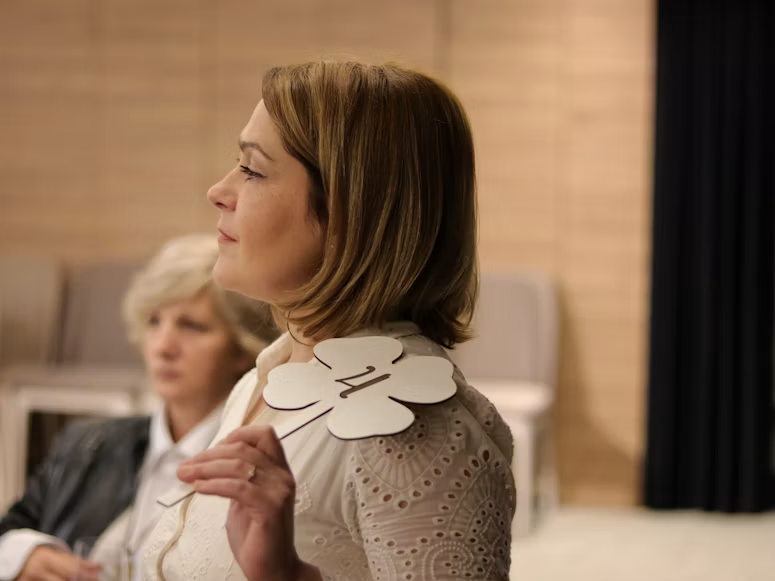
Unlike charity auctions though, there aren’t any items or art involved, and attendees will not be bidding on a piece. An ask is made, and donors willing to contribute that amount raise their paddles. Due to the simpler setup and direct contributions, paddle raises have high ROI and are generally considered to be very effective.
How does a Paddle Raise work?
Usually taking place at the peak of the fundraiser, a paddle raise takes around 10-20 minutes (it happens quite quickly). This is typically how it unfolds:
- A designated speaker or emcee gets the event rolling by showing a video or narrating a quick story that introduces and emphasizes the impact of your mission.
- The emcee announces the fundraising target for the night, or if there are multiple causes, the goals for each.
- Tiers of contributions are planned beforehand ($10k, $7.5k and so on), and the emcee starts with the highest tier and works their way down to the lower tiers. When they ask for contributions, attendees express their willingness by raising numbered paddles.
- Volunteers and staff keep track of all the pledges and note it down.
- After going through all the tiers, the pledges are processed, and the total amount raised is announced. Attendees are thanked for their contributions and the event draws to a close.
Now that we’ve gone through what a paddle raise is and how it usually plays out, let’s get to how you can run one of your own.
How to Run a Successful Paddle Raise (Step-by-Step)
While paddle raises are simple enough in concept, they do require proper planning and coordination to capture pledges accurately and create good energy overall.
Here’s how you do it:
1. Pick the right cause/project for your targets and set your targets
Paddle raises are a lot more effective if you can tie them to a specific initiative that makes donors feel like they’re making a meaningful impact. It could be an annual raise for cancer, providing education to underprivileged children, etc.
Set a tangible goal and be clear on where the money goes. Sharing this with your donors builds trust. The goal shouldn’t be so high that hitting it feels impossible. All in all, you want to set a realistic but fairly ambitious figure.
2. Decide the contribution levels or tiers
You should aim for 5-10 levels and make sure it’s inclusive of everyone’s giving capabilities. You can discuss with your pre-committed donors (more on that later) to decide amounts for the higher giving tiers (or conversely for lower giving tiers depending on the situation).
This is where having a regularly updated donor database helps greatly, as you can base your levels off of giving history and data.
A basic example would be to have $15k as the highest tier, followed by $10k, $5k, $2k and so on all the way to $50. Remember that you have to be inclusive, so don’t skimp out on small or micro-level contributions.
3. Pick your emcee or host
The emcee is critical in setting the stage and the energy before the raise begins. An enthusiastic crowd can make a massive difference in contributions. If possible, hire a professional emcee who has been on the mic for other charity events before. You know your donors best; use that knowledge to pick out a host that can connect with them and elevate the room accordingly..
Alternatively, if your organization has deep ties with the attendees, you could consider a leadership figure (directors, chair, etc.) for familiarity. Of course, they need to be a good orator as well.
4. Decide the schedule and script
Since a paddle raise is relatively short, decide when the paddle raise should take place during your fundraising event or gala. You should aim to host the raise during the peak of the fundraiser, when everyone is energetic and receptive to instructions from you or your host.
Come up with a script, including your opening statement, tier announcements, anecdotes, and expressing gratitude at the end. Have alternative scripts ready for different scenarios since you can’t always predict if you’ll hit your target, overshoot it, or come close.
5. Pick the right tools for your event
You can choose to host your paddle raise with either physical paddles or through bidding software, though incorporating the former is heavily recommended.
You’ll need to assign numbers to each attendee and give them a paddle with the corresponding number. When a certain giving tier is called out, they can choose to pledge that amount by raising the paddle while volunteers keep track of it.
If you’re opting for a digital process, look for mobile-friendly bidding platforms. There are some other options as well like scanning QR codes to pledge. However, keep your attendees’ preferences in mind and try to find a balance between their experience and your team’s feature set. This is important, since the bidding and giving data will need to be synced to your CRM.
6. Running the paddle raise itself
When opening your event, it helps to set the energy high. Start with the mission statement and targets you set earlier. Here’s where the emcee does the heavy lifting. Videos and stories with emotional angles work really well at establishing a connection with your donors and creating empathy for your cause. If you have first time donors in the mix, a quick explanation of how the paddle raise works would also be helpful.
Make sure your volunteers are in place to clearly record everything. The emcee announces the levels in succession, starting with the highest one and working their way down.
Seeing major contributions right at the start might encourage the others to go beyond what they had originally planned. Make sure that the emcee acknowledges and celebrates pledges briefly for each tier before moving on to the next one.
How your staff records the pledges is up to you. You can use an app, spreadsheets, or simply pen and paper. Choose whichever would be the most convenient and accurate for your team.
7. Gratitude and stewardship
After going through all the levels, tally the total amount raised and announce it as the event draws to a close. Celebrate the impact everyone has created on the day. Tying the money raised to a tangible outcome (for example, 50 scholarships granted for struggling children, or feeding 100 people) creates even more positivity and really drives home a sense of accomplishment and giving.
After your fundraising event, follow up with your attendees to collect the pledged amounts, preferably within a day. Include key details like their paddle number, amount they pledged, and multiple payment options. Thank all the participants, regardless of whether they donated or not.
A Few Tips to Enhance Your Paddle Raise
Here are a few extra things to ensure you get the most out of your paddle raise(s):
- Pre-committing a handful of donors: Reach out to some of your long time supporters, and ask for an early commitment to a particular level, especially the higher ones. Hesitation in the opening rounds of the raise can affect the overall contributions negatively. When attendees see paddles being raised immediately even at higher tiers, it gives them confidence to donate more.
- Host it at the right time: If your paddle raise is part of a larger fundraising event (as is most common), avoid doing it right after a meal break when attendees are a bit languid, or at the very end of the event when a lot of them have left already.
- Celebrate milestones during the raise: Every time you get significantly closer to hitting the day’s target, celebrate it. For example, if your goal is to raise $30000, then announce and celebrate when the contributions reach $5000, $15000, maybe hit a gong at $25000, and so on. Also, make sure to recognize all contributions, big or small, with equal excitement.
Almabase - A Powerful Tool for Hosting Your Paddle Raise
At its core, a paddle raise is fairly simple. But behind that simplicity is a lot of manual tracking like volunteers noting down pledges, someone tallying totals, and follow-up calls or emails to actually collect what was pledged. This is usually where a platform like Almabase can take some of that load off your team.
Instead of clipboards and spreadsheets, Almabase gives you a real-time dashboard of the event as it unfolds, so pledges don't need to be re-entered after the fact. Since collecting payment is often the trickiest part, you can also capture a guest's card at registration and charge pledges automatically once the raise wraps, rather than chasing donors down individually.
A couple of other things worth mentioning: contributions can be routed straight to the fund or project they were raised for, and everything syncs directly with your CRM so your donor records stay accurate without extra data entry.
None of this replaces a great emcee or an emotionally engaged room, but it does mean less time spent staring at numbers, and more time celebrating what you raised.
Request a personalized demo to see how this would look for you!

How to run a successful paddle raise (fund-a-need) at your event
Learn what a paddle raise is, how you can run one successfully, as well as a few tips to make your paddle raise stand out.
Hari Govind
September 4, 2026
12 minutes
Modern donors expect deeply relevant, personalized communications, especially when it’s alumni hearing from their alma mater. Generic messages won’t cut it, but it can also be difficult to make your appeals stand out when you’re making the same ask every year. To develop annual fund appeal letters that drive revenue and deepen relationships, you need a strategic approach.
Annual fund appeals succeed when they have refined messaging, emotional resonance, and enough variation to win donors’ support outside of flashier, major campaigns. In this post, we’ll explore a few key ways to elevate your university’s next ask.
1. Center Authentic Student Storytelling
Donors give to people, not institutions, making personal narratives one of the most effective fundraising and marketing strategies you can use. By shifting the focus from university-wide achievements to the tangible success of individual students, you foster a direct emotional connection with your audience and demonstrate the real, lasting impact of their donations.
Instead of relying on generic asks for annual fund appeal letters, incorporate the stories of individual students and the scholarships and programs that empower them to thrive. For instance, you might share how a first-generation nursing student used a grant to complete their clinical rotations, or include a quote from a scholarship recipient about how attending your university made their dreams a reality.
No matter how you incorporate storytelling into your appeals, Meyer Partners recommends using the three R's of storytelling to make them as impactful and ethical as possible:
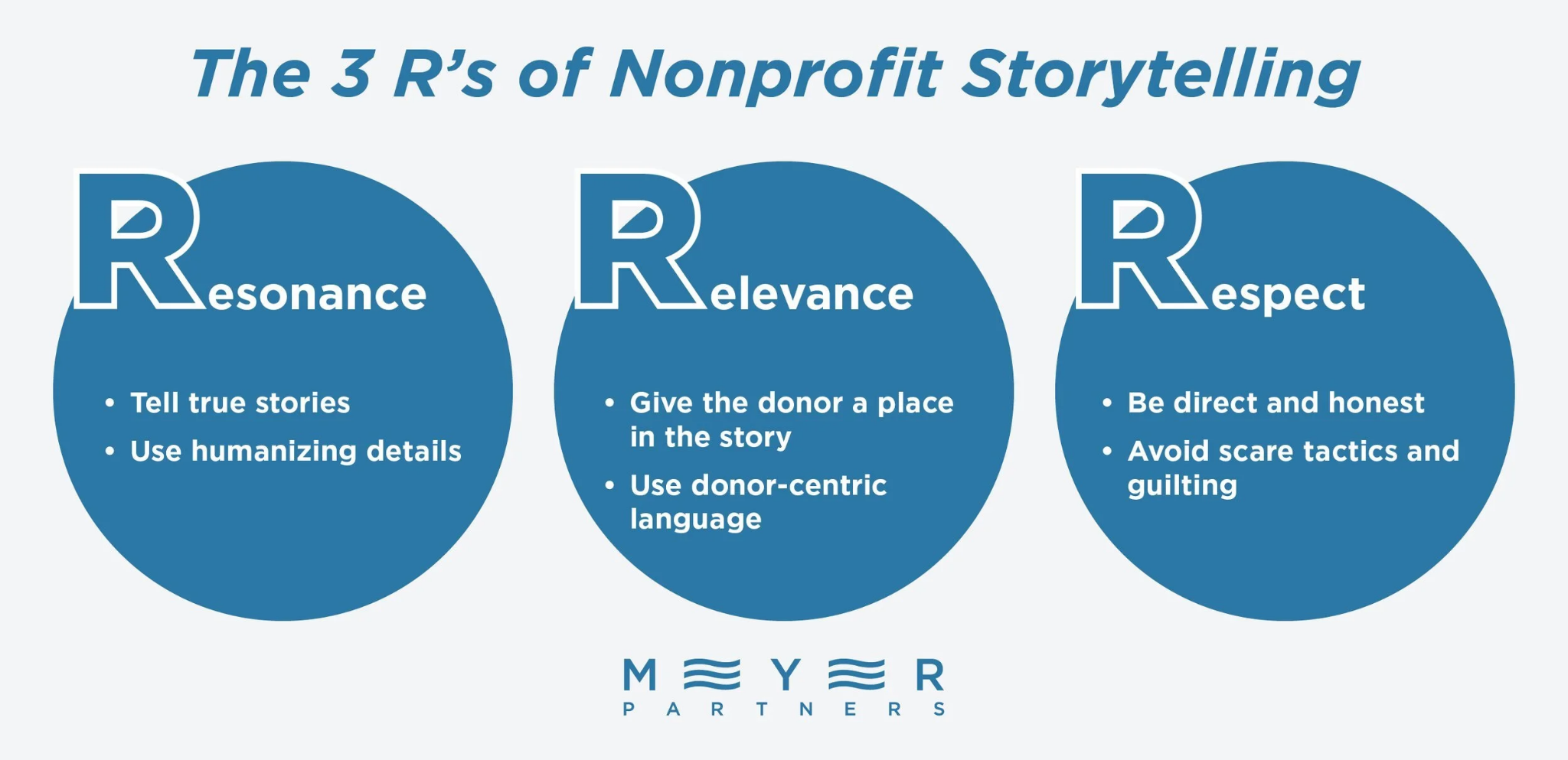
- Resonance: Every story should include real, humanizing details that resonate with donors. Let students tell their stories in their own words, and pair testimonials with photos whenever possible.
- Relevance: Make sure the donor can clearly understand their role in the story. Use donor-centric language that appeals directly to supporters’ values, inspiring them to become the changemakers who support the next generation of students.
- Respect: Respect both your readers and your storytellers by maintaining authenticity. Be direct and honest about what donations can achieve, and always focus on positive emotions like empowerment rather than guilt or scare tactics.
Incorporate these stories into multiple elements of your annual fund campaign to ensure maximum visibility and consistency. For example, you might include quotes from a student in your direct mail appeals, then post a selfie video of the same student telling their story on social media.
2. Highlight Impactful Giving Opportunities
To maximize revenue and increase average gift sizes, ask for more than standard, one-time cash gifts in your annual appeal letters. Offer additional giving options that provide greater flexibility and can increase donors’ long-term impact. These opportunities are often more compelling, especially for young alumni looking for accessible options and for high-capacity donors looking to make the most of their donations.
Specifically, use your annual appeals to highlight opportunities like:
Matching Gifts
The easiest way to make supporters’ donations go further is to double them. Typically, donors can double the impact of their gifts at no extra cost in one of two ways:
- Your university offers a matching donation challenge. Organizations often partner with a major donor who commits to matching every dollar donated within a set timeframe, up to a certain amount. These challenges motivate individual donors to give urgently so they don’t miss out on the match.
- Donors request corporate matching gifts from their employers. At any time, donors who work for participating companies can independently request matching donations from their workplaces. If the request meets the employer’s guidelines (e.g., a donation between $10 and $100 to a registered 501(c)(3) nonprofit), they’ll match their employee’s gift.
Either way, donation matching is a powerful motivator, especially during year-end giving season. Feature matching gifts prominently in your annual fund appeals, explaining how to participate and why these donations are so impactful.
Recurring Giving
Imagine you’re a recent graduate just starting your career and trying to pay off student loans. You wouldn’t want to donate $1,000 to the university you left last year, but it might be feasible to give $20 a month. In this case, you’re much more likely to respond to an appeal that highlights recurring giving.
Recurring gifts offer a more manageable opportunity to support your university while deepening donor relationships. In your annual fund appeal letters, include the option to give monthly and provide several accessible donation tiers.
Legacy Giving
Plant the seed for long-term support by introducing planned giving and bequest options in your annual appeals, too. These avenues empower alumni to leave a lasting mark on your institution without requiring an immediate, large-scale donation.
Even if most donors aren’t ready to commit to a legacy gift right now, just including information about planned giving in your appeal can get them thinking about it. Include links in emails and QR codes in direct mail letters so supporters can easily learn more on your university’s website or request a meeting with your major gifts officer. Note each donor who shows interest in the program so you can cultivate the relationship over time.
3. Leverage Donor Data for Highly Personalized Appeals
The best fundraising strategies reflect the unique relationship each supporter has with your university. Highly personalized appeals show each donor that you value them as an individual and respect their unique contributions.
Use your donor and alumni data to tailor your asks as much as possible. Go beyond addressing recipients by their preferred names—reference their specific past involvement, giving history, and personal connections to the university. Acknowledging that an alumnus was on the debate team or that a donor consistently supports the engineering department validates their identity and gives them clear, specific reasons to give again.
Segment your donor lists in several ways to maximize relevancy, and regularly audit your donor database to ensure all contact information and engagement records are accurate before sending appeals.
If you aren’t sure how to best segment your audience, hone in on the highest-value potential donors, or match supporters with the right requests, consider professional donor analytics services. Experienced fundraising consultants who specialize in data analysis can help you optimize your strategy for this year’s annual fund appeal and well into the future.
An effective annual fund approach relies on deep personalization, authentic narratives, and a variety of flexible giving options tailored to your audience. Upgrading the underlying strategy of your communications with these tips will help you build stronger relationships with alumni and secure the financial future of your core programs.

3 Ways to Build a Better Annual Fund Appeal for Higher Ed
Asking for donations to your annual fund can feel repetitive, but your appeal letters shouldn’t be. Learn how to develop better annual fund appeals here.
.jpg)
Alyssa Jefferies
September 3, 2026
12 minutes
LinkedIn continues to stay relevant for alumni outreach in 2026 as it is one of the most comprehensive self-updating directories from an advancement standpoint. Over 50% of LinkedIn’s user base holds a higher-education degree, and ~53% of US college graduates are active on the platform.
That means your alumni not only present but also likely engaging with a variety of content. But as far as reaching out to them goes, being present on LinkedIn and being reachable are two different things, and the wrong outreach strategy can disinterest or even alienate alumni.
In this blog, we’ll go through whether LinkedIn is worth your time for alumni outreach and how you can get your alumni’s attention effectively.
Is LinkedIn outreach worth the investment?
Let’s start with understanding why LinkedIn is different from the other channels
LinkedIn InMail gets a 10–25% response rate while cold email, by comparison, sits at 1–5%. The platform’s natural context is also a big factor here because when an alum receives an InMail from their alma mater, it’s in a different environment to when they’re sorting through personal emails and family messages. They log on to LinkedIn with a certain mindset, which makes them more open to professional conversations.
LinkedIn also gives outreach teams more context about who they’re reaching before they begin the process such as:
- Where an alum works currently
- What they’ve recently posted
- What groups and communities they’re in
- Who the common connections are
That’s a lot of helpful material to tailor the first message that will hopefully be the start of a donor’s journey. Combine all of this with the social media nature of the platform and you get a channel that has a lot of potential if you approach it right.
LinkedIn Alumni Outreach Strategies
Now that we’ve established that LinkedIn is at least worth a look, let’s set your team up for success so that your messages don’t go ignored.
1. Build an Active Presence Before You Send a Message
Advancement teams (and most teams in any field, to be fair) tend to treat LinkedIn outreach the same way they’d treat a cold email campaign. They find the person, write the message, hit send, and hope for the best.
But LinkedIn is, at it’s core, a social network. Your alumni notice who’s following you, who’s commenting on your posts, and whether your institution has a solid presence on the platform. If your university’s LinkedIn page hasn’t posted in months and the last post was a stock photo of a campus building, it hurts your cause already.
Before you start an outreach campaign, make sure you tick all these boxes::
- First, make sure your institution’s LinkedIn page is active. Posting once per weekday helps you reach 60% of your followers in a month. You should be aiming for consistent presence over viral content.
- Secondly, look for mutual connections, a shared connection increases reply rates by 27%. If a colleague or another alum is already connected,
- Thirdly, follow the alum you plan to message and leave a genuine comment on something they’ve posted. If possible, build and nurture your online relationship with them. You should be looking to gain a follow-back. This can be crucial since alumni who already follow your institution are 81% more likely to respond to your InMail.
2. Build a Segmented List
Use your CRM along with LinkedIn's alumni search tool to understand who you will be sending your messages to. Many alumni engagement tools also allow you to better find, segment, and automate outreach to the right people.
The segmentation itself will be crucial as personalization is a big part of making your message stand out (as we will explain later), so take your time and make sure all your segments and alumni information is updated, synced, and ready to go.
3. Get the Subject Line Right
LinkedIn InMail by default gives you a 200-character subject line limit. When an alum receives your InMail as a notification, they see roughly 25 to 40 characters before the preview cuts off.
For this reason, short, specific, and personalized subject lines can work really well. For example: “A quick question from [University]” or “Connecting with [Name] re: mentorship”.
What won’t work on the other hand, is anything that sounds like a mass email campaign. Something like “Exciting news from the alumni office!” might feel generic or may confuse recipients.
4. Keep the Message Short and Simple
LinkedIn’s own data shows that InMails under 400 characters get higher response rates. Many institutions sometimes write messages much longer than this and have their messages scrolled past.
For your first message, your alums only need enough to understand what you’re asking and if it's worth their time. If you have more context to give and more reasons to say why this outreach matters, that can follow later.
Write a ~300-character message that asks one clear question. The message can address the basics such as who you are, why you’re reaching out, and your one specific question.
5. Personalize Beyond the Name
Alumni can tell if a message was written for them or if someone just replaced a mail merge field, so you’ll want to go further than just swapping people’s first names. Here’s a few things that might help with personalization:
- Spend a couple of minutes on the alum’s profile; personalized InMails increase acceptance rates by about 40%, according to LinkedIn data. Mention a recent post they made, a project they were publicly credited for, a career transition they just went through, or a shared connection.
- Find a good natural connection between what you discover about them and what you’re reaching out about. If you’re inviting them to a career mentorship panel and they’ve been posting about early-career development, mention that. If you’re reaching out around their 10-year graduation anniversary, you definitely want to acknowledge it.
- Avoid mentioning generic and obvious things like “I see you graduated from [University].” Good personalization shows you’ve paid attention to their life after graduation and you have a brief window that you want to make the most out of, especially for less-engaged alumni.
6. Templates for Common Outreach Scenarios
Here are some templates that you could borrow and build on to personalize your next outreach message on LinkedIn:
General reconnect:
"Hi [Name], congrats on the move to [Company]. I'm on the alumni relations team at [University]. We're putting together a small group of alumni at your career stage to get some honest input on our programs. Would a 15-minute call work?"
Mentorship opportunity:
"Hi [Name], I work in alumni relations at [University]. Saw your recent post on [topic] and thought you'd be a great fit for our mentorship program. We're matching alumni with students in [field]. Would you have 30 minutes to hear more?"
Upcoming event:
"Hi [Name], I'm with alumni relations at [University]. We're hosting a small dinner for [City] alumni on [date] and wanted to make sure you were on the list. Can I send you the details?"
Giving day:
"Hi [Name], [University]'s giving day is [date]. This year all gifts are going toward [initiative]. Wanted to reach out personally before things kick off. Can I send you a bit more context on what it supports?"
What each of these has in common is one clear ask and customization that shows the sender did their homework before reaching out.
7. Time Your Outreach Well
LinkedIn data shows that Friday and Saturday see 4% and 8% fewer than average responses, respectively. Your alumni may want to relax and disconnect from the professional world on the weekends, so Monday through Thursday is a good window. However, depending on your event calendar, and past alumni engagement data, this can vary a bit so do double check!
Going back to the mentioned window, Sprout Social's analysis of nearly 2 billion engagements across major social platforms points to Tuesday through Thursday, 11 a.m. to 5 p.m., as LinkedIn's peak activity window. That's when professionals are most actively checking and responding on the platform, so it's your best shot at being seen before your message gets buried.
8. What to Do When Alumni Reply
Your next message after an alum replies sets the tone for the entire conversation that follows and the subsequent relationship. So here’s a few things to keep in mind:
- Reply quickly, ideally within a few hours of seeing their response.
- Thank them by name and reference something specific from their reply.
- Remember that this is a conversation on a social platform.
The goal should be to establish that your team and, by extension, your institution has a real interest in keeping in touch with them after graduation. For this reason, you’ll want to:
- Find out what they’re working on.
- Ask follow-up questions.
- Make it clear that there is no immediate ask attached.
💡This doubles as an opportunity to get updated information in case their profile information hasn’t been updated in a while.
Alumni who are connected to their institution are 23 times more likely to donate than those who aren’t. That connection, however, has to be built through consistent, genuine interaction over time. So, when it’s time to make an ask, it’s coming from the context of the conversation.
Build a LinkedIn Alumni Community (and not just another contact list)
At the end of the day, one-on-one outreach can only take you so far. Advancement and alumni relations teams that are able to keep alumni engaged are also building environments where alumni feel like they want to stay engaged.
If we are sticking to the platform at hand, LinkedIn Groups are a great way to do this. You can organize alumni groups around:
- Your institution
- Graduation cohorts
- Academic departments
- Regional chapters
- Donor groups
- Matching gift opportunities
…and much much more
AdvancementForm looked at what the institutions running active alumni groups have in common. Here are the main takeaways:
- Stay active every day: Keith Hannon of Cornell University shared that two-thirds of alumni relations professionals running thriving LinkedIn communities log in daily. That includes posting, answering questions, responding to comments, and engaging with what other members are sharing.
- Give alumni the spotlight: Spotlighting a graduate's career achievement or resharing something they wrote brings their audience into your content. Even the simple act of tagging alumni where needed will ensure that their network is notified as well.
- Share career resources such as job postings, industry reads/insights, career advice for alumni at different stages and make sure they are updated frequently. This is the content that consistently performs well as it provides a clear reason to engage.
- Mix up your content formats: Posts with images get a 98% higher comment rate than those without, and posts with YouTube videos (that play directly in the feed) get a 75% higher share rate. Varying your formats will keep the feed from feeling like a broadcast channel.
- Ask alumni to help current students: Academic Impressions flags this as an especially meaningful way to engage alumni because it gives them an opportunity to give back give back, even without a financial element. Posting something like "What do you wish someone told you in your first year in [industry]?" gets replies from alumni who would otherwise never comment on, say, an event announcement.
- Run polls: Lebanon Valley College asked their alumni "What career field are you currently in or looking to enter?" and it sparked a lively, ongoing discussion among their alumni. Polls can be a great icebreaker and contextualizing them to recent events, career stages, or other segmented needs is even better!
- Add in the nostalgia angle: Questions and posts about campus memories or institutional history give alumni interactive content that serves as a break on their feed from the usual LinkedIn content while also reminding them of why they feel connected to their school.
Finally, if you're thinking about content ratios, keep it weighted toward value-first content, career resources, alumni recognition, and conversation, with campaigns and event promotion playing a supporting role, not leading the feed.
Measure Your Progress and Know Your Blind Spots
You need to know whether your efforts are paying off. So, if you’re running structured outreach campaign on LinkedIn, here are the metrics which will help you track what's working:
- Connection acceptance rate: You generally want to aim for ~20% or above. If you're below that, check whether you're warming up contacts before sending requests and whether your institution's page looks active and credible.
- InMail response rate: With personalized, well-targeted outreach, this should sit between 10–25%. Single-digit numbers are an indication to look at your message length, your subject line preview, and how specific your personalization is.
- Conversation-to-action rate: This tracks what percentage of replies converts into whatever your goal is, whether that’s an event registration, a scheduled call, or a gift.
The Council for Advancement and Support of Education (CASE) tracks alumni engagement across four modes: philanthropic, volunteer, experiential, and communications.
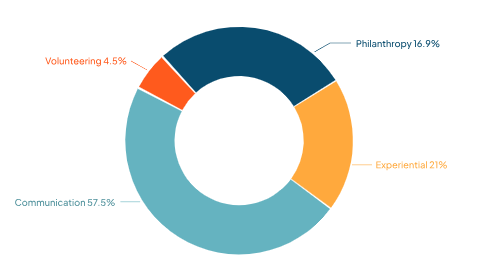
LinkedIn activity can feed into your experiential and communications metrics. If you’re not tracking LinkedIn engagement as part of your overall alumni engagement scorecard, you should consider starting now.
A few common blind spots that can be avoided include:
- Reaching out only when there's an ask: If alumni only hear from you around giving day or annual fund season, the outreach feels transactional. Only 27% of alumni who donate give to their alma mater. The most common reason others don't give is because they don't feel connected enough to make it a priority.
- Writing LinkedIn messages like emails: Avoid long messages, formal language, attached PDFs when LinkedIn is conversational. Keep messages short, and the tone conversational.Save the documents for follow-up conversations.
- Ignoring alumni who engage with your posts: When an alum comments on something your institution shared, respond to them, thank them by name, and if appropriate, send a connection request with a brief personal note referencing what they said.
- Not knowing what comes next when someone replies: Replying to a message without a clear next step might waste the opening you had spent time and effort on. Know what you’re trying to accomplish before you send the first message so that when someone replies, you’re ready to take the conversation forward.
Final Thoughts
We hope we’ve been able to give you and your team plenty of things to keep in mind. While LinkedIn outreach may seem like a simple game of numbers at first glance, any outreach campaigns involving social media rarely tend to be so predictable and you definitely want to keep that in mind.
To wrap things up, keep personalization (and segmentation by extension) at the heart of your strategy, have a consistent presence on LinkedIn just as you probably do with Facebook or Instagram, and make sure you are thinking about how to take the conversation forward many weeks ahead of time so that alumni feel appreciated after reacting to your outreach.
If you are looking for an alumni engagement platform to help you plan, execute, and measure your alumni outreach and engagement strategy, Almabase is built just for that so feel free to book a personalized demo with us!
How to Reach Out to Alumni on LinkedIn and Get Responses
Our article takes you through LinkedIn alumni outreach and how your team or institution can ensure that your alumni don't ignore your messages.

Prajnya Yelamali
September 2, 2026
12 minutes

As alumni events grow, so do the headcount and the complexity in executing them.
A Homecoming weekend, for example, has so many things to plan for and keep track of: registrations, sub-events, guest management, communications, fundraising, check-in, CRM updates, reporting, all happening simultaneously. This is a whole different ballgame than just a bigger pool of attendees.
Every successful event, whether it's a regional chapter gathering or a multi-day Homecoming celebration, moves through the same five stages:
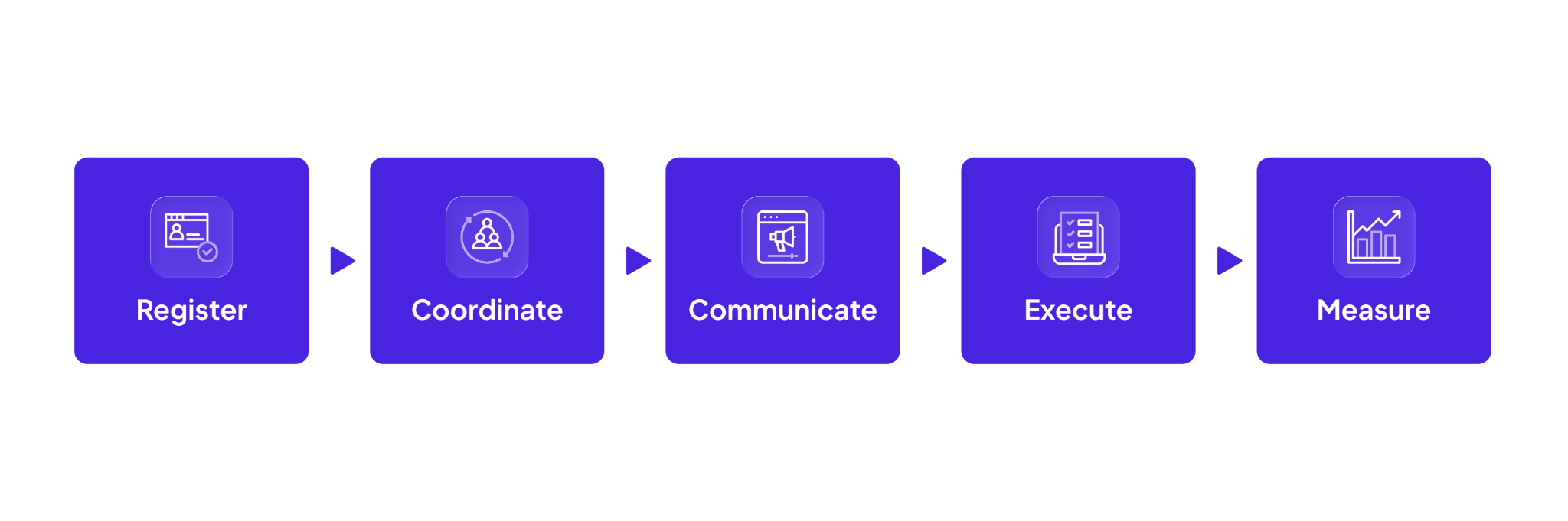
A Homecoming weekend or a Giving Day means these same five things, but now alongside multiple sub-events running in parallel, attendees taking completely different paths through the weekend, tighter timelines to pull it all together, and more data flowing between more systems than any one person can track by hand.
These learnings are gained over time and Almabase is built around them to support the entire event lifecycle, from the first registration to the insights that shape the next event.

1. Event Registration Experience
Getting alumni to register sounds straightforward, but the complexity could already start building at this stage.
Attendees RSVP and bring guests, or sign up for a single session before opting into several others, which may carry different pricing tiers. Sometimes, they even change their minds midway through.
The organizers’ goal is to accommodate these compounding decisions seamlessly. A good registration experience makes all of these as effortless as possible, for attendees and for the team behind the scenes.
No-code event pages, built by your team
Regardless of when you start planning, your event page should be something your team can build themselves. It is very likely that you’ll need to make last-minute adjustments to keep up with changes to your strategy.
Almabase lets you build fully branded event pages with no code, reuse templates across events, and publish quickly while keeping everything aligned with your institution's visual identity.
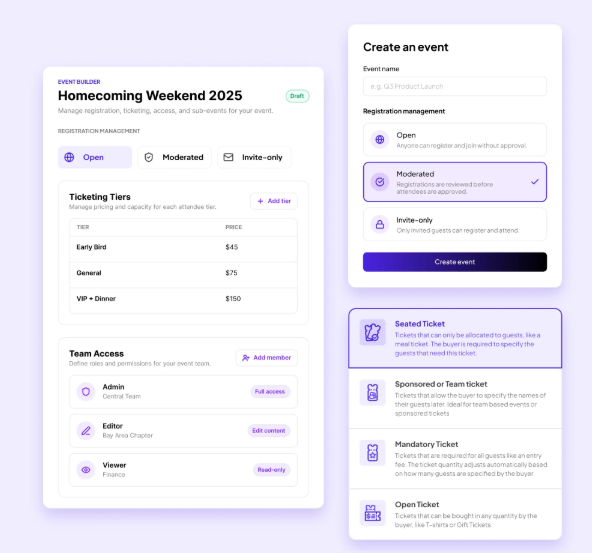
The result is faster launches and one less external dependency when timelines tighten close to event day.
Managing multiple events in one
Think about a typical alumni weekend or events scattered throughout spirit week. On the guests’ end, someone signs up for the Friday evening reception, skips the Saturday morning campus tour, buys tickets for the gala, and brings two guests to the football tailgate.
Behind the scenes, every one of those activities has its own capacity, schedule, pricing, and attendee list. If your systems don’t keep up at this point,tracking individual attendee schedules and ticket details becomes overwhelming. Information will slip through the cracks.
With Almabase, you can organize all of those experiences under one parent event, while giving each sub-event its own registration flow, ticketing, capacity limits, and logistics. Alumni still enjoy one seamless registration journey, while your team manages everything from a single backend instead of juggling multiple event pages and spreadsheets.
Cornell College runs its entire alumni program with 15,000+ alumni on a lean team, and it shows in what they've been able to pull off with one connected system: 1,008 donors on Giving Day, a 4.7/5 participant rating, and 430+ Homecoming attendees, all without adding headcount.
Read the full blog here.
Attendees register in groups
Reunions are designed around reconnecting with classmates, old roommates, mentors, partners, and sometimes introducing children to the campus that's featured in so many family stories. The point is, these are not solo events, and the registration should reflect that.
Instead of asking every guest to complete a separate registration, Almabase allows alumni to register together. Families, spouses, classmates, and other guests need not separate out in the registration process, making for a smoother experience while helping your team keep relationships and headcounts organised.
Forms that adjust based on who's filling them out
You don’t want a reunion volunteer to see the same questions as a first-time attendee, and someone attending only the gala shouldn't have to scroll through options for every campus tour.
This is solved by the conditional questions that can be used in forms built with Almabase.
Based on an attendee's answers and preferences, you can choose to surface different questions, sessions, ticket options, or pricing automatically. The form adapts as people move through it, keeping the experience simple while ensuring your team still captures the information it needs.
While it is a small detail, saving your attendees unnecessary information overload definitely adds to their experience.
Let attendees manage their own changes
A tale as old as time, and perhaps the most unsurprising: a delayed flight means swapping the morning session for the afternoon one, or someone remembers (well after registrations have closed) that they wanted to bring their spouse along.
While it’s great to accommodate these changes, there’s no way to account for the manual overhead these create.
Instead of asking staff to rebuild registrations every time someone's plans shift, Almabase allows attendees to update registrations, cancel or switch sessions, or manage guests themselves. The time your team would’ve spent fixing records is now free to go into preparing for the event.
2. Event Coordination
Once registrations start flowing in, your team then needs to focus on organizing an increasingly complex event without creating too much operational overhead.
Fundraising built into the event
Moments that get your attendees the most excited, such as when they walk in through the campus they once called home, catching up with old friends, watching current students with pride or recounting their campus experiences to their kids, are moments of pure connection.
Fundraising, when built into the event, must come as part of this experience, but not interrupt it. It takes a bit of careful planning to get this just right.
With Almabase, you can choose to build fundraising moments throughout the event journey: during registration, through dedicated giving pages, at check-in, or on-site through mobile giving. Whether someone wants to make a one-time gift, set up recurring giving, or add a donation alongside their ticket purchase, it all happens within the same experience.
Waitlists that account for attendees’ preferences
Part of running a great event is watching popular sessions get sign ups beyond anticipation.
Without a structured way to manage this demand, your team might find itself needing to maintain manual waitlists, replying to individual emails, or trying to remember who expressed interest first. And when a spot opens up because someone cancels, the scramble unfolds: pulling sign-up data from multiple lists, checking who cancelled, who expressed interest and can be slotted in instead - it’s a lot.
Almabase's sub-event waitlists are built to handle that process for you. When a session reaches capacity, attendees can join a waitlist instead of being turned away. If a spot becomes available, whether through a cancellation or increased capacity, they're automatically (or manually, if you prefer) offered that spot with a time-bound registration link. If they don't respond in time, the offer moves to the next person in line.
For events where some attendees deserve priority, like reunion committee members, sponsors, or VIP guests, you can switch to manual mode, reorder the queue, and choose exactly who receives the next available spot.
It’s one of those details that you think you can manage, but it's exactly the kind of thing that saves event teams hours of back-and-forth while ensuring every available seat has the best chance of being filled.
3. Event Marketing and Communications
The event begins much before event day for your team, but in many ways, for your attendees as well. Invitations and save-the-dates are followed by a period of planning: booking accommodation, transportation, taking time off work or family, or bringing someone along.
The communication should spark the decision to come and honor this commitment shown by your attendees. The reminder nudges them to finally register, while the confirmation reassures them they've signed up for the right sessions. The follow-up keeps the conversation going once the event is over. All of these parts come together to make sure the attendees feel like they’re wanted and welcome at the events, and more than just names off of a guest list.
Effective, segmented outreach
Good communication matches the right receiver with the right message. As simple as it sounds, it can get really complicated in practice as you try and figure out ways to get different messages across to different segments of your audience.
Almabase lets you build audiences using the alumni data you already have. You can decide to segment them by class year, reunion cohort, geography, volunteer involvement, previous event attendance, or giving history.

Instead of blasting your entire database with one generic invitation, you can tailor outreach to the communities you're trying to bring together and no one gets blasted with one generic invitation. A little more thought for some really promising results.
Automated emails that still sound like you
Every event has almost the same email and communication cycle: the save-the-dates, the invitation, a couple of reminders and follow-ups, parking and general event information the day before (sometimes on the day of), and finally a ‘thank you’ once everything is over.
Writing, scheduling, and sending them one by one could take up a lot of time, time that leaner teams especially, could be spending on other, less-repetitive tasks.
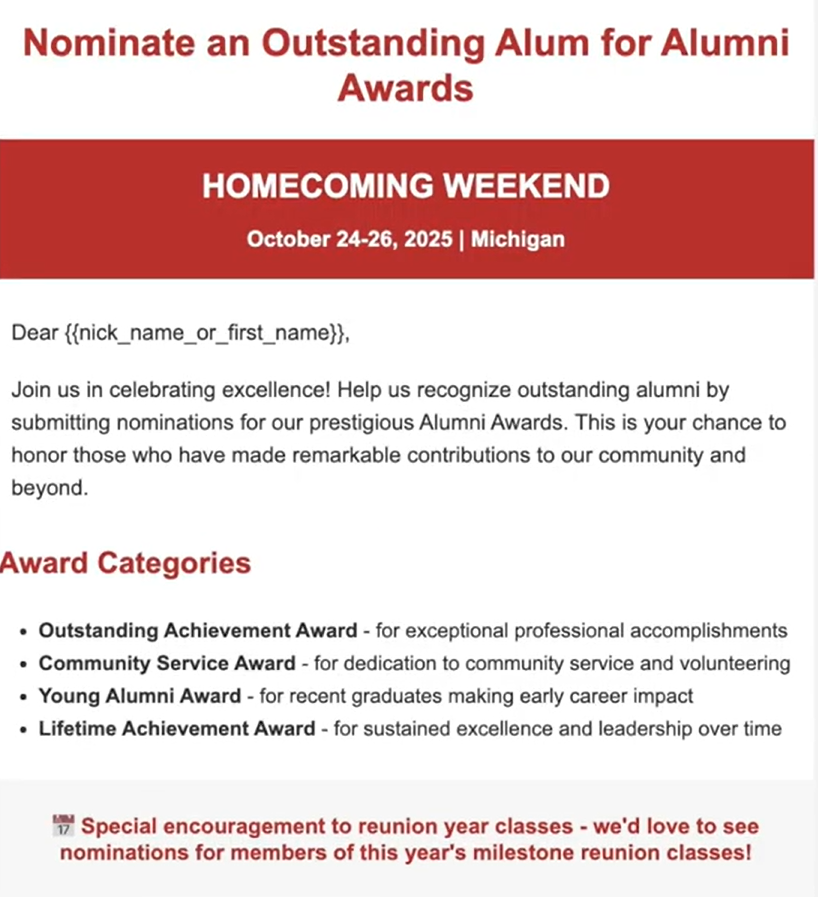
Almabase treats email communication as a workflow. With its Emily AI integration, your team can generate a context-aware first draft right inside Almabase's Email Center using a simple prompt like "Invite alumni to our 25th reunion in a warm, conversational tone".It can even pull details from your event page, like the event name, date, location, and registration link, so you're not starting from scratch every time. Once you have a draft, you can refine it, regenerate it, or send it through your usual workflow without ever leaving the platform.
From there the invite automation lets you build an entire invitation sequence upfront, complete with follow-up reminders that are sent only to alumni who haven't yet registered. As people respond, the workflow automatically adapts, so your team isn't manually tracking who still needs a nudge.
And because every email is sent from a sender identity you configure for your institution, the experience feels consistent and familiar to alumni from the very first invitation to the final thank-you. This goes far when your goal is to scale communication without losing the voice that resonates with your audience.
Keep the conversation going after the event
The days immediately after an event are when alumni feel most connected to your institution. The experience is fresh: reliving conversations, sharing photos, reconnecting with classmates, and thinking about when they'll come back next.
That's the perfect moment to keep the momentum going.
Send attendees a thank-you and earnestly ask for feedback while attendees care enough to write back. Share event photos. Reach out with event highlights for those who couldn’t make it. Invite those interested to volunteer at the next planning committee. If fundraising is part of your strategy, follow up with an ask while the emotional connection is still strong.
Almabase makes those conversations easier by letting you tailor follow-up based on what went on: who attended, who didn't, who volunteered, who donated, and who might just need another reason to reconnect.
We believe that the end of an event is a place to show gratitude and leave the door open for conversations about the next one.
4. Executing Your Event
Registrations have closed, reminder emails have gone out, and volunteers are at their stations, and everyone's hoping the weather holds up. Months of planning come down to a few hours or a weekend.
Ironically, the mark of a well-run event is when nobody notices the operations behind it.
Smooth check-in that prevents bottlenecks
Attendees notice whether they got through the door without a hitch.
Someone forgot to bring their confirmation email, or a spouse is tagging along but isn't sure whose name the registration is under. These last-minute oddities aren’t unusual, so Almabase equips you with exactly what you need to handle this.
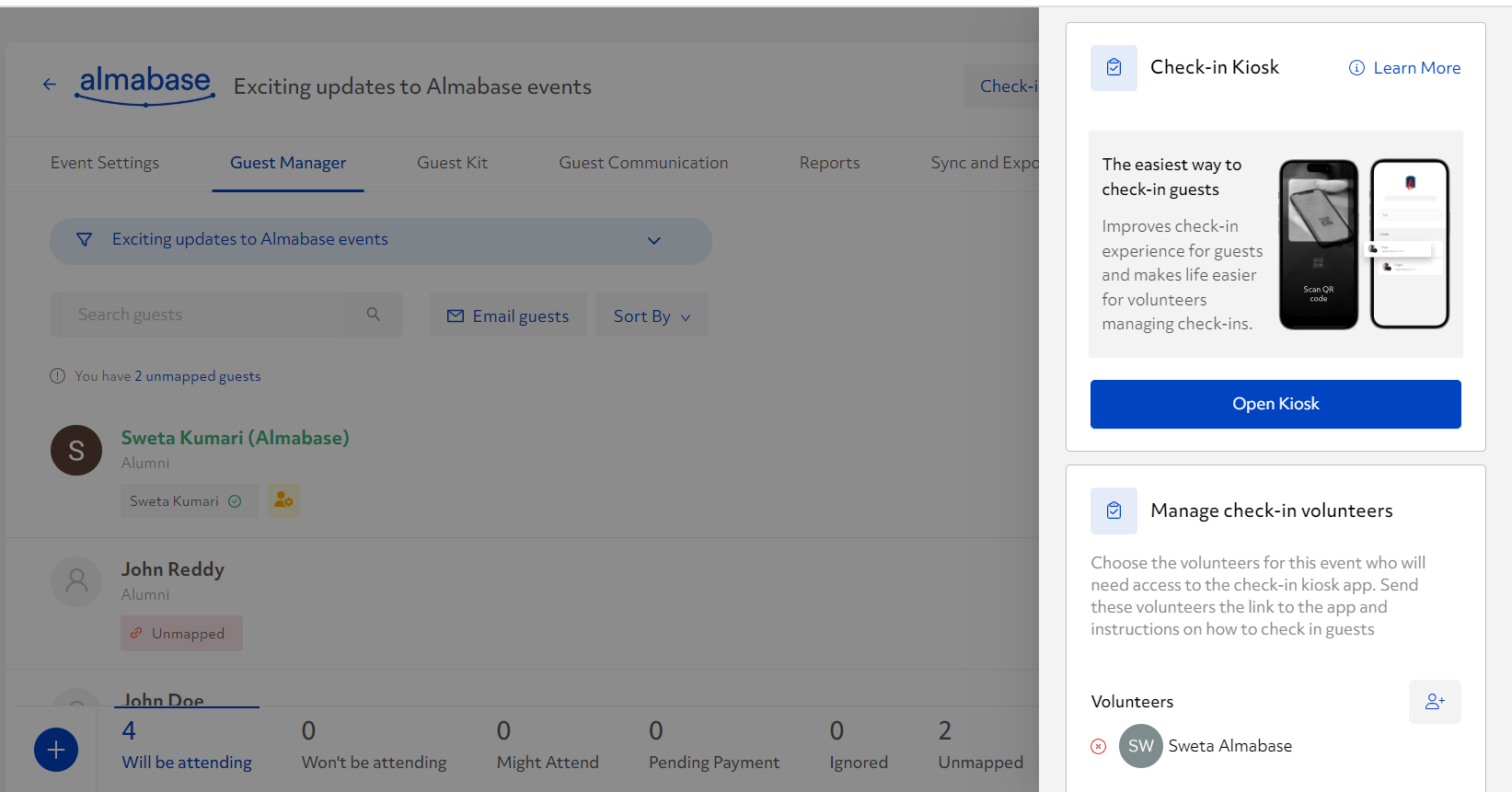
With the QR check-in option, volunteers can scan an attendee's QR code or search for them by name. If someone isn't registered, they can be added on the spot. And because you can assign check-in access to volunteers without giving them full admin permissions, it's easy to run multiple check-in desks without everyone working from the same laptop.
From the attendee's perspective, it's a smooth welcome. From your team's perspective, every check-in is automatically recorded, so you know who actually attended without spending half a day reconciling attendance lists.
Know who showed up for what
Knowing the total headcount of your event is useful, but data that tells you what your attendance means looks like you knowing who showed up for the campus tour, how many stayed for the reunion lunch, and what percentage of your attendees were at the donor reception. This kind of data goes into informing decisions for the next edition of your event.
With Almabase, every sub-event has its own check-in flow. Attendees can scan the QR code from their confirmation email or be checked in by a volunteer, and participation is captured in real time for each individual session. That means you know who attended the event and which experiences they chose to be part of.
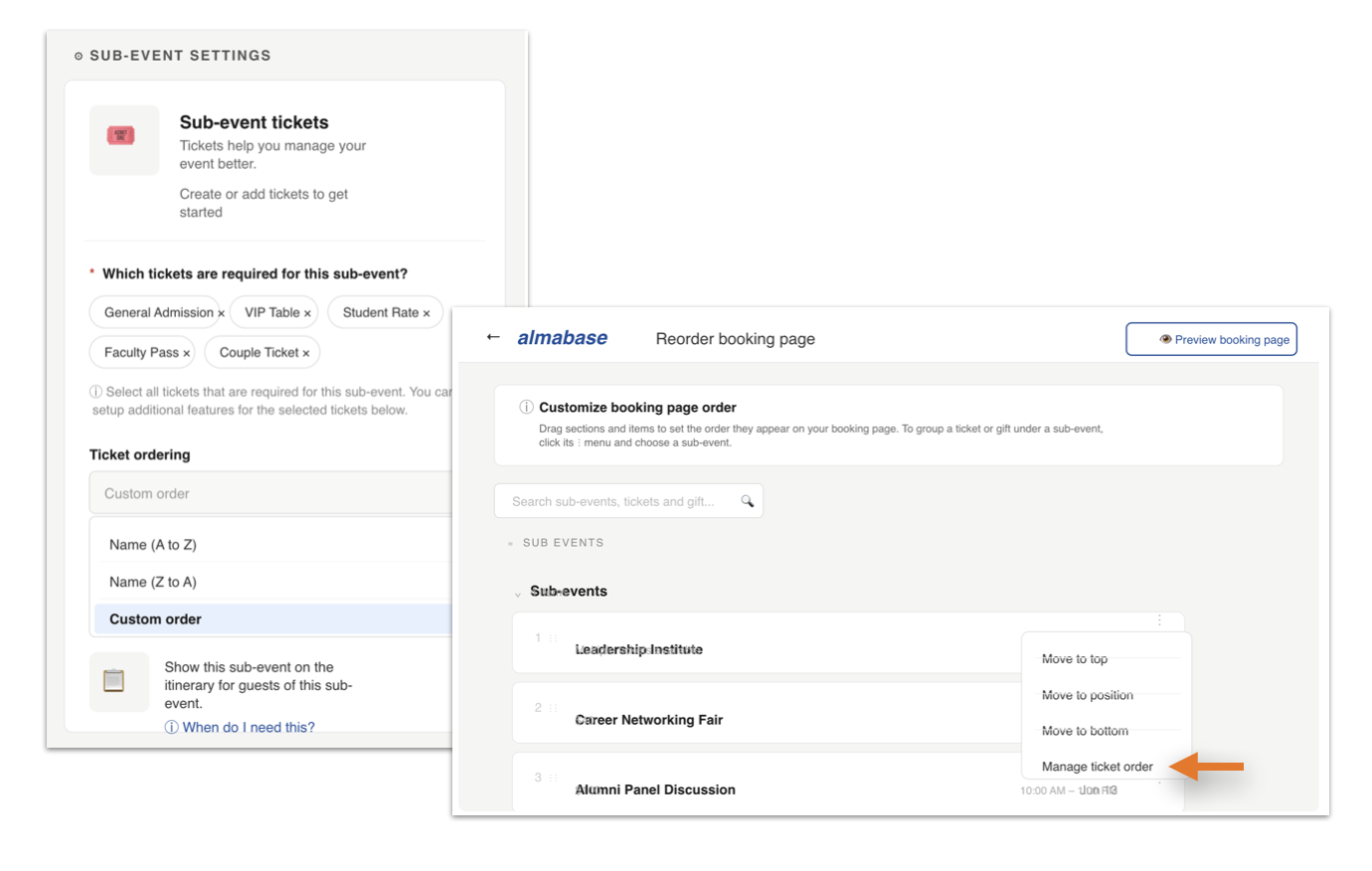
Behind the scenes, that attendance data is synced with your CRM, giving your team a complete picture of engagement.
One system for in-person, virtual, or both
One enduring change since the pandemic years has been the blending of in-person and virtual programmes throughout event experiences, allowing organizers to reach alumni who will not be able to make it in person.
Almabase understands the importance of providing a uniform experience across these formats. It supports in-person, virtual, hybrid, and multi-day events through the same registration, communication, and reporting framework, giving both attendees and event teams a familiar experience regardless of the format.
5. Event Success Measurement
Now that the event is over, it’s time to unearth the wealth of insights provided by the data captured throughout all the previous stages.
Answering the ‘How did it go’ question depends on accurately reading the insights from this data. As your team embarks on this last project, your platform should be able to keep up by capturing this information for them.
Robust CRM Sync
With Almabase's TrueSync with Raiser's Edge NXT, constituent profiles, event registrations, guest information, gifts, ticketing, and sub-event participation stay synchronized between both systems. You decide how data should move, with flexible sync rules that let you automatically update records where it makes sense or review changes before they're pushed to your CRM.
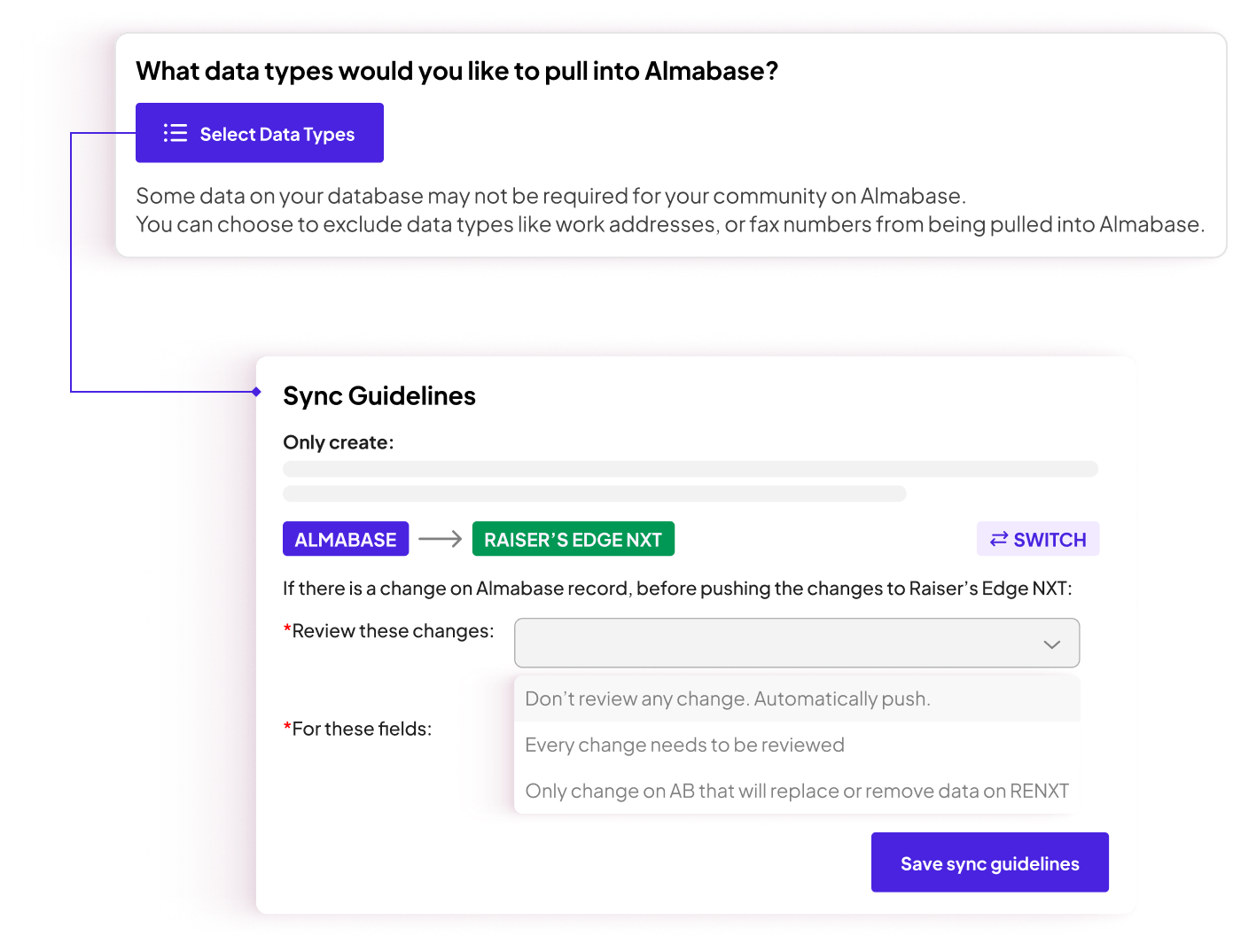
As a result, your team is always working with current, clean data: less time spent maintaining records and more time acting on the insights contained in them.
For MSUM, synced data turned into time they got back: Giving Day reconciliation dropped from four weeks to four days, freeing the team up to launch a stewardship campaign that brought in an additional $40,000 in follow-on gifts. Read more about it here.
The best event report that your team doesn’t have to build
Once the event wraps, everyone looks for different metrics for value: the alumni office wants attendance, the alumni relations officer wants to know which reunion class had the highest turnout and leadership wants information on the ROI for the event.
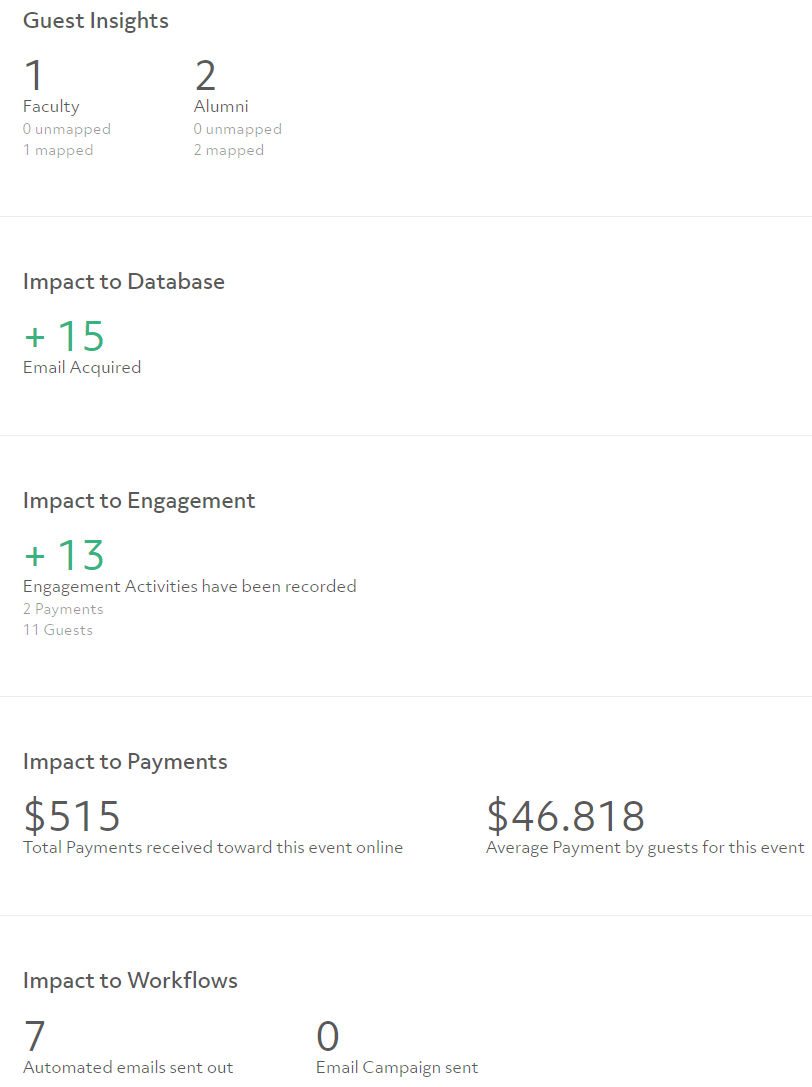
With Almabase, this information is easily accessed and you just have to put it together. Your team gets reports for registrations, attendees, guests, ticket sales, revenue, registration sources, and sub-events without having to export data from three different places first. All of this in a matter of a few clicks.
And because guest data, attendance, and registrations all stay connected via CRM sync, you're working from one version of the truth. Essentially, the data is as reliable as it gets.
The Almabase difference: every event should make the next one better.
Discussing all the stages so far, one thing becomes very clear: if the journey ends at ‘Measure’, you start from scratch with every new event.
Maybe regional events are outperforming expectations while a long-running format has started to plateau. Those patterns only become visible when your event history stays connected. The reports you've built, the attendance you've tracked, the registrations you've captured, and the gifts you've recorded all have another, more important job to do. They're meant to inform the next event.
That's why we'd add one more stage to the framework:

While Measure tells you what happened, Post-event Insights help you decide what to do differently.
Of course, this only works if your event data is complete and trustworthy. When registrations, check-ins, guest records, and gifts flow back into your CRM automatically, you're looking at one complete picture of how the event unfolded and using it to make smarter decisions about the next one.
In other words, you’re feeding the loop instead of closing it.
Every event should leave your team a little smarter than it was before. Over time, Almabase helps build that institutional knowledge, making it easier to compare events year over year, understand what drives engagement, and make decisions based on evidence instead of instinct.
Bringing it all together
It’s a bit of a misconception that a bigger headcount is what drives up the difficulty when it comes to scaling events. Issues start showing up because with multiple events, the complexity rises, demanding the right systems handle it. With Almabase, teams can handle this complexity while continuing to spend time on curating and creating experiences instead of wrestling with technology.
Scalable ▶️ repeatable ▶️ bigger and better, year on year.
Curious to see what that looks like for your institution? Request a demo with us now! 🤗

FAQs
1. Can Almabase run multiple sub-events at once?
Yes. A reunion weekend, Homecoming, or Giving Day can run as one parent event with several sub-events underneath it, each with its own registration flow, capacity, and pricing. Your team manages it all from a single backend instead of juggling separate event pages.
2. Does Almabase support multiple event formats?
Yes. In-person, virtual, hybrid, and multi-day events all run through the same registration, communication, and reporting framework, so attendees and staff get a consistent experience no matter the format.
3. Does Almabase sync event and giving data to your CRM?
Yes. Through TrueSync with Raiser's Edge NXT, registrations, guest information, gifts, and sub-event participation stay synced automatically, so your team is always working from current, clean data.
4. Is Almabase suitable for smaller teams?
Almabase is suitable for teams of all sizes. The platform scales to the complexity of the event, keeping registration, coordination, communication, and reporting manageable across an entire calendar of events.
.jpg)
How Almabase Scales Alumni Events Effortlessly
Alumni events get more complicated as they grow. Here's how Almabase keeps every stage running smoothly.
Events
Anwesha Kiran
July 24, 2026
12 minutes
Blackbaud NetCommunity (BBNC) has been the default choice for institutions on Blackbaud Raiser's Edge for a long time now. It still handles the basics well enough; things like a simple donation form, a straightforward event RSVP, or an email blast to contacts off of an existing list.
But advancement work has grown more complex, and there are tasks modern teams need done that BBNC hasn’t been able to keep up with, simply because it wasn’t built for these tasks.
In this blog, we’ll walk you through some of these tasks that users have come to realize that BBNC cannot handle well, and how Almabase closes that gap.
Where BBNC stops keeping up with modern advancement needs
1. Sending email to anyone who isn't already an RE query
This is a well-documented pain point that BBNC users face when scaling their events: email lists have to originate from a Raiser's Edge (RE) query. If you have a list of addresses that didn't come from RE, there's no way to feed it in directly. These could be lists procured from an event partner or from around a campus, but it cannot be used to send email blasts unless recreated as a query within RE first.
The email builder itself offers limited design flexibility without a modern interface, so anything beyond a simple layout takes real effort to construct. Even then, there’s no way to know for sure that these emails would look the same in the recipients’ inbox.
Another related limitation is that unsubscribes work at a single level: a constituent who wants out of event emails but wants to keep getting annual fund appeals has no way to say so. They either get everything or nothing.
BBNC's analytics cover opens, bounces, and opt-outs, which is fine for knowing what happened to an email. It doesn't tell you what the constituent did next. There's no link-level click attribution and no behavioral data, like page visits or email-to-gift conversion paths, flowing back into the CRM.
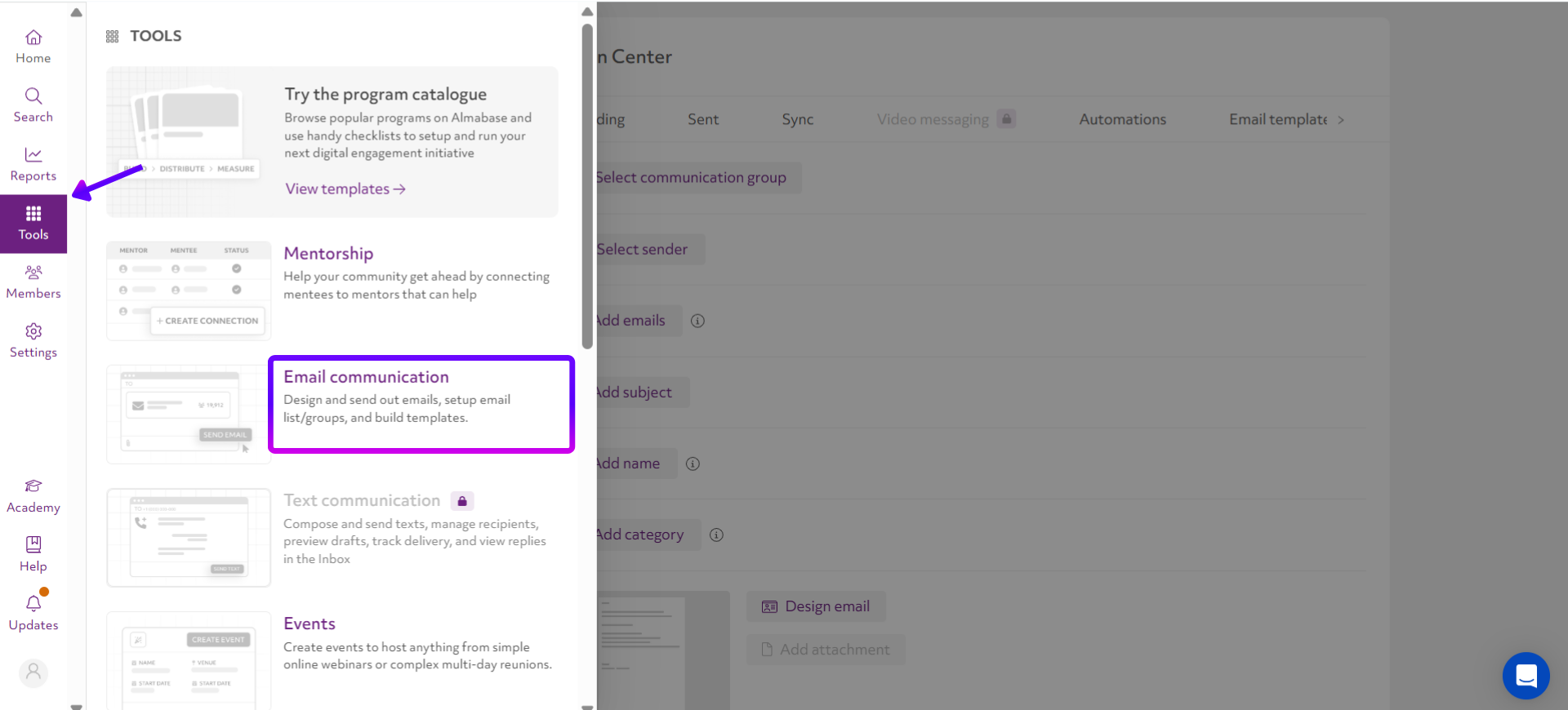
Almabase's drag-and-drop email builder works from any list, whether that means uploading a spreadsheet or building a segment directly inside the platform.
Email layouts also render consistently on mobile, and unsubscribes are handled through category-level preference centers, so a constituent can opt out of one kind of communication while staying on others.
Because Almabase's engagement data flows back to the constituent's RE NXT tile through TrueSync, your team can see which emails someone opened, which links they clicked, and which giving pages they visited before they gave, all without pulling a separate report.
2. Running a Giving Day without exhausting your team
BBNC works just fine for a simple, single-fund "give now" page. It really starts to struggle when institutions begin to get more ambitious with their scale: campaign hubs, fund-level thermometers, leaderboards, time-based matching challenges, or a mobile checkout handled cleanly with only a few clicks. Institutions running multi-event giving days or homecoming weekends with sub-events where more is required from the platform find that BBNC doesn't have the building blocks for it.
The workaround is obviously to layer on a different tool to handle the campaign mechanics BBNC can't. That solves the giving day experience but reintroduces the exact data problem BBNC's RE sync was supposed to prevent. Gift data now lives in the third-party tool and Raiser's Edge, and neither talks to the other automatically. For complex events, this could mean up to a week of manual data reconciliation for your team.
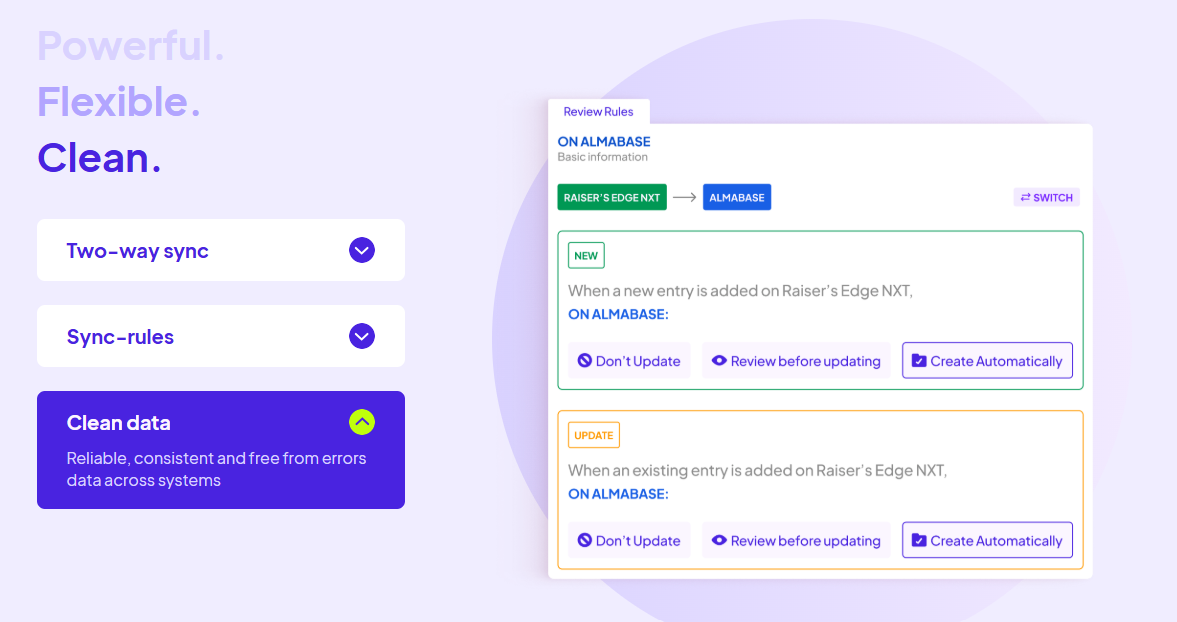
Almabase solves this problem by building this natively. Branded campaign hubs support fund-level goals with rollups, live leaderboards, and matching challenge banners, all with mobile-first checkout that doesn't ask donors to navigate multiple screens.
Every transaction captured during the rush of a giving day flows into RE NXT in real time through TrueSync, so there's no separate reconciliation step because there's no separate system generating a second set of records to begin with!
Faster reconciliation isn't just about efficiency. With Almabase, MSUM reduced Giving Day reconciliation from four weeks to four days, giving the advancement team time to launch a stewardship campaign that generated an additional $40,000 in follow-on gifts.
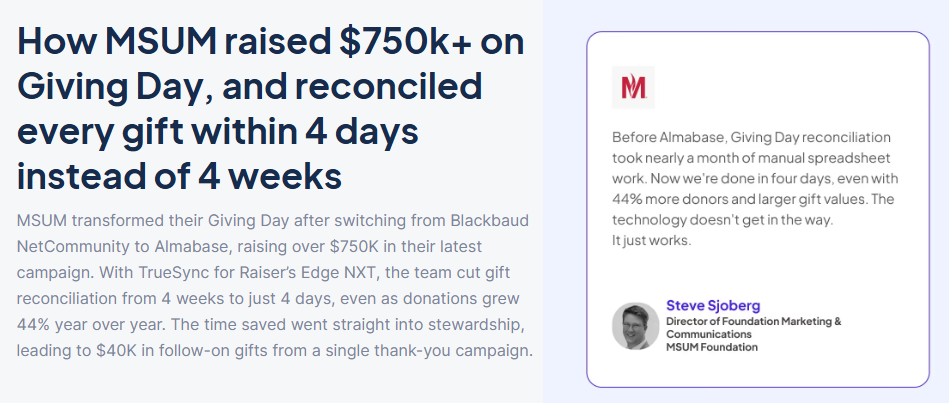
Read the full case study here.
3. Connecting engagement with giving
BBNC's own connection to Raiser's Edge handles transactional data reasonably well. Gifts link to the right funds, registrations flow into the correct event records, and email lists continue pulling from your existing queries. For teams using BBNC largely as-is, the native connection does what it's meant to do.
Where it falls short is context. BBNC's RE integration records that a gift happened, but not what led up to it. There's no lead scoring, no engagement history on the constituent record, and no way for a gift officer to see that a prospect opened three campaign emails and visited the Giving Day page four times before finally making a gift.
Those kinds of signals are the ones that help teams decide who to reach out to and when, and unfortunately, these never make it into Raiser's Edge. Instead, advancement teams are left relying on campaign-level reports and educated guesses, even though RE NXT is already where they're doing most of their work.
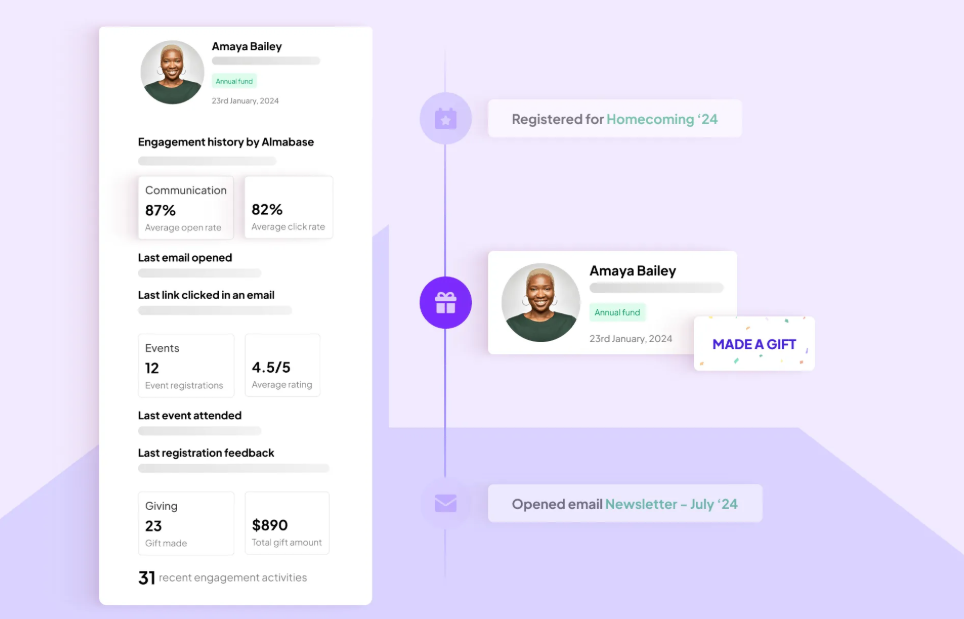
Almabase's TrueSync integration fills in those missing pieces by surfacing engagement data directly on the RE NXT constituent record at no additional charge. Gift officers can see which emails someone opened, which links they clicked, where they've been engaging, and where their gifts are directed, all without leaving the CRM. Instead of a record that simply logs transactions, they get a much clearer picture of how someone has engaged over time.
4. Running an event start to end
BBNC's event registration works well for straightforward events, but it starts to show its limits as complexity increases. It doesn't support sub-event management, ticket-level fund designation, guest forms for collecting meal preferences or accessibility needs, QR code check-in, or conditional registration based on class year or affiliation. A multi-day reunion weekend or a Homecoming with parallel events across departments is basically more than what BBNC was built to handle.
At that point, once again, institutions turn to third-party tools. The trade-off is that the same event often has to be built twice: once in BBNC to maintain the connection with Raiser's Edge, and again in a third-party platform to deliver the registration experience attendees need. That creates another data silo, doubles administrative work, and makes it harder to keep track of who's attending what.
Almabase handles those more complex events within a single registration flow. A 15-event Homecoming weekend can live under one event instead of a dozen separate registration pages. Staff can check in attendees with QR codes, register walk-ins, and accept on-site payments from a mobile device.
Through conditional questions, the form adapts in real time based on who is registering and how they respond. Alumni, parents, volunteers, or specific class years can each see a different set of questions, while nested follow-up fields appear only when they're relevant.
Attendees can register themselves and manage one or more guests, choose sub-events, select meal or accessibility preferences, and complete everything in a single, mobile-friendly checkout experience.
5. Making a page that looks like it belongs in 2026
BBNC's page editor gets the job done for basic pages, but customization is limited. Anything beyond a simple layout: adding a promotional video banner, updating the color scheme, creating a modern grid, or building a more polished landing page requires code-level changes. In 2026, maybe it is not the most reasonable to have to depend on a developer to make minor changes to your donation pages.
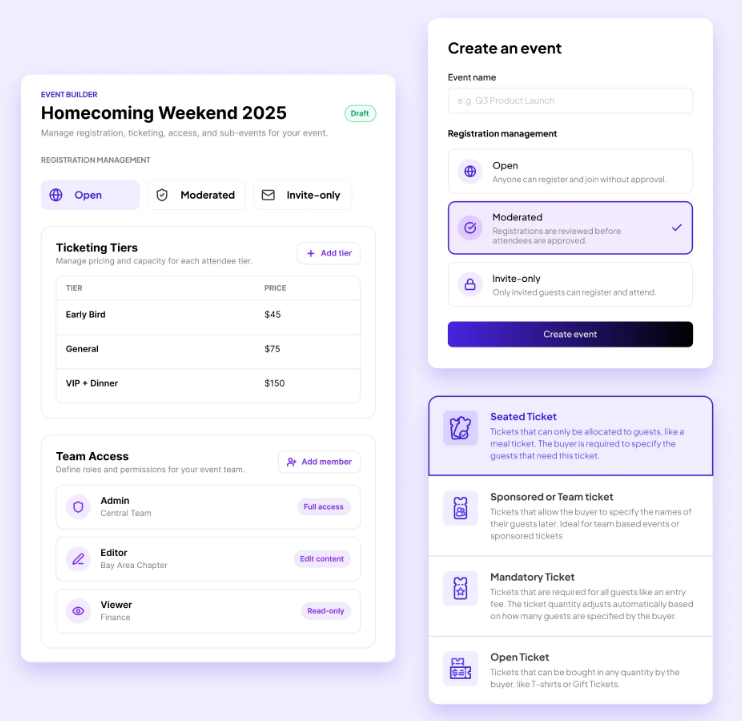
Almabase gives advancement teams a no-code way to build branded, mobile-responsive pages themselves. Event pages, giving forms, and campaign microsites can all be created, launched, and updated without writing code. Teams can embed donation asks directly into the registration journey, delegate event management with role-based permissions, and make last-minute updates without waiting on IT or a developer. This flexibility can be especially valuable in the weeks leading up to a launch, when messaging, visuals, and calls to action might need to change in real time as you make adjustments to your campaign strategy.
Check out our blog that compares Almabase with BBNC for a deeper look at how these two platforms stack against each other.
Trade-offs worth knowing about
No platform does everything perfectly, and it's worth calling out the areas where BBNC still has an advantage.
Relationship data doesn't import (yet):
BBNC can surface information stored in RE NXT's relationship tables, such as spouses, children, congregation membership, and other family or affiliation records directly on a constituent's profile. Almabase doesn't currently sync those relationship records from RE NXT, although anniversary dates are supported.
For institutions that rely heavily on family or congregational relationships as part of stewardship, that's an important consideration to discuss during the evaluation process.
In practice, many teams continue to treat RE NXT as the source of truth for that information, with gift officers referring to those records when relationship context is needed.
Address types are narrower:
RE NXT supports a wide range of address types, all of which BBNC can surface. Almabase currently supports two: Home and Office. During onboarding, one RE NXT address type is mapped to each, which is sufficient for most institutions' day-to-day communication and stewardship.
The main consideration is for schools that maintain several distinct address types, such as seasonal residences, business addresses, or separate international mailing addresses. Those institutions may need to decide which addresses should remain primary and which can be consolidated.
Email consent is managed at the constituent level:
RE NXT lets institutions manage email consent for each individual email address. That means a constituent can choose to receive communications at a personal email while opting out of a work address, or vice versa.
Almabase takes a simpler approach by managing consent at the constituent level. If someone opts out, the preference applies across all of the email addresses associated with their record. For most institutions, this wouldn’t make a huge difference. But if your team regularly works with constituents who maintain separate personal, professional, or other email addresses, it's a distinction worth understanding before implementation.
Single branded subdomain:
Some BBNC institutions maintain different subdomains for different audiences; for example, ‘alumni.school.edu’ and ‘parents.school.edu’, each with its own branding, navigation, and experience. Almabase brings those audiences together under a single subdomain.
This distinction, of course, can still be retained with Almabase: different audiences can be served through dedicated landing pages, conditional content, and tailored navigation within the same site. But if your current setup depends on entirely separate subdomains, it's something to account for when planning your migration.
What switching looks like
Migrations from BBNC generally follow the same path as any move to a new advancement platform. Our blog on migrating from BBNC covers the process in more detail, but the short version is this: most implementations take anywhere from three weeks to two months, depending on the amount of data cleanup, testing, and staff training involved.
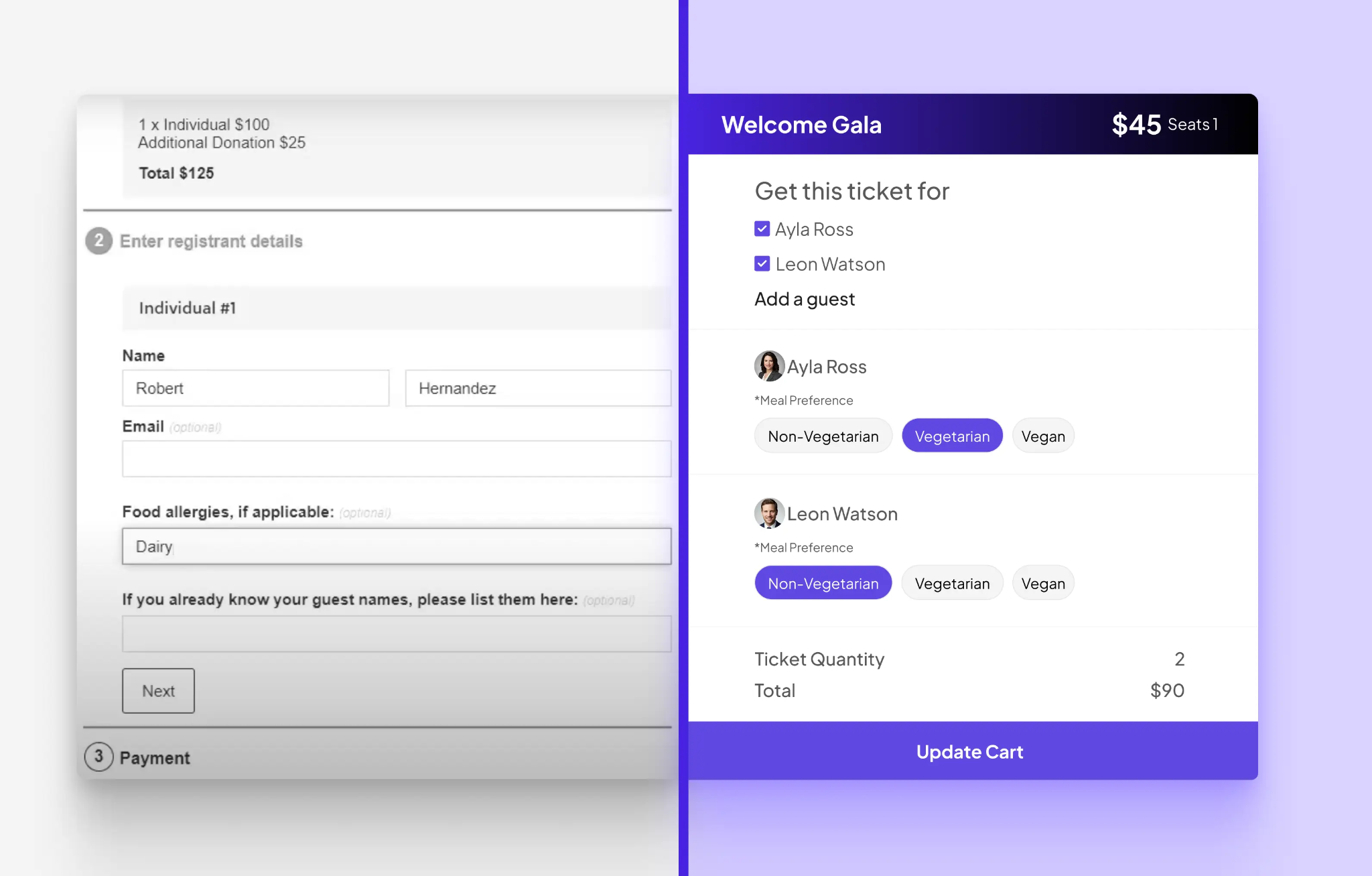
Almabase starts reducing that work before implementation even begins. A free 30-minute integration audit with a solutions engineer reviews your current data structure, naming conventions, integrations, and migration goals so potential issues are identified upfront instead of during go-live.
From there, TrueSync configures the two-way sync between Almabase and RE NXT while preserving your existing field mappings and naming conventions. Your team also decides how data should flow, whether updates from Almabase sync automatically into RE NXT or require review before they're committed to the CRM.
What switching looks like in practice: Cornell College
Cornell College manages a community of 15,000 to 17,000 alumni with a lean advancement team. Before moving to Almabase, staff were piecing together BBNC and other tools, and spending valuable time managing disconnected systems instead of building relationships with alumni.
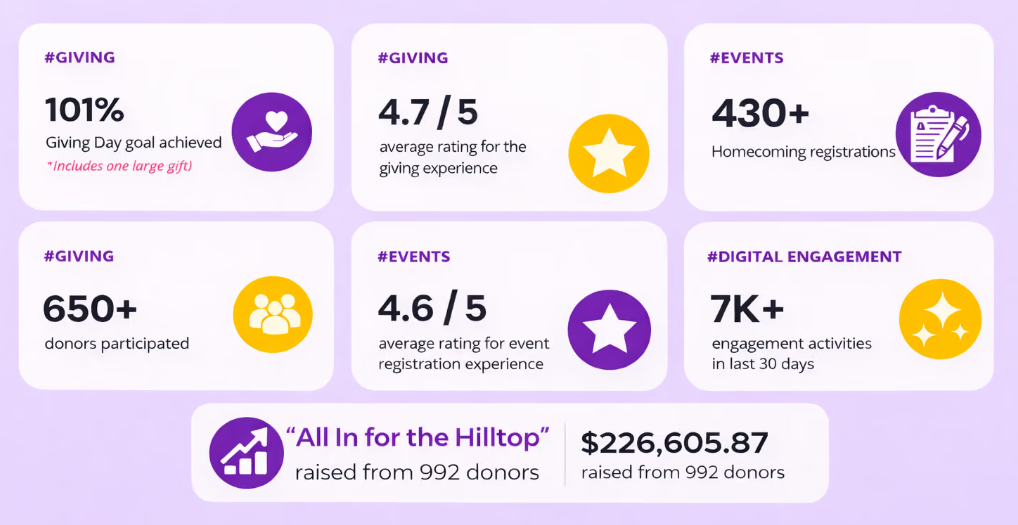
With giving, events, email, forms, and community engagement all in one platform, registrations flowed smoothly, alumni could update their own records, and the team spent less time on administration.
The results followed: 1,008 donors on Giving Day, a 4.7/5 participant rating, more than 430 Homecoming attendees, and over $226,000 raised from 992 donors during the "All In for the Hilltop" campaign.
Here’s the full scoop on Cornell College for more on how that shift played out.
Does this sound familiar?
None of the limitations above are deal-breakers on their own. Exporting a CSV takes only a few minutes. Building an event in two systems isn't impossible. Even manually reconciling registrations after a campaign can become part of the routine for an event or two.
But dealing with all of these together and operating with workarounds that cost in manual hours is not what your team should have to experience.
A few things to think about:
- Do you regularly export data between systems because the information you need isn't where you're already working?
- Are events, giving campaigns, or emails spread across multiple platforms that all need to be kept in sync?
- Does someone on your team spend time after every event cleaning up registrations or reconciling data before it's usable?
- Have you stopped trying to do certain things because you already know the platform can't support them?
- When planning a new campaign, do you think about the workarounds before you think about the idea?
For some institutions, the existing setup might still be the right fit. But if the workarounds are starting to consume more time than the work itself, it's a good signal that it's worth evaluating what's changed.
As budget planning comes around, ask your team the right questions: "What does this platform cost?", but also, "How much time are we spending working around it?".
If your team is constantly exporting data, reconciling spreadsheets, or jumping between tools for events, email, giving, and community engagement, those hours add up. The question is whether the operational savings from keeping everything in one place outweigh the cost of continuing with a stack of disconnected tools.
Ready to see how you could run your events without the workarounds? Request a demo today.

Blackbaud NetCommunity vs. Modern Advancement Needs: A Closer Look
Managing targeted campaigns, giving days, and CRM syncs with Blackbaud NetCommunity? See where BBNC creates friction and how Almabase simplifies it.
Events
Anwesha Kiran
July 21, 2026
12 minutes
The best alumni engagement practices are really about one thing: giving alumni a meaningful reason to stay connected after they leave campus.
Most teams nowadays are well aware that one-off emails or event invites are not enough. Long-term engagement could come from mentoring, volunteering, or simply hearing from the institution in a way that feels relevant The challenge is making these efforts consistent without adding more manual work for already busy advancement teams.
In this blog, we want to walk through practical alumni engagement best practices and strategies that help institutions meet the needs of modern alumni.
What Drives Alumni Participation Today
Alumni engagement today (and for a good while now) scales well when alumni see a clear reason to stay involved. Now more than ever, they need to hear from the institution in ways that feel personal, relevant, and substantial. They need digital experiences that are easy to access as well as opportunities that match their interests, life stage, and capacity to contribute.
For advancement teams, this means alumni engagement has to be treated as a long-term relationship strategy. CASE’s 2024 alumni engagement found that across a three-year cohort, the average share of alumni engaged in at least one way stayed between 19% and 20%, which shows how much intentional work is needed to move participation.
Fundraising, of course, is part of that relationship, but it should never be the only reason to reach out.
That leaves us with the strongest alumni engagement programs today being built around:
- Personalized communication
- Value-first engagement
- Digital-first alumni experiences
- Active community-building
- Consistent multi-channel outreach
- Data-driven engagement strategies
With these pieces in play and fine-tuned to your audience’s needs, institutions are more likely to improve event participation, alumni giving, volunteerism, mentorship activity, and long-term donor loyalty.
11 Alumni Engagement Best Practices Institutions Should Prioritize
1. Build an Alumni-Centric Engagement Strategy
An alumni-centric engagement strategy starts with what alumni value. This means being in tune with and reacting to what your alumni actually want, and helps teams create programs that feel relevant across different life stages and levels of involvement.
Strong alumni-centric planning usually asks:
- What do alumni need from us right now?
- Which groups are underserved?
- What reasons do alumni have to return, connect, or contribute?
- How does each touchpoint build long-term trust?
Providence Day School used this approach by creating targeted events for different alumni groups instead of relying on broad outreach alone. With Almabase, the school ran 92 events in under two years. Homecoming participation grew by nearly 400% in one year, and alumni donor participation rose from 4% to 20%.
Also read → How institutions can approach alumni-centric advancement in 2026: A detailed guide
2. Segment Alumni Beyond Graduation Year
Segmentation is essential for any engagement program and while a category like graduation year is a useful starting point, today’s need for personalized communications means that your segmentation ideally should be much more granular. Good segmentation today looks at behavior, context, and motivation so that teams can segment by:
- Interests
- Career stage
- Event participation
- Volunteer activity
- Geographic location
- Engagement history
This makes communication more relevant because each group receives outreach that matches their connection to the institution. It also helps teams identify alumni who may be ready for deeper involvement.
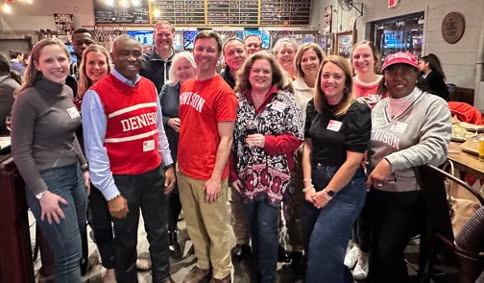
Denison University’s 2024-2027 alumni plan sets goals across class years, affinity groups, regions, and underrepresented alumni groups. That structure gives the team more ways to shape programming and outreach around real alumni communities, rather than treating the full alumni base as one audience.
3. Create Digital-First Alumni Experiences
Digital touchpoints give alumni easier ways to participate when they cannot come to campus or attend a scheduled event. It also keeps the relationship active between major programs and events.
This can include:
- Online alumni communities
- Mobile-friendly engagement
- Virtual events
- Self-service networking
- Always-on digital engagement
Alumni should be able to find peers, explore opportunities, update their information, and join programs without waiting for the next email.
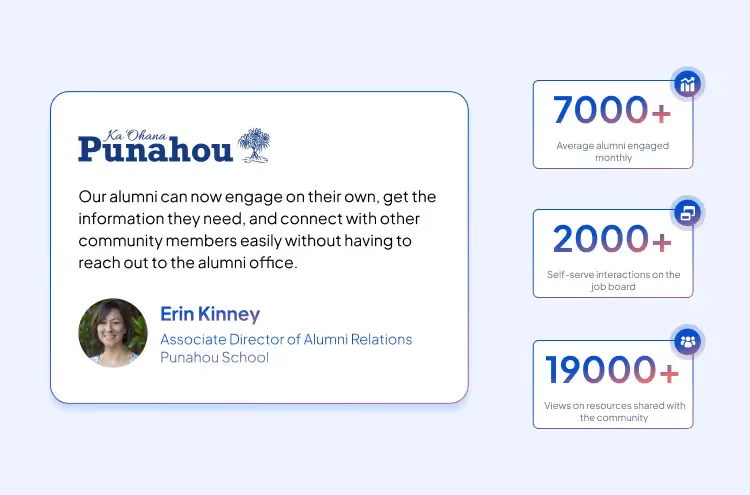
Punahou for instance, used Almabase to build a dedicated digital alumni community where alumni could discover peers and network independently. The school also created self-serve digital programs, which helped keep more than 7,000 alumni engaged each month.
4. Develop Programs Around Career and Networking Value
Career-focused programs give alumni an accessible and practical reason to engage beyond nostalgia.
They usually include:
- Mentorship programs that connect students with alumni
- Internship connections through alumni employers
- Alumni job boards with relevant opportunities
- Industry-based groups for focused networking
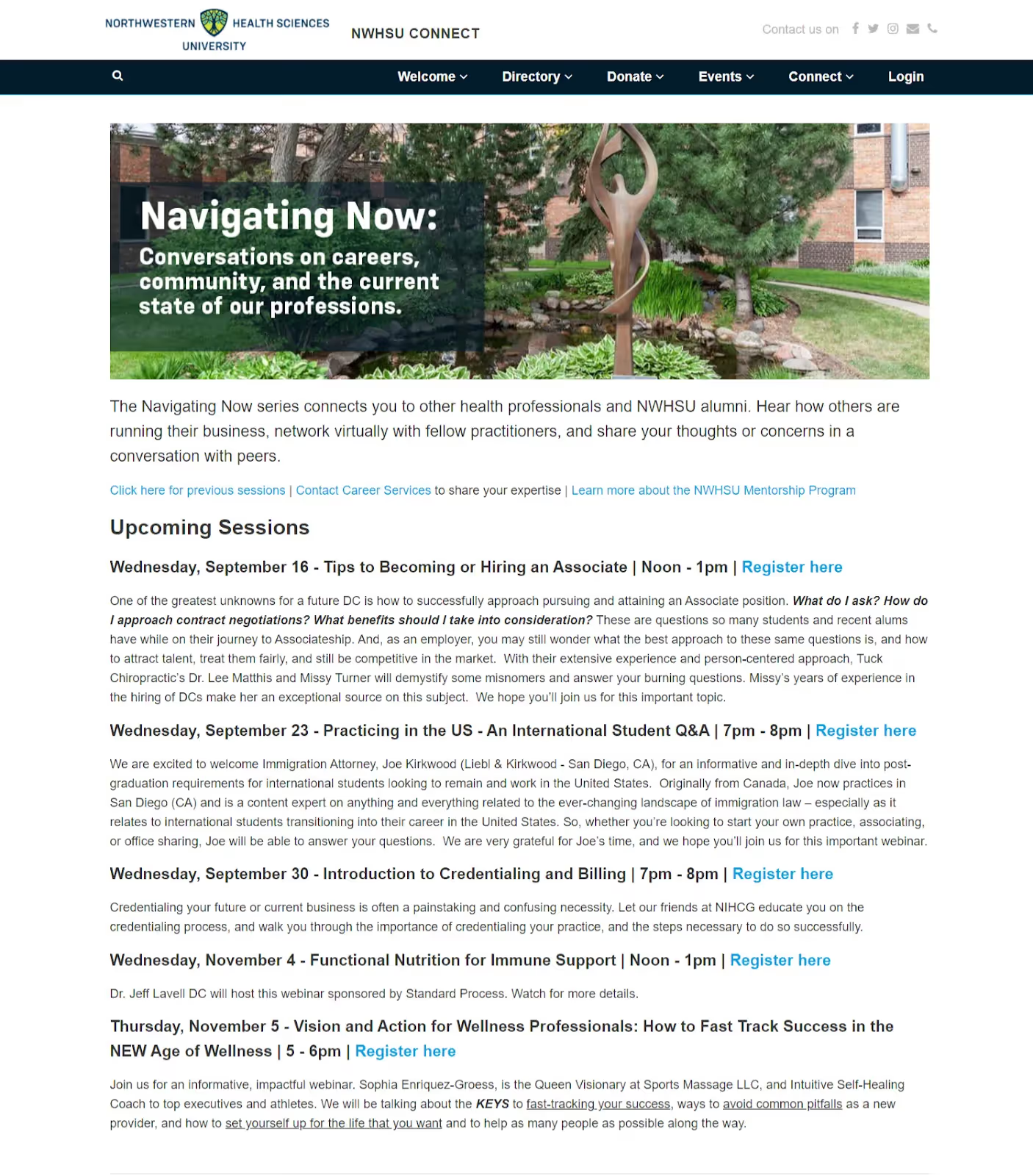
Northwestern Health Sciences University used Almabase to support this through job updates, classifieds, virtual career programs, community events, and a mentor program connecting students with alumni or professional mentors. This helped the university keep alumni involved through practical career value, which contributed to 1,000 event registrations over two years.
5. Use Events to Deepen Community Participation
Events remain one of the most effective alumni engagement strategies when they are designed around connection instead of attendance alone.
Homecoming and reunions help alumni reconnect with campus. Regional gatherings make engagement easier for alumni who live farther away. Networking events create professional value. Hybrid events allow more people to participate, especially when travel is not realistic.
To make the most of event participation, the strongest event programs usually include a clear next step. That could be joining a group, volunteering, updating a profile, or attending another program.
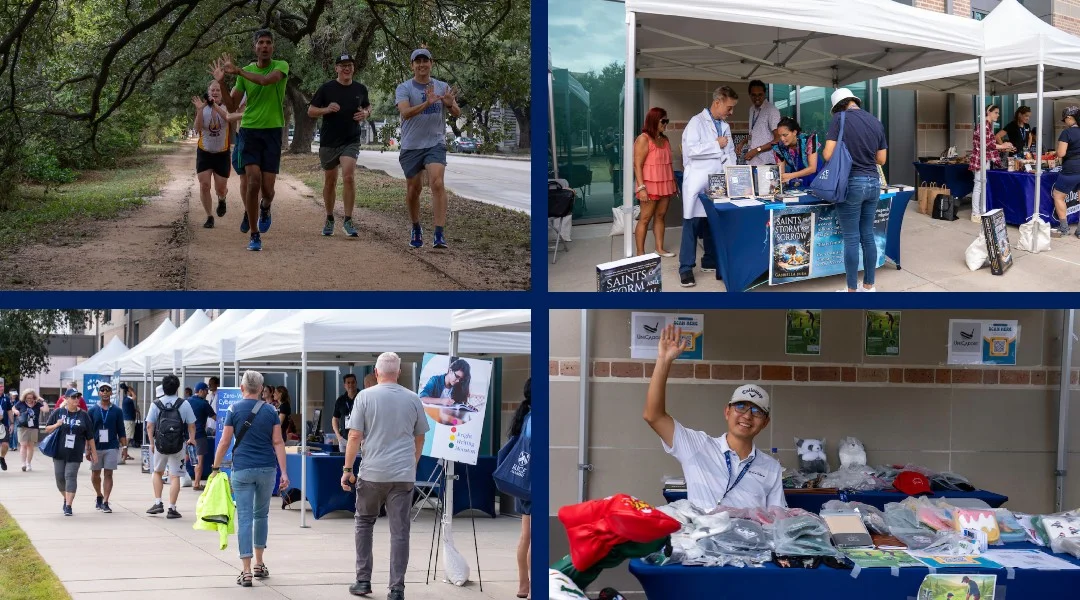
Rice University’s Alumni Weekend 2024 brought alumni back into campus life through reunion activity, fellowship, football, and shared community moments. The event also connected alumni with students, faculty, and staff. That mix matters because it turns an event into a broader community experience instead of a single-day gathering.
6. Personalize Alumni Communication at Scale
Personalized alumni communication starts with knowing who alumni are and how they engage. It also requires a steady communication rhythm that does not depend on manual effort every time.
Teams can improve personalization through:
- Smart segmentation
- CRM-driven outreach
- Personalized campaigns
- Clear communication cadences
- Automated engagement workflows
This helps alumni receive messages that match their interests and past activity. It also helps teams avoid sending the same broad message to every graduate.
Deloitte Digital’s personalization research found that brands delivering standout personalized value reported 50% higher engagement. For alumni teams, the takeaway is simple: personalization should make each message feel more useful, not just more targeted.
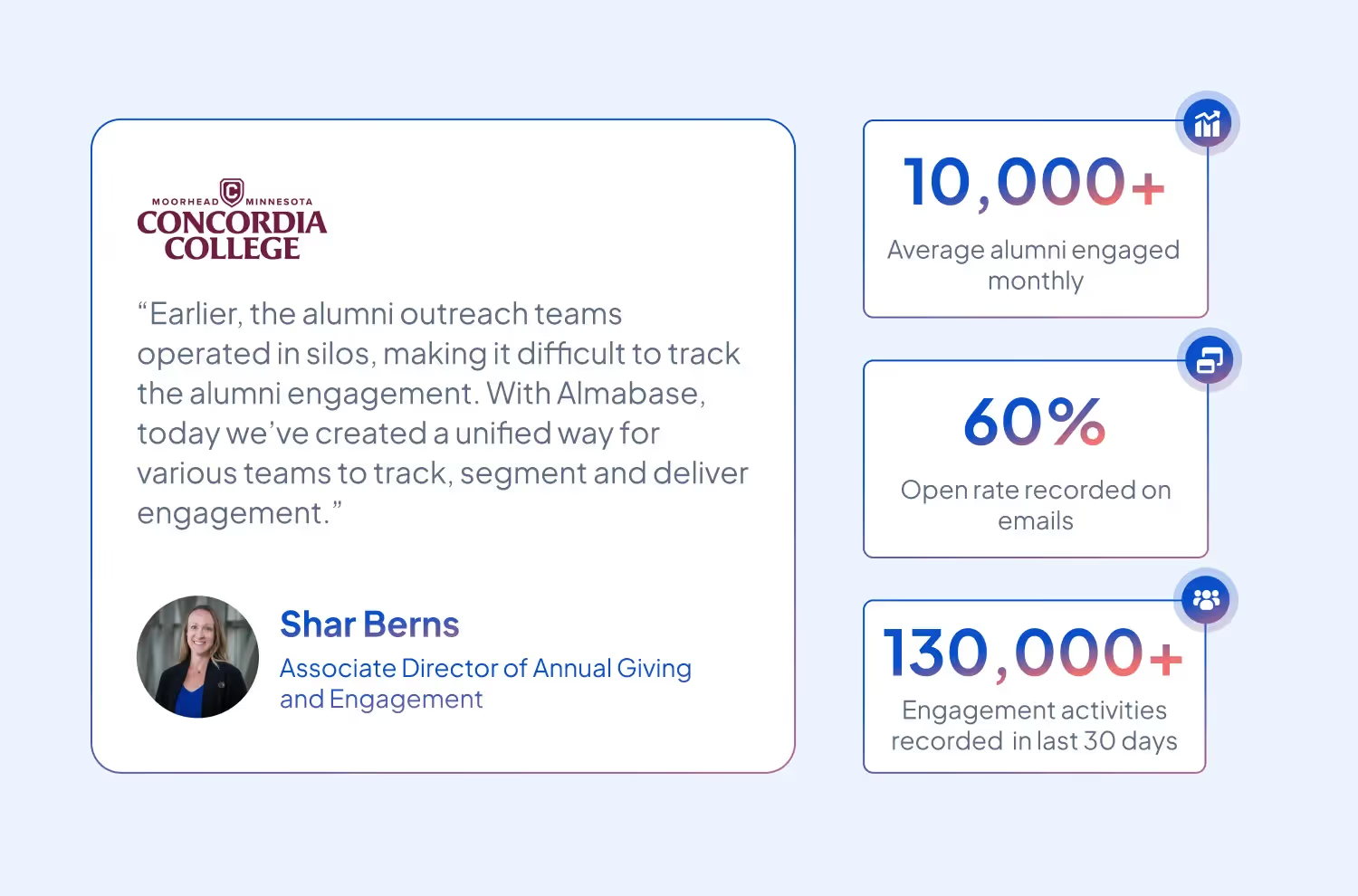
Concordia College moved away from fragmented email tools and brought alumni communication into a more connected system. The team deployed Almabase for segmented outreach, shared stronger alumni stories, and used engagement data to shape future campaigns. That helped them engage 10,000+ alumni monthly, reach a 60% email open rate, and record 130,000+ engagement activities in 30 days.
7. Activate Alumni Participation Through Affinity Groups and Communities
Affinity groups help alumni reconnect through shared identity, location, experience, or interest. This is often easier than asking alumni to engage with the institution as one broad audience. Strong community models can include:
- Regional alumni chapters
- Cultural affinity groups
- Athletic alumni groups
- Volunteer communities
- Shared-interest programs
These groups create smaller spaces where alumni can participate more naturally. They also help institutions build alumni community engagement beyond large annual events.
The University of Delaware’s UDPride Alumni Network shows how this can work. In its second year, the network welcomed new members and hosted a Drag Show during Alumni Weekend. That kind of programming gives alumni a clear community to join, not just an event to attend.
8. Integrate Fundraising Naturally Into Engagement
Alumni are more likely to give when they already feel connected to the people, programs, and communities their support affects. This is why giving should sit within the larger engagement journey.
Giving days, peer-to-peer fundraising, volunteer-led fundraising, and engagement-to-donation pathways work best when alumni have already had meaningful touchpoints with the institution. The goal is to make giving feel like a natural next step.
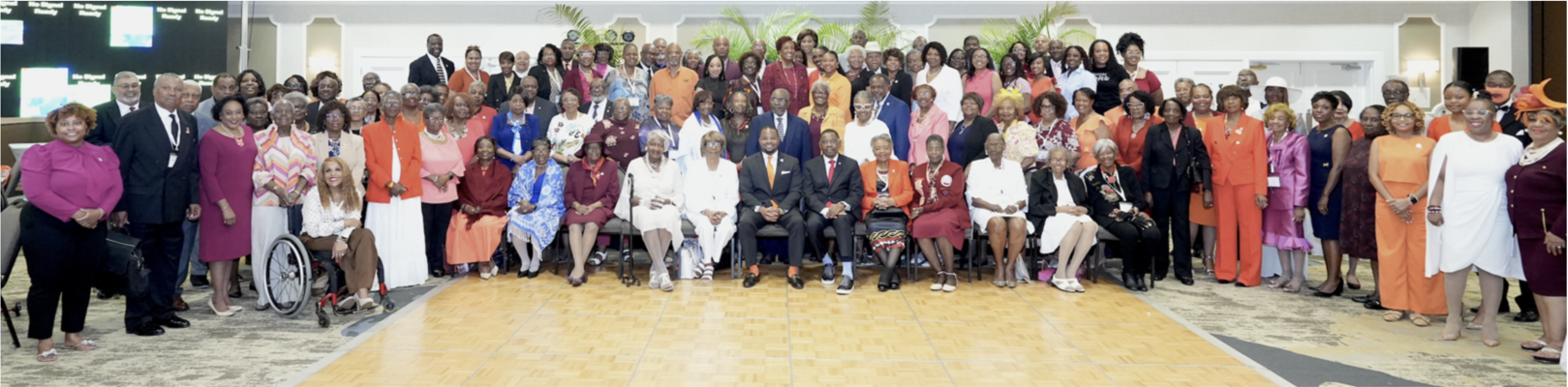
Claflin University connected alumni fundraising to broad participation across reunion classes, young alumni, alumni chapters, and multiple generations. In FY 2024-2025, alumni contributed $1,006,088 and helped the university exceed its $1 million alumni fundraising goal.
9. Create Volunteer and Ambassador Opportunities
Volunteer roles give alumni a way to contribute time, experience, and influence even when they may not be ready to make a gift. This is crucial today where alumni and donors want to feel connected to a cause and its impact before they give.
These roles can include:
- Alumni ambassadors
- Mentorship volunteers
- Event volunteers
- Class agents
- Regional chapter leaders
They help bring others into the community, support students, and extend the reach of small advancement teams.
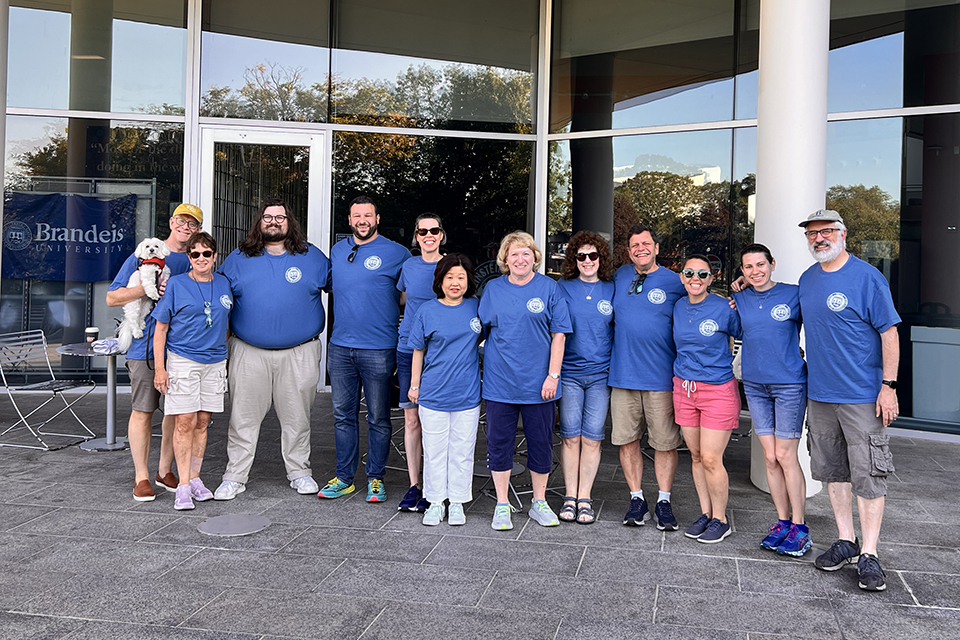
Brandeis University’s Alumni Ambassador Program gives alumni clear ways to strengthen the community, build professional connections, promote university initiatives, amplify campus news, and connect with students. The role turns alumni advocacy into structured participation.
10. Use Storytelling and Alumni Spotlights to Sustain Engagement
Stories help alumni visualize their impact in the institution’s community. They also give teams a way to keep engagement active between events, campaigns, and formal programs.
Common storytelling initiatives include:
- Alumni success stories
- Spotlight campaigns
- Community-sourced stories
- Recognition-based engagement
A thoughtful spotlight can recognize career growth, personal impact, service, resilience, or the way an alum supports others.

Sacred Heart’s November 2024 alumni story featured two alumni sharing personal experiences of hope and resilience. The story focused on what they had lived through and how their experiences could help others facing similar moments.
11. Track Engagement Metrics That Matter
Alumni engagement data should show more than donations. Giving matters, but it is only one part of the relationship. Your teams should also track:
- Event attendance over time
- Email engagement patterns
- Volunteer participation trends
- Mentorship activity
- Alumni directory usage
- Affinity group participation
- Giving participation
These metrics help teams understand who is active, what programs are working, and where follow-up should happen next. They also help demonstrate engagement ROI to leadership with clearer evidence.
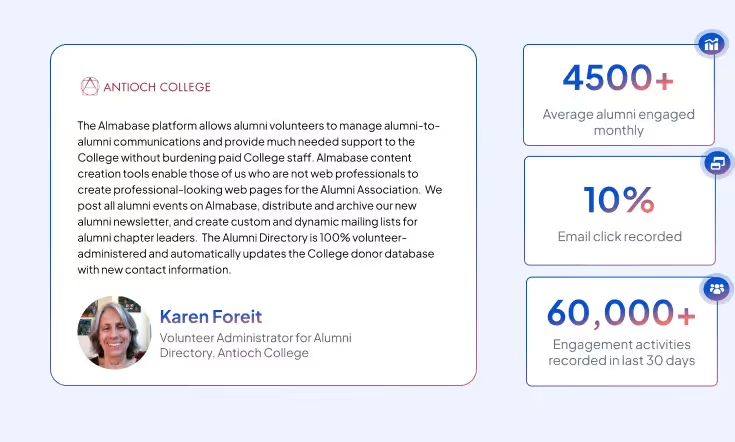
Antioch College used Almabase to improve community engagement and streamline volunteer management. The college recorded 60,000+ engagement activities in the last month, reached a 10% email click rate, and engaged 4,500+ alumni on average each month.
How Almabase Helps Institutions Build Sustainable Alumni Engagement
Sustainable alumni engagement depends on consistent relationship-building, personalized outreach, useful community experiences, and the right infrastructure to keep everything connected. Almabase helps colleges and universities bring these pieces together through an integrated alumni relations platform built for
-teams that need to scale without adding more manual work.
Institutions can use Almabase to:
- Build online alumni communities and directories
- Create affinity groups and networking opportunities
- Run alumni events and mentorship programs
- Personalize communication using segmentation and engagement data
- Track alumni participation across programs
- Sync engagement activity directly with advancement CRMs
This helps teams understand how alumni participate over time and use that insight to improve future outreach. It also keeps engagement activity from sitting in disconnected tools.
For institutions building a stronger online alumni community, Almabase makes it easier to strengthen relationships, improve participation, and support advancement outcomes through one connected system.
Request a demo to see how Almabase can support your alumni engagement strategy or watch an interactive tour below!
FAQs About Alumni Engagement Best Practices
1. What are alumni engagement best practices?
Alumni engagement best practices are strategies institutions use to build meaningful, long-term alumni relationships. They usually include personalized communication, community-building, events, networking, mentorship, and clear engagement measurement.
2. How do universities improve alumni engagement?
Universities improve alumni engagement by making outreach more relevant and participation easier. This often includes personalized communication, career-focused programs, alumni communities, events, mentorship opportunities, and consistent multi-channel communication.
3. What are the best alumni engagement strategies?
The best alumni engagement strategies are the ones that create value before asking for deeper involvement. These include segmentation, alumni-centric engagement, networking programs, affinity groups, giving day participation, and volunteer programs.
4. How do you measure alumni engagement?
You can measure alumni engagement by tracking participation across different touchpoints. Useful metrics include event attendance, volunteer involvement, email engagement, community participation, mentorship activity, and giving participation.
5. Why is alumni engagement important in higher education?
Alumni engagement helps institutions build stronger relationships that support fundraising, advocacy, mentorship, student success, and community-building. It also creates a stronger foundation for long-term donor relationships because alumni stay connected before they are asked to give.

Alumni Engagement Best Practices to Boost Participation
Use these alumni engagement best practices to improve events, giving, volunteerism, mentorship, and scalable alumni relationship management.
Alumni Engagement
Almabase
July 17, 2026
12 minutes
Walkathons are one of the few fundraising events that have stood the test of time. The appeal lies in their simplicity- easy to organize, open to everyone, and surprisingly effective. Whether organized by healthcare organizations, schools, or nonprofits, they bring people together for a shared cause while blending fitness, community, and fundraising into a single event.
Of the 30 largest peer-to-peer fundraising programs in the U.S. in 2025, which raised a combined $1.17 billion and engaged more than 2.63 million participants, many of them were walkathons.
In this article, we've rounded up walkathon ideas from successful healthcare campaigns, along with a few examples from educational institutions and nonprofits.

15+ Walkathon ideas for better fundraising
Every successful walkathon has something that sets it apart. For some, it's the cause they support. Here are some ideas from real campaigns that you can draw inspiration from:
Sponsor- led walkathons
Walkathon sponsors have come a long way from logo placement and finish-line banners. They show up, bring employees, set up activities, and become part of the day. Here’s how they are doing it:
1. Corporate team sponsorships

Rather than asking companies to simply sponsor the walk, the American Heart Association turns them into participants. Businesses register employee teams, set fundraising goals, and take part in Heart Walks across the country. Companies that raise $100,000 or more across multiple events are recognized through the National Teams program, with milestones reaching $1 million+. The model has helped bring companies such as AT&T, KPMG, Quest Diagnostics, Labcorp, and ADP into the campaign year after year. Heart Walk is now held in 300+ communities nationwide and continues to rank among the country's largest peer-to-peer fundraising campaigns. In 2025, the campaign raised $121 million, making it the country's largest peer-to-peer fundraising program for the sixth year in a row.
2. Sponsors beyond event day
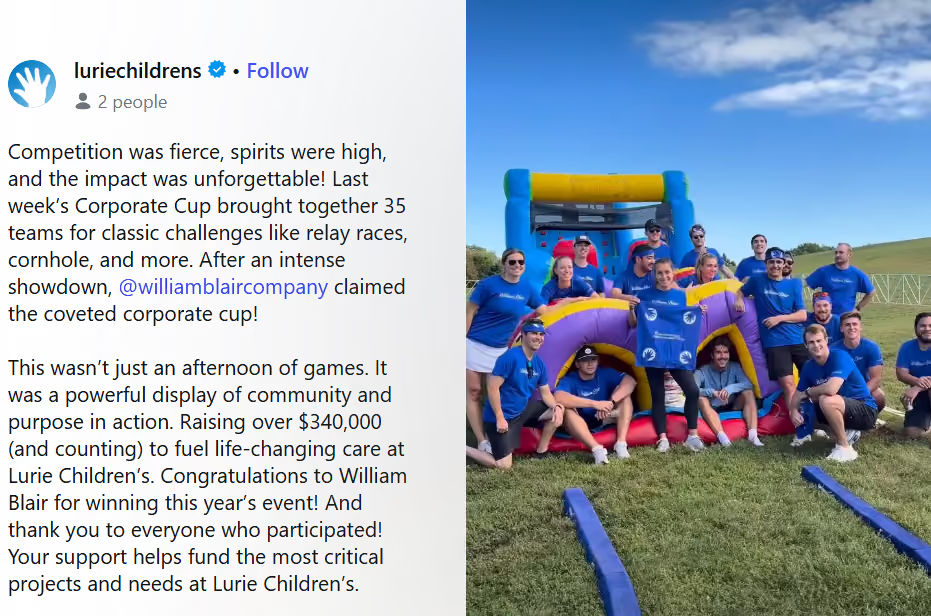
Walk for Lurie Children's gives sponsors a much bigger role than simply putting their names on event signage. On walk day, companies run games for children, welcome families at activity booths, and send employee teams to volunteer. Many of those same businesses show up again at Lurie Children's Corporate Cup, a separate fundraiser where companies compete against one another, such as tailgate games and relay races in an effort to raise money that will help Lurie Children's patients and their families. Together, the two events give corporate partners more than one opportunity each year to support the hospital and involve their employees.
3. Sponsor-led activity zones
At the Greater Washington Region Heart Walk, sponsors were involved throughout the event, not just as names on banners. Companies formed fundraising teams before walk day, then showed up with employee volunteers, activity booths, and interactive exhibits. Participants could stop for Hands-Only CPR demonstrations, visit sponsor tents, take part in family activities, and spend time at Survivor Lane before and after the walk. In 2025, the event brought together 90 companies, 579 fundraising teams, and nearly 10,000 walkers, raising more than $2.1 million for the American Heart Association.
4. More ways to involve sponsors
A sponsor could match every donation made during a one-hour window on walk day. Another could take over a challenge along the route, with participants stopping to complete a quick game, trivia question, or fitness activity. Sponsors could also support a hospital program, scholarship fund, or community project chosen by participants.
A sponsor passport is another option. Participants collect stamps at sponsor booths during the walk and enter the completed passport into a prize draw at the finish line. They're all simple ideas, but they give sponsors a bigger role and give participants another reason to stay involved throughout the event.
Cause-based walkathons
Cause-based walkathons are among the most recognizable fundraising events in healthcare. Each one is built around a specific mission, bringing together people connected by a shared cause.
5. Promise Garden

The Walk to End Alzheimer's, held by the Alzheimer's Association, is held in more than 600 communities across the U.S. Each walk begins with the Promise Garden ceremony, where participants carry flowers representing those living with Alzheimer's, caregivers, advocates, and loved ones lost to the disease. Last year alone, the campaign raised more than $112 million to support Alzheimer's care, support services, and research.
6. Luminaria Ceremony
Relay For Life is the American Cancer Society's signature fundraising walk, held in thousands of communities around the world to support cancer research, patient services, and advocacy. One of its best-known traditions is the Luminaria Ceremony, where participants decorate paper luminaria bags with names, messages, or photos before placing them along the walking route. As evening falls, the bags are lit, and the walk continues by candlelight, creating one of the event's most memorable moments.
7. Honor beads

Out of the Darkness Walks organized by the American Foundation for Suicide Prevention include Community Walks, Campus Walks, and the Overnight Walk, gives people different ways to take part throughout the year. Before the walk begins, participants receive Honor Beads, with each color representing a different connection to suicide prevention. As the walk gets underway, the beads become an easy way for participants to recognize shared experiences and start conversations with others along the route.
8. Choose your cause walk
Instead of asking everyone to walk for the same cause, participants choose the one they'd like to support when they register. A healthcare organization could offer options like cancer care, heart health, or pediatric services. Universities could let participants walk for scholarships, student wellness, or research programs, while nonprofits could include different community initiatives. Participants receive a colored T-shirt, bib, or wristband based on their choice, making it easy to see the different causes represented as the walk gets underway.
Beyond the examples above, organizations have built successful walks around breast cancer, rare diseases, mental health, veterans, animal welfare, environmental conservation, and many other causes. When the walk rallies behind a cause people can get behind, it gives them a reason to come together and support it.
Challenge-based walkathons
A little competition can change the feel of a walkathon. Bring in team challenges, fundraising competitions, or step goals that start weeks before the event gets participants into the spirit of the event. Here are a few examples of how different organizations have used a little competition to build excitement around their walk.
9. Classroom challenge

Every class had something to compete for at Bishop Chatard High School's Walkathon. Students tracked donations through class and student leaderboards, turning fundraising into a friendly competition across the school. The 2026 walkathon raised more than $54,000, reaching 155% of its fundraising goal with support from more than 1,000 donors.
10. Miles challenge

The Susan G. Komen 3-Day turns the walk itself into the challenge. Participants can walk for one, two, or all three days, covering up to 60 miles over the weekend. Those taking on the full event average about 20 miles a day, making it as much an endurance challenge as a fundraiser. Along the way, walkers stop at pit stops for food and water, spend the night at camp, and return the next morning to continue the journey. Since 2003, the Susan G. Komen 3-Day has raised more than $915 million for breast cancer research, patient care, and advocacy.
11. Companion walk challenges

The American Cancer Society's 30-Mile Dog Walk Challenge puts a different spin on a traditional walkathon. Participants sign up online, create a fundraising page, and join the challenge's Facebook community before setting out to walk 30 miles with their dogs over the course of the month. Along the way, they share photos and progress updates, encourage donations, and celebrate milestones with other participants in the group. Everyone who raises the qualifying donation receives an official challenge T-shirt, and fundraisers can earn additional rewards as they reach higher fundraising milestones. They run multiple virtual fundraising challenges throughout the year, giving supporters different ways to take part from home.
12. Challenge cards
Give each participant a challenge card at check-in instead of the same route checklist. Create a mix of cards so no two participants have the same set of tasks. One card could ask walkers to collect stamps from every hydration station, while another could send them on fun 1k, 2k walks towards specific destinations apart from the finish line. Families could receive scavenger hunt cards with clues hidden along the route, and children could look for mascots, signs, or landmarks. You could also include simple community challenges, such as writing a message on a tribute wall, thanking a volunteer, or taking a group photo at the finish line. Completed cards can be exchanged for a small prize or entered into a raffle at the end of the event.
Themed walkathons
Adding themes to your event can change its outlook entirely. It shapes everything from the invitations and T-shirts to costumes, activities, and photo opportunities. Here are a few organizations that have done it well.
13. Pajama walk
Friendship Circle and ZABS Place built their annual walk around one simple idea: everyone comes in pajamas. Families, schools, community groups, and local businesses all join the walk dressed for the theme. After the walk, the event continues with the Dreamland Festival, featuring carnival games, obstacle courses, inflatables, and live entertainment. An Ability Fair also gives local artists and makers with disabilities a place to showcase and sell their work. The theme carries through the entire day, turning the walk into a community event rather than just a fundraiser. The walk has become one of the organization's signature fundraisers, bringing the community together while supporting programs for children, teens, and adults of all abilities.
14. Candyland
St. Martin of Tours School gave its annual walkathon a Candy Land theme, turning the campus into a colorful course with themed decorations, games, and raffle baskets. Families, students, and staff embraced the theme throughout the event, making it feel more like a school celebration than a fundraiser. The walkathon raised more than $28,000 from 400+ donors, surpassing its fundraising goal while supporting the school's mission of faith, learning, and inclusion.
15. One walk, many themes
A walkathon can be turned into a different experience based on what theme you choose. A school could turn each stop into a page from a favorite storybook or a different country to explore. Hospitals could bring in superheroes, teddy bears, or characters that children already know. Community walks could take on a glow theme, celebrate local neighborhoods, or invite participants to bring their pets along. Small details like themed checkpoints, music, costumes, and photo stations can tie everything together without changing the walk itself.
16. Virtual walkathon

Following its inaugural event, the University of Northern Iowa Alumni Association is preparing for the second Panther Virtual 5K. Alumni, students, families, and friends can run, walk, or jog from wherever they are during September. Participants can register for free with a downloadable race bib and finisher certificate or choose the Gold Racer package, which includes an alumni-designed event T-shirt. Everyone is encouraged to share photos along the way, with a Panther prize pack up for grabs, while paid registrations support the UNI Alumni Association Engagement Fund.
17. Hybrid walkathon

For Abby's House, the annual 5K is one of the organization's largest fundraisers for women and children experiencing homelessness. The event starts in Worcester, but it doesn't end there. Anyone who can't make it on race day has the rest of Race Week to walk or run the same distance wherever they are. Whether participants join in person or virtually, they register through the same event, fundraise for the same cause, and take part as individuals or teams. The campaign also includes an online auction and fundraising awards that continue throughout the week.
18. Nationwide walkathon

For years, UNCF's Walk for Education has brought communities together to raise funds for scholarships, strengthen historically Black colleges and universities (HBCUs), and help students get to and through college. Today, the series spans multiple cities across the country, with local walks feeding into one national campaign. The 2025 season included 14 Walk for Education events between August and October, all working toward a shared goal of raising $2 million for scholarships, internships, and student success programs.
The ideas don’t stop here. There are countless ways to put a fresh spin on a walkathon. You could build the route around local landmarks, turn it into a photo challenge, celebrate community heroes, add live performances along the way, create a farm-to-table walk with local vendors, host a twilight walk under the stars, or partner with museums, parks, and neighborhood businesses to make each stop part of the experience. Take inspiration from what others have done, adapt it to your audience, and build a walkathon that feels like it belongs to your organization and the people who support it.
How Almabase helps bring event fundraisers to life
From nationwide walks and virtual challenges to campus traditions and themed events, the examples above show that there is no single idea to make a walkathon successful. Bringing them to life means giving participants an easy way to register, create teams, share their fundraising pages, and invite friends and family to support the cause.
That's where Almabase comes in. It helps foundations manage registrations, sponsorships, donor engagement, and event communications in one place, making it easier to deliver a walkathon that's memorable for the right reasons.
Whether you are hosting a neighborhood walk, a hospital-wide tradition, or a nationwide fundraising campaign, Almabase will ensure end-to-end logistics, so your team can focus on creating a meaningful experience for your community.
If you’d like to see how Almabase can power the next event for your foundation or institution, feel free to book a personalized demo below! 👇

Wrapping up
Walkathons have become a lasting part of healthcare fundraising because of how they grow and change with the communities they support. Whether it's a local hospital walk, a patient-led fundraiser, or a large community event, there's always room to make it your own. We hope these ideas have given you a few new ways to think about your next walkathon. If you're exploring platforms for your next walkathon fundraiser, we'd love to show you how Almabase can help. Book a personalized demo, and let's talk about what you're planning.

15+ Walkathon Fundraiser Ideas
Walkathons are a great way to raise funds for your foundation, institution, or cause. With inspiration from real world fundraisers, we bring you the best walkathon ideas.
Events

Sharada Koti
July 15, 2026
12 minutes
You may notice that throughout this article, we use the term “investor” when referring to “donors.” This is because Convergent believes in reframing charitable institutions as valuable community assets worthy of investment. By positioning donors as investors, we focus on sustainable funding rather than one-time gifts.
Your educational institution is a pillar of your community. However, you may undermine its stability by approaching your alumni annual fund with a transactional mindset, focusing solely on raising funds rather than on developing relationships with supporters. As a result, you may exhaust your investors and create volatile cash flows in your nonprofit’s financial accounts.
For this reason, it is necessary to shift away from a transactional relationship (in which giving is driven by the expectation of receiving something in return, such as a tax write-off) and toward a sustainable partnership, which is rooted in shared values and strategic alignment.
This guide provides actionable steps to realign your alumni annual fund giving with long-term, mission-critical outcomes. When you treat alumni as true financial partners, you can secure robust, predictable funding that sustains your institution for decades to come.
Understand why alumni give
Different investors have their own reasons for giving, so analyzing giving behavior is an important step to tailoring your investment-driven approach. For example, the Lilly Family School of Philanthropy reported that younger generations tend to support causes tied to social impact and advocacy, so if you want people in this demographic to give more, you have to highlight your mission and the impact you’ve had in your community in your outreach materials.
No two investors are alike. To understand why your supporters choose to contribute, try the following strategies:
- Conduct surveys and interviews. Directly asking your investors about their philanthropic priorities removes the guesswork from your outreach strategy.
- Analyze past data. Review your organization’s past feasibility studies to discover historical trends in your investors’ preferences and capacity.
- Collaborate with development officers. Development officers spend a lot of time cultivating relationships with investors, so they have valuable insights regarding what drives their investments.
Incorporate these insights into your nonprofit’s constituent relationship management system (CRM), so your team can segment your audiences accurately. By the time the alumni annual fundraising comes around, you can deploy tailored messaging, thereby drastically improving conversion rates.
Realign your alumni annual fund with strategic outcomes
Establish your institution’s value by demonstrating strict alignment between your mission, fundraising objectives, and the outcomes delivered to the community. For example, if your organization is planning a STEM initiative for first-generation students, you can frame it like this:
- The mission: Empower first-generation students to graduate debt-free and enter high-demand STEM fields.
- The fundraising objective: Raise $500,000 through the alumni annual fund to provide full-ride scholarships and stipends for a cohort of 50 local students.
- The delivered outcome: Provide an impact report showing that 100% of the funded cohort graduated on time, with 85% immediately securing employment at local companies, thereby boosting the regional economy.
When sharing the impact report with your investors, spotlight a specific narrative (e.g., a student who benefited directly from the funds), then pair that with hard numbers (e.g., “we’ve helped 100 students achieve their dreams like [Student X]”). By incorporating data in the narrative, you’re showing investors that their contributions fund tangible results.
Realigning your alumni annual fund with strategic outcomes can be challenging because there are several moving parts to consider. For this reason, Convergent recommends conducting a development audit, which provides a clear, objective assessment of your current fundraising efforts and a strategic roadmap to improve them. The result is that everyone in your team is aligned with your goals, and you can build a stronger case for investment.
Shift from a donation mindset to an investment value proposition
Shifting from a traditional donation mindset to an investment value proposition fundamentally changes the dynamic between your institution and your alumni. When you operate with a donation mindset, you inherently position the educational institution as a charity in need of a handout. Additionally, a donation mindset relies heavily on emotional appeals and transactional exchanges (e.g., giving a t-shirt or a tax write-off in exchange for money), which ultimately exhaust supporters.
When you reframe your outreach and treat alumni as long-term investors and stakeholders, you unlock distinct benefits that secure sustainable funding, such as:
- Clearer ROI: Transactional models historically struggle to demonstrate the rational, value-based ROI that modern investors require. An investment mindset forces your team to clearly articulate the tangible, real-world impact of the funds, providing stakeholders with the proof of success they demand.
- Engagement with younger generations of investors: As we mentioned earlier, younger demographics are highly analytical with their philanthropy. They are likely to stop investing if they do not clearly understand the strategic outcomes of their financial contributions. Presenting an investment proposition speaks directly to their desire for measurable impact.
- Preventing supporter fatigue: Relying on small-scale emotional appeals and staff-intensive events only leads to investor burnout. When you treat alumni as true partners, you can focus on continuous, data-driven stewardship rather than bombarding them with relentless, piecemeal appeals.
To complete your shift from a transactional to an investment-driven mindset, you’ll need to audit your current communication templates and eliminate passive phrasing. For example, refer to gifts and donations as “partnerships” instead. So, rather than saying “Your gifts are needed to help maintain our current programs,” you can say, “Your partnership with our organization has helped expand our scholarship endowment and directly funds our new STEM initiative.” This subtle linguistic shift empowers alumni, making them feel like co-architects of the institution's future.
Encourage other forms of giving
In addition to launching capital campaigns, your organization should integrate workplace giving into your alumni annual fund strategy. This is because corporate philanthropy programs, such as matching gifts and volunteer grants, significantly amplify the ROI of each contribution.
That said, not many people know about workplace giving initiatives; in fact, studies show that nearly 80% of donors are unaware of whether their company offers a matching gift program. Because of this, you must educate your investors about these programs by:
- Integrating workplace giving awareness into appeals: Do not treat corporate giving as an afterthought. Advise your development teams to actively educate alumni about corporate matching gift programs as part of your standard outreach, noting that many investors may qualify for workplace matching without realizing it.
- Reminding investors about these programs on their thank-you receipt: When someone contributes to your fundraiser, encourage them to check their matching gift eligibility to maximize their investment. You can set up these automated reminders on your nonprofit’s donor management software.
- Adding workplace giving to your “Ways to Give” page: Provide a brief explanation of how certain corporate giving programs work so that investors know how to participate.
- Creating educational content about workplace giving: For example, you can write a long-form informational post or create video tutorials on how to check matching gift eligibility.
By leveraging corporate philanthropy programs, you’re shifting the giving narrative away from individual charitable donations toward larger-scale, sustainable institutional investments. In other words, you’re ensuring no money is left on the table, while maximizing the impact of your existing investor base.
As an educational institution, you’re an indispensable community asset, and your funding strategies must reflect this vital role. Transitioning from transactional appeals to a sustainable, investment-focused model ensures that you maintain long-term partnerships with alumni investors. By prioritizing data-driven stewardship and clear ROI, your future fundraising efforts will build a resilient foundation for generations to come.

Transforming Your Alumni Annual Fund for Sustainability
Transition alumni giving from transactional exchanges to sustainable investments. Discover how to rethink your alumni annual fund for long-term ROI here.
Fundraising

Brian Abernathy
July 10, 2026
12 minutes
Your university’s marketing strategies shape whether donors feel connected to you. They also determine whether a prospective student finds your institution when they start searching, or finds a competitor instead. Done well, they benefit both enrollment numbers and campaign totals. Because guess what? Advancement and admissions teams now compete for the same audience's attention, trust, and money, whether they've coordinated around that fact or not.
In this blog, we’ll go over the best marketing strategies for your university whether you're trying to improve brand awareness, grow donor participation, or get more out of your digital marketing efforts.
What is University Marketing and What's Driving it?
University marketing is the set of strategies used to attract new students, retain and engage alumni, and build relationships with donors and community stakeholders. It spans paid advertising, content, events, email, social media, and direct outreach.
Several forces are shaping how universities approach marketing right now. One of the main factors is in how students and donors find and evaluate universities is changing. A school's digital presence, its website, search ranking, social media, and reputation on review platforms all influence decisions and are questions frequently asked on AI tools.
Over 80% of students now use AI tools to research programs. They ask questions about costs, outcomes, and campus life. A university website that doesn't answer those questions effectively to help AI-assisted searches or feed Answer Engine Optimization gets skipped.
Generation Alpha in particular, who entered high school in fall 2024, grew up watching short-form videos and expect two-way conversations. They want to know what a degree leads to in more specific terms. In this case, personalized and outcome-focused communication works well with them.
For advancement teams, the same principle applies. Alumni and donors expect to feel like the institution knows who they are. When communications feel mass-produced, engagement drops, and donor participation follows.
Why University Marketing Matters More Than Ever
Advancement raised money. Marketing recruited students. For a long time, those were separate jobs with separate teams. But that separation is not so clear cut in 2026.
American colleges and universities received $61.5 billion in voluntary contributions in FY24, according to the CASE VSE report. That number grows at institutions that stay visible and credible all year round, and not just between campaigns.
Here's where the connection between marketing and fundraising becomes inevitable:
- Digital presence affects donor confidence because donors research institutions online before they give.
- Alumni expect personalized communication. Generic emails see lower engagement and higher unsubscribes.
- A university's reputation is influenced by its students, parents, faculty, and donors. This reputation has an impact on donor confidence.
- Brand awareness through digital channels keeps the institution visible in the gap between campaigns, so donors haven't gone cold by the next giving day. It also creates familiarity for new donors, which affects their confidence to give again.
- Digital channels give fundraising teams real data on what's driving engagement and gifts, so campaigns get progressively smarter.
Advancement, alumni relations, admissions, and communications share more goals than most universities acknowledge. When those teams coordinate around a shared consistent message, their work compounds. When they don't, they often compete for the same audience's attention with conflicting messages.
12 University Marketing Strategies for Modern Advancement Teams
These strategies focus on how advancement and alumni relations teams can use marketing to drive donor participation and deeper engagement.
1. Segment your audience
Sending the same appeal to a recent graduate, parents, and a major donor is a missed opportunity for all 3. Effective segmentation divides audiences by graduation year, geographic location, interest area, giving history, and engagement level. Start with what's already in your CRM, even basic segmentation will get you good results.
2. Personalize email outreach
Personalization today goes far beyond using someone's first name. It means referencing their class year, their program, or the cause they previously supported. Personalized email campaigns consistently outperform generic ones on click-through rates and on conversion to gifts.
3. Invest in video storytelling
Short-form video on TikTok and Instagram Reels generates the highest engagement rates among prospective students, who will be your future donors. It’s also an effective way to invite current students to be influencers or advocates for your campaign. On the other hand, longer-form impact videos work well for alumni and donor audiences. For example, showing how a scholarship changed a student's trajectory or how funding to a particular department helped keep an important program alive. Both formats outperform text-only content for emotional response and sharing.
4. Build a peer-to-peer fundraising program
Alumni give more when asked by people they know. Peer-to-peer campaigns, where engaged alumni solicit gifts from classmates and community members, have consistently raised more per campaign than institution-led appeals. They also extend reach into networks the advancement office can't access.
5. Use student and alumni-generated content
The less scripted and more user-generated your content is (while keeping the core message intact), the better. All audience segments are starting to prefer more organic content over polished scripts. Alumni sharing their own stories reinforces the value of an institution's network for current donors and giving-day prospects.
6. Run giving day campaigns with urgency mechanics
A giving day is a marketing campaign with a deadline. The urgency mechanics that make it work are the countdown timers, matching gift challenges, leaderboards, and other gamification elements on the fundraising page. They are the same tools any timed marketing campaign uses to drive action.
Thomas Aquinas College used this approach to achieve a 45% alumni donor participation rate, raising $142K+ from more than 650 donors.
7. Optimize for answer engines, not just search
New donors and alumni nowadays often use ChatGPT, Claude, and Google's AI Overview to research institutions and causes before they give. They ask questions like "what has [university] done with donations?". Answer Engine Optimization for AI-powered search tools is now as important as traditional SEO. So, if your institution's impact content, donor stories, and program outcomes aren't structured to answer those questions clearly, you won't appear in AI-generated responses. This means writing content that leads with specific answers: how gifts were used, what changed, and what outcomes were achieved.
8. Build a digital alumni engagement program
Mentorship platforms, alumni directories, job boards, and affinity group networks give alumni reasons to stay connected all year round and not just during fundraising campaigns. Engaged alumni are significantly more likely to donate than those with no ongoing relationship to the institution.
Illinois Tech generated 123,000+ engagement activities in a single month after rebuilding its digital engagement strategy with Almabase.
9. Prioritize content marketing
Blog posts, impact reports, case studies, and research-backed thought leadership serve multiple purposes: they improve SEO, build institutional credibility, and give advancement teams shareable material for donor outreach. Content that addresses what prospective new donors actually care about will work wonders over generic promotional material (for example: student outcomes, program impact, institutional stewardship content over generic giving day numbers)
10. Track attribution across the full donor journey
Which email led to which gift? Which event attendance correlated with a subsequent donation? What content on which platform led to the most amount of engagement? Advancement teams that track attribution across touchpoints can plan and allocate marketing budgets toward what works, and stop spending on what doesn't.
11. Make mobile-first the default
Most alumni and prospective donors open emails, visit giving pages, and register for events on their phones. Giving pages and event registration forms that aren't mobile-optimized see higher abandonment rates. Test the entire donor journey on a phone before every campaign launch.
12. Coordinate digital and traditional channels deliberately
Digital-only or mail-only campaigns never consistently outperform integrated approaches. A direct mail followed by a personalized email, or a social ad retargeting someone who visited your giving page but didn't donate, will outperform either channel working on its own. The next section covers the data.
Digital Marketing vs. Traditional Marketing for University Fundraising
According to the M+R Benchmarks 2026 report, direct mail revenue grew 9%, online giving revenue grew 15%, and email revenue grew 16% in 2025. Digital is growing faster, but direct mail is holding its own.
According to the same report, the average direct mail gift was $120. For every dollar raised online, nonprofits in the study raised $0.66 through direct mail. That's a channel that still drives real money and not one in decline, especially with donors who already know your institution.
But digital channels do bring different strengths to the table: lower costs, wider and more accurate targeting, real-time data, and the ability to reach alumni whose mailing addresses have long since changed.
The truth is, the right mix depends on your audience, budget, and your data quality. Older alumni tend to respond better to direct mail. Younger alumni and recent graduates engage more through digital. That's not a reason to run two separate campaigns. You can let channel selection be driven by the audience segment rather than what’s been the norm.
How to Create a University Marketing Strategy
Step 1: Define the goal
Generic goals like "Increase alumni engagement" are too broad to act on. Create clear and practical goals such as "Increase donor participation rate among alumni who graduated between 2015 and 2022 by 10% before our March giving day" which is actionable.
Here are some common goals you can include:
- Increasing applications or improving yield
- Growing brand awareness in target recruitment markets
- Increasing event attendance or registrations
- Re-engaging alumni who haven't interacted with the institution in over two years
- Promoting a new program or research initiative
- Increasing the number of first-time donors
Step 2: Identify the audience
Different audiences need different messages, channels, and timing. Know who you're talking to before you decide what to say or where to say it. Typical higher ed audiences usually include:
- High school and graduate students, and parents
- Transfer students
- International prospective students
- Recent active alumni and alumni with no giving history
- New donors and lapsed donors who haven't given in 2+ years
- Major gift prospects
- Faculty, staff, and community partners
Step 3: Define the message
Most universities lead with what they're proud of. Rankings, facilities, research output. But for some that might already be common knowledge and in any case, that's not always what your audience is there for.
A prospective student is curious about the costs involved, the campus life, and whether the degree will open doors for them. A donor wants to know if their last gift made a difference and if this one will too.
Build the message around what your audience is asking, not based on internal priorities or what your institution wants to say.
Step 4: Choose the right channels
Channel selection should always follow your audience and your goal, not over team familiarity. Ask yourself,
- “Where does this audience actually spend time?” “
- What format does this message need?”
- “What's the budget?”
- “Which channels give you measurable data for the outcomes you care about?”
A giving day campaign has vastly different channel needs than a graduate program recruitment campaign, and marketing is heavily dependent on choosing and making the most out of the right channels for each objective.
Step 5: Create content and campaign assets
Based on what we’ve already discussed above, you'll need a combination of:
- A landing page or giving page
- An email sequence (usually 3-5 emails for a fundraising campaign)
- Social media posts and ads: organic and paid
- A short video (for email, social, or the giving page itself)
- Blog content to support SEO and content marketing
- Event pages with clear registration flows
- Donor testimonials or impact stories
- FAQs addressing the most common points of confusion
Step 6: Launch, measure, and optimize
A smart team builds a measurement before launch. Set up A/B tests where volume permits and track which channels, subject lines, and messages are actually driving the outcomes important to you, not just opens and clicks, but registrations, gifts, and engagement activities.
Use your analytics tools during and after each campaign to review and carry the findings forward.
Your marketing strategy will continue to improve through several iterations. For longer campaigns, a team that collects data and iterates on the go tends to see better results.
Common Mistakes to Avoid in University Marketing
Here are some common pitfalls that you or your team may want to avoid while marketing your university.
1. Treating your audiences as a homogeneous group
A 23-year-old recent graduate and a 60-year-old major donor share almost nothing as an audience. Generic communications that try to speak to everyone end up reaching no one. Basic segmentation by graduation year and giving history alone will improve your campaign performance.
2. Running campaigns with no follow-ups in between
A lot of advancement teams pour everything into a giving day and then go quiet for months. Donors who give once and hear nothing back are less likely to give again. A newsletter, an alumni spotlight, an event invitation, or impact stories - low-pressure touchpoints between campaigns keep the relationship warm.
3. Optimizing for vanity metrics
High follower counts and strong open rates feel good. But they don't always translate to gifts. Track what actually matters: donor participation rates, year-over-year retention, cost per gift, and lifetime donor value. Track the entire journey, from first impression, to gift, to retention.
4. Writing about the institution instead of the donor's impact
Donors want to know their gift made an impact. Show them, specifically: "Our endowment grew by X%" tells a donor little to nothing. "Here's a student whose scholarship changed what was possible for her" tells donors their impact.
5. Neglecting the donor experience
A slow-loading giving page, a confusing registration process, or a broken confirmation email does more damage than a weak campaign. Donors who hit friction don't often come back. Walk through your own giving journey multiple times and fix on the go.
6. Letting channel preference override audience preference
Some teams default to direct mail because that's what they've always done. Others go fully digital because it's cheaper. Both channels work. The best results come from using them together and letting your audience segment guide you.
FAQs About University Marketing Strategies
How can universities improve brand awareness?
Give current students, recent alumni, and active donors moments and opportunities worth sharing, since organic awareness grows when people with a genuine connection to your institution talk about it publicly. Build on that momentum through consistent content marketing across every channel and paid social advertising in your target markets.
Is digital marketing better than traditional advertising for universities?
Neither of them win out categorically. Both channels work and the right balance changes from one institution to another. Most modern approaches use them together, as in a direct mail piece followed by a personalized email to the same person lets each touchpoint build on the last and reinforces your message.
What social media platforms should universities use for admissions?
For undergraduate programs, Instagram and TikTok see the highest engagement. RNL's 2025 research found that social media mattered most for 56% of students when they first started thinking about college, and students tend to follow college accounts for organic student life content, application information, and major-specific content. For graduate and professional programs, LinkedIn usually performs better. You’ll want to pick two or three that match your audience and invest in them.
How do you measure the ROI of university marketing campaigns?
Define what ROI means for each campaign first, because it changes with the goal. A giving day might be measured by total revenue raised, cost per gift, or donor participation rate, while admissions might look at applications per dollar spent or yield improvement. Track the full funnel rather than the single channel that drove traffic, asking which touchpoints in what sequence led to the outcome you wanted. UTM parameters reveal which email, ad, or post someone clicked, CRM attribution reporting shows which touchpoints led to a gift, and A/B testing tells you which subject lines, messages, and formats perform best.

University Marketing Strategies: 12 Proven Tactics for Higher Ed
Whether it is to attract admissions, donations, or simply to raise your institution's brand, university marketing plays a big role in your institution's engagement strategy.
Alumni Engagement
Prajnya Yelamali
July 8, 2026
12 minutes
For decades now, fundraising galas have been at the forefront of philanthropic events, and with good reason. It’s a format that combines formality, cause and accessible fun very effortlessly.
The best part about a fundraising gala is that it doesn’t have to follow specific guidelines; you can customise it however you want according to your needs and your donors. It can include just about anything ranging from live entertainment, food, presentations to auctions and awards.
And that’s also why the distinctness of your particular gala is all the more important. We’ll take a look into how these events are planned, and some unique ideas that you can adopt to engage your donors.

Are Fundraising Galas Worth it in 2026?
Galas have been a philanthropy event mainstay for a long time now, but it begs the question of whether they still provide ROI or just function as a general networking event.
The data on this leans towards the former. Overall, in 2025, about 77% of organizations met or exceeded their fundraising goals. The ones that organized purely in-person events or mixed it up with virtual/hybrid events were the standout performers.
But there’s more. Here are a couple of interesting takeaways from the same study:
- Around 80% of organizations who incorporated in-person events met their fundraising goals.
- In contrast, almost half (46%) the nonprofits who skipped events altogether failed to meet their goals.
This gives us two important takeaways: one being that events in general continue to be a crucial part of philanthropy. Secondly, galas meet both the criteria of being an in-person event as well as an event that can incorporate virtual or hybrid events (or purely any of the three).
All that is to say that galas continue to meet the preferences of donors as well as the innovations of fundraising teams, giving us an easy answer to our question above: Yes, galas are definitely worth it in 2026 and will in all likelihood, continue to be in the foreseeable future.
Exploring the Impact of a Fundraising Gala
With events involving so much of spontaneous conversation, recreation, chance sign-ups, and curating experiences, it can be quite hard to see how extensive the benefits are and the areas they influence:
- Relationships with major gift prospects: Community building is an obvious benefit but more specifically, wealthy donors and philanthropists require multiple touchpoints, a lot of trust, and a relationship with not just your team, but the cause itself. All of which can be generated through fundraising galas.
- Increased awareness of your efforts and success: There’s no better way to share stories, heartwarming moments, and showcase your progress. Newsletters and blogs are fine, but not nearly as thought-provoking or emotional.
- Brand Visibility: Successful galas can attract new supporters. If people recognize the influence you’re able to have on your donors and beneficiaries as a brand, they are more likely to trust you.
- Multiple avenues for revenue: Donations aren’t the only support you’ll get. A fundraising gala offers so many more opportunities to contribute. You can generate revenue through ticket sales, selling merchandise, organizing fun workshops, and so much more.
How to Plan a Fundraising Gala
As you might know, a successful fundraising gala sometimes takes months and months of preparation. Coming up with plans and goals is easy enough, but with the amount of moving parts, keeping track of progress across all fronts can be confusing. The step-wise approach outlined below ensures you don’t leave any stones unturned.
1. Form Your Gala Planning Committee
Clearly define every team’s roles and responsibilities. A few key roles to include are:
- Event Chair
- Auction Chair
- Marketing Head
- Sponsorship Lead
- Volunteer Coordinator
- Treasurer/Finance Lead
It’s important to make sure you have enough event volunteers to pull the gala off without a hitch. You will inevitably need help with minor problems and logistics hurdles during the gala itself.
2. Set Clear and Actionable Fundraising Goals
Go through past event data to set a realistic goal. Refresh your lists and segments, check ticket sales from previous galas, and take into account all the revenue sources. The key here is to have goals centered around net revenue, not total cashflow. Setting goals using the SMART framework (Specific, Measurable, Achievable, Relevant, and Time-bound) can help a lot.
3. Decide the Total Budget
Getting this right is crucial, as your fundraising goals are directly dependent on the gala budget. Be as extensive as you can, and categorize expenses to track them better. Separate fixed costs (like venue, catering) from variable costs (merch, printing, staff) and compare it against projected revenue from all the different sources like tickets, donations, and auctions. If your expenses are greater than the potential earnings, reduce costs wherever possible without taking away from the core experience itself.
4. Choose your Date, Venue, and Theme
You don’t really have restrictions as fundraising galas can be held at any time of the year. So decide the date and venue based on your donors’ availability and proximity. You can gauge this through surveys/forms or analyzing participation data from previous events.

Depending on projected footfall, choose a venue that has enough space to comfortably accommodate everyone. Before you book it though, gather information on AV capabilities, official capacity, catering conditions, and Wi-Fi speed. Visit the venue in person and take note of power sources, layout, and parking as well. Evaluate the venue based on the participant’s convenience.
5. Decide Ticket Prices
A good way to land on a feasible ticket price is to work backwards from the total cost of hosting the gala. A simple yet useful formula for calculating ticket prices is as follows:
(Total event cost + fundraising goal) / paid attendees = minimum ticket price
On average, gala tickets are usually in the $100 - $250 range. Of course, you also have to account for platform fees if you’re using ticket management software.
There’s really no need for all tickets to be the same price. There are also options like the pay-what-you-want model if you want to provide more flexibility to your attendees. Introduce tiered prices offering different perks. Give discounts to families, students, etc. Early-bird offers are actually great to get some initial ticket sales and momentum going.
6. Arranging the Program and Speakers
Identify your event host early. Finding a good orator who is familiar with your organization, and does a good job of engaging the crowd, can take time. Create an inventory tracker and source equipment for entertainment (speakers, lights, stage props and the like).

If you’re running a live auction, then contact and book an auctioneer a few months before the event. Set procurement targets for auction items and include 3 or 4 premium ‘big-money’ items that bidders will contest over (like unique art, travel packages, etc.)
Prepare a full-fledged agenda for attendees to refer to and for you to plan around with.
7. Secure Sponsors and Form Partnerships
Getting the right sponsor can not only reduce expenses, but also add to your marketing efforts. Depending on the scale of your gala, choose between local businesses and corporate sponsors. Having a company whose mission aligns with yours (creating affordable health-monitoring devices, for example) can provide a big boost in trust.
Have a tiered system for sponsorships, and clearly outline the different levels of visibility and recognition that your sponsors get like social media shoutouts, speaking slots, banners, and so on.
8. Promotion and Marketing
After you have your list of prospects, promote your gala in as many channels as you can. This means multiple teams with their own responsibilities. You’ll have to create email sequences, a social media post schedule, landing pages on your website, and visual media like billboards and posters. Marketing starts months before the gala. Start off by providing sneak peeks, and gradually reveal details as the event draws closer. Building anticipation takes time.
For your more affluent donors, send out personalized invites through their preferred mode of communication.
9. Set Up Registration Workflows
Open registration around the same time you send out invites. Collect key information such as meal preferences, payment methods, and additional guests to ensure a smooth experience during the gala. Save-the-date emails can be sent a couple of months prior.
Your registration process should only ask for necessary information and should be fairly easy to complete. As the event date approaches, send targeted reminders to certain segments.
Fundraising Gala Ideas
Fundraising galas are heavily customizable, making it easy for you to incorporate themes and programs catered to your organization and its donors. Here are a few gala ideas that can create fun, memorable experiences that inspire your donors to contribute.
1. Silent Auction + Cocktail Party
Silent auctions can be a great alternative to conventional ones as they don’t involve crowding, too much competition, or loud announcements. You’ll have to decide on a bidding app and pay a lot of attention to how the items are presented, but it is well worth the effort.

Combined with a cocktail party, this creates a really nice environment for interesting conversations, some friendly competition, and generates good interest for items in the auction. Attendees can bid at their convenience without the stress of time running out or the pressure of matching someone else’s amount on the spot.
2. Casino Night Gala
This one changes the energy of the room entirely. Instead of a seated program with a single fundraising moment, guests rotate between blackjack tables, roulette, and poker throughout the evening, with chips that convert to charitable contributions at the end.
It's also one of the easier formats to get sponsors involved with. Each table can be presented by a different sponsor, giving them more visibility without cramping the experience. You could layer it with a James Bond or Las Vegas theme, but it’s entirely optional, the format holds up even without the extra theatrics.
Note: Check your local regulations on charity gaming events before you start planning as the rules vary quite a bit by state.
3. Live Art Auction
Commission local artists to create work live during the event. Guests watch the pieces come together over the course of the evening, and it goes up for auction towards the end of the night when emotional investment is at its peak.
It works particularly well because it gives people something to gather around and talk about, rather than just passive participation. Art is an important subject of interest for a lot of wealthy donors. But do keep in mind that the work should be compelling enough that guests actually want it, not just feel obligated to bid. Vetting the artists beforehand is not something to skip over.
4. Masquerade or Themed Gala
A strong theme does something a generic gala dinner can't – it gives guests a reason to get excited before the event even starts. A masquerade or a black and white affair creates a strong visual identity perfectly suited for social media. They’re also extremely conversation friendly, with plenty of compliments and ice-breakers being thrown around.

The key is committing to it properly. Half-hearted theming, like placing a few props in a standard hotel ballroom can sour things. The decor, music, dress code, and even the menu should all ideally have the same aesthetic. For healthcare organizations especially, a well executed theme can shift the tone away from the clinical and toward something your donors look forward to all year.
If you’re stuck on deciding a theme or are looking for some inspiration, check out this list by the American Fundraising Association.
How Almabase Helps Teams Run Successful Fundraising Galas
Keeping track of outreach sequences, responses, and registrations while simultaneously planning for event logistics can end up being messy and stressful. Almabase gets some weight off your shoulders by bringing together engagement, giving, and event planning under one roof.
Especially with a gala involving auctions and sponsorships, you’ll need varying registration forms and workflows. With the built-in event builder module you don’t have to worry about losing track of different groups of attendees and the relevant forms. Almabase can also accommodate complex tiered ticketing structures, which you will need to tackle for a large fundraising gala with multiple sub-events.
With Emily AI, you don’t have to take painstaking effort to manually personalize outreach for every segment of attendees. The context-aware AI drafts subject lines and event emails which you can further tweak to your liking.
During the gala itself, ground operations can be hard to manage even with enough volunteers. QR check-ins, payments, and on-site registrations are all automatically synced to your CRM when using Almabase. Additionally, seating assignments and name tags are easy to arrange.
As for tracking and collecting event data, you can do away with spreadsheets (well, most of them). Almabase lets you see registrations, revenue, attendance, and engagement data all at the same place. If you’re selling merch, tracking order count ensures that you’re prepared with just the right amount of stock next time around.
Wrapping Up
Fundraising galas inject some much needed spectacle and celebration when it comes to giving. They’ve been a mainstay in philanthropy for many decades, and will continue being so long into the future. Hopefully, you’ve gained some helpful pointers in planning one of your own and drawing people to your cause.
If you’re on the lookout for tools that could help your team and wish to learn more about Almabase, we’d suggest booking a personalized demo. Happy planning!

How To Plan a Fundraising Gala + Gala Ideas
The perfect blog for planning your next fundraising gala. We go over the essential steps to planning your next fundraising gala as well as creative ideas you can use.
Events
Hari Govind
July 7, 2026
12 minutes
A decade ago, a university fundraising campaign was judged mainly by how much it raised. Today, donors care just as much about what that money actually does. According to the FY2025 CASE Insights on Voluntary Support of Education survey, 81% of all donations to higher education went toward specific purposes like student success, financial aid, and research.
The same CASE study found that while total alumni giving rose 10.9% in fiscal 2025, the number of alumni donors actually shrank, pushing the median gift per alumni donor up to $1,895. Institutions are now leaning on a narrower, higher-capacity donor base to keep their fundraising afloat.
That tension between deepening loyalty and widening the circle of who gives, is the real story of university fundraising in 2026. In this article, we'll explore how university fundraising programs are structured, the trends influencing higher education fundraising, and the strategies institutions are using right now to grow sustainably instead of just riding a good year.
University fundraising trends shaping the next 5 years
There are many trends and even more moving parts shaping university fundraising at any given time. For the purpose of this blog, we’ll boil it down to four key trends that might prove vital for the next few years to come.
1. Alumni giving is no longer the whole story
For years, the health of an alumni program was reduced to one number: what percentage of alumni gave back, and that number was built into university rankings for decades. Then, in 2023, U.S. News & World Report updated its methodology and removed alumni giving as a ranking indicator.
What does this mean for university fundraising?
Without a vanity number forcing every program toward "more donors, any donors," institutions can now build toward something sturdier: fewer transactional asks, more genuine relationship-building, and metrics that actually track whether someone feels connected to the place, not just whether they wrote a check this fiscal year. Building these holistic programs will also give institutions insights into retention tracking, lifetime value, and how many touchpoints, volunteering, mentoring, and events happen before anyone gets asked for money.
2. The tax code just changed who has a reason to give, and when
The One Big Beautiful Bill Act, effective for the 2026 tax year, shook up things this summer. Starting this year, non-itemizers can claim a new above-the-line deduction for cash gifts, up to $1,000 for single filers and $2,000 for joint filers. That's a real, if modest, incentive for exactly the broad-based donor pool that giving days and annual appeals are built to reach.
Itemizers got the opposite treatment with a new floor that disallows deductions on the first 0.5% of AGI given (that applies to every itemizer, regardless of income) plus a cap on the value of the deduction once a donor is in the top bracket. None of that kills major giving, but it does change the math around timing; bunching multiple years of giving into a single tax year now makes more sense for a donor who used to spread gifts evenly.
3. Bequests are gaining traction
Recent CASE findings reported increases in bequest intentions, realized bequests, and unexpected estate gifts, an encouraging sign for institutions investing in long-term donor relationships.
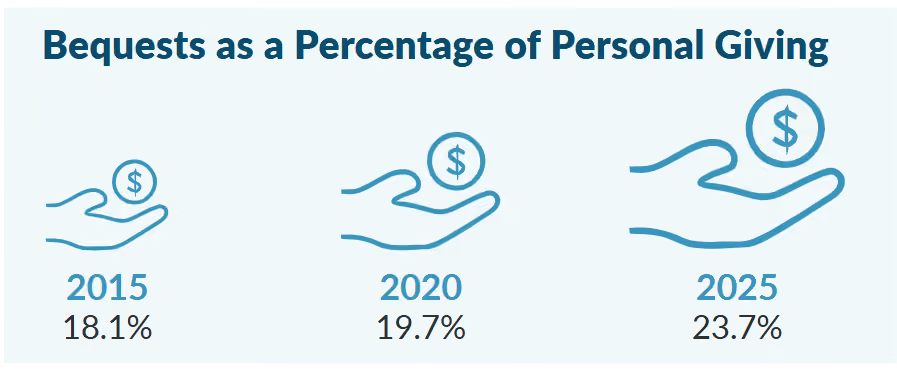
This could be a significant and possibly unanticipated outcome of the ongoing Great Wealth Transfer. These findings point to a more comprehensive understanding of potential beneficiaries for these transfers, which goes beyond simply passing money from one generation to the next within a family to include possibly greater advantages to younger generations through gifts to institutions.
For advancement teams, it’s a powerful reminder that stewardship isn't all just retaining donors for the next campaign but about building relationships strong enough to become part of an institution’s legacy.
4. Building the next generation of donors
University fundraising is bringing in record levels of support, but the donor base behind that giving is becoming increasingly concentrated. According to the FY2025 CASE Insights on Voluntary Support of Education survey, 89% of funds raised came from just 2% of donors.
Major gifts will always play a critical role in university fundraising. But long-term fundraising health depends on more than a handful of generous supporters. To shift this donors-to-dollars imbalance trend, institutions need to think beyond the next campaign and focus on building a broader pipeline of engaged donors.
That work starts early. Today's student volunteer, reunion attendee, mentor, or first-time donor could become tomorrow's major donor, planned giver, or campaign champion. The challenge is creating meaningful opportunities for people to stay connected long before they're ready to make a significant gift.
By investing in engagement, stewardship, and community-building, universities can strengthen both donor participation and long-term philanthropic support.
5 Top university fundraising strategies and best practices
With the trends established, let’s walk you through some best practices to adapt to what is shaping modern university fundraising:
1. Start with your data and go from there
Before launching a new campaign, planning a Giving Day, or investing in new technology, ask yourself a simple question: how confident are you in your donor data?
Outdated records, duplicate profiles, and incomplete engagement histories can quietly undermine fundraising efforts. When advancement teams don't have a clear picture of who their supporters are, personalization becomes difficult, and opportunities slip through the cracks.
A periodic data audit and clean-up may not be the most exciting fundraising project on your list, but it often delivers some of the highest returns. Clean data makes it easier to segment audiences, identify engaged supporters, and build stronger donor relationships over time. In fact, it forms the foundation of any successful fundraising strategy.
2. Create experiences people want to be part of
Let's be honest. Alumni don't attend events because they're fundraising events. They attend because they see value in them.
The value could be to connect with classmates, mentor students, celebrate milestones, engage with campus life in meaningful ways, or simply for the opportunity to feel connected to a community they care about. The fundraising often follows naturally because the relationship comes first.
The goal is to create experiences that alumni want to talk about long after they're over. When you build momentum through social media campaigns, alumni ambassadors, peer-to-peer outreach, challenges, and gamification elements that encourage participation and friendly competition, it encourages your alumni to take part. Institutions that follow this approach to plan their Giving Day turn their fundraising events into a community-wide effort rather than a one-day transaction.
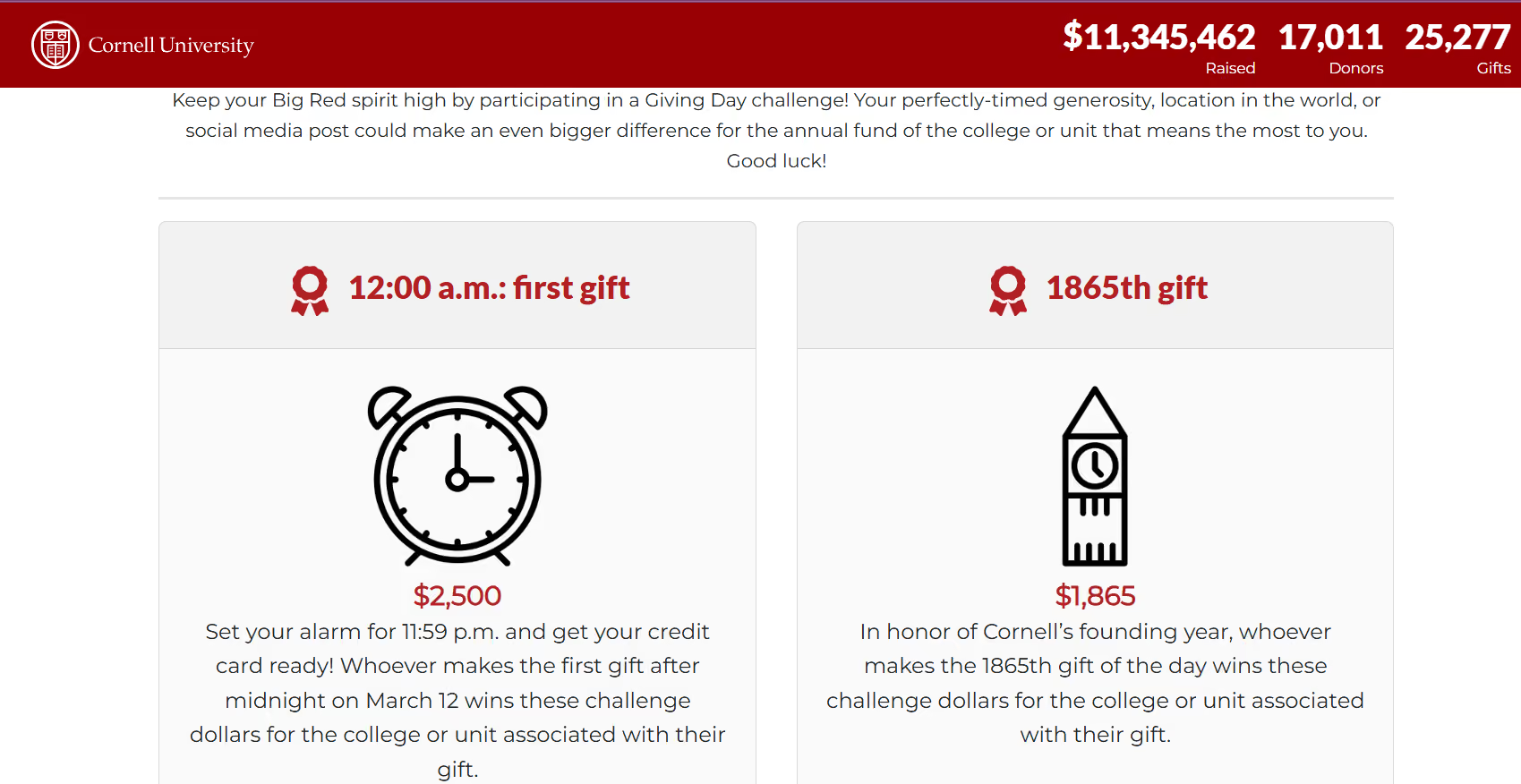
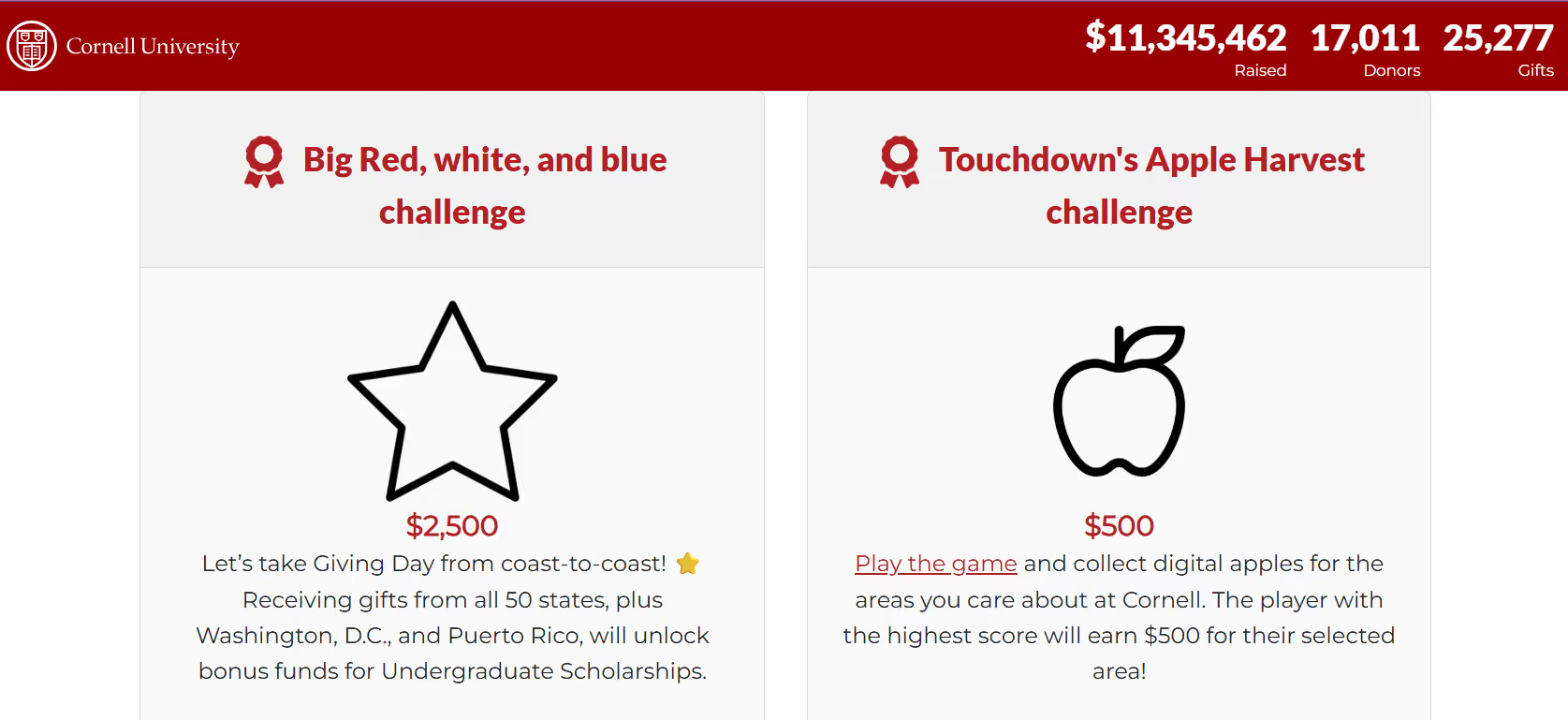
3. Make the donation impact visible
Donors today don't just want to know that their contribution was received. They want to know what happened because of it. Did a student receive a scholarship? Did a research project move forward? Did a new program launch?
The challenge, of course, is making that impact visible at scale.
A thank-you email is a good start, but the strongest institutions go beyond acknowledgments and find ways to bring their impact to life:
- Share student and faculty stories regularly- A scholarship recipient's journey or a research breakthrough often resonates more than a fundraising update.
- Create fund-specific impact updates- Donors who support scholarships, athletics, research, or a specific department want to know what happened because of their contribution.
- Use video whenever possible- A two-minute thank-you from students or faculty can often communicate impact more effectively than a lengthy report.
- Bring donors closer to the work- campus visits, project showcases, student presentations, and virtual briefings help donors see their support in action.
- Close the loop after campaigns- if you raised funds for a new program, building renovation, or scholarship initiative, follow up and share what was accomplished.
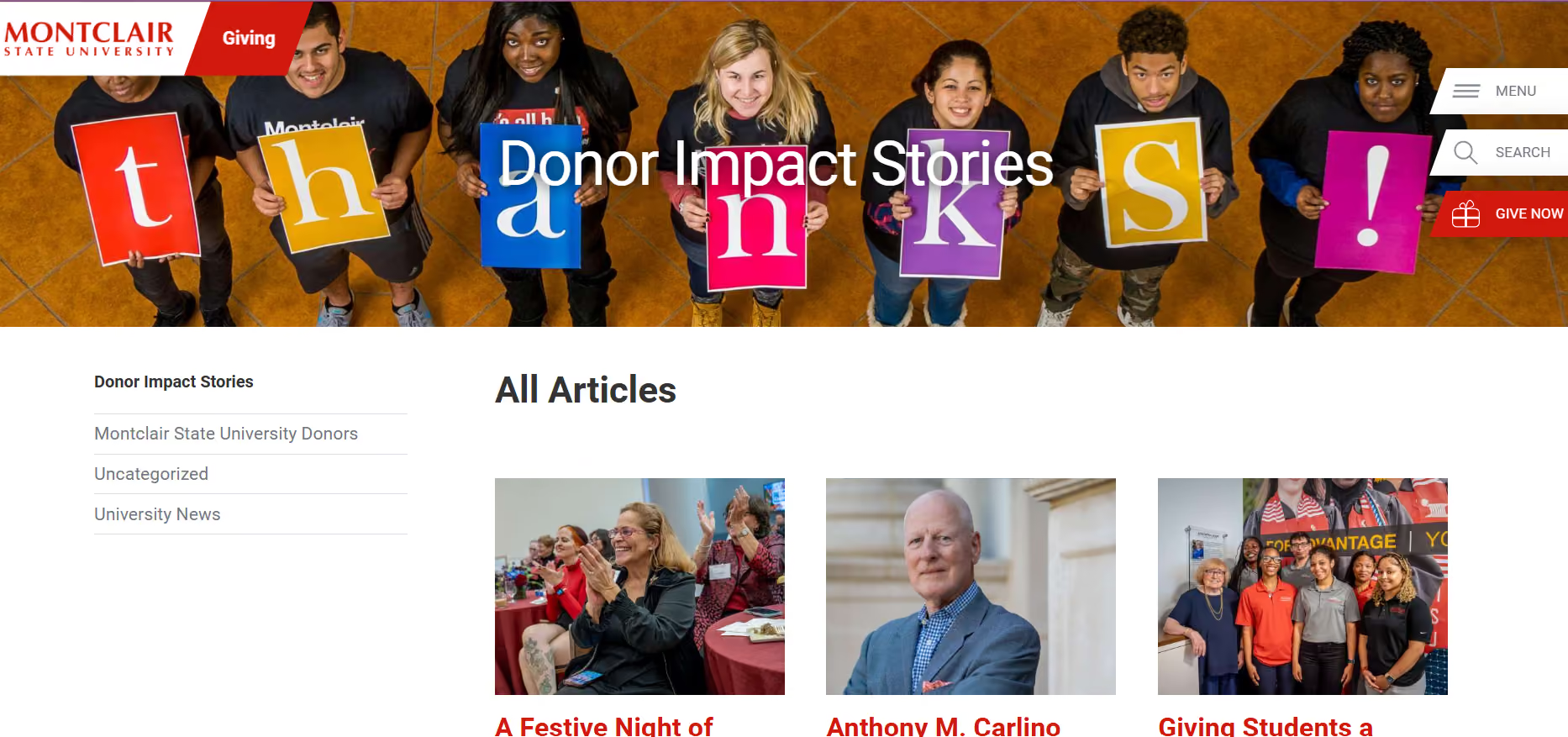
4. Use a multi-channel approach for better reach
Not every donor interacts the same with content. Some will watch a short video. Others will open an email, browse social media, attend a webinar, or listen to a podcast featuring alumni and faculty.
The institutions breaking records lately aren't relying on a single channel and hoping it scales. They're stacking peer-to-peer storytelling, short-form video, text alerts, and live updates throughout a campaign, so a donor encounters the ask in more than one place, in more than one format. Text messages alone still see open rates above 98%, genuinely underused for the urgent, time-bound moment a Giving Day creates, while a platform like TikTok carries video storytelling in a way a static email never will.
The goal is to meet a donor in whichever channel they're paying attention to, rather than asking them to come find you in yours. It works best since it allows institutions to meet supporters where they already are while reinforcing the same message across different channels.
5. Make Giving Easy
Imagine a donor is ready to give.
How many clicks does it take? Can they donate from their phone? Support multiple funds in a single transaction? Set up a recurring gift without jumping through hoops? Complete the process in under two minutes?
As fundraising programs become more sophisticated, even small inefficiencies can create challenges for both donors and advancement teams. That's exactly what Elon University experienced. For years, the institution relied on an in-house Giving Day platform and faced setbacks. After moving to a purpose-built platform, the result wasn't just a smoother Giving Day. It was a record-breaking one.
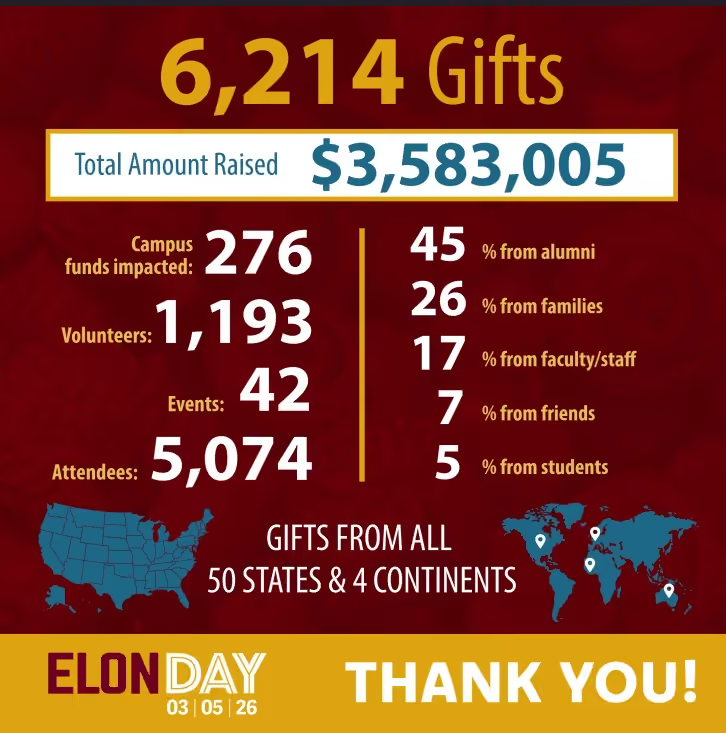
For the first time in its Giving Day’s history, it removed a kind of friction that had nothing to do with money and everything to do with decision fatigue. Mobile-first, frictionless, and flexible aren't three separate features. They help you get out of the way of a donor who's already decided to give. When donors can give easily, and advancement teams can spend less time troubleshooting systems, everyone can focus on what matters most: building relationships and inspiring support.
Common challenges in university fundraising
We’d like to also briefly go through some of the common challenges currently faced in university fundraising before we move on.
1. Broadening your donor base
University fundraising continues to benefit from generous major donors. But relying too heavily on a small group of supporters can create long-term risk.
According to the FY2025 CASE Insights on Voluntary Support of Education survey, 89% of funds raised came from just 2% of donors. That's an impressive testament to the impact of major gifts, but it also raises an important question: How to set right this imbalance?
The instinct is usually to ignore and lean harder into the major donors already giving. The better move, and the one a lot of programs skip, is paying real attention to the low- and mid-value donors who are the ones actually holding up your giving rate when you zoom out. Building a healthy donor pipeline takes time. Alumni don't become major donors overnight. They are built through years of engagement, participation, volunteering, mentoring, and smaller acts of support.
2. Needing to manage more with less
Fundraising has become much more sophisticated over the past decade. Advancement teams are expected to manage Giving Days, alumni engagement programs, donor stewardship, digital communications, events, major gifts, planned giving, and increasingly complex reporting requirements. At many institutions, however, team sizes haven't grown at the same pace.
As a result, many advancement professionals find themselves balancing competing priorities while trying to deliver personalized experiences at scale.
The institutions navigating this challenge most effectively aren't necessarily doing more. They're finding ways to focus their time where it matters most and using technology to eliminate unnecessary administrative work.
3. Donor fatigue
Your alumni nowadays are receiving fundraising appeals, event invitations, newsletters, volunteer requests, and Giving Day campaigns not just from your institution, but from every cause and organization that has information about them.
Even highly engaged supporters can begin to tune out when every message competes for their attention. The resulting problem (or situation) is that more communication doesn't always create more engagement.
If every interaction feels like an ask, supporters may begin to disengage. That's why many advancement teams are shifting their focus from communication frequency to communication value. Are you giving alumni enough reasons to stay connected when you're not asking for a donation?
Sometimes the most meaningful message isn't a fundraising appeal at all. It could be a student success story, an invitation to mentor, an exclusive alumni event, or an update on a project they helped support.
4. AI adoption that's outpacing the readiness to use it well
Most institutions report a positive view of AI in fundraising, and plenty have already deployed it somewhere in donor communications. According to CCS's 2026 data, staff rating their knowledge of AI as mostly or fully knowledgeable doubled to 20%, yet 65% of organizations report no AI training. It flags the gap underneath that enthusiasm: limited training, unclear governance, and weak coordination across teams are slowing how much value institutions actually get from it. The risk isn't that advancement teams adopt AI too slowly. It's that they adopt it without anyone deciding who owns it, what it's allowed to say to a donor, or how two officers are supposed to use the same tool without stepping on each other.
How Almabase helps university fundraising
Reading through this blog, you might have noticed something. None of the strategies we've discussed are particularly controversial. Most advancement professionals already know they should steward donors better, engage young alumni earlier, personalize communications, and make giving easier. The challenge is execution, and this is where the right technology earns its place.
With Almabase, universities can:
- Build and nurture alumni communities
- Manage events and engagement initiatives
- Run Giving Days and fundraising campaigns
- Track alumni participation and donor activity
- Simplify donor management and stewardship
- Create a more connected alumni experience across the entire lifecycle
Almabase was built for advancement teams that want to spend less time stitching together spreadsheets, exporting reports, and managing disconnected systems, and more time focusing on strategy, engagement, and fundraising.
Whether you're running a Giving Day, building alumni communities, managing events, or tracking engagement, now may be a good time to evaluate whether your current fundraising approach and the tools supporting it are helping you get there.
Book a personalized demo to learn how Almabase helps advancement teams engage alumni, streamline fundraising, and build stronger donor relationships.

University Fundraising in 2026: Strategies, Trends & Best Practices
A look into the strategies and trends shaping university fundraising in 2026 and the best practices that will allow your institution to stand out.
Fundraising
Sharada Koti
June 29, 2026
12 minutes
See how leading institutions put these ideas into action