.svg)
Blog Gallery
Build lifelong relationships
Latest stories, guides, and benchmarks from the world of alumni relations, fundraising, donor engagement, advancement services, events, and higher-education philanthropy
Blackbaud recently announced that support for Raiser’s Edge NXT’s database view and related functionality will end on September 15, 2027, affecting several Blackbaud products. These include Blackbaud Online Express and Blackbaud NetCommunity (BBNC). For advancement teams that have spent years building forms, pages, workflows, and other processes around the platform, this means choosing and migrating to a new platform. The prospect can feel like a lot to take on, especially if it wasn't something you'd anticipated.
If you're looking for an alternative, Almabase can help you replace the functionality you currently rely on across these products. We've already covered why teams might be thinking of a move off BBNC and how the main alternatives compare. In this article, we’ll be focusing on what happens once you've made that decision: what the migration process looks like, what your team can expect along the way, and how Almabase approaches the move.
In case you’re evaluating how Almabase stacks up against BBNC, check out our comparison blog here.
There’s also another question that comes up around a platform migration: How much is this going to cost?
This question extends beyond the immediate, visible technical costs. In fact, the technical side of the move might just be the simplest to figure out. It’s the broader, more abstract elements like shifting scopes, changing requirements, or even figuring out the right set of requirements in the first place that could end up costing the most amount of money and time, if not approached thoughtfully.
That's why we want to walk you through the Assisted Fast Pass Migration process upfront: what happens at each stage, what your team is responsible for, what our migration team handles, and where costs may come into the picture. We hope to give you a clear idea of what the move to Almabase will look like before you get started, so there are fewer surprises along the way.
Why transparency matters during a migration
A migration project always begins with an agreed-upon plan. But it’s also very likely that, a few weeks in, you discover a form that needs some additional customization or a request that seemed straightforward seems to fall outside the original scope, on second thought. These are perfectly reasonable hiccups during the migration, but if work is already underway, it could seem harder to understand what you're paying for, and even harder to plan around the rest of the project.
Clear expectations are at the heart of our migration approach, starting with total transparency around what extra requirements cost. With Almabase’s Assisted Fast Pass Migration, each stage gives you a chance to understand what's being proposed, what falls within the standard migration, and where something would require additional work.
Basically, you shouldn't find out about an extra requirement after the work has already been done. Your approval and sign-off comes first. The five steps in the migration process are built around this intention. Let’s get into them.
1. Kickoff: Getting the project off on the right foot
The migration process starts with a kickoff between your team, a dedicated CSM, and an implementation specialist. This is where we get the groundwork in place. This is usually access to your current site, your branding assets, and the dates your team needs to work around.
Another important step here is understanding your calendar and priorities. Your Giving Day, reunion, fiscal year-end, or another major event may determine what needs to happen first and we would be building the migration calendar around it. So, the migration sequence might look a little different for each institution, as each gets to choose which product goes first.
The kickoff is also a chance to flag anything unusual about your current NetCommunity setup.
After years on a platform, it's normal for your setup to have accumulated a few workarounds, custom configurations, or integrations that made sense when they were created. We don't need to solve all of those questions in the first meeting, but we do need to know about them.
That way, we can account for them during the next stage: the inventory. 🤗
Your team mainly needs to provide:
- Key dates and deadlines
- Relevant branding assets
- Access to your existing NetCommunity site
- Any known custom configurations, integrations, or unusual workflows
From there, you can let us take on the heavy lifting.
Your dedicated CSM and implementation specialist work with you throughout the migration, while your team focuses on the decisions and approvals. A migration shouldn't require your advancement team to take on managing a project full time on top of everything else they’re already handling.
Your data doesn't have to wait for the build
Your data migration is handled alongside the rest of the process. Almabase's bi-directional TrueSync integration connects with Raiser's Edge NXT and supports two-way syncing for configured entities and fields, including constituent, event, and gift data.
Admins can also decide which fields update automatically and which should be reviewed before they're pushed or pulled between systems.
That means your team doesn't have to wait until every page and workflow decision has been finalized before thinking about what happens to your data. The data side of the transition can move forward alongside the rest of the migration, with real time decisions being made.
2. Discovery and inventory: weeks one and two
Once kickoff is complete, your implementation specialist carefully starts building a complete inventory of what's currently running on NetCommunity: pages, forms, events, programs, memberships, and other key components of your site.
This process is useful in its own right, especially when taken on by someone external. After years on a platform, it's easy for a site to accumulate things that no one thinks about anymore, simply because they’re too involved in the process. The inventory gives you one place to see what's actually there, anything you might’ve forgotten about, and to make decisions about what needs to move vs what can be left behind.
Probably the most effective part of this is that it's a shared inventory that you can review alongside your specialist. If something looks outdated, doesn't need to move, or needs a closer look, you can flag it before it moves to the new product.
The inventory can surface things like:
- Duplicate or unused event pages
- Old forms or pages that are still live
- Site elements that don't need to be carried into Almabase
- Custom fields and configurations that don’t make sense on the new platform
This idea is to document your NetCommunity site so well that both teams end up on the same picture of what exists and what needs to happen next. The Almabase team handles the actual inventory work, and all you need to do is review the inventory and flag anything that should be changed, removed, or investigated.
3. Sign-off: deciding what moves forward
At this stage, the migration project starts taking on a more defined shape as you decide what you need to bring into Almabase. You and your implementation specialist review the inventory, decide what carries forward, and establish what the finished version should look like.
For each item being migrated, the team, along with you, defines the acceptance criteria before the building begins. If your existing alumni directory has eight fields and three filters, for example, those requirements can be documented as part of the scope. By the end of this discussion, everyone has arrived at the same definition of what needs to be delivered.
This is also where you’ll be able to clearly separate standard migration work from anything that requires additional effort.
If something falls outside the standard scope, you'll know before the work begins:
- What the additional work involves
- What's included and what's excluded
- The estimated effort
- The associated cost
You won’t have to decipher this from the invoice later on, because the work only moves forward once you’ve signed off on the scope.
This is exactly why your input here matters most. The Almabase team handles the building, but it’s you and your team deciding what is important enough to carry forward and what “done” needs to look like, within the standard process or with additional effort layered on.
4. Build and launch: 30 days for each product
Our team takes up building only once you’ve greenlit the scope. Each product gets its own dedicated 30-day track, with the order of products taken up built around your events and fiscal calendar.
This is to accommodate your calendar: giving days, reunions, Homecoming, we’ll build that product first so you’re ready in time for go-live day. If your immediate priority is your broader alumni site, we might begin with building that instead. The point is, even at this pace, you’re not forced to adopt a one-size-fits-all solution. Your implementation team works with you to determine what needs to come first.
The build itself happens on your Almabase pages, so you can review as it gets built while also familiarizing yourself with the new platform.
The timeline typically looks like this:
- 30-day build track: Each product moves through its own focused build.
- Weekly working session: Your team meets with the implementation team to review progress, provide input, and make decisions.
- Training as you go: Your team gets hands-on experience with the platform during the build, rather than waiting until everything is finished to start learning it.
- First launch: The fastest migrations can have their first product live around 45 days from kickoff, depending on the scope and sequencing of your project.
Having the scope agreed upon shows up in smoothness at this point: you can expect fewer decisions to make from scratch during this stage. Your team knows what's being built, your implementation specialist knows what they're working toward, and everything can move as planned, on track.
5. Cutover: moving from NetCommunity to Almabase
As you get closer to launch, the focus shifts from building to making the transition itself as smooth as possible.
The most important part of that is making sure people can still find the things they've been using. Your team receives a redirect map that pairs each carried-forward NetCommunity URL with its new Almabase destination. You'll also want to review where those old links appear outside NetCommunity: your main institutional website, email templates, QR codes, printed materials, and any other places where an old URL may still be in circulation.
The redirect map gives you a clear list of what needs to change and no one has to discover old links one by one after launch.
Before each product goes live, your team gets to review it thoroughly and explicitly approve the launch.
The aim, with these five steps, is to get your Almabase programs ready before your NetCommunity access ends, so the transition remains smooth and doesn't become a last-minute scramble.
What happens when something doesn't fit the standard scope?
Not everything that comes up during a migration falls neatly into the original plan. But there's also an important conversation to be had: what counts as additional scope and what is a limitation in the platform itself?
If something requires work beyond the standard migration scope, that's identified and quoted before the work begins. You can then decide whether you want to take it on.
But if there’s a requirement you have that Almabase cannot support yet, we’ll be fully transparent with you. Essentially, you haven’t asked for too much, we’re just not there yet. Depending on what you need, the team can look at a workaround or determine how the functionality could be addressed after launch.
This conversation is also one of the reasons the earlier stages matter. The shared inventory, defined acceptance criteria, and upfront scoping give everyone a common reference point throughout the project.
That's really the principle behind the entire migration process. You're not expected to know every detail of what needs to happen before the project starts. The process itself is designed to show you those details early, give your team a chance to make the calls that matter, and keep the build moving while minimizing unexpected, last-minute surprises.
Ready to make the move?
A BBNC migration may not have been on your roadmap, but that also doesn't mean it has to become a project that takes over your team's calendar.
With a clear process, an agreed scope, and the right support, you can move the parts of NetCommunity that matter to your team and work for your institution without having to figure everything out as you go. The Almabase team handles the build and migration work, while your team stays in complete control of the decisions, priorities, and final approvals.
And because the scope and any additional costs are addressed before the work happens, you can go into the migration knowing what to expect.
If you're planning your move away from BBNC, let's talk about what it could look like for your institution.
Talk to the Almabase team about your BBNC migration →

Moving from BBNC to Almabase: The Assisted Fast Pass Migration
Blackbaud is sunsetting support for Raiser’s Edge NXT’s database view and related functionality in September 2027. Learn how Almabase replaces your current functionality and how our Assisted Fast Pass Migration makes for a smooth switch without disrupting your campaigns or operations.

Anwesha Kiran
September 10, 2026
12 minutes
A paddle raise (also called a fund-a-need) is a great and simple fundraising format for nonprofits. It is easy to host, fun, and similar enough to auctions that if you have experience in one, you can easily incorporate the other.
All this is to say that, with proper planning, it is one of the most effective ways to get donations for your nonprofit or a particular project.
In this blog, we’ll look at what makes a typical paddle raise work, its benefits, and the essential steps to start hosting one on your own.
What is a Paddle Raise?
A paddle raise, also often called fund-a-need, is a live, direct appeal during a fundraising event such as a gala where donors pledge a financial contribution to a nonprofit, charity, or a particular cause. This is usually done by raising paddles containing varying numbers or ‘levels’, or through bidding devices and software.

Unlike charity auctions though, there aren’t any items or art involved, and attendees will not be bidding on a piece. An ask is made, and donors willing to contribute that amount raise their paddles. Due to the simpler setup and direct contributions, paddle raises have high ROI and are generally considered to be very effective.
How does a Paddle Raise work?
Usually taking place at the peak of the fundraiser, a paddle raise takes around 10-20 minutes (it happens quite quickly). This is typically how it unfolds:
- A designated speaker or emcee gets the event rolling by showing a video or narrating a quick story that introduces and emphasizes the impact of your mission.
- The emcee announces the fundraising target for the night, or if there are multiple causes, the goals for each.
- Tiers of contributions are planned beforehand ($10k, $7.5k and so on), and the emcee starts with the highest tier and works their way down to the lower tiers. When they ask for contributions, attendees express their willingness by raising numbered paddles.
- Volunteers and staff keep track of all the pledges and note it down.
- After going through all the tiers, the pledges are processed, and the total amount raised is announced. Attendees are thanked for their contributions and the event draws to a close.
Now that we’ve gone through what a paddle raise is and how it usually plays out, let’s get to how you can run one of your own.
How to Run a Successful Paddle Raise (Step-by-Step)
While paddle raises are simple enough in concept, they do require proper planning and coordination to capture pledges accurately and create good energy overall.
Here’s how you do it:
1. Pick the right cause/project for your targets and set your targets
Paddle raises are a lot more effective if you can tie them to a specific initiative that makes donors feel like they’re making a meaningful impact. It could be an annual raise for cancer, providing education to underprivileged children, etc.
Set a tangible goal and be clear on where the money goes. Sharing this with your donors builds trust. The goal shouldn’t be so high that hitting it feels impossible. All in all, you want to set a realistic but fairly ambitious figure.
2. Decide the contribution levels or tiers
You should aim for 5-10 levels and make sure it’s inclusive of everyone’s giving capabilities. You can discuss with your pre-committed donors (more on that later) to decide amounts for the higher giving tiers (or conversely for lower giving tiers depending on the situation).
This is where having a regularly updated donor database helps greatly, as you can base your levels off of giving history and data.
A basic example would be to have $15k as the highest tier, followed by $10k, $5k, $2k and so on all the way to $50. Remember that you have to be inclusive, so don’t skimp out on small or micro-level contributions.
3. Pick your emcee or host
The emcee is critical in setting the stage and the energy before the raise begins. An enthusiastic crowd can make a massive difference in contributions. If possible, hire a professional emcee who has been on the mic for other charity events before. You know your donors best; use that knowledge to pick out a host that can connect with them and elevate the room accordingly..
Alternatively, if your organization has deep ties with the attendees, you could consider a leadership figure (directors, chair, etc.) for familiarity. Of course, they need to be a good orator as well.
4. Decide the schedule and script
Since a paddle raise is relatively short, decide when the paddle raise should take place during your fundraising event or gala. You should aim to host the raise during the peak of the fundraiser, when everyone is energetic and receptive to instructions from you or your host.
Come up with a script, including your opening statement, tier announcements, anecdotes, and expressing gratitude at the end. Have alternative scripts ready for different scenarios since you can’t always predict if you’ll hit your target, overshoot it, or come close.
5. Pick the right tools for your event
You can choose to host your paddle raise with either physical paddles or through bidding software, though incorporating the former is heavily recommended.
You’ll need to assign numbers to each attendee and give them a paddle with the corresponding number. When a certain giving tier is called out, they can choose to pledge that amount by raising the paddle while volunteers keep track of it.
If you’re opting for a digital process, look for mobile-friendly bidding platforms. There are some other options as well like scanning QR codes to pledge. However, keep your attendees’ preferences in mind and try to find a balance between their experience and your team’s feature set. This is important, since the bidding and giving data will need to be synced to your CRM.
6. Running the paddle raise itself
When opening your event, it helps to set the energy high. Start with the mission statement and targets you set earlier. Here’s where the emcee does the heavy lifting. Videos and stories with emotional angles work really well at establishing a connection with your donors and creating empathy for your cause. If you have first time donors in the mix, a quick explanation of how the paddle raise works would also be helpful.
Make sure your volunteers are in place to clearly record everything. The emcee announces the levels in succession, starting with the highest one and working their way down.
Seeing major contributions right at the start might encourage the others to go beyond what they had originally planned. Make sure that the emcee acknowledges and celebrates pledges briefly for each tier before moving on to the next one.
How your staff records the pledges is up to you. You can use an app, spreadsheets, or simply pen and paper. Choose whichever would be the most convenient and accurate for your team.
7. Gratitude and stewardship
After going through all the levels, tally the total amount raised and announce it as the event draws to a close. Celebrate the impact everyone has created on the day. Tying the money raised to a tangible outcome (for example, 50 scholarships granted for struggling children, or feeding 100 people) creates even more positivity and really drives home a sense of accomplishment and giving.
After your fundraising event, follow up with your attendees to collect the pledged amounts, preferably within a day. Include key details like their paddle number, amount they pledged, and multiple payment options. Thank all the participants, regardless of whether they donated or not.
A Few Tips to Enhance Your Paddle Raise
Here are a few extra things to ensure you get the most out of your paddle raise(s):
- Pre-committing a handful of donors: Reach out to some of your long time supporters, and ask for an early commitment to a particular level, especially the higher ones. Hesitation in the opening rounds of the raise can affect the overall contributions negatively. When attendees see paddles being raised immediately even at higher tiers, it gives them confidence to donate more.
- Host it at the right time: If your paddle raise is part of a larger fundraising event (as is most common), avoid doing it right after a meal break when attendees are a bit languid, or at the very end of the event when a lot of them have left already.
- Celebrate milestones during the raise: Every time you get significantly closer to hitting the day’s target, celebrate it. For example, if your goal is to raise $30000, then announce and celebrate when the contributions reach $5000, $15000, maybe hit a gong at $25000, and so on. Also, make sure to recognize all contributions, big or small, with equal excitement.
Almabase - A Powerful Tool for Hosting Your Paddle Raise
At its core, a paddle raise is fairly simple. But behind that simplicity is a lot of manual tracking like volunteers noting down pledges, someone tallying totals, and follow-up calls or emails to actually collect what was pledged. This is usually where a platform like Almabase can take some of that load off your team.
Instead of clipboards and spreadsheets, Almabase gives you a real-time dashboard of the event as it unfolds, so pledges don't need to be re-entered after the fact. Since collecting payment is often the trickiest part, you can also capture a guest's card at registration and charge pledges automatically once the raise wraps, rather than chasing donors down individually.
A couple of other things worth mentioning: contributions can be routed straight to the fund or project they were raised for, and everything syncs directly with your CRM so your donor records stay accurate without extra data entry.
None of this replaces a great emcee or an emotionally engaged room, but it does mean less time spent staring at numbers, and more time celebrating what you raised.
Request a personalized demo to see how this would look for you!

How to run a successful paddle raise (fund-a-need) at your event
Learn what a paddle raise is, how you can run one successfully, as well as a few tips to make your paddle raise stand out.

Hari Govind
September 4, 2026
12 minutes
Modern donors expect deeply relevant, personalized communications, especially when it’s alumni hearing from their alma mater. Generic messages won’t cut it, but it can also be difficult to make your appeals stand out when you’re making the same ask every year. To develop annual fund appeal letters that drive revenue and deepen relationships, you need a strategic approach.
Annual fund appeals succeed when they have refined messaging, emotional resonance, and enough variation to win donors’ support outside of flashier, major campaigns. In this post, we’ll explore a few key ways to elevate your university’s next ask.
1. Center Authentic Student Storytelling
Donors give to people, not institutions, making personal narratives one of the most effective fundraising and marketing strategies you can use. By shifting the focus from university-wide achievements to the tangible success of individual students, you foster a direct emotional connection with your audience and demonstrate the real, lasting impact of their donations.
Instead of relying on generic asks for annual fund appeal letters, incorporate the stories of individual students and the scholarships and programs that empower them to thrive. For instance, you might share how a first-generation nursing student used a grant to complete their clinical rotations, or include a quote from a scholarship recipient about how attending your university made their dreams a reality.
No matter how you incorporate storytelling into your appeals, Meyer Partners recommends using the three R's of storytelling to make them as impactful and ethical as possible:
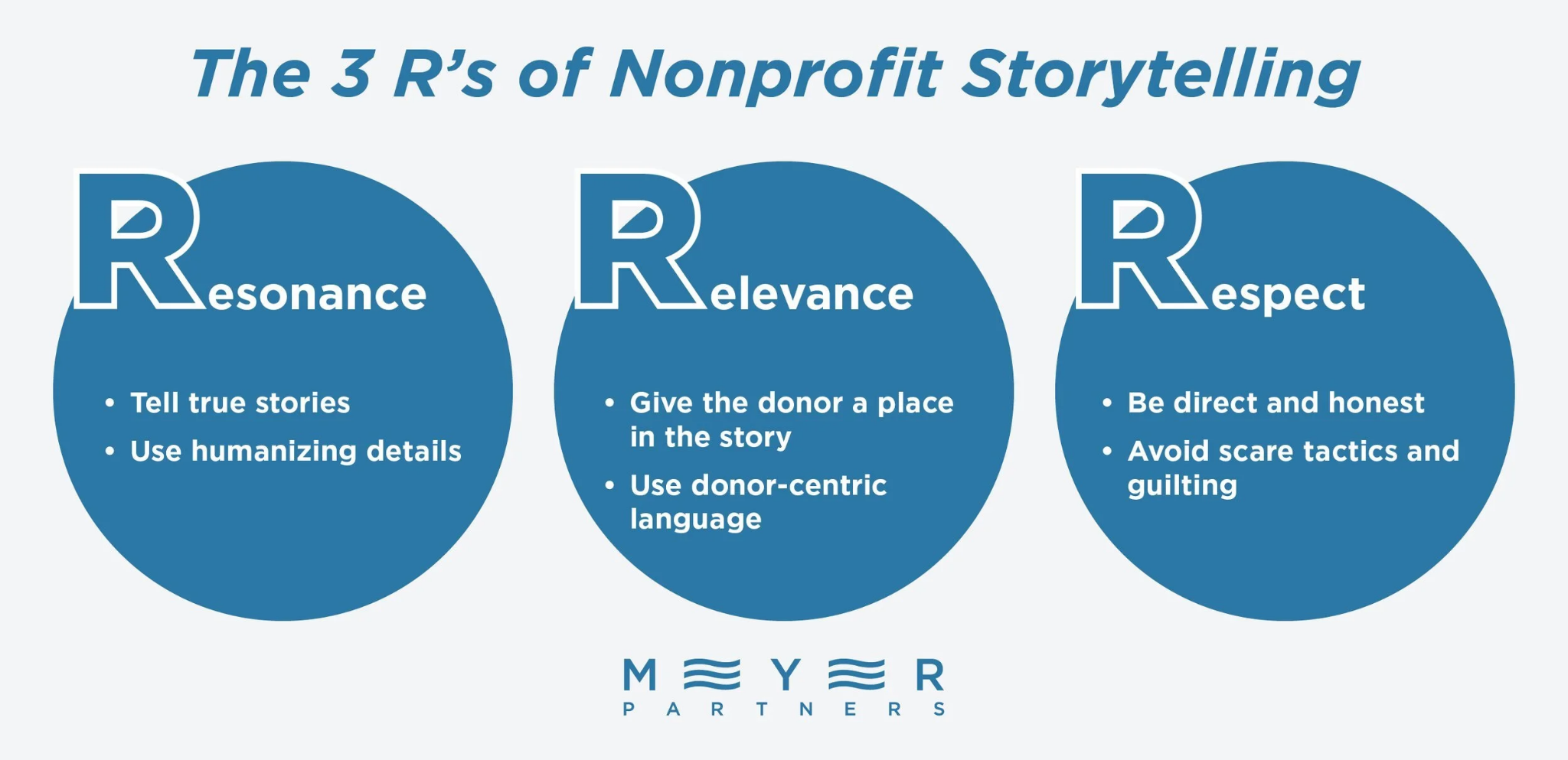
- Resonance: Every story should include real, humanizing details that resonate with donors. Let students tell their stories in their own words, and pair testimonials with photos whenever possible.
- Relevance: Make sure the donor can clearly understand their role in the story. Use donor-centric language that appeals directly to supporters’ values, inspiring them to become the changemakers who support the next generation of students.
- Respect: Respect both your readers and your storytellers by maintaining authenticity. Be direct and honest about what donations can achieve, and always focus on positive emotions like empowerment rather than guilt or scare tactics.
Incorporate these stories into multiple elements of your annual fund campaign to ensure maximum visibility and consistency. For example, you might include quotes from a student in your direct mail appeals, then post a selfie video of the same student telling their story on social media.
2. Highlight Impactful Giving Opportunities
To maximize revenue and increase average gift sizes, ask for more than standard, one-time cash gifts in your annual appeal letters. Offer additional giving options that provide greater flexibility and can increase donors’ long-term impact. These opportunities are often more compelling, especially for young alumni looking for accessible options and for high-capacity donors looking to make the most of their donations.
Specifically, use your annual appeals to highlight opportunities like:
Matching Gifts
The easiest way to make supporters’ donations go further is to double them. Typically, donors can double the impact of their gifts at no extra cost in one of two ways:
- Your university offers a matching donation challenge. Organizations often partner with a major donor who commits to matching every dollar donated within a set timeframe, up to a certain amount. These challenges motivate individual donors to give urgently so they don’t miss out on the match.
- Donors request corporate matching gifts from their employers. At any time, donors who work for participating companies can independently request matching donations from their workplaces. If the request meets the employer’s guidelines (e.g., a donation between $10 and $100 to a registered 501(c)(3) nonprofit), they’ll match their employee’s gift.
Either way, donation matching is a powerful motivator, especially during year-end giving season. Feature matching gifts prominently in your annual fund appeals, explaining how to participate and why these donations are so impactful.
Recurring Giving
Imagine you’re a recent graduate just starting your career and trying to pay off student loans. You wouldn’t want to donate $1,000 to the university you left last year, but it might be feasible to give $20 a month. In this case, you’re much more likely to respond to an appeal that highlights recurring giving.
Recurring gifts offer a more manageable opportunity to support your university while deepening donor relationships. In your annual fund appeal letters, include the option to give monthly and provide several accessible donation tiers.
Legacy Giving
Plant the seed for long-term support by introducing planned giving and bequest options in your annual appeals, too. These avenues empower alumni to leave a lasting mark on your institution without requiring an immediate, large-scale donation.
Even if most donors aren’t ready to commit to a legacy gift right now, just including information about planned giving in your appeal can get them thinking about it. Include links in emails and QR codes in direct mail letters so supporters can easily learn more on your university’s website or request a meeting with your major gifts officer. Note each donor who shows interest in the program so you can cultivate the relationship over time.
3. Leverage Donor Data for Highly Personalized Appeals
The best fundraising strategies reflect the unique relationship each supporter has with your university. Highly personalized appeals show each donor that you value them as an individual and respect their unique contributions.
Use your donor and alumni data to tailor your asks as much as possible. Go beyond addressing recipients by their preferred names—reference their specific past involvement, giving history, and personal connections to the university. Acknowledging that an alumnus was on the debate team or that a donor consistently supports the engineering department validates their identity and gives them clear, specific reasons to give again.
Segment your donor lists in several ways to maximize relevancy, and regularly audit your donor database to ensure all contact information and engagement records are accurate before sending appeals.
If you aren’t sure how to best segment your audience, hone in on the highest-value potential donors, or match supporters with the right requests, consider professional donor analytics services. Experienced fundraising consultants who specialize in data analysis can help you optimize your strategy for this year’s annual fund appeal and well into the future.
An effective annual fund approach relies on deep personalization, authentic narratives, and a variety of flexible giving options tailored to your audience. Upgrading the underlying strategy of your communications with these tips will help you build stronger relationships with alumni and secure the financial future of your core programs.

3 Ways to Build a Better Annual Fund Appeal for Higher Ed
Asking for donations to your annual fund can feel repetitive, but your appeal letters shouldn’t be. Learn how to develop better annual fund appeals here.
.jpg)
Alyssa Jefferies
September 3, 2026
12 minutes
LinkedIn continues to stay relevant for alumni outreach in 2026 as it is one of the most comprehensive self-updating directories from an advancement standpoint. Over 50% of LinkedIn’s user base holds a higher-education degree, and ~53% of US college graduates are active on the platform.
That means your alumni not only present but also likely engaging with a variety of content. But as far as reaching out to them goes, being present on LinkedIn and being reachable are two different things, and the wrong outreach strategy can disinterest or even alienate alumni.
In this blog, we’ll go through whether LinkedIn is worth your time for alumni outreach and how you can get your alumni’s attention effectively.
Is LinkedIn outreach worth the investment?
Let’s start with understanding why LinkedIn is different from the other channels
LinkedIn InMail gets a 10–25% response rate while cold email, by comparison, sits at 1–5%. The platform’s natural context is also a big factor here because when an alum receives an InMail from their alma mater, it’s in a different environment to when they’re sorting through personal emails and family messages. They log on to LinkedIn with a certain mindset, which makes them more open to professional conversations.
LinkedIn also gives outreach teams more context about who they’re reaching before they begin the process such as:
- Where an alum works currently
- What they’ve recently posted
- What groups and communities they’re in
- Who the common connections are
That’s a lot of helpful material to tailor the first message that will hopefully be the start of a donor’s journey. Combine all of this with the social media nature of the platform and you get a channel that has a lot of potential if you approach it right.
LinkedIn Alumni Outreach Strategies
Now that we’ve established that LinkedIn is at least worth a look, let’s set your team up for success so that your messages don’t go ignored.
1. Build an Active Presence Before You Send a Message
Advancement teams (and most teams in any field, to be fair) tend to treat LinkedIn outreach the same way they’d treat a cold email campaign. They find the person, write the message, hit send, and hope for the best.
But LinkedIn is, at it’s core, a social network. Your alumni notice who’s following you, who’s commenting on your posts, and whether your institution has a solid presence on the platform. If your university’s LinkedIn page hasn’t posted in months and the last post was a stock photo of a campus building, it hurts your cause already.
Before you start an outreach campaign, make sure you tick all these boxes::
- First, make sure your institution’s LinkedIn page is active. Posting once per weekday helps you reach 60% of your followers in a month. You should be aiming for consistent presence over viral content.
- Secondly, look for mutual connections, a shared connection increases reply rates by 27%. If a colleague or another alum is already connected,
- Thirdly, follow the alum you plan to message and leave a genuine comment on something they’ve posted. If possible, build and nurture your online relationship with them. You should be looking to gain a follow-back. This can be crucial since alumni who already follow your institution are 81% more likely to respond to your InMail.
2. Build a Segmented List
Use your CRM along with LinkedIn's alumni search tool to understand who you will be sending your messages to. Many alumni engagement tools also allow you to better find, segment, and automate outreach to the right people.
The segmentation itself will be crucial as personalization is a big part of making your message stand out (as we will explain later), so take your time and make sure all your segments and alumni information is updated, synced, and ready to go.
3. Get the Subject Line Right
LinkedIn InMail by default gives you a 200-character subject line limit. When an alum receives your InMail as a notification, they see roughly 25 to 40 characters before the preview cuts off.
For this reason, short, specific, and personalized subject lines can work really well. For example: “A quick question from [University]” or “Connecting with [Name] re: mentorship”.
What won’t work on the other hand, is anything that sounds like a mass email campaign. Something like “Exciting news from the alumni office!” might feel generic or may confuse recipients.
4. Keep the Message Short and Simple
LinkedIn’s own data shows that InMails under 400 characters get higher response rates. Many institutions sometimes write messages much longer than this and have their messages scrolled past.
For your first message, your alums only need enough to understand what you’re asking and if it's worth their time. If you have more context to give and more reasons to say why this outreach matters, that can follow later.
Write a ~300-character message that asks one clear question. The message can address the basics such as who you are, why you’re reaching out, and your one specific question.
5. Personalize Beyond the Name
Alumni can tell if a message was written for them or if someone just replaced a mail merge field, so you’ll want to go further than just swapping people’s first names. Here’s a few things that might help with personalization:
- Spend a couple of minutes on the alum’s profile; personalized InMails increase acceptance rates by about 40%, according to LinkedIn data. Mention a recent post they made, a project they were publicly credited for, a career transition they just went through, or a shared connection.
- Find a good natural connection between what you discover about them and what you’re reaching out about. If you’re inviting them to a career mentorship panel and they’ve been posting about early-career development, mention that. If you’re reaching out around their 10-year graduation anniversary, you definitely want to acknowledge it.
- Avoid mentioning generic and obvious things like “I see you graduated from [University].” Good personalization shows you’ve paid attention to their life after graduation and you have a brief window that you want to make the most out of, especially for less-engaged alumni.
6. Templates for Common Outreach Scenarios
Here are some templates that you could borrow and build on to personalize your next outreach message on LinkedIn:
General reconnect:
"Hi [Name], congrats on the move to [Company]. I'm on the alumni relations team at [University]. We're putting together a small group of alumni at your career stage to get some honest input on our programs. Would a 15-minute call work?"
Mentorship opportunity:
"Hi [Name], I work in alumni relations at [University]. Saw your recent post on [topic] and thought you'd be a great fit for our mentorship program. We're matching alumni with students in [field]. Would you have 30 minutes to hear more?"
Upcoming event:
"Hi [Name], I'm with alumni relations at [University]. We're hosting a small dinner for [City] alumni on [date] and wanted to make sure you were on the list. Can I send you the details?"
Giving day:
"Hi [Name], [University]'s giving day is [date]. This year all gifts are going toward [initiative]. Wanted to reach out personally before things kick off. Can I send you a bit more context on what it supports?"
What each of these has in common is one clear ask and customization that shows the sender did their homework before reaching out.
7. Time Your Outreach Well
LinkedIn data shows that Friday and Saturday see 4% and 8% fewer than average responses, respectively. Your alumni may want to relax and disconnect from the professional world on the weekends, so Monday through Thursday is a good window. However, depending on your event calendar, and past alumni engagement data, this can vary a bit so do double check!
Going back to the mentioned window, Sprout Social's analysis of nearly 2 billion engagements across major social platforms points to Tuesday through Thursday, 11 a.m. to 5 p.m., as LinkedIn's peak activity window. That's when professionals are most actively checking and responding on the platform, so it's your best shot at being seen before your message gets buried.
8. What to Do When Alumni Reply
Your next message after an alum replies sets the tone for the entire conversation that follows and the subsequent relationship. So here’s a few things to keep in mind:
- Reply quickly, ideally within a few hours of seeing their response.
- Thank them by name and reference something specific from their reply.
- Remember that this is a conversation on a social platform.
The goal should be to establish that your team and, by extension, your institution has a real interest in keeping in touch with them after graduation. For this reason, you’ll want to:
- Find out what they’re working on.
- Ask follow-up questions.
- Make it clear that there is no immediate ask attached.
💡This doubles as an opportunity to get updated information in case their profile information hasn’t been updated in a while.
Alumni who are connected to their institution are 23 times more likely to donate than those who aren’t. That connection, however, has to be built through consistent, genuine interaction over time. So, when it’s time to make an ask, it’s coming from the context of the conversation.
Build a LinkedIn Alumni Community (and not just another contact list)
At the end of the day, one-on-one outreach can only take you so far. Advancement and alumni relations teams that are able to keep alumni engaged are also building environments where alumni feel like they want to stay engaged.
If we are sticking to the platform at hand, LinkedIn Groups are a great way to do this. You can organize alumni groups around:
- Your institution
- Graduation cohorts
- Academic departments
- Regional chapters
- Donor groups
- Matching gift opportunities
…and much much more
AdvancementForm looked at what the institutions running active alumni groups have in common. Here are the main takeaways:
- Stay active every day: Keith Hannon of Cornell University shared that two-thirds of alumni relations professionals running thriving LinkedIn communities log in daily. That includes posting, answering questions, responding to comments, and engaging with what other members are sharing.
- Give alumni the spotlight: Spotlighting a graduate's career achievement or resharing something they wrote brings their audience into your content. Even the simple act of tagging alumni where needed will ensure that their network is notified as well.
- Share career resources such as job postings, industry reads/insights, career advice for alumni at different stages and make sure they are updated frequently. This is the content that consistently performs well as it provides a clear reason to engage.
- Mix up your content formats: Posts with images get a 98% higher comment rate than those without, and posts with YouTube videos (that play directly in the feed) get a 75% higher share rate. Varying your formats will keep the feed from feeling like a broadcast channel.
- Ask alumni to help current students: Academic Impressions flags this as an especially meaningful way to engage alumni because it gives them an opportunity to give back give back, even without a financial element. Posting something like "What do you wish someone told you in your first year in [industry]?" gets replies from alumni who would otherwise never comment on, say, an event announcement.
- Run polls: Lebanon Valley College asked their alumni "What career field are you currently in or looking to enter?" and it sparked a lively, ongoing discussion among their alumni. Polls can be a great icebreaker and contextualizing them to recent events, career stages, or other segmented needs is even better!
- Add in the nostalgia angle: Questions and posts about campus memories or institutional history give alumni interactive content that serves as a break on their feed from the usual LinkedIn content while also reminding them of why they feel connected to their school.
Finally, if you're thinking about content ratios, keep it weighted toward value-first content, career resources, alumni recognition, and conversation, with campaigns and event promotion playing a supporting role, not leading the feed.
Measure Your Progress and Know Your Blind Spots
You need to know whether your efforts are paying off. So, if you’re running structured outreach campaign on LinkedIn, here are the metrics which will help you track what's working:
- Connection acceptance rate: You generally want to aim for ~20% or above. If you're below that, check whether you're warming up contacts before sending requests and whether your institution's page looks active and credible.
- InMail response rate: With personalized, well-targeted outreach, this should sit between 10–25%. Single-digit numbers are an indication to look at your message length, your subject line preview, and how specific your personalization is.
- Conversation-to-action rate: This tracks what percentage of replies converts into whatever your goal is, whether that’s an event registration, a scheduled call, or a gift.
The Council for Advancement and Support of Education (CASE) tracks alumni engagement across four modes: philanthropic, volunteer, experiential, and communications.
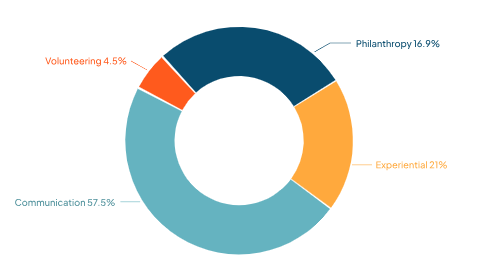
LinkedIn activity can feed into your experiential and communications metrics. If you’re not tracking LinkedIn engagement as part of your overall alumni engagement scorecard, you should consider starting now.
A few common blind spots that can be avoided include:
- Reaching out only when there's an ask: If alumni only hear from you around giving day or annual fund season, the outreach feels transactional. Only 27% of alumni who donate give to their alma mater. The most common reason others don't give is because they don't feel connected enough to make it a priority.
- Writing LinkedIn messages like emails: Avoid long messages, formal language, attached PDFs when LinkedIn is conversational. Keep messages short, and the tone conversational.Save the documents for follow-up conversations.
- Ignoring alumni who engage with your posts: When an alum comments on something your institution shared, respond to them, thank them by name, and if appropriate, send a connection request with a brief personal note referencing what they said.
- Not knowing what comes next when someone replies: Replying to a message without a clear next step might waste the opening you had spent time and effort on. Know what you’re trying to accomplish before you send the first message so that when someone replies, you’re ready to take the conversation forward.
Final Thoughts
We hope we’ve been able to give you and your team plenty of things to keep in mind. While LinkedIn outreach may seem like a simple game of numbers at first glance, any outreach campaigns involving social media rarely tend to be so predictable and you definitely want to keep that in mind.
To wrap things up, keep personalization (and segmentation by extension) at the heart of your strategy, have a consistent presence on LinkedIn just as you probably do with Facebook or Instagram, and make sure you are thinking about how to take the conversation forward many weeks ahead of time so that alumni feel appreciated after reacting to your outreach.
If you are looking for an alumni engagement platform to help you plan, execute, and measure your alumni outreach and engagement strategy, Almabase is built just for that so feel free to book a personalized demo with us!
How to Reach Out to Alumni on LinkedIn and Get Responses
Our article takes you through LinkedIn alumni outreach and how your team or institution can ensure that your alumni don't ignore your messages.

Prajnya Yelamali
September 2, 2026
12 minutes

Alumni relations have come a long way from simple newsletters and reunion invites. Today, institutions are embracing creativity, technology, and community-driven values to build meaningful, lasting connections with their alumni.
In this blog, we’ve curated 10 standout alumni initiatives that go beyond the ordinary. Whether you're looking to spark new ideas or elevate your existing engagement strategy, these examples are sure to inspire your next big move.
What counts as an alumni relations initiative?
An alumni relations initiative refers to any program, event, or effort specifically designed to engage and strengthen ties with an institution’s alumni community. These initiatives aim to foster a sense of belonging, keep alumni informed, and encourage continued involvement in the life of the school or university. In essence, alumni relations initiatives are a focused subset of broader alumni programs—those that revolve around community-building rather than fundraising, career services, or admissions support.
These initiatives can take many shapes depending on the institution’s goals and audience. Across the US, UK, and Canada, schools and universities have adopted a wide range of strategies to stay connected with their alumni in meaningful ways. Below are some of the most common and effective alumni relations initiatives seen in practice today:
- Reunion Events: Class reunions, homecoming weekends, or milestone gatherings
- Alumni Chapters & Regional Meetups: Local events organized by geography or shared interests
- Mentorship Programs: Pairing alumni with current students or recent graduates
- Alumni Awards & Recognition: Honoring outstanding alumni achievements
- Online Communities & Networking Platforms: Digital spaces for alumni to connect and collaborate
- Lifelong Learning Opportunities: Webinars, courses, and lectures exclusively for alumni
- Volunteer Engagement: Alumni-led committees, ambassador programs, or event support
- Career Support & Job Boards: Alumni-exclusive job listings, resume reviews, and networking
- Affinity Groups: Communities based on identity, profession, or extracurricular involvement
- Alumni Newsletters & Magazines: Regular updates showcasing alumni stories and institutional developments
These are some of the most popular ways schools and universities stay connected with their alumni, but the real magic lies in how each institution puts its own spin on them. From small colleges to large universities, we’ve seen some truly creative and impactful ideas take shape.
10 alumni relations initiatives to take inspiration from
In this section, we’re highlighting 10 real-life examples of alumni relations initiatives that stand out. Each one comes with a quick snapshot (literally, where possible!) so you can see how these ideas were brought to life and maybe even borrow a little inspiration for your own alumni strategy.
1. Kent State's Care Calls to New Graduates
In a time when many new graduates feel uncertain about their next steps, Kent State University took a deeply human approach—picking up the phone. As part of their wonderful initiatives, the university launched Care Calls, where staff and faculty personally called recent graduates to check in, offer congratulations, and provide information on alumni resources and support.
What made this initiative so powerful wasn’t just the information shared—it was the gesture itself. A personal call during a major life transition reminded students that they remained part of the Kent State family even after crossing the graduation stage. It turned a one-way farewell into a two-way conversation, reinforcing lifelong belonging. The program’s success earned it a CASE Circle of Excellence Award in 2024.
2. Next-Gen Platform Takes Alumni Engagement to New Level
Punahou School earned a 2024 CASE Circle of Excellence Award for its cutting-edge alumni engagement platform, built in partnership with Almabase. The platform brought together events, volunteer opportunities, career networking, and alumni directories—all in one easy-to-navigate space. The result? A dramatically improved alumni experience and increased participation.
This thoughtful integration led to a measurable impact: over 7,000 alumni became active monthly users, 70% of contactable alumni engaged with the platform, and more than 30,000 alumni profile views were recorded. Additionally, job boards saw 2,000+ self-serve interactions, and alumni resources received over 19,000 engagements. By leveraging Almabase’s tailored technology, Punahou not only modernized its engagement strategy but also built a stronger, more connected alumni community. The initiative demonstrates how the right tech partner can transform passive alumni databases into thriving, connected communities.

3. Undercover President Meets Alumni in Their Workplaces
St. Lawrence College took a bold and refreshingly personal approach to alumni relations by sending their college president undercover. As part of this initiative, the president visited alumni at their workplaces, not just to observe, but to celebrate their post-college journeys in a deeply authentic way. These surprise visits were documented and shared as inspiring stories of alumni success, bridging the gap between the institution and its graduates in a memorable and human-centered way.
What made this initiative stand out wasn’t just the novelty; it was the genuine connection it created. Alumni felt recognized and valued, while the broader college community gained new appreciation for the real-world impact of their peers. The initiative earned St. Lawrence College a 2024 CASE Circle of Excellence Award for redefining how leadership can show up for alumni, literally and figuratively.
4. Connecting Students and Alumni Through Externship Experiences
William & Mary's innovative approach to alumni engagement involved facilitating externship experiences that connected current students with alumni in their professional environments. This initiative earned the university a 2024 CASE Circle of Excellence Award in the Alumni Relations category.
By providing students with the opportunity to shadow alumni in various industries, the program offered real-world insights and fostered meaningful connections between students and graduates. These short-term experiences not only enhanced students' understanding of potential career paths but also strengthened the alumni network by encouraging alumni to actively participate in mentoring the next generation.

5. TCU Fair Connects Alumni and Supports Scholarships and Alumni-Owned Businesses
Texas Christian University (TCU) brought alumni together in a really fun and meaningful way with their Horned Frog Vendor Fair. This event isn’t just about catching up — it’s all about shining a spotlight on alumni-owned businesses and giving back to the community through scholarships. Imagine a campus filled with alumni entrepreneurs selling everything from handmade jewelry to tasty treats, creating a buzz and building connections that matter.
What makes this initiative so special is how it turns alumni support into action — fostering a sense of pride, community, and collaboration all in one place. Plus, it’s a win-win: alumni get to promote their businesses, students benefit from scholarships, and everyone leaves feeling a little more connected. No wonder it snagged a CASE Circle of Excellence Award in 2024!
6. Thompson Rivers University’s New Alumni Welcome Reception
At Thompson Rivers University, graduation was not just about crossing the stage—it was about stepping into a lifelong community. The New Alumni Welcome Reception, held in the nostalgic TRU Old Gym, gave fresh graduates a chance to celebrate with family, friends, faculty, and fellow alumni. Following each convocation ceremony, the gym transformed into a festive space filled with music, photo ops with iconic TRU symbols like the TRU letters and Wolfie, and light refreshments.
This warm tradition, in recent years, saw record-breaking attendance, welcoming nearly 10,000 guests over three days and six ceremonies. The event’s success didn’t go unnoticed; it earned TRU a Gold award for Best Special Initiative from the Canadian Council for Advancement of Education (CCAE) in 2023.

7. The Aston for Life Platform
Aston University introduced the Aston for Life platform to provide its alumni with a centralized hub for personal and professional development. Launched in July 2023, the platform offers a range of resources, including career development tools, networking opportunities, and access to university news and events. This initiative earned Aston University a 2024 CASE Circle of Excellence Award in the Alumni Relations category.
By offering tailored content and opportunities, the platform ensures that alumni remain connected and supported throughout their careers. Features such as personalized career advice, industry-specific news, and community forums foster a sense of belonging and continuous growth among graduates.

8. Ask an Alum: Using AI as an Engagement Tool
The London School of Economics and Political Science (LSE) took a forward-thinking approach to alumni engagement by integrating artificial intelligence into their "Ask an Alum" program. This initiative earned LSE a Gold award in the 2024 CASE Circle of Excellence Awards.
By leveraging AI, LSE streamlined the process of connecting current students with alumni, facilitating meaningful conversations about careers, experiences, and advice. The AI-driven system efficiently matched students' inquiries with the most relevant alumni, enhancing the overall engagement experience.

9. Young Alumni Opportunity Fund
Stanford University has been putting the power of alumni engagement directly into the hands of its recent graduates through the Young Alumni Opportunity Fund. This ongoing initiative has provided young alumni with micro-grants to create and host events that resonate with their peers, fostering a sense of community and connection beyond the campus.
From local meetups and virtual workshops to networking events, the fund has empowered alumni to take the lead in building meaningful relationships within the Stanford community. By supporting these grassroots efforts, Stanford continues to enhance alumni engagement while cultivating leadership and initiative among its recent graduates.

10. USask Golden Grads Program
At the University of Saskatchewan (USask), the Golden Grads Program is a heartfelt tribute to alumni who graduated 50 years ago. Initiated in 2017, this annual celebration honors the enduring connection between the university and its alumni, recognizing their contributions and lifelong bond with the institution. Each year, Golden Grads receive a commemorative golden alumni pin and parchment, symbolizing their lasting place in the USask community.
The program also features "Memory Lane," a curated collection of stories, photos, and traditions shared by fellow Golden Grads, allowing alumni to reminisce and reconnect with their peers. It’s a beautifully simple idea that reminds us how powerful it can be to pause, look back, and celebrate the journey because alumni engagement isn’t just about the present, but honoring the paths that led us here.

These initiatives show that alumni engagement isn’t one-size-fits-all—it’s personal, thoughtful, and evolving. What ties them all together is a deep understanding of community and a creative commitment to keeping the alumni spirit alive.
Best practices for any successful alumni relations program or initiative
No matter how creative or ambitious your alumni initiative is, a few foundational practices can go a long way in making sure it actually connects with your community. Think of these as the essentials—habits and principles that the most impactful alumni teams consistently follow.
1. Use data to drive decisions
Before launching any initiative, dig into alumni engagement analytics—email open rates, event RSVPs, survey feedback. This helps you prioritize what alumni actually respond to, not what you think they want.
2. Segment your audience
Treat young alumni, mid-career professionals, and retirees differently. Use graduation year, location, and profession to personalize outreach and events. A mentorship invite for a recent grad isn’t going to resonate with a 1985 alum—and vice versa.
3. Build peer-to-peer momentum
Create alumni champions or ambassadors for different regions, industries, or class years. When initiatives are peer-driven rather than institution-driven, they gain more traction.
4. Integrate with student life
Make alumni relations part of the student experience before graduation. Invite alumni to guest lecture, offer externships, or co-host events. This ensures students transition into engaged alumni, not distant observers.
5. Celebrate milestones, not just fundraising
Spotlight 10-year reunions, professional achievements, new parents, or business launches. Engagement doesn’t always need to lead to a donation—sometimes it starts with a simple celebration.
6. Choose tech that scales but stays human
Platforms like Almabase can help automate communication, host events, and manage data to make sure your communication stays warm and human without having to write each email manually.
7. Measure and adjust
Don’t set and forget. Track KPIs like event attendance vs. registration, digital engagement, and volunteer sign-ups. Run quick pulse surveys post-events and use that insight to iterate.
Things to avoid when setting up an alumni relations initiative
Even with the best intentions, some common missteps can hold your initiative back. Here are a few pitfalls we’ve seen teams stumble into—and some gentle reminders to help you steer clear of them.
1. Don’t launch without clarity
If your initiative lacks a clear “why” or value proposition, alumni will eventually struggle to relate to your cause. They need to understand why your initiative exists and why now, as well as what they are gaining from participating.
2. Avoid asking before giving
Jumping straight into donation appeals—especially with younger alumni—can backfire. Offer value first, whether it's through mentorship, events, or learning opportunities.
3. Don’t rely on one-size-fits-all engagement
Personalization is simply not just a matter of luxury anymore but a growing necessity. Sending the same event invite or newsletter to a 23-year-old and a 60-year-old just won’t land the same way. Segmentation and personalization should be central to your communication and promotion efforts.
4. Neglecting internal collaboration
If your alumni office is working in a silo, you’re bound to not get the most out of your initiatives, whether that’s time wasted on manual syncs or solving redundancies. Sync with career services, student affairs, and advancement for richer programming and outreach.
5. Minimal post-event follow-up
Sending a thank-you is pretty much expected now, which means the standard is higher. Follow up with a thank-you, share event highlights, and suggest a next step (e.g., join a group, mentor, donate).
Conclusion
At the heart of every great alumni initiative is a simple goal: building genuine, lasting relationships. It’s about authenticity, continuity, and creating moments that make alumni feel seen, heard, and still part of the story. Whether you're just getting started or looking to level up, small, thoughtful steps can lead to a big, meaningful impact. So if you're designing your next initiative, let these ideas be a reminder: meaningful engagement starts with listening, builds with consistency, and grows with creativity.

10 Great Alumni Relations Initiatives to Inspire You
Here are 10 awesome and unique alumni relations initiatives to take inspiration from for your 2025 programs.
Alumni Engagement

Sharada Koti
May 29, 2025
12 minutes
If you're exploring Graduway alternatives, you're likely in the middle of evaluating what your advancement team truly needs from an alumni engagement platform in 2026. Maybe you're looking for tighter CRM integration, a more tailored user experience, or modular functionality that aligns better with your internal workflows.
This blog is designed to help you identify the best-fit solutions. We’ve researched five leading platforms that advancement professionals are turning to—each offering a slightly different approach to engagement, community management, and fundraising. Whether you’re focused on alumni networking, giving days, mentorship programs, or branded experiences, these alternatives are worth your time.
What Makes a Great Graduway Alternative?
Not every platform will meet every institution’s needs. That’s why the best Graduway alternatives are flexible, powerful, and deeply connected to the daily operations of advancement teams. Here's what to look for:
- CRM Integration: especially with Raiser’s Edge NXT, Salesforce, or Ellucian
- Scalable Personalization: dynamic communications based on user data
- Fully Branded Experiences: Your alumni portal should look and feel like your institution.
- Built-In Analytics: understand and act on engagement metrics
- Ease of Use: both for internal teams and alumni end users
- Modular Pricing: pay for what you use, and accommodate your personal requirements
5 Best Graduway Alternatives
Each of these platforms offers a unique value proposition. Here's a deep dive into why they stand out in 2026:
1. Almabase

Almabase is an all-in-one alumni engagement and fundraising platform purpose-built for educational institutions. It’s known for its tight integrations, intuitive interface, and ability to run giving, events, email, and community features from a single platform.
Why advancement teams love it:
Almabase is designed around the real workflows of advancement teams. It integrates directly with Blackbaud Raiser’s Edge NXT, enabling bidirectional sync of contacts, activities, and gifts. Teams can automate email cadences, launch giving day microsites, run peer-to-peer campaigns, and manage alumni directories—all without code.
Pros:
- Deep RE NXT integration with best-in-industry two-way sync
- Highly dedicated support for onboarding and issues
- Easy to set-up and customize
- A customer-feedback-driven product roadmap
Cons:
- Almabase doesn’t offer a free trial or free tier.
- As a platform that has historically focused on K-12 and Higher-ed, Almabase may not be as experienced with nonprofits as some other options on the market.
Ideal for:
Advancement teams at higher-ed and K-12 schools as well as small to mid-sized nonprofits that want to focus on alumni engagement, events, and fundraising.
Pricing:
Modular pricing based on features and alumni database size. Book a demo here.
2. Anthology

Anthology offers a wide range of solutions for institutions to engage, raise funds, and host events within their platform ecosystem. Some tools such as their Anthology Encompass and Anthology Raise will be of interest to advancement teams.
Why advancement teams love it:
Anthology comes with its own CRM to complement its ecosystem as it covers both students and alumni as well as a few complementary tools to help advancement tasks such as marketing.
Pros:
- An expansive set of tools for teams with a higher budget
- May be ideal for institutions that heavily lean into the Microsoft software environment
Cons:
- Some reviews mention the possibility of glitches
- As an expansive platform, it may come with a higher learning curve
- Integrations with tools outside of the Anthology environment may be limited
Ideal for:
Institutions or nonprofits that are used to the Anthology environment or preferred the previous iteration of iModules
Pricing:
No publicly available pricing sheet. You can book a demo and ask for a quote here.
3. EverTrue

EverTrue is an alumni engagement and fundraising platform designed for educational institutions and nonprofits. It stands out for its deep integration with social media, advanced segmentation, and real-time analytics, enabling advancement teams to connect with donors and alumni in highly personalized ways.
Why advancement teams love it:
EverTrue’s unique TrueView profiles aggregate up-to-date career, giving, and engagement data—including Facebook interactions—into a single dashboard. Teams can segment audiences with 80+ filters, automate outreach, manage events, and identify new ambassadors or volunteers using actionable engagement insights. Its mobile-friendly interface and seamless integrations with popular tools (like Eventbrite and Emma) help advancement teams save time and boost participation.
Pros:
- Social media integration for engagement tracking
- Filters for advanced segmentation and targeted outreach
- Real-time analytics and customizable reporting
Cons:
- Evertrue focuses heavily on data enrichment through social media and any gaps in integrations with your social media workflows or CRM could impact its effectiveness
- May be expensive for teams who want an expansive alumni engagement and event management tool on top of Evertrue
Ideal for:
Teams who want to engage alumni active on Facebook and mainly prioritize fundraising
Pricing:
EverTrue’s pricing is not publicly available. You can request a demo to get a quote here.
4. ToucanTech

ToucanTech is a CRM-driven engagement platform designed for schools, colleges, and nonprofits. It combines fundraising, alumni engagement, and communication into a single interface.
Why advancement teams love it:
ToucanTech is praised for its ease of use and built-in CRM, which removes the need to integrate with a third-party system. It's particularly popular among K–12 independent schools and smaller colleges that want an all-in-one system without heavy tech lift.
Pros:
- Built-in CRM and donation tracking
- User-friendly design according to reviews
- Forums, job boards, and photo galleries
- Online payments and ticketing
Cons:
- May require some getting used to as it is an expansive platform that relies on how well you can use its database
- Will take time and effort to switch to if your institution already has an extensive software environment or CRM in place
- May not have as many integrations as some other options
Ideal for:
Advancement offices that want a branded alumni website with an in-built back-end CRM.
Pricing:
ToucanTech’s pricing is not publicly available. You can request a demo to get a quote here.
5. Hivebrite

Hivebrite is a powerful community management platform used across education, enterprise, and nonprofit sectors. It offers robust customizability and scalability for complex engagement needs.
Why advancement teams love it:
Hivebrite excels at creating branded online communities for alumni, offering tools for networking, groups, forums, events, mentorship programs, and content sharing.
Pros:
- Hivebrite offers good community-building, group management, and online interaction features
- Powerful API and third-party integration capabilities
- Many reviews praise their customer support
Cons:
- Some users report limited customizations and a variable learning curve
- Reporting and analytics modules are still developing and may lack flexibility or depth, especially for payments and emails.
- As a well-established and extensive tool, it may be one of the more expensive options
Ideal for:
Large universities or Advancement teams that need deep customization, API access, and enterprise-level security for complex engagement structures.
Pricing:
Hivebrite offers three pricing plans: “Connect”, “Scale” and "Enterprise" with each tier having custom pricing. You can find out more here
Choosing an Engagement Platform That Matches Your Strategy
The platforms above offer different strengths. What you ultimately choose as an alternative to Graduway will depend on:
- Your budget and team size
- You current data infrastructure and potential costs of migrating data
- Your team’s comfort with your current and alternative choices
- Your institution’s long-term needs and goals
Ultimately, integrated platforms that offer a variety of tools are meant to be long-term partnerships and you’ll want to make sure you land on the right platform for your institution and your team.
If you’re considering Almabase, we’d love to sit down with you and show you how we can help. We’re always open for a personalized demo or conversation! ⤵️


5 Graduway Alternatives Advancement Teams Love in 2026
Looking for the best Graduway alternatives to consider? We've picked out 5 options to consider for all your advancement needs in 2026
Alumni Engagement
Anwesha Kiran
May 29, 2025
12 minutes
The importance of fundraising needs no introduction. However, with social, political, and economic elements proving increasingly tricky to predict, institutions of all sizes need to consider how they can make their fundraising strategy resilient to policy changes or the possibility of economic uncertainty.
Even before the sweeping education policy changes, fundraisers were proving increasingly reliant on large donors. According to the Fundraising Effectiveness Project, the dollars raised increased every quarter throughout 2024, but there were fewer donors at every turn. It goes without saying that an increasing reliance on large donors at a time of declining donor retention runs a huge risk.
In this blog, we’ll guide you through some key points you should look to integrate in order to futureproof your fundraising strategy.
How to Build a Sustainable Fundraising Strategy
1. Focus on Small and Medium-Sized Donors
Your large donors are undeniably your biggest champions. However, a future-proof fundraising strategy requires all its donor segments to believe in your cause. You should look to:
- Develop campaigns that appeal to everyday donors with accessible giving levels
- Introduce flexible and recurring donation options
- Have storytelling campaigns centered around small and medium donors
- Celebrate milestones for small donors to keep them engaged and appreciated
- Have a pathway in mind to turn smaller donors into ambassadors, volunteers, or more.
Some donors may simply not have felt as connected to your cause as your larger donors. Keeping in mind that every $10 or $50 donation adds up over time, have specific segments and nurture processes for your small and mid-sized donors with a focus on donor retention and long-term community building.
2. Have a Strong and Consistent Data Strategy
Data is the backbone of modern advancement and fundraising. A well-maintained data system ensures you know who your donors are and how to engage them meaningfully.
- Pick a CRM that your team is comfortable with and can scale with your strategy
- Consider training and migration time/resources if you’re planning to switch CRMs
- Make the most of your CRM to segment different donor groups and track engagement data
- Consider complementary tools and add-ons based on your team’s budgets and needs
- Leverage data analytics to identify trends and predict donor behavior
Knowing is half the battle, and CRMs should be the knowledge hub to drive your current and future fundraising strategies.
3. Inspire Trust Through Transparency
Trust is the foundation of sustainable giving. Being upfront about how funds are used can inspire trust to snowball your donors’ perception of your cause.
- Include relevant data and plans in your donor retention and stewardship strategy
- Publish detailed annual reports showcasing the impact of raised funds
- Include donors in decision-making processes via polls or surveys
- Create transparent campaigns with clear, measurable goals
- Maintain open lines of communication with alumni for any questions or feedback they may have (more on this later)
Transparency builds credibility, making donors more likely to continue supporting your initiatives.
4. Explore Corporate Partnerships
Corporate entities, especially those associated with your alumni provide great scope for collaborations and can significantly expand your fundraising impact.
- Research local or national businesses associated with your alumni and/or aligned with your institution’s values
- Keep corporate matching gifts in mind for your fundraisers
- Propose mutually beneficial partnership ideas (e.g., co-hosted events, scholarships)
- Businesses located close to your institution are a particularly great opportunity for a deeper partnership
5. Provide Flexible and Evergreen Giving Options
There is no guarantee that your emails and events will be noticed by your alumni and donors at the perfect time. Providing a multitude of giving options not only increases the timeframe for donors to contribute but also attracts smaller and irregular donors.
- Set up recurring giving programs with flexible options
- Keep exploring matching gift opportunities
- Always include custom donation amounts as a choice
- Make use of platforms that have payment processing fees that your donors would be comfortable with
- Explore the possibility of longer or unlimited fundraisers
6. Encourage Non-Financial Contributions
Fundraising goes beyond monetary gifts. Non-financial contributions foster the culture of giving back and are crucial to building your donor community.
- Encourage volunteerism for campus events or fundraising campaigns
- Host blood donation drives or ambassador programs to engage communities
- Invite industry professionals to mentor students or lead workshops
These contributions build community goodwill and often pave the way for future financial support.
7. Maintain Open Lines of Communication
While your institution would obviously have some common points of contact, you’ll need to go further to inspire donor loyalty. Your institution needs to feel approachable, and your donors need to feel heard. Here are some things to keep in mind:
- Send personalized thank-you notes immediately after donations
- Make use of automated workflows to personalize communication with your various donor segments
- Regularly mention where donors and alumni can reach out to you for suggestions or questions, either through email signatures, website footers, or CTAs
- Use newsletters, emails, and social media to make your donors and alumni feel included. Bonus points if you’re able to create segment-specific newsletters.
Conclusion
At the end of the day, fundraising relies on your donors and their willingness to support your cause(s). By focusing on sustainable practices, your institution gains the flexibility to adapt to donor trends and economic shifts, essentially future-proofing your fundraising strategy.
If you’re looking for a long-term partner for your fundraising efforts, do give us a shout and we’d love to answer your questions and show you how we can help!
Frequently Asked Questions
What is sustainable fundraising?
Sustainable fundraising focuses on creating long-term financial stability for an institution by diversifying revenue sources and fostering regular contributions. It ensures that you maintain consistent supporter engagement while adapting to changing economic and political dynamics.
Is sustainable giving difficult to achieve?
While building a sustainable fundraising strategy requires effort, it becomes manageable with the right tools and approaches. Leveraging data, fostering trust, and offering flexible giving options can simplify and strengthen your efforts.
How do I approach a corporate business for a fundraising partnership?
Start by identifying companies that share your institution’s values. Reach out with a concise and clear proposal that highlights mutual benefits. Focus on co-branded initiatives and emphasize the positive publicity their business can gain through the partnership.
What are the benefits of having a sustainable fundraising strategy?
Sustainable fundraising reduces reliance on unpredictable sources of income, enables long-term planning, and fosters stronger donor relationships. It ensures financial stability, even in uncertain times, and allows institutions to focus more on their mission.

Sustainable fundraising: Future-proofing K-12 and Higher-ed fundraising
Discover actionable strategies for sustainable fundraising to secure long-term support for K-12 schools and higher-ed institutions.
Fundraising
If your institution uses texting to reach alumni, you already know how powerful the channel can be. Responses come in faster, engagement goes up, and follow-through improves.
But for teams that manage records in Raiser’s Edge NXT, one thing has always been tricky: keeping texting consent up to date.
Even though platforms like Almabase make it easy to collect consent during event registrations or through profile preferences, that information hasn’t always made its way back to Raiser’s Edge automatically.
That’s where things often break down.
Fundraising and engagement teams start second-guessing their outreach lists. Data teams get pulled in to verify opt-ins. Campaigns slow down, or texting gets paused altogether, just to play it safe.
A channel meant to speed things up starts creating friction instead.
That’s now changing.
We’re excited to share that texting consent captured on Almabase now syncs seamlessly to Raiser’s Edge NXT.
Whether it’s collected during an event registration or updated through a profile, consent can now flow into RE automatically or with admin review, based on how your team prefers to manage it.
No manual uploads. No second-guessing. Just clean, up-to-date consent where you need it most.
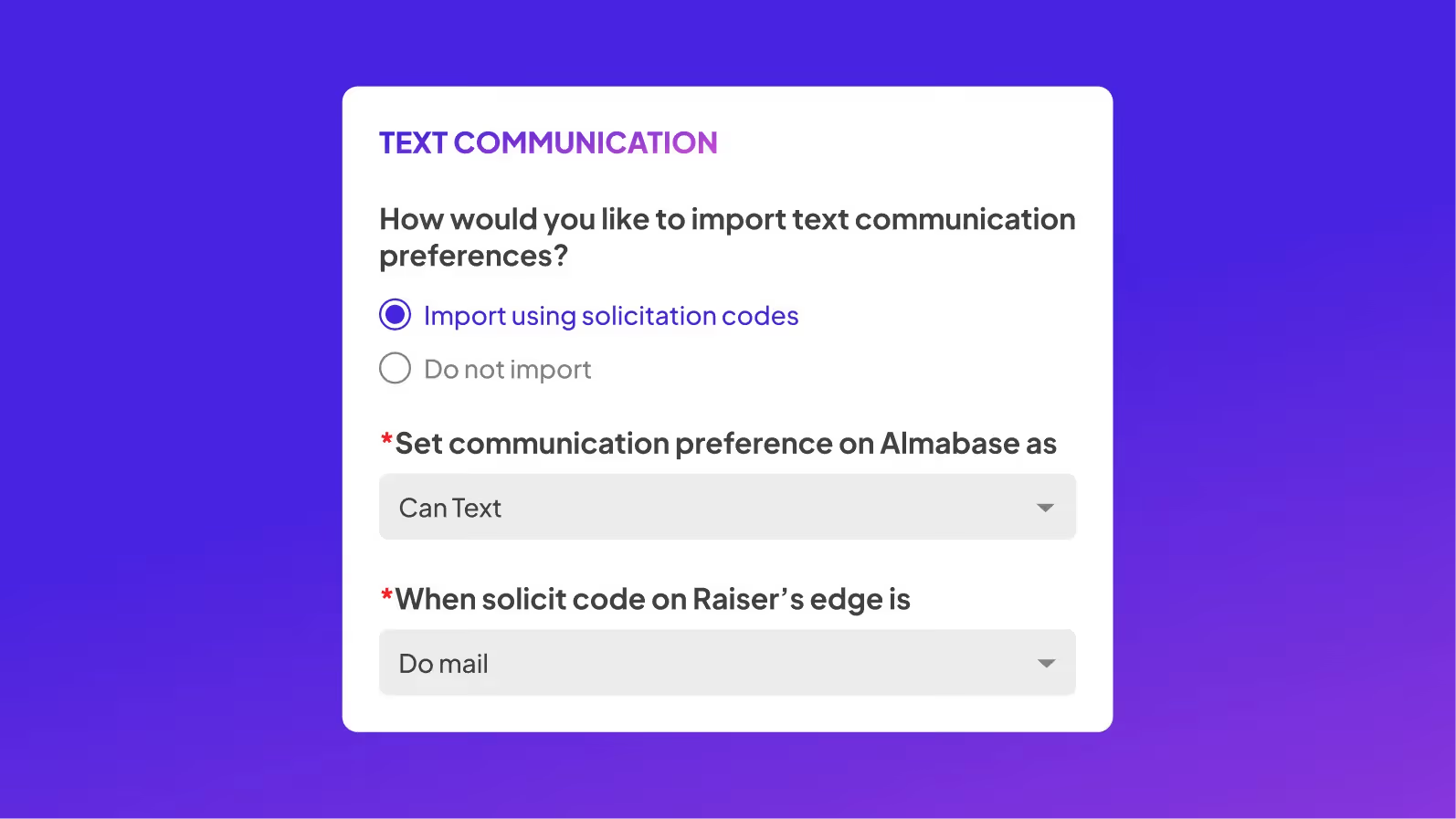
The Hidden Friction Behind Every Text
Consent management has always been more than a checkbox. It’s about trust, timing, and getting it right across systems.
When texting consent lives in one place but not another, it creates quiet inefficiencies that stack up over time:
- Teams have to pause and verify permission before sending a message
- Ops and IT field one-off data sync requests
- Shared solicit codes risk accidentally overwriting email preferences
- And worst of all, people who’ve opted in are left out of the loop because no one’s sure if it’s safe to message them.
What should be a fast, personal channel starts to feel riskier than it is, not because the tools don’t work, but because the data isn’t in sync.
What’s Possible Now
The gap between where consent is collected and where it’s managed is finally closed.
You can now configure Almabase to sync texting consent directly to Raiser’s Edge NXT using a solicit code of your choice, for example, “Can Text.” The sync works both ways, so any updates in either system stay aligned automatically.
Here’s what that makes possible:
- Opt-ins collected via Almabase (through events, or profiles) are automatically reflected in Raiser’s Edge
- Consent changes in Raiser’s Edge NXT can sync back to Almabase
- All consent updates are tracked on the Almabase profile, so you always know who gave consent, when they gave it, and through which channel
- This creates a clear audit trail that supports internal reviews, compliance checks, and builds trust with your constituents
The entire workflow runs in the background once set up. No extra steps, no operational overhead.
A Closer Look at How It Works
It’s simple. You choose which solicit code in Raiser’s Edge NXT should track texting consent from Almabase.
- When someone opts in, Raiser’s Edge NXT is updated
- When they opt out, the code is removed
- Any changes in Raiser’s Edge NXT can also reflect back in Almabase
- You decide if consent should sync one way or both ways
Why This Changes How You Use Texting
As texting continues to drive faster engagement across alumni and donor communications, the margin for error narrows.
It’s no longer just about having texting enabled, but your systems staying in sync, whether your team can move quickly, and whether your outreach is built on clean, trustworthy data.
This update unlocks that confidence. You can now treat Almabase and Raiser’s Edge as one coordinated source of truth when it comes to texting consent and let your team focus on outreach, not admin.
Turn It On in Minutes
If you’re already using Almabase texting alongside Raiser’s Edge NXT, you can enable this integration in just a few clicks.
Head to your Communication Preferences in Almabase and assign the solicit code you want to use for texting consent.
From there, every opt-in, opt-out, and update flows exactly where it needs to go — no workarounds required.
Your next campaign just got smarter, cleaner, and easier to launch.

Bi-Directional Text Consent Flow Is Now Live for Almabase + Raiser’s Edge NXT
Bi-directional texting consent sync with Raiser’s Edge NXT is now live. See how Almabase helps you stay compliant and campaign-ready in this blog.
Product updates
Crowdfunding has become a powerful tool for social good. Educational institutions throughout the past several years have taken well to it as a vehicle to raise funds, foster engagement, and bring exciting new projects to life. From supporting innovative learning initiatives to preserving cultural landmarks, schools and universities across the US, UK, and Canada are tapping into the potential of crowdfunding to drive meaningful change.
In this blog, we’ll explore 10 inspiring crowdfunding campaigns in K-12 and higher education. We’ll break down what made each campaign unique, how much they raised, and key takeaways your institution can apply to your next crowdfunding effort.
Essential elements of a successful crowdfunding campaign
Before we examine the campaigns, it’s worth understanding what sets apart successful crowdfunding campaigns in education. While every campaign is unique, they often share these key elements:
- Clear Goals: Successful campaigns outline a specific, tangible, and achievable goal that resonates with potential donors.
- Compelling Storytelling: The most impactful campaigns emphasize storytelling to create emotional connections with donors.
- Engaging Visuals: High-quality images and videos help campaigns stand out and inspire trust.
- Community Engagement: Actively involving stakeholders, alumni, parents, or students in the fundraising process often leads to stronger support.
- Follow-Up and Gratitude: Acknowledging contributors and sharing the impact of their donations builds goodwill and encourages future support.
Now, let's explore how these principles were applied in real-life campaigns that not only met but often exceeded their goals.
10 Crowdfunding Campaigns in K-12 and Higher Ed to inspire you
1. Barn Croft School Christmas No. 1 Campaign
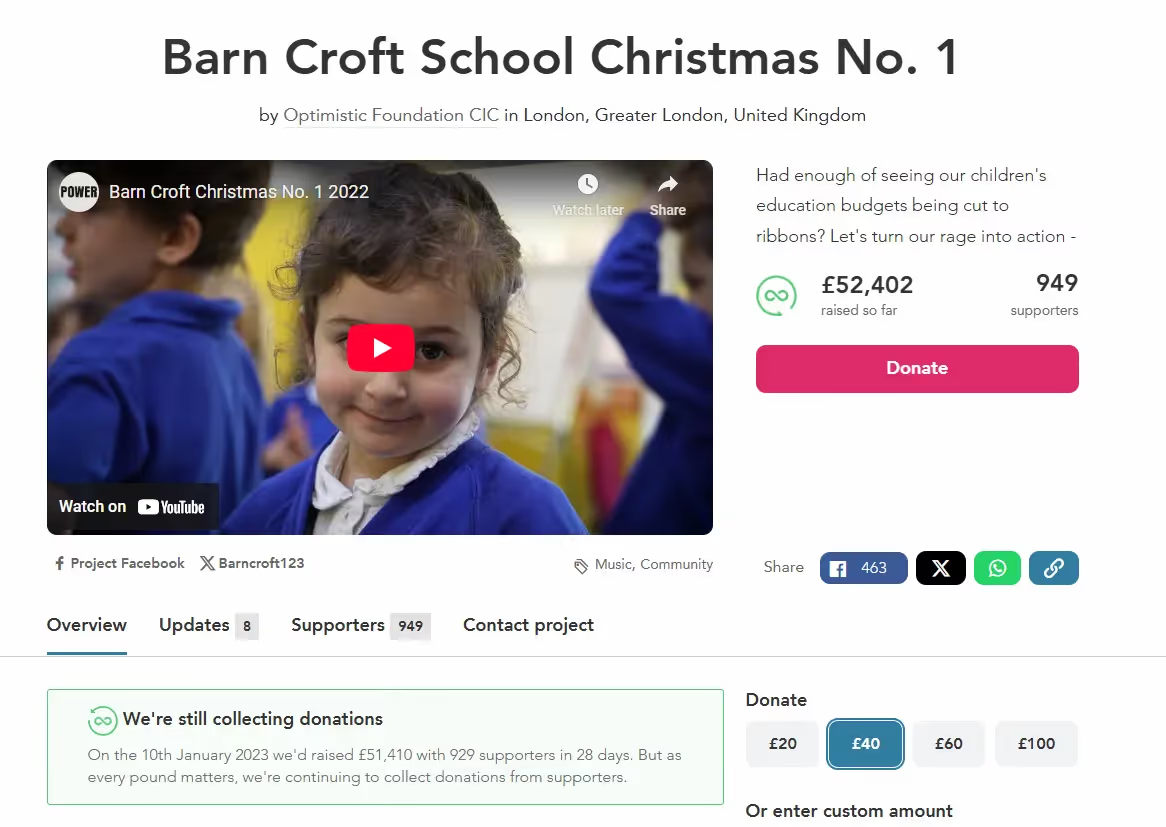
Amount Raised
£52,402 out of a £50,000 goal
The campaign
Barn Croft School in the UK launched a crowdfunding bid on Crowdfunder, uniquely utilizing music to elevate the school's profile and secure vital funds. The campaign aimed to highlight the severe impact of education cuts and ensure the school's resilience in the face of financial challenges.
What makes it unique
The campaign's innovative use of music, specifically aiming for a "Christmas No. 1" song, to draw national attention to education budget cuts is highly distinctive. It transformed a financial appeal into a public awareness campaign with a creative, engaging, and emotionally resonant hook, garnering national attention.
Key takeaway
Creative and unconventional approaches can significantly amplify a campaign's reach and impact, turning a local funding need into a national conversation. Linking fundraising to a broader social issue, such as education cuts, can galvanize wider support beyond the immediate school community.
2. Paul Farmer Lectureship and Award for Global Health Equity

Amount Raised
$181,749+ out of a $30,000 goal
The campaign
Launched in 2024 as part of McGill24, McGill University's annual day of giving, this crowdfunding campaign honors the legacy of Dr. Paul Farmer. It aims to recognize individuals working in underserved communities whose groundbreaking work in health equity often goes unrecognized. The campaign garnered donations from over 600 individuals and remains active, continuing to raise funds.
What makes it unique
This campaign uniquely focuses on honoring unsung heroes in global health equity, aligning with a powerful humanitarian legacy. Its success, attracting over 600 donors, demonstrates the strong resonance of a cause that celebrates impactful, often overlooked, work in underserved communities.
Key takeaway
Campaigns tied to the legacy of influential figures or addressing global humanitarian causes can inspire broad support. Leveraging institutional giving days, like McGill24, can provide a powerful platform and amplify reach for such initiatives by creating a collective sense of purpose and urgency.
3. University of the Pacific - Pacific Gives
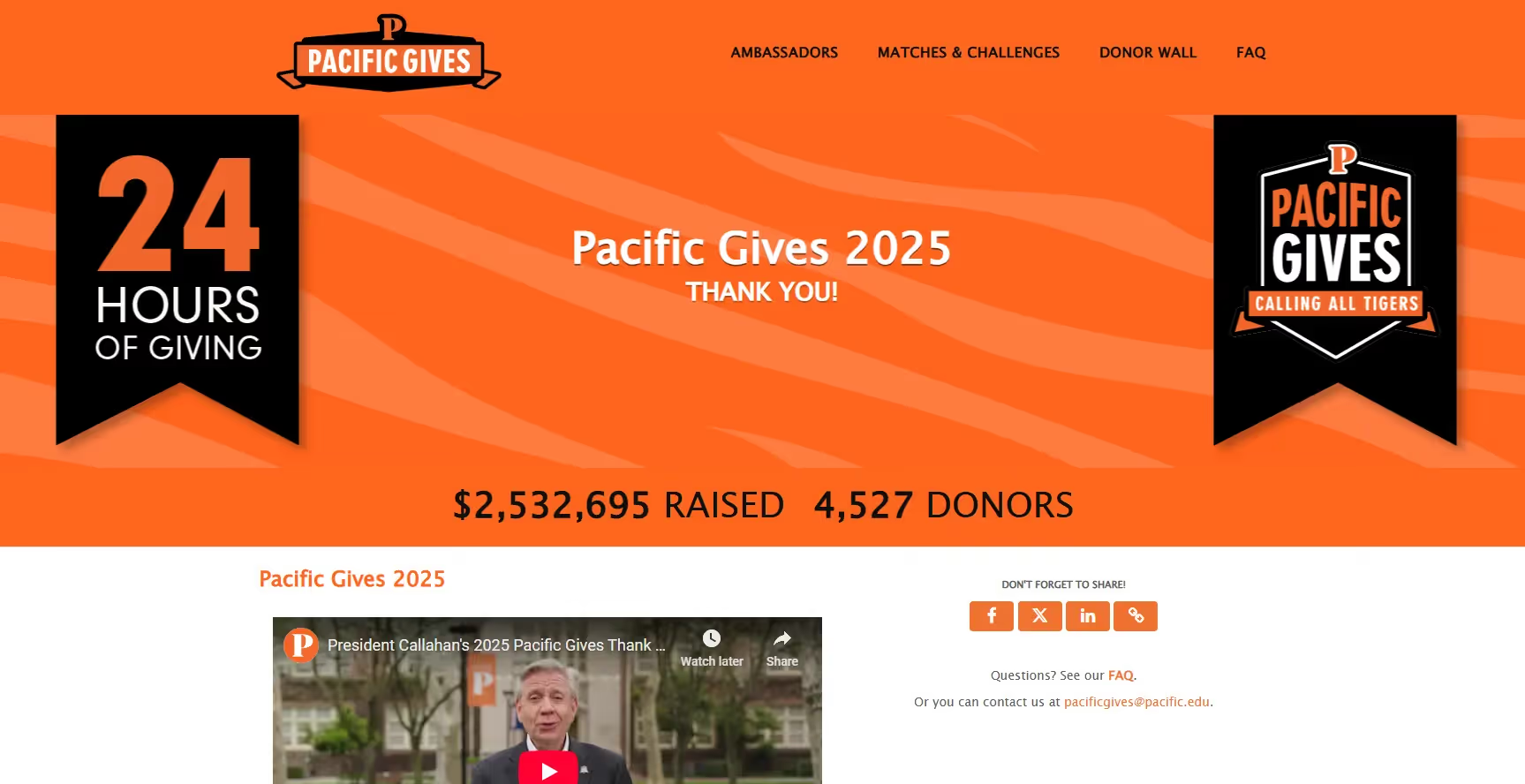
Amount Raised
$2.5 million at the time of writing
The campaign
University of the Pacific's annual 24-hour day of giving returned on April 8 and 9, 2025 (reporting 2024 results). It brought together a global community to support scholarships, academic programs, athletics, and student clubs. In 2024, an emergency grant funded during Pacific Gives 2024 provided financial and emotional support to a student whose home was destroyed in wildfires.
What makes it unique
A Giving Day that specifically highlighted and responded to immediate student crises (like wildfire impact) through emergency grants, demonstrating direct and compassionate support beyond general academic funding. It also emphasized community connection and collective action.
Key takeaway
Giving Days can effectively serve as rapid response mechanisms for student emergencies, fostering a strong sense of community and care. They also do a great job at inspiring supporters to become ambassadors and have a healthy giving ecosystem between their different departments/teams.
4. Cornell University Engineers In Action Project Team
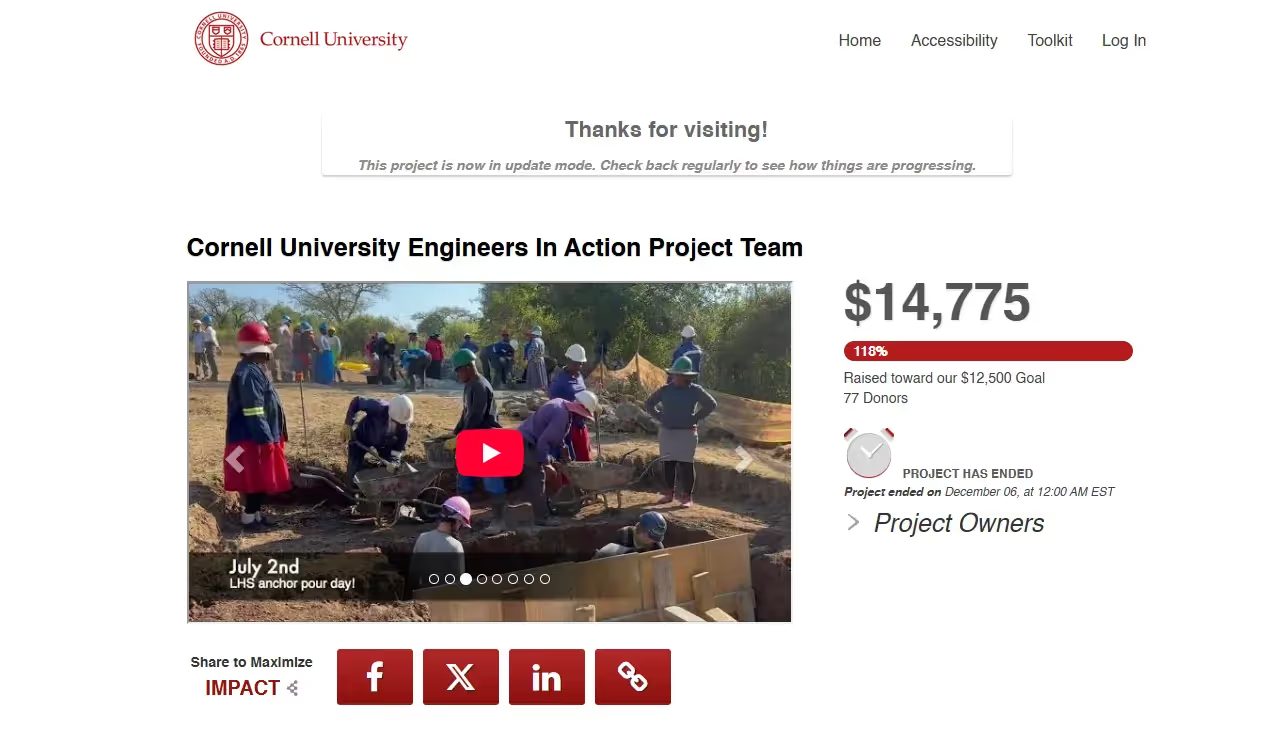
Amount Raised
$14,775 out of a $12,500 goal
The Campaign
As stated on their giving page, the Cornell University Chapter of Engineers in Action is a student-run project team with the College of Engineering that works with the non-for-profit organization Engineers in Action to design and build pedestrian footbridges, WASH systems, and suspension bridges for rurally isolated communities.
What Makes It Unique
The campaign focuses on helping students make real world impact in other parts of the world. With it’s extensive documentation, it does a great job in inspiring more donations. Donors naturally feel inspired when they see a long-term dedication to funds being put into action with a well-researched plan.
Key Takeaway
While your local community is essential, raising funds to help faraway rural areas makes for a compelling goal and provides valuable exposure to your volunteers. The extensive documentation history not only attracts donations but also inspires more trust in your institution’s other fundraisers.
5. University of Reading’s first Giving Day
Amount Raised
£36,747
The campaign
The University's first-ever Giving Day (April 29-30, 2025), focusing on four key causes: student scholarships, the Centre for Autism Wellbeing Hub, Henley's entrepreneurship programmes, and flexible support. It featured match-funding challenges.
What makes it unique
By providing diverse choices on donations, a simple giving page, and match-funding challenges totaling £20,000, the institution did well to inspire donors on their inaugural giving day.
Key takeaway
Launching a dedicated Giving Day with clear, diverse causes and match funding can be a powerful way for institutions to initiate or revitalize their crowdfunding efforts.
6. Support the Investigative Reporting Program - UC Berkeley
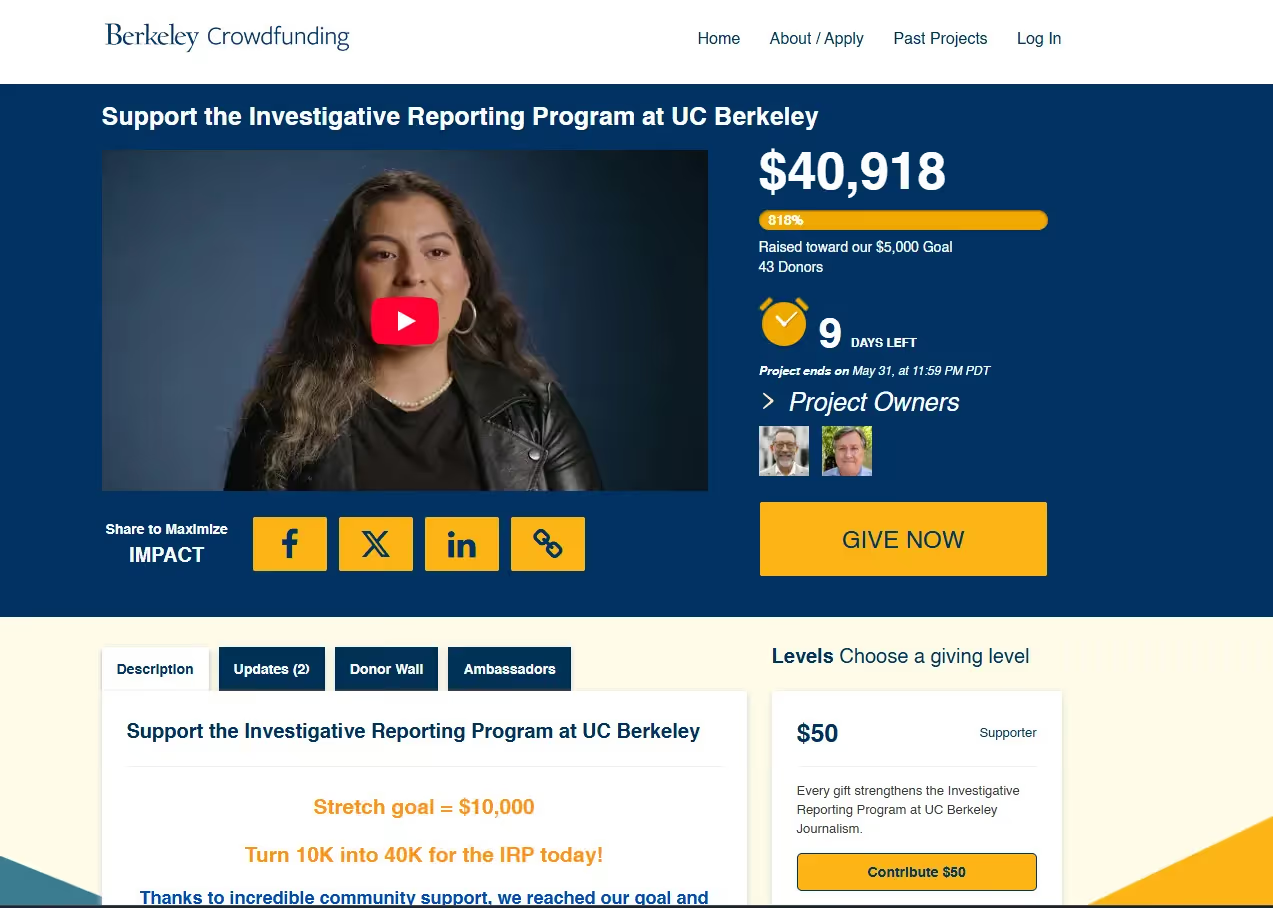
Amount raised
$40,918 (818% Funded)
How the campaign works
This campaign was hosted on UC Berkeley's internal crowdfunding platform. It directly sought support for the Investigative Reporting Program (IRP) within the School of Journalism. The campaign's core appeal encouraged donors to empower students to delve into social justice issues that were often overlooked or ignored by traditional newsrooms.
What makes it unique
Its explicit focus on public service journalism and social justice provided a clear, impactful mission that extended beyond typical academic funding, tapping into a broader desire for societal betterment. The description of the program, emphasizing its role in empowering students to "dig into issues of social justice long overlooked or ignored by newsrooms," framed the campaign not merely as funding for a department, but as supporting a cause aligned with broader societal values.
Key takeaways
Campaigns with a strong, clear social impact and a compelling narrative can significantly outperform their targets. Direct alignment with societal benefit, such as social justice or accountability, serves as a powerful motivator for donors.
7. Support Students in Learning International Perspectives, Rwanda ASB Trip - NC State College of Engineering
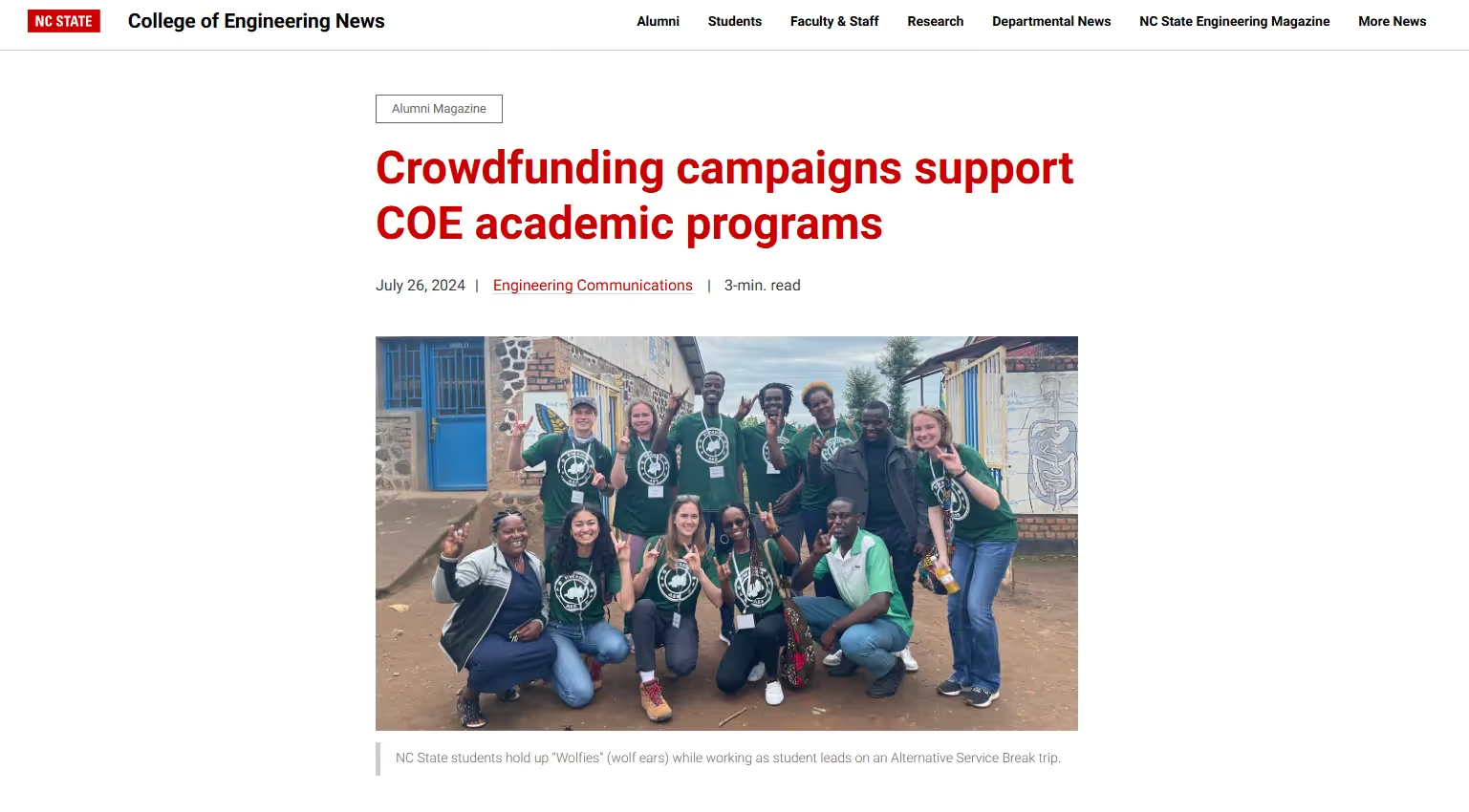
Amount Raised
$25,000~
The Campaign
Launched during the fall 2023 semester on NC State Crowdfunding, this campaign aimed to support the annual spring Alternative Service Break (ASB) trip to Rwanda. The trip was led by the Women and Minority Engineering Programs, and the funds specifically covered costs for students to participate in cultural experiences during their journey
What Makes It Unique
This campaign uniquely combined international service, cultural immersion, and direct support for women and minority students in engineering. Volunteers can visualize their contribution directly and share their own worldview and professional development, making the impact highly relatable and inspiring.
Key Takeaway
Campaigns that integrate multiple positive outcomes, such as global engagement, diversity, and service learning, and feature authentic student voices, are highly effective and motivate volunteers especially well.
8. Vanderbilt Giving Day and I⚓VU Week 2025 - Vanderbilt University

Amount Raised
Over $12.2 million
The Campaign
This initiative marked the inaugural "I⚓VU Week," a week-long celebration designed to elevate "Commodore spirit" and culminate in Giving Day. It encompassed diverse activities such as #TravelingMrC photo submissions, which showcased Vanderbilt's global presence, and a first-ever "I Bleed Black and Gold Blood Drive," representing a non-monetary giving opportunity. The campaign successfully closed out over 35 matches and challenges. Donations supported various university areas, including schools, labs, athletics, student organizations, and scholarships, all contributing to the overarching "Dare to Grow" campaign.
What Makes It Unique
Vanderbilt transformed a traditional Giving Day into a comprehensive, week-long "spirit celebration," incorporating diverse, non-monetary engagement activities like the blood drive and photo contests to build community and pride alongside financial solicitations. The campaign achieved impressive global reach, with donors participating from all 50 US states and 23 countries. This builds a broader base of goodwill, participation, and emotional investment that can translate into financial giving, either immediately or in the future.
Key Takeaway
Integrating fundraising with broader community engagement and spirit-building activities can significantly amplify results. Offering diverse ways to participate, beyond just financial giving, fosters a more inclusive culture of philanthropy.
9. Support Southeast Asian Students at Cal – UC Berkeley (SASC)
Amount Raised
$4,510 (902% of goal)
The Campaign
Part of the Berkeley Crowdfunding program, this campaign was led by the **Southeast Asian Student Coalition (SASC)** in 2024. Using Berkeley’s official platform, SASC created a project page describing how donations would support their events and initiatives (such as cultural festivals, mentorship programs, and graduation stoles for low-income members). Donors (students, alumni, community members) contributed online during a month-long drive. Berkeley’s platform provided tools and training even though it was SASC’s first crowdfunding attempt.
What Makes It Unique
This success funded free community meals (feeding 150+ students at events) and graduation regalia for students who couldn’t otherwise afford it. The uniqueness lies in empowering a student-run, diversity-focused club to raise money typically beyond their reach. Their story of supporting first-generation Southeast Asian American students deeply resonated. Even without prior fundraising experience, the students’ authentic mission and collaboration paid off hugely
Key Takeaway
Even new fundraisers can succeed wildly if the cause strikes a chord. By emphasizing inclusion and tangible student support (food, cultural events, mentorship), SASC attracted donations far beyond expectations. Providing donors with a clear vision of where funds go (directly to student needs) and leveraging social networks were key.
10. Campus Community Garden - University of British Columbia
Amount Raised
$52,082
The Campaign
In October 2024 (aligned with World Mental Health Day), the U-M College of Literature, Science and Arts (LSA) launched a crowdfunding drive on its official platform to support the LSA Fund for Student Well-Being. The campaign lasted 3 weeks, with a goal of $50K, and utilized a matching challenge and social media pushes around Mental Health Day. The campaign emphasized that gifts would fund resources like counseling, wellness programming, and emergency aid for student mental health.
What Makes It Unique
This campaign addressed the growing mental health needs on campus – a cause both urgent and somewhat intangible. By tying the launch to World Mental Health Day, it gained topical relevance. Uniquely, it was a time-limited “flash” campaign that still hit a relatively large target ($50K)
Key Takeaway
Framing the ask around World Mental Health Day gave it momentum and meaning. Transparency about the use of funds (every dollar to the Student Well-Being Fund in this case) builds trust.
Conclusion
Crowdfunding succeeds when institutions tell compelling stories, engage their communities, and provide a clear sense of purpose. Whether you're looking to fund a new initiative, preserve a cultural landmark, or support students in need, the examples shared here demonstrate the power of collaboration and the impact of a well-executed campaign.
Are you ready to run your own successful crowdfunding campaign? Start by analyzing these examples and tailoring their strategies to your unique goals and community. Need help with your next crowdfunding campaign? We’d love to help!

10 Inspiring Crowdfunding Campaigns in K-12 and Higher Ed
Explore 10 successful crowdfunding campaigns in K-12 and higher ed and learn valuable tips to launch your next impactful initiative.
Fundraising
There’s something powerful about watching a community come together online- whether it’s to celebrate a milestone, support a cause, or share a moment that matters. These everyday digital interactions hold incredible potential when it comes to fundraising. Whether you're a K-12 school, a college alumni office, or a student club trying to hit your annual goals, social media fundraising can turn your campaign from "meh" to major. With the right mix of creativity, timing, and platform strategy, you can tap into your community, build buzz, and raise way more than you expected.
In this blog, we’ll unpack what social media fundraising is, why it matters, and how educational institutions can use it to boost engagement and giving. You’ll find helpful tips, creative social media fundraising ideas, real examples, and ways to promote a fundraiser on social media that truly connect with your audience.
What is social media fundraising, and why is it crucial?
Social media fundraising is the practice of using social networking platforms like Facebook, Instagram, LinkedIn, and X to raise funds for a cause, campaign, or institution. But it’s not just about dropping a donation link and hoping for the best. It’s about building awareness, showing people why your cause matters, sharing real stories, giving your community simple ways to get involved and and encouraging them to take action, all in real-time.
Social media fundraising has been around for over a decade, slowly gaining traction as platforms like Facebook and Twitter introduced donation tools and nonprofits began experimenting with online giving. Back then, it was mostly big organizations leading the charge, with schools and colleges dipping their toes in the water, trying to see if social media fundraising was something they truly needed to make waves.
Then 2020 changed everything. With events canceled and face-to-face meetings off the table, and virtual gatherings taking the center stage, institutions had to get creative and fast. Social media became the easiest and most effective way to stay connected with their communities. Campaigns went digital, giving days went live, and suddenly, fundraising on social media wasn’t just an extra; it was essential.
For schools and colleges, this shift opened up new possibilities. Social media bridged the gap between past and present students, parents, faculty, and alumni. It made it easier to reach alumni, parents, and students where they already were, and in a way that felt more personal. It turned annual giving days into digital celebrations and everyday posts into opportunities for support. Ever since the pandemic, social media fundraising has been helping institutions to stay visible, relevant, and donor-ready—all at once.
Why Social Media is a Game-Changer for Fundraising
Today, social media and fundraising go hand in hand, making it easier than ever to engage supporters where they already are. It has revolutionized how we approach fundraising, offering tools that amplify outreach, build connections, and tap into networks in ways that were once out of reach. Let’s dive into the key reasons why social media is a game-changer for fundraising and how you can make the most of it-
Reach the right audience, faster
Social media allows you to instantly connect with a global audience, from alumni and current students to parents and beyond, breaking down geographical barriers and reaching more people than ever before.
- No printing flyers, no distributing pamphlets. Just one well-timed post can land in hundreds of feeds within minutes.
- Alumni in different time zones? Parents across cities? Social media bridges that distance instantly.
- Hashtags, geotags, and targeted ads help you reach exactly who you want, without wasting time or budget.
Peer-driven impact and network effects
When your community shares and promotes your campaign, it creates a ripple effect. Friends and family see it, trust it, and are more likely to donate, making your campaign stronger through organic, peer-driven support.
Cover a variety of platforms
Unlike traditional fundraising methods that limit you to a small circle, social media opens the door to a global audience. Each platform brings its own vibe, strengths, and type of community—and that’s exactly what makes it exciting. The key is to use each platform to do what it does best.
- Great for tapping into alumni groups, parent networks, and school communities.
- Use live videos, events, and heartfelt updates to build momentum.
- Add a donation button to your posts to make giving super simple.
- Perfect for quick, engaging content- reels, behind-the-scenes shots, and countdown stories.
- Use it to show the impact of donations in a way that words can’t always capture.
- Donor shoutouts, transformation posts, and day-in-the-life content do especially well.
- Ideal for showcasing alumni success and getting corporate partners involved.
- Share leadership updates, achievements, alumni testimonials, or impact stats to build credibility.
- Encourage alumni to reshare posts and explore matching gift opportunities at their companies.
How to Promote a Fundraiser on Social Media
Not sure how to promote a fundraiser on social media without being all over the place? Here's a simple breakdown to help you plan, post, and follow up like a pro, without burning out your team.
Pre-Launch Planning
- Teaser campaigns: Drop a few hints before the big launch—maybe a countdown, a blurred image, or a “something exciting is coming” reel. Create curiosity without giving away everything.
- Email + social alignment: Make sure your email newsletter and social pages are telling the same story. Use consistent branding, tone, and messaging so no one’s confused about what you’re asking and why.
During Campaign
- Donor recognition on stories/posts: Give real-time shoutouts to donors—tag them in stories, share their messages, or create a thank-you reel. It makes supporters feel seen and encourages others to jump in.
- Live updates and countdowns: Show progress as it happens. Post real-time updates, go live with students or alumni, and use countdown stickers to build urgency in the final hours.
Post-Campaign
- Thank-you posts and donor impact visuals: Don’t just stop after you hit the goal. Share what you achieved because of your community. Impact photos, videos, and stats go a long way in closing the loop.
- Tagging donors, sharing testimonials: Highlight donor stories and testimonials that speak to why they gave. It not only celebrates them—it also sets the tone for your next campaign.
10 Creative Social Media Fundraising Ideas for Schools & Universities
Now that we've unpacked what social media fundraising is and how to build the right framework around it, let's take a look at these 10 fresh and creative social media fundraising ideas that can be used by schools and universities-
1. Give Back Challenge
Encourage alumni and supporters to participate in a challenge hosted by the school or university. It’s all about tapping into school spirit and encouraging participation through friendly competition and community pride. A great example? The University of New Hampshire’s annual "(603) Challenge." With over 11,800 donors in 2025, it raised more than $3.6 million. The campaign used strategic donor challenges, matching gifts, and a robust social media presence to energize alumni, students, and parents alike.

2. Crowdfunding Campaign
Yes, crowdfunding has been around for a while, but when paired with the right social media strategy, it can still pack a punch. Set up a sleek GoFundMe or GiveCampus page, and drive traffic through Instagram reels, student-led TikTok videos, and short alumni testimonial clips on LinkedIn. When donors see a live progress bar and real-time peer activity, it creates that perfect blend of FOMO and feel-good energy that leads to a successful campaign.
3. Virtual Art Auction
Turn your students and faculty into featured artists for a cause. Set up an online gallery where followers can preview and bid on artwork, all linked to your school’s social channels. Instagram carousels showcasing the artists, behind-the-scenes reels of their process, and countdown stories leading up to the final auction create a buzz that makes people want to tune in (and bid big).
4. Talent Show Livestream
Forget the auditorium—go global with a livestreamed talent show. Students, alumni, or even faculty submit audition clips, the community votes on who makes the final cut via polls on Instagram and Twitter, and the final event is hosted live on YouTube or Facebook. Viewers can donate while they watch, with real-time donation trackers and pop-ups thanking donors on screen. The more engaging the show, the more viral it gets—and the more funds you raise.
5. Student Spotlight Series
Launch a social-first storytelling campaign where individual students or groups are highlighted weekly on Instagram and LinkedIn. Show their projects, their journeys, their dreams—and how donor support fuels them. Purdue University mastered this with its "Purdue Day of Giving," allowing donors to choose exactly where their gift goes, connecting names to impact in a deeply personal way.

6. Virtual Gala or Auction
Bring the black-tie magic to people’s living rooms. Host a virtual gala on Zoom or YouTube Live with emcees, entertainment, student performances, and live auction items. But don’t stop there—build excitement on social media for weeks leading up: teaser videos, theme reveals, Instagram stories with polls to choose menu or music, and LinkedIn shoutouts to donors or sponsors. On event day, make your hashtags trend and watch donations roll in with every applause emoji.
7. Online Bake Sale
The bake sale gets a digital glow-up. Students, parents, and alumni bake from home and post mouthwatering pics using a unique hashtag like #BakesForBooks or #SweetSupport. Orders and payments are managed online, and limited-edition treats or campus-themed goodies create urgency. Use Instagram and Facebook to drive this one: Reels of the baking process, Stories showing “behind the oven” moments, and shoutouts for every donor. It's cozy, shareable, and community-driven.
8. Social Media Takeover
Let a student, alum, or a club take the reins of your official social channels for a day. They share their behind-the-scenes, their memories, and what makes your institution special. Not only is it authentic, but it also breaks the algorithmic monotony with fresh voices. NEHS uses this method beautifully with its chapters, and it sparks serious engagement. Pair this with donation swipe-up links, countdown stickers, and pinned stories that stay long after the day ends.

9. Digital Time Capsule Fundraiser
This one’s got legacy written all over it. Donors get to submit selfies, memes, letters, or inside jokes into a digital time capsule that’ll be opened 5 or 10 years down the road. Access is donor-exclusive, and the buildup is part of the charm. Use nostalgic music reels, design retro digital postcards, and let student ambassadors post teaser entries.
10. Meme Investment Portfolio
Take a cue from the stock market, but make it campus-coded. Create a mock "Meme Market" featuring inside-joke tokens like “Coffee Line Coin” or “Finals Panic Token.” Donors pick which memes to back with their money. The more a meme gets shared or voted up, the higher its "value." Sponsors match donations to top-performing memes. Track it all in Instagram Stories with stock-style charts, Friday recaps, and student commentary.
Social Media Fundraising: Best Practices
Now that you’ve had some ideas to spark your next social media fundraising campaign, here are a few best practices to help you fine-tune your approach and boost your results. These tips are all about working smarter with content, platforms, and outreach—because even great ideas need the right delivery.
Platform-Specific Tips: Choose Your Arena Wisely
Every platform has its own vibe, and what clicks on one might fall flat on another. To get the most out of your outreach, think about where your audience hangs out and what kind of content feels native to that space.
Instagram:
It’s all about aesthetics and energy. Use high-quality visuals, Reels, and Stories to share short, engaging content. Countdown stickers and donation link buttons can drive urgency and action. Showcase student life, behind-the-scenes moments, and quick thank-you shoutouts.
Facebook:
Perfect for alumni and parents who love staying connected with their alma mater. Host Facebook Live events with faculty or student panels, launch Facebook Fundraisers tied to specific campaigns, and share nostalgic throwbacks or impact updates.
LinkedIn:
This one’s best for tapping into the professional pride of your graduates. Share stories of scholarship recipients, research breakthroughs, and student and alumni success stories that show the long-term impact of giving. Keep it polished, purpose-driven, and authentic.
Content Mix: Keep It Fresh, Keep It Moving
You need more than pretty pictures; you need content that makes people feel something, then do something. Mixing it up keeps your audience curious and engaged.
- Share behind-the-scenes videos and day-in-the-life stories of students.
- Post testimonials from donors and scholarship recipients.
- Use bold visuals and graphics to show progress, countdowns, and milestones.
- Always include a call-to-action (CTA) like “Donate now,” “Tag a classmate,” or “Help unlock this challenge.”
A/B Test Your Appeals: Small Changes, Big Gains
Data doesn’t lie. Even small tweaks to your posts can make a measurable difference, especially if you're experimenting with how you present the same message.
- Try different headlines or captions for similar posts and track which one performs better.
- Alternate images: photos of people typically grab more attention than abstract designs or logos.
- Switch up tone and voice: does your audience respond more to heartfelt appeals or playful jabs? Use what suits best for them.
- Experiment with posting at different times and days to see when your audience is most active.
Examples of Successful Social Media Fundraising
University of South Carolina – #SpeakYourMIND Campaign (2025)
Reviving the spirit of the Ice Bucket Challenge, the University of South Carolina’s MIND Club launched the #SpeakYourMIND campaign in 2025 to support mental health awareness with a goal of $500. Through short-form videos on TikTok and Instagram, students and supporters amplified the cause, driving both visibility and donations. The campaign went viral, drawing celebrity endorsements and far exceeding expectations by raising $250,000+ until now.
Pacific Gives 2023 – University of the Pacific
In 2023, the University of the Pacific's "Pacific Gives" campaign brought together alumni, staff, faculty, parents, and friends in a 24-hour online fundraising effort. The campaign successfully raised over $1.7 million, with 75% of the gifts being $100 or less, highlighting the power of collective small donations.
Penn State University – Giving Tuesday (2024)
During Giving Tuesday 2024, Penn State University leveraged social media platforms to share real-time updates, success stories, and donor acknowledgments. This strategy enhanced community engagement and encouraged widespread participation in the fundraising efforts. It achieved a record-breaking fundraising milestone of more than 9,700 donors contributing 11,986 gifts and collectively raising over $1.7 million for various university programs and initiatives.
Tools to Supercharge Your Social Media Fundraising
It’s important to have an engagement tool that integrates smoothly with social media platforms and your CRM—so all your donor data stays organized and actionable. The right digital tools help you streamline operations, personalize experiences, and drive results regardless of which platform you use. Having integrations with industry experts like Almabase+ RE NXT can be powerful. They allow campaign tracking, smart donor segmentation, and the creation of personalized giving links, enabling advancement teams to monitor performance, adapt in real-time, and make each interaction more meaningful.
Take Boyd-Buchanan School for example; they saw a remarkable turnaround after adopting such a setup. Before using Almabase, their team had to manually log every donation into Raiser's Edge NXT. With Almabase’s tailored sync rules for RE NXT, their gift data now flows directly and accurately into the CRM, allowing them to focus more on strategy and engagement. Within just five months, they surpassed 200% of their Giving Day goal and reconnected meaningfully with their alumni.
Conclusion
With a plethora of specialized tools and proven strategies available today, advancement teams have the opportunity to take their social media fundraising to the next level. If you’re looking for a partner to help your digital engagement and fundraising efforts, do give us at Almabase a shout and we’d love to chat!

Social Media Fundraising: Ideas, Examples, and Tips to Promote Your Next Campaign
In this blog, we’ll unpack what social media fundraising is, why it matters, and how educational institutions can use it to boost engagement and giving.
Fundraising
Sharada Koti
May 22, 2025
12 minutes
If you're part of a school, college, or university advancement team, chances are you've heard the term fundraising calendar more than once. And if you're still managing campaigns reactively—scrambling to send an email the day before Giving Tuesday or clashing with exam weeks—you’re not alone. A well-planned fundraising calendar can be the difference between chaos and clarity, missed opportunities and record-breaking donations.
In this blog, we’ll walk you through everything you need to know to create a smart, organized, and effective fundraising calendar that works for your team all year round. Whether you're starting from scratch or looking to improve what you already have, you'll also get tips on using a calendar fundraiser template, tools to help you stay on track, and even a downloadable fundraiser calendar template you can use right away.
What is a Fundraising Calendar?
Think of a fundraising calendar as your campaign playbook for the year. It’s not just a schedule—it's a strategy. It helps you map your fundraising efforts month-by-month or even week-by-week, aligning with key moments in the academic year, holidays, awareness days, and donor behaviors. For example, you might plan your annual giving campaign around Giving Tuesday, tie alumni events to reunion weekends, or schedule stewardship emails right after a major donation push.
The best part? It brings structure and visibility to your entire fundraising year. With a calendar in place, your team isn’t just reacting to deadlines—you’re anticipating them. Everyone knows what’s coming, what needs to be done, and who’s doing it. You’re no longer guessing or winging it. You’re planning with purpose.
Beyond organization, a good fundraising calendar helps build momentum. When your team knows what’s next, your audience does too. You can create more thoughtful campaigns, align your messaging with what’s going on in your institution or the world, and, most importantly, raise more funds with less stress.
Why Your Institution Needs a Fundraising Calendar
Still wondering if it’s worth the time to create one? Here's why a fundraising calendar isn’t just “nice to have”—it’s essential.
- Avoid last-minute chaos: Say goodbye to rushed emails and overlapping campaigns. Planning ahead gives your team time to create high-quality content and coordinate properly.
- Improve coordination across departments: Advancement teams don’t work in silos. A shared calendar helps alumni relations, events, communications, and fundraising teams stay on the same page.
- Maximize giving opportunities: Tie your campaigns to natural fundraising seasons—like Giving Tuesday, graduation, or fiscal year-end. People are more likely to give when it’s part of a larger moment.
- Link campaigns to academic and community milestones: Align your asks with campus events, student activities, and alumni reunions to make your messaging more relevant.
- Enhance donor stewardship: Plan thank-you emails, impact reports, and recognition events right into your calendar so no supporter feels forgotten.
A clear plan leads to better teamwork, stronger campaigns, and happier donors.
How to Create Your Own Annual Fundraising Calendar Template
1. Choose Your Campaign Types
The first step is deciding what kinds of fundraising activities you'll include in your calendar. These can range from traditional campaigns to creative digital outreach. Your mix will depend on your institution’s goals, audience, and bandwidth.
Here are a few campaign types to consider:
- Peer-to-peer campaigns: These are incredibly powerful because they leverage personal networks. Think of alumni rallying their former classmates or students hosting birthday fundraisers. A great example is Colby College’s Day of Giving, where alumni, parents, and students team up to spread the word.
- Email appeals: These are direct, cost-effective, and measurable. Time them well—maybe one right before calendar year-end when donors are thinking about tax-deductible contributions. Platforms like Mailchimp or HubSpot make email automation easier, and tools like Almabase help personalize alumni outreach.
- Events (virtual or in-person): Galas, giving days, reunions, or student-led concerts—events give you a chance to create meaningful donor moments that go beyond a simple ask. You can also combine these events with peer-to-peer efforts to multiply their reach. For example, Princeton’s Annual Giving program often leverages class reunions not just for celebration, but as powerful fundraising engines that bring alumni together around a shared cause and goal.
- Social media campaigns: Social platforms offer some of the most cost-effective and wide-reaching opportunities to connect with your audience—especially younger alumni and students. Giving Tuesday is a must—#GivingTuesday happens every November and is perfect for viral, high-energy campaigns. Other times, consider themed campaigns like “March for Mental Health” or “Spring into Support.” Tools like Canva and Buffer can help small teams do big things.
- Phone-a-thons: Yes, they’re still effective—especially with older donors. A warm voice and a personal ask can go a long way. To keep it fun, make it a student volunteer event with prizes for the most calls or donations.
💡Tip: Don’t try to do everything every month. Instead, spread out campaign types across the year. For example, you could run a major digital push in November, focus on alumni reunions in June, and reserve February for targeted email appeals.
2. Map Campaigns to the Academic Calendar
Once you’ve chosen your campaign types, align them with your institution’s calendar. This not only ensures better participation but also helps you avoid scheduling mishaps—like launching a campaign during finals week.
Start by plotting out key academic milestones and cultural moments, such as:
- Semester starts and ends
- Midterms and finals
- Breaks and holidays
- Homecoming, alumni weekends, or major sports events
- Giving days (national or institutional)
- Special anniversaries or leadership changes
For example, if your school’s homecoming is in October, that’s a great time to launch an alumni challenge campaign. Or, if seniors graduate in May, you might run a “Senior Class Gift” appeal leading up to their last day on campus—here’s a great example from NYU.
You can also tap into larger giving movements. Campaigns that align with Giving Tuesday or End-of-Year Giving see higher traction because they ride on already existing momentum.
Bonus: Consider building in quieter months for reflection and reporting. For example, use July to analyze mid-year performance and tweak your calendar for the next half.
3. Assign Internal Roles and Timelines
Even the best calendar will fall flat without clear accountability. That’s why the next step is to break each campaign down into roles, timelines, and dependencies.
Start by answering:
- Who’s in charge of each campaign?
- Who handles the creative (design, copy, branding)?
- Who sends the emails or posts on social media?
- When do drafts need to be reviewed?
- What departments need to be looped in?
Let’s say you’re running a virtual reunion fundraiser in June. Your calendar might look like this:
4. Use Tools That Make It Easy
You don’t need an expensive tool to start building your fundraising calendar. Many institutions begin with what they already use. The key is to pick something collaborative, easy to update, and visually clear.
Here are a few tools that work well:
- Google Sheets: Great for budget-conscious teams. You can color-code months, track campaign types, and share access with anyone.
- Microsoft Excel: Offers more structure and customization, especially for larger teams who want to build dashboards.
- Notion: Lets you build a drag-and-drop calendar with tagging, checklists, and campaign documentation all in one place.
- Trello or Asana: Best if you’re already using project boards to plan tasks. You can assign roles, set deadlines, and track campaign progress visually.
- Integrated tools: Platforms such as Almabase provide you with the tools for digital engagement, event management, and fundraising to cover all your bases if you're looking for one hub to coordiante your long-term fundraising strategy.
Don’t forget to also build in time for retrospectives. After each campaign, set aside a week to reflect: What worked? What didn’t? What can be repeated or improved?
Best Practices to Keep Your Fundraising Calendar on Track
Creating your calendar is one thing. Keeping it updated and useful is another. Here are some quick best practices to stay on course:
Leave Room for Flexibility:
Life happens. So do emergencies, new opportunities, and spontaneous campus events. Build buffer periods and leave some “wiggle room” in your calendar for changes.
Review and Update Quarterly:
Don’t just create the calendar and forget it. Set reminders to revisit your calendar at least once per quarter to adjust timelines, add new events, or shift priorities.
Include More Than Just Campaigns: Your calendar should also include:
- Internal planning meetings
- Donor stewardship milestones (thank-you emails, impact reports)
- Content cadences (monthly newsletters, social posts)
Collaborate Regularly:
Make the calendar a living document. Invite team members to suggest changes, mark progress, and keep notes. The more collaborative it is, the more likely it is to be used.
Annual Fundraising Calendar Template
Want a ready-to-use fundraiser calendar template you can customize for your institution? Here’s one you can download and edit for free right now, no strings attached:
📅Link: [Fundraising Calendar - Template]
Conclusion
If you’ve ever wished for more organized campaigns, less deadline stress, and better results from your fundraising efforts, a fundraising calendar is your answer. It transforms fundraising from a reactive chore into a proactive, strategic process. With the right calendar in place, you’ll communicate more clearly, plan smarter, and raise more money—all while staying sane.

How to Make a Fundraising Calendar in 4 Easy Steps (+ Free Template)
We’ll walk you through everything you need to know to create a smart, organized, and effective fundraising calendar that works for your team all year round
Fundraising
Anwesha Kiran
May 20, 2025
12 minutes
Advancement professionals understand that successful fundraising isn’t simply about donations; it’s about building lasting relationships with donors. This is where donor cultivation comes in—a proactive, intentional approach to developing meaningful connections with supporters over time.
In this blog, we explore what donor cultivation means, how it differs from stewardship, its key benefits, and the lifecycle involved. We'll also discuss several practical strategies to take your advancement team’s fundraising efforts to the next level, as well as tips for building your own donor cultivation plan.
What is donor cultivation? (And why it matters in Advancement)
Donor cultivation is the ongoing process of engaging, educating, and building relationships with current and potential donors before a gift is solicited. The ultimate goal of donor cultivation is to create a sense of connection and commitment to your institution’s mission, making donors more likely to give and continue supporting you in the long term.
Cultivation is not just a fundraising tactic but also a critical element in sustainable advancement work as it paves the way for more support. A well-implemented donor cultivation not only gains and retains its donors but also empowers them to become valuable assets of their institution or cause.
Donor cultivation & stewardship: What's the difference?
While both donor cultivation and stewardship are crucial elements of fundraising, they refer to distinct phases of the donor relationship. Cultivation typically occurs before and up to the point of making a gift, focusing on building awareness, interest, and excitement around your mission. It includes outreach, education, and connection activities designed to encourage a prospective donor to contribute for the first time or to increase their giving.
Stewardship, on the other hand, begins after a donation is made. It centers on showing appreciation, ensuring donor satisfaction, and demonstrating the impact of gifts. The goal of stewardship is to foster continued and increased support over time. Simply put, while cultivation is about earning a donor’s first or next gift, stewardship is about thanking them and keeping them engaged for the future.
As you can see, the two are far from exclusive and on the contrary, are best used to complement each other to both gain and retain donors.
Why donor cultivation?
Investing in donor cultivation offers several important advantages to advancement teams, including:
- Stronger relationships: Genuine engagement builds loyalty and emotional connection, leading to longer-lasting support.
- Higher conversion rates: Prospective donors who are engaged and informed are more likely to say “yes” when asked to give.
- Larger gifts: Cultivation can lead to a deeper affinity with your mission, motivating donors to make more significant contributions.
- Improved donor retention: Consistent, value-led communication reduces one-time gifts and increases the likelihood of repeat giving.
- Sense of community: Cultivation creates a sense of belonging, making donors feel valued as partners rather than transactions.
The donor cultivation lifecycle
.avif)
The donor cultivation lifecycle outlines the stages that prospects move through, from first contact to becoming a loyal supporter. While there will be variations between donors in different institutions and nonprofits, it mostly follows the stages of:
- Identification: Recognizing potential donors within your community or database.
- Qualification: Assessing interest, giving capacity, and potential engagement.
- Cultivation: Building relationships through personalized outreach, events, and updates.
- Solicitation: Making an informed and timely ask.
- Stewardship: Thanking, reporting impact, and nurturing for future engagement.
10 Proven Donor Cultivation Strategies for Advancement Teams
To build a robust donor pipeline and grow long-term relationships, try these proven donor cultivation strategies:
Every advancement office is unique, but certain cultivation strategies consistently deliver the highest return on investment. Below, we explore ten in depth, each accompanied by actionable examples.
1. Personalize Communications
Personalization is not just about using a donor’s name; it means tailoring messages to interests, giving history, and engagement preferences. For instance, referencing a donor’s support of a specific scholarship in a thank-you letter creates a sense of individual recognition.
Example: Sending a note about campus news related to the exact project a donor previously funded.
2. Engage Through Storytelling
Sharing compelling stories about your institution’s impact helps donors see themselves as catalysts for change. When you relay a student’s success thanks to a funded scholarship, it illustrates the real results of generosity.
Example: Featuring a short video testimonial from a student who benefited from donor-supported programs.
3. Host Intimate Donor Events
Smaller, mission-focused gatherings cultivate deeper engagement by allowing donors greater access to leadership and beneficiaries. Such settings foster meaningful exchanges and feedback.
Example: Organizing a dinner for science program supporters to meet student researchers and faculty innovators.
4. Leverage Data and Analytics
Utilize data from your CRM to segment donors, predict giving potential, and optimize outreach. Data-driven insights inform when and how to engage each segment.
Example: Using analytics to identify lapsed donors and launching a targeted re-engagement campaign.
5. Offer Volunteering and Leadership Opportunities
Inviting donors to serve as event hosts, mentors, or advisory board members strengthens their ties to your organization. Active roles often lead to increased sense of ownership and higher giving levels.
Example: Encouraging alumni to speak at career panels for current students.
6. Provide Behind-the-Scenes Access
Exclusive tours or previews make donors feel like insiders, offering a tangible sense of impact and belonging. These experiences create lasting memories and stories to share.
Example: Hosting a guided tour of a new research facility before its public opening.
7. Timely and Transparent Reporting
Keep donors informed about the results of their contributions with regular, clear updates. Reports should tie outcomes directly back to donor support to reinforce their value.
Example: Sending a detailed impact report showing scholarship recipients’ progress at semester’s end.
8. Cultivate Multi-Channel Engagement
Use a mix of phone calls, handwritten notes, emails, and social media to maintain connection without overwhelming donors. Multi-channel touchpoints accommodate diverse engagement preferences.
Example: Following up an in-person event with a social media post that tags and thanks attendees.
9. Recognize Milestones and Special Occasions
Acknowledging anniversaries of giving, birthdays, or other life milestones demonstrates genuine care beyond financial support.
Example: Mailing a birthday card or small gift to a long-time donor, expressing appreciation for ongoing partnership.
10. Solicit Feedback and Encourage Dialogue
Encouraging donors to share their thoughts and preferences positions your institution as a true partner. Two-way communication builds trust and surfaces new ideas for engagement.
Example: Sending a survey after major events to ask donors what resonated and what could be improved.
Common Mistakes in Donor Cultivation
While even seasoned teams strive for excellence, pitfalls are common and can undermine even the strongest cultivation plans.
1. Tunnel vision on large donors and major gifts
Focusing exclusively on major gift prospects risks neglecting the broader donor base, which collectively offers immense value and potential for growth. For example, loyal annual donors can often grow into major contributors over time if properly engaged.
2. Using generic communication for all donor segments
Mass, impersonal communications signal a lack of investment in individual relationships and often lead to disengagement. For example, sending the same form letter to every donor, regardless of past giving or interest area, misses crucial opportunities for connection.
3. Lack of engagement or interaction tracking
Advancement teams that don’t systematically track interactions lose valuable insight into donor journeys and can easily miss timely follow-ups. For example, failing to record attendance at events can lead to missed thank-yous or future invitations.
4. Overlooking opportunities for collaboration
Teams sometimes forget that collaboration across departments can deepen donor engagement and streamline outreach. For example, event planners sharing donor preferences with communications staff can help tailor invitations and follow-ups more effectively.
5. Neglecting lapsed or dormant donors
Failing to re-engage lapsed or inactive donors can lead to long-term attrition. Proactively reach out to those who have stepped back, and offer pathways for renewed involvement.
Building your own cultivation plan: Things to keep in mind
Now that you have the what, why, how and how nots of a donor cultivation plan, here are some things to keep in mind when building (or reworking) your cultivation plan:
1. Create a data-informed workflow
Having a robust and well-maintained strategy for your database/CRM straight from the get-go will save you weeks of headaches and manual work when you eventually want to scale your fundraisers or incorporate more tools to complement your donor acquisition and retention.
2. Map out a multi-channel communications calendar
Include a mix of personal outreach, digital communications, and live or virtual events. Use your data to schedule when and how you’ll engage prospects throughout the year.
3. Invest in donor recognition and feedback loops
Set up systems to acknowledge milestones, celebrate donor achievements, and collect feedback regularly. This creation of genuine two-way communication cultivates loyalty and trust.
4. Focus on sustainable fundraising
With the number of individual donors falling consistently for the past 4 years, it is important that your long-term donor cultivation hinges on meaningful engagement that will resonate with your donors and keep them coming back in one way or another. Have your fundraising and cultivation strategy be diverse, flexible, and transparent to engage any past, potential, and current supporters.
Wrapping it up
Fundraising success grows from genuine relationships and thoughtful engagement. By understanding the stages of donor cultivation and applying strategies tailored to your audience, your advancement team will be well-positioned for sustainable support and long-term impact. Start building your customized donor cultivation plan today to foster partnerships that fuel your mission.
If you’re looking for a platform that covers your entire fundraising journey from cultivation to stewardship and everything in between, give us at Almabase a try and we’d love to help!

Donor Cultivation Strategies for Advancement Teams: 10 Useful Ideas
Explore 10 proven donor cultivation strategies for advancement teams. Build stronger relationships, improve retention, and grow mission-driven support.
Alumni Engagement
See how leading institutions put these ideas into action