.svg)
Blog Gallery
Build lifelong relationships
Latest stories, guides, and benchmarks from the world of alumni relations, fundraising, donor engagement, advancement services, events, and higher-education philanthropy
Blackbaud recently announced that support for Raiser’s Edge NXT’s database view and related functionality will end on September 15, 2027, affecting several Blackbaud products. These include Blackbaud Online Express and Blackbaud NetCommunity (BBNC). For advancement teams that have spent years building forms, pages, workflows, and other processes around the platform, this means choosing and migrating to a new platform. The prospect can feel like a lot to take on, especially if it wasn't something you'd anticipated.
If you're looking for an alternative, Almabase can help you replace the functionality you currently rely on across these products. We've already covered why teams might be thinking of a move off BBNC and how the main alternatives compare. In this article, we’ll be focusing on what happens once you've made that decision: what the migration process looks like, what your team can expect along the way, and how Almabase approaches the move.
In case you’re evaluating how Almabase stacks up against BBNC, check out our comparison blog here.
There’s also another question that comes up around a platform migration: How much is this going to cost?
This question extends beyond the immediate, visible technical costs. In fact, the technical side of the move might just be the simplest to figure out. It’s the broader, more abstract elements like shifting scopes, changing requirements, or even figuring out the right set of requirements in the first place that could end up costing the most amount of money and time, if not approached thoughtfully.
That's why we want to walk you through the Assisted Fast Pass Migration process upfront: what happens at each stage, what your team is responsible for, what our migration team handles, and where costs may come into the picture. We hope to give you a clear idea of what the move to Almabase will look like before you get started, so there are fewer surprises along the way.
Why transparency matters during a migration
A migration project always begins with an agreed-upon plan. But it’s also very likely that, a few weeks in, you discover a form that needs some additional customization or a request that seemed straightforward seems to fall outside the original scope, on second thought. These are perfectly reasonable hiccups during the migration, but if work is already underway, it could seem harder to understand what you're paying for, and even harder to plan around the rest of the project.
Clear expectations are at the heart of our migration approach, starting with total transparency around what extra requirements cost. With Almabase’s Assisted Fast Pass Migration, each stage gives you a chance to understand what's being proposed, what falls within the standard migration, and where something would require additional work.
Basically, you shouldn't find out about an extra requirement after the work has already been done. Your approval and sign-off comes first. The five steps in the migration process are built around this intention. Let’s get into them.
1. Kickoff: Getting the project off on the right foot
The migration process starts with a kickoff between your team, a dedicated CSM, and an implementation specialist. This is where we get the groundwork in place. This is usually access to your current site, your branding assets, and the dates your team needs to work around.
Another important step here is understanding your calendar and priorities. Your Giving Day, reunion, fiscal year-end, or another major event may determine what needs to happen first and we would be building the migration calendar around it. So, the migration sequence might look a little different for each institution, as each gets to choose which product goes first.
The kickoff is also a chance to flag anything unusual about your current NetCommunity setup.
After years on a platform, it's normal for your setup to have accumulated a few workarounds, custom configurations, or integrations that made sense when they were created. We don't need to solve all of those questions in the first meeting, but we do need to know about them.
That way, we can account for them during the next stage: the inventory. 🤗
Your team mainly needs to provide:
- Key dates and deadlines
- Relevant branding assets
- Access to your existing NetCommunity site
- Any known custom configurations, integrations, or unusual workflows
From there, you can let us take on the heavy lifting.
Your dedicated CSM and implementation specialist work with you throughout the migration, while your team focuses on the decisions and approvals. A migration shouldn't require your advancement team to take on managing a project full time on top of everything else they’re already handling.
Your data doesn't have to wait for the build
Your data migration is handled alongside the rest of the process. Almabase's bi-directional TrueSync integration connects with Raiser's Edge NXT and supports two-way syncing for configured entities and fields, including constituent, event, and gift data.
Admins can also decide which fields update automatically and which should be reviewed before they're pushed or pulled between systems.
That means your team doesn't have to wait until every page and workflow decision has been finalized before thinking about what happens to your data. The data side of the transition can move forward alongside the rest of the migration, with real time decisions being made.
2. Discovery and inventory: weeks one and two
Once kickoff is complete, your implementation specialist carefully starts building a complete inventory of what's currently running on NetCommunity: pages, forms, events, programs, memberships, and other key components of your site.
This process is useful in its own right, especially when taken on by someone external. After years on a platform, it's easy for a site to accumulate things that no one thinks about anymore, simply because they’re too involved in the process. The inventory gives you one place to see what's actually there, anything you might’ve forgotten about, and to make decisions about what needs to move vs what can be left behind.
Probably the most effective part of this is that it's a shared inventory that you can review alongside your specialist. If something looks outdated, doesn't need to move, or needs a closer look, you can flag it before it moves to the new product.
The inventory can surface things like:
- Duplicate or unused event pages
- Old forms or pages that are still live
- Site elements that don't need to be carried into Almabase
- Custom fields and configurations that don’t make sense on the new platform
This idea is to document your NetCommunity site so well that both teams end up on the same picture of what exists and what needs to happen next. The Almabase team handles the actual inventory work, and all you need to do is review the inventory and flag anything that should be changed, removed, or investigated.
3. Sign-off: deciding what moves forward
At this stage, the migration project starts taking on a more defined shape as you decide what you need to bring into Almabase. You and your implementation specialist review the inventory, decide what carries forward, and establish what the finished version should look like.
For each item being migrated, the team, along with you, defines the acceptance criteria before the building begins. If your existing alumni directory has eight fields and three filters, for example, those requirements can be documented as part of the scope. By the end of this discussion, everyone has arrived at the same definition of what needs to be delivered.
This is also where you’ll be able to clearly separate standard migration work from anything that requires additional effort.
If something falls outside the standard scope, you'll know before the work begins:
- What the additional work involves
- What's included and what's excluded
- The estimated effort
- The associated cost
You won’t have to decipher this from the invoice later on, because the work only moves forward once you’ve signed off on the scope.
This is exactly why your input here matters most. The Almabase team handles the building, but it’s you and your team deciding what is important enough to carry forward and what “done” needs to look like, within the standard process or with additional effort layered on.
4. Build and launch: 30 days for each product
Our team takes up building only once you’ve greenlit the scope. Each product gets its own dedicated 30-day track, with the order of products taken up built around your events and fiscal calendar.
This is to accommodate your calendar: giving days, reunions, Homecoming, we’ll build that product first so you’re ready in time for go-live day. If your immediate priority is your broader alumni site, we might begin with building that instead. The point is, even at this pace, you’re not forced to adopt a one-size-fits-all solution. Your implementation team works with you to determine what needs to come first.
The build itself happens on your Almabase pages, so you can review as it gets built while also familiarizing yourself with the new platform.
The timeline typically looks like this:
- 30-day build track: Each product moves through its own focused build.
- Weekly working session: Your team meets with the implementation team to review progress, provide input, and make decisions.
- Training as you go: Your team gets hands-on experience with the platform during the build, rather than waiting until everything is finished to start learning it.
- First launch: The fastest migrations can have their first product live around 45 days from kickoff, depending on the scope and sequencing of your project.
Having the scope agreed upon shows up in smoothness at this point: you can expect fewer decisions to make from scratch during this stage. Your team knows what's being built, your implementation specialist knows what they're working toward, and everything can move as planned, on track.
5. Cutover: moving from NetCommunity to Almabase
As you get closer to launch, the focus shifts from building to making the transition itself as smooth as possible.
The most important part of that is making sure people can still find the things they've been using. Your team receives a redirect map that pairs each carried-forward NetCommunity URL with its new Almabase destination. You'll also want to review where those old links appear outside NetCommunity: your main institutional website, email templates, QR codes, printed materials, and any other places where an old URL may still be in circulation.
The redirect map gives you a clear list of what needs to change and no one has to discover old links one by one after launch.
Before each product goes live, your team gets to review it thoroughly and explicitly approve the launch.
The aim, with these five steps, is to get your Almabase programs ready before your NetCommunity access ends, so the transition remains smooth and doesn't become a last-minute scramble.
What happens when something doesn't fit the standard scope?
Not everything that comes up during a migration falls neatly into the original plan. But there's also an important conversation to be had: what counts as additional scope and what is a limitation in the platform itself?
If something requires work beyond the standard migration scope, that's identified and quoted before the work begins. You can then decide whether you want to take it on.
But if there’s a requirement you have that Almabase cannot support yet, we’ll be fully transparent with you. Essentially, you haven’t asked for too much, we’re just not there yet. Depending on what you need, the team can look at a workaround or determine how the functionality could be addressed after launch.
This conversation is also one of the reasons the earlier stages matter. The shared inventory, defined acceptance criteria, and upfront scoping give everyone a common reference point throughout the project.
That's really the principle behind the entire migration process. You're not expected to know every detail of what needs to happen before the project starts. The process itself is designed to show you those details early, give your team a chance to make the calls that matter, and keep the build moving while minimizing unexpected, last-minute surprises.
Ready to make the move?
A BBNC migration may not have been on your roadmap, but that also doesn't mean it has to become a project that takes over your team's calendar.
With a clear process, an agreed scope, and the right support, you can move the parts of NetCommunity that matter to your team and work for your institution without having to figure everything out as you go. The Almabase team handles the build and migration work, while your team stays in complete control of the decisions, priorities, and final approvals.
And because the scope and any additional costs are addressed before the work happens, you can go into the migration knowing what to expect.
If you're planning your move away from BBNC, let's talk about what it could look like for your institution.
Talk to the Almabase team about your BBNC migration →

Moving from BBNC to Almabase: The Assisted Fast Pass Migration
Blackbaud is sunsetting support for Raiser’s Edge NXT’s database view and related functionality in September 2027. Learn how Almabase replaces your current functionality and how our Assisted Fast Pass Migration makes for a smooth switch without disrupting your campaigns or operations.

Anwesha Kiran
September 10, 2026
12 minutes
A paddle raise (also called a fund-a-need) is a great and simple fundraising format for nonprofits. It is easy to host, fun, and similar enough to auctions that if you have experience in one, you can easily incorporate the other.
All this is to say that, with proper planning, it is one of the most effective ways to get donations for your nonprofit or a particular project.
In this blog, we’ll look at what makes a typical paddle raise work, its benefits, and the essential steps to start hosting one on your own.
What is a Paddle Raise?
A paddle raise, also often called fund-a-need, is a live, direct appeal during a fundraising event such as a gala where donors pledge a financial contribution to a nonprofit, charity, or a particular cause. This is usually done by raising paddles containing varying numbers or ‘levels’, or through bidding devices and software.

Unlike charity auctions though, there aren’t any items or art involved, and attendees will not be bidding on a piece. An ask is made, and donors willing to contribute that amount raise their paddles. Due to the simpler setup and direct contributions, paddle raises have high ROI and are generally considered to be very effective.
How does a Paddle Raise work?
Usually taking place at the peak of the fundraiser, a paddle raise takes around 10-20 minutes (it happens quite quickly). This is typically how it unfolds:
- A designated speaker or emcee gets the event rolling by showing a video or narrating a quick story that introduces and emphasizes the impact of your mission.
- The emcee announces the fundraising target for the night, or if there are multiple causes, the goals for each.
- Tiers of contributions are planned beforehand ($10k, $7.5k and so on), and the emcee starts with the highest tier and works their way down to the lower tiers. When they ask for contributions, attendees express their willingness by raising numbered paddles.
- Volunteers and staff keep track of all the pledges and note it down.
- After going through all the tiers, the pledges are processed, and the total amount raised is announced. Attendees are thanked for their contributions and the event draws to a close.
Now that we’ve gone through what a paddle raise is and how it usually plays out, let’s get to how you can run one of your own.
How to Run a Successful Paddle Raise (Step-by-Step)
While paddle raises are simple enough in concept, they do require proper planning and coordination to capture pledges accurately and create good energy overall.
Here’s how you do it:
1. Pick the right cause/project for your targets and set your targets
Paddle raises are a lot more effective if you can tie them to a specific initiative that makes donors feel like they’re making a meaningful impact. It could be an annual raise for cancer, providing education to underprivileged children, etc.
Set a tangible goal and be clear on where the money goes. Sharing this with your donors builds trust. The goal shouldn’t be so high that hitting it feels impossible. All in all, you want to set a realistic but fairly ambitious figure.
2. Decide the contribution levels or tiers
You should aim for 5-10 levels and make sure it’s inclusive of everyone’s giving capabilities. You can discuss with your pre-committed donors (more on that later) to decide amounts for the higher giving tiers (or conversely for lower giving tiers depending on the situation).
This is where having a regularly updated donor database helps greatly, as you can base your levels off of giving history and data.
A basic example would be to have $15k as the highest tier, followed by $10k, $5k, $2k and so on all the way to $50. Remember that you have to be inclusive, so don’t skimp out on small or micro-level contributions.
3. Pick your emcee or host
The emcee is critical in setting the stage and the energy before the raise begins. An enthusiastic crowd can make a massive difference in contributions. If possible, hire a professional emcee who has been on the mic for other charity events before. You know your donors best; use that knowledge to pick out a host that can connect with them and elevate the room accordingly..
Alternatively, if your organization has deep ties with the attendees, you could consider a leadership figure (directors, chair, etc.) for familiarity. Of course, they need to be a good orator as well.
4. Decide the schedule and script
Since a paddle raise is relatively short, decide when the paddle raise should take place during your fundraising event or gala. You should aim to host the raise during the peak of the fundraiser, when everyone is energetic and receptive to instructions from you or your host.
Come up with a script, including your opening statement, tier announcements, anecdotes, and expressing gratitude at the end. Have alternative scripts ready for different scenarios since you can’t always predict if you’ll hit your target, overshoot it, or come close.
5. Pick the right tools for your event
You can choose to host your paddle raise with either physical paddles or through bidding software, though incorporating the former is heavily recommended.
You’ll need to assign numbers to each attendee and give them a paddle with the corresponding number. When a certain giving tier is called out, they can choose to pledge that amount by raising the paddle while volunteers keep track of it.
If you’re opting for a digital process, look for mobile-friendly bidding platforms. There are some other options as well like scanning QR codes to pledge. However, keep your attendees’ preferences in mind and try to find a balance between their experience and your team’s feature set. This is important, since the bidding and giving data will need to be synced to your CRM.
6. Running the paddle raise itself
When opening your event, it helps to set the energy high. Start with the mission statement and targets you set earlier. Here’s where the emcee does the heavy lifting. Videos and stories with emotional angles work really well at establishing a connection with your donors and creating empathy for your cause. If you have first time donors in the mix, a quick explanation of how the paddle raise works would also be helpful.
Make sure your volunteers are in place to clearly record everything. The emcee announces the levels in succession, starting with the highest one and working their way down.
Seeing major contributions right at the start might encourage the others to go beyond what they had originally planned. Make sure that the emcee acknowledges and celebrates pledges briefly for each tier before moving on to the next one.
How your staff records the pledges is up to you. You can use an app, spreadsheets, or simply pen and paper. Choose whichever would be the most convenient and accurate for your team.
7. Gratitude and stewardship
After going through all the levels, tally the total amount raised and announce it as the event draws to a close. Celebrate the impact everyone has created on the day. Tying the money raised to a tangible outcome (for example, 50 scholarships granted for struggling children, or feeding 100 people) creates even more positivity and really drives home a sense of accomplishment and giving.
After your fundraising event, follow up with your attendees to collect the pledged amounts, preferably within a day. Include key details like their paddle number, amount they pledged, and multiple payment options. Thank all the participants, regardless of whether they donated or not.
A Few Tips to Enhance Your Paddle Raise
Here are a few extra things to ensure you get the most out of your paddle raise(s):
- Pre-committing a handful of donors: Reach out to some of your long time supporters, and ask for an early commitment to a particular level, especially the higher ones. Hesitation in the opening rounds of the raise can affect the overall contributions negatively. When attendees see paddles being raised immediately even at higher tiers, it gives them confidence to donate more.
- Host it at the right time: If your paddle raise is part of a larger fundraising event (as is most common), avoid doing it right after a meal break when attendees are a bit languid, or at the very end of the event when a lot of them have left already.
- Celebrate milestones during the raise: Every time you get significantly closer to hitting the day’s target, celebrate it. For example, if your goal is to raise $30000, then announce and celebrate when the contributions reach $5000, $15000, maybe hit a gong at $25000, and so on. Also, make sure to recognize all contributions, big or small, with equal excitement.
Almabase - A Powerful Tool for Hosting Your Paddle Raise
At its core, a paddle raise is fairly simple. But behind that simplicity is a lot of manual tracking like volunteers noting down pledges, someone tallying totals, and follow-up calls or emails to actually collect what was pledged. This is usually where a platform like Almabase can take some of that load off your team.
Instead of clipboards and spreadsheets, Almabase gives you a real-time dashboard of the event as it unfolds, so pledges don't need to be re-entered after the fact. Since collecting payment is often the trickiest part, you can also capture a guest's card at registration and charge pledges automatically once the raise wraps, rather than chasing donors down individually.
A couple of other things worth mentioning: contributions can be routed straight to the fund or project they were raised for, and everything syncs directly with your CRM so your donor records stay accurate without extra data entry.
None of this replaces a great emcee or an emotionally engaged room, but it does mean less time spent staring at numbers, and more time celebrating what you raised.
Request a personalized demo to see how this would look for you!

How to run a successful paddle raise (fund-a-need) at your event
Learn what a paddle raise is, how you can run one successfully, as well as a few tips to make your paddle raise stand out.

Hari Govind
September 4, 2026
12 minutes
Modern donors expect deeply relevant, personalized communications, especially when it’s alumni hearing from their alma mater. Generic messages won’t cut it, but it can also be difficult to make your appeals stand out when you’re making the same ask every year. To develop annual fund appeal letters that drive revenue and deepen relationships, you need a strategic approach.
Annual fund appeals succeed when they have refined messaging, emotional resonance, and enough variation to win donors’ support outside of flashier, major campaigns. In this post, we’ll explore a few key ways to elevate your university’s next ask.
1. Center Authentic Student Storytelling
Donors give to people, not institutions, making personal narratives one of the most effective fundraising and marketing strategies you can use. By shifting the focus from university-wide achievements to the tangible success of individual students, you foster a direct emotional connection with your audience and demonstrate the real, lasting impact of their donations.
Instead of relying on generic asks for annual fund appeal letters, incorporate the stories of individual students and the scholarships and programs that empower them to thrive. For instance, you might share how a first-generation nursing student used a grant to complete their clinical rotations, or include a quote from a scholarship recipient about how attending your university made their dreams a reality.
No matter how you incorporate storytelling into your appeals, Meyer Partners recommends using the three R's of storytelling to make them as impactful and ethical as possible:
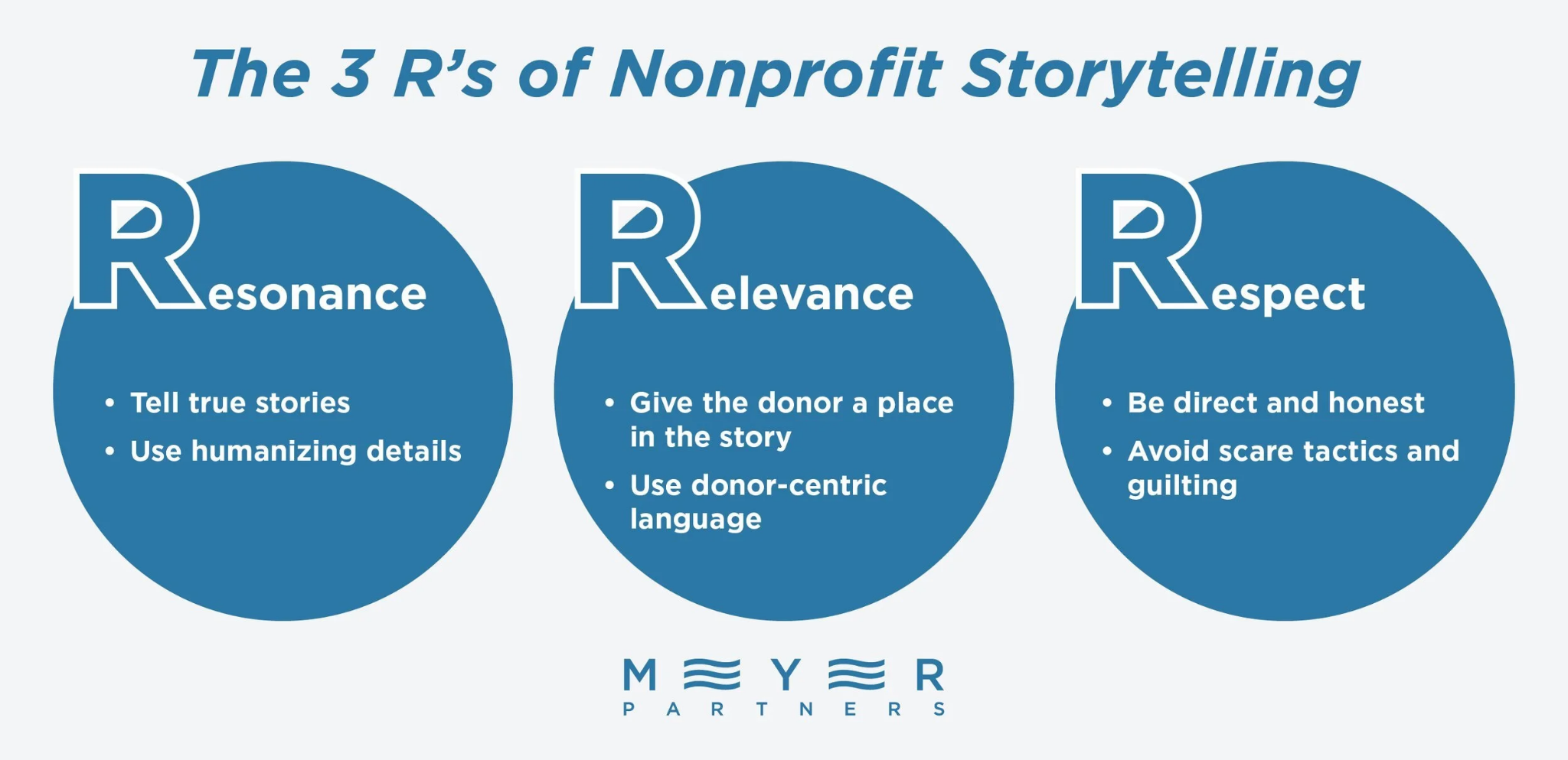
- Resonance: Every story should include real, humanizing details that resonate with donors. Let students tell their stories in their own words, and pair testimonials with photos whenever possible.
- Relevance: Make sure the donor can clearly understand their role in the story. Use donor-centric language that appeals directly to supporters’ values, inspiring them to become the changemakers who support the next generation of students.
- Respect: Respect both your readers and your storytellers by maintaining authenticity. Be direct and honest about what donations can achieve, and always focus on positive emotions like empowerment rather than guilt or scare tactics.
Incorporate these stories into multiple elements of your annual fund campaign to ensure maximum visibility and consistency. For example, you might include quotes from a student in your direct mail appeals, then post a selfie video of the same student telling their story on social media.
2. Highlight Impactful Giving Opportunities
To maximize revenue and increase average gift sizes, ask for more than standard, one-time cash gifts in your annual appeal letters. Offer additional giving options that provide greater flexibility and can increase donors’ long-term impact. These opportunities are often more compelling, especially for young alumni looking for accessible options and for high-capacity donors looking to make the most of their donations.
Specifically, use your annual appeals to highlight opportunities like:
Matching Gifts
The easiest way to make supporters’ donations go further is to double them. Typically, donors can double the impact of their gifts at no extra cost in one of two ways:
- Your university offers a matching donation challenge. Organizations often partner with a major donor who commits to matching every dollar donated within a set timeframe, up to a certain amount. These challenges motivate individual donors to give urgently so they don’t miss out on the match.
- Donors request corporate matching gifts from their employers. At any time, donors who work for participating companies can independently request matching donations from their workplaces. If the request meets the employer’s guidelines (e.g., a donation between $10 and $100 to a registered 501(c)(3) nonprofit), they’ll match their employee’s gift.
Either way, donation matching is a powerful motivator, especially during year-end giving season. Feature matching gifts prominently in your annual fund appeals, explaining how to participate and why these donations are so impactful.
Recurring Giving
Imagine you’re a recent graduate just starting your career and trying to pay off student loans. You wouldn’t want to donate $1,000 to the university you left last year, but it might be feasible to give $20 a month. In this case, you’re much more likely to respond to an appeal that highlights recurring giving.
Recurring gifts offer a more manageable opportunity to support your university while deepening donor relationships. In your annual fund appeal letters, include the option to give monthly and provide several accessible donation tiers.
Legacy Giving
Plant the seed for long-term support by introducing planned giving and bequest options in your annual appeals, too. These avenues empower alumni to leave a lasting mark on your institution without requiring an immediate, large-scale donation.
Even if most donors aren’t ready to commit to a legacy gift right now, just including information about planned giving in your appeal can get them thinking about it. Include links in emails and QR codes in direct mail letters so supporters can easily learn more on your university’s website or request a meeting with your major gifts officer. Note each donor who shows interest in the program so you can cultivate the relationship over time.
3. Leverage Donor Data for Highly Personalized Appeals
The best fundraising strategies reflect the unique relationship each supporter has with your university. Highly personalized appeals show each donor that you value them as an individual and respect their unique contributions.
Use your donor and alumni data to tailor your asks as much as possible. Go beyond addressing recipients by their preferred names—reference their specific past involvement, giving history, and personal connections to the university. Acknowledging that an alumnus was on the debate team or that a donor consistently supports the engineering department validates their identity and gives them clear, specific reasons to give again.
Segment your donor lists in several ways to maximize relevancy, and regularly audit your donor database to ensure all contact information and engagement records are accurate before sending appeals.
If you aren’t sure how to best segment your audience, hone in on the highest-value potential donors, or match supporters with the right requests, consider professional donor analytics services. Experienced fundraising consultants who specialize in data analysis can help you optimize your strategy for this year’s annual fund appeal and well into the future.
An effective annual fund approach relies on deep personalization, authentic narratives, and a variety of flexible giving options tailored to your audience. Upgrading the underlying strategy of your communications with these tips will help you build stronger relationships with alumni and secure the financial future of your core programs.

3 Ways to Build a Better Annual Fund Appeal for Higher Ed
Asking for donations to your annual fund can feel repetitive, but your appeal letters shouldn’t be. Learn how to develop better annual fund appeals here.
.jpg)
Alyssa Jefferies
September 3, 2026
12 minutes
LinkedIn continues to stay relevant for alumni outreach in 2026 as it is one of the most comprehensive self-updating directories from an advancement standpoint. Over 50% of LinkedIn’s user base holds a higher-education degree, and ~53% of US college graduates are active on the platform.
That means your alumni not only present but also likely engaging with a variety of content. But as far as reaching out to them goes, being present on LinkedIn and being reachable are two different things, and the wrong outreach strategy can disinterest or even alienate alumni.
In this blog, we’ll go through whether LinkedIn is worth your time for alumni outreach and how you can get your alumni’s attention effectively.
Is LinkedIn outreach worth the investment?
Let’s start with understanding why LinkedIn is different from the other channels
LinkedIn InMail gets a 10–25% response rate while cold email, by comparison, sits at 1–5%. The platform’s natural context is also a big factor here because when an alum receives an InMail from their alma mater, it’s in a different environment to when they’re sorting through personal emails and family messages. They log on to LinkedIn with a certain mindset, which makes them more open to professional conversations.
LinkedIn also gives outreach teams more context about who they’re reaching before they begin the process such as:
- Where an alum works currently
- What they’ve recently posted
- What groups and communities they’re in
- Who the common connections are
That’s a lot of helpful material to tailor the first message that will hopefully be the start of a donor’s journey. Combine all of this with the social media nature of the platform and you get a channel that has a lot of potential if you approach it right.
LinkedIn Alumni Outreach Strategies
Now that we’ve established that LinkedIn is at least worth a look, let’s set your team up for success so that your messages don’t go ignored.
1. Build an Active Presence Before You Send a Message
Advancement teams (and most teams in any field, to be fair) tend to treat LinkedIn outreach the same way they’d treat a cold email campaign. They find the person, write the message, hit send, and hope for the best.
But LinkedIn is, at it’s core, a social network. Your alumni notice who’s following you, who’s commenting on your posts, and whether your institution has a solid presence on the platform. If your university’s LinkedIn page hasn’t posted in months and the last post was a stock photo of a campus building, it hurts your cause already.
Before you start an outreach campaign, make sure you tick all these boxes::
- First, make sure your institution’s LinkedIn page is active. Posting once per weekday helps you reach 60% of your followers in a month. You should be aiming for consistent presence over viral content.
- Secondly, look for mutual connections, a shared connection increases reply rates by 27%. If a colleague or another alum is already connected,
- Thirdly, follow the alum you plan to message and leave a genuine comment on something they’ve posted. If possible, build and nurture your online relationship with them. You should be looking to gain a follow-back. This can be crucial since alumni who already follow your institution are 81% more likely to respond to your InMail.
2. Build a Segmented List
Use your CRM along with LinkedIn's alumni search tool to understand who you will be sending your messages to. Many alumni engagement tools also allow you to better find, segment, and automate outreach to the right people.
The segmentation itself will be crucial as personalization is a big part of making your message stand out (as we will explain later), so take your time and make sure all your segments and alumni information is updated, synced, and ready to go.
3. Get the Subject Line Right
LinkedIn InMail by default gives you a 200-character subject line limit. When an alum receives your InMail as a notification, they see roughly 25 to 40 characters before the preview cuts off.
For this reason, short, specific, and personalized subject lines can work really well. For example: “A quick question from [University]” or “Connecting with [Name] re: mentorship”.
What won’t work on the other hand, is anything that sounds like a mass email campaign. Something like “Exciting news from the alumni office!” might feel generic or may confuse recipients.
4. Keep the Message Short and Simple
LinkedIn’s own data shows that InMails under 400 characters get higher response rates. Many institutions sometimes write messages much longer than this and have their messages scrolled past.
For your first message, your alums only need enough to understand what you’re asking and if it's worth their time. If you have more context to give and more reasons to say why this outreach matters, that can follow later.
Write a ~300-character message that asks one clear question. The message can address the basics such as who you are, why you’re reaching out, and your one specific question.
5. Personalize Beyond the Name
Alumni can tell if a message was written for them or if someone just replaced a mail merge field, so you’ll want to go further than just swapping people’s first names. Here’s a few things that might help with personalization:
- Spend a couple of minutes on the alum’s profile; personalized InMails increase acceptance rates by about 40%, according to LinkedIn data. Mention a recent post they made, a project they were publicly credited for, a career transition they just went through, or a shared connection.
- Find a good natural connection between what you discover about them and what you’re reaching out about. If you’re inviting them to a career mentorship panel and they’ve been posting about early-career development, mention that. If you’re reaching out around their 10-year graduation anniversary, you definitely want to acknowledge it.
- Avoid mentioning generic and obvious things like “I see you graduated from [University].” Good personalization shows you’ve paid attention to their life after graduation and you have a brief window that you want to make the most out of, especially for less-engaged alumni.
6. Templates for Common Outreach Scenarios
Here are some templates that you could borrow and build on to personalize your next outreach message on LinkedIn:
General reconnect:
"Hi [Name], congrats on the move to [Company]. I'm on the alumni relations team at [University]. We're putting together a small group of alumni at your career stage to get some honest input on our programs. Would a 15-minute call work?"
Mentorship opportunity:
"Hi [Name], I work in alumni relations at [University]. Saw your recent post on [topic] and thought you'd be a great fit for our mentorship program. We're matching alumni with students in [field]. Would you have 30 minutes to hear more?"
Upcoming event:
"Hi [Name], I'm with alumni relations at [University]. We're hosting a small dinner for [City] alumni on [date] and wanted to make sure you were on the list. Can I send you the details?"
Giving day:
"Hi [Name], [University]'s giving day is [date]. This year all gifts are going toward [initiative]. Wanted to reach out personally before things kick off. Can I send you a bit more context on what it supports?"
What each of these has in common is one clear ask and customization that shows the sender did their homework before reaching out.
7. Time Your Outreach Well
LinkedIn data shows that Friday and Saturday see 4% and 8% fewer than average responses, respectively. Your alumni may want to relax and disconnect from the professional world on the weekends, so Monday through Thursday is a good window. However, depending on your event calendar, and past alumni engagement data, this can vary a bit so do double check!
Going back to the mentioned window, Sprout Social's analysis of nearly 2 billion engagements across major social platforms points to Tuesday through Thursday, 11 a.m. to 5 p.m., as LinkedIn's peak activity window. That's when professionals are most actively checking and responding on the platform, so it's your best shot at being seen before your message gets buried.
8. What to Do When Alumni Reply
Your next message after an alum replies sets the tone for the entire conversation that follows and the subsequent relationship. So here’s a few things to keep in mind:
- Reply quickly, ideally within a few hours of seeing their response.
- Thank them by name and reference something specific from their reply.
- Remember that this is a conversation on a social platform.
The goal should be to establish that your team and, by extension, your institution has a real interest in keeping in touch with them after graduation. For this reason, you’ll want to:
- Find out what they’re working on.
- Ask follow-up questions.
- Make it clear that there is no immediate ask attached.
💡This doubles as an opportunity to get updated information in case their profile information hasn’t been updated in a while.
Alumni who are connected to their institution are 23 times more likely to donate than those who aren’t. That connection, however, has to be built through consistent, genuine interaction over time. So, when it’s time to make an ask, it’s coming from the context of the conversation.
Build a LinkedIn Alumni Community (and not just another contact list)
At the end of the day, one-on-one outreach can only take you so far. Advancement and alumni relations teams that are able to keep alumni engaged are also building environments where alumni feel like they want to stay engaged.
If we are sticking to the platform at hand, LinkedIn Groups are a great way to do this. You can organize alumni groups around:
- Your institution
- Graduation cohorts
- Academic departments
- Regional chapters
- Donor groups
- Matching gift opportunities
…and much much more
AdvancementForm looked at what the institutions running active alumni groups have in common. Here are the main takeaways:
- Stay active every day: Keith Hannon of Cornell University shared that two-thirds of alumni relations professionals running thriving LinkedIn communities log in daily. That includes posting, answering questions, responding to comments, and engaging with what other members are sharing.
- Give alumni the spotlight: Spotlighting a graduate's career achievement or resharing something they wrote brings their audience into your content. Even the simple act of tagging alumni where needed will ensure that their network is notified as well.
- Share career resources such as job postings, industry reads/insights, career advice for alumni at different stages and make sure they are updated frequently. This is the content that consistently performs well as it provides a clear reason to engage.
- Mix up your content formats: Posts with images get a 98% higher comment rate than those without, and posts with YouTube videos (that play directly in the feed) get a 75% higher share rate. Varying your formats will keep the feed from feeling like a broadcast channel.
- Ask alumni to help current students: Academic Impressions flags this as an especially meaningful way to engage alumni because it gives them an opportunity to give back give back, even without a financial element. Posting something like "What do you wish someone told you in your first year in [industry]?" gets replies from alumni who would otherwise never comment on, say, an event announcement.
- Run polls: Lebanon Valley College asked their alumni "What career field are you currently in or looking to enter?" and it sparked a lively, ongoing discussion among their alumni. Polls can be a great icebreaker and contextualizing them to recent events, career stages, or other segmented needs is even better!
- Add in the nostalgia angle: Questions and posts about campus memories or institutional history give alumni interactive content that serves as a break on their feed from the usual LinkedIn content while also reminding them of why they feel connected to their school.
Finally, if you're thinking about content ratios, keep it weighted toward value-first content, career resources, alumni recognition, and conversation, with campaigns and event promotion playing a supporting role, not leading the feed.
Measure Your Progress and Know Your Blind Spots
You need to know whether your efforts are paying off. So, if you’re running structured outreach campaign on LinkedIn, here are the metrics which will help you track what's working:
- Connection acceptance rate: You generally want to aim for ~20% or above. If you're below that, check whether you're warming up contacts before sending requests and whether your institution's page looks active and credible.
- InMail response rate: With personalized, well-targeted outreach, this should sit between 10–25%. Single-digit numbers are an indication to look at your message length, your subject line preview, and how specific your personalization is.
- Conversation-to-action rate: This tracks what percentage of replies converts into whatever your goal is, whether that’s an event registration, a scheduled call, or a gift.
The Council for Advancement and Support of Education (CASE) tracks alumni engagement across four modes: philanthropic, volunteer, experiential, and communications.
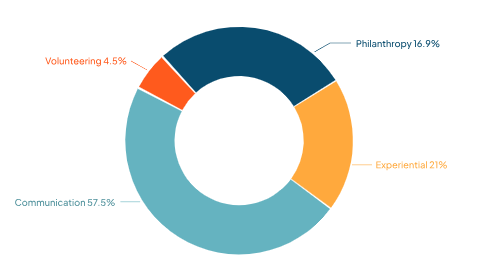
LinkedIn activity can feed into your experiential and communications metrics. If you’re not tracking LinkedIn engagement as part of your overall alumni engagement scorecard, you should consider starting now.
A few common blind spots that can be avoided include:
- Reaching out only when there's an ask: If alumni only hear from you around giving day or annual fund season, the outreach feels transactional. Only 27% of alumni who donate give to their alma mater. The most common reason others don't give is because they don't feel connected enough to make it a priority.
- Writing LinkedIn messages like emails: Avoid long messages, formal language, attached PDFs when LinkedIn is conversational. Keep messages short, and the tone conversational.Save the documents for follow-up conversations.
- Ignoring alumni who engage with your posts: When an alum comments on something your institution shared, respond to them, thank them by name, and if appropriate, send a connection request with a brief personal note referencing what they said.
- Not knowing what comes next when someone replies: Replying to a message without a clear next step might waste the opening you had spent time and effort on. Know what you’re trying to accomplish before you send the first message so that when someone replies, you’re ready to take the conversation forward.
Final Thoughts
We hope we’ve been able to give you and your team plenty of things to keep in mind. While LinkedIn outreach may seem like a simple game of numbers at first glance, any outreach campaigns involving social media rarely tend to be so predictable and you definitely want to keep that in mind.
To wrap things up, keep personalization (and segmentation by extension) at the heart of your strategy, have a consistent presence on LinkedIn just as you probably do with Facebook or Instagram, and make sure you are thinking about how to take the conversation forward many weeks ahead of time so that alumni feel appreciated after reacting to your outreach.
If you are looking for an alumni engagement platform to help you plan, execute, and measure your alumni outreach and engagement strategy, Almabase is built just for that so feel free to book a personalized demo with us!
How to Reach Out to Alumni on LinkedIn and Get Responses
Our article takes you through LinkedIn alumni outreach and how your team or institution can ensure that your alumni don't ignore your messages.

Prajnya Yelamali
September 2, 2026
12 minutes

In our other blogs, we often mention how important it is for a product to fit your team, and that is no different for alumni community platforms. However, when the core function of a platform revolves around it’s users, your alumni’s experience not only comes into the equation but weighs heavily on which one you should go with.
The last thing you want is for your institution or organization to have a community platform that alumni find tedious and staff hate managing. A bad choice also ultimately means your alumni will have to be asked to switch to another platform at some point, which you want to avoid.
To help you find the right platform for you, your staff, and your alumni, we’re breaking down the strengths and weaknesses of some of the best alumni community platforms available today. We hope that this blog helps you narrow down your search or find the next digital home for your alumni!
.avif)
Best Alumni Community Platforms: At a glance
Before diving deep into each platform, it helps to see how they compare at a glance. The table below highlights positioning, strengths, and ideal institutional fit so you can quickly narrow down the most relevant options.
8 Best Community Platforms for Alumni Networks in 2026
By offering alumni a space to connect, share career opportunities, and participate in community-driven initiatives, these platforms enhance alumni engagement, strengthen relationships, and boost donations, making them essential for modern alumni engagement strategies.
Below, we break down each solution in a consistent structure so you can quickly evaluate alignment with your engagement strategy, CRM ecosystem, and long-term alumni goals.
1. Almabase
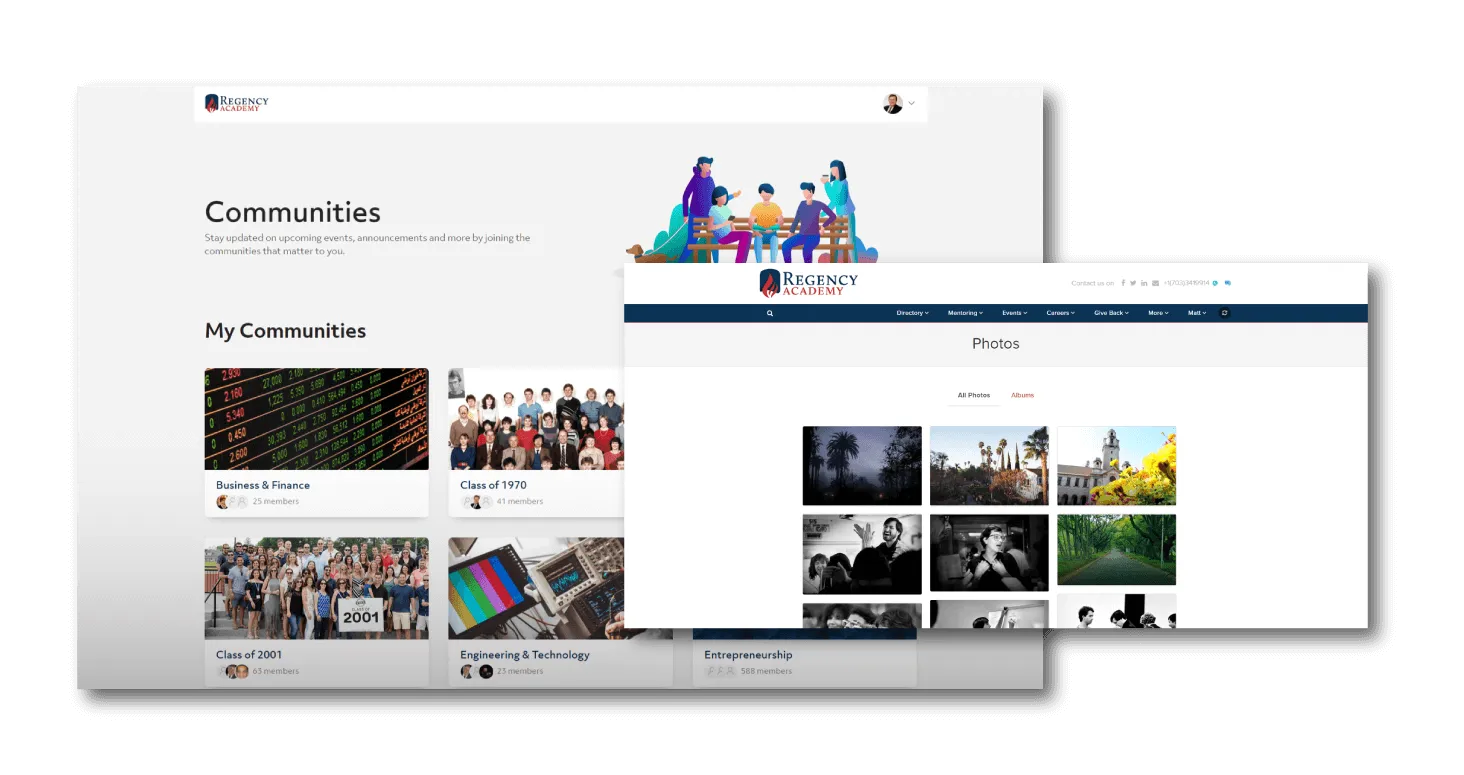
Almabase is an alumni-first engagement platform built for higher education and K-12 institutions as well as nonprofits. It combines networking, events, fundraising, and CRM synchronization into a structured alumni engagement platform, designed for advancement teams that need measurable engagement outcomes rather than a generic community tool.
Best suited for: Universities, K-12 schools, alumni associations, advancement teams, and structured alumni communities.
Key capabilities & strengths
- Dynamic alumni directory: Provides a searchable, self-updating alumni directory that keeps alumni records current and reduces manual data maintenance.
- CRM integration: Integrates with systems like Raiser’s Edge NXT and Salesforce to ensure real-time synchronization between community engagement and advancement databases.
- Purpose-built networking tools: Enables structured mentorship programs, affinity groups, regional chapters, and career boards to strengthen alumni-to-alumni and alumni-to-student connections.
- Event management workflows: Supports end-to-end event setup, ticketing, registrations, attendance tracking, and post-event data capture.
- Targeted communication & segmentation: Allows institutions to personalize outreach based on alumni behavior, profile attributes, and lifecycle stage.
- Self-service alumni portal: Empowers alumni to update profiles, register for events, explore opportunities, and participate in groups without administrative intervention.
Why institutions choose Almabase
Institutions often select Almabase when they need engagement tied directly to advancement visibility. The demo below presents a quick look into how Almabase helps you keep alumni engaged (click on the fullscreen icon if needed)
Loma Linda School of Medicine reported 3x higher alumni participation online after launching its digital community in under a week, along with stronger giving engagement from registered members. This was achieved by configuring their alumni directory, enabling self-profile updates, activating targeted communications, and syncing engagement data directly with their CRM.
Almabase’s strong reputation in alumni engagement is reflected in its high rating of 4.7 stars from over 200 reviews on Capterra, positioning it as one of the top alumni platforms in the market.
If you're evaluating how an alumni community platform for universities fits into your advancement strategy, seeing how the implementation model works in your own ecosystem makes the evaluation clearer. You can request a demo and explore that through a walkthrough.
Potential limitations
Institutions with highly customized legacy systems or unique workflow requirements may require thoughtful implementation planning to align branding, CRM structures, and internal processes.
2. Hivebrite
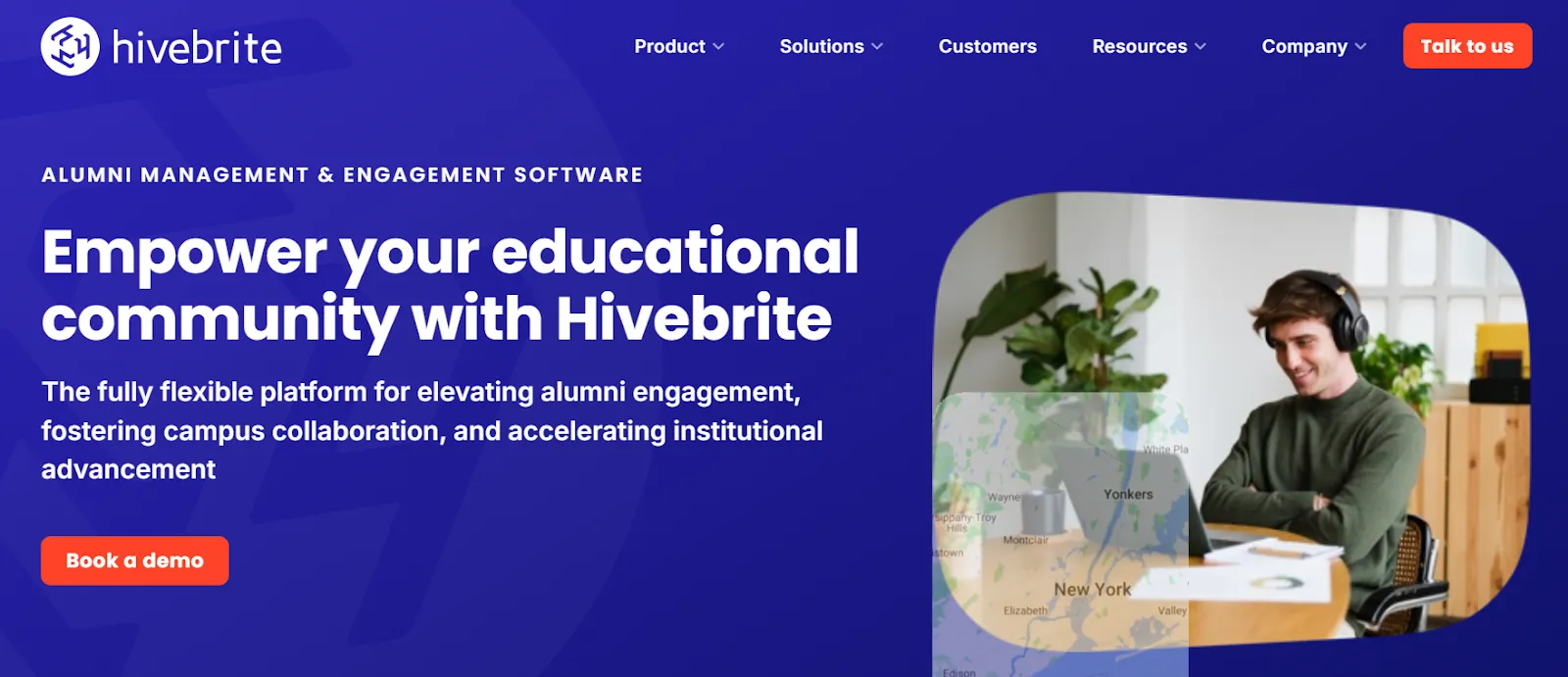
Hivebrite is a configurable community management platform used by universities and global alumni networks to build branded digital communities with networking, events, and member management capabilities.
Best suited for: Larger institutions or global networks that need a highly configurable alumni community hub.
Key capabilities & strengths
- Customizable community hub: Provides visual branding control, flexible modules, and tailored community structures suited to your institution’s identity.
- Member directory & profiles: Offers detailed search, filtering, and segmentation to help alumni discover connections based on shared interests, locations, or industries.
- Event management: Includes tools for virtual and in-person events with RSVP management, ticketing, and calendars to centralize engagement activities.
- Engagement analytics: Built-in dashboards and reporting help administrators monitor activity, measure community health, and refine strategies with data.
Potential limitations
- Some institutions report a learning curve for administrators due to the platform’s breadth and configuration options, which may extend setup timelines.
- Customization outside the predefined templates may require technical resources or support alignment during onboarding.
- Depending on your needs, the extensiveness of features could be more than required for smaller or less complex alumni communities.
- Certain users note that navigation and advanced customization elements feel less intuitive compared with lighter community tools.
3. Graduway (Gravyty)
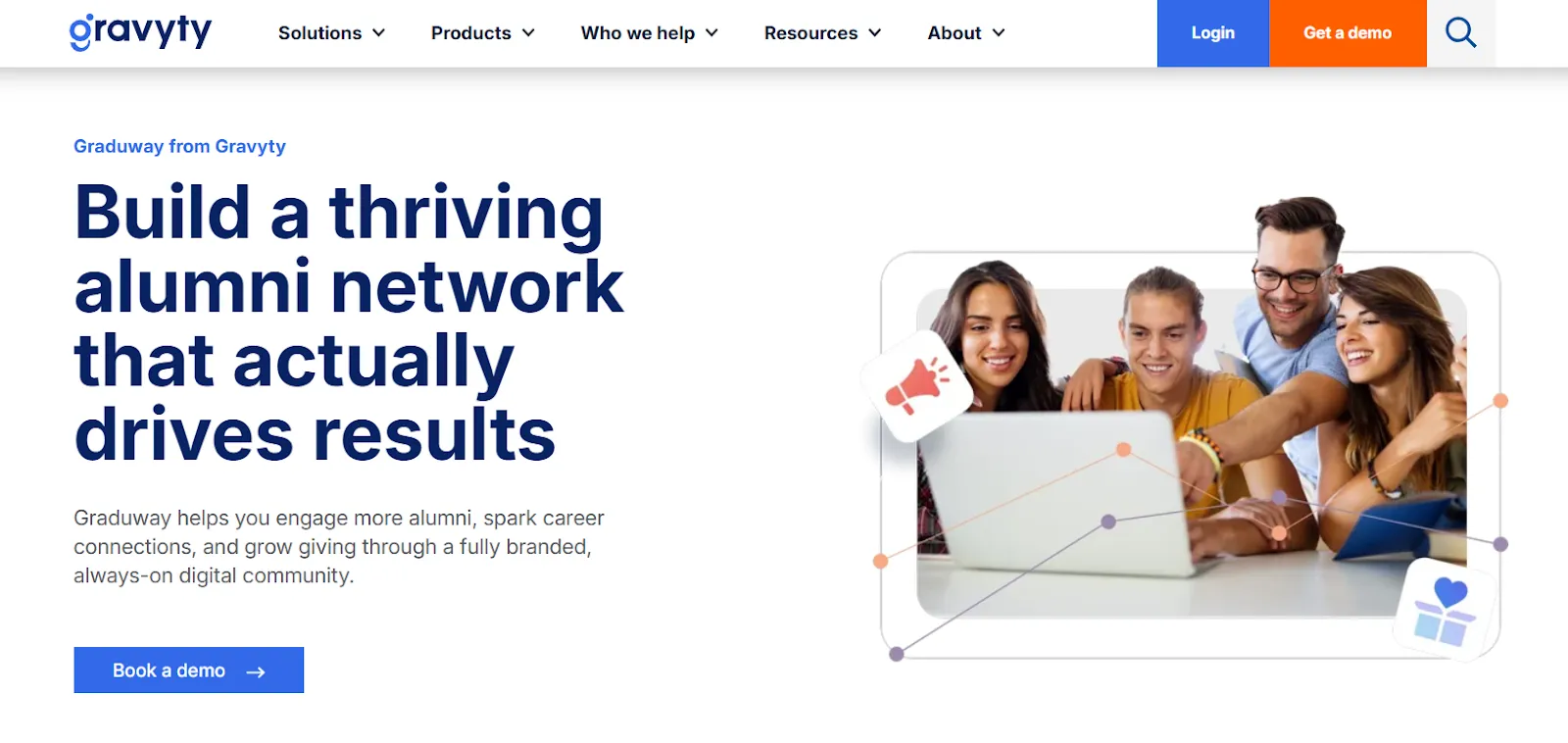
Graduway, now part of Gravyty, is an online alumni community and mentoring platform built primarily for higher education institutions. It focuses on career networking, mentorship programs, and structured engagement between alumni and students within a centralized digital ecosystem.
Best suited for: Universities prioritizing mentorship, career outcomes, and advancement-aligned alumni engagement.
Key capabilities & strengths
- Mentorship program management: Enables structured alumni-to-student and peer mentoring initiatives with matching and tracking tools.
- Professional networking directory: Provides searchable alumni profiles organized by industry, expertise, and career pathways.
- Community engagement tools: Includes discussion feeds, groups, and messaging to encourage alumni interaction.
- Engagement reporting dashboards: Offers visibility into participation metrics across mentoring and networking activities.
Potential limitations
- Several reviewers indicate that the platform offers fewer advanced features compared to some competing alumni systems.
- Users have noted constraints in customization and interface flexibility depending on institutional needs.
- Some institutions report that reporting tools may require manual data refinement for deeper analysis.
- Feedback also suggests that search filters and navigation can feel less intuitive for administrators in certain workflows.
4. PeopleGrove
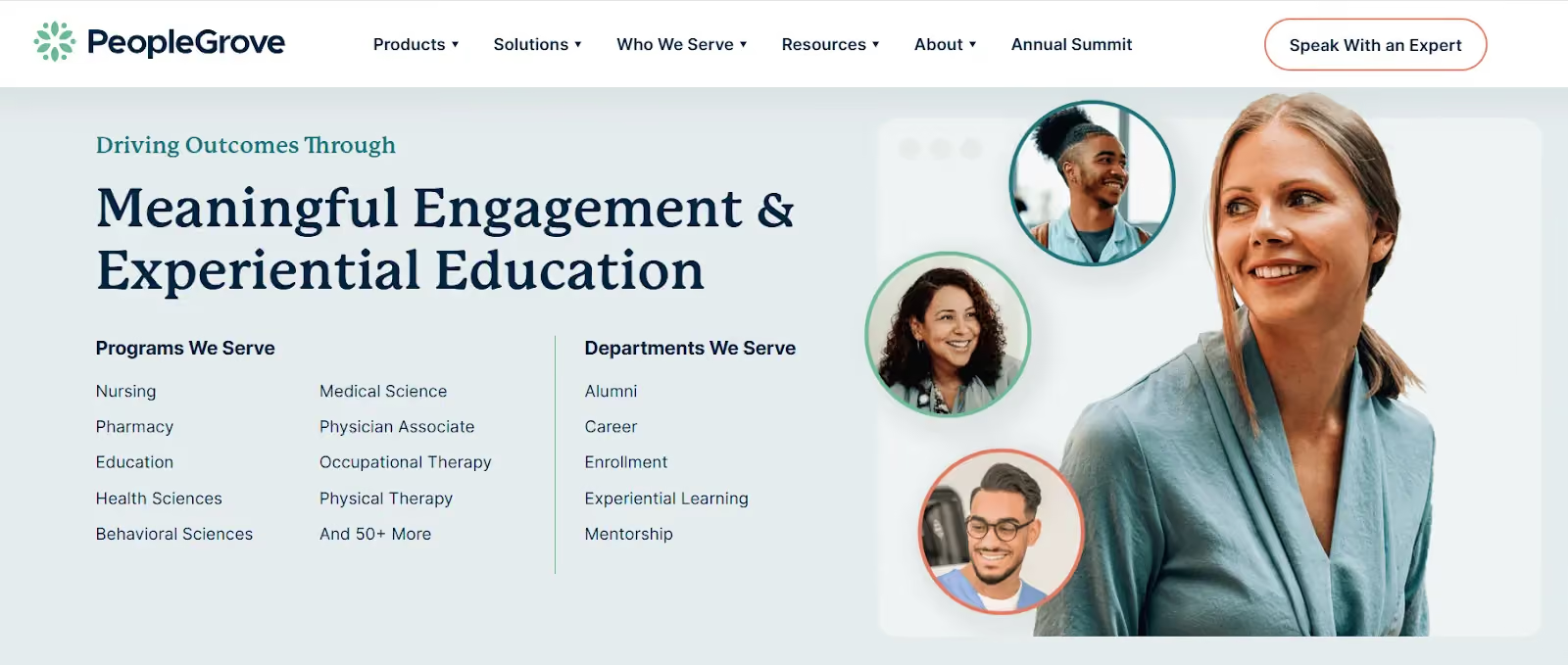
PeopleGrove is a career and alumni engagement platform that helps educational institutions foster professional connections and mentorship. It centers on bridging alumni with students and peers through structured mentoring, career pathways, and skills-based networking within a unified digital environment.
Best suited for: Institutions focused on career outcomes, mentorship programs, and alumni-to-student professional networking.
Key capabilities & strengths
- Career networking: Offers searchable alumni directories and career pathways to help users find connections based on skills, industry, and interests.
- Mentorship program support: Enables structured, two-way mentorship matching with tracking and progress monitoring tools.
- Engagement features: Facilitates community interaction through groups, discussions, and personalized outreach dashboards.
- Outcome tracking analytics: Provides reporting and analytics to help institutions measure mentorship and career engagement outcomes.
Potential limitations
- Several users note that the focus on career and mentoring features can leave broader community discussions or social networking tools feeling less robust compared with dedicated community platforms.
- Customization options for branding and workflows may be perceived as limited relative to more flexible platforms.
- Some reviewers indicate that reporting dashboards may require additional refinement for deep advancement or fundraising metrics.
- Administrators have reported a learning curve with certain interface elements for managing advanced mentorship configurations.
5. ToucanTech
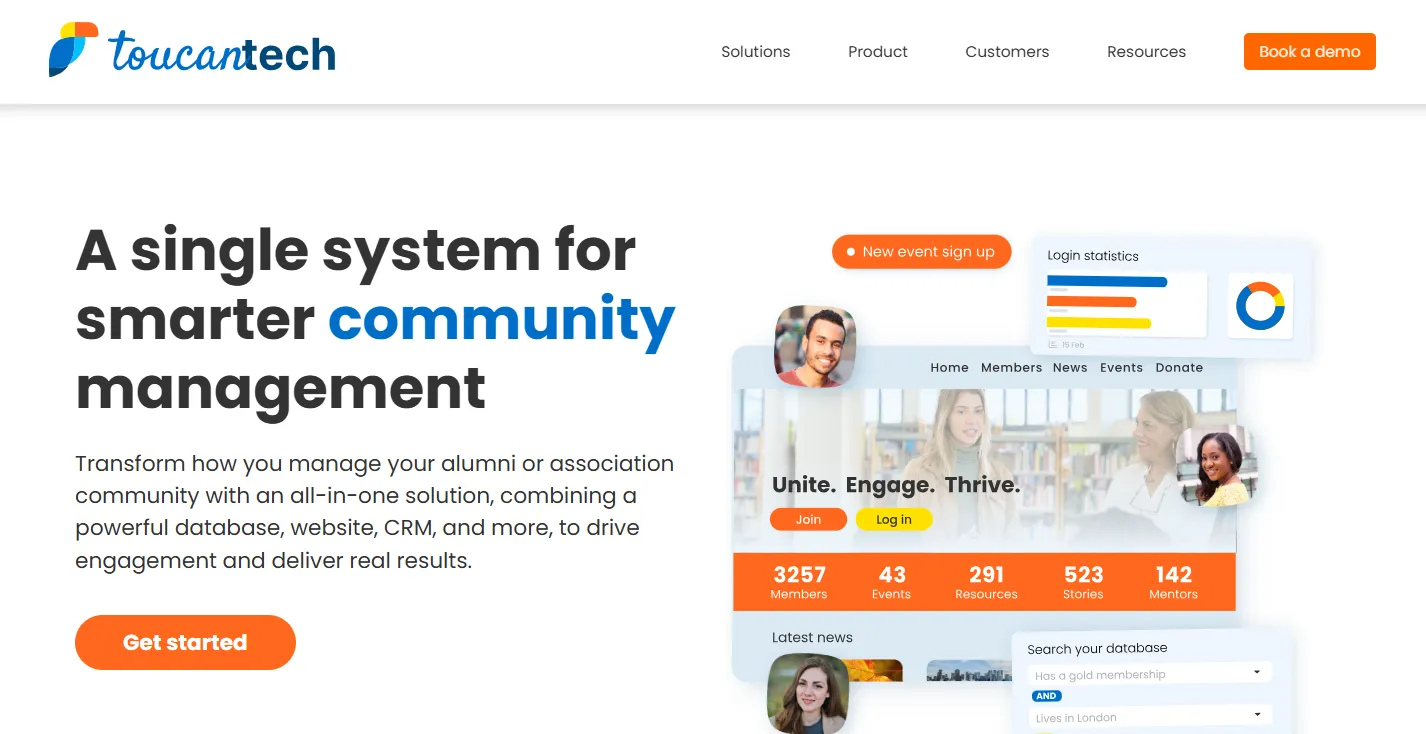
ToucanTech is a community and alumni management platform that combines CRM-style data management with engagement tools. It aims to help institutions centralize alumni records, communications, and activities within a single system that supports segmentation, outreach, and relationship tracking.
Best suited for: Institutions seeking strong alumni data management combined with communication and directory capabilities.
Key capabilities & strengths
- Alumni database and CRM: Offers built-in CRM features to store, segment, and manage alumni contact and relationship data.
- Communication tools: Provides email campaigns, newsletters, and targeted messaging based on alumni segments.
- Event workflows: Includes tools for event creation, registration, and attendance tracking to centralize engagement activities.
- Directory and search: Enables searchable alumni directories with filters for interests, locations, and other profile attributes.
Potential limitations
- Some reviewers note that advanced community engagement features (e.g., robust social networking or interactive feeds) are less developed compared with specialized alumni platforms.
- Users have mentioned the platform can feel more like a database/communications tool than a dynamic community hub.
- Customization and workflow automation may require additional support depending on internal technical resources.
- Some institutions report that reporting and analytics may need supplementary tools for deeper advancement insights.
6. 360Alumni

360Alumni is an alumni engagement platform that helps institutions build branded digital alumni communities with directories, event management, networking, and communications. It focuses on easing community access while maintaining alignment with institutional identity and audience segmentation.
Best suited for: Institutions that want a branded alumni portal with core networking and event capabilities.
Key capabilities & strengths
- Community directory: Provides a searchable alumni directory with filters to help users find peers based on shared attributes.
- Event management: Includes tools for event creation, registration, ticketing, and attendance tracking.
- Networking features: Supports basic connection features like member lists, private messaging, and group interactions.
- Communication tools: Offers email campaigns and segmented messaging to reach alumni based on behavior or profile data.
Potential limitations
- Some reviewers note that advanced social networking features (such as threaded discussions or interactive feeds) are less developed compared with platforms focused on active community engagement.
- Customization beyond basic branding elements may require additional setup support.
- Reporting and analytics features are viewed by some users as less comprehensive for measuring long-term engagement impact.
- Review feedback suggests that certain UI elements, like navigation and filtering, could feel less intuitive for administrators without platform training.
7. Disco

Disco is a community and learning platform that combines discussion feeds, events, AI-enabled interaction tools, and mobile access to help organizations build engaged digital communities with branded spaces and activity hubs. It’s designed for groups that want a central place for interaction, learning, and events.
Best suited for: Groups and organizations seeking an intuitive, engagement-focused community environment with event and discussion tools.
Key capabilities & strengths
- Discussion feeds & messaging: Offers activity feeds, direct messaging, and group discussions to encourage ongoing member interaction.
- Event management support: Supports virtual and in-person event promotion and member RSVPs within the community space.
- Branded community hub: Allows custom branding so the platform reflects your organization’s identity throughout the member experience.
- Mobile engagement: Provides mobile app access for discussions, events, and community interactions on the go.
Potential limitations
- User reviews indicate that some core features are still evolving, and certain capabilities may feel limited compared with more mature community platforms.
- Several reviewers highlight limited native integrations with external tools, which can constrain workflow automation without third-party connectors.
- Feature depth has been noted as less extensive than standalone alumni-specific platforms, especially for CRM integration and advancement-linked workflows.
- Some users report occasional issues with feature reliability or update-related disruptions as the platform continues to expand its functionality.
8. Wild Apricot
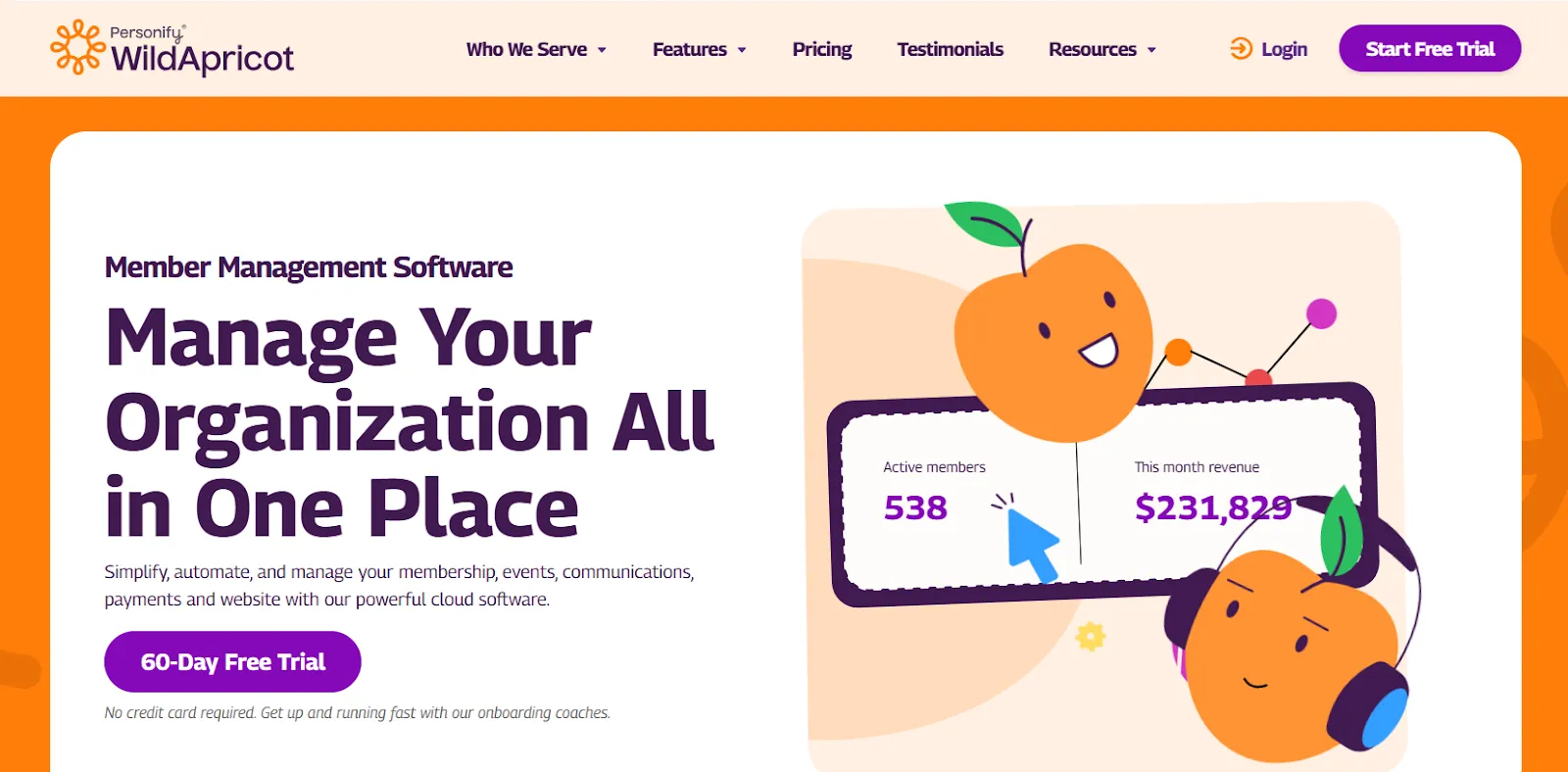
Wild Apricot is an all-in-one membership management and community platform that helps organizations manage member databases, event registrations, newsletters, and payments within a single system. It’s commonly used by associations, nonprofits, and small alumni groups seeking core engagement and administrative tools.
Best suited for: Small alumni associations or groups needing robust membership administration with basic community engagement features.
Key capabilities & strengths
- Membership database & CRM: Provides tools to store, segment, and manage alumni/member contact information and profiles.
- Event registration & payments: Includes event setup, registration forms, ticketing, and payment processing workflows.
- Communication suite: Offers email campaigns, newsletters, and automated messaging to stay in touch with members.
- Website & portal builder: Lets organizations build a branded site or microsite for events, directories, and community content.
Potential limitations
- Wild Apricot focuses primarily on membership administration rather than rich alumni community engagement or networking features.
- It lacks built-in structured mentoring or advancement-focused engagement tools typical of higher education alumni platforms.
- Reporting and advanced analytics are more basic and may require exporting data for deeper insights.
- Customization and integration options are more limited compared with enterprise-grade alumni community platforms.
And that wraps up the leading options in alumni community platforms in 2026. Now the real question is: which one aligns with your institution’s engagement goals, CRM ecosystem, and long-term alumni strategy?
Key Features To Look For Before Finalizing An Alumni Community Platform
Before you commit to any alumni community platform, let’s step back from feature checklists and evaluate what might set apart one choice from another for you. Below are some areas that directly influence long-term success.
1. Alumni Engagement And Networking Capabilities
At its core, an alumni platform must create meaningful connections, not just host profiles.
Look for:
- Active discussion spaces: Threaded conversations, interest groups, and chapter communities that encourage ongoing participation.
- Structured mentorship programs: Built-in matching tools that connect alumni with students or peers based on career goals or expertise.
- Searchable networking directories: Filters by industry, geography, graduation year, or skills to make connections actionable.
- Career opportunities boards: Job listings, internships, and volunteer postings that add professional value.
- Mobile accessibility: Native or responsive mobile experiences that keep alumni engaged beyond desktop logins.
Equally important is branding. A clearly branded alumni portal strengthens institutional identity and belonging. Platforms that support custom branding, storytelling, and personalized communication often see stronger participation than those relying solely on technical features.
As Sarah Hillel from Alumni Podcasts puts it while discussing about engaging alumni community:
“There is a huge potential for universities and schools to boost their alumni engagement through authentic voice, through storytelling, through engaging their communities with the authentic voices of their alumni.”
Recent findings by Marts & Lundy show that communication-driven engagement is most successful among younger alumni, with 22.8% of those who graduated in the last five years engaging through communication channels, a number that drops significantly for older alumni cohorts.
2. Alumni Database And Relationship Management
Engagement without clean data creates operational friction.
Evaluate:
- CRM integrations: Real-time synchronization with systems like Raiser’s Edge or Salesforce to prevent duplicate records.
- Segmentation tools: The ability to target alumni by behavior, giving history, geography, or lifecycle stage.
- Lifecycle tracking: Visibility into engagement touchpoints from graduation to donor conversion.
- Data governance controls: Permission settings, audit trails, and structured data hygiene workflows.
For example, Northwestern Health Sciences University used Almabase to automate profile updates and engagement tracking across more than 9,000 alumni by enabling self-service profile management, centralized event workflows, and CRM-synced engagement data. This enabled a small team to manage outreach more effectively and drive over 1,000 event registrations in two years.
3. Events, Fundraising, And Communication Tools
Events and fundraising are often where alumni engagement becomes measurable. Your platform should not treat these as add-ons but as integrated workflows.
Look for:
- End-to-end event management: Event creation, registration forms, ticketing, check-in tools, and post-event data capture in one system.
- Automated communication flows: Triggered emails, reminders, and follow-ups based on alumni behavior.
- Campaign tracking: Visibility into attendance, participation rates, and campaign performance.
- Donation workflows: Integrated giving forms that connect directly to your CRM and advancement records.
Event participation, email engagement, and giving activity should feed into a unified record so advancement teams can see full participation patterns. Platforms that separate community engagement from fundraising data often create reporting gaps.
4. Integrations With CRM And Existing Tech Stack
Integration depth directly affects operational efficiency. If event registrations, profile updates, and donations do not sync automatically, your team ends up reconciling data manually.
Evaluate:
- API availability: Open APIs that allow custom integrations when needed.
- Marketing automation compatibility: Integration with email marketing tools and campaign platforms.
- Data synchronization logic: Bi-directional syncing that prevents duplicate or outdated records.
- Ecosystem flexibility: Compatibility with payment processors, analytics tools, and institutional SSO systems.
Keep in mind that integration readiness during selection can drastically affect onboarding experience and time-to-value.
5. Analytics, Reporting, And ROI Visibility
Your alumni community platform should provide clear visibility into what drives participation and long-term value.
Look for:
- Engagement dashboards: Real-time insights into logins, event participation, mentoring activity, and communication response rates.
- Donor behavior visibility: The ability to correlate community participation with giving patterns.
- Participation metrics: Tracking of active users, repeat attendees, and networking interactions.
- Exportable and CRM-aligned reports: Clean data outputs that advancement teams can use without manual reconciliation.
The “how” matters here. Platforms that sync engagement data directly into your CRM allow advancement teams to view participation alongside giving history, enabling smarter segmentation and targeted outreach. Without integrated analytics, you’re measuring surface activity instead of institutional impact.
6. User Experience, Adoption, And Accessibility
Even the most feature-rich platform fails if alumni don’t use it.
Evaluate:
- Onboarding simplicity: Clear registration flows and minimal login friction to increase early adoption.
- Interface usability: Intuitive navigation for both alumni and administrators.
- Accessibility compliance: ADA-aligned design to ensure inclusive participation.
- Mobile optimization: Responsive design or native apps to support engagement beyond desktop access.
Institutions that combine strong UX with branded storytelling, structured rollout plans, and ongoing communication see higher participation rates than those relying on a one-time launch announcement. A strong alumni network is built through consistent engagement planning, not just software deployment.
Research by RSI International Study on Alumni Engagement highlights the critical role of social influence in alumni adoption of digital platforms, showing that peer networks and institutional promotion strongly drive platform usage and engagement.
Even well-equipped platforms can fall short if common selection mistakes aren’t recognized early in the evaluation process. The next section will focus on that part of your platform browsing checklist.
What To Avoid When Selecting An Alumni Community Platform For Your Institution
1. Choosing Generic Community Software Over Alumni-Specific Needs
Alumni engagement spans graduation, career progression, mentoring, events, and giving. Generic community tools rarely account for advancement workflows, donor tracking, or lifecycle segmentation. If the platform cannot align engagement with fundraising and CRM data, you create reporting silos and missed opportunities.
2. Underestimating Data Migration And Integration Complexity
Legacy databases often contain duplicate records, incomplete fields, and inconsistent formatting. Migration requires data cleaning, field mapping, and integration testing. If CRM synchronization is not carefully planned, institutions may face duplicate records or manual reconciliation work after launch.
3. Ignoring Alumni Adoption And Engagement Factors
Institutions that overlook change management, communication planning, and onboarding simplicity typically see low participation. Adoption depends on intuitive UX, mobile access, and consistent outreach, not just system availability.
4. Prioritizing Feature Volume Over Outcomes
A long feature list does not guarantee engagement. Overly complex platforms can overwhelm administrators and alumni alike. The better question is whether the platform supports your defined engagement goals, participation metrics, and advancement priorities.
5. Overlooking Long-Term Scalability And Support
Consider vendor roadmap clarity, support responsiveness, and scalability. As your alumni base grows, your platform should support expanded segmentation, events, integrations, and analytics without requiring major reconfiguration.
Final Verdict: Choosing The Right Alumni Community Platform
You’ve probably realized that the decision is less about comparing logos and more about evaluating your institutional fit. We recommend a simple framework:
- Engagement priorities: Are you focused on mentoring, events, fundraising, career outcomes, or all of the above?
- Data and CRM alignment: Does the platform integrate cleanly with your existing systems and reduce manual reconciliation?
- Organizational readiness: Do you have internal ownership, rollout plans, and communication strategies to drive adoption?
- Budget and scalability: Can the platform support your current alumni base and scale with future growth without major reconfiguration?
The right alumni community platform is the one that aligns engagement goals with operational capability. Instead of asking which platform is “best,” ask which platform best supports your advancement model, alumni lifecycle complexity, and reporting needs. Decision clarity comes from alignment, not feature volume. Also try to get second opinions from institutions and teams with similar sizes and problems.
If you’re narrowing down your options and want a clearer sense of how an alumni community platform fits your institution's needs, request a demo with Almabase and see how you can build and manage a more engaged alumni community.
FAQs about Alumni Community Platforms
1. What is an alumni community platform?
An alumni community platform is a digital space designed for alumni to network, connect, and engage with their alma mater or organization. It provides tools for communication, event management, mentorship, and fundraising, helping institutions maintain long-term relationships with alumni.
2. How can an alumni community platform benefit my organization?
It strengthens alumni relations, supports fundraising efforts, enables career development through mentorship, and enhances community engagement. These platforms centralize alumni data and streamline communication, helping organizations build a more connected and active alumni network.
3. How to build an alumni community?
Building an alumni community involves selecting the right platform, defining clear goals, creating engaging content, hosting events, and encouraging participation through mentorship programs and networking opportunities. Consistent communication and seamless integration with CRM tools are essential for sustained engagement.
4. What is the best software for building an alumni community platform?
Almabase is the ideal software for building an alumni community platform. It offers powerful engagement tools, event management features, and seamless fundraising integrations tailored to universities and alumni associations, empowering institutions to foster stronger alumni relationships.
5. How do alumni community platforms support fundraising initiatives?
Alumni community platforms support fundraising by offering tools for donation tracking, peer-to-peer fundraising, and seamless integration with CRM systems. These features help institutions manage donations and engage alumni in giving campaigns effectively.

8 Best Alumni Community Platforms for Networking in 2026
Explore the best alumni community platforms in 2026 for universities, with features for networking, engagement, fundraising, and more.
Alumni Engagement
When planned effectively, alumni fundraising events serve a dual purpose: they generate critical revenue for the institution while fostering lifelong loyalty, networking, and school pride among graduates.
But today’s alumni expect more than just the standard fundraising dinner or annual appeal. They want experiences—events that offer entertainment, connection, nostalgia, and tangible value in exchange for their contributions.
The most successful advancement teams curate a diverse event calendar that appeals to different segments of their alumni base, from recent grads looking to build their careers to established executives who want to give back to the institution that shaped them.
Below are 19 memorable charity fundraising event ideas to help higher education institutions engage alumni while supporting meaningful philanthropic goals.
Elegant Galas and Signature Soirées
Formal events remain a powerful alumni engagement opportunity to connect with major donors, long-time supporters, and corporate sponsors. These gatherings are an opportunity to celebrate pride in the institution through a sophisticated philanthropic environment.
1. Milestone Anniversary Gala
Celebrate a major institutional milestone, such as a 50th, 75th, or 100th anniversary, with a black-tie gala. Sell VIP tables, sponsorship packages, and premium seating, and incorporate entertainment like historical displays or student performances to reinforce the story of your institution’s impact and legacy
2. Alumni Awards Banquet
Combine recognition and fundraising by hosting a ticketed dinner honoring distinguished alumni who have made notable contributions to the institution, their industries, or their community. Highlighting these achievements inspires other graduates to stay connected and give back, while creating meaningful role models for current students.
3. Silent Auction and Wine Tasting
Partner with alumni who own wineries, breweries, or local restaurants to host an upscale tasting event. Pair the tasting experience with a silent auction featuring exclusive, experiential items such as:
- Dinner with the university president or dean
- Premium homecoming tickets and parking passes
- VIP campus tour experiences
- Travel packages or alumni-hosting retreats
4. “Night on the Quad” Campus Dinner
Few things evoke nostalgia like returning to campus. Host a high-end dinner on a beloved campus space, such as a historic quad or green space, to create a magical atmosphere. Sell tickets to the event, and add string lights, live music, and storytelling moments from university leadership to make the event a memorable celebration of shared history.
Athletic Tournaments and Activities
Athletic events tap into school spirit, friendly rivalry, and social interaction, making them excellent fundraising opportunities—especially when combined with peer-to-peer fundraising campaigns and sponsorships from businesses and corporate entities.
5. Charity Golf Tournament
Golf events remain one of the most reliable alumni fundraising options. They combine networking, friendly competition, and corporate sponsorship opportunities. Maximize tournament revenue by:
- Offering sponsorships at multiple price points or tiers
- Selling mulligans
- Adding a raffle
- Holding a post-tournament awards dinner
- Including exciting on-course challenges, like hole-in-one or golf putting contests
6. Alumni Vs. Students Exhibition Game
Host a spirited match between alumni and current student athletes in sports such as basketball, volleyball, baseball, softball, or flag football. Charge admission, sell concessions, and encourage alumni participants to fundraise within their networks. The competition aspect creates great campus buzz!
7. Pickleball Round-Robin Tournament
Pickleball’s massive popularity across all age groups makes it an ideal option for a cross-generational alumni event. Host a round-robin tournament and charge a team entry fee. Offer university-branded paddles, trophies, or other prizes to the winning team.
8. Fun Run or Walk
Encourage alumni participation by organizing teams by graduation decade or academic department. For broader participation, include a virtual run option so alumni across the country or even around the world can participate. Provide race t-shirts to all participants.
Professional Networking and Industry Events
Many alumni are eager to support their alma mater when the event also offers professional value. Career-oriented events can provide meaningful networking opportunities for alumni and donations for the institution.
9. Alumni Speaker Series
Host a ticketed evening featuring three to four accomplished alumni delivering short, TEDx-style talks about their career journeys or industry insights. This format works especially well for younger alumni seeking inspiration and networking opportunities. Offer a virtual participation option to reach alumni who can’t make the in-person event.
10. Executive Mentorship Breakfast or Luncheon
Create a roundtable breakfast where C-suite or senior alumni leaders mentor young alumni and graduating seniors. Offer a tiered ticketing system, where young alumni pay a modest entry fee (which acts as a donation), and senior alumni participate as volunteer mentors. This type of event creates connections across generations of alumni.
11. Industry-Specific Networking Events
Host focused networking events for students and alumni in prominent industries such as technology, healthcare, finance, or education. These events could include short panel discussions followed by networking, which helps students and alumni expand their professional connections while supporting the institution.
12. Alumni Career Fairs
Create a career fair where alumni employers recruit fellow alumni and current students to open roles in their company. Charger employers a registration fee and offer sponsorship packages for companies that want additional visibility or exposure.
13. Exclusive Alumni Masterclasses
Invite popular university professors or faculty experts to lead paid one-day workshops on topics relevant to the modern-day workforce, such as:
- AI in the workplace
- Leadership and management strategy
- Entrepreneurship and innovation
Virtual and Hybrid Experiences
Not all alumni can travel back to campus. Virtual events allow advancement teams to engage out-of-state, international, or busy alumni who still want to support their alma mater but have barriers to participating in person.
14. Giving Day Livestream
Host a 24-hour livestream event during your institution’s annual giving day. Display a live donation ticker to build excitement and encourage participation throughout the day. The livestream could also feature:
- Interviews with favorite professors
- Student performances
- Live campus tours
- Alumni success stories
15. Virtual Alumni Trivia Night
Host a pay-to-play trivia night using online platforms like Kahoot or Zoom. Focus trivia categories on university history, campus traditions and folklore, and pop culture from different graduating decades. Alumni enjoy testing their school knowledge while also reconnecting with their classmates.
16. Online Skill-Share Workshops
Tap into the expertise of your alumni community by inviting them to host virtual classes. Participants make a donation to the university in order to receive accompanying workshop materials and a viewing link. Workshops could include:
- Cooking demonstrations
- Mixology classes
- Personal finance workshops
- Fitness or wellness sessions
Family-Friendly Community Gatherings
Many alumni in their 30s and 40s are balancing careers and family life. Creating events where children (who are potential legacy students) are welcome makes it easier for them to stay involved with their alma mater.
17. Homecoming Tailgate and Carnival
Create a family-friendly tailgate zone before the big homecoming game to transform a traditional tailgate into a full community event. Charge a modest entry fee and secure sponsors for fun attractions like:
- Food trucks
- Bounce houses
- Face paintings
- Carnival games and prizes
- Visits from and photo ops with the university mascot
18. Campus Drive-In Movie Night
Turn part of campus into an old-fashioned outdoor theater by projecting a family-friendly movie onto the side of a large building or stadium scoreboard. Charge a per-car donation fee and sell popcorn, snacks, and university merchandise.
19. Alumni Family Summer Picnic
Invite alumni to a relaxed summer gathering where they can bring their children to campus and introduce them to the campus community. Add fun activities to engage kids of all ages, like kid-friendly campus tours, lawn games, live music, ice cream socials, or picnic-style food.
Wrapping Up
The most successful alumni events do more than just raise money. They create meaningful experiences that strengthen the emotional connections between graduates and the institution they love. By offering value through entertainment, professional networking, athletic competitions, or nostalgic moments on campus, you can inspire alumni to remain actively engaged in the university’s mission and committed to its financial success.
A thoughtful alumni event strategy should include a diverse mix of in-person, virtual, formal, casual, and family-friendly experiences to appeal to every segment of your alumni community.
Finally, remember that recognition and gratitude are essential. OmniAlly suggested publicly celebrating your supporters through a donor wall, or you might hold recognition events or provide digital acknowledgements. This helps reinforce a culture of giving and reminds alumni that their contributions do matter.
When alumni feel appreciated and connected, they are far more likely to stay engaged for years to come and continue supporting the institution that helped shape their journey.

19 Memorable Fundraising Events That Engage Alumni
Alumni have a strong connection to your chapter that ties them together. Bring them closer together and support your fundraising efforts with these event ideas.
Events

Jen Wemhoff
March 17, 2026
12 minutes
Selecting the right fundraising software for your university is rarely straightforward. You’re probably not starting from scratch. There’s already a CRM in place, maybe a separate event tool, perhaps something powering giving days.
The real question is whether the software you’re using empowers or limits your team’s potential.
Some teams we talk to require a lot of engagement features, while others want a simple fundraising tool to add to an existing toolset. So the question ultimately becomes “what fundraising software fits the gap we want to fill?”
In this blog, we’re mapping fundraising software for universities by use case. Whether you’re evaluating alumni crowdfunding platforms, donor management systems, or data-driven reporting tools, we hope it helps you find an answer.
Best university fundraising software (quick comparison)
University fundraising software helps advancement teams manage alumni donors, run giving days and campaigns, process online donations, and track results in one system.
The right platform supports alumni crowdfunding, donor CRM records, event and peer-to-peer fundraising, and real-time reporting. Strong tools also connect with existing CRMs and campus systems to reduce data gaps.
This guide maps university fundraising software by use case, so universities can shortlist options faster and choose the best fit for participation, retention, and fundraising visibility.
Here’s a quick comparison to orient your shortlist:
The key is alignment. If alumni participation is your priority, your shortlist will look very different from a university focused on enterprise-level donor reporting.
According to CASE, voluntary contributions to U.S. higher education reached $61.5 billion in FY24, reinforcing the scale and operational complexity advancement teams manage today.
Best university fundraising software for alumni crowdfunding and digital fundraising
Universities prioritizing participation, giving days, and alumni-led campaigns need platforms built for digital-first fundraising. These tools focus on alumni activation, branded giving experiences, and frictionless donation flows that reduce barriers during time-bound campaigns.
1. Almabase

Almabase is a purpose-built fundraising and alumni engagement platform designed for Higher Ed and K–12 institutions focused on alumni engagement and digital-first giving. It combines crowdfunding, engagement, and CRM connectivity into one advancement-focused system.
It supports giving days, class campaigns, project-specific fundraising, and ambassador-led drives through branded giving hubs and structured campaign formats such as crowdfunding, competitive fundraising, and checkout pages.
Best suited for:
Higher Ed and K–12 institutions prioritizing alumni participation growth through structured giving days, class campaigns, and ambassador-led digital fundraising initiatives for advancement teams.
Core capabilities and strengths:
- Modern donor experience: Instant, mobile-optimized donation flows supporting one-time, recurring, and pledge gifts, reducing friction and improving completion rates.
- Campaign discovery & visibility: Custom giving hubs with configurable thermometers, leaderboards, search, and campaign groupings, increasing campaign participation and momentum.
- Multichannel donor marketing: Segmented email and text campaign tools for targeted alumni outreach, improving message relevance, visibility, and response rates.
- CRM integration & clean data sync: Automated syncing of gifts into advancement CRMs like Raiser’s Edge with batch updates and duplicate prevention, minimizing manual reconciliation and data errors.
- Data intelligence: Donor pipelines and segmentation analytics for identifying engagement and giving trends, enabling more informed campaign planning.
- Peer-to-peer fundraising: Ambassador-led personal campaign pages connected to institutional fundraising goals, expanding reach through alumni networks.
Almabase also earns strong third-party feedback on Capterra, with an overall 4.7/5 rating, and especially high marks for customer service (4.9/5), which matters when small teams need responsive support.
Why institutions choose Almabase
Institutions select Almabase because it directly addresses the challenge of stagnant alumni participation by improving digital engagement and conversion.
For example, Loma Linda University School of Medicine tripled its online alumni participation after launching giving day campaigns with Almabase’s mobile-first giving and leaderboard tools. The platform’s design helped them attract more donors and simplify campaign discovery.
Similarly, The University of Texas at El Paso saw a 309% increase in alumni membership within six months by leveraging tailored engagement workflows and segmented outreach, showing that combining fundraising with engagement deepens long-term supporter involvement.

Considerations before choosing:
- Focused majorly on digital fundraising and alumni engagement
- Requires CRM integration for comprehensive institutional reporting
For universities looking to strengthen alumni participation and modernize digital fundraising experiences within their broader cloud-based university fundraising system, Almabase is one of the best options to choose.
You can book a personalized demo to explore how it can support your campaigns, engagement goals, and CRM workflows.
2. GiveCampus

GiveCampus is a digital giving platform designed for campaign-centric fundraising in higher education. It is commonly used by institutions running structured giving days, short-term drives, and ambassador-led outreach initiatives.
Best suited for:
Institutions running frequent, time-bound digital campaigns that rely on alumni ambassadors and peer-driven participation.
Core capabilities and strengths:
- Giving day support: Tools to configure, launch, and monitor online giving days and challenges.
- Peer-to-peer campaigns: Features that enable advocates and volunteers to create and promote personal fundraising pages.
- Mobile-optimized donation forms: Online giving forms designed for responsiveness across devices, supporting multiple payment methods.
- Analytics and reporting: Dashboards and insights that track fundraising performance and donor interactions throughout active campaigns.
Considerations before choosing:
- Primarily optimized for campaign-based fundraising rather than long-term donor lifecycle management
- May require integration with an existing donor CRM for consolidated advancement reporting
- Institutions seeking deep customization or complex data workflows may need additional configuration or system support
Best university fundraising software for donor and alumni relationship management
Campaign performance matters, but long-term fundraising growth depends on structured donor tracking and retention. This category focuses on platforms that centralize donor data, track giving history, and monitor engagement over time.
With total U.S. charitable giving reaching $592.5 billion in 2024, up 6.3% in current dollars according to Giving USA, competition for donor attention continues to intensify, making segmentation and stewardship discipline increasingly important.
3. CharityEngine
CharityEngine is a unified fundraising and donor management platform designed to centralize donor records and fundraising operations within a single system. It supports institutions that want donor data, recurring giving, and campaign activity managed in one environment rather than across multiple disconnected tools.
Best suited for:
Universities seeking to focus on managing donor records, recurring giving, and campaign activity within a consolidated fundraising and CRM environment.
Core capabilities and strengths:
- Centralized donor records: Single CRM database for donor profiles, giving history, and engagement activity.
- Recurring giving management: Tools for managing recurring donations, pledges, sustainer programs, and renewals.
- Fundraising automation: Built-in email marketing, campaign workflows, and automated outreach sequences.
- Reporting and analytics: Dashboards and reports for monitoring fundraising performance and donor engagement trends.
Considerations before choosing:
- Institutions with highly specialized advancement workflows may require configuration to align with internal processes
- Enterprise-scale implementations can involve structured onboarding and data migration planning
- Universities already using a mature CRM ecosystem may evaluate integration depth before consolidation decisions
4. Bloomerang
Bloomerang is a donor CRM focused on relationship tracking and donor retention. It is structured to help advancement teams monitor engagement trends, giving behavior, and long-term donor activity within a centralized system.
Best suited for:
Small to mid-sized advancement teams focused on donor retention, engagement tracking, and structured relationship management.
Core capabilities and strengths:
- Donor engagement scoring: Tracks supporter activity and assigns engagement levels to help identify highly engaged or at-risk donors.
- Retention dashboards: Provides built-in reports that monitor donor retention rates, giving frequency, and year-over-year trends.
- Online fundraising tools: Includes donation forms, recurring giving management, and campaign tracking within the CRM.
- Reporting and analytics: Offers customizable reports and dashboards to analyze fundraising performance and donor behavior.
Considerations before choosing:
- May require supplemental tools for large-scale campaign or peer-to-peer fundraising
- Advanced customization options may be limited compared to enterprise CRM systems
- Institutions with complex advancement structures may evaluate scalability as fundraising operations grow
Best university fundraising CRM software
Large universities often manage extensive donor databases, structured major gift programs, and detailed institutional reporting requirements. This category focuses on systems built to support complex advancement operations and dedicated CRM teams.
5. Raiser’s Edge NXT
Raiser’s Edge NXT is Blackbaud’s enterprise donor management CRM designed to manage donor lifecycles, major gifts, and institutional reporting. While it provides strong giving and reporting capabilities, institutions often complement it with additional platforms like Almabase for digital fundraising, crowdfunding, and campaign activation.
Best suited for:
Universities with mature development operations managing large donor databases, major gift portfolios, and formal reporting workflows.
Core capabilities and strengths:
- Donor and gift tracking: Unified database for tracking donor profiles, giving history, interactions, and relationships.
- Major giving workflows: Tools for managing major gift prospects, moves management, and gift planning.
- Reporting and analytics: Customizable reports and dashboards for advancement metrics and institutional insights.
- Segmentation: Advanced lists and segments to support targeted outreach and campaign planning.
Considerations before choosing:
- Implementation and configuration can require dedicated CRM expertise and internal resources
- System complexity may exceed the needs of smaller or campaign-focused teams
- Custom reporting and data governance processes may require structured setup and ongoing administration
6. Ellucian CRM Advance

Ellucian CRM Advance is an advancement and donor management system designed specifically for higher-education institutions. It supports core fundraising operations while connecting constituent data with broader campus technology systems.
Best suited for:
Institutions with centralized advancement teams, particularly those already operating within the Ellucian campus technology ecosystem.
Core capabilities and strengths:
- Alumni and donor record management: Centralized constituent profiles and engagement history.
- Gift and pledge processing: Structured tools to record, process, and manage gifts, pledges, allocations, and funds.
- Advancement reporting: Fundraising dashboards and institutional reporting tools that support fundraising metrics.
- Ecosystem integration: Alignment with Ellucian’s broader higher-ed systems, including SIS-connected environments.
Considerations before choosing:
- Schools not already in the Ellucian ecosystem may evaluate integration and implementation complexity
- Custom reporting and workflows may require dedicated technical resources
- Smaller advancement teams may find enterprise configuration more structured than needed
Best university fundraising software for events, peer-to-peer, and reunion campaigns
Some universities prioritize event-driven fundraising, reunion campaigns, and community-led initiatives. These platforms focus on event registration, peer-to-peer fundraising, and ambassador participation to mobilize networks around specific fundraising moments.
7. GoFundMe Pro
GoFundMe Pro (formerly Classy) is an online fundraising platform designed to support campaign and event-based fundraising initiatives. It provides digital infrastructure for managing donation pages, peer-to-peer campaigns, and event fundraising within a centralized environment.
Best suited for:
Universities organizing event-driven, peer-to-peer, and community-led fundraising initiatives with structured campaign timelines.
Core capabilities and strengths:
- Donation pages: Customizable campaign pages for general fundraising or specific projects.
- Peer-to-peer campaigns: Support for fundraisers where participants create personal pages to raise on behalf of a larger cause.
- Event fundraising: Tools that enable fundraising around community events, galas, and themed campaigns.
- Campaign tracking: Basic dashboards to monitor contributions, participant activity, and progress.
Considerations before choosing:
- Primarily structured for campaign and event fundraising rather than full donor lifecycle management
- Universities may require CRM integration for centralized donor record tracking
- Advanced customization or integration needs may require internal technical support
8. Bloomerang Fundraising (formerly Qgiv)
Bloomerang Fundraising, formerly known as Qgiv, is a digital fundraising platform designed to support event-linked and campaign-based giving initiatives. It provides tools for managing donation collection, event participation, and mobile fundraising within a unified interface.
Best suited for:
Institutions seeking flexible event-linked fundraising tools that combine donation forms, peer participation, and registration workflows.
Core capabilities and strengths:
- Donation forms: Modern, customizable online giving forms for collecting gifts.
- Event registration: Tools for creating and managing event ticketing and attendee registration.
- Mobile giving support: Mobile-friendly fundraising and text-to-donate functionality.
- Peer-to-peer campaigns: Support for supporter-led fundraising initiatives and personal pages.
Considerations before choosing:
- Primarily optimized for event-linked fundraising rather than comprehensive donor lifecycle management
- Universities with complex advancement structures may require additional CRM integration
- Advanced analytics or institutional reporting needs may depend on system configuration
Best university fundraising software for data-driven fundraising and reporting
Some advancement teams prioritize analytics, executive dashboards, and institutional reporting over campaign-specific tooling. These platforms focus on customizable data models, reporting depth, and ecosystem integrations that support long-term strategic planning.
9. Salesforce Nonprofit Cloud

Salesforce Nonprofit Cloud is a CRM for nonprofit and education organizations built on the Salesforce platform. It provides configurable data architecture and reporting capabilities designed to support complex fundraising and constituent management needs.
Best suited for:
Universities requiring highly customizable donor data models, advanced analytics, and dedicated Salesforce administration capacity.
Core capabilities and strengths:
- Customizable donor data models: Flexible CRM objects and fields tailored to constituent and giving data.
- Advanced dashboards and reporting: Report Builder and dashboard tools for visualizing fundraising and engagement metrics.
- Integration across the Salesforce ecosystem: Native connectivity with other Salesforce products and AppExchange extensions.
- Fundraising and automation: Tools for campaign workflows, constituent segmentation, and process automation.
Considerations before choosing:
- Implementation and customization typically require experienced Salesforce administrators
- Configuration complexity may extend setup timelines compared to out-of-the-box systems
- Universities without internal technical capacity may rely on external implementation partners
10. Neon CRM

Neon CRM is a donor management and fundraising platform designed to centralize donor records, online giving, and event management within a single system. It supports organizations that want CRM functionality combined with fundraising and communication tools in one environment.
Best suited for:
Growing advancement teams looking to combine donor management, online giving, and event tracking within a single platform.
Core capabilities and strengths:
- Donor and event management: Centralized constituent records with event registration and attendance tracking.
- Online giving: Customizable donation forms supporting one-time and recurring contributions.
- Reporting and analytics: Built-in reports and dashboards for fundraising and engagement tracking.
- Email communications: Integrated email tools for segmented outreach and supporter engagement.
Considerations before choosing:
- May require configuration to support complex advancement hierarchies
- Advanced customization and integrations may be limited compared to enterprise CRM platforms
- Universities with large-scale major gift programs may evaluate reporting depth and scalability
After reviewing different categories of university fundraising software, the next step is not comparing feature checklists. It’s stepping back and asking whether your systems reflect how your fundraising actually operates and whether your resources are being directed where they create measurable impact.
As Michael Richmond, present Director of Annual Giving (Health Systems) at Tulane University, suggests about maximizing fundraising efforts, “Create a baseline so you know where you are. When resources are limited, it becomes very important where you seed those resources and to track what the return from those fundraising efforts actually is.”
How to evaluate university fundraising software before choosing
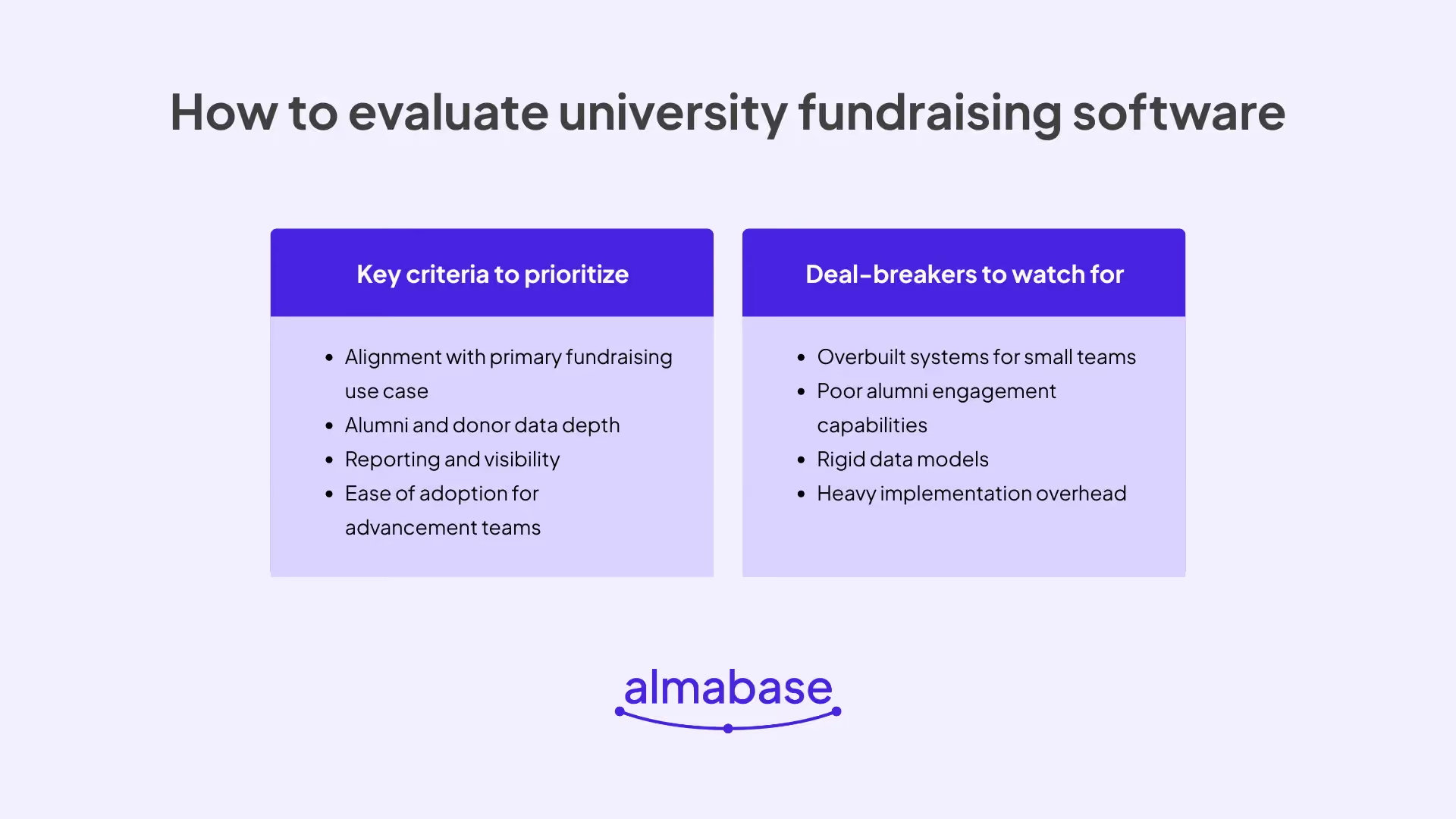
Shortlisting tools is only the first step. Universities make stronger decisions when evaluation criteria align with their fundraising motion, team structure, and long-term advancement goals rather than feature volume alone.
Key criteria universities should prioritize
1. Alignment with primary fundraising use case
Start with clarity on your dominant fundraising motion. A university focused on giving days and alumni participation will evaluate platforms differently from one managing major gifts and capital campaigns. The system should directly support your highest-impact fundraising activity.
2. Alumni and donor data depth
Evaluate how well the platform captures donor profiles, giving history, engagement timelines, and communication records. Advancement teams should be able to see a unified view of alumni and donor activity without relying on multiple disconnected tools.
3. Reporting and visibility
Leadership reporting requirements often shape software selection. Assess dashboard flexibility, segmentation capabilities, and export options to ensure institutional reporting, board updates, and campaign analysis can be generated efficiently.
4. Ease of adoption for advancement teams
While endowments returned an average of 11.2% in FY24, according to the NACUBO-Commonfund Study of Endowments, advancement teams continue to diversify fundraising motions beyond investment performance alone.
Instead of complex systems, consider onboarding requirements, training needs, and day-to-day usability. Advancement staff should be able to launch campaigns, access donor data, and generate reports without constant technical support.
When all the above-mentioned criteria are applied in practice, the evaluation becomes clearer. For example, if a university is evaluating alumni crowdfunding software, it would look for a platform like Almabase that fulfils all the above-listed criteria.
Almabase aligns with the above evaluation lens by supporting giving days and class campaigns, syncing donor data with existing CRMs, offering real-time campaign dashboards, and enabling quick setup for digital fundraising initiatives without restructuring the broader advancement system.

Common deal-breakers to watch for
- Overbuilt systems for small teams: Enterprise-grade platforms can introduce unnecessary complexity for smaller advancement offices. Features that exceed operational needs may increase costs and administrative burden.
- Poor alumni engagement capabilities: If alumni participation is a priority, platforms lacking peer-to-peer tools, branded campaign pages, or digital engagement workflows may limit growth potential.
- Rigid data models: Systems that restrict customization or segmentation can create reporting gaps. Universities often require flexible donor classifications and campaign tracking structures.
- Heavy implementation overhead: Long deployment timelines, extensive data migration, or reliance on external consultants can delay fundraising initiatives. Evaluate resource requirements before committing to a platform.
Point to note → As institutions report a 10-year average endowment return of 7.7% and a one-year return of 10.9% in FY25, according to NACUBO, advancement leaders are expected to maintain steady fundraising performance alongside investment returns.
In that context, structural mismatches in fundraising systems can weaken pipeline discipline, reporting clarity, and long-term donor stewardship. Choosing the right platform often comes down to avoiding these structural mismatches early, before they create long-term operational friction for your advancement team.
Final thoughts on choosing the right university fundraising software
Choosing the right university fundraising software becomes simpler when we filter options through alignment, not feature volume. The strongest outcomes usually come from matching the platform to how fundraising actually operates on campus.
Universities tend to succeed when their software aligns with:
- Primary fundraising motion — alumni giving, giving days, major gifts, events, or campaign-led initiatives
- Team structure — centralized advancement offices versus campaign-led or distributed teams
- Desired outcomes — higher participation, improved donor retention, clearer reporting visibility
When those three elements align, software supports execution instead of slowing it down.
If alumni engagement and digital participation are central to your strategy, reviewing how a platform handles crowdfunding, class campaigns, and ambassador-led giving can clarify fit.
Book a quick demo to explore how Almabase supports alumni-focused digital fundraising and campaign execution in practice.
FAQs about University Fundraising Software
1. What is university fundraising software?
University fundraising software is a platform that helps advancement teams manage alumni donors, run fundraising campaigns, track donations, and report on results. It supports activities such as giving days, peer-to-peer campaigns, donor relationship management, and event-based fundraising within higher education institutions.
2. How does university fundraising software work for advancement teams?
University fundraising software centralizes donor records, campaign data, and donation activity in one system. Advancement teams use it to manage alumni engagement, track giving history, automate communications, and monitor campaign performance through dashboards and reports.
3. What features should we look for in university fundraising software?
Key features include donor and alumni management, campaign and event tools, online and recurring donation processing, reporting dashboards, and CRM or SIS integrations. Universities should prioritize alignment with their primary fundraising motion, data visibility needs, and ease of adoption for advancement teams.
4. How does university fundraising software integrate with our alumni database?
Many platforms integrate with existing CRMs or student information systems to sync donor records, gift data, and engagement history. This integration reduces data silos and supports consistent reporting across advancement and development operations.
5. How can universities raise funds effectively using software?
Universities can raise funds more effectively by using software to run giving days, alumni crowdfunding campaigns, peer-to-peer initiatives, and event-based fundraising. Centralized donor data, automated communications, and real-time reporting help advancement teams increase participation and track outcomes across campaigns.
6. What is the best fundraising platform for schools and universities?
The best fundraising platform depends on a university’s primary use case. Some institutions prioritize alumni crowdfunding and giving days, while others focus on donor CRM, advancement reporting, or event fundraising. The right choice depends on team structure, fundraising motion, integration needs, and budgets.

University Fundraising Software: Best Tools for 2026
Explore university fundraising software for alumni giving, donor CRM, campaigns, reporting, and integrations. Compare top platforms by use case.
Fundraising
Have you ever thought about how the scholarships that change lives, the labs that spark innovation, and the alumni programs that keep communities connected all rely on fundraising? It is the backbone of a resilient, sustainable revenue stream. The numbers show just how big this responsibility is. In fiscal year 2024, U.S. colleges and universities received $61.5 billion in voluntary support, a 3% increase after inflation. Across all nonprofits, charitable giving reached $592.5 billion in 2024, setting a new record. But here’s the catch: all of this was not raised from a single source of funding, but rather multiple sources. So, to thrive, institutions need diversified strategies that draw on alumni, foundations, corporations, and community partners, ensuring stability even as donor expectations evolve.
So, how do you put all these insights into action for your institution? In this article, we will focus on the 10 best practices for university fundraising campaigns that advancement teams can put into play right away, helping institutions secure diversified funding, strengthen alumni engagement, and deliver results that leadership and donors can see.
What is university fundraising?
University fundraising is the practice of building financial support by engaging alumni, parents, corporations, foundations, and other partners. Tuition and government funding only cover part of what a university needs. Scholarships, research, new facilities, and student programs often rely on philanthropy.
So why do universities fundraise? Because gifts make the difference. They open doors for students who need financial aid, fuel innovation in labs and classrooms, and keep alumni connected to their alma mater. It is as much about relationships as it is about dollars. Fundraising structures usually take shape in a few key ways:
- Development or Advancement: Focuses on building relationships with the university’s highest‑impact donors, partners, and funders.
- Alumni Relations and Fundraising: Dedicated offices or programs that engage alumni communities through events, communications, and campaigns.
- University Foundations: Separate nonprofit entities created to handle fundraising, simplify compliance, and steward donor relationships.
- Endowments: Charitable funds invested to generate long‑term income for scholarships, faculty positions, and operations. Universities often create multiple endowments for specific purposes, while unrestricted funds provide the greatest flexibility.
Top 10 University Fundraising Best Practices
1. Create a year‑round calendar that reflects your mission
Fundraising shouldn’t feel like a series of disconnected appeals. A well‑planned calendar ensures that every campaign and communication is tied to your institution’s mission and vision, keeping donors engaged consistently and reinforcing the bigger picture.
- Map annual fundraising goals directly to scholarships, research, or alumni programs.
- Break campaigns into phases: pre‑launch, active, and stewardship, and schedule communications accordingly.
- Balance major campaigns with smaller touchpoints like newsletters, impact updates, or alumni spotlights.
- Coordinate across departments so messaging feels unified and not fragmented.
When institutions skip this, they often end up with last‑minute appeals or overlapping campaigns that confuse donors and dilute impact. A calendar keeps everything strategic, consistent, and mission‑driven.
2. Strengthen alumni engagement to boost giving
Alumni give when they feel part of something bigger. When schools invest in relationships first, giving follows naturally. Engagement through mentorship, volunteering, and storytelling builds pride and loyalty, which makes financial support a logical next step.
- Invite alumni to mentor students or share career advice.
- Offer volunteer opportunities that connect them back to campus.
- Share stories that highlight alumni impact and celebrate their role.
- Tailor programs for different generations, from young grads to retirees.
Merchant Taylors’ School showed how this works in practice. By encouraging alumni to contribute time and talent before asking for treasure, they built a strong community that later translated into higher giving and deeper involvement.
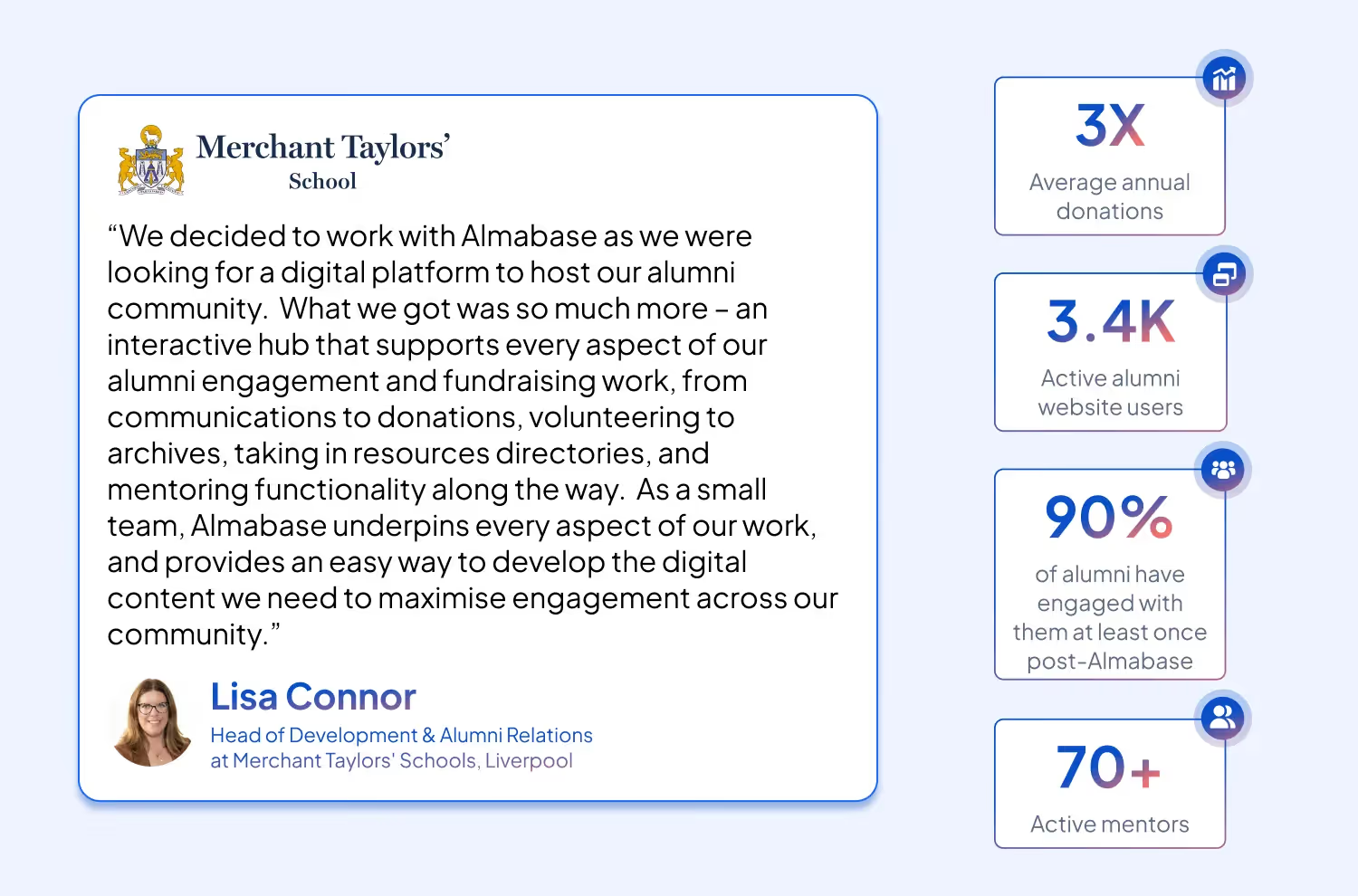
3. Personalize communication to improve donor retention
Donors stay loyal when communication feels personal. A generic “Dear alumni” message doesn’t build a connection, but a note that reflects their history with your institution does. Personalization shows alumni they’re valued, not just solicited.
- Emails: Reference past gifts or involvement, and tailor content to their interests (scholarships, athletics, research).
- Text messages: Use short, timely updates for event reminders, thank‑yous, or impact highlights that feel direct and personal.
- Donation request letters: Address alumni by name, acknowledge their relationship with the school, and connect the ask to causes they care about.
- Segment by generation, recent grads may prefer texts, while older alumni may respond better to letters.
- Use CRM tools to automate personalization at scale without losing the human touch.
The real impact comes when you combine these channels. A donor who gets a thank‑you text, sees their impact in an email newsletter, and later receives a tailored letter about a scholarship fund feels consistently valued. That’s what drives retention.
With Almabase’s Multi‑Channel Bundle, you can unify email, text, and video outreach in one place. Instead of juggling platforms, you can deliver authentic, multi‑channel communication that boosts engagement and keeps alumni connected year‑round.
4. Make digital giving smooth and flexible
Alumni expect donation pages to be quick, mobile‑friendly, and secure. If the experience feels clunky, they’ll drop off. A smooth digital journey shows donors you value their time and makes giving feel effortless.
- Optimize donation pages for mobile and keep forms short.
- Offer multiple payment options- credit card, ACH, PayPal, and digital wallets.
- Add recurring gift options so donors can set it and forget it.
- Use clear calls‑to‑action and show impact right on the page.
- Test the process yourself; if it takes more than a minute or two, simplify it.
- Offer gifts (one time, monthly, peer-to-peer, corporate) according to the donor’s preference.
You need a robust online fundraising platform to execute all of this seamlessly. With it, you don’t just make giving easy; you also get all the donor data seamlessly. Every gift, whether through a mobile wallet or a peer‑to‑peer campaign, flows directly into your CRM, so you can track impact, segment donors, and personalize future outreach without extra manual work.
5. Use different formats to keep alumni engaged
Fundraising works best when alumni hear from you in ways that feel fresh and personal. Instead of relying on the same old email blasts, mix up the formats you use to connect, promote, and sustain giving.
- Short videos: Share clips of alumni success stories or student impact. A 60‑second video can spark more emotion than a long report.
- Social posts: Use Instagram reels, LinkedIn updates, or Facebook groups to spread the word about campaigns and events.
- Virtual events: Host online reunions, panel discussions, or live Q&As so alumni can join from anywhere.
- Podcasts or interviews: Feature alumni voices to highlight diverse experiences and keep the community conversation going.
- Interactive content: Polls, quizzes, leaderboards, or behind‑the‑scenes tours make alumni feel part of the journey, not just spectators.
These formats create social giving excitement. Shoutouts, leaderboards, and shared stories build a competitive spirit and make giving feel fun. Archbishop Riordan High School leaned into this approach for their Giving Day. By combining social shoutouts, storytelling, and a competitive edge, they turned their campaign into a community celebration and increased donations by 550%.
6. Run campaigns that match donor passions
Dollar goals alone don’t inspire alumni. What really moves people is the chance to support something they care about. Themed campaigns let you tap into those passions and make giving feel personal.
- Tie campaigns to causes like mental health, research, athletics, scholarships, or diversity programs that alumni connect with.
- Match gift options to donor interests so they feel their contribution is personal and meaningful.
- Share stories and updates tied to each theme, student testimonials, alumni spotlights, or program milestones.
- Rotate themes across the year to keep campaigns fresh and avoid fatigue.
Think beyond the generic “annual fund.” You could run an Athletics Challenge where alumni rally behind their old teams, with leaderboards showing which sport is winning. Or a Mental Health Fund that highlights counseling services and invites alumni to support student wellbeing.
7. Build strategic corporate and foundation partnerships
Universities win when fundraising moves beyond one‑off asks and into sustained partnerships. Corporates and foundations bring multi‑year funding, program expertise, employee engagement, and credibility when you approach them with clarity and mutual benefit.
- Start with a short, specific ask: a one‑page proposal that states the problem, the measurable outcome, and the partnership ask (funding, matching, in‑kind, or employee engagement).
- Map alignment, not just money: target companies and foundations whose mission, CSR priorities, or grant guidelines match your program outcomes.
- Offer clear engagement options: sponsorship, matching windows, research collaborations, internships, or volunteer days; make it easy for partners to say yes.
- Create a simple stewardship plan: quarterly impact updates, a named contact, and an annual review, keep partners invested beyond the first gift.
- Pilot a small, measurable program: run a 6–12 month pilot with defined KPIs and a short impact report to use in renewal conversations.
8. Use data and analytics for impact
A data-driven approach to fundraising is crucial. You’ll want to measure key metrics to analyze this data and refine your strategies based on these metrics. Then your team can maximize its fundraising efforts and focus on creating positive change for the missions you serve. Use simple signals to decide who to ask, how to ask, and when to change course.
- Track engagement: opens, clicks, RSVPs, SMS replies; prioritize people showing multiple signals.
- Segment smartly: group by interest and past behavior, then send fewer, more relevant asks.
- Watch KPIs: conversion rate, average gift, and donor retention show you patterns that you’d otherwise miss.
- Run small experiments: A/B test subject lines, ask amounts, and channels. Treat each test like a mini-campaign and scale winners quickly.
- Monitor live and pivot: during a giving day, watch a live dashboard and change messaging or channel if a segment isn’t responding. Real‑time tweaks beat waiting until the campaign ends.
9. Showcase fundraising impact in creative ways
Stories create empathy; metrics create trust. When you combine both and make the next step obvious, donors understand the value of giving again, and your fundraising becomes a conversation, not a transaction.
- Lead with a story: open with a 1–2 sentence donor or student vignette that shows real change.
- Follow with the numbers: one or two measurable outcomes (students served, hours tutored, devices distributed, retention rate improved).
- Use multiple formats: a 30‑second video, a single‑page impact snapshot, and a short email highlight reach different audiences.
- Tie metrics to the ask: show how a $50 gift buys X, $500 funds Y, and $5,000 creates Z.
- Close the loop quickly: send impact updates within 30–90 days of a campaign so donors see results while the experience is fresh.
Take a look at how Furman University’s giving page models this approach: it pairs a concise case for support with clear institutional stats and direct CTAs that guide donors to give now or learn more, while highlighting priorities like student aid and placement rates.
10. Choose technology that can scale with your institution’s needs
Technology should remove friction, not add it. Pick systems that keep your data clean, connect donor touchpoints, and let your team move from manual busywork to strategic outreach.
- Start with data hygiene: deduplicate records, standardize fields (graduation year, major, giving history), and fix bad emails/phone numbers before buying new tools.
- Prioritize integration: choose a CRM that plays well with email, SMS, payment processors, and your event platform so donor activity flows into one profile.
- Automate routine work: set up workflows for receipts, thank‑you emails, and renewal reminders so staff focus on relationships.
- Choose modular tools: pick platforms that scale (add modules for peer‑to‑peer, volunteer management, or analytics) rather than replacing everything every few years.
Investing in the right technology means institutions can reduce downtime during migration, train staff quickly and with more flexibility, and realize ROI more rapidly. In today’s fast-paced environment, you need to look for higher education software that not only incorporates features that are easy to navigate but include support during the implementation process.
University fundraising metrics to track
It’s one thing to run a campaign, but the real test is being able to show what worked, what didn’t, and why. Dollars raised are important, sure, but they don’t tell the whole story. To really prove ROI, you need to track metrics that show how engaged your alumni are, how efficient your campaigns are, and whether donors are sticking around for the long haul. Here are the metrics that matter most:
- Total Dollars Raised: The headline number, showing the overall funds collected during a campaign or fiscal year.
- Alumni Participation Rate: The percentage of alumni who gave, a key measure of community involvement.
- Donor Retention Rate: The share of donors who come back year after year, showing loyalty and long‑term health.
- Average Gift Size: The typical donation amount, helping you spot trends in giving capacity.
- New Donor Acquisition: How many first‑time donors joined your campaign
- Recurring Gifts: The number or value of donors who commit to ongoing contributions
- Event‑to‑Gift Conversion: The percentage of event attendees who go on to donate
- Online Giving Conversion Rate: The percentage of visitors to your giving page who complete a donation, a direct measure of usability.
- Engagement Score: A composite measure of alumni activity like events, volunteering, and giving, that ties directly to fundraising potential.
- Campaign ROI: The ratio of funds raised to campaign costs, the ultimate measure of return on investment.
How Almabase helps advancement teams improve university fundraising
Almabase works on top of your CRM to clean data processes, personalized outreach, improve donor experiences, host fundraising events, and to make it as easy as possible to track numbers. Some of it’s key features include:
- CRM sync and clear data: Native integrations with systems like Raiser’s Edge NXT automatically keep records up to date. You don’t have to spend hours reconciling spreadsheets, and you can trust that participation rates, donor histories, and campaign results are accurate every time you present them to leadership.
- Segmentation and built-in email tools make personalization something you can actually scale. Instead of sending the same appeal to everyone, you can target reunion classes, first-time donors, or loyal supporters with tailored messages. Campaigns feel relevant, response rates improve, and your team doesn’t have to manually manage dozens of lists.
- Giving pages are simple, mobile-first, and designed to convert clicks into completed gifts. Donors see clear impact statements, suggested amounts, and easy payment options. The smoother the experience, the more likely alumni are to give—and to come back again for future campaigns.
- Community-building tools keep alumni connected year-round. Digital alumni communities give graduates a place to engage with each other and the institution, so fundraising isn’t tied only to one-off campaigns.
Almabase helps advancement teams move from juggling disconnected tasks to running fundraising strategies that are relationship-driven, data-informed, and sustainable.
Wrapping it up
Regardless of your institution or prior history of fundraising, with the right strategies, tools, and know-how, you can develop a robust and successful alumni fundraising strategy that yields lasting benefits for your institution.
By implementing thoughtful alumni fundraising strategies outlined above, you can look forward to fostering a culture of giving and generosity that extends far beyond graduation day.
FAQs
What are the most effective university fundraising strategies?
Focus on storytelling that connects donors to student impact, diversify channels (email, social, events), and balance major gifts with annual giving. Always tie campaigns back to alumni engagement rather than just dollars raised.
How can universities increase alumni giving?
Segment alumni by interests or milestones, personalize outreach, and show clear outcomes of their support. Peer-driven efforts, such as class captains or reunion challenges, consistently boost participation.
What makes a successful Giving Day?
Energy and community are everything. Use matching gifts, hourly challenges, and real-time updates to keep momentum high, and spotlight authentic student and alumni stories to drive emotional connection.
How do you improve donor retention in higher ed?
Retention comes from consistent stewardship: thank donors personally, share impact updates regularly, and invite them into the campus community through events or student-led appreciation.
Which platform is best for fundraising?
There are a lot of great fundraising platforms out there for different kinds of teams, events, and budgets such as Almabase, Givebutter, DonorPerfect, and many more. What’s best for one team might not be the best for another.

University Fundraising: 10 Best Practices + Metrics to Track in 2026
10 great practices and metrics for your advancement team to stay on top of in 2026 to really take your university fundraising strategy to the next level.
Fundraising

Sharada Koti
March 10, 2026
12 minutes
School fundraising software has come a long way from bake sales and car washes. Today, administrators, parent organizations, and athletic directors are turning to purpose-built fundraising software to run campaigns that are more complex than ever before.
But with dozens of platforms on the market, choosing the right one can feel overwhelming. Should you go with an all-in-one solution that handles donor management and online giving? Or do you need something specialized for auctions, walk-a-thons, or youth sports? In this blog, we want to walk you through the top fundraising software options for K–12 schools, depending on your needs so you can find the best fit for your institution.
Why Do You Need Fundraising Software for Your School?
Institutional fundraising has never been more data-driven than it is today, and your school (or team) needs to be able to make use of it to keep up with the increasing expectations of your constituents. Apart from that, here are some things that make fundraising software so important for schools today:
- Tracking donor and donation data: For schools, both past and potential donors engage through a mix of offline (envelopes, checks, cash at the door, etc.) and online (giving pages, annual fund pages, online auctions, etc.) channels, and spreadsheets alone are simply not scalable enough to ensure your team can stay on top of this data.
- Engagement and donation experience: Parents, alumni, and community supporters are more likely to give when the process is simple, mobile-friendly, and visually compelling. Dedicated software usually comes with branded donation pages, shareable links, and real-time progress tracking that keeps donors engaged.
- Volunteer and event coordination: School fundraisers often involve dozens of volunteers, multiple event logistics, and time-sensitive communications. Purpose-built tools help streamline sign-ups, reminders, and coordination to avoid last-minute problems.
- Reporting and compliance: School administrators and parent-teacher organizations need to show where money came from and where it went. Many tools generate reports automatically, saving hours of manual work and ensuring transparency.
- Recurring giving: Without a system to capture recurring donor preferences, schools miss out on the most reliable source of long-term funding. This is where donor management and dedicated tools for sustained giving come into play.
Must-Have Features in a Fundraising Platform
A search for the best fitting fundraising platforms for schools starts with features. However, consider an alternative starting point: the workflow. Where does friction show up in your current workflow? The right platform should reduce that friction.
Mobile-Friendly Donation Experience:
Most donors give from their phones. A donation page that loads quickly, requires minimal steps, and clearly communicates impact can influence completion rates more than design aesthetics alone.
Secure Payment Processing
Look for clarity around how transactions are processed, what payment gateways are supported, and how refunds or chargebacks are handled.
Equally important is reconciliation. Can your finance team easily track revenue, fees, and deposits without rebuilding reports manually? The back-end experience matters as much as the front-end donation page.
Donor Management and Communication
Platforms should allow segmentation, automated thank-you emails, tax receipts, and visibility into donor history. If you cannot quickly identify repeat donors or first-time supporters, future outreach becomes guesswork.
Events and Peer-to-Peer Campaigns
K-12 schools frequently depend on events such as walk-a-thons, auctions, and ticketed fundraisers. Peer-to-peer tools, personal fundraising pages, and live progress tracking can increase visibility and participation, especially when families are sharing within their networks.
Top Fundraising Platforms for Schools
We have picked out some of the top options available in 2026 and categorized them by different use cases to suit your team’s current needs. Have a look!
All-in-One Fundraising and Donor Management Software
For schools serious about building lasting donor relationships through event and donor management, an all-in-one platform might just be what you need.
1. Almabase
Almabase is a fundraising and donor management platform built specifically for schools, higher-ed institutions, and nonprofits that want to build meaningful, long-term relationships with their alumni and donors. Almabase focuses on branding and easy to set-up giving pages, event management, memorable donor experiences and giving data sync to provide a comprehensive yet easy to use platform that both staff and donors will appreciate. Schools can run annual giving campaigns, peer-to-peer fundraisers, set up recurring gifts, and track engagement across touchpoints for better engagement and fundraising.
What sets Almabase apart is its focus on data-driven relationship building. It integrates well with popular education CRMs like Raiser’s Edge NXT, making it a strong fit for schools that want to get the most out of each fundraiser. For schools looking to grow their fundraising program and engage constituents over the long term, Almabase offers the infrastructure to support that growth.
2. Bloomerang
Bloomerang is a popular nonprofit CRM and fundraising platform known for its clean interface and strong donor retention focus. The platform tracks donor engagement scores, helping development staff identify who is most likely to give again. Bloomerang includes online donation forms, email marketing tools, and reporting features that are accessible even for small development teams.
For schools without a dedicated development director, Bloomerang's simplicity is a major advantage. The platform is designed to be used by generalists, not just fundraising professionals. It is particularly well-suited for independent schools, charter networks, and private K–12 institutions that want a solid foundation for donor management without a steep learning curve.
3. DonorPerfect
DonorPerfect is one of the most established names in nonprofit fundraising software and offers a comprehensive suite of donor management tools. The platform handles recurring gifts, pledge tracking, grant management, event registration, and online fundraising all in one place. It is a strong choice for schools with larger development operations that need deep customization and integration options.
DonorPerfect's strength lies in its flexibility. The platform can be configured to match almost any fundraising workflow, and it comes with reporting capabilities. Schools with complex fundraising operations such as multiple campaigns, major gift programs, and foundation support may find DonorPerfect's depth particularly valuable.
Budget-friendly Options
1. Givebutter
Givebutter is a modern, all-in-one fundraising platform with strong auction and event features. It supports silent auctions, livestream fundraising, and ticket sales, all from a visually polished interface. The platform is free to use and relies on optional donor-covered tips to sustain operations. If you want to opt out of optional tips, a 3% platform fee applies to every donation on top of processing fees.
2. Schoolfundr
Schoolfundr is a fundraising platform built specifically for schools. Similar to Givebutter, it charges no subscription fees, relying on optional tips from donors as well as charging transaction fees.
🪶We’ve narrowed down the budget-friendly options to two choices which we think are the easiest to get started with whether you want to scale down costs or are looking to start small. However, we still highly recommend talking to each platform’s representatives to understand pricing models, data policies, and features. Also keep in mind how your donors might feel about adding a tip on top of a donation and try to find what works best for your school.
For School Auctions
Auctions remain one of the most popular and lucrative school fundraising formats. These platforms are built specifically to make auction management simple.
1. OneCause
OneCause (formerly BidPal) is purpose-built for nonprofit event fundraising and is widely used by schools running gala-style events and auctions. The platform covers everything from mobile bidding and item catalog management to paddle raise fundraising and live auction tools. It also handles event ticketing, seating management, and sponsorship tracking.
OneCause is particularly strong for schools that host large, formal fundraising events with hundreds of attendees. The platform's mobile bidding experience is intuitive for guests, and the backend management tools give event organizers full visibility into real-time results. The platform does come at a higher price point, making it better suited for schools with larger events that can justify the investment.
2. GoFundMe Pro
GoFundMe Pro (formerly Mightycause) is the enterprise tier of the widely recognized GoFundMe brand and is designed specifically for nonprofits and educational institutions. It offers peer-to-peer fundraising, event fundraising, and a suite of campaign management tools along with auction capabilities.
GoFundMe's brand recognition works in schools' favor when it comes to donor trust. Many parents and community members are familiar with the platform and are comfortable donating through it. GoFundMe Pro adds deeper customization, reporting, and donor management features on top of the consumer platform's usability.
For One-Off Events and A-Thons
Walk-a-thons, read-a-thons, and similar pledge-based events are a staple of school fundraising especially at the elementary and middle school level. These platforms are built for exactly this format.
1. 99Pledges
99Pledges is one of the simplest and most popular platforms for running pledge-based fundraising events at schools. Students create personal fundraising pages, solicit pledges from family and friends, and the platform tracks all commitments and payments automatically. There is no app to download, no complex setup, and the per-student pages are easy to share via text and email.
What makes 99Pledges stand out is its sheer simplicity. Schools can launch a campaign in under an hour, and parents can make pledges in just a few clicks. The platform charges a small platform fee and standard payment processing fees but requires no upfront cost, making it accessible for even the smallest schools and parent organizations.
2. RallyUp
RallyUp is a versatile fundraising platform that supports a wide range of event-based fundraising formats, including walk-a-thons, jog-a-thons, read-a-thons, and virtual events. It includes peer-to-peer fundraising pages, donation tracking, and tools for motivating student participants through leaderboards and milestone celebrations.
RallyUp is particularly well-suited for schools that want to run engaging, gamified fundraising events that get students excited to participate. The platform's interface is colorful and student-friendly, and its reporting tools help organizers see participation rates and revenue in real time. It supports both pledge-per-activity and flat donation models.
For Matching Gifts
Matching gift programs are one of the most underutilized sources of fundraising revenue for schools. Many constituents work for companies that will match their charitable donations dollar-for-dollar, or even two-to-one. But most donors never bother to check or submit a match request.
Double the Donation
Double the Donation is a dedicated matching gift software for nonprofits and educational institutions. It integrates with most major fundraising platforms and automatically prompts donors to check their employer's matching gift eligibility at the point of donation. The platform maintains a database of over 20,000 companies and their matching programs, making it easy for donors to find and submit their employer's match.
For schools, even a modest improvement in matching gift submission rates can translate into thousands of additional dollars per campaign. Double the Donation's automation makes that improvement achievable without adding workload to development staff.
For Volunteer Sign-Up Management
For schools, volunteers can often be one of the most important assets. However, not every school can afford or needs to have a dedicated volunteer management system. We’ve picked out some of the best options for schools looking to manage volunteer signups and related tasks such as scheduling, organizing, etc.
- SignUp Genius
- Jotform
- VolunteerSignup
- VolunteerLocal
- Volunteer Scheduler Pro
Many event management or donor management platforms also come with volunteer management features as a complementary tool or an add-on which can be a good choice. For any option you are considering, keep certain nuances in mind such as ad presence, ease of use for volunteers, and pricing structures to make sure you pick the right tool for your team.
How to Choose the Right Software for Your School
With so many options available, the right can help you narrow down your choices:
What is your primary fundraising model? If you run a gala every year, prioritize auction tools. If your revenue comes from an annual giving program, prioritize donor management. If you rely on walk-a-thons, look at pledge-based platforms.
What do your donors want? Some donors might be turned away by pre-filled tips or ads while others may not mind. Some donors may prefer sleek UI elements and mobile-friendly design while others don’t mind as long as their donations go into a meaningful cause.
What is your team's capacity? A small PTA with volunteer leadership needs something simple and fast. A professional development office can handle more complex tools with greater customization.
What is your budget? Free platforms with optional tips work well for smaller campaigns. For larger programs, a platform fee may be worth paying for better support, integration, and features.
What is your long-term vision? If you want to build a lasting alumni and donor community, invest in a platform with strong CRM and relationship management capabilities now. Even if it costs more upfront, it can be more cost-effective than accumulating a ton of single purpose tools over the years.
What integrations do you need? Check whether the platform connects with your school's existing tools: your SIS, accounting software, email platform, or website CMS.
Taking the time to answer these questions before evaluating platforms will save significant time and help you avoid switching costs down the road.
How Almabase Empowers Your Fundraising Strategy
Among the platforms covered in this guide, Almabase is a great choice for schools that are ready to build a serious, sustainable fundraising program. It goes beyond one-off campaigns to help schools develop the donor relationships that drive long-term revenue growth.
Almabase provides a unified platform for donor management, online fundraising, and event management.. Schools can launch giving day campaigns, manage peer-to-peer fundraising, track donor engagement over time, and generate detailed reports all from a single interface. The platform is originally designed for educational institutions, which means the tools, updates, and data models are built around real-world problems that schools face.
For schools that rely on annual fund campaigns, alumni giving, and major gift cultivation, Almabase provides the tools to segment donors, personalize outreach, and track the full donor journey from their first gift to becoming a loyal supporter. It’s integration with CRM systems means school data flows smoothly into the fundraising platform, reducing manual data entry and improving accuracy.
If your school is ready to move beyond spreadsheets and disconnected tools and invest in a platform that can grow with your program, Almabase is worth a serious look.
FAQs
Are free fundraising platforms actually free?
Free fundraising platforms usually mean no platform or subscription fees. However, they typically have transaction fees and depending on the platform, may come with a percentage of your raised funds as fees, ads, or per transaction fees.
What is the difference between a fundraising platform and a donor management system?
A fundraising platform primarily helps you collect donations and run campaigns. A donor management system helps you track donor relationships and nurture relationships over time.
Can I use more than one fundraising platform?
Yes, many schools use multiple platforms. Just be mindful of managing donor data across multiple systems and increasing the cost of stacking too many single-purpose tools.
How do I increase matching gift revenue?
Integrate a matching gift tool like Double the Donation with your primary fundraising platform. Prompt donors to check their employer's match eligibility immediately after they give, while the donation is still top of mind.
Is fundraising software worth the cost for small schools?
Even small schools and associations can benefit from the efficiency, and donor experience improvements that dedicated software provides. Many platforms are free or very low cost at smaller volume levels, making the ROI compelling even for modest campaigns.
Conclusion
The fundraising software landscape for schools has never been more robust. Whether you are running a walk-a-thon for a hundred elementary students or building a comprehensive alumni giving program for a private high school, there is usually a platform designed for your specific needs.
The most important step is to match your platform choice to your actual fundraising model, budget, and long-term goals. A well-chosen platform pays for itself quickly through higher donor conversion rates, reduced administrative burden, and stronger donor relationships over time.
If you are looking for a fundraising platform for your school or associated organization, Almabase can help you raise funds, manage donor relations, and streamline events and communications. Schedule a personalized demo to find out how it fits into your school’s needs.

The Best Fundraising Software Platforms for Schools in 2026
We have looked at some of the best fundraising software for schools available in 2026 to help your school, club, or nonprofit raise funds according to your needs.
Fundraising
Anwesha Kiran
February 26, 2026
12 minutes
Giving Days weren’t always complicated.
What began as a single day to rally alumni and boost annual fundraising has evolved into something much bigger. Today, Giving Days are the core of fundraising, engagement, and community-building efforts across higher education. They’re no longer combined with dollars alone, but by who shows up, how they participate, and what happens after the day ends.
In partnership with CASE, we surveyed 150+ institutions to understand how Giving Days are changing in 2025. Colleges and universities are moving beyond one-day-only tactics and generic outreach. They’re setting new goals, tracking new signals of success, and designing Giving Days that feel more personal and sustainable.
This blog explores the top 7 colleges that incorporate how institutions are rethinking strategy, redefining metrics, and building momentum that lasts well beyond 24 hours.
Top Seven Insights and Emerging Trends Shaping Giving Days
CASE Insights spoke directly with professionals from 14 institutions across the United States, the United Kingdom, Chile, and Australia. These conversations helped bring the survey findings to life and offered deeper insight into how Giving Days are changing. Below are the top seven insights and emerging trends.
1. James Madison University: Start Early, Build Together
At James Madison University (JMU), Giving Day planning begins in advance. Early on, the team hosts a campus-wide kickoff called Coffee and Comms, bringing together people from across the university, from academic departments to student groups. The session covers key dates, shared resources, and a preview of upcoming content, helping everyone feel prepared from the beginning. It also gives partners a chance to ask questions, share ideas, and learn from each other. Regular check-ins after the kickoff keep the conversation going and make sure partners feel included. By treating Giving Day as an ongoing campus effort instead of a last-minute push, JMU strengthens participation, encourages new ideas, and builds momentum year after year.
.avif)
2. Punahou School: Reaching Alumni Between Reunions
At Punahou School, Giving Day helped reconnect alumni who are usually less active between reunions. While reunion classes already had strong participation, the school saw a drop in giving in the years that followed. To close this gap, the team focused their Giving Day ambassadors on alumni from non-reunion classes. They reached out personally, kept the time commitment small, and clearly explained what was expected. Ambassadors were given simple tools such as classmate lists, ready-to-use messages, and live updates, so it was easy to ask friends to give. Seeing their class move up the leaderboard made it fun and motivating. By engaging the right group of volunteers, Punahou increased participation and continued to exceed its Giving Day goals.


.avif)
3. Universidad de los Andes: One Cause, Shared Purpose
In 2019, Universidad de los Andes (UAndes) launched Chile’s first Giving Day to help build a culture of giving, where alumni were not used to donating to universities. The team focused on one clear cause, student scholarships, so donors could easily see the impact of their gifts. They shared student stories through videos and social media and spent time explaining why giving matters and how it helps students.Despite early doubts, the first Giving Day exceeded its goals and has continued to grow. Today, it’s seen as a joyful campus-wide event, with students, alumni, faculty, and staff all taking part. What began as a fundraising effort has become a celebration of generosity, and it has inspired other universities across Latin America to launch Giving Days of their own.


.avif)
4. George Washington University: Let Students Lead the Story
Over the past few years, George Washington University (GW) has used Giving Day to try a more relaxed and creative social media approach. Instead of polished marketing, they rely on a team of student digital ambassadors to create short, fun videos about campus life, student opportunities, and how donations make a difference. These quick videos are easy to watch and connect better than long emails. On Giving Day, students go live from campus events, share leaderboard updates, post thank-you videos, and keep energy high online. This student-led, authentic content has made Giving Day feel more lively and has helped GW reach and engage new donors in a way that feels natural and human.


.avif)
5. Southern Illinois University Edwardsville: Make Sharing Easy
Southern Illinois University Edwardsville (SIUE) launched its first Giving Day in 2022 with ambassadors at the center of the effort. To help people across campus take part, the team created a simple digital toolkit with ready-to-use content for social media. Posts were pre-made and sized for each platform, making them easy to share without extra work.By putting everything in one easy-to-find place, SIUE removed friction and made it simple for students, staff, and ambassadors to spread the word. The toolkit quickly became a go-to resource and helped expand the reach of Giving Day across campus.

.avif)
6. Fresno State: Taking Giving Day Into the Community
In 2025, California State University, Fresno (Fresno State) took Giving Day beyond campus with its first Bulldog Roadshow. In one day, the team visited local businesses with pop-up events featuring treats, giveaways, the mascot, and QR codes for Giving Day. The roadshow helped promote Giving Day while celebrating alumni working in the local community. Businesses helped spread the word, and the response was so positive that many were already asking to take part again. Encouraged by the success, Fresno State is now exploring ways to expand the roadshow and better track its impact in future Giving Days.


.avif)
7. Oregon State University: Celebrating the Team Behind Giving Day
At Oregon State University (OSU), Dam Proud Day is built through strong teamwork across campus. In its first year, the team created a small event called The Dammys to thank staff who worked behind the scenes on Giving Day. Over time, The Dammys has grown into a campus-wide celebration. Leaders, staff, faculty, students, and partners come together to recognize great ideas, strong collaboration, and creative fundraising. The awards build excitement, share what works, and help teams learn from each other as they plan for future Giving Days.

.avif)
Here’s what you can take away
Giving Days are now an important part of annual giving in education. They have grown beyond one-day fundraisers into moments that bring the whole community together. By involving volunteers, highlighting student voices, and reaching local supporters, institutions are encouraging more people to take part and feel proud of their campus.
Most importantly, Giving Days make giving feel simple and welcoming. Every action and every gift, no matter how small, helps people feel connected to a shared purpose. At a time when fewer people are giving, Giving Days help grow participation, support future donors, and build a stronger culture of giving over time.

The New Age Giving Day Blueprint: Strategies from 7 Leading Colleges
In partnership with CASE, we surveyed 150+ institutions to understand how Giving Days are changing in 2025. Colleges and universities are moving beyond one-day-only tactics and generic outreach. They’re setting new goals, tracking new signals of success, and designing Giving Days that feel more personal and sustainable.
Fundraising
Planning an alumni event is a tall order. Be it a reunion, a donor gala, or a campus program, the journey is complex, and your team is expected to deliver experiences that feel seamless for attendees and meaningful for your institution.
The challenge here is that most advancement teams are stuck juggling disconnected systems that aren’t built particularly for schools and universities. While there are plenty of event management software options available on the market that might reduce your burden, the right platform will ensure that every detail runs like clockwork and delivers measurable impact.
In this guide, we’ll show you how modern event management software can help your advancement teams gain the clarity and confidence to choose the right platform that makes planning easier and outcomes clearer.
Why event management software matters more than ever in 2026
Higher education leaders are making technology a top priority. In the 2025 CCS Philanthropy Pulse survey, more than 70% of institutions identified technology adoption as a key focus for the year ahead, reflecting the push to strengthen fundraising operations and engagement systems. This shift is driven by the growth of alumni and fundraising events, the rise of hybrid formats that bring global audiences together, and increasing pressure from leadership to demonstrate ROI with clear, data‑driven reporting.
At the same time, common pain points remain stubbornly familiar. Manual list exports, disconnected CRM data, and separate systems for email, ticketing, and giving leave staff juggling fragmented workflows. On-site check‑ins often feel chaotic, post‑event reporting is delayed or missing, and leadership lacks visibility into how events contribute to long‑term donor engagement. In 2026, event management software matters more than ever because it addresses these challenges head‑on, integrating CRM workflows, simplifying check‑ins, and delivering the reporting advancement leaders now demand.
Must-have features in modern event management software
When you look closely, not every event management software is built with institutional needs in mind. Some tools focus on running events; others support everything that happens around and after them. Before getting into comparisons or questions, it helps to understand the core features that tend to matter most for institutions managing alumni, advancement, and engagement at scale:
1. Registration, Ticketing & Check‑In
Your attendees’ first impression is shaped by how easy it is to register. A platform that offers automated registration, flexible ticketing, and QR code check‑in saves staff time and reduces bottlenecks at the door.
Look for mobile‑friendly sign‑ups, customizable forms, and real‑time attendance tracking so you know exactly who’s in the room without chasing spreadsheets.
2. CRM Integration & Data Management
Clean data is non‑negotiable for advancement teams. Native integrations with systems like Raiser’s Edge NXT or BBCRM ensure every registration, gift, and interaction flows directly into your database without duplicate records.
Prioritize platforms that sync automatically, prevent errors, and give you confidence that your event data strengthens long‑term alumni and donor strategy.
3. Communication & Marketing
One of the biggest frustrations for alumni and donor teams is juggling multiple tools just to send event updates. The right platform should let you manage confirmations, reminders, and segmented outreach in one place, so you’re not copying lists back and forth between systems. Personalization is where communication really pays off; alumni should get invites to reunions they care about, donors should see recognition that feels genuine, and students should receive messaging tailored to their involvement.
Look for software that integrates directly with your CRM, makes it easy to segment audiences, and tracks engagement so you know which messages resonate and which need adjustin
4. Fundraising & Giving Tools
Events are often where giving happens, and the right software makes it effortless. Built‑in donation options during registration or live events encourage spontaneous contributions, while sponsorship and auction features help you manage commitments and maximize revenue.
Look for platforms that make giving frictionless and follow‑up automatic, so you capture every opportunity without extra manual work.
5. Event Logistics & Planning
Large events come with moving parts: seating charts, table assignments, and multi‑day schedules. Software that supports seating and table management helps you place donors thoughtfully, while sub‑event support keeps conferences or reunions organized under one umbrella. These tools reduce manual coordination and give your team more control over the attendee experience.
6. Reporting & Compliance
Data tells the story of your event’s success. Real‑time attendance reporting gives you visibility into who showed up, while post‑event summaries help you demonstrate impact to leadership. Compliance features like SOC 2 certification and ADA accessibility considerations ensure your institution meets standards and delivers inclusive experiences without extra stress.
7. Engagement & Experience Add‑Ons
Events are about connection, and interactive features make attendees feel part of the experience. Tools like live polls, Q&A, gamification, or hybrid event support extend your reach and keep participants engaged.
Look for platforms that make these features easy to set up and integrate, so your team can focus on building relationships instead of troubleshooting tech.
8. AI‑powered automation & insights
Advancement teams are expected to do more with less, and AI is becoming the tool that makes it possible. A platform with built‑in AI can automate repetitive tasks like reminders and follow‑ups, clean up attendee lists, and even predict which events are most likely to drive donor conversions.
Look for systems that use AI to personalize alumni communication, surface engagement patterns you might otherwise miss, and deliver smarter reporting that connects attendance directly to fundraising outcomes. Instead of adding more manual work, AI frees staff to focus on relationships while giving leadership the clarity they need.
9. Budgeting & Cost Tracking
Events aren’t just about logistics; they’re also about managing dollars and cents. Having built‑in tools to track expenses against sponsorships and ticket sales gives you a clear view of ROI without juggling spreadsheets. This makes it easier to justify budgets to leadership and plan smarter for the next event.
10. Campus System Integrations
Events don’t happen in a vacuum. Integrations with student portals, finance systems, or learning management tools reduce silos and keep everything connected. For advancement teams, this means smoother coordination across departments and fewer headaches when pulling reports or reconciling data.
Questions to ask when evaluating event management software
When you’re sitting down with a vendor or demoing a platform, asking the right questions will help you cut through the sales pitch and see if the software truly fits your institution’s needs. Here are the ones worth asking:
- Will event registrations and attendance update our records automatically, or will our team still rely on exports and manual cleanup?
- Does event participation become part of an existing alumni or donor profile, or does it live only at the event level?
- Can we see engagement across multiple events when planning future outreach?
- Is it possible to enable giving during registration without creating a separate workflow?
- How easily can we connect event participation to engagement or fundraising outcomes?
- What manual work will remain for our team after an event ends?
- Will this tool continue to work as our event volume and data complexity grow?
Tips for choosing the right event management software for your institution
Once you’ve asked the right questions, the next step is weighing the answers. Choosing the right software is about finding a tool that fits your institution’s goals, budget, and the way your team actually works. Here’s how to approach the decision:
- Define your event goals clearly: Decide what success looks like, whether it’s smoother registrations, stronger donor engagement, or better reporting. Clear priorities help you cut through vendor pitches.
- Assess your budget realistically: Factor in training, integrations, and add‑ons, not just subscription costs. The right tool should save staff time and reduce manual work.
- Research and compare options. Demo multiple platforms, but don’t rely on polished presentations. Ask vendors to show how their system would handle one of your actual events.
- Bring multiple stakeholders into the evaluation: Advancement staff, alumni relations officers, IT, and even student volunteers will use the platform differently. Their input helps avoid adoption hurdles later.
- Consider scalability and flexibility: Your events may be small today, but reunions, conferences, or hybrid programs can quickly add complexity. Choose software that can grow with you.
- Evaluate customer support and training: Even the best software fails if your team can’t use it confidently. Ask about onboarding, ongoing support, and whether the vendor understands higher‑ed advancement needs.
- Seek recommendations and references: Talk to peer institutions or ask vendors for references in the education space. Real stories from other universities give you a clearer picture than any demo.
- Look at reporting through a leadership lens: Dashboards are nice, but can the system produce the summaries your VP or board expects? If leadership wants quick ROI snapshots, the platform should deliver them without manual cleanup.
The right event management software should feel like an extension of your team, reducing manual work, strengthening alumni and donor records, and scaling with your institution’s ambitions. If it feels like “just another system to manage,” keep looking.
Implementation timeline & rollout expectations for schools and universities
Choosing the right software is only half the story; the other half is how quickly and smoothly it becomes part of your institution’s day‑to‑day. Here’s what a typical rollout looks like, and what you should expect along the way:
- Weeks 1-2: Kickoff & Setup: Initial onboarding usually covers account creation, basic configuration, and connecting your CRM. This is also when you’ll define event types, ticketing rules, and permissions for staff and volunteers.
- Weeks 3-4: Training & Early testing: Your advancement and alumni relations teams should get hands-on training. A smart move is to run a small, low‑stakes event first, like a webinar or student mixer, to test registration, check‑in features, and reporting before scaling up.
- Weeks 5-6: First major event rollout: By this stage, you should be ready to use the platform for a larger event, such as a donor dinner or alumni reunion. Expect some fine‑tuning around communications, seating, or giving integrations, but the core workflows should be smooth.
- Weeks 7-8: Review & Optimization : After your first big event, gather feedback from staff and attendees. Review reporting dashboards, check data sync accuracy, and adjust workflows. This is where you lock in efficiencies and make the system feel like second nature.
- Beyond 2 Months: Scaling & Continuous support: Once the basics are in place, you can expand into multi‑day conferences, hybrid events, or auctions. Ongoing vendor support and updates should keep the system aligned with your institution’s evolving needs.
Top event management software for K-12 and Higher Ed
You’ve asked the right questions, weighed practical tips, and seen what a rollout might look like. The final step is exploring which platforms can actually deliver on those expectations. We’ve put together a detailed roundup of the best event management software for K‑12 and higher ed.
To give you a quick snapshot, here are five options schools and universities often consider:
How Almabase helps schools and universities modernize event management
After exploring the broader software options, it’s clear that advancement teams need something different. They need a platform that aids in strengthening alumni relationships, stewarding donors, and connecting participation to long‑term outcomes. This is where Almabase comes in. Designed with educational institutions in mind, it helps you move beyond one‑off event management and into a connected approach where every gathering contributes to engagement and fundraising goals.
Here’s how Almabase supports schools and universities in practice:
- Advancement‑first workflows
Events are tied directly to alumni and donor journeys, ensuring they contribute to relationship building rather than sitting in isolation. - Deep CRM integration
Native compatibility with systems like Blackbaud means event data flows seamlessly into alumni and donor records, giving staff real‑time visibility. - Events and giving in the same place
Registration, attendance, and donations live in one place, making it easy to see how events drive fundraising outcomes. - Scalable across formats
From small chapter mixers to reunions, galas, or giving days, workflows adapt to the complexity of each event. - Decentralized but connected
Role‑based access allows chapters, departments, or volunteers to manage their own events while staying tied to the same alumni database. - Smooth onsite experience
QR code check‑ins and mobile tools simplify attendance tracking, with data flowing instantly into alumni records. - Actionable dashboards for leadership
Reporting highlights beyond attendance, including how events contribute to alumni engagement and fundraising, giving leadership clear visibility into impact.
Before finalizing
While the decisions often look straightforward, hidden costs, weak integrations, and poor rollout planning can derail even the best‑intentioned purchase. Here are some quick pointers to keep in mind before you make the final choice-
Best practices
- Involve both advancement staff and leadership in demos.
- Test CRM integrations before signing; don’t assume they’ll work.
- Ask vendors for real examples of how reporting connects events to fundraising outcomes.
- Consider adoption and training capacity, not just the tool itself.
Pricing realities
- Subscription fees are only part of the cost.
- Watch for add‑ons: ticketing, connector requirements, and advanced reporting tiers.
- Push vendors to be transparent about what’s included vs. upgrade‑only.
Common pitfalls to avoid
- Choosing a product solely on price.
- Ignoring CRM integration.
- Underestimating the importance of post‑event reporting.
- Adding another system that complicates workflows instead of simplifying them.
Wrapping up
Making the right choice will and should depend on knowing what matters most to your team, understanding how events fit into your larger advancement strategy, and choosing a tool that makes those connections easier to handle.
If you’re ready to see what that looks like in practice, we’d love to continue the conversation. Schedule a demo and let’s talk about how your next reunion, gala, or giving day can become part of a connected engagement journey.

Event Management Software for schools and universities. A Complete Buyer's Guide (2026)
A complete 2026 guide to event management software for institutions. Everything advancement teams need to evaluate platforms and decide with confidence.
Events
Sharada Koti
February 25, 2026
12 minutes
For advancement and alumni relations teams today, the days of annual newsletters and homecoming weekends solely being enough to keep your community connected are long gone. A lot of alumni engagement strategy efforts from institutions and organizations unfortunately get lost in the hundreds of emails, notifications, and phone calls that they experience on a daily basis.
This is why today's advancement landscape demands a modernized approach that stands out to people who are digitally savvy, time-constrained, and expecting personalized experiences.
We've come up with an alumni engagement checklist to help you audit your current engagement strategy to help your engagement stand out and build meaningful relationships for many years to come.
What alumni engagement actually feels like today
A decade or two ago, staying in touch with alumni was simpler. A semi-regular newsletter, a reunion, and the occasional email update were often enough to signal effort. Nowadays, most alumni are overwhelmed with communication every hour of their lives, and yours needs to stand out.
To meet the expectations of today's alumni and stand out, it is important to know what engagement looks like in the first place:
Engagement is a journey with various checkpoints: An alum may attend an event, mentor a student in the next couple of months, and join an advisory group a year later. Modern teams need to be able to pinpoint which part of the journey motivated them to take it one step further. Sometimes it's the most mundane things but
Alumni have more diverse motivations than: The same person might be one of your most regular volunteer mentors, yet hardly ever donate, while an alum that hasn't even updated their contact information in years feels compelled to donate generously whenever possible. This is a good thing as alumni have more ways to connect with their alma mater than ever! However, teams today need to tailor their engagement to each alum's personal motivations.
The questions leadership asks have changed: Attendance still matters, but it's no longer enough. Teams are increasingly asked who is deepening their involvement, where engagement is leading, and how today's activity supports longer-term relationships. It ties into the data-driven nature of modern advancement.
Alumni engagement now sits closer to planning and strategy than ever before, compared to the pure programming that it sometimes used to be. Teams are often not just asked to run things, they're asked to explain what's working, what's not, and why.
1. Data and Infrastructure
You've probably heard it all before but your data infrastructure has never been more important. It is no longer enough to just have a bunch of standardized metrics and be content at looking at them from time to time.
☑️Centralize your constituent database
A CRM is the bare minimum but it is only as good as the data inside it. Start with a comprehensive data audit with questions such as:
- How many duplicate records exist?
- When was contact information last verified?
- Are graduation years, degree programs, and class years consistently formatted?
- How different is your data to other departments?
- Which tools or processes are introducing duplicate records?
Data tends to get messy regardless over time so you should implement quarterly data hygiene protocols and assign ownership for data maintenance.
☑️Segment your data
As mentioned earlier, alumni today face more emails, notifications, and ads than ever before. This means generic mass communications, whether they are from a well meaning nonprofit or from their alma mater are likely to end up in the spam folder. Your database should support segmentation by at least a few common criteria such as:
- class year
- degree program
- geographic location
- engagement level
- giving history
- Industry
- life stage.
Having well categorized lists and segments will make any engagement efforts much easier to personalize as well as measure impact for.
☑️Ensure integration between your CRM and other tools
Integrating an advancement CRM with giving platforms and event management tools creates a unified "source of truth" that eliminates data silos and manual entry errors. The goal is for teams to gain a 360-degree view of reliable donor behavior and to be able to use your other tools to their fullest potential.
☑️Check privacy compliance and consent management
Take stock of your required compliance certifications as well as your privacy policy. You need documented consent for communications, clear opt-out mechanisms, and the ability to fulfill data deletion requests. Beyond legal compliance, transparency about data use also builds trust with your community.
💡Go through the privacy and data policies of tools you use as well. Some alumni may end up being uncomfortable with the policies of certain tools you use.
☑️Tie it all up with an analytics dashboard for tracking key engagement metrics
Finally, you want all that data to be easy to look at and study. Your dashboard should not only track all the metrics you need but also be able to surface engagement patterns and be customizable as per your team's needs. Tools like Almabase present alumni engagement and donor management data in an easy to use format.
2. Digital Presence and Content Strategy
In 2026, your digital ecosystem is usually your primary touchpoint with most constituents. There are some things you definitely want to pay attention to here.
☑️Ensure a mobile-friendly user experience
With so much web traffic coming from mobile devices, your alumni and donor portals must function flawlessly on smartphones. Test your site on multiple devices and screen sizes. Can users register for events, update their information, and make gifts in three taps or less?
☑️Have a consistent content calendar
A content calendar ensures you're not scrambling for last-minute ideas or going silent for months. Most teams today have an assigned person to handle content and manage social media accounts.
☑️Have an alumni directory that alumni will love
An alumni directory is one of the most important features of any alumni engagement strategy. It helps people find former classmates, build professional networks, and reconnect with their community. Today, institutions and organizations often stand out by having features such as detailed privacy settings, search filters, and integration with LinkedIn for professional networking.
☑️Provide career and mentorship features
Career support is always a highly ranked priority for alumni. A mentorship platform that connects students and young alumni with established professionals creates value for both parties. Include job boards, resume resources, resume examples, templates and industry-specific networking groups.
☑️Provide digital community spaces
Whether it's through dedicated platforms or integrated social features, give your community space to connect directly with each other (not just with you). Online alumni communities allow niche interest groups whether it's from specific academic programs or shared hobbies, to reconnect and thrive without requiring institutional staff to facilitate every interaction.
3. Communication
How you communicate is as important as what you communicate. This section is mostly to do with best practices to ensure each touchpoint is meaningful.
☑️Define an email cadence to prevent spam
The last thing you want is for alumni to get email fatigue from you. Establish a predictable rhythm, whether it's monthly newsletters, event invitations, campaign updates, and ad-hoc announcements. Each message should have one clear call to action. You'll also want to track metrics such as open rates, click-through rates, and unsubscribe rates to know what works and what doesn't.
☑️Personalize beyond "Dear [First Name]"
True personalization references specific attributes, behaviors, or history. "As a member of the Class of 2015" or "Given your recent attendance at our Denver event" makes messages feel relevant. Experiment with variable content blocks that change based on segment. For example, you can try showing different event listings to different regions.
☑️Have a multi-channel strategy (email, social media, SMS, direct mail)
Different segments naturally prefer different channels. Your volunteer leaders might respond best to personal calls, while recent graduates engage primarily through the odd Instagram comment. A sophisticated engagement strategy should ideally coordinate messages across channels for maximum reach without feeling repetitive or disjointed.
☑️Make use of text messaging for time-sensitive communications
For urgent updates, last-minute event reminders, or breaking institutional news, text messaging can be pretty effective. Keep messages brief and include clear opt-out instructions. You will ideally want to use this channel sparingly to maintain its effectiveness.
☑️Prioritize social media platforms where your audience is active
Don't spread yourself thin across every platform. Focus on where your community actually spends time. LinkedIn works well for professional content and networking, Instagram resonates with younger alumni, and Facebook still hosts active regional chapters for older demographics. And of course, this can vary greatly between different institutions and individual segments.
☑️Have a video content strategy
Video outperforms other content types across nearly every metric. Short-form video (under 90 seconds) works for social media, while longer documentary-style pieces showcase impact. Student and alumni testimonials, campus updates, and event recaps all translate well to video as they exude authenticity.
4. Events and Programming
Events remain the cornerstone of engagement, but the engagement practices involved before, during, and after an event have changed a lot over the years.
☑️Diversify your event calendar to appeal to different segments
Your calendar should include networking events, educational webinars, social gatherings, volunteer opportunities, family-friendly activities, and regional meetups. Survey your community about preferences and track attendance patterns to build an event calendar that fits your team's capacity as well as your alumni's demands.
☑️Have virtual event capabilities
The best virtual alumni events support breakout rooms for networking, interactive Q&A, live polling, and chat features that facilitate connection. Record sessions for on-demand viewing, extending the event's value.
☑️Have hybrid event options
Hybrid events expand reach without sacrificing the intimacy of in-person gatherings. But executing them well requires a lot of moving parts such as dedicated facilitators for virtual attendees, cameras positioned to include remote participants, and technology that makes virtual attendees feel included.
☑️Streamline your registration and check-in processes
Nowadays, you need to ensure your event registrations and check-ins are as easy as possible. Registration forms should request only essential information, save progress automatically, and provide immediate confirmation. QR code check-in at events eliminates lines and automatically updates attendance records in your CRM.
☑️Have a post-event follow-up sequence
Send thank-you messages within 24 hours, share photos and recordings within a week, and follow up with non-attendees who registered. Track which attendees might be prospects for deeper engagement such as leadership roles, giving opportunities, or other events.
☑️Empower regional chapter events
Strong regional chapters extend your reach but can struggle without institutional support. Provide chapters with event toolkits, budget assistance, branded materials, and coordination help.
5. Integrating your fundraising strategy
Engagement strategies and best practices often empower fundraising. Here are some ways you can ensure that your community's generosity feels valuable and cyclical.
☑️Optimize your online giving platform(s) for convenience
Your donation form is a critical point of engagement. Therefore, it needs to load quickly, work flawlessly on mobile devices, offer multiple payment methods (credit card, ACH, PayPal, Venmo, Apple Pay), and support recurring gifts. Try to minimize or remove unnecessary fields as you can always gather additional information later.
☑️Peer-to-peer fundraisers are great engagement opportunities
Peer-to-peer tools let individuals create personal fundraising pages, share them with their networks, and track progress toward goals. These campaigns work particularly well for reunion giving, athletic fundraising, and milestone campaigns. It is a great way to fundraise while acknowledging the value that your most engaged supporters provide to your organization or institution.
☑️Consider giving societies with meaningful benefits and recognition
Giving societies create identity and belonging around philanthropy. Consider exclusive events, leadership opportunities, insider campus updates, or impact reports showing exactly how gifts are used. Segment benefits by giving level and donor interests to personalize these programs even further.
☑️Host integrated fundraising and engagement campaigns
The most successful campaigns tell stories and invite participation beyond a simple donation form. For example, a capital campaign for a new building that includes construction updates, naming opportunities, volunteer roles in outreach, and events celebrating milestones. Every campaign should have engagement opportunities at all levels.
☑️Provide transparent impact reporting
Donors want to know their gifts matter. Regular impact reporting with specific outcomes, stories, and data builds trust and encourages continued giving. Common practices here include annual impact reports, endowment updates, and scholarship recipient stories all demonstrate stewardship. Share these widely, not just with current donors, but with all constituents to grow your community's giving culture
6. Measure and Optimize
The most effective advancement teams treat engagement as an ongoing experiment, constantly testing and refining their approach.
☑️Define your engagement scoring methodology
Obviously, not all engagement is equal. Attending a webinar is different from volunteering for a committee, which is different from making a major gift. Define a particular outcome you are aiming for, such as a donation. Develop a point system that weights different actions contributing to that objective, creating an engagement score for each constituent. This lets you identify your most engaged community members, track score changes over time, and target interventions to those at risk of disengagement.
☑️Analyze engagement patterns by cohort
Whether it's class year, acquisition source, geography, or other meaningful segments, ask yourself which cohorts show the strongest engagement? Which are declining? Where are you gaining ground, and where are you losing it? Analyzing these metrics by cohorts can provide interesting insights that overall engagement metrics sometimes miss.
☑️A/B test communications, calls-to-action, and creatives
Keep testing subject lines, send times, message length, calls-to-action, imagery, and personalization strategies. Even small improvements tend to compound over time. Document what works and build those learnings into your standard practices.
☑️Post-campaign analysis and documentation
After every major initiative, conduct a retrospective of what worked, what didn't, and what you or your team would do differently. Document these learnings so institutional knowledge survives staff transitions. You can even consider creating a campaign playbook that evolves based on repeated learnings over time.
☑️Benchmark against peer institutions and industry standards
Compare your performance to your peers whether it's on an institutional level or simply on a similar engagement campaign. Where are you ahead? Where are you behind? Is there something you're missing out on? Use these insights to prioritize improvements and set realistic goals.
How Almabase Supports Your Engagement Strategy
Building a comprehensive engagement program requires the right infrastructure. Many advancement teams find themselves juggling multiple disconnected systems. One for events, another for communications, a third for giving, and spreadsheets filling the gaps. This fragmentation creates data silos, duplicated records, and missed opportunities.
Almabase provides an integrated platform designed specifically for advancement and alumni relations teams. Rather than piecing together generic tools, you get purpose-built solutions that understand the unique needs of alumni, donors, and constituents in general. This includes:
- An alumni and donor engagement platform that includes:
- An easy to use and set-up fundraising platform
- A streamlined event management tool
- A multichannel communication platform
For teams working through this checklist, Almabase may address many of the foundational infrastructure requirements such as data integration, mobile responsiveness, multi-channel communication, fundraising, and analytics, allowing you to focus on strategy and relationships.
Wrapping things up
It should go without saying that this checklist is not something to be easily completed in a few days, a week, or even a month. Even the most sophisticated advancement operations have gaps that can sometimes take years to fix. Our goal is to help you identify your current engagement potential, prioritize improvements based on potential impact, and create a roadmap for enhancing your engagement infrastructure.
Remember that the ultimate goal has and will always be building genuine relationships with your community, creating value for them, and inviting them into the ongoing story of your institution. The tactics and tools matter of course, but they're in service of a larger and deeper purpose.
If you are interested in learning how Almabase helps you engage alumni effectively, request a personalized demo and we'd love to chat!
Frequently Asked Questions
How do we engage younger alumni who aren't responding to traditional approaches?
Meet them where they are. Younger alumni prioritize career value, peer connections, and convenience over institutional nostalgia. Offer short-form virtual programming that fits their schedules, create affinity groups around shared interests
What if we don't have the budget for new technology or major initiatives?
Start with optimizing what you already have. Better segmentation of your existing database, improved email content, and systematic follow-up don't require new tools.
Should we focus more on engagement or fundraising?
People give to institutions they feel connected to, and connection doesn't happen through solicitation alone. The most successful advancement operations view every interaction as both an engagement opportunity and a potential step in someone's philanthropic journey.
What's the biggest mistake advancement teams make with engagement?
Treating it as a series of transactions rather than building genuine, long-term relationships that provide consistent value to your community.

The Ultimate Alumni Engagement Checklist for Modern Advancement Teams
Use this alumni engagement checklist to strengthen connections with your community. Covers essential strategies for communications, events, fundraising, and measuring what works.
Alumni Engagement
Sharada Koti
February 17, 2026
12 minutes
See how leading institutions put these ideas into action