.svg)
Blog Gallery
Build lifelong relationships
Latest stories, guides, and benchmarks from the world of alumni relations, fundraising, donor engagement, advancement services, events, and higher-education philanthropy
Blackbaud recently announced that support for Raiser’s Edge NXT’s database view and related functionality will end on September 15, 2027, affecting several Blackbaud products. These include Blackbaud Online Express and Blackbaud NetCommunity (BBNC). For advancement teams that have spent years building forms, pages, workflows, and other processes around the platform, this means choosing and migrating to a new platform. The prospect can feel like a lot to take on, especially if it wasn't something you'd anticipated.
If you're looking for an alternative, Almabase can help you replace the functionality you currently rely on across these products. We've already covered why teams might be thinking of a move off BBNC and how the main alternatives compare. In this article, we’ll be focusing on what happens once you've made that decision: what the migration process looks like, what your team can expect along the way, and how Almabase approaches the move.
In case you’re evaluating how Almabase stacks up against BBNC, check out our comparison blog here.
There’s also another question that comes up around a platform migration: How much is this going to cost?
This question extends beyond the immediate, visible technical costs. In fact, the technical side of the move might just be the simplest to figure out. It’s the broader, more abstract elements like shifting scopes, changing requirements, or even figuring out the right set of requirements in the first place that could end up costing the most amount of money and time, if not approached thoughtfully.
That's why we want to walk you through the Assisted Fast Pass Migration process upfront: what happens at each stage, what your team is responsible for, what our migration team handles, and where costs may come into the picture. We hope to give you a clear idea of what the move to Almabase will look like before you get started, so there are fewer surprises along the way.
Why transparency matters during a migration
A migration project always begins with an agreed-upon plan. But it’s also very likely that, a few weeks in, you discover a form that needs some additional customization or a request that seemed straightforward seems to fall outside the original scope, on second thought. These are perfectly reasonable hiccups during the migration, but if work is already underway, it could seem harder to understand what you're paying for, and even harder to plan around the rest of the project.
Clear expectations are at the heart of our migration approach, starting with total transparency around what extra requirements cost. With Almabase’s Assisted Fast Pass Migration, each stage gives you a chance to understand what's being proposed, what falls within the standard migration, and where something would require additional work.
Basically, you shouldn't find out about an extra requirement after the work has already been done. Your approval and sign-off comes first. The five steps in the migration process are built around this intention. Let’s get into them.
1. Kickoff: Getting the project off on the right foot
The migration process starts with a kickoff between your team, a dedicated CSM, and an implementation specialist. This is where we get the groundwork in place. This is usually access to your current site, your branding assets, and the dates your team needs to work around.
Another important step here is understanding your calendar and priorities. Your Giving Day, reunion, fiscal year-end, or another major event may determine what needs to happen first and we would be building the migration calendar around it. So, the migration sequence might look a little different for each institution, as each gets to choose which product goes first.
The kickoff is also a chance to flag anything unusual about your current NetCommunity setup.
After years on a platform, it's normal for your setup to have accumulated a few workarounds, custom configurations, or integrations that made sense when they were created. We don't need to solve all of those questions in the first meeting, but we do need to know about them.
That way, we can account for them during the next stage: the inventory. 🤗
Your team mainly needs to provide:
- Key dates and deadlines
- Relevant branding assets
- Access to your existing NetCommunity site
- Any known custom configurations, integrations, or unusual workflows
From there, you can let us take on the heavy lifting.
Your dedicated CSM and implementation specialist work with you throughout the migration, while your team focuses on the decisions and approvals. A migration shouldn't require your advancement team to take on managing a project full time on top of everything else they’re already handling.
Your data doesn't have to wait for the build
Your data migration is handled alongside the rest of the process. Almabase's bi-directional TrueSync integration connects with Raiser's Edge NXT and supports two-way syncing for configured entities and fields, including constituent, event, and gift data.
Admins can also decide which fields update automatically and which should be reviewed before they're pushed or pulled between systems.
That means your team doesn't have to wait until every page and workflow decision has been finalized before thinking about what happens to your data. The data side of the transition can move forward alongside the rest of the migration, with real time decisions being made.
2. Discovery and inventory: weeks one and two
Once kickoff is complete, your implementation specialist carefully starts building a complete inventory of what's currently running on NetCommunity: pages, forms, events, programs, memberships, and other key components of your site.
This process is useful in its own right, especially when taken on by someone external. After years on a platform, it's easy for a site to accumulate things that no one thinks about anymore, simply because they’re too involved in the process. The inventory gives you one place to see what's actually there, anything you might’ve forgotten about, and to make decisions about what needs to move vs what can be left behind.
Probably the most effective part of this is that it's a shared inventory that you can review alongside your specialist. If something looks outdated, doesn't need to move, or needs a closer look, you can flag it before it moves to the new product.
The inventory can surface things like:
- Duplicate or unused event pages
- Old forms or pages that are still live
- Site elements that don't need to be carried into Almabase
- Custom fields and configurations that don’t make sense on the new platform
This idea is to document your NetCommunity site so well that both teams end up on the same picture of what exists and what needs to happen next. The Almabase team handles the actual inventory work, and all you need to do is review the inventory and flag anything that should be changed, removed, or investigated.
3. Sign-off: deciding what moves forward
At this stage, the migration project starts taking on a more defined shape as you decide what you need to bring into Almabase. You and your implementation specialist review the inventory, decide what carries forward, and establish what the finished version should look like.
For each item being migrated, the team, along with you, defines the acceptance criteria before the building begins. If your existing alumni directory has eight fields and three filters, for example, those requirements can be documented as part of the scope. By the end of this discussion, everyone has arrived at the same definition of what needs to be delivered.
This is also where you’ll be able to clearly separate standard migration work from anything that requires additional effort.
If something falls outside the standard scope, you'll know before the work begins:
- What the additional work involves
- What's included and what's excluded
- The estimated effort
- The associated cost
You won’t have to decipher this from the invoice later on, because the work only moves forward once you’ve signed off on the scope.
This is exactly why your input here matters most. The Almabase team handles the building, but it’s you and your team deciding what is important enough to carry forward and what “done” needs to look like, within the standard process or with additional effort layered on.
4. Build and launch: 30 days for each product
Our team takes up building only once you’ve greenlit the scope. Each product gets its own dedicated 30-day track, with the order of products taken up built around your events and fiscal calendar.
This is to accommodate your calendar: giving days, reunions, Homecoming, we’ll build that product first so you’re ready in time for go-live day. If your immediate priority is your broader alumni site, we might begin with building that instead. The point is, even at this pace, you’re not forced to adopt a one-size-fits-all solution. Your implementation team works with you to determine what needs to come first.
The build itself happens on your Almabase pages, so you can review as it gets built while also familiarizing yourself with the new platform.
The timeline typically looks like this:
- 30-day build track: Each product moves through its own focused build.
- Weekly working session: Your team meets with the implementation team to review progress, provide input, and make decisions.
- Training as you go: Your team gets hands-on experience with the platform during the build, rather than waiting until everything is finished to start learning it.
- First launch: The fastest migrations can have their first product live around 45 days from kickoff, depending on the scope and sequencing of your project.
Having the scope agreed upon shows up in smoothness at this point: you can expect fewer decisions to make from scratch during this stage. Your team knows what's being built, your implementation specialist knows what they're working toward, and everything can move as planned, on track.
5. Cutover: moving from NetCommunity to Almabase
As you get closer to launch, the focus shifts from building to making the transition itself as smooth as possible.
The most important part of that is making sure people can still find the things they've been using. Your team receives a redirect map that pairs each carried-forward NetCommunity URL with its new Almabase destination. You'll also want to review where those old links appear outside NetCommunity: your main institutional website, email templates, QR codes, printed materials, and any other places where an old URL may still be in circulation.
The redirect map gives you a clear list of what needs to change and no one has to discover old links one by one after launch.
Before each product goes live, your team gets to review it thoroughly and explicitly approve the launch.
The aim, with these five steps, is to get your Almabase programs ready before your NetCommunity access ends, so the transition remains smooth and doesn't become a last-minute scramble.
What happens when something doesn't fit the standard scope?
Not everything that comes up during a migration falls neatly into the original plan. But there's also an important conversation to be had: what counts as additional scope and what is a limitation in the platform itself?
If something requires work beyond the standard migration scope, that's identified and quoted before the work begins. You can then decide whether you want to take it on.
But if there’s a requirement you have that Almabase cannot support yet, we’ll be fully transparent with you. Essentially, you haven’t asked for too much, we’re just not there yet. Depending on what you need, the team can look at a workaround or determine how the functionality could be addressed after launch.
This conversation is also one of the reasons the earlier stages matter. The shared inventory, defined acceptance criteria, and upfront scoping give everyone a common reference point throughout the project.
That's really the principle behind the entire migration process. You're not expected to know every detail of what needs to happen before the project starts. The process itself is designed to show you those details early, give your team a chance to make the calls that matter, and keep the build moving while minimizing unexpected, last-minute surprises.
Ready to make the move?
A BBNC migration may not have been on your roadmap, but that also doesn't mean it has to become a project that takes over your team's calendar.
With a clear process, an agreed scope, and the right support, you can move the parts of NetCommunity that matter to your team and work for your institution without having to figure everything out as you go. The Almabase team handles the build and migration work, while your team stays in complete control of the decisions, priorities, and final approvals.
And because the scope and any additional costs are addressed before the work happens, you can go into the migration knowing what to expect.
If you're planning your move away from BBNC, let's talk about what it could look like for your institution.
Talk to the Almabase team about your BBNC migration →

Moving from BBNC to Almabase: The Assisted Fast Pass Migration
Blackbaud is sunsetting support for Raiser’s Edge NXT’s database view and related functionality in September 2027. Learn how Almabase replaces your current functionality and how our Assisted Fast Pass Migration makes for a smooth switch without disrupting your campaigns or operations.

Anwesha Kiran
September 10, 2026
12 minutes
A paddle raise (also called a fund-a-need) is a great and simple fundraising format for nonprofits. It is easy to host, fun, and similar enough to auctions that if you have experience in one, you can easily incorporate the other.
All this is to say that, with proper planning, it is one of the most effective ways to get donations for your nonprofit or a particular project.
In this blog, we’ll look at what makes a typical paddle raise work, its benefits, and the essential steps to start hosting one on your own.
What is a Paddle Raise?
A paddle raise, also often called fund-a-need, is a live, direct appeal during a fundraising event such as a gala where donors pledge a financial contribution to a nonprofit, charity, or a particular cause. This is usually done by raising paddles containing varying numbers or ‘levels’, or through bidding devices and software.
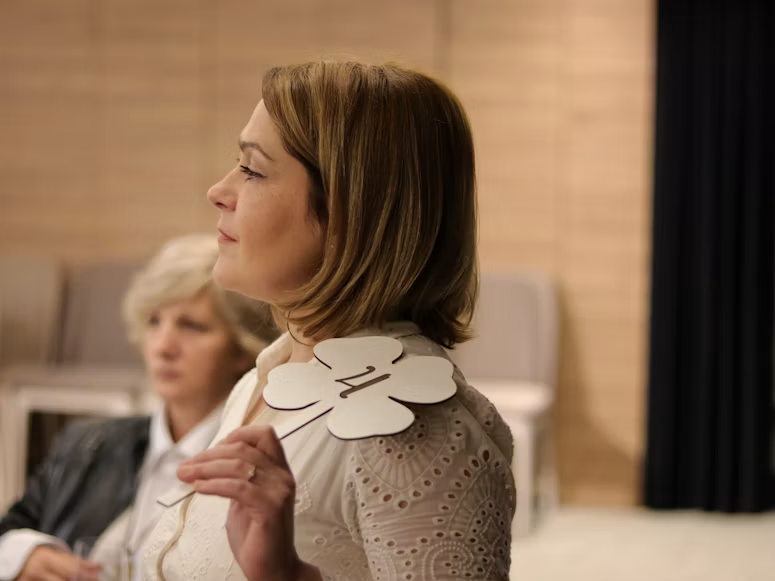
Unlike charity auctions though, there aren’t any items or art involved, and attendees will not be bidding on a piece. An ask is made, and donors willing to contribute that amount raise their paddles. Due to the simpler setup and direct contributions, paddle raises have high ROI and are generally considered to be very effective.
How does a Paddle Raise work?
Usually taking place at the peak of the fundraiser, a paddle raise takes around 10-20 minutes (it happens quite quickly). This is typically how it unfolds:
- A designated speaker or emcee gets the event rolling by showing a video or narrating a quick story that introduces and emphasizes the impact of your mission.
- The emcee announces the fundraising target for the night, or if there are multiple causes, the goals for each.
- Tiers of contributions are planned beforehand ($10k, $7.5k and so on), and the emcee starts with the highest tier and works their way down to the lower tiers. When they ask for contributions, attendees express their willingness by raising numbered paddles.
- Volunteers and staff keep track of all the pledges and note it down.
- After going through all the tiers, the pledges are processed, and the total amount raised is announced. Attendees are thanked for their contributions and the event draws to a close.
Now that we’ve gone through what a paddle raise is and how it usually plays out, let’s get to how you can run one of your own.
How to Run a Successful Paddle Raise (Step-by-Step)
While paddle raises are simple enough in concept, they do require proper planning and coordination to capture pledges accurately and create good energy overall.
Here’s how you do it:
1. Pick the right cause/project for your targets and set your targets
Paddle raises are a lot more effective if you can tie them to a specific initiative that makes donors feel like they’re making a meaningful impact. It could be an annual raise for cancer, providing education to underprivileged children, etc.
Set a tangible goal and be clear on where the money goes. Sharing this with your donors builds trust. The goal shouldn’t be so high that hitting it feels impossible. All in all, you want to set a realistic but fairly ambitious figure.
2. Decide the contribution levels or tiers
You should aim for 5-10 levels and make sure it’s inclusive of everyone’s giving capabilities. You can discuss with your pre-committed donors (more on that later) to decide amounts for the higher giving tiers (or conversely for lower giving tiers depending on the situation).
This is where having a regularly updated donor database helps greatly, as you can base your levels off of giving history and data.
A basic example would be to have $15k as the highest tier, followed by $10k, $5k, $2k and so on all the way to $50. Remember that you have to be inclusive, so don’t skimp out on small or micro-level contributions.
3. Pick your emcee or host
The emcee is critical in setting the stage and the energy before the raise begins. An enthusiastic crowd can make a massive difference in contributions. If possible, hire a professional emcee who has been on the mic for other charity events before. You know your donors best; use that knowledge to pick out a host that can connect with them and elevate the room accordingly..
Alternatively, if your organization has deep ties with the attendees, you could consider a leadership figure (directors, chair, etc.) for familiarity. Of course, they need to be a good orator as well.
4. Decide the schedule and script
Since a paddle raise is relatively short, decide when the paddle raise should take place during your fundraising event or gala. You should aim to host the raise during the peak of the fundraiser, when everyone is energetic and receptive to instructions from you or your host.
Come up with a script, including your opening statement, tier announcements, anecdotes, and expressing gratitude at the end. Have alternative scripts ready for different scenarios since you can’t always predict if you’ll hit your target, overshoot it, or come close.
5. Pick the right tools for your event
You can choose to host your paddle raise with either physical paddles or through bidding software, though incorporating the former is heavily recommended.
You’ll need to assign numbers to each attendee and give them a paddle with the corresponding number. When a certain giving tier is called out, they can choose to pledge that amount by raising the paddle while volunteers keep track of it.
If you’re opting for a digital process, look for mobile-friendly bidding platforms. There are some other options as well like scanning QR codes to pledge. However, keep your attendees’ preferences in mind and try to find a balance between their experience and your team’s feature set. This is important, since the bidding and giving data will need to be synced to your CRM.
6. Running the paddle raise itself
When opening your event, it helps to set the energy high. Start with the mission statement and targets you set earlier. Here’s where the emcee does the heavy lifting. Videos and stories with emotional angles work really well at establishing a connection with your donors and creating empathy for your cause. If you have first time donors in the mix, a quick explanation of how the paddle raise works would also be helpful.
Make sure your volunteers are in place to clearly record everything. The emcee announces the levels in succession, starting with the highest one and working their way down.
Seeing major contributions right at the start might encourage the others to go beyond what they had originally planned. Make sure that the emcee acknowledges and celebrates pledges briefly for each tier before moving on to the next one.
How your staff records the pledges is up to you. You can use an app, spreadsheets, or simply pen and paper. Choose whichever would be the most convenient and accurate for your team.
7. Gratitude and stewardship
After going through all the levels, tally the total amount raised and announce it as the event draws to a close. Celebrate the impact everyone has created on the day. Tying the money raised to a tangible outcome (for example, 50 scholarships granted for struggling children, or feeding 100 people) creates even more positivity and really drives home a sense of accomplishment and giving.
After your fundraising event, follow up with your attendees to collect the pledged amounts, preferably within a day. Include key details like their paddle number, amount they pledged, and multiple payment options. Thank all the participants, regardless of whether they donated or not.
A Few Tips to Enhance Your Paddle Raise
Here are a few extra things to ensure you get the most out of your paddle raise(s):
- Pre-committing a handful of donors: Reach out to some of your long time supporters, and ask for an early commitment to a particular level, especially the higher ones. Hesitation in the opening rounds of the raise can affect the overall contributions negatively. When attendees see paddles being raised immediately even at higher tiers, it gives them confidence to donate more.
- Host it at the right time: If your paddle raise is part of a larger fundraising event (as is most common), avoid doing it right after a meal break when attendees are a bit languid, or at the very end of the event when a lot of them have left already.
- Celebrate milestones during the raise: Every time you get significantly closer to hitting the day’s target, celebrate it. For example, if your goal is to raise $30000, then announce and celebrate when the contributions reach $5000, $15000, maybe hit a gong at $25000, and so on. Also, make sure to recognize all contributions, big or small, with equal excitement.
Almabase - A Powerful Tool for Hosting Your Paddle Raise
At its core, a paddle raise is fairly simple. But behind that simplicity is a lot of manual tracking like volunteers noting down pledges, someone tallying totals, and follow-up calls or emails to actually collect what was pledged. This is usually where a platform like Almabase can take some of that load off your team.
Instead of clipboards and spreadsheets, Almabase gives you a real-time dashboard of the event as it unfolds, so pledges don't need to be re-entered after the fact. Since collecting payment is often the trickiest part, you can also capture a guest's card at registration and charge pledges automatically once the raise wraps, rather than chasing donors down individually.
A couple of other things worth mentioning: contributions can be routed straight to the fund or project they were raised for, and everything syncs directly with your CRM so your donor records stay accurate without extra data entry.
None of this replaces a great emcee or an emotionally engaged room, but it does mean less time spent staring at numbers, and more time celebrating what you raised.
Request a personalized demo to see how this would look for you!

How to run a successful paddle raise (fund-a-need) at your event
Learn what a paddle raise is, how you can run one successfully, as well as a few tips to make your paddle raise stand out.

Hari Govind
September 4, 2026
12 minutes
Modern donors expect deeply relevant, personalized communications, especially when it’s alumni hearing from their alma mater. Generic messages won’t cut it, but it can also be difficult to make your appeals stand out when you’re making the same ask every year. To develop annual fund appeal letters that drive revenue and deepen relationships, you need a strategic approach.
Annual fund appeals succeed when they have refined messaging, emotional resonance, and enough variation to win donors’ support outside of flashier, major campaigns. In this post, we’ll explore a few key ways to elevate your university’s next ask.
1. Center Authentic Student Storytelling
Donors give to people, not institutions, making personal narratives one of the most effective fundraising and marketing strategies you can use. By shifting the focus from university-wide achievements to the tangible success of individual students, you foster a direct emotional connection with your audience and demonstrate the real, lasting impact of their donations.
Instead of relying on generic asks for annual fund appeal letters, incorporate the stories of individual students and the scholarships and programs that empower them to thrive. For instance, you might share how a first-generation nursing student used a grant to complete their clinical rotations, or include a quote from a scholarship recipient about how attending your university made their dreams a reality.
No matter how you incorporate storytelling into your appeals, Meyer Partners recommends using the three R's of storytelling to make them as impactful and ethical as possible:
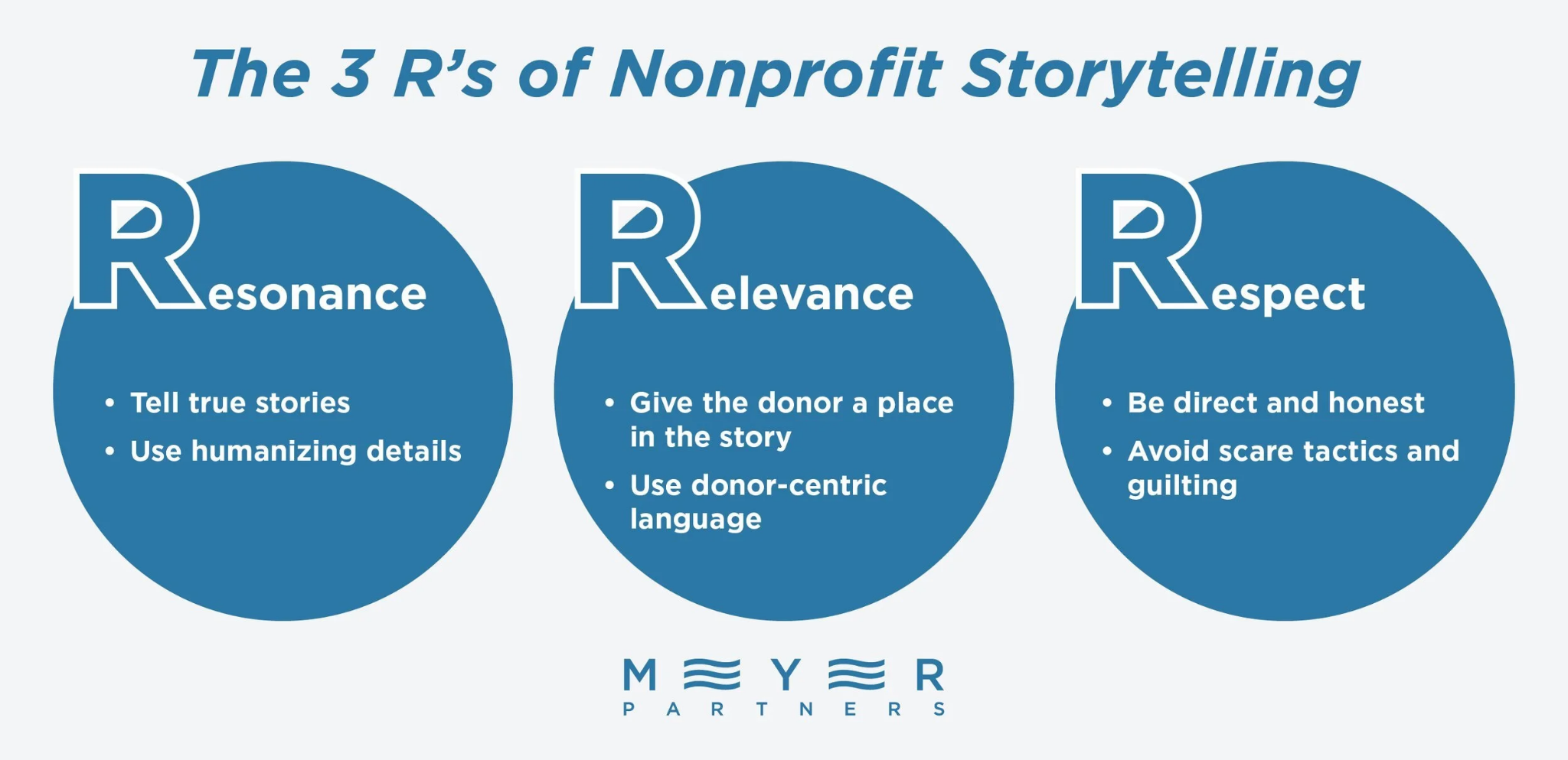
- Resonance: Every story should include real, humanizing details that resonate with donors. Let students tell their stories in their own words, and pair testimonials with photos whenever possible.
- Relevance: Make sure the donor can clearly understand their role in the story. Use donor-centric language that appeals directly to supporters’ values, inspiring them to become the changemakers who support the next generation of students.
- Respect: Respect both your readers and your storytellers by maintaining authenticity. Be direct and honest about what donations can achieve, and always focus on positive emotions like empowerment rather than guilt or scare tactics.
Incorporate these stories into multiple elements of your annual fund campaign to ensure maximum visibility and consistency. For example, you might include quotes from a student in your direct mail appeals, then post a selfie video of the same student telling their story on social media.
2. Highlight Impactful Giving Opportunities
To maximize revenue and increase average gift sizes, ask for more than standard, one-time cash gifts in your annual appeal letters. Offer additional giving options that provide greater flexibility and can increase donors’ long-term impact. These opportunities are often more compelling, especially for young alumni looking for accessible options and for high-capacity donors looking to make the most of their donations.
Specifically, use your annual appeals to highlight opportunities like:
Matching Gifts
The easiest way to make supporters’ donations go further is to double them. Typically, donors can double the impact of their gifts at no extra cost in one of two ways:
- Your university offers a matching donation challenge. Organizations often partner with a major donor who commits to matching every dollar donated within a set timeframe, up to a certain amount. These challenges motivate individual donors to give urgently so they don’t miss out on the match.
- Donors request corporate matching gifts from their employers. At any time, donors who work for participating companies can independently request matching donations from their workplaces. If the request meets the employer’s guidelines (e.g., a donation between $10 and $100 to a registered 501(c)(3) nonprofit), they’ll match their employee’s gift.
Either way, donation matching is a powerful motivator, especially during year-end giving season. Feature matching gifts prominently in your annual fund appeals, explaining how to participate and why these donations are so impactful.
Recurring Giving
Imagine you’re a recent graduate just starting your career and trying to pay off student loans. You wouldn’t want to donate $1,000 to the university you left last year, but it might be feasible to give $20 a month. In this case, you’re much more likely to respond to an appeal that highlights recurring giving.
Recurring gifts offer a more manageable opportunity to support your university while deepening donor relationships. In your annual fund appeal letters, include the option to give monthly and provide several accessible donation tiers.
Legacy Giving
Plant the seed for long-term support by introducing planned giving and bequest options in your annual appeals, too. These avenues empower alumni to leave a lasting mark on your institution without requiring an immediate, large-scale donation.
Even if most donors aren’t ready to commit to a legacy gift right now, just including information about planned giving in your appeal can get them thinking about it. Include links in emails and QR codes in direct mail letters so supporters can easily learn more on your university’s website or request a meeting with your major gifts officer. Note each donor who shows interest in the program so you can cultivate the relationship over time.
3. Leverage Donor Data for Highly Personalized Appeals
The best fundraising strategies reflect the unique relationship each supporter has with your university. Highly personalized appeals show each donor that you value them as an individual and respect their unique contributions.
Use your donor and alumni data to tailor your asks as much as possible. Go beyond addressing recipients by their preferred names—reference their specific past involvement, giving history, and personal connections to the university. Acknowledging that an alumnus was on the debate team or that a donor consistently supports the engineering department validates their identity and gives them clear, specific reasons to give again.
Segment your donor lists in several ways to maximize relevancy, and regularly audit your donor database to ensure all contact information and engagement records are accurate before sending appeals.
If you aren’t sure how to best segment your audience, hone in on the highest-value potential donors, or match supporters with the right requests, consider professional donor analytics services. Experienced fundraising consultants who specialize in data analysis can help you optimize your strategy for this year’s annual fund appeal and well into the future.
An effective annual fund approach relies on deep personalization, authentic narratives, and a variety of flexible giving options tailored to your audience. Upgrading the underlying strategy of your communications with these tips will help you build stronger relationships with alumni and secure the financial future of your core programs.

3 Ways to Build a Better Annual Fund Appeal for Higher Ed
Asking for donations to your annual fund can feel repetitive, but your appeal letters shouldn’t be. Learn how to develop better annual fund appeals here.
.jpg)
Alyssa Jefferies
September 3, 2026
12 minutes
LinkedIn continues to stay relevant for alumni outreach in 2026 as it is one of the most comprehensive self-updating directories from an advancement standpoint. Over 50% of LinkedIn’s user base holds a higher-education degree, and ~53% of US college graduates are active on the platform.
That means your alumni not only present but also likely engaging with a variety of content. But as far as reaching out to them goes, being present on LinkedIn and being reachable are two different things, and the wrong outreach strategy can disinterest or even alienate alumni.
In this blog, we’ll go through whether LinkedIn is worth your time for alumni outreach and how you can get your alumni’s attention effectively.
Is LinkedIn outreach worth the investment?
Let’s start with understanding why LinkedIn is different from the other channels
LinkedIn InMail gets a 10–25% response rate while cold email, by comparison, sits at 1–5%. The platform’s natural context is also a big factor here because when an alum receives an InMail from their alma mater, it’s in a different environment to when they’re sorting through personal emails and family messages. They log on to LinkedIn with a certain mindset, which makes them more open to professional conversations.
LinkedIn also gives outreach teams more context about who they’re reaching before they begin the process such as:
- Where an alum works currently
- What they’ve recently posted
- What groups and communities they’re in
- Who the common connections are
That’s a lot of helpful material to tailor the first message that will hopefully be the start of a donor’s journey. Combine all of this with the social media nature of the platform and you get a channel that has a lot of potential if you approach it right.
LinkedIn Alumni Outreach Strategies
Now that we’ve established that LinkedIn is at least worth a look, let’s set your team up for success so that your messages don’t go ignored.
1. Build an Active Presence Before You Send a Message
Advancement teams (and most teams in any field, to be fair) tend to treat LinkedIn outreach the same way they’d treat a cold email campaign. They find the person, write the message, hit send, and hope for the best.
But LinkedIn is, at it’s core, a social network. Your alumni notice who’s following you, who’s commenting on your posts, and whether your institution has a solid presence on the platform. If your university’s LinkedIn page hasn’t posted in months and the last post was a stock photo of a campus building, it hurts your cause already.
Before you start an outreach campaign, make sure you tick all these boxes::
- First, make sure your institution’s LinkedIn page is active. Posting once per weekday helps you reach 60% of your followers in a month. You should be aiming for consistent presence over viral content.
- Secondly, look for mutual connections, a shared connection increases reply rates by 27%. If a colleague or another alum is already connected,
- Thirdly, follow the alum you plan to message and leave a genuine comment on something they’ve posted. If possible, build and nurture your online relationship with them. You should be looking to gain a follow-back. This can be crucial since alumni who already follow your institution are 81% more likely to respond to your InMail.
2. Build a Segmented List
Use your CRM along with LinkedIn's alumni search tool to understand who you will be sending your messages to. Many alumni engagement tools also allow you to better find, segment, and automate outreach to the right people.
The segmentation itself will be crucial as personalization is a big part of making your message stand out (as we will explain later), so take your time and make sure all your segments and alumni information is updated, synced, and ready to go.
3. Get the Subject Line Right
LinkedIn InMail by default gives you a 200-character subject line limit. When an alum receives your InMail as a notification, they see roughly 25 to 40 characters before the preview cuts off.
For this reason, short, specific, and personalized subject lines can work really well. For example: “A quick question from [University]” or “Connecting with [Name] re: mentorship”.
What won’t work on the other hand, is anything that sounds like a mass email campaign. Something like “Exciting news from the alumni office!” might feel generic or may confuse recipients.
4. Keep the Message Short and Simple
LinkedIn’s own data shows that InMails under 400 characters get higher response rates. Many institutions sometimes write messages much longer than this and have their messages scrolled past.
For your first message, your alums only need enough to understand what you’re asking and if it's worth their time. If you have more context to give and more reasons to say why this outreach matters, that can follow later.
Write a ~300-character message that asks one clear question. The message can address the basics such as who you are, why you’re reaching out, and your one specific question.
5. Personalize Beyond the Name
Alumni can tell if a message was written for them or if someone just replaced a mail merge field, so you’ll want to go further than just swapping people’s first names. Here’s a few things that might help with personalization:
- Spend a couple of minutes on the alum’s profile; personalized InMails increase acceptance rates by about 40%, according to LinkedIn data. Mention a recent post they made, a project they were publicly credited for, a career transition they just went through, or a shared connection.
- Find a good natural connection between what you discover about them and what you’re reaching out about. If you’re inviting them to a career mentorship panel and they’ve been posting about early-career development, mention that. If you’re reaching out around their 10-year graduation anniversary, you definitely want to acknowledge it.
- Avoid mentioning generic and obvious things like “I see you graduated from [University].” Good personalization shows you’ve paid attention to their life after graduation and you have a brief window that you want to make the most out of, especially for less-engaged alumni.
6. Templates for Common Outreach Scenarios
Here are some templates that you could borrow and build on to personalize your next outreach message on LinkedIn:
General reconnect:
"Hi [Name], congrats on the move to [Company]. I'm on the alumni relations team at [University]. We're putting together a small group of alumni at your career stage to get some honest input on our programs. Would a 15-minute call work?"
Mentorship opportunity:
"Hi [Name], I work in alumni relations at [University]. Saw your recent post on [topic] and thought you'd be a great fit for our mentorship program. We're matching alumni with students in [field]. Would you have 30 minutes to hear more?"
Upcoming event:
"Hi [Name], I'm with alumni relations at [University]. We're hosting a small dinner for [City] alumni on [date] and wanted to make sure you were on the list. Can I send you the details?"
Giving day:
"Hi [Name], [University]'s giving day is [date]. This year all gifts are going toward [initiative]. Wanted to reach out personally before things kick off. Can I send you a bit more context on what it supports?"
What each of these has in common is one clear ask and customization that shows the sender did their homework before reaching out.
7. Time Your Outreach Well
LinkedIn data shows that Friday and Saturday see 4% and 8% fewer than average responses, respectively. Your alumni may want to relax and disconnect from the professional world on the weekends, so Monday through Thursday is a good window. However, depending on your event calendar, and past alumni engagement data, this can vary a bit so do double check!
Going back to the mentioned window, Sprout Social's analysis of nearly 2 billion engagements across major social platforms points to Tuesday through Thursday, 11 a.m. to 5 p.m., as LinkedIn's peak activity window. That's when professionals are most actively checking and responding on the platform, so it's your best shot at being seen before your message gets buried.
8. What to Do When Alumni Reply
Your next message after an alum replies sets the tone for the entire conversation that follows and the subsequent relationship. So here’s a few things to keep in mind:
- Reply quickly, ideally within a few hours of seeing their response.
- Thank them by name and reference something specific from their reply.
- Remember that this is a conversation on a social platform.
The goal should be to establish that your team and, by extension, your institution has a real interest in keeping in touch with them after graduation. For this reason, you’ll want to:
- Find out what they’re working on.
- Ask follow-up questions.
- Make it clear that there is no immediate ask attached.
💡This doubles as an opportunity to get updated information in case their profile information hasn’t been updated in a while.
Alumni who are connected to their institution are 23 times more likely to donate than those who aren’t. That connection, however, has to be built through consistent, genuine interaction over time. So, when it’s time to make an ask, it’s coming from the context of the conversation.
Build a LinkedIn Alumni Community (and not just another contact list)
At the end of the day, one-on-one outreach can only take you so far. Advancement and alumni relations teams that are able to keep alumni engaged are also building environments where alumni feel like they want to stay engaged.
If we are sticking to the platform at hand, LinkedIn Groups are a great way to do this. You can organize alumni groups around:
- Your institution
- Graduation cohorts
- Academic departments
- Regional chapters
- Donor groups
- Matching gift opportunities
…and much much more
AdvancementForm looked at what the institutions running active alumni groups have in common. Here are the main takeaways:
- Stay active every day: Keith Hannon of Cornell University shared that two-thirds of alumni relations professionals running thriving LinkedIn communities log in daily. That includes posting, answering questions, responding to comments, and engaging with what other members are sharing.
- Give alumni the spotlight: Spotlighting a graduate's career achievement or resharing something they wrote brings their audience into your content. Even the simple act of tagging alumni where needed will ensure that their network is notified as well.
- Share career resources such as job postings, industry reads/insights, career advice for alumni at different stages and make sure they are updated frequently. This is the content that consistently performs well as it provides a clear reason to engage.
- Mix up your content formats: Posts with images get a 98% higher comment rate than those without, and posts with YouTube videos (that play directly in the feed) get a 75% higher share rate. Varying your formats will keep the feed from feeling like a broadcast channel.
- Ask alumni to help current students: Academic Impressions flags this as an especially meaningful way to engage alumni because it gives them an opportunity to give back give back, even without a financial element. Posting something like "What do you wish someone told you in your first year in [industry]?" gets replies from alumni who would otherwise never comment on, say, an event announcement.
- Run polls: Lebanon Valley College asked their alumni "What career field are you currently in or looking to enter?" and it sparked a lively, ongoing discussion among their alumni. Polls can be a great icebreaker and contextualizing them to recent events, career stages, or other segmented needs is even better!
- Add in the nostalgia angle: Questions and posts about campus memories or institutional history give alumni interactive content that serves as a break on their feed from the usual LinkedIn content while also reminding them of why they feel connected to their school.
Finally, if you're thinking about content ratios, keep it weighted toward value-first content, career resources, alumni recognition, and conversation, with campaigns and event promotion playing a supporting role, not leading the feed.
Measure Your Progress and Know Your Blind Spots
You need to know whether your efforts are paying off. So, if you’re running structured outreach campaign on LinkedIn, here are the metrics which will help you track what's working:
- Connection acceptance rate: You generally want to aim for ~20% or above. If you're below that, check whether you're warming up contacts before sending requests and whether your institution's page looks active and credible.
- InMail response rate: With personalized, well-targeted outreach, this should sit between 10–25%. Single-digit numbers are an indication to look at your message length, your subject line preview, and how specific your personalization is.
- Conversation-to-action rate: This tracks what percentage of replies converts into whatever your goal is, whether that’s an event registration, a scheduled call, or a gift.
The Council for Advancement and Support of Education (CASE) tracks alumni engagement across four modes: philanthropic, volunteer, experiential, and communications.
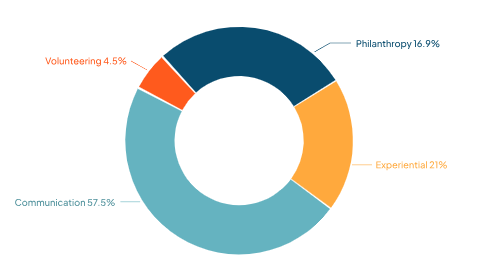
LinkedIn activity can feed into your experiential and communications metrics. If you’re not tracking LinkedIn engagement as part of your overall alumni engagement scorecard, you should consider starting now.
A few common blind spots that can be avoided include:
- Reaching out only when there's an ask: If alumni only hear from you around giving day or annual fund season, the outreach feels transactional. Only 27% of alumni who donate give to their alma mater. The most common reason others don't give is because they don't feel connected enough to make it a priority.
- Writing LinkedIn messages like emails: Avoid long messages, formal language, attached PDFs when LinkedIn is conversational. Keep messages short, and the tone conversational.Save the documents for follow-up conversations.
- Ignoring alumni who engage with your posts: When an alum comments on something your institution shared, respond to them, thank them by name, and if appropriate, send a connection request with a brief personal note referencing what they said.
- Not knowing what comes next when someone replies: Replying to a message without a clear next step might waste the opening you had spent time and effort on. Know what you’re trying to accomplish before you send the first message so that when someone replies, you’re ready to take the conversation forward.
Final Thoughts
We hope we’ve been able to give you and your team plenty of things to keep in mind. While LinkedIn outreach may seem like a simple game of numbers at first glance, any outreach campaigns involving social media rarely tend to be so predictable and you definitely want to keep that in mind.
To wrap things up, keep personalization (and segmentation by extension) at the heart of your strategy, have a consistent presence on LinkedIn just as you probably do with Facebook or Instagram, and make sure you are thinking about how to take the conversation forward many weeks ahead of time so that alumni feel appreciated after reacting to your outreach.
If you are looking for an alumni engagement platform to help you plan, execute, and measure your alumni outreach and engagement strategy, Almabase is built just for that so feel free to book a personalized demo with us!
How to Reach Out to Alumni on LinkedIn and Get Responses
Our article takes you through LinkedIn alumni outreach and how your team or institution can ensure that your alumni don't ignore your messages.

Prajnya Yelamali
September 2, 2026
12 minutes

Gen Z is the generation born between 1997 and 2012. As current high school students, college students, and young alumni, Gen Z is the prime audience for your university’s digital content. But is your higher education website meeting their needs effectively?
The top college websites are user-friendly, accessible, mobile-compatible, and unique. They offer the authenticity that students and young alumni need to feel strongly connected to their alma mater. If your website isn’t clearing that bar, it could be time for a Gen Z-focused reset.
A Gen Z-friendly website is especially important as more Gen Z members become young alumni. Gen Z's philanthropic engagement has increased by 22% since 2021, making your young alumni a key audience for your university's fundraising efforts.
Below, we’ve created a self-assessment tool with questions to help you determine whether your website is meeting the needs of your Gen Z audience, organized by key website features. Use these guiding questions and tips to help you determine your website’s current state and growth path.
1. Visual authenticity and social proof
Morning Consult’s Most Trusted Universities report found that, among the four generations surveyed (including Millennials, Gen Z, and Baby Boomers), Gen Z is the least likely to trust higher education institutions. As your digital home, your higher education website is among your strongest tools for building trust with Gen Z students and alumni.
Does your homepage feature user-generated content (UGC) or raw videos from current students and young alumni?
Gen Z craves social proof in the form of unfiltered reality rather than curated experiences. Your website should appeal to that preference by:
- Avoiding stock photos and instead only using authentic, unposed photographs of students and campus life.
- Incorporating user-generated content via a social media widget on your homepage that pulls in real-time Instagram or TikTok content from campus.
- Adding “day in the life” content to your blog posts and social media pages, where student ambassadors can take over posting for a day, and show what their daily activities look like.
These content strategies ensure your digital presence reflects and prioritizes student voices.
Are your impact stories focused on individual narratives rather than institutional progress?
Young alumni donors want to see the immediate, tangible impact their contributions will have before deciding to give or engage with your alumni giving program. To meet Gen Z's demand for authenticity, impact stories should focus on individual stories rather than general institutional updates.
For example, avoid generic, nebulous fundraising requests like “Please give to our annual fund.” Instead, send an email asking young alumni to “Help first-generation student Sarah fund essential cancer research to complete her senior thesis.” The second option pulls potential Gen Z donors directly into the story of a real student on your campus who needs help.
2. Mobile-first functionality and seamless giving
Your higher education website must be fully mobile-optimized, as a Harmony Healthcare IT survey found that Gen Z spends an average of 6 hours and 27 minutes on their phones every day.
A seamless, mobile-optimized giving experience is an essential step toward making alumni giving more convenient and less intimidating for Gen Z.
Are your overall website and donation page mobile-optimized?
Your website should look good on any device, whether visitors are using a laptop, an Android device, or an iPhone. Keep these elements in mind when optimizing your website for mobile devices:
- Large, readable fonts
- Stackable content structures, such as hamburger menus
- Properly spaced tap targets like buttons and links
- Robust text-to-give capabilities for immediate, personal communication
Your institution can further enhance engagement by creating mobile-friendly online forums or Facebook groups to foster a sense of community among young alumni.
Can a donor complete a gift in under 60 seconds using a digital wallet?
Digital wallets such as Apple Pay, Google Pay, and PayPal are now the third most popular way donors give to nonprofits, surpassing traditional methods like checks.
If your donation checkout process requires entering a 16-digit credit card number and a billing address, Gen Z members won’t take the time to complete their transactions. Integrate one-touch payment options via digital wallets to reduce friction and increase young alumni giving.
3. AI-ready infrastructure and discoverability
An EAB survey found that nearly half of high school students now use AI tools such as ChatGPT and Gemini during their college search, a sharp increase from 26 percent in spring 2025. If your website is invisible to AI search tools, it’s invisible to potential applicants.
Is your content structured for generative engine optimization (GEO)?
GEO is the term for optimizing a website to appear in generative AI search engines for specific queries. Users tend to interact with AI-powered search tools much more conversationally than with traditional search platforms, because they can ask multi-part questions and receive personalized answers.
To ensure your website appears for highly-targeted searches, Kanopi Studios’ guide to AI for higher education recommends providing “specific information on your website that highlights your unique credentials and offerings.”
For example, if your coastal university wants to increase traffic from potential applicants looking for schools by the beach, you could include keywords such as “universities with the best ocean views” and “colleges 30 minutes from the beach” on your student life page.
Do you use AI-driven personalization to greet returning alumni or students?
The National Alumni Survey discovered that only 14% of alumni believe their institution has a good understanding of their current career or life stage. Increase alumni engagement and retention by creating secure portals where they can log in and see personalized gated content, such as a custom alumni or student dashboard that displays relevant information, deadlines, and upcoming events.
4. Communication and ongoing engagement
Potential and current students, as well as young alumni, want to feel included in your university’s community. They want real-time, transparent information to help them navigate your application process, student life, or the post-grad experience.
Does your website address the causes and topics Gen Z cares about?
Higher education website design and development isn’t just about how your website looks. Gen Z wants to find answers and information about the questions and causes they care most about, such as:
- Resources for underrepresented students
- Mental health services and resources for students
- Clarity on DEI initiatives and racial equity
- Campus safety
- Environmental sustainability
- Information about the university’s position on using AI in the classroom
Don’t make website visitors hunt for this information. Use your main navigation menu to share links to essential resources, including your campus security details, environmental sustainability reports, and DEI policies.
Is it easy to find event opportunities on your website?
The National Alumni Survey found that the vast majority of alumni (86 percent) are very satisfied or satisfied with their student experience, but just 50 percent feel very satisfied or satisfied with their alumni experience. This stark contrast highlights a critical gap that higher education websites can easily address by improving event discoverability.
Though considered a digital-native generation, Gen Z alumni actually crave community. They rank networking opportunities, career support, and sporting events as the three most valuable services offered by their alma mater, demonstrating a clear desire for engagement. By spotlighting relevant event opportunities, your website can help them find their alumni niche.
Make it easy for Gen Z website visitors to find opportunities to connect, such as fundraising events, sporting events, networking meetups, and giving days, on your online calendar. Ensure your calendar offers all the need-to-know information for each event, including how to register, date, time, location, and any associated costs. Additionally, to fully support their desire for community and career development, offer clear information about local alumni groups to join, virtual career prep panels and webinars, and mentorship opportunities with current students.
So, how did you do? If you answered yes most of the time, congratulations; your website is probably in pretty good shape for engaging Gen Z. If you had a few more nos than you’d like, don’t panic. Start by addressing your site’s infrastructure, ensuring it's mobile-friendly and optimized for AI search. Then, build on your approach by layering in the personalization, community-building, and authenticity that Gen Z is looking for. As a result, you’ll be able to build a website that engages your core audience and helps them feel at home with your university.

Is Your Higher Ed Website Meeting Gen Z’s Expectations?
Audit your higher ed website with this self-assessment. Get tips for digital fundraising, mobile UX, and AI discoverability to engage Gen Z students and alumni.
Alumni Engagement

Anne Stefanyk
April 23, 2026
12 minutes
Picture the basket nobody glances at twice - shrink-wrapped, full of gift cards to popular stores and individually wrapped chocolates. It’s sitting next to a hand-packed wooden crate with a local chef's sauce, a pottery mug from a neighborhood studio, and a card that reads "Saturday Morning Trek in Our City." Both probably cost the same to assemble, but only one of them starts a bidding war.

Research shows that experience-based and thoughtfully curated auction items raise 20 to 30 percent more than generic physical goods. This guide is for fundraisers putting those baskets together, whether for a school event, nonprofit gala, alumni weekend, or a community fundraiser. Below, you'll find 18 silent auction basket ideas, each with sourcing suggestions and best-fit audiences.
Why Silent Auction Baskets Work So Well for Fundraising
Baskets are easy to assemble: local businesses say yes, item prices are flexible, and a good theme easily travels from a school event to a nonprofit gala. Community-sourced items consistently out-earn generic catalog items, because a "Spa Day at [local wellness center]" carries weight a generic "$50 massage voucher" won’t. Local sourcing also gives you the flexibility to tailor baskets to different audiences, such as parents, alumni, donors, teachers, and local supporters.
What makes a Silent Auction Basket Stand Out?
There are maybe ten seconds before someone at the bidding table moves on. In that window, three things do the most work.
1. A Coherent Theme
A bidder scans the table looking for something that catches their eye. The faster your basket answers "who is this for and what does it feel like to receive it," the better. BidBeacon recommends including a few items that clearly fit your theme, plus one standout piece that's valuable enough to drive competitive bidding.
2. Something Experiential
Experience-based items raise 20 to 30 percent more than physical goods because winning one feels like getting access to an experience rather than collecting another mug for your crowded kitchen shelf. A cooking class, a fitness studio pass, a photographer session: these become the centerpieces that give the whole basket its pazazz.
3. Right Opening Bid
The opening bid sets expectations in both directions - too low, and the basket reads as low-value; too high, and it doesn't get an early bid to anchor against. LuxGive recommends starting at 30 to 50 percent of fair market value, which tends to invite that first bid and let competitive psychology take over from there.
Silent Auction Basket Ideas for School Fundraisers
The audience here usually falls into a few predictable groups: parents who want a special memory from the year for their kids, community members drawn to anything that helps the school, and grandparents who will outbid everyone for something their grandchild's class made together.
1. The Experience Basket

Principle for a day - the experience basket. This basket offers something that doesn't exist outside your school: a certificate for the winning child to shadow the principal for a day, make morning announcements, and choose a reward for their class. That specificity is what drives the bid; you can’t buy this at Staples.
What to include:
- The experience certificate
- "Principal's kit" - a quality journal, a good pen, and a book about a historical figure/leader who led something worth knowing about
Best for: Elementary school fundraisers. For parent bidders who want to give their child a story to tell from the school year.
Pro tip: The experience basket can be adapted for any staff role - librarian, PE coach, cafeteria supervisor, and you've got a whole new basket
2. The Class Project
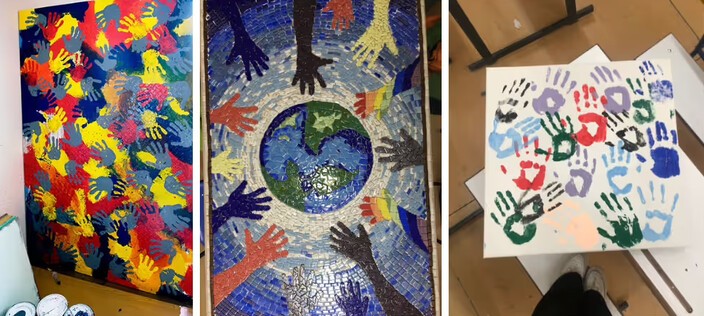
Every student in a class contributes to a collaborative piece of art: a painted canvas, a mosaic tile, a hand-stamped painting. The winning bidder takes home something that exists nowhere else on earth. The backstory of this project is the whole pitch.
What to include:
- The artwork itself
- Gift card to a local frame shop
- A printed card that reads, "Made by [the teacher’s name, class and year]" with each student's name listed
- A photo of the class in the act of making it
Best for: K-8 schools; parent and community bidders; particularly impactful at schools with arts programs.
3. The Study Essentials Basket

For middle and high school fundraisers, the baskets that do well usually connect to the specific stage of school life the kids are in. This one speaks to the parent who is already quietly thinking about what the next few years will look like.
What to include:
- An adjustable desk lamp
- Noise-canceling headphones (donated or sourced wholesale through a local electronics retailer)
- Local cafe/juice shop gift card,
- A planner and good stationery
Best for: Middle and high school audiences, particularly strong with parents of juniors and seniors.
4. The STEM Discovery Box
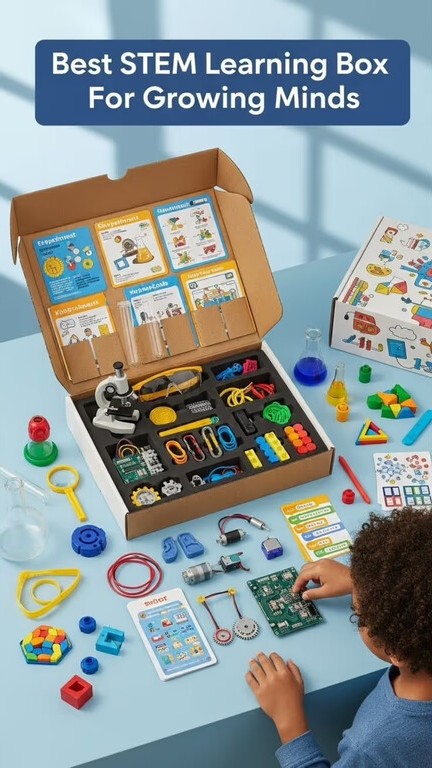
A great option for K-8 audiences where the bidding energy comes from parents who want to buy something that’s genuinely interesting for their kids and also directly useful for their school curriculum. The subscription box shows ongoing value, which makes the basket feel worth more than the individual items inside.
What to include:
- A voucher for a STEM subscription service - KiwiCo (Tinker Crate) and CrunchLabs both have school donation programs
- A beginner's coding activity book
- Science kit or snap circuit set
- A science journal
Best for: K-8 fundraisers and STEM-oriented parent communities.
Pro tip: Reach out to STEM subscription companies directly and share your school’s 501(c)(3) information. Many do have donation or education-support programs that respond faster than general customer-service enquiries.
5. The Teacher Appreciation Basket

Before the event, survey your faculty. Ask what they'd actually want, not what a planning committee assumes teachers want. Build the basket from the real answers, and mention the source in the basket description at the event with a bit of humor. That extra effort and the funny detail give the basket an edge that a generic “teacher appreciation” basket doesn’t have.
What to include:
- Items based directly on top wishlists
- Gift cards to classroom supply retailers
- A quality insulated mug
- Local bookstore gift card
- A planner or agenda book
Best for: The Whole school community; families who want to give something meaningful back to their child's teachers; best at beginning-of-year and end-of-year events.
6. The Celebration Kit
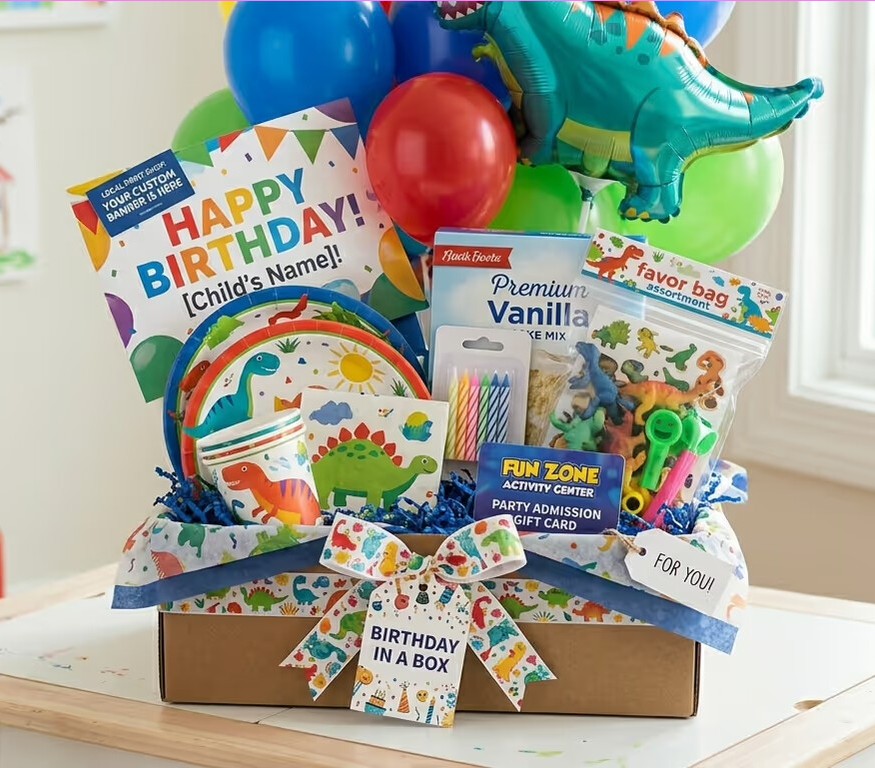
For parents of young kids, planning a birthday party is a yearly stress test. This basket takes away at least some of that stress, if not all. Any parent who’s been through it will recognize exactly what it offers.
What to include:
- A themed tableware set
- Balloons
- Personalized banner gift card from a local print shop
- Cake mix
- Candles
- A favor bag assortment (small toys, stickers)
- Gift card to a local party venue or activity center
Best for: Elementary school audiences with young families; best at back-to-school and spring semester fundraisers.
Pro tip: If your parent community includes someone who does event planning or parties, ask them to donate a coupon. It adds real value and puts their name in front of an audience that will likely need their services soon.
Silent Auction Basket Ideas for Nonprofits and Galas
These audiences have typically attended many of these events. They’ve seen all the standard basket types, and they’re not likely to get excited about anything that feels like a placeholder. The ideas below are specific - in theme or in how they’re put together. They will feel fresh in a room full of experienced donors.
7. The 12 Date Nights Basket

A single dinner gift card is appreciated. Twelve of them - one per month, to a rotating set of well-regarded local restaurants is something people will actively try to win.
What to include:
- Gift cards to four or five local restaurants (enough for dinner for two at each)
- Local food guide
- Ride-share credits
Best for: Couples, young professionals, busy parents who'd genuinely use a monthly reason to get out; strong at galas and alumni events.
Pro tip: Approach the restaurants together, framing the "Year of Date Nights" as a package. Restaurants are more generous when they know they're featured alongside other well-regarded local spots. They're part of a curated package and not just donating free dinners.
8. The Culinary Experience Basket

Cooking classes with a local chef consistently land among the higher-bidding items at nonprofit events. Mainly because they're hard to arrange on your own. Winning this will feel more like an invitation than a purchase.
What to include:
- A private or small-group cooking class for two
- Chef's knife or a cast-iron pan
- Signed cookbook from the instructor
- A bottle of wine
Best for: Foodie donors, couples, professional communities; strong at spring and fall galas.
9. The Wellness Basket

The version of this basket that wins bids goes well beyond a standard spa basket. The difference comes down to specificity and quality. For example, a membership to a local studio instead of a generic coupon, high-end skincare instead of a department store brand. Basically, items that come together around an idea of what it really means to relax and restore yourself.
What to include:
- Two-month pass to a local fitness studio (yoga, pilates, spin classes), sourced through a donated partnership
- Quality herbal tea set
- A guided journal
- Locally made skincare or a natural soap collection
- A glass water bottle
Best for: Professional donor communities; women's organizations; health-focused nonprofits; best at spring galas.
Pro tip: Approach the fitness studio as an event wellness partner and not just as a basket donor. Studios are often actively looking for community partnerships.
10. The Farmer’s Market Basket

Every item in this basket comes from a local artisan or small producer, which means every item comes with a story. At a gala full of experienced donors who have bid on baskets after baskets of mass-produced items, something handmade and artisanal will hit the spot.
What to include:
- Handmade candles from a local candlemaker
- An artisanal hot sauce from a local producer
- A hand-thrown pottery mug
- Small-batch of artisanal chocolates
- A textile or art print from a local maker
Best for: Community-centered nonprofits; arts organizations; for any event/community with a "buy local" ethos.
Pro tip: Source the whole basket at a single local artisan/farmers market. You build multiple donor relationships in one trip, and "every item in this basket was made in our community" becomes its own selling point at the table.
11. The Weekend Escape Basket

The version of this that actually draws bids makes the weekend feel fully formed and ready to go. Clear, specific details give bidders an immediate sense of the experience, so they can picture themselves already there and relaxing.
What to include:
- A one-night stay at a local boutique hotel (donated partnership)
- Spa treatment gift card
- Dinner reservation voucher
- A small arrival kit with wine, chocolates, and bath products
Best for: Professional donors; couples and singles alike; best at galas and alumni events where attendees are busy professionals who need a break but won't take one unless it's handed to them.
Pro tip: Boutique hotels are significantly more open to donation partnerships than chains. Community visibility is a genuine advantage for them in a way that it isn't for national brands. You can make that part of your pitch.
12. The Pet Parent's Basket

Pet owners are a loyal and enthusiastic group at auctions, but they’re often underrepresented at the bid table. A well-made pet basket can quickly become one of the most talked-about items in the room and spark the kind of competitive bidding that draws a crowd.
What to include:
- Premium pet treats/food from a local pet boutique
- A session with a professional pet photographer
- A curated toy bundle
- A gift card to a local vet or grooming service
Best for: Community nonprofits; animal rescue organizations; any event where a meaningful portion of the room might own pets.
Basket Themes That Travel Well
These ideas don't belong to one event type. With light adjustments, they move from elementary school auctions to nonprofit galas to alumni events.
13. The Seasonal Basket

Seasonal relevance creates a different kind of urgency at the bid table, the sense that this basket is specifically for right now.
What to include:
A fall version can have:
- Locally sourced jam and apple cider
- Cozy candles
- Warm socks
- A Thanksgiving recipe card from a neighborhood chef
A spring version can have:
- Seedling kits
- Herb seeds
- Garden gloves
- A nursery voucher
Best for: Any event timed to a season; works for family audiences and professional donors alike.
14. The Frequent Flyer Basket

This basket appeals to professionals who travel often - a group that shows up in strong numbers at galas, alumni events, and tends to bid on things they’ll actually use. The right mix of items makes frequent travel feel easier while still feeling a bit indulgent.
What to include:
- Quality noise-canceling earbuds
- A premium travel tumbler
- Packing cubes
- A well-chosen destination coffee table book
- An airport lounge day pass
Best for: Big galas, alumni events; Events with a strong base of frequent travelers.
Pro tip: An airport lounge day pass is a relatively low-cost addition that feels genuinely valuable to anyone who spends a lot of time in airports.
15. The Game Night Basket

This basket works across age groups. It brings together everything needed for a relaxed, social evening, and the specific game choices help the basket feel thoughtful rather than generic.
What to include:
- Two or three well-chosen board games (Ticket to Ride, Codenames, and Wingspan have broad appeal)
- A quality snack assortment
- A set of cocktail or wine glasses
- A gift card to a local bottle shop
Best for: Family audiences at school events; younger professional donors at nonprofit galas; mixed-age events.
16. The Survey Basket

This buzz about this basket starts before the event. Poll your community through a parent newsletter, email list, or social media and ask what they’d most like to see in a silent auction basket. Then build it using the top responses and name it something like “The One You Asked For.” The process creates a sense of involvement early on, and the people who voted feel a stronger pull to bid on it.
What to include:
- Items based directly on top poll responses
- A mix that reflects the community’s actual preferences
Best for: Schools with active parent associations; nonprofits with strong email lists; any community with high pre-event engagement.
Pro tip: Share the poll results in your event communications before the auction. It keeps the basket part of an ongoing conversation and builds anticipation.
17. The Neighborhood Guide Basket

This basket highlights the best of the neighborhood. Include gift cards to six or eight local spots - a pet-friendly coffee shop, a family-owned restaurant, an independent bookstore, a new age yoga studio, a farmers market vendor - along with a simple map showing where each one is and a short note about why it’s worth knowing.
This basket tends to hold people’s attention at the table longer; more time at the table often means more competitive bidding.
What to include:
- Gift cards to a curated set of interesting/new local businesses
- A printed neighborhood map
- Short descriptions of what makes each spot special
Best for: Community organizations; place-based nonprofits; any event with a strong geographic anchor.
18. The Under-the-Weather Care Basket

This basket is built for a very specific moment: when someone is sick, worn out, and just wants to feel taken care of. The more thoughtful and well-chosen the items, the more it feels like real relief rather than a generic comfort bundle. The basket name and item list together should answer one question: after what kind of week would someone really be thankful for having this basket around?
What to include:
- A soft, high-quality weighted blanket
- Herbal teas and a premium cocoa set
- Locally made honey or throat-soothing lozenges
- A streaming service gift card
- A curated set of quick, soothing comfort foods (soups, broths, and heat-and-eat staples)
Best for: Broad audiences - works well with families, professionals, and mixed-age donor groups; best at any event at the start of a new season/the flu season.
Pro tip: Add a simple “doctor’s note” style card with light humor. It makes the basket feel more personal and will make the winner chuckle through their blocked nose when they finally use it.
How Almabase Can Help You Run a Better Fundraising Event
A silent auction does not start when the doors open. It starts when the first invitation hits someone's inbox, and it does not end when the winning bid is logged. What happens in the weeks before and the days after determines whether that night builds into something or stays a one-time event. Almabase is built for that full journey.
Event Registration and Ticketing
Almabase centralizes registration and ticketing in one place, so your team doesn’t have to juggle multiple systems in the days leading up to the event. Make it easy for your attendees, donors, parents, alumni, and supporters to register for your fundraising event by using a platform that integrates everything.
Personalized Event Communications
Send targeted reminders, invitations, and updates to the right audience segments before and after the event. Almabase helps you tailor communication for returning attendees, first-time supporters, and everyone in between.
Better Donor and Community Engagement
The supporters who show up for a silent auction are exactly the people worth staying in touch with. Almabase gives teams the tools to keep that conversation going after the event closes - through community features, engagement tools, and communications.
Integrated Fundraising Experience
Create a smoother path from participation to giving. Almabase connects event attendance, donation pages, and gift tracking, so supporters can move naturally from showing up to making a gift without switching platforms. Learn more here.
Cleaner Data for Future Fundraising
Capture the engagement data your team needs to strengthen future campaigns, donor outreach, and event planning. Almabase syncs this information to your CRM in real time, helping you build on each event rather than starting over.
If your school or nonprofit wants to run smoother, more effective fundraising events, especially if you're managing multiple events a year across disconnected tools, it’s worth exploring a more integrated approach. Almabase can help create a more organized, engaging experience for your community. Book a personalized demo to learn more!
.avif)
18 Silent Auction basket Ideas for Schools and Nonprofits
Discover 18 silent auction basket ideas that raise 20-30% more for schools and nonprofits. Themes, sourcing tips, and pricing advice to spark bidding wars.
Fundraising
Prajnya Yelamali
April 23, 2026
12 minutes
Young alumni engagement has long been one of advancement’s most persistent challenges. Low event attendance. Limited giving. Minimal volunteer participation.
But what if the problem isn’t that young alumni don’t care?
In a recent webinar, Shweta Mathew sat down with Dr Amanda Shoemaker, Director of Advancement Operations at the University of Illinois’ College of ACES, to unpack exactly that. Drawing from Amanda’s doctoral research, the session moved beyond assumptions and into something more useful: real insights from young alumni themselves.
.png)
The Challenge isn't New, but it is Misunderstood.
Across institutions, one pattern holds true:
Young alumni (graduates from the last decade) consistently engage less in events, volunteering, and giving, despite a wide range of opportunities available.
But this isn’t a story of complete disengagement. They’re still opening emails, following on social media, and staying loosely connected.
Which leads to the real question: Why does engagement drop off when it comes to deeper involvement?

Three Insights That Change How We Think About Engagement
Through in-depth interviews with recent graduates, Amanda identified three recurring themes that explain this gap.
1. They’re Looking for Belonging
Young alumni, along with attending something, want to see themselves involved in it. They’re asking questions that matter to them, such as, “Will I feel comfortable?” “Will I connect with someone?" etc.
In fact, one alum shared she avoided events where she’d be “the youngest person in the room by 20 years". That says it all.
Takeaway:
Engagement starts with peer connection.
2. They Don’t Know How to Engage (or Why It Matters)
Many young alumni want to get involved but don’t know how to. They aren’t aware of the opportunities that exist, or how to participate, or even what they will get out of it.
And when it comes to giving, misconceptions run deep:
- “Do I need to give a large amount?”
- “Will my money even make a difference?”
- “Will I just get asked for more?”
At the core is one simple question:
“What’s in it for me?”
Takeaway:
Clarity and value communication matter more than volume of outreach.
3. Life Context Shapes Engagement
Early adulthood is chaotic, where everyone gets busy paying off loans, building careers or saving up for big life milestones.
Even when intent exists, engagement often depends on whether it’s convenient, timely or easy to act on.
As Amanda put it, engagement needs to “fall into place".
Takeaway:
It’s less about willingness and more about whether opportunities “fit” into already busy lives.

The Big Myth: Young Alumni Don’t Want to Give
One of the most surprising findings?
Many young alumni are open to giving. Even small amounts.
What stops them is perception because they end up assuming that small gifts don’t matter, or their impact won’t be visible, or they postpone their giving for “later in life”.
But consistent, small contributions are exactly what build long-term philanthropic habits.
A $5 gift today is more powerful than a $500 gift ten years later if it builds consistency.
What Can Institutions Do Differently?
The good news: solving this doesn’t require massive overhauls.
Small, intentional shifts can make a big difference.
1. Make Communication More Clear
- Highlight who will be at events
- Share what alumni will gain
- Start earlier marketing
- Use snail mail marketing
- Show the impact of participation and giving
2. Design Events for Real Life
- Offer virtual options (they still matter)
- Include professional value (networking, learning, career growth)
- Build a year-long engagement calendar
3. Remove Friction Everywhere
- Simplify sign-ups
- Add reminders and calendar integrations
- Make volunteering and giving effortless
4. Start Before Graduation
The most engaged alumni?
Those who were engaged as students.
Build habits early around student-alumni programs mentorship opportunities, and exposure to advancement work.
5. Normalize Small Giving
- Explicitly say small gifts matter
- Show where the money goes
- Close the loop with impact storytelling
Reframing the narrative around small, consistent contributions can help young alumni see that participation matters more than the amount.
The Shift That Matters Most
Ultimately, the biggest shift is in perspective. Instead of asking why young alumni aren’t showing up, institutions might need to ask whether they are making engagement clear, relevant, and worthwhile. Because the reality is, young alumni aren’t disengaged; they’re just waiting for experiences that truly fit their lives.
Want to Go Deeper?
If you’re interested in exploring Amanda’s research in detail, check out her full dissertation.
We also host Lunch & Learn sessions, smaller, personalized conversations where we dive into your institution’s specific challenges and opportunities around alumni engagement.
And if you’d like to see these insights come to life, watch the full webinar recording here.
Why Young Alumni Engagement Feels Difficult and What We Can Do About It
Why engaging young alumni often feels like an uphill task—and, in this webinar recap with Amanda Shoemaker, we unpack the small, strategic shifts institutions can make to turn it around.
Live event recaps

Sanna Bara
April 23, 2026
12 minutes
Fundraising success doesn’t solely depend on your donors. Setting a fundraising goal can help advancement teams target alumni better, make the best use of available resources, and provide much needed structure while raising money.
With giving making up around 10% of an institution’s educational and general expenditures, a reliable, scalable strategy ensures you’re getting the most out of your campaigns.
This guide explores goal-setting and strategies on how to promote a fundraiser, with valuable fundraising tips thrown in.
How to Set a Fundraising Goal
It is possible to set nuanced goals based on data using various tools. That being said, you should choose the right areas of focus and aim for ambitious, yet realistic numbers. Here’s how you approach setting an effective fundraising goal:
1. Identify the Purpose
It’s so much easier for alumni to donate when they relate to a particular cause, as opposed to participating in generic campaigns with no visibility into where the money goes.
Your campaign can be tied to a variety of initiatives associated with infrastructure, scholarships, research programs, sports development, fostering communities, or even charity activities.
For example:
- Raising $100,000 to fund need-based scholarships for students over the next academic year
- Raising $20,000 to plant and maintain trees in a local area affected by deforestation
2. Review Previous Fundraising Campaigns
Study both financial and engagement data from campaigns across the previous couple of years. This helps you set realistic expectations, while identifying areas for improvement.
There’s a lot of engagement metrics that cater to measuring different outcomes, but in a fundraising context, you should ideally focus on:
- Highest donors and repeat donors
- Attendance
- Effectiveness of outreach/marketing channels
- Most appealing causes
- Active alumni segments
While reviewing financials, make sure to include the following:
- Campaign totals
- Average gift size
- Total number of gifts
- Highest donation
3. Use the Top-Down, Bottom-Up Framework
More often than not, there’s a disparity between the expectations of advancement teams and the leadership. This approach helps bridge that gap, making sure everyone is aligned on the goals.
Leadership sets a goal based on the needs of the institution, while working teams also do the same from the ground up after reviewing prospect and pipeline data. The final figure is a compromise between the two.
Example: Your institution needs $200,000 in order to finance a new sports facility, and that is leadership’s goal. The fundraising team reviews previous data and arrives at $150,000 as a more realistic goal. After negotiating with each other, the final target is decided to be $178,000.
4. Have Both - Grounded and Stretch Goals
While it’s great to have a practical number backed by data, stretch goals can encourage teams to connect with more prospects and provide a quality experience. They can also be tied to new initiatives that haven’t been tested before – say, hosting a fundraising marathon for the first time.
Stretch goals can incentivize experimentation with purpose. You can try different types of events and see what works best for you, without being overly reliant on them.
5. Set Event KPIs For Teams (Goal Breakdown)
You’ll want to monitor both activity and numbers, so set the key performance indicators accordingly. Breaking down the overall goal into multiple smaller goals for the teams involved and the different alumni segments participating makes it easier to track progress and achieve the final figure.
KPIs can change according to an institution’s working structure and needs, but including the following essentials would be helpful:
- Number of prospects and major donors contacted
- Number of asks
- How frequently they were contacted
- Attendance
- Total gift income
- Total pledged income
- Donor pipeline created
- Average gift size
- Number of marketing/social campaigns
6. Aiming for Success Beyond Money
It can be easy to let qualitative metrics slip by and focus purely on financial goals. But a successful fundraising event doesn’t just rake in donations, it manages to retain previous donors, bring in new ones, and recover lost donors.
Have goals centered around participation rate, event engagement, geographic diversity, donor motivations, retention, and communication styles.
These may not be straightforward, but are very much influential in ensuring active and prolonged fundraising contributions.
Practical Fundraising Goal Examples For Schools, Colleges, and Nonprofits
The examples outlined below have one thing in common – they all fit into the SMART framework:
- Specific: Focuses on a particular area of performance
- Measurable: You should be able to objectively measure, not just form an opinion
- Attainable: Expectations have to be practical and realistic
- Relevant: The goal should align with the broader vision of the institution
- Time-bound: Your goal should have a reasonable deadline
This framework ensures relevancy, and can help with prioritizing important goals.
For Schools and Colleges
Example 1: Major Gifts Goal
Major gifts typically constitute the majority of the money received during a fundraising campaign. Decide on the number of major donors and the money you aim to raise from them.
This goal works well as it encourages interaction with donors who directly influence campaign success.
Pointers and tips:
- Communicate with leadership and decide what counts as a major gift for your organization. Smaller institutions may consider $20K to be the minimum while large, reputed institutions define it in hundreds of thousands of dollars.
- Go through past campaigns to identify major gifts prospects and prepare asks.
- Set up and utilize stewardship programs (if you haven’t already) to maintain relationships with these donors.
- Recognize their effort by celebrating and highlighting their contributions in different avenues – socials, forums, and newsletters.
Example 2: Donor Retention Goal
Donors aren’t going to continue contributing without good reason. One-time contributions are nice, but it’s always easier to retain donors than acquiring new ones. Recurring donors are a steady, reliable source of gifts over a longer period of time.
This goal makes sure the emphasis isn’t purely on first-timers but also on developing and maintaining relationships with existing donors.
Pointers and tips:
- In order to achieve this goal, it’s important to make alumni feel valued. Gamifying loyalty is a good shout – creating donor milestone programs with various levels (supporter, champion, patron, for example) and corresponding rewards is a common formula.
- Review donor churn rate and aim to improve on that. For example, if your campaigns depend mostly on new donors, aim for a donor retention rate of 30% to begin with.
- Don’t just stop with generic thank you emails. Share impact stories, showcase projects that utilized their contribution, leverage certificates for recognition, and let them know about upcoming campaigns.
Example 3: Overall Fundraising Goal
It’s not the only metric that matters, but total financial contributions is the most influential factor in determining campaign success. An overall fundraising goal is a must for every campaign.
If you’re raising for multiple causes, have sub-goals for each one. This will help you divide effort and resources based on what is being expected.
Pointers and tips:
- This goal is highly subjective, and depends on what financial success means for your institution. As such, set this goal based on organizational needs, not outside figures.
- Go through financial data, ongoing initiatives, and upcoming projects to set a practical target.
- Account for various sources of money – donations, sponsorships, partnerships, and more.
- Integrating stretch goals here would be great for direction and motivation.
Example 4: Alumni Participation Goal
While large donations are valuable, widespread participation signals a strong, engaged community. This goal focuses on increasing the number of alumni who contribute, regardless of gift size.
A high participation rate signals good outreach and promotion, and a lack of the same can help you tweak marketing and communications for better engagement in upcoming campaigns.
Pointers and tips:
- Start by evaluating your current alumni participation rate and set a realistic improvement target (increasing it from 8% to 12%, for example).
- Encourage smaller, more accessible contributions to reduce barriers for entry.
- Run time-bound challenges to create urgency and boost involvement.
- Create class-wise or batch-wise friendly contests to increase excitement.
Example 5: Donor Acquisition Goal
Loyal donors and recurring donations ensure stability, but a steady influx of new donors in every fundraising campaign is necessary for it to be sustainable. Expanding your donor base not only reduces over-reliance on existing contributors but also builds a pipeline for long-term giving.
This goal is all about converting non-donors (younger alumni and recent graduates, typically) into first time contributors.
Pointers and tips:
- Identify alumni who’ve never donated before and tailor messaging specifically for them.
- Ask for small amounts to start with. Their participation is what matters here, not the size of the contribution.
- Use peer influence (student ambassador, volunteers) for outreach and to connect with alumni better.
- Leverage social media to draw in younger alumni.
For Nonprofits
Example 1: Sponsorship Goal
Corporate sponsorships are a steady, reliable source of revenue. Additionally, they increase visibility and awareness significantly, rallying more donors to your cause.
You should be hunting for sponsorship opportunities throughout the year, but this goal helps you evaluate the good ones that align with not only financial goals, but also institutional values.
Pointers and tips:
- Corporate sponsorships only work if they’re mutually beneficial. Companies may have various motivations (supporting common causes, brand visibility, etc.), so create value propositions accordingly. Simply asking them for support seldom works.
- Sponsorship perks aren’t limited to cash; a lot of companies aid the cause by helping with infrastructure, outreach, or logistics as well. Keep this in mind while considering your needs.
- For example, a company that sells cruelty-free vegan products may partner with a nonprofit that helps with rehabilitating animals affected by deforestation and habitat loss.
Example 2: Online Fundraising Goal
Digital channels make it easier to reach donors without the constraints of location, logistics, or event timelines. This goal focuses on driving a defined portion of your total funds through online platforms like your website, email campaigns, and social media.
It helps you build a repeatable system for fundraising instead of relying heavily on one-off events or offline efforts.
Pointers and tips:
- Set a clear target for how much of your total funds should come from online channels.
- Keep your donation flow simple and frictionless. Every extra step reduces conversions.
- Prioritize mobile optimization since a large share of traffic comes from mobile devices.
- Review performance after each campaign to identify what channels and messages worked best.
Example 3: Donor Engagement Goal
Fundraising doesn’t start with an ask. It starts with consistent communication and visibility. This goal focuses on how often and how well you engage with your donors outside of active campaigns.
It ensures that your organization stays top of mind, making future fundraising efforts more effective.
Pointers and tips:
- Define what engagement means for your team. It could be email opens, event participation, or content interactions.
- Maintain a regular communication rhythm instead of only reaching out when you need funds.
- Set up email campaigns, create social media schedules, and experiment with different formats to see what clicks best with your donor base.
Example 4: Recurring Giving Program Goal
Instead of focusing broadly on repeat donations, this goal is about building and growing a structured recurring giving program. That means getting donors to opt into a system, not just give again occasionally.
A well-defined program gives you better visibility into future income and reduces the uncertainty that comes with one-time campaigns.
Pointers and tips:
- Set a clear target for how many donors you want to bring into the program, rather than just focusing on the total amount raised. For example, converting 10-15% of your existing donor base or aiming for 100 new monthly donors within a campaign cycle.
- Make sign-up easy and visible. Add recurring options directly on your main donation page and highlight them during campaigns instead of treating them as secondary.
- Give the program a distinct identity so donors recognize it as an ongoing initiative, not just another way to donate.
- Share updates that go beyond fundraising. Show ongoing work, progress, and challenges.
How to Promote a Fundraiser and Reach More Supporters
A good promotion campaign utilizes multiple channels, personalized messaging, and consistent touchpoints over a period of time anywhere between a few weeks to a couple of months.
Here, we explore strategies that can boost campaign visibility and engagement, and show you how to fundraise more effectively across channels.
1. Create a Compelling Title and Message
A simple, descriptive title is the best way to get the core message of your campaign across. It should also indicate what cause you’re raising money for. A good title is concise, straightforward, and memorable. A few good examples are ‘Break the barrier - make education affordable’ (if you’re raising money for a scholarship), ‘Help us launch a library’ (if you’re, well, launching a library).
The campaign message should highlight your cause and should be easy to sympathize with. What you’re raising money for, how donations will help, and how you’re planning to use the money – including all of these makes it easier for the donors to understand your need and support the institution.
Add a personal touch if possible, and use an honest, warm tone throughout.
2. Highlight the Event on Your Website
Use your institution’s website to highlight upcoming fundraising events. Creating a separate landing page is a great way to share details. Include the campaign title, message, and even your targets to give donors a goal to work with.
Make registration easy. A simple workflow gathering only the necessary details is enough. A long registration process drives prospects away more often than not. Integrate digital giving by setting up suggested donations, and include a custom option that can be used.
3. Set Up Email Marketing Workflows
For large-scale outreach, email marketing remains one of the best tools. You’ll be using it for three things – sharing upcoming events, sending ticket/donation links, and sharing reminders for the event. Emails are also used for stewardship programs post-event.
Create segmented campaigns based on graduation year, program, giving patterns, or geography, and personalize messaging accordingly. Generic emails feel low-effort and make it harder to relate to your cause.
Plan outreach and sequencing at least a few weeks prior. Reminders/follow-ups should be spaced out and shouldn’t feel spammy.
4. Leverage Social Media
Social media is a more creative channel, and is great for drawing attention to various issues and causes, including yours. Use multiple formats like slideshows, videos, text, and pictures to spread awareness, celebrate previous contributions, and the progress being made.
Engage your donors through polls, contests (a 24-hour giving challenge, for example), quizzes, etc. Start a countdown before the event to create a sense of urgency.
Share updates constantly during the fundraising event period to gain more contributions.
5. Peer Power is Underrated
Fundraising is built on trust. Include alumni ambassadors, well-known volunteers, and department heads in your promotion strategy. Encourage them to post on socials and connect with alumni. Familiarity helps – prospects are more likely to engage with someone they know.
Organize friendly contests between departments, batches, or programs to add a bit of fun while furthering a cause.
Common Mistakes Teams Make When Setting a Fundraising Goal
Even with the right intent, teams often fall into patterns that limit the effectiveness of their fundraising efforts. Being aware of these pitfalls can help you build a more practical and scalable strategy.
1. Setting Arbitrary Goals Without Data
It’s tempting to aim high without grounding targets in historical data or current capacity. Goals that aren’t backed by past performance, donor insights, or pipeline strength often lead to missed expectations and disengaged teams.
A strong goal should feel ambitious, but still achievable with the resources and audience you currently have.
2. Over-Reliance on a Single Donor Segment
Focusing too much on major donors or, conversely, only on small contributions can create imbalance. If one segment underperforms, the entire campaign suffers.
Diversifying your donor base – major donors, recurring contributors, and first-time givers – creates a more dependable strategy.
3. Ignoring Non-Financial Goals
Fundraising success isn’t just about the total amount raised. Teams that overlook participation, engagement, and retention miss out on long-term growth opportunities.
Campaigns that bring in new donors, re-engage inactive ones, and strengthen relationships often provide more value over time than a one-time spike in donations.
4. Lack of Alignment Between Teams and Leadership
When leadership sets aggressive targets without input from fundraising teams, execution suffers. Misalignment leads to unrealistic expectations, poor planning, and inconsistent messaging.
Using structured approaches like the top-down, bottom-up framework ensures that goals are both visionary and practical.
5. Treating Promotion as an Afterthought
Even well-planned campaigns can underperform if promotion isn’t given enough attention. Waiting until the last minute to start outreach limits visibility and reduces participation.
Promotion should run parallel to planning, with consistent messaging across email, social media, and peer networks.
6. Failing to Adapt Mid-Campaign
Some teams stick rigidly to their original plan, even when early indicators suggest something isn’t working. Whether it’s low engagement, poor email performance, or weak event turnout, ignoring these signals can impact contributions.
Regular check-ins and flexibility allow you to refine messaging, reallocate resources, and improve outcomes when things aren’t going great.
How Almabase Helps Teams Hit Their Fundraising Goals
Setting fundraising goals, crafting strategies, and executing them smoothly involves a multitude of tasks whether that’s scraping data, coordinating outreach campaigns, designing giving pages just to name a few.
Handling these workflows using too many tools and teams often leads to a gap in communication or misalignment.
Almabase’s giving platform integrates all the necessary workflows inside a single module, bringing much-needed structure to fundraising chaos:
- Engagement: We saw earlier how important it is for donors to be able to identify or relate to a particular cause. Almabase lets you design on-page experiences facilitating campaign discovery and guiding donors towards initiatives they care about.
- Attendee and donor experience: Registering and giving should feel easy. With check-out style donations, multiple giving options, and automatic receipts, donors get a modern, smooth, experience.
- Promotion: Almabase acts as a one-stop-shop for all things outreach, whether it’s email/SMS campaigns, personalized outreach, segmented lists, or post event appreciation messages. With the ability to automate workflows, you can focus more on providing an excellent event experience.
- Integration: Scattered data makes it hard to target alumni, evaluate event performance, and gauge donor engagement. Almabase’s bi-directional sync with fundraising CRMs gives you control over how and where data flows.
Looking to get more out of your campaigns? See how Almabase can help you achieve your fundraising goals here.

How to Set Fundraising Goals and Build a Winning Strategy
A fundraising goal sounds simple on paper but is the main pillar for much of your advancement and giving-related goals. Learn how to set one that fits your team.
Fundraising
Hari Govind
April 22, 2026
12 minutes
Handling alumni data is a delicate balancing act between the right infrastructure and the right strategies to support it. Your team most likely already has a system in place for this whether it’s an integrated CRM or an ecosystem of specialized tools.
Relying on that data to run programs and track results however, is where your alumni database software gets put to the test. We often see instances where the records are available but using them consistently across teams becomes harder over time.
This is where most institutions start looking beyond their database and start looking at the tools that make use of the data at hand.
In this blog, we will walk you through alumni database software and tools that help you work more effectively with your existing database, so you can keep data accurate and use it to drive ongoing engagement.
The Role of an Alumni Database Software in Alumni Data Management
An alumni database software is a centralized system that helps institutions maintain a reliable record of their alumni and how they stay connected over time. It allows teams to track interactions and update information as alumni participate in programs or contribute to the institution.
In most cases, this database sits within a CRM. Teams use it as a central place to manage alumni records so different departments are working with the same information. This becomes important when multiple teams are running outreach, events, or fundraising activities at the same time.
As engagement grows, maintaining accurate data becomes more demanding. Alumni participate in different programs, update their details, and interact across multiple channels. Without a consistent system, it becomes harder to keep records current and use them effectively.
According to the 2024 CASE Insights Alumni Engagement Survey, 51.8% of institutions reported increased alumni engagement. As participation grows, institutions need systems that can keep up with these interactions and reflect them accurately in their data.
This is why many institutions rely on additional tools alongside their database. These tools help teams manage ongoing engagement and keep data aligned with actual activity, so decisions are based on current information.
When Institutions Add Supporting Tools to Their Alumni Database
A CRM is often where institutions begin managing alumni data. It works well when programs have limited scope and teams are focused solely on maintaining records and basic outreach. At this stage, the system supports day-to-day needs without much additional setup.
As the number and scale of your alumni programs expand, teams start working across more activities at the same time. This means engagement becomes harder to manage within a single system, and gaps begin to appear in how data is updated and used.
Common bottlenecks
- Data updates rely on manual effort: Information from events or campaigns does not always flow back into the system automatically, which leads to delays in keeping records current.
- Engagement activity is not fully visible: Teams cannot easily see how alumni are interacting across programs, which makes it harder to plan follow-ups.
- Reporting takes longer than expected: Data often needs to be pulled from different sources, which slows down analysis and decision-making.
Kimberly Verstandig, Vice President for Fundraising and Senior Strategist at Mackey Strategies, describes this clearly:
“The CRM is kind of like the mothership, but then you have all of these other ships floating around it. Donor Relations wants one platform, Annual Giving needs another, Alumni Engagement wants something different for events. All of a sudden you have these disparate systems, and you're trying to figure out how they all connect back to the CRM in order to make use of that data effectively.”
In response, institutions start adding supporting tools around their alumni database. These tools help teams manage engagement as it happens and keep data aligned with actual activity, so records remain accurate and useful over time.
Best Alumni Database Software That Helps Institutions Activate Alumni Engagement
Advancement teams often use additional platforms alongside their alumni database when engagement programs become harder to manage within a single system. These tools help teams run programs more consistently and keep data aligned with actual activity.
The following categories reflect how institutions typically extend their alumni database to support ongoing engagement.
1. Alumni Management and Engagement Systems
Alumni management and engagement platforms are used to run programs that keep alumni involved over time. These platforms help teams move from storing data to using it in day-to-day engagement. They work alongside the CRM so teams can manage engagement as it happens and ensure that updates reflect back in the database without manual effort.
a. Almabase
Almabase is an alumni management and engagement platform built for Higher Ed and K–12 institutions. It works alongside an existing alumni database to help teams use their data during day-to-day programs, rather than only storing it.
At its core, the platform maintains a centralized alumni directory that updates as alumni interact with the institution. Alumni can update their own information, which helps keep records accurate without requiring constant manual work from internal teams.
Core database and lifecycle capabilities
- Centralized alumni directory: Teams can search and manage alumni records in one place, which reduces time spent switching between systems.
- CRM connectivity: Data updates from engagement activity flow into systems like Blackbaud Raiser's Edge NXT or Salesforce, which helps keep records aligned across teams.
- Reconnect inactive alumni: Tools help identify and update records that are no longer active, which improves overall data quality over time.
- Targeted grouping of alumni: Teams can group alumni based on shared attributes, which helps when planning outreach or programs.
Engagement and advancement workflows
- Event execution and tracking: Teams can manage registrations and track participation, which makes it easier to follow up after events.
- Communication tied to activity: Outreach can be based on how alumni engage, which helps teams send more relevant messages.
- Community interaction: Alumni can connect with each other within the platform, which supports ongoing participation.
- Fundraising connected to engagement: Giving activity is linked with alumni profiles, which helps teams understand how engagement influences contributions.
This integration becomes important at scale. NACUBO reported that US higher education institutions received $61.5 billion in voluntary contributions in FY24, with alumni contributing a significant share. When engagement data connects with giving activity, teams can better track participation and follow up with donors in a timely way.
Governance and integrations
- Controlled access for teams: Different roles can access relevant data, which helps maintain oversight without restricting day-to-day work.
- Integration with institutional systems: The platform connects with existing tools like SIS and CRM systems so data remains consistent across systems.
- Reporting based on real activity: Teams can view engagement and giving together, which supports more accurate decision-making.
By connecting engagement activity with alumni records, Almabase helps institutions use their database as an active system that supports programs over time.
b. Gravyty
Gravyty is used within advancement teams to support fundraising and donor engagement. It works alongside a CRM, where core alumni and donor records are maintained, and adds tools that help teams manage outreach and track activity during campaigns.
What Gravyty supports in an advancement workflow
- Supports donor outreach within existing systems: Teams use it to manage communication with donors while continuing to rely on the CRM for maintaining records.
- Works alongside CRM-based data structures: Alumni and donor data remain in the CRM, which means teams operate across systems when running campaigns.
- Provides visibility into fundraising activity: Reporting is tied to CRM data, which helps teams track performance within their existing reporting setup.
- Includes alumni community features through Graduway: Institutions can offer directory-style experiences and networking spaces, which support engagement alongside fundraising efforts.
In practice, Gravyty is used as an extension to CRM-led environments. Teams rely on it for fundraising and outreach while continuing to manage core alumni data within the CRM.
Alumni Database Software Comparison for Institutions
For institutions that want to manage engagement and reporting within the same system, Almabase provides a more unified setup. Teams can run programs and track outcomes without relying on multiple tools.
Also read → Alumni management software buying guide for Higher Ed and K-12 institutions | Almabase vs Vaave: Which alumni management platform is right for your institution?
2. Data Enrichment and Data Management Systems
Alumni data changes over time. People switch jobs, move locations, or stop using old contact details. Without regular updates, records become less reliable, which affects how teams reach out and plan programs.
Data enrichment tools are used to keep alumni records current. They help teams identify gaps in the database and update information so outreach is based on accurate data.
What these tools help with
- Updating professional information: Employment and location details are refreshed, which helps teams understand where alumni are and how to reach them.
- Resolving duplicate records: Multiple entries for the same person are identified and cleaned up, which improves data quality and reporting accuracy.
- Reconnecting inactive alumni: Missing or outdated profiles can be updated, which expands the pool of alumni available for outreach.
- Validating existing data: Records are checked for accuracy, which reduces errors during campaigns and communication.
Institutions often use these tools alongside their alumni database to keep records reliable over time. This becomes important when engagement and fundraising depend on current information.
Platforms such as Windfall, WealthEngine, and LexisNexis are commonly used for this purpose. They focus on improving data quality and donor intelligence, rather than running engagement programs.
When connected to the alumni database, these tools help ensure that outreach and fundraising efforts are based on accurate information.
3. Analytics and Prospect Research Tools
As alumni programs grow, teams need better visibility into which relationships to prioritize. Analytics and prospect research tools help by analyzing patterns in alumni activity and giving behavior.
What these tools help with
- Identifying potential donors: Data is used to highlight alumni who are more likely to contribute, which helps teams focus their efforts.
- Understanding giving capacity: External indicators are used to estimate potential, which supports more informed outreach planning.
- Evaluating campaign performance: Teams can see how campaigns are performing, which helps them adjust strategy during execution.
- Tracking engagement over time: Trends in participation are analyzed, which helps teams understand how alumni involvement is evolving.
Institutions use these tools alongside their alumni database to support fundraising strategy and planning. Platforms such as DonorSearch, iWave, and EverTrue are commonly used in this category. They focus on identifying donor potential and guiding outreach decisions.
When connected to the alumni database, these insights help teams prioritize relationships and improve the effectiveness of fundraising efforts.
4. Community and Networking Platforms
Community platforms help institutions move beyond storing alumni data and create ongoing interaction between alumni. These platforms are used to support networking, mentorship, and participation across programs, which helps keep alumni engaged over time.
As alumni begin interacting within these platforms, their activity also updates the database. This makes it easier for teams to keep records current without relying entirely on manual updates.
a. Almabase Community Platform

Almabase’s community platform provides a dedicated space where alumni can connect with each other and participate in programs run by the institution. Teams use it to support networking and mentorship while capturing engagement activity as it happens.
What this looks like in practice:
- Search and connect with alumni: Alumni can find others based on professional background, which supports networking and outreach.
- Run mentorship programs: Institutions can connect experienced alumni with students or early-career graduates, which helps structure mentorship initiatives.
- Create groups and communities: Alumni can participate in shared-interest groups, which helps sustain interaction beyond one-time events.
- Support career-related activity: Opportunities such as jobs or internships can be shared within the community, which keeps alumni returning to the platform.
- Keep profiles up to date: Alumni can update their own information, which reduces the need for manual data maintenance.
- Communicate based on participation: Teams can reach alumni based on how they engage, which helps make communication more relevant.
When networking activity and program participation are captured within the same platform, alumni data remains more accurate over time. This allows institutions to build stronger relationships while maintaining a database that reflects real engagement.
b. 360Alumni
360Alumni provides an online community platform that institutions use to connect alumni through ongoing interaction. It brings alumni activity into one place so members can engage with each other and participate in programs managed by the institution.
What this looks like in practice:
- Find and connect with alumni: Alumni directories and maps help members locate others, which supports networking and outreach.
- Manage events and reunions: Teams can organize registrations and track participation, which helps keep event activity structured.
- Run mentorship programs: Alumni and students can be connected through guided programs, which supports career development.
- Create discussion spaces: Groups allow alumni to interact around shared interests, which helps sustain engagement over time.
- Share opportunities: Job postings and other updates keep alumni involved beyond events.
- Communicate with participants: Teams can reach alumni based on their activity, which helps make communication more relevant.
Institutions typically use platforms like 360Alumni to support community engagement, while maintaining core alumni records within their existing database or CRM.
Almabase vs Alumni360 - Quick Comparison
360Alumni is used primarily to support networking and community interaction. On the other hand, Almabase is used when institutions want community activity to connect with events and fundraising, so teams can track engagement and follow up within the same system.
How These Tools Work Together With Your Alumni Database
In most institutions, the CRM holds the primary alumni records. Teams rely on it to maintain contact details and track giving activity. But as programs expand, additional tools are introduced to support how teams run engagement and keep data current.
A typical advancement stack looks like this:
- CRM / Alumni database – stores alumni records, giving history, and communication data
- Engagement platforms – manage events, communications, and alumni programs
- Data enrichment tools – maintain accurate alumni profiles and contact information
- Analytics and prospect research tools – identify donor potential and engagement trends
- Community platforms – enable networking, mentorship, and peer connections
When these tools work alongside the alumni database, teams can manage engagement while keeping records aligned with actual activity. This makes it easier to track participation, follow up with alumni, and maintain consistent reporting over time.
Evaluation Checklist for Tools That Support Alumni Database Management
At this point, the focus moves from comparing tools to deciding which one fits your institution’s setup. A structured checklist helps teams evaluate options during demos and internal discussions.
What to look for during evaluation:
- Data alignment:
Does the tool work cleanly with your alumni database? It should support how your data is organized, including details like class year and program information. It should also reflect engagement activity and giving history without requiring manual updates.
- Segmentation capabilities:
Can advancement teams group alumni based on how they interact with the institution? This includes participation levels, location, and past engagement. The goal is to support more relevant outreach.
- Integration coverage:
Does the platform connect with the systems your teams already use? This includes your CRM and other tools that support day-to-day operations, so data can move without manual effort.
- Reporting visibility:
Can teams track engagement and fundraising outcomes directly within the platform? Reporting should be accessible without relying on spreadsheets or pulling data from multiple sources.
- Administrative usability:
Is the system easy for advancement teams to manage? Teams should be able to use it without depending on technical support for routine tasks.
- Data governance and security:
Does the platform provide controlled access based on roles? It should also support consent management so teams can handle data responsibly.
Using a checklist like this helps ensure that new tools support your alumni database instead of adding complexity to your workflows.
Also read → The ultimate alumni engagement checklist for modern advancement teams
Why Institutions Use Almabase to Activate Their Alumni Database
Institutions choose Almabase when they want alumni data to stay connected with how their programs run. Instead of working across separate tools, teams can manage engagement and track outcomes within the same system. This reduces the effort required to keep data aligned during ongoing activity.
In practice, this becomes useful when teams are managing events and fundraising at the same time. Activity from these programs is reflected in alumni records, which helps teams follow up and report without switching systems.
What teams highlight in reviews
- Ease of use during rollout: On Capterra, Almabase is rated 4.7 out of 5. Teams often point to how quickly they are able to start using the platform without heavy setup.
- Works well with existing systems: On G2, Almabase holds a 4.6 out of 5 rating. Reviews frequently mention how data stays aligned with CRM systems, which helps teams maintain consistency.
At Nicholls State University, Almabase helped bring alumni data into a single system used for engagement. The team reduced reliance on manual processes and improved how records were maintained. Within a year, they were able to reach 94% of contactable alumni and increased registered alumni by 159%.
For institutions looking to use alumni data across engagement and fundraising programs, Almabase helps teams manage activity within one system while keeping records accurate over time. Book a demo to see how this would work within your institution’s workflows.
Conclusion and Next Steps
Most institutions already rely on a CRM as their alumni database. The impact depends on how well that data is maintained and used across alumni engagement and fundraising programs.
Supporting tools help teams manage this in practice. They are used to run engagement activity and keep data updated as programs continue, which helps ensure records reflect actual participation.
For advancement teams looking to strengthen alumni engagement without adding operational complexity, the next step is to understand how these tools fit into existing workflows.
Book a demo with Almabase to see how institutions manage engagement and fundraising within the same system.
FAQs About Alumni Database Software
1. What is alumni database software, and how is it different from an alumni engagement platform?
Alumni database software is used to maintain accurate alumni records and track how alumni interact with the institution over time. Teams rely on it to keep data updated and consistent across departments.
Engagement platforms focus on how alumni participate in programs and interact with each other. In many institutions, both work together so that activity from engagement programs is reflected in the database.
2. What features matter most in alumni database software for universities?
The most important features depend on how teams manage alumni programs. Institutions typically look for tools that keep records updated as activity happens and support reporting across engagement and fundraising. Ease of use also matters, since teams need to work with the system regularly.
3. What integrations are essential for alumni database software?
Integrations are important when multiple systems are used to manage alumni programs. The database should connect with existing tools so that data flows without manual updates. This helps keep records consistent and reduces errors during reporting.
4. How does alumni database software support fundraising?
Integrations are important when multiple systems are used to manage alumni programs. The database should connect with existing tools so that data flows without manual updates. This helps keep records consistent and reduces errors during reporting.
5. How does alumni database software track engagement?
The system records how alumni participate in programs and interact with the institution. Teams use this information to understand patterns in participation and plan outreach based on past activity.
6. Which alumni database software works best for small and large institutions?
The right choice depends on how the institution operates. Smaller teams often prefer tools that are easy to manage and support multiple use cases in one place. Larger institutions usually look for systems that can handle higher volumes of data and support more complex workflows across teams.

Best Alumni Database Software to Activate Alumni Engagement
Compare alumni database software for engagement, fundraising, CRM sync, and events. See features, use cases, and how to choose the right platform.
Alumni Engagement
Almabase
April 21, 2026
12 minutes
Most institutions evaluating alumni management software already have a CRM or an alumni database in place. What often changes over time is how difficult it becomes to run engagement programs consistently using those systems.
Teams often start seeing a gradual change in day-to-day execution where participation drops after initial campaigns, follow-ups take up more working hours and the data to tie it all together sits across multiple systems, eventually slowing down outreach and reporting. This is where the initial (or in some cases additional) platform choice starts to matter.
Today, we have a blog that compares four platforms that institutions commonly evaluate, including Almabase, Graduway, PeopleGrove, and Hivebrite. We’ll walk you through how each one works in practice and what to consider when shortlisting the right option.
Shortlisting the Best Alumni Management Software
Alumni management software helps institutions manage alumni relationships across programs such as events, communication, and fundraising within a single system. It allows teams to track participation and connect engagement activity with giving, which reduces manual effort when data needs to be shared across departments.
Selecting the right platform depends on how well it supports your institution’s programs in practice. To begin, let’s compare the four mentioned platforms that institutions that we’ve picked out:
And a quick summary before we proceed with the detailed comparisons:
- Almabase is typically used by Higher Ed and K-12 institutions that want to manage engagement and fundraising within the same workflow, without relying on multiple tools.
- Graduway is more often used where the focus is on maintaining a branded alumni network and directory experience.
- PeopleGrove is adopted in cases where structured mentorship and career networking are a priority.
- Hivebrite is chosen when institutions want flexibility in building and managing online communities with a strong emphasis on customization.
The next section looks at how these platforms compare across specific institutional needs.
Comparison 1: Almabase vs Graduway for Alumni Engagement and Fundraising
For advancement teams, engagement and fundraising are deeply connected. Events drive participation. Participation drives giving. Giving drives long-term alumni relationships.
The right alumni management software should support that entire cycle without forcing teams to stitch together multiple disconnected tools.
Here’s how Almabase and Graduway compare when the priority is advancement-led engagement and fundraising.
Evaluating Key Criteria:
1. Alumni data and CRM connectivity
Almabase connects directly with systems such as Blackbaud, Salesforce, and Ellucian, which means engagement and giving activity flows back into the institution’s CRM as it happens. This reduces the need for manual updates and allows advancement teams to work with a consistent view of alumni participation and donor activity.
Graduway stores alumni data within its platform and links fundraising through the Gravyty ecosystem. The level of CRM synchronization depends on how those integrations are configured, which can affect how easily teams track activity across systems.
2. Event and campaign workflows
Almabase supports event execution with built-in workflows that carry through from registration to post-event tracking. Because participation data is tied to fundraising activity, teams can see how events contribute to broader advancement outcomes without additional reconciliation.
Graduway supports event coordination and communication within the platform, with a primary focus on facilitating alumni participation. When teams need deeper visibility into how events influence fundraising, they often rely on additional tools within the Gravyty setup.
3. Fundraising depth and integration
Almabase includes giving workflows within the same system used for engagement. Campaigns, donations, and participation data remain connected, which helps teams track outcomes without switching between tools.
Graduway supports fundraising through the Gravyty ecosystem, where campaign management may sit alongside other modules. This setup can work well for institutions that already operate within that structure, though it introduces additional coordination across systems.
Key Decision Considerations:
Almabase is typically used by teams that want engagement and fundraising to run within the same system, with shared data across workflows.
Graduway is used in setups where institutions rely on the Gravyty ecosystem and manage engagement and fundraising through connected modules.
The choice depends on how your team prefers to operate and how closely these workflows need to stay connected during execution.
Quick tip → According to the 2024 CASE framework, alumni engagement breaks down into four measurable modes: Communication (15.4%), Experiential (6.1%), Philanthropy (4.7%), and Volunteering (1.2%). Platforms are increasingly evaluated on how well they support each of these categories.
Comparison 2: Almabase vs PeopleGrove for Career Networking and Mentorship
Career networking and mentorship programs depend on how well institutions can connect alumni with students or peers in a structured way. This usually involves identifying the right participants, enabling interaction, and tracking whether those connections continue over time.
When institutions evaluate platforms for this use case, they look at how easily mentorship programs can be set up and how clearly participation can be measured.
Here’s how Almabase and PeopleGrove compare within this specific context.
Evaluating Key Criteria:
1. Mentorship structure and platform scope
PeopleGrove is designed specifically for career networking and mentorship. Institutions use it to set up matching frameworks and run structured programs where participants are guided through defined interactions. This makes it easier to manage mentorship as a focused initiative with clear boundaries.
Almabase supports mentorship within its broader alumni system. Programs run alongside existing alumni data and communication workflows, so teams can connect mentorship activity with other forms of engagement. This is useful when mentorship is one part of a larger alumni strategy rather than a standalone program.
2. Data visibility and integration
Almabase connects mentorship activity with CRM systems, which allows teams to view participation alongside other engagement data. This helps when reporting needs to reflect overall alumni involvement instead of isolated program metrics.
PeopleGrove enhances participant profiles using LinkedIn data, which improves visibility into professional backgrounds during mentorship matching. Reporting remains centered on career program activity, which works well for teams focused on mentorship outcomes.
3. Scope of engagement
PeopleGrove is used primarily for career-focused engagement. Institutions adopt it when mentorship and professional networking are core priorities and require dedicated workflows.
Almabase supports mentorship within a broader engagement setup. Teams can manage events, communication, and fundraising alongside networking programs, which allows different initiatives to stay connected during execution.
Key Decision Considerations:
PeopleGrove is typically chosen when mentorship programs are a primary focus and require a dedicated environment for managing career interactions.
Almabase is used when mentorship is one part of a broader engagement strategy that includes events, communication, and fundraising within the same system.
The choice depends on how mentorship fits into your overall alumni strategy and how closely it needs to connect with other engagement activities.
Comparison 3: Almabase vs Hivebrite for Community Engagement and Building
Community engagement depends on whether alumni continue to participate after joining a platform. This usually happens when institutions create spaces where interaction is visible and tied to ongoing programs rather than one-time activity.
When evaluating platforms for this use case, institutions look at how community interaction is structured and how participation connects to events or broader engagement efforts.
Here’s how Almabase and Hivebrite compare within community engagement and building.
Evaluating Key Criteria:
1. Community structure and engagement model
Hivebrite is built around digital community spaces where alumni interact through groups and discussions. Institutions use it to create branded environments that encourage peer-to-peer participation. Engagement tends to grow when members see activity from others within the same community.
Almabase supports community interaction within a broader alumni system. Activity from groups or discussions connects with events and institutional initiatives, which allows teams to track how engagement moves across different programs. This helps when participation needs to translate into measurable outcomes rather than remain limited to conversations.
A 2024 study on digital alumni platforms shows that visible peer activity influences whether users stay active over time. Platforms that make participation visible across programs often see more consistent engagement.
2. Events and engagement workflows
Almabase connects event workflows directly with alumni activity. Teams can track who participates and follow up within the same system, which helps when events are used to drive ongoing engagement.
Hivebrite supports event participation within its community environment. It allows institutions to manage registrations and track attendance, but teams may rely on additional processes when they want to connect event activity with broader engagement efforts.
3. Fundraising and integration depth
Almabase includes fundraising workflows that connect with alumni records and CRM systems. This allows teams to track how engagement activity contributes to giving over time.
Hivebrite provides limited fundraising functionality within the platform. Institutions often use additional tools when fundraising becomes part of their engagement strategy, which can add steps to tracking results.
Key Decision Considerations:
Almabase is typically used when community engagement needs to connect with events and fundraising within the same system, so teams can manage participation and outcomes together.
Hivebrite is used when the focus is on building a standalone community space where interaction between members is the primary goal.
The choice depends on whether community engagement needs to connect with other institutional workflows or operate as a separate initiative.
Why Institutions Choose Almabase for Alumni Management
After evaluating different platforms, institutions usually look for a setup where alumni activity stays connected across programs. This matters because teams often manage events, fundraising, and communication in parallel, and disconnected tools make it harder to track participation or follow up consistently.

Almabase is used in these situations because it keeps engagement activity within a single system. Event participation and giving activity are recorded together, so teams can see how programs influence each other without switching tools.
What stands out in practice
- Workflows stay connected during execution: Events and fundraising campaigns run in the same environment. Teams can follow up with participants while engagement is still active, instead of exporting data between systems.
- Data remains aligned across systems: CRM synchronization ensures alumni records and donor activity stay consistent. This reduces manual reconciliation when teams prepare reports or track campaign outcomes.
- Adoption is easier for internal teams: On Capterra, Almabase is rated 4.7 out of 5 based on 144 reviews, with strong scores for ease of use and customer service. These ratings reflect how quickly teams get comfortable using the platform during rollout.
- Support matters during ongoing campaigns: On G2, Almabase holds a 4.6 out of 5 rating in the United States. Reviews often highlight responsiveness, which becomes important when teams need quick adjustments during live programs.
What this looks like in practice
At Thomas Aquinas College, 25% of alumni signed up within three months of implementation. This was driven by moving from a static alumni page to an interactive platform where participation was visible in real time. Features such as leaderboards, campaign progress tracking, and peer-driven challenges encouraged alumni to engage more actively, which helped the team sustain participation across both events and fundraising initiatives.
As Kalyan, Founder and CEO of Almabase, notes, “technology makes the donor experience significantly better, making the donor feel connected to the organization, whether you're making a $100 donation or $100,000,” highlighting how systems th ko at bring engagement and giving together can strengthen participation over time.
Also read → Alumni management software buying guide for institutions and advancement teams
Conclusion and Next Steps
By now, you’ve seen how different platforms support alumni programs in practice. The key difference comes down to how workflows are structured and how easily teams can manage them together.
Almabase is used by institutions that want engagement activity, event participation, and giving data to stay connected within the same system. This makes it easier to track outcomes and coordinate work across teams.
If you’re evaluating platforms, the next step is to see how this works in practice. A demo can help you understand how your workflows would run within the system and how data flows across programs. Request a free demo to see how your workflows would run in practice.
FAQs About Alumni Management Software
1. What is alumni management software?
Alumni management software is used by institutions to manage alumni relationships across programs. Teams use it to track interactions, run events, and manage giving activity within the same system, which helps reduce manual work when data needs to be shared across teams.
2. Which features matter most in alumni management software?
The most important features depend on how the institution runs its programs. Teams usually look for tools that support event execution and allow them to track participation over time. CRM connectivity also matters when reporting needs to reflect both engagement and giving activity in one place.
3. How is alumni management software different from a CRM or alumni community platform?
A CRM is typically used to store donor and contact records, while alumni platforms focus on engagement programs. Alumni management software connects these areas by allowing teams to run events and fundraising while keeping data aligned with institutional systems.
4. Can alumni management software integrate with CRM systems?
Many platforms connect with systems such as Blackbaud, Salesforce, or Ellucian. This allows engagement activity to reflect in donor records, which helps teams maintain accurate reporting without manually updating data across systems.
5. How does alumni management software support events and fundraising?
These platforms support event execution by allowing teams to manage registrations and track participation. Fundraising activity can then be linked to that engagement, which helps teams follow up with alumni based on their involvement.
6. How should institutions choose the right alumni management software?
The right choice depends on how your institution runs alumni programs. Teams should look at how well the platform supports their existing workflows and whether engagement activity connects with fundraising and reporting in a way that reduces manual effort.

Alumni Management Software: Best Platforms Compared
Compare the best alumni management software for engagement, events, mentoring, and fundraising. See how Almabase stacks up against top platforms.
Alumni Engagement
Almabase
April 20, 2026
12 minutes
10 Top College & University Landing Page Designs That Convert
Higher ed institutions are competing for attention on more fronts than ever, whether that’s admissions, alumni giving, event sign-ups, or donor campaigns. A landing page isn’t just a brochure anymore. After all, it is often the point where someone decides whether to apply, register, or give.
Taking a page from one that doesn’t convert to one that does comes down to making a few key things working well together: how clearly the message comes across, how quickly the page loads, and whether the next step is obvious.
In this blog we cover 10 of the best college and university landing page examples, covering what each one does well, why it works, and what you can take from it.
What makes a great college landing page?
Before we look at landing pages, it helps to be clear on what moves the needle. The strongest landing pages are built with a very specific outcome in mind. They’re not trying to speak to everyone at once. Instead, they’re focused on one audience and one outcome, whether that’s getting a prospective student to start an application or prompting an alum to make a gift.
- First, be very clear with your messaging. When the message is clear, visitors are able to make a quick call on whether to stay or leave. The copy of your landing page, the visuals you choose, the colors you lead with, all should make it immediately clear what the page is about and why it’s relevant to the person reading it.
- Next, consider compatibility. A lot of higher ed traffic now comes from mobile devices, which means pages need to be designed with smaller screens in mind. Speed plays into this as well. Slow pages frustrate visitors and also perform worse in search, which makes them harder to find in the first place.
- Good pages also guide attention without making people work for it. The layout should naturally lead from the headline to supporting information and then to a clear next step. If someone has to stop and figure out where to click, you risk breaking the flow. The next step or the call to action needs to be easy to find. Whether it’s “Apply Now”, “Register”, or “Give Today”, it should be visible early and repeated where it makes sense.
- Accessibility remains an important part of a good landing page. Pages that meet standards like Web Content Accessibility Guidelines work better across devices, connection speeds, and user needs.
- Finally, adding rankings, testimonials, research outcomes, or real student stories to your page gives people a reason to believe what they’re seeing. This is where trust helps you go that last mile.
These elements separate high-performing pages from the rest, and you’ll see them show up consistently in the examples ahead. It is worth thinking about what these elements would look like on the landing page of your own institution.
Top 10 best college landing page examples in 2026
1. Rhode Island School of Design (RISD)
RISD's landing page looks like the work of someone who went to RISD. The layout is sparse and high-contrast, built around student artwork that fills the screen with almost no text competing for attention. It feels entirely intentional and arouses curiosity immediately. There’s also a clear sense of pride in showcasing the featured artwork.

What stands out:
RISD's landing page is a portfolio and a university website rolled into one, which makes a loud case for the institution.
The visuals carry the otherwise sparse-looking page, speaking to the confidence of the institution in the work showcased.

Why it works:
- The design is a direct expression of what RISD teaches. A school that trains artists and designers can't afford to look generic.
- The layout scales cleanly across devices without losing the visual impact on mobile, which is a hard balance to strike with image-heavy sites.
Takeaway for higher ed teams: Your visual identity should reflect your curriculum. A school with a generic layout has very little chance of making a lasting impression. RISD shows their own version of this with a blend of confidence and restraint.
2. Bates College
Bates College has always had a warmer, more personal feel and the landing page reflects that. It’s minimal and clean and it doesn’t try to do too much. Navigation is straightforward, and key experiences are easy to access without digging. The page trusts that visitors will engage when they’re ready, and in the meantime, it gets out of the way. This simplicity speaks to the confidence that the content is strong enough to carry it.
What stands out:
The “Take a Virtual Tour” feature shows up early and clearly. For a residential college, that’s a meaningful choice since it gives prospective students a sense of the campus without requiring them to search for it.
The site also extends beyond the landing page itself. The embedded social feed-style content (like the Instagram grid showing campus life, safety updates, student moments, and everyday activity) keeps the experience fresh.
Why it works:
- The layout is uncluttered, which means important features are not competing for attention.
- High-value experiences are shown early and don’t require deeper navigation.
- Simplicity guides focus and reduces visual noise
- The overall structure reflects what prospective students are actually looking for and does not try to include everything.
Takeaway for higher ed teams:
Treat a virtual tour as more than a ‘good to have’ or just a nice addition. Placed well, it can do a lot of the work of a campus visit. More broadly, it’s worth identifying which experiences answer your audience’s biggest questions and making those easy to access.
3. Middlebury College
Middlebury’s landing page builds gradually as you move through it. Campus visuals lead into sections like “Projects to Build Our Future,” which ground the institution’s ambitions in specific, ongoing work rather than broad messaging. It unfolds gradually as you move through it, with different sections adding context.
What stands out:
The “Projects to Build Our Future” section gives visitors a more concrete outcome to engage with. It ties the institution’s ambitions to specific, ongoing work, which works better than abstract positioning.
Why it works:
- Evocative visuals are paired with specific, real-world work, which makes the messaging feel more grounded.
- The structure encourages continued exploration instead of pushing a single path.
- Narrative and proof are balanced in a way that serves different visitor types without putting one over the other.
- The animation of the line that connects the dots as you move through the different sections of the page adds visual cohesion.

Takeaway for higher ed teams:
Pages work better when they give visitors both something to feel and something to evaluate. Middlebury manages that balance well. Pairing storytelling with concrete examples can make a page more persuasive.
4. Johns Hopkins University
Johns Hopkins has a landing page that rewards scrolling. It leads with a statement first, supported by stories of real people and their specific experiences. It then opens to the broader research and healthcare identity of the university. The tab structure is also worth noting: where most sites stack navigation at the top, Johns Hopkins places it along the right-hand side, which changes the rhythm of how you move through the page and keeps you alert.

What stands out:
Starting with people shifts the tone of the page. Anecdotal evidence has a way of sticking and the page uses that to its advantage. It feels human before it feels impressive.
The right-side navigation also changes how you move through the experience, giving the page a more intentional feel.
Why it works:
- Human stories are used early to build trust before institutional claims are introduced.
- Content is sequenced into a narrative so visitors engage before they’re asked to evaluate options.
- Interactive scroll reveals depth gradually instead of presenting everything at once.
- Stories are reinforced with research and impact, which only adds to the institution’s credibility.

Takeaway for higher ed teams:
The order of information matters as much as the information itself. Leading with people can make everything that follows easier to connect with. That’s a useful shift even for simpler pages. A static "About Us" copy cannot build trust the way live, up-to-date proof of impact does.
5. Virginia Commonwealth University (VCU)
VCU’s landing page has a certain energy to it. The color does a lot of the work with the way the energetic yellow runs through the page. It looks purposeful and fresh. It shows up where you’d expect it to: on actions, on highlights, on anything that needs attention. Alongside that, the page leans heavily on student voices, particularly through video.
What stands out:
The testimonials are doing a lot of heavy lifting on this page. Instead of explaining what the university is like, the page lets students speak for themselves. The color then ties everything together, along with the inviting copy (“Join the Uncommon”), making it very clear where a visitor’s attention should be at all times.

Why it works:
- Brand color is used as a guide, not just a visual element. When it consistently marks actions, it helps users understand where to look without needing to think about it.
- Student voices are used where possible, which tends to land differently from institutional copy, especially for prospective applicants trying to picture themselves there.
- The tone of the page stays consistent, so visuals, copy, and video all point in the same direction and the experience feels more cohesive.
Takeaway for higher ed teams:
If you have strong student voices, bring them forward. They answer questions better than polished copy or generic FAQs. The lesson here is to be smart about your institution colors by using them to do more than make a page look good.
6. Notre Dame
Notre Dame's landing page carries itself with the dignity of a place that knows exactly what it is. The layout is flat and modern and restraint shows up in the design as well as messaging. The copy is written to appeal to something emotional in the visitor while also demonstrating real impact. At the same time, the messaging is doing quite a bit: it’s not descriptive or abstract, it’s trying to connect the visitor to something real.

What stands out:
The balance in the copy has a sense of history and identity running through the messaging, but it’s consistently tied back to present-day impact and relevance.
It also doesn’t feel like different sections are speaking to different audiences in isolation. The same piece of copy can resonate with a prospective student while still holding meaning for an alum or donor. That overlap is difficult to get right, but Notre Dame gets close.
Why it works:
- The copy is written with multiple audiences in mind. Prospective students tend to respond to how something feels, while donors or alumni are more likely to look for evidence of impact
- The layout gives the messaging enough space to do its job, so it isn’t diluted by visual noise.
- Legacy is present but it isn’t overused. References to history feel more effective when they’re paired with something current.
Takeaway for higher ed teams:
It helps to think about what a page is asking a visitor to feel, and what visible outcomes help achieve that. When those two align, the experience lands more effectively.
7. Brown University
Brown's landing page is calm. The background imagery of campus scenes, architecture, everyday moments, and students on campus sits quietly behind the layout, while featured stories and updates carry more visual weight. Visitors don't get hit with everything at once and attention moves almost by itself toward what's meant to be read.
It's not a dramatic design choice, but it's consistent and done with a certain outcome in mind. The page makes a clear distinction between what's there to support and what's there to be engaged with.
What stands out: The page separates background from content in a clean manner: supporting visuals stay subtle, while stories and updates are more prominent. This contrast does most of the work. There aren't extra borders, labels, or callouts trying to organize things. It's handled almost entirely through visual hierarchy that determines where your eye goes first.
Why it works:
- Reduce visual competition. When everything is bright and prominent, it becomes harder to know where to look.
- Use contrast to create hierarchy instead of adding more structure. Color can often do what additional layout elements would otherwise need to do.
- There's also a tone decision here. A page that holds back a little tends to feel more self-assured, particularly for an institution that doesn't need to over-explain its value.
Takeaway for higher ed teams:
If your landing page feels like it's doing too much at once, look at how many elements are competing equally for attention. Not everything needs to stand out. Let some parts of the page recede so the content that matters has room to land.
8. Clemson University
For a color-forward landing page, Clemson’s doesn’t overwhelm you with color. It’s actually quite controlled. Purple carries most of the page’s interactions: navigation, backgrounds, structure, while orange is used sparingly to highlight key actions and moments.

This contrast in color beautifully supports the strong messaging. It’s specific and real: what a student studied, what they’re working toward, and what they’ve done along the way. Then, as you move through the page, this narrative is backed up with numbers placed directly into the experience.
What stands out:
The pairing of student stories with specific stats gives you something to relate to, followed by something to verify it with. The stats themselves are also chosen carefully. They answer questions prospective students actually have such as:
- Will I graduate with debt?
- Is this school doing serious research?
- How is it ranked?
That makes them easier to process and more relevant at the moment.
Why it works:
- Stories on their own can feel anecdotal. Stats on their own can feel abstract. Putting them together closes that gap and paints a fuller picture.
- When a visitor reads about a student preparing for a medical career and then sees the scale of research funding or outcomes across the university, it reinforces that story.
- It also builds confidence quickly. A claim like “strong outcomes” doesn’t carry much weight, but ‘57% of graduates having no debt’ is specific and easy to understand.
- The page connects the dots for you so all you need to do is focus on the outcome.
Takeaway for higher ed teams:
There’s usually more room to commit to your visual identity than it feels like. Consistency in branding and colors builds recognition faster than variety.
Don’t treat stories and stats as separate sections of your site. They work better together. A student story gets attention, but it’s the supporting data that makes it believable. When both show up in the same flow, the message tends to land faster and stick longer.
9. Arizona State University (ASU)
ASU's landing page doesn't start by explaining what the university offers. It starts with proof. Rankings, recognitions, and third-party validation show up immediately, before you've scrolled, before you've read anything long-form.

Claims like "#1 in Innovation" aren't tucked away on a rankings page, they're one of the first things you see. The rest of the page builds outward from there with programs, research, student experience, but the tone is set by the proof.
What stands out: Instead of introducing itself and then backing it up, ASU leads with what others have said about it. This order of presenting information changes how the rest of the page is read. When you see rankings and recognitions first, everything that follows feels more credible.
The visual system supports this too. The color palette and typography stay consistent across sections, so even as the content shifts, the page holds together and stays recognizable.
Why it works:
- Visitors arrive with questions, comparisons, and a certain amount of skepticism. Leading with external validation rather than self-description meets that skepticism head-on before any ask is made.
- By the time a prospective student reaches the program listings or campus life section, the credibility has already been established.
Takeaway for higher ed teams:
If you have strong external validation, it’s worth thinking about where it appears. Early placement can change how everything that follows is received. Even without major rankings, smaller proof points can serve a similar role.
10. University of Waterloo
Waterloo's landing page finds a balance that's harder to get right than it looks. There's enough visual content to draw you in, but enough substance to hold attention once you're there. Most university landing pages get this wrong in one direction or the other. Either the imagery takes over and there's nothing to actually read, or the page is so text-heavy that nothing pulls you through it.
Waterloo doesn't have that problem. The visual and text elements work together rather than competing. Visuals ground the content; copy gives the visuals something to say. The result is a page that keeps visitors moving comfortably through it without ever feeling rushed or sparse.
What stands out:
The focus is on what students and researchers have produced. Not what they could do, not what past graduates went on to build but what's happening now, shown directly.
Interactive elements let visitors go deeper into that work without leaving the page, which keeps the experience contained and the attention where it should be.
Why it works:
- The image-text balance is doing strategic work here. Visuals make someone stop scrolling and the text: real, specific text about real outcomes is what makes them stay. When those two things are calibrated well, the page doesn't need tricks to hold attention.
- Waterloo's decision to show actual work rather than aspirational language means visitors get answers to the question they're actually asking: what does this place produce?
- It also allows visitors to explore deeper without needing to leave the page, which means attention doesn’t wander off.
Takeaway for higher ed teams:
A lot of visitors are looking for proof, even if they don’t articulate it that way. Showing real work can answer that more effectively than promising future outcomes. Even small shifts in how that work is surfaced can make a difference. Also, treat the image-text ratio on your landing page as worth treating as a strategic decision, not a design preference. Too much of either and the page stops working as intended.
A checklist for your own institution
Before your next landing page goes live, it helps to run through a few basics.
- Is the page built for one specific audience and one clear goal?
Pages that try to do too much usually end up diluting the message. Clarity on purpose and audience and outcome make every decision, from copy to layout, easier to get right. - Is the primary CTA visible above the fold on both desktop and mobile?
If someone’s ready to act, don’t make them hunt for the next step. Put it right in front of them. You capture intent in the moment instead of losing it to friction. - Does the page actually work well on mobile, not just technically load?
- A page might be responsive, but that does not always mean it is easy to use on a phone. Think thumb-friendly buttons, readable text, and forms that are not frustrating to fill out on a small screen. A large share of visitors will come from mobile, and a clunky experience there quickly leads to drop-offs.
- Does it load in under three seconds on a standard mobile connection?
People won’t wait around for a slow page and neither will search engines.
Faster pages keep visitors from bouncing and improve your chances of being found in the first place. - Are forms as short as they can possibly be?
Every extra field is another reason for someone to drop off. Shorter forms reduce friction and increase completion rates. - Are the visuals authentic (real students, real campus) rather than stock?
People are quick to pick up on generic visuals. As far as possible, use real visuals to help people picture themselves at your campus. Authenticity builds trust and makes your page more relatable. - Is there trust content: rankings, testimonials, outcomes data?
Most people arrive a little skeptical. Give them something solid to hold onto. Proof helps you go the distance between interest and confidence, increasing the likelihood of conversion. - Can someone easily tell what to do next at any point?
Not everyone reads a page top to bottom. Repeating and reinforcing the CTA ensures that wherever someone decides to act, they can. - Can non-technical staff update it without an IT ticket?
Pages perform better when they can be iterated on quickly. If every change requires developer time, improvements tend to slow down or not happen at all.
How Almabase helps you create branded landing pages for events and fundraising
Building a consistently good landing page across events, campaigns, and giving pages is harder than it looks.
Most advancement teams are working within fairly real constraints. A Day of Giving page might need to go live next week. An alumni event registration page might need to be ready the same day an email goes out. In those situations, waiting on design or development cycles isn’t always practical.
That’s usually where things start to break down. Pages get put together quickly using whatever tools are available. They work, but they don’t always feel connected to the institution, and the data they collect doesn’t always flow cleanly into the systems that need it.
This is exactly the gap Almabase is built to address.
Teams can create landing pages for events and campaigns without needing to involve design or engineering every time. The pages stay on-brand, and they connect to the rest of the institution’s systems in a way that reduces manual work later.
This looks like:
- Event registration pages that handle ticketing, capacity limits, and follow-up communication in one place, so teams aren’t managing the same information across multiple tools
- Giving pages that connect directly to your CRM, whether that’s Raiser's Edge NXT or Blackbaud CRM, so gift data flows through without additional cleanup
- A more connected workflow overall, where the landing page, the campaign, and the follow-up all sit within the same system
It’s worth remembering that these pages aren’t just functional. They shape how alumni and donors experience the institution in small but noticeable ways. A page that feels considered shows care and intention.
For teams that are currently stitching together pages from generic tools and then reconciling data afterward, a more integrated approach can make a difference.
Curious to see how that looks in practice? Get in touch with us.
FAQs
How do I create a landing page for my college or university?
Start with one goal and one audience. From there, pick a platform that does not require IT every time you need to make a change. Keep the headline clear, the form short, and the CTA easy to find. Use real visuals where you can, and always check the experience on mobile before publishing.
What should a university landing page include?
At the very least, you need a clear headline, a short explanation of why it matters, authentic visuals, and a CTA or form tied to one goal. Trust signals help too, things like testimonials, rankings, or outcomes data. For event pages, include the basics like date, time, and location, along with an easy registration flow. For giving pages, add things like a progress bar, impact statements, and a direct, specific ask.
How can advancement teams create landing pages without relying heavily on IT?
Look for tools with no-code or low-code builders so non-technical teams can make updates themselves. Platforms like Almabase are designed for this, so teams can create and publish pages without waiting on developers. Template systems also help keep things consistent, even when different people are building pages.
How can landing pages improve alumni engagement?
A dedicated page for an event or initiative gives alumni a clear place to land, instead of sending them to a general website and hoping they find their way. When the page loads quickly, feels current, and makes it easy to register, more people follow through. Personal touches, like tailoring sections by class year or location, can make it feel even more relevant.
Can landing pages help increase fundraising conversions?
Yes, and often by a lot. A focused giving page tends to perform better than a general “Giving” section on a website. Things like progress bars, matching gift messaging, and live donor counts can create momentum. Mobile matters here more than anywhere else. If the form is hard to complete on a phone, people drop off.
How do colleges use landing pages for events?
Colleges use landing pages for events to drive sign-ups with a clear, focused experience. They’re focused entirely on a single event and make registration quick and easy with simple forms and fast confirmations. The same page can be updated after the event with highlights or next steps like applying or joining another event.

10 of the Best College Landing Pages
See 10 college landing page examples and practical tips to build branded pages for events, fundraising, and alumni engagement that drive action.
Alumni Engagement
Anwesha Kiran
April 20, 2026
12 minutes
Alumni reunions are still a core part of how institutions stay connected with their communities. They’re familiar and often well-intentioned. But over time, the format can start to feel repetitive. Especially when the programme doesn’t really change: a cocktail hour, a speech from the Dean, or some time to catch up with people you’ve mostly lost touch with, alumni interest starts to taper off.
This could be because, at some point, alumni begin to weigh the effort of booking flights and stays, or taking time off of work or family against the payoff. Reunions are being compared against everything else people could be doing with their time. And in that comparison, a lot of programming starts to feel dated, even to a very seemingly engaged alumni community.
To help you keep up with the evolving expectations of your alumni, we’ve put together a range of alumni reunion activity ideas across formats. The idea is to give you options you can actually use, backed with real life examples and tips to help you make them work.
Why the Right Alumni Reunion Activities Matter
Alumni look forward to reunions because they miss each other, and the institution gives them a chance to relive a part of their student life with friends. That’s worth keeping in mind when you’re designing the programme.
This consideration also influences what the activities need to do. They should create space for those old friends to connect with each other in meaningful ways. The better ones bring together alumni who wouldn’t otherwise meet, and over time, build something that’s harder to measure: a willingness to give back. This may not always be financially or right away. It could look like year-on-year re-engagement, or just giving time, mentorship, introductions. Financial giving tends to follow when that relationship is in place.
It’s also worth recognizing that different activities serve different goals, and treating them as interchangeable could backfire. One thing that’ll help is clarity on the outcomes expected from these activities. Once you’re clear on what you want the reunion to do, the choice of activities becomes a lot more straightforward.
Alumni Reunion Activities to Boost Engagement in 2026
In-Person Reunion Activities
In-person events are usually what people picture when they think of reunions. They’re also where the strongest connections happen. To embrace the potential for these connections, think of how interactive you can make the experience for attendees.
1. Campus Scavenger Hunt
A campus scavenger hunt gets alumni moving around. Routing participants past old lecture halls, favorite spots, and campus landmarks brings back memories and experiences from years ago. It gives organizers a chance to nudge people beyond their old cohort by combining folks across different graduating years within teams.
Reed College runs ‘Foster's Quest’, a narrative-driven hunt where alumni follow 11 clues to 11 locations across campus, collecting letters that unscramble into a four-word phrase. The first 250 to finish get a special keepsake. It's built around the college's own history and folklore, which is what makes it stick.
Tips:
- Mix graduation years within teams deliberately! When left to their own devices, people will want to cluster by cohort.
- Build in stops that only long-ago alumni would recognize; it rewards the ones who've been coming back longest.
- Keep the hunt under 90 minutes. There's a lot of networking to be done at a reunion and a lot of sub-events to attend. This best not take up all of the attendees’ time.
2. Alumni Trivia Night
Trivia nights are a classic because they’re low-barrier and customizable, but only worthwhile when the content is right. Generic questions miss the point of an alumni reunion. Instead, build rounds around the institution's history, notable alumni, campus lore, and the specific years of whoever's in the room. Done well, it can feel like a shared trip down memory lane.
Christian Brothers University runs an annual Trivia Night organised by its National Alumni Board where graduates form "legacy teams" of up to eight people, bring their own food and drinks, and are hosted by alumni rather than staff. The effect is closer to a house party than a formal event and that's what makes people show up with eagerness.
Tips:
- Chat with alumni staff to dig up fun, unwritten campus stories, like that iconic security guard, old hangout spots, or inside jokes from certain graduating classes.
- Add a final “wager” question where teams can bet their points. It's an easy way to make things more exciting. If you want, you can turn this around into a small giving moment in the evening as well.
- Find an emcee with history with the university. This could be a beloved former faculty member, or the alumnus who enjoyed a level of celebrity or notoriety on campus. Encourage them to share their stories of the campus between rounds.
3. Panel Discussion and Networking
Give your alumni a reason to come back beyond just seeing their old classmates with a well-run panel. Pair it with structured networking opportunities like faculty-led roundtables, speed-mentoring rotations, or breakout groups, and it can function as a career development event too. That makes it particularly valuable for younger alumni still building their networks.

Stanford's Reunion Homecoming has four days of "Classes Without Quizzes", which are faculty-led sessions on current research, running alongside class panels and networking opportunities. The programming is also flexible with Open Houses that do not have a set agenda. This allows alumni to socialise without the added pressure of adhering to a formal schedule.
Tips:
- Give panellists a theme in advance to keep the conversation tight and leaves less room for the session to drift.
- Set aside time for audience questions; that's where the most useful, unscripted exchanges happen.
- Record it and share with all registered alumni afterwards. This extends the value of the event well beyond the people in the room and builds interest for the next chapter.
4. An Experiential Element
Some of the most memorable reunion moments happen when people have something to do together. Building a hands-on activity into your programme gives alumni a chance to collaborate and create, together.
Built into Saint Louis University's Billiken Days (the university’s official alumni reunion) is a table decoration contest where alumni and families build themed displays for a cash prize. Past themes have ranged from "Candyland" to "SLU History." Teams end up debating which campus legend to include or which era deserves the spotlight, and those conversations often turn into some of the most fun parts of the event.
The same idea can be adapted in different ways: a collaborative mural, a trivia build-up round, a class scrapbook station, or even a cook-off by graduating cohorts.
Tips:
- Anchor themes in shared history, such as "Freshman Year Memories" or "Campus Legends" to give teams something to argue about and a chance for stories and memories to emerge.
- Let guests vote for their favorite table with a small donation. Giving moments work better when they’re built into something people are already enjoying.
- Put a ‘basics’ kit out (streamers, tape, markers in school colors), so alumni don’t have to worry about carrying materials for the event.
5. Bring Your Family to Campus Day
Older alumni often come with children or grandchildren, so planning a family-friendly campus day removes a real barrier to attendance. Alumni gladly welcome the opportunity to bring their loved ones along. It gives them a chance to share stories, show off their old hangout spots, and relive their campus days through a more personal, “storied” tour of the place they once called home.
The University of Toronto's Alumni Reunion runs a Kids' Passport programme alongside Stress-Free Degree lectures and an outdoor Alumni Fest. The Passport sends children around campus collecting stamps at activity stations run by university departments. This means alumni parents get to say "We're going to university!" rather than "You’re coming to my thing."
Tips:
- Consider the experience you’re offering to everyone visiting, be it your alumni or their families. Try to build small touchpoints that all attending can enjoy.
- Designate specific sub-events for families so it doesn't bleed into everything else.
- Stagger the schedule: family-focused afternoon, adults-only evening.
Hybrid Reunion Activities
Not everyone is going to make it back to campus, no matter how strong the programme is. Hybrid formats help you include those alumni without having to run a separate event altogether. Give yourself the best shot at engaging them too by extending your reunion online while still keeping the in-person experience intact.
1. Livestreamed Panel with Remote Q&A
Hybrid panels let you run a full in-person event while including alumni who can't be there physically. A good hybrid panel integrates the remote experience almost seamlessly into the event. If virtual attendees are just watching a stream with no way to participate, they’ll likely switch off quickly.
Cornell Law School's Reunion Weekend runs a mix of in-person and virtual programming, with sessions explicitly flagged for virtual access on the published schedule so remote alumni can plan ahead. Cornell also offers a free virtual registration package open to all alumni, with featured events livestreamed. The result is that remote participation feels intentional, not like an afterthought.
Tips:
- Assign someone to focus on the virtual audience. Their role is to monitor the chat and bring questions into the discussion so remote participants are included.
- Use a single Q&A platform like Slido for both in-person and remote attendees, so everyone can upvote and engage with the same questions.
- Share recordings afterwards with chapter markers, so alumni can jump to the parts most relevant to them.
2. Live-Streamed University Sporting Events
For alumni who follow their institution's teams, a live-streamed event with accompanying virtual watch parties is one of the more straightforward hybrid formats to run. The content already exists. The alumni relations job is packaging it: organizing viewing groups, adding commentary, and building in social moments around the broadcast.

UCLA's Beat 'SC Rally, one of the largest annual on-campus spirit events held ahead of the UCLA-USC football game, was livestreamed (via YouTube) for alumni who couldn’t attend in person. The live chat quickly turned into its own space, with alumni cheering, reacting, and arguing over which dance team was better. It’s not the same as being there, but it comes pretty close. It works because it builds on something that already has meaning within the institution and makes it accessible to a wider audience.
Tips:
- Coordinate with athletics teams early. Broadcast rights can be more complex than they seem.
- Set up regional viewing group channels so alumni in the same city can connect and organize their own watch parties.
- Enable live interaction like live chat or reactions for alumni to send in their views, reactions, and comments and respond to others.
3. Guided Campus Tour
A hybrid version of a campus tour lets you run a physical walk through campus while bringing in remote alumni through a livestream.
What makes this work is how it’s structured. Instead of a passive walkthrough, think of it as a shared experience. A host can lead the tour on campus while a second person moderates questions and comments coming in from virtual attendees. Remote alumni can ask to revisit specific spots, share their own memories, or react in real time as the tour moves through familiar spaces.
It’s also worth thinking about pacing. Pausing at key locations, building in short interaction moments, and keeping the group small enough to manage helps both audiences stay engaged.
Tips:
- Have a dedicated person managing the virtual audience so questions and comments don’t get missed.
- Use simple, stable streaming setups. Clear audio matters as much as the video.
- Plan a route, but keep it flexible enough to respond to what alumni want to see or talk about.
- Share a recording afterwards so alumni in different time zones can watch it later.
Virtual Reunion Activities
Virtual reunions need more deliberate design than in-person ones. There's no ambient socialising, no hallway conversations, no accidental run-ins, so every connection point has to be built in. That means structured breakout rooms by cohort or industry, actual icebreaker activities, and transitions that keep energy up.
1. Virtual Alumni Reunion
A good virtual reunion treats the format on its own terms, like designing events around how people show up and interact virtually.
During MIT's 2020 Virtual Tech Reunions, the Alumni Association the Alumni Association built a network of breakout rooms for affinity and interest group meetups, ran a student-built Minecraft campus tour, and hosted a live Alumni Quiz Bowl. The experience felt intentionally designed for a virtual setting, rather than a scaled-down version of an in-person event.
Tips:
- Keep plenary sessions under 30 minutes and build in real breakout time.
- Send something physical in advance. Even a small branded item can make the event feel more tangible.
- Use polls and live reactions during presentations. Passive viewing leads to drop off.
2. Virtual Panel or Fireside Chat with a Notable Alumnus
A 45-60 minute interview-style conversation with a well-known alumnus can draw strong attendance even from people who rarely engage with reunion programming. The star of the event is obviously the person here.

Penn Alumni's regional clubs run virtual happy hours and board meetings via Zoom that consistently pull in alumni who can’t attend in-person events (including people in the same city who simply hadn't engaged before). A virtual fireside chat with a compelling speaker operates on the same logic: the barrier to attend is low enough that people who would never book a flight will show up.
This format really took off during COVID, when institutions had to find new ways to stay connected. What carries over is the effectiveness.
Tips:
- Choose speakers with a clear connection to the audience. Relevance matters more than name recognition alone.
- Have a moderator who can guide the conversation and keep it moving at a steady pace.
- Leave at least 10 to 15 minutes for live audience questions to keep the session interactive.
- Share key moments or clips afterwards to extend the life of the session beyond the live event.
3. Virtual Escape Room
Escape rooms translate well to virtual because they're social, collaborative, time-bound, and require enough active participation that people can't quietly disengage. They work best with groups who already know each other reasonably well.
The University of Toronto runs an Alumni Virtual Escape Room where alumni are teamed up with fellow graduates to work through riddles and puzzles via a third-party app over Zoom, with the fastest team to escape winning. The puzzle gives people a reason to talk, collaborate, and interact with others they might not otherwise meet. It’s a win-win for everyone involved.
Tips:
- Keep teams to 6 to 8 people. Beyond that, it gets harder for everyone to participate.
- Have a host to manage pacing and keep the energy up between rounds.
4. Digital Photo Wall / "Where Are They Now?"
A crowdsourced digital photo wall is a simple way to get alumni involved. Alumni submit a current photo along with a short update, which can then be showcased during the reunion.
What makes this work is its versatility. It can run as a live stream during the event, (virtual, in-person or hybrid), be displayed between sessions, and even act as a starting point for conversations. People look forward to familiar faces and compare where life has taken everyone. Reconnection is the next step from there. It's a low-lift activity to organize.
You can also pair it with a guided campus tour, with a host or student walking through familiar spaces while alumni engage in the chat. Together, it creates a low-effort but effective way to bring in both nostalgia and interaction.
Tips:
- Keep submissions simple. A short form with no login required will get better participation.
- Start collecting entries a few weeks in advance so there’s enough content to showcase.
- Prompt alumni with specific questions like “Where are you now?” or “What’s changed since graduation?” to make responses more engaging.
Milestone Year Reunion Activities
Milestone reunions carry a different weight. Alumni coming to these events are often marking something significant in their own lives aside from the relationship with their alma mater. The programming should reflect that with more curated experiences and a genuine sense that the institution takes the milestone seriously.
1.Milestone Time Capsule Ceremony
A time capsule ceremony can turn a milestone reunion into a ‘must-attend’ milestone reunion. Because it’s tied to a specific moment, whether it’s being sealed or opened, it creates a sense of occasion that typical social events don’t always have.
It also works well as a paired tradition. A class can seal a capsule at one milestone with the understanding that it will be opened at a future reunion. That shared timeline gives alumni a reason to stay connected and come back.
Rutgers University’s Livingston College offers a good example of this. The Class of 1999-2000 sealed a time capsule for the college’s 30th anniversary, with plans to open it in 2029 for the 60th. In the meantime, the capsule remains on campus in Tillett Hall, becoming something alumni can return to and talk about over the years.
Tips:
- Encourage contributions that reflect shared experiences, like a favourite professor’s syllabus, a student club flyer, or even a well-loved local takeout menu.
- Frame the ceremony as something that connects two moments in time. For younger cohorts, something like “letters to our future selves” can make it more personal.
- Involve alumni from the cohort in collecting items. Peer outreach often works better than formal requests and leads to more meaningful contributions.
2. "Back to the Classroom" Experiences
A “back to the classroom” session isn’t really about sitting through a lecture again. It’s more about seeing what’s changed since alumni were last on campus, and how the academic side of the institution has evolved.
There’s a lot of room to work with, depending on the cohort. For younger groups, it might be an industry-focused session that connects what they studied to where the field is now. For older cohorts, it could be a more informal conversation with a beloved faculty member or even time spent in a new lab or studio. The point is to give alumni something they wouldn’t get otherwise, so the trip feels worthwhile.
Phillips Exeter Academy builds this into its milestone reunions with “Back to the Classroom” sessions where alumni sit in on faculty-led discussions alongside current students. It’s a simple idea, but it works because it brings people back into a familiar setting while also showing how things have moved on.
Tips:
- Pair alumni with current students for a lunch or panel. Those conversations will be more interesting than anything scripted and build value for both groups.
- Work with faculty to pick topics that connect to what the cohort studied, but reflect where things are today.
- If it fits, add a small shared element for the class, like a message for future students or something they can contribute to together.
3. Milestone Recognition Ceremonies
A milestone ceremony makes the relationship feel intentionally recognised, which is exactly what it should aim for. This would work especially well for older cohorts, where there’s gathered interest in legacy and formal recognition, and more people are expected to show up.

Brock University does this during its Homecoming weekend with commemorative pinning ceremonies. Different milestone classes receive distinct pins, like a silver cameo for the 25-year cohort and a golden badger for the 50-year group. These are usually built into formal receptions, which adds a bit of weight to the moment without overcomplicating it.
The format is easy to adapt. A 10-year reunion could have a “young alumni” marker, while a 40-year group might receive something more archival, like a limited-edition print. What matters more is consistency. Once alumni see this happening for other cohorts, it builds a sense of anticipation for their own milestone.
Tips:
- Offer something alumni can take back with them, like a simple but well-made memento.
- Involve current students in the ceremony where possible. It adds a cross-generational element that people remember and look forward to.
Giving-Focused Reunion Activities
Giving-focused activities work best when they’re part of an event alumni already want to attend. When they feel like a separate track, or the main agenda, engagement drops off. The goal is to make giving feel like a natural extension of the experience, not a transaction.
1. Peer-to-Peer Fundraising Challenge
Peer-to-peer fundraising changes who’s doing the asking. When class groups rally around a shared participation goal, it becomes less about the institution asking for money and more about showing up alongside and for your peers. That shift makes a real difference.

Yale University’s Reunion Giving programme centers campaigns around class volunteers. Participation rate, not total dollars, is the primary metric. This positioning makes the campaign feel more inclusive and gives alumni something to rally around beyond just a number.
Tips:
- Lead with participation rate in communications. It brings in alumni who might otherwise opt out.
- Appoint class ambassadors to drive momentum within each cohort.
2. Choosing a Class Gift
A class gift gives alumni something to build together. When a cohort contributes toward a shared outcome, whether it’s a scholarship, a space, or a piece of equipment, the giving becomes part of the reunion story and a moment of pride.
Northwestern University's Reunion Class Scholarship Fund allows each class to build an endowed scholarship in its name. It’s something that continues well beyond the reunion and gives alumni a lasting point of connection.
Tips:
- Set a clear participation goal and share progress during the event.
- Make the outcome visible. A named plaque, a board, or a small ceremony helps the contribution feel celebrated.
3. Silent Auction Built Into the Reunion
A silent auction can raise funds while also giving people something to engage with during the event. It works best when it runs in the background across the reunion, rather than as a standalone session.
Items tied to the institution do better than generic ones. Experiences like a dinner with leadership, behind-the-scenes campus access, or alumni-donated items with a story behind them usually get more attention.
Tips:
- Share items in advance so alumni come in knowing what they want to bid on.
- Use mobile bidding. It keeps things moving and is much easier to manage than paper-based systems.
How to Choose the Right Activity for Your Alumni Reunion
The list above covers a lot of ground and not all of it will fit your institution, your alumni base, or your specific reunion cycle. A few simple filters can help narrow it down.
Start with your goal. If you’re trying to re-engage lapsed alumni, in-person, experiential formats usually work better than virtual ones. If you’re running a giving campaign, build that into the main event itself, intentionally. Activities that feel like an afterthought could get ignored.
Milestone years need a different level of thought. A 25-year reunion, for example, carries more weight than a regular annual gathering, and the programming should reflect that.
And finally, leave some breathing room for organic connections. The best parts of a reunion are rarely scheduled. Conversations happen in the gaps before a panel starts, between sessions, over meals. If everything is tightly packed, you lose that.
How to plan a successful reunion effortlessly
Choosing the right activities is the visible part of reunion planning. What’s less visible (and sometimes more challenging) is everything that supports it: registrations, pre-event communication, attendance tracking, post-event follow-up, and any giving tied to the programme.
In most teams, this ends up spread across multiple tools. Registrations in one place, emails in another, attendance tracked manually, and follow-ups going out later than they should, or not at all.
It works, but it’s messy. Data gets fragmented, manual work piles up, and by the time everything is pulled together, the moment has already passed.
Use a dedicated event management platform to help you plan and execute events:
Purpose-built alumni platform like Almabase can make a huge difference for both staff and attendees. Instead of managing separate tools and trying to piece things together, everything sits in one place and works as a single system, which changes how the reunion is hosted, how alumni find and interact with the event, and how event data is captured and analyzed.
You have a clear view of who’s registering, who’s attending, and how alumni are engaging, without pulling data from multiple sources. Communication becomes more targeted because it’s based on real-time information. Follow-ups go out on time, while the event is still top of mind. And if giving is part of your reunion, it fits naturally into the same flow.
In practice, that looks like:
- Event creation, registration, and ticketing in one place, so teams aren’t moving data between tools or fixing errors later.
- Targeted event communication, which means the right alumni hear about the right events and show up more consistently.
- Check-ins that feed directly into your CRM, giving you a clearer view of who’s engaging and helping you spot alumni who are ready for deeper involvement or giving.
- Timely post-event follow-ups, so thank-you emails and giving asks go out while the experience is still fresh.
- Fundraising built into the event flow, making it easier to introduce giving without it feeling like a separate ask.
For teams running multiple reunions or managing large alumni bases, this kind of setup removes a lot of manual work and makes it easier to act on what’s happening in real time. If your team is spending more time coordinating tools than running the reunion, it might be worth taking a closer look at how Almabase brings it all together.

Alumni Reunion Activity Ideas to Boost Engagement
We've compiled a collection of alumni reunion activities for your institution that your event attendees will love whether you want something simple or grandiose.
Events
Anwesha Kiran
April 15, 2026
12 minutes
See how leading institutions put these ideas into action